
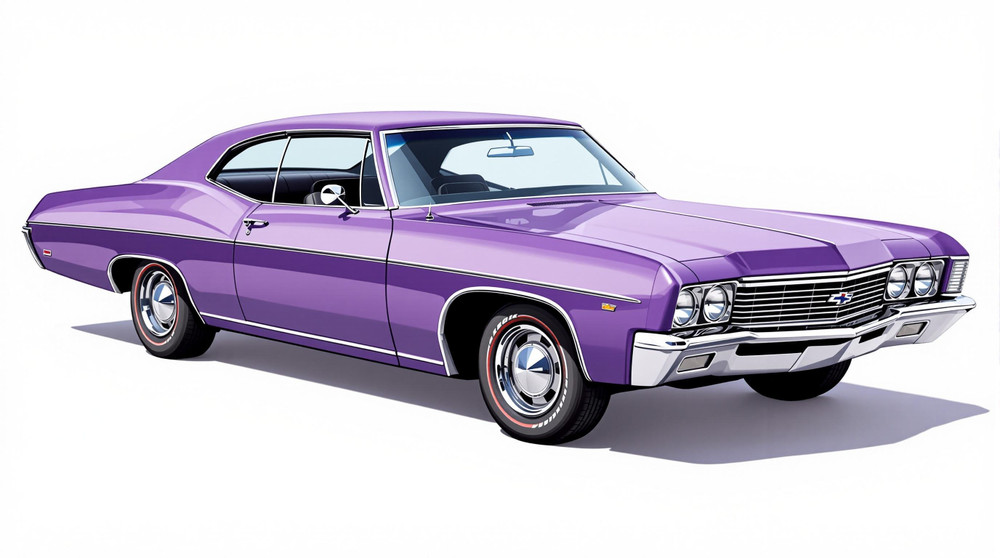
Image of 1969 Chevrolet Impala, Note: These illustrations use artistic license and may differ from actual historical models.
Performance Metrics
Fundamental Metrics
Emotional Appeal
MMP Rating
| Engine Specifications | |
|---|---|
| Engine: | 250 I6, 307 V8, 327 V8, 350 V8, 396 V8, 427 V8 |
| Displacement: | 250-427 cu in |
| Horsepower: | 155-425 hp |
| Torque: | 235-460 lb-ft |
| Compression Ratio: | 8.5:1 - 11.0:1 |
| Ignition System: | Conventional breaker-point ignition system |
| Cooling System: | Liquid-cooled |
| Performance Specifications | |
| 0-60 Time: | 7.5-8.5 seconds |
| 1/4 Mile Time: | 15-16 seconds |
| Top Speed: | 120-130 mph |
| Transmission and Drive | |
| Drive Type: | Rear-wheel drive |
| Transmission Type: | 3-speed manual, 4-speed manual, 2-speed Powerglide automatic, 3-speed Turbo-Hydramatic automatic |
| Fuel and Efficiency | |
| Fuel System Type: | Carburetor |
| MPG: | 10-15 mpg |
| Dimensions and Brakes | |
| Brakes: | Front disc brakes and rear drum brakes |
| Wheelbase: | 119.0 inches |
| Weight: | 3,500-4,000 lbs |
Note: Specifications for classic cars are given to the best of our ability, considering the limited and variant data available.
1969 Chevrolet Impala: A Full-Size American Classic
The 1969 Chevrolet Impala brought big-car comfort, confident styling, and a broad range of V8 power to one of America’s most popular nameplates. Built by Chevrolet, a division of General Motors, it belonged to the Impala’s fourth generation, which ran from 1965 through 1970. By 1969, the Impala was no longer simply a luxurious trim level: it was a familiar fixture of American roads, available as a family sedan, a stylish coupe, a convertible, or a wagon.
The Impala name first appeared in 1958 as a high-end version of the Chevrolet Bel Air, then became its own model line in 1959. Its popularity grew rapidly, and the 1969 car arrived in a year when American buyers still favored roomy, powerful full-size automobiles. One intriguing detail: Chevrolet offered the Impala with engines ranging from an economical six-cylinder to potent big-block V8s, giving buyers an unusually broad choice of personalities under the same long hood.
1969 Impala Styling and Body Styles
The 1969 Impala wears its size with purpose. Its long hood, wide grille, broad shoulders, and gently tapered rear give it the classic full-size proportions many enthusiasts associate with late-1960s American cars. The front end looks substantial without being overly ornate, while the rear features a wide bumper and distinctive triple taillights, a signature Impala design cue. Hidden windshield wipers helped keep the cowl area looking clean.
Chevrolet offered the Impala in several body styles, including a two-door Sport Coupe, four-door Sport Sedan, four-door sedan, convertible, and station wagon. The two-door Custom Coupe, with its smooth roofline and pillarless appearance, is among the most recognizable versions today. The convertible has obvious collector appeal, while the roomy four-door models make practical classics. Chevrolet’s full-size wagon lineup was marketed under the Kingswood name, so buyers seeking wagon utility generally encountered that related model rather than an Impala-badged wagon.
Paint choices reflected the period’s mix of subtle and vivid tastes. Depending on the specific model and production details, buyers could choose shades such as Tuxedo Black, LeMans Blue, Matador Red, Fathom Green, and Cortez Silver, alongside lighter and earthier colors. Red, black, metallic silver, and blue remain especially popular with collectors, although original paint and documented factory colors can matter more to value than any single favorite shade.
Cabin Comfort and Period Technology
Inside, the Impala emphasized space and ease of use. The wide bench seats, generous legroom, and broad dashboard suited long-distance travel and family duty. Depending on trim and equipment, buyers could select cloth-and-vinyl or all-vinyl upholstery, with coordinated door panels and carpeting. The materials were appropriate to a high-volume American car of the era: durable and comfortable rather than hand-crafted luxury-car fare.
Available equipment could make the Impala feel remarkably well appointed for 1969. Options included air conditioning, power steering, power brakes, power windows, cruise control, tilt steering, and an AM/FM radio. A three-speed Turbo Hydra-Matic automatic transmission was a popular choice, while manual transmissions were also available in some configurations. These features were not all standard, so a particular car’s equipment should be checked against its build documentation rather than assumed from the model name.
Why the 1969 Impala Matters
The Impala’s significance comes less from a single revolutionary invention than from how effectively it brought size, style, choice, and value together. Chevrolet could sell the same basic full-size platform as a comfortable commuter, a family sedan, a sporty coupe, or a powerful big-block car. That range helped make the Impala one of the defining American automobiles of its era.
Its body-on-frame construction and conventional rear-wheel-drive layout were familiar engineering, but they also made the car adaptable and relatively straightforward to service. The Impala helped reinforce a formula that dominated the American market for decades: a roomy cabin, a broad range of engines and options, and styling that made even an everyday car feel special. Its long production history and unmistakable proportions continue to shape the popular image of a classic American full-size car.
Engine Choices, Speed, and Road Manners
Engine availability varied by configuration and equipment. The lineup included a 250-cubic-inch inline-six in some versions, along with small-block V8 choices such as the 327 and 350. Buyers wanting more muscle could order a 396-cubic-inch big-block V8. Exact output depended on the engine code and specification, but the range ran from modest, everyday power to strong performance-oriented setups. A 1969 Impala was not automatically a muscle car, yet the right big-block example could move its substantial body with authority.
Performance figures depend heavily on engine, transmission, axle ratio, condition, and testing method. As a broad period-car estimate, a V8 Impala with a 350 and automatic transmission might reach 60 mph in roughly 9 to 11 seconds, with a top speed around 110 to 120 mph under suitable conditions. A well-equipped big-block car could be substantially quicker, potentially reaching 60 mph in the high-six- to eight-second range. These are estimates, not a universal factory specification for every 1969 Impala.
On the road, the Impala favors a relaxed, floating ride over sharp cornering. Its long wheelbase and soft suspension absorb ordinary pavement joints and bumps comfortably, though worn shocks, tired bushings, or sagging springs can make a classic example feel loose. On winding roads, the car’s size and weight are apparent: it leans more than a modern sedan and rewards smooth steering inputs rather than aggressive turn-in. Crosswinds and uneven pavement can also demand more attention than they would in a smaller, newer car.
The driving experience is part of the appeal. A small-block V8 delivers a mellow, low-pitched burble, while a big-block adds a deeper, more forceful exhaust note. The steering is typically light, especially with power assist, and the automatic transmission encourages unhurried cruising. Behind the wheel, the long hood and broad bench seat create a distinctly different relationship with the road than a modern car: you sit in a spacious cockpit and guide a substantial machine rather than darting through traffic.
Living With a 1969 Impala
Today, Impalas serve as weekend cruisers, show cars, family heirlooms, and, in some cases, daily drivers. Their broad parts supply and straightforward mechanical layout make many repairs approachable for an owner with basic tools and experience. Small-block Chevrolet engines and common GM components are especially well supported by specialist suppliers and restoration shops.
Age is the bigger challenge than complexity. Before buying, inspect the frame, floors, trunk, body mounts, lower fenders, and rear quarter panels for rust or previous repairs. Check the cooling system, brakes, steering components, transmission behavior, and electrical accessories. A car that has sat for years may need fuel-system work, new tires, fresh brake hydraulics, and attention to seals even if the engine starts. Air conditioning, power windows, and other optional equipment can add comfort, but they also add parts and troubleshooting to a restoration.
Impala Trivia and Common Criticisms
The Impala name was inspired by the African antelope, a choice that suited Chevrolet’s desire for a name suggesting speed and grace. The 1969 model was also the final year of the fourth-generation body style; the redesigned 1970 Impala carried the line into a new look. Chevrolet did not offer a 1969 Impala SS, as the SS had been discontinued after the 1968 model year. Buyers could still order powerful engines, but a 1969 car advertised as an original SS deserves careful documentation checks.
There is no single well-established speed or endurance record that defines the 1969 Impala. Its more notable achievement was its mass-market success: estimates commonly place 1969 Impala production at roughly 777,000 cars, though totals can vary by source and by how related models are counted. That huge original production run means the model is not rare overall, but surviving examples vary widely in condition, equipment, and originality. Convertibles and cars with desirable factory big-block options are much less common than ordinary sedans and coupes.
Common criticisms are the same qualities that make the car distinctive: it is large, heavy, thirsty, and not especially nimble. Fuel economy is modest by modern standards, and parking can be a chore. Some owners also find the soft suspension less composed than they expect. For enthusiasts who want quiet cruising, generous cabin space, and classic V8 character, those drawbacks are part of the bargain rather than deal-breakers.
1969 Impala Collector Values
Values depend on body style, originality, rust, engine and transmission, documentation, and restoration quality. As a general U.S. market guide, a project car may fall around $5,000 to $15,000. A usable driver often lands in the $15,000 to $35,000 range, while a well-restored example can bring roughly $35,000 to $60,000 or more. Excellent convertibles and especially desirable, well-documented big-block cars may exceed that range, sometimes reaching $60,000 to $100,000 or higher. These are broad estimates, not appraisals, and exceptional cars can sell outside them.
With an estimated production total near 777,000, the 1969 Impala is generally available on the collector market, particularly in sedan and coupe form. Convertibles, unusually original cars, and rare engine-and-option combinations are harder to find. Values have generally strengthened for clean, authentic examples, though the market is selective: rust-free condition and provenance tend to matter more than expensive cosmetic work. Ordinary driver-quality cars may see slower appreciation and can fluctuate with local demand.
The Lasting Appeal of the 1969 Chevrolet Impala
The 1969 Chevrolet Impala captures a moment when a full-size car could be both everyday transportation and a statement of style. Its sweeping body, roomy cabin, range of engines, and relaxed highway manners explain why so many were sold and why the best survivors remain desirable. It is not the most agile or economical classic, but it offers something modern cars rarely do: the sensation of cruising in a broad, unmistakably American machine. That is the Impala’s lasting strength, and the reason its presence still fills a driveway, a show field, or a quiet stretch of open road.
1969 Chevrolet Impala Catalog of Parts
 1969 Chevrolet Impala Upper Door Lock Pillar Seal-ALP 5054Upper Door Lock Pillar Seal. 69-70 GM B & C Body 2 Door Hardtop and Convertibles. Made with all details and steel cores. 2-1/8"W X 5-1/4"L. Pair R&L.
 1969 Chevrolet Impala Accelerator Pedal Pad with flange-AP 31-AAccelerator Pedal Pad with flange, made of rubber with steel core. Also
 1969 Chevrolet Impala Accelerator Pedal Pad without flange-AP 31-BAccelerator Pedal Pad without flange, made of rubber with steel core. Also
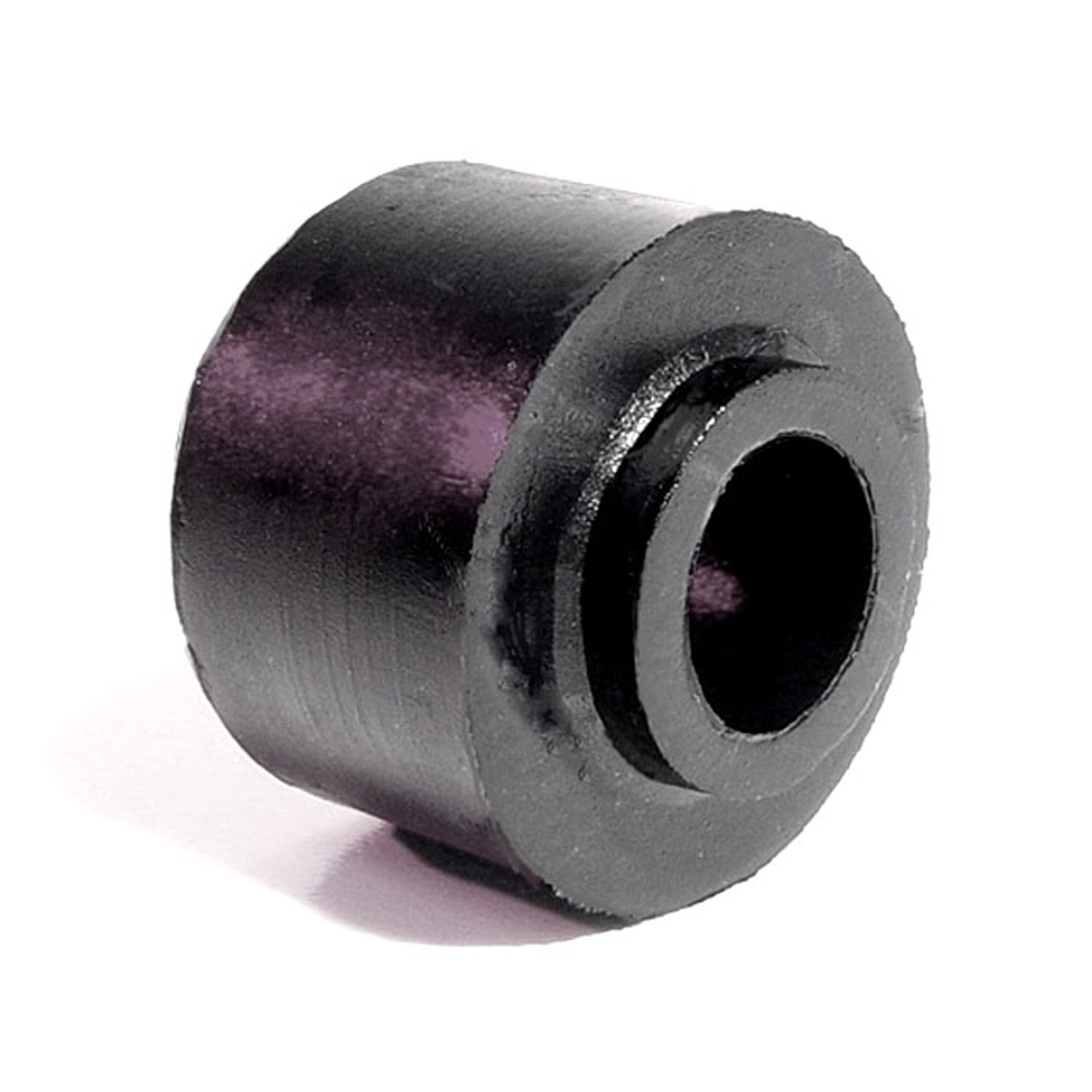 1969 Chevrolet Impala Shock Absorber Grommet. 1" bottom O.D., 3/4" high-BN 1Shock Absorber Grommet. 1" bottom O.D., 3/4" high., with 7/16" I.D. Each
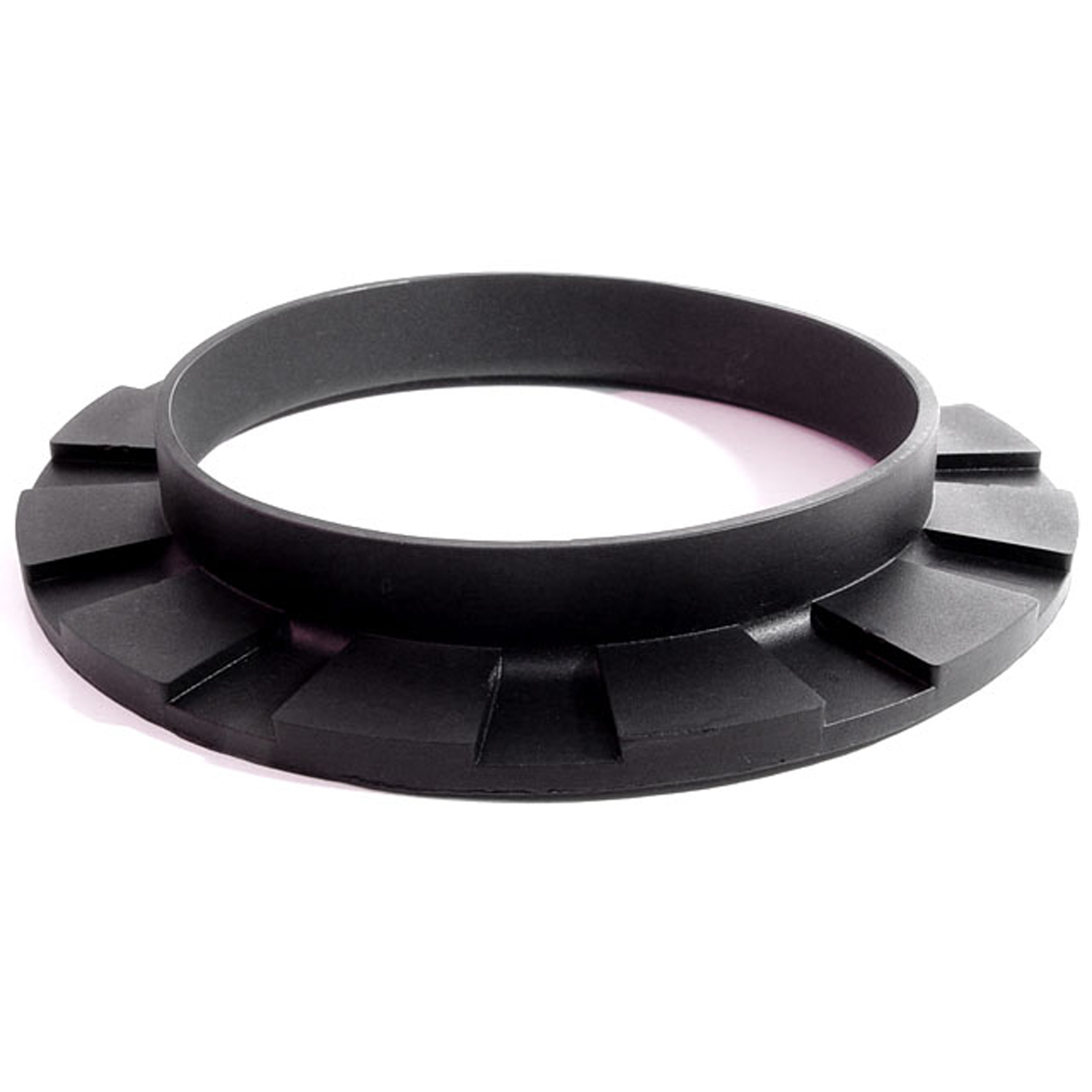 1969 Chevrolet Impala Front coil-spring insulator-BN 110Front coil-spring insulator. Fits '41-'60 Oldsmobile and '50-'83 GM passenger models. 5-3/8 in. OD x 3-3/4 in. ID x 3/4 in. high with 13/16 in. wide bottom flange 1/4" thick, 12 flutes. Each.
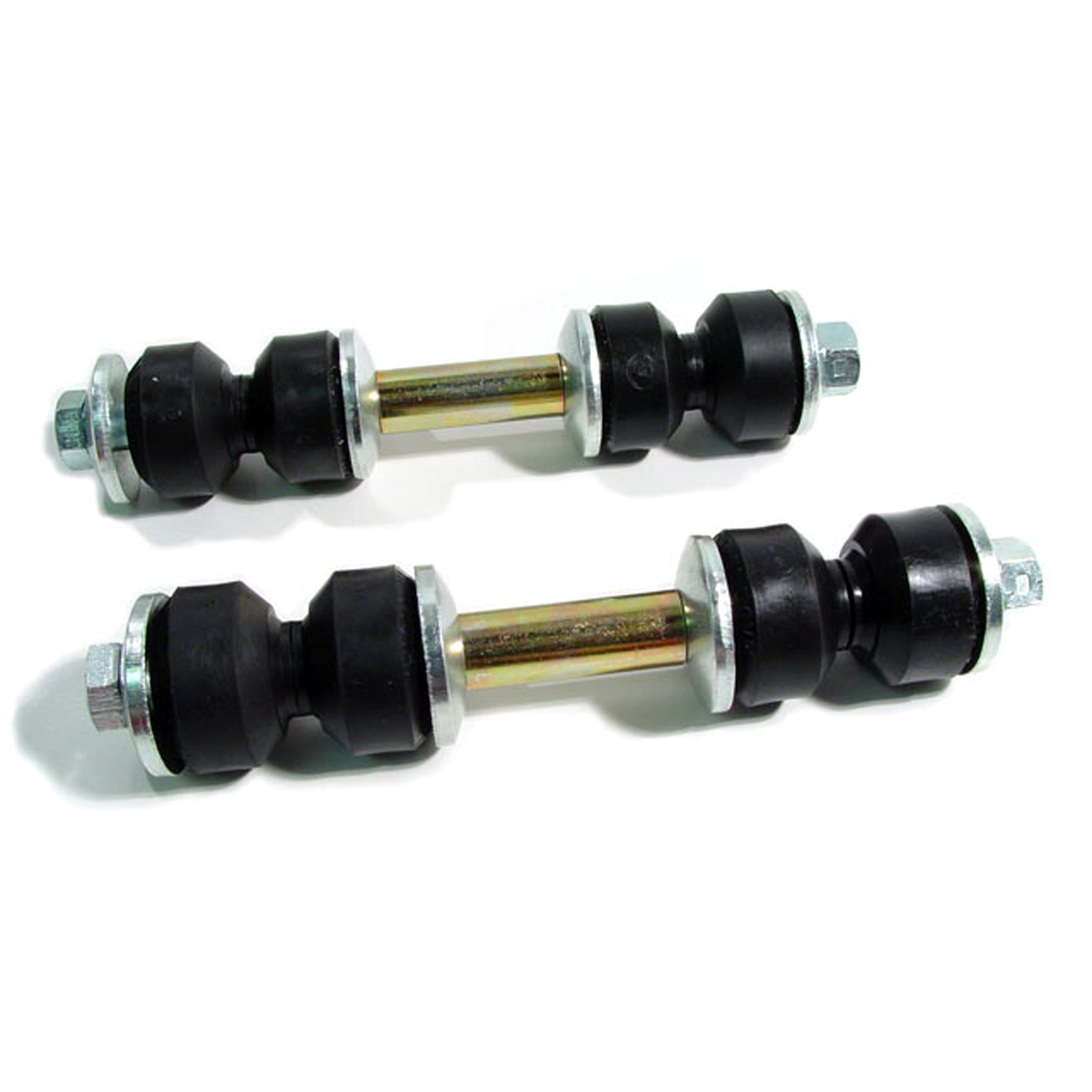 1969 Chevrolet Impala Front Stabilizer End Repair Kit-BNK 22Front Stabilizer End Repair Kit. 22-piece set for two stabilizer bars. Contains all rubber bushings, washers, bolts and nuts, enough for one front end. Set
 1969 Chevrolet Impala Butyl Glass Setting Tape-BT 1Butyl Glass Setting Tape. Used to install windshields and backlights. Superior sealing properties. 5/16" wide X 15' long. Each
 1969 Chevrolet Impala Convertible Top Windshield Header Seal-C/LP 40-GConvertible Top Windshield Header Seal. Clips installed every 3-5/8". Made of soft, black, skin-covered sponge. Sold by the foot.
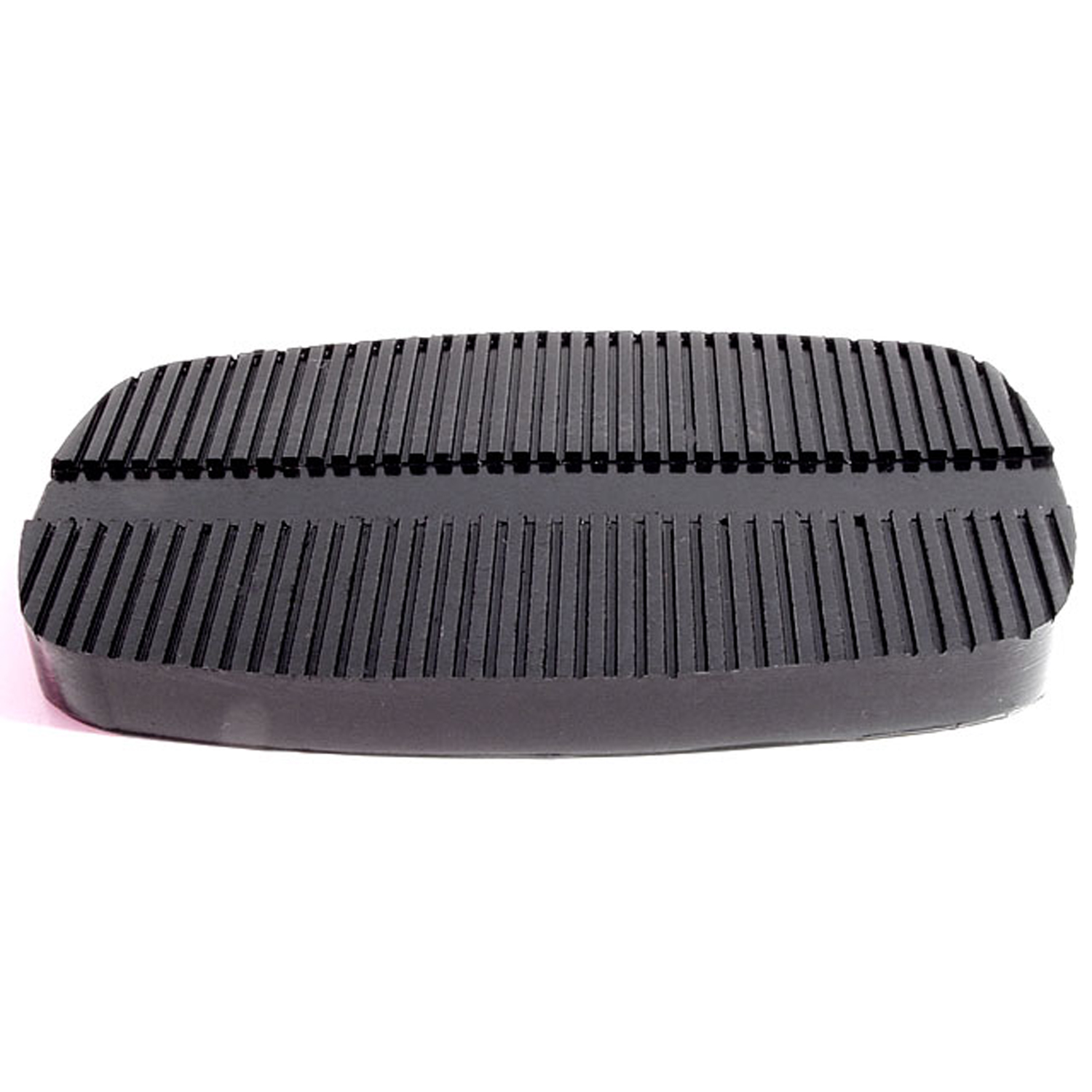 1969 Chevrolet Impala Brake Pedal Pad-CB 101-ABrake Pedal Pad. For power brakes or automatic transmissions. 4-3/4" wide X 2-3/4' long. Each
 1969 Chevrolet Impala Park Brake Pedal Pad. 2-9/16" wide. Each-CB 99-APark Brake Pedal Pad. 2-9/16" wide. Each
 1969 Chevrolet Impala Auto Brake Pedal Pad. 5-7/8" wide. Each-CB 99-BAuto Brake Pedal Pad. 5-7/8" wide. Each
 1969 Chevrolet Impala Windshield Pillar Post Seals for Convertibles-CZ 8106Windshield Pillar Post Seals for Convertibles. Two pieces, 25" long. Pair
 1969 Chevrolet Impala Top Bow to Header Seal (fits late '66-'70 GM "B" body-HD 731Top Bow to Header Seal (fits late '66-'70 GM "B" body, '65-'70 GM "C" body). Made of smooth, skin-covered sponge, with steel core and molded ends, like original. 56-1/2" Long. Each
 1969 Chevrolet Impala Molded Door Seals. For 2-door hardtop and convertible-LM 18-IMolded Door Seals. For 2-door hardtop and convertible. Replaces OEM #8781162/3. Pair R&L
 1969 Chevrolet Impala Front Molded Door Seals. For 4-Door Sedan. Pair R&L-LM 21-HFront Molded Door Seals. For 4-Door Sedan. Pair R&L
 1969 Chevrolet Impala Rear Molded Door Seals. For 4-door Sedan. Pair R&L-LM 21-H/RRear Molded Door Seals. For 4-door Sedan. Pair R&L
 1969 Chevrolet Impala Bumper to Body Gravel Deflector Seal-LP 109-MBumper to Body Gravel Deflector Seal. 69" Long piece, 2-7/8" wide. Each
 1969 Chevrolet Impala Door Handle Pads. 2-5/8" long & 1-1/8" long. Set R&L-MP 989-DDoor Handle Pads. 2-5/8" long & 1-1/8" long. Set R&L
 1969 Chevrolet Impala Basic Kit, for 2-Door Hardtop-RKB 2007-110Basic Kit, for 2-Door Hardtop. Door (LM 18-I) Roof Rail (RR 5014) Trunk (TK 46-18), Seals.
 1969 Chevrolet Impala Basic Kit, for 2-Door Hardtop (Sport)-RKB 2007-112Basic Kit, for 2-Door Hardtop (Sport). Door (LM 18-I) Roof Rail (RR 5014-A) Trunk (TK 46-18), Seals.
 1969 Chevrolet Impala Basic Kit, for Convertibles-RKB 2007-113Basic Kit, for Convertibles. Door (LM 18-I) Roof Rail (RR 1811-B) Trunk (TK 46-18) Header (HD 731), Seals.
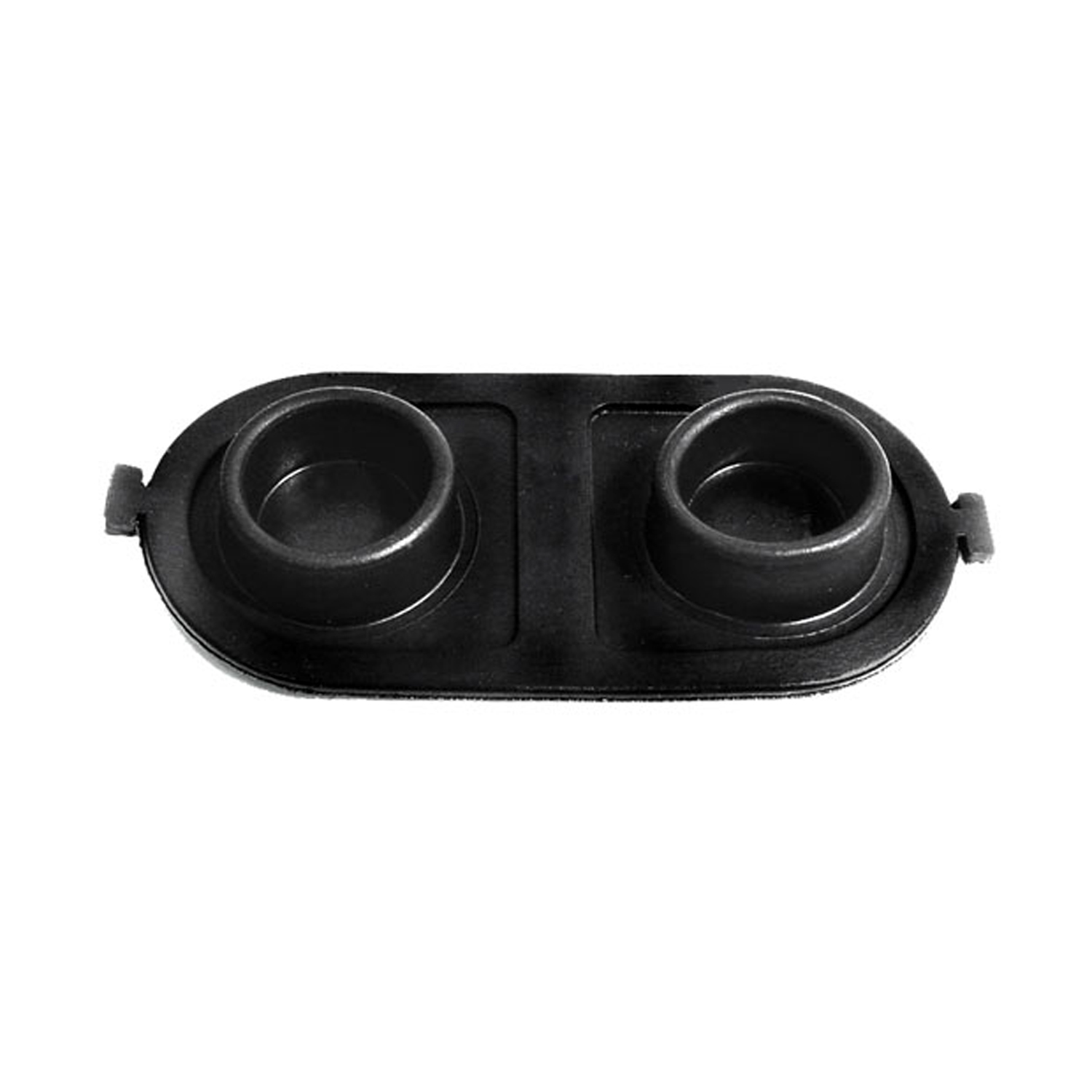 1969 Chevrolet Impala Brake Master Cylinder Cover Seal. Replaces OEM #5470861-RP 2-EBrake Master Cylinder Cover Seal. Replaces OEM #5470861. 5" X 2-1/2". Each
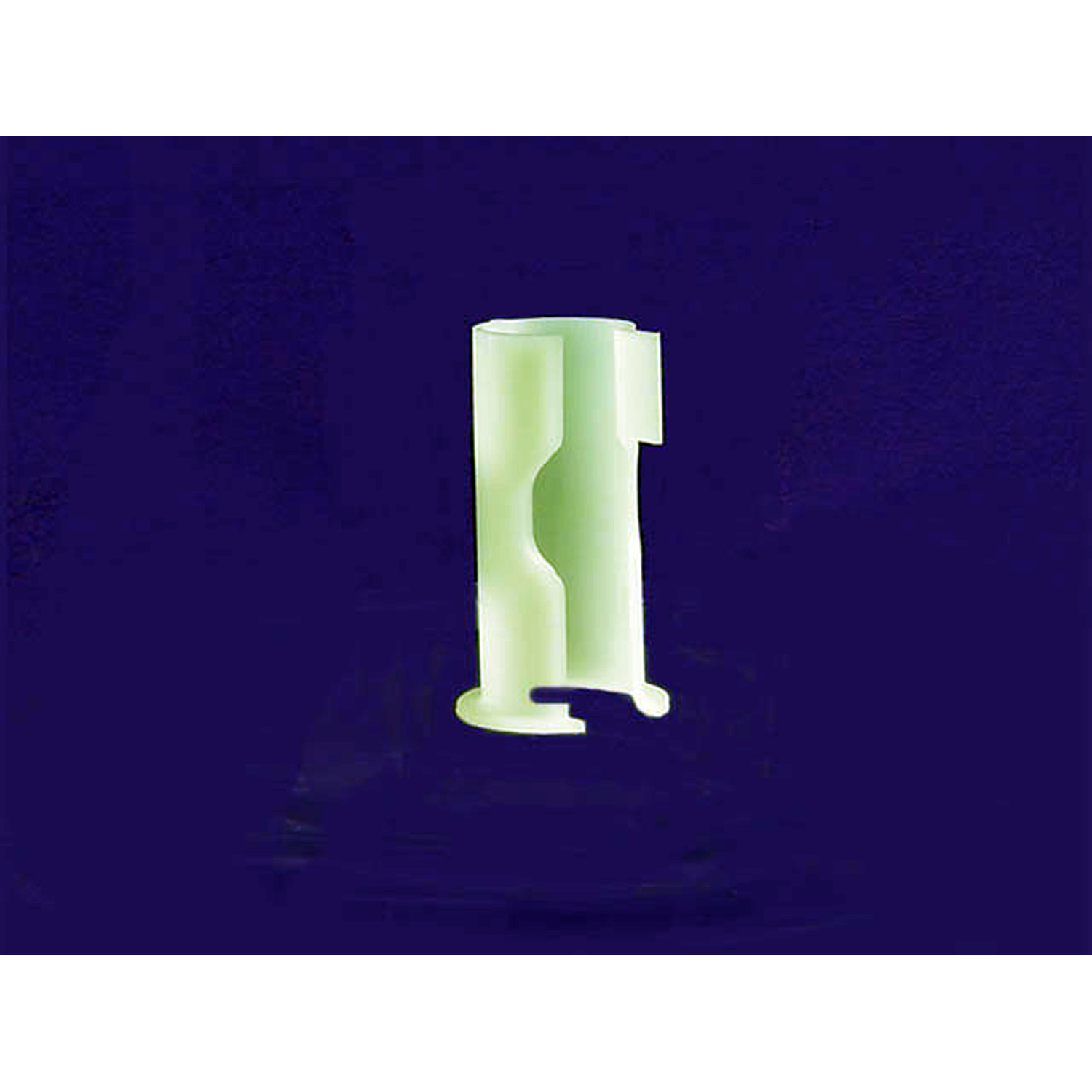 1969 Chevrolet Impala Sun Visor Support Sleeve. Clear plastic. Each-RP 303-ASun Visor Support Sleeve. Clear plastic. Each
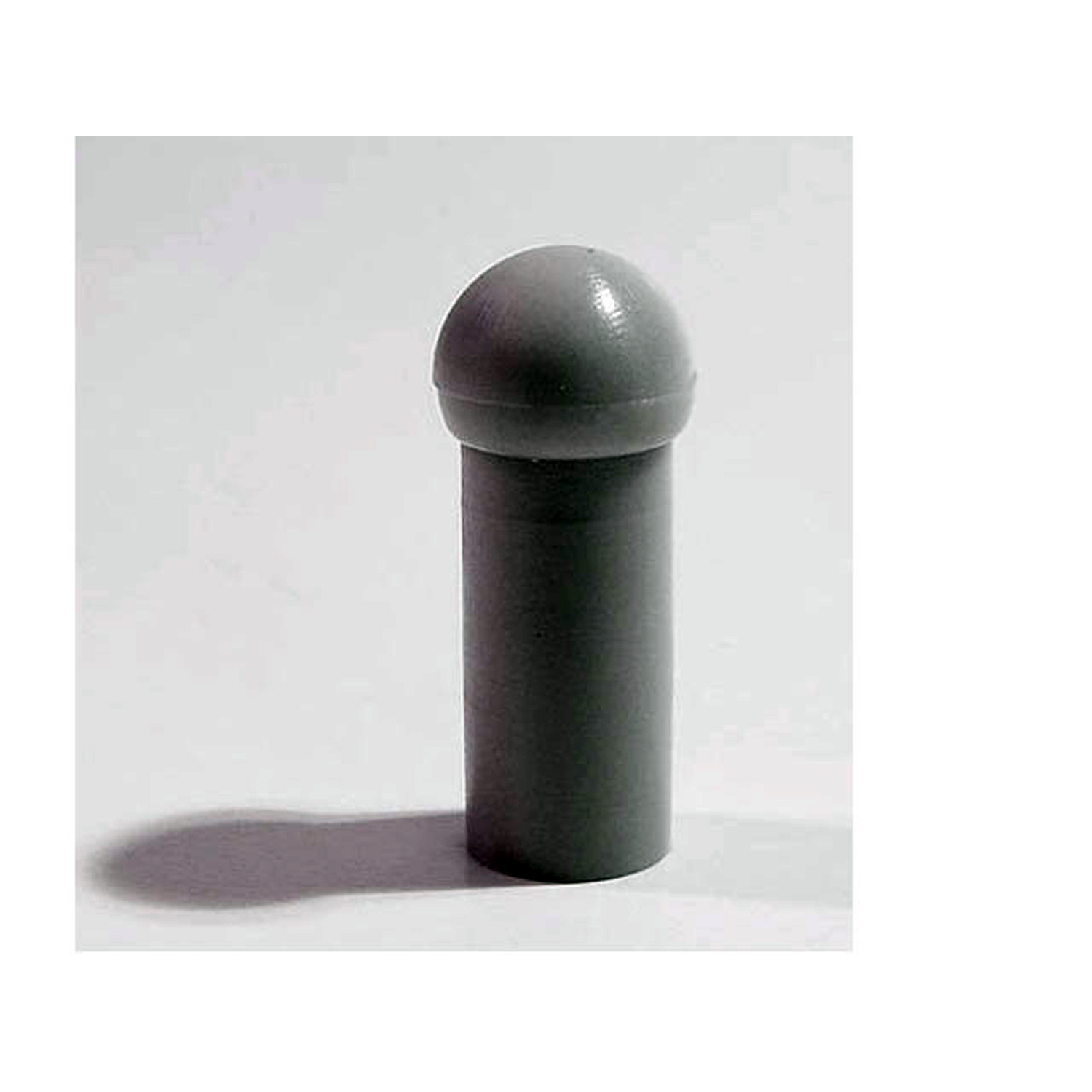 1969 Chevrolet Impala Sun Visor Rod Rubber Grommet. 3/4" long. Gray. Each-RP 303-CSun Visor Rod Rubber Grommet. 3/4" long. Gray. Each
 1969 Chevrolet Impala Molded Roof Rail Seals, for Convertibles-RR 1811-BMolded Roof Rail Seals, for Convertibles. 6-Piece set, with steel cores (remove rear flaps for '69-'70 Chevrolet). For molded sponge header seal, order part #HD 731.
 1969 Chevrolet Impala Molded Roof Rail Seals, for 2-Door Hardtop. Pair R&L-RR 5014Molded Roof Rail Seals, for 2-Door Hardtop. Pair R&L
 1969 Chevrolet Impala Molded Roof Rail Seals, for 2-Door Sport Hardtop. Pair R&L-RR 5014-AMolded Roof Rail Seals, for 2-Door Sport Hardtop. Pair R&L
 1969 Chevrolet Impala Molded Roof Rail Seals for 4-Door Hardtop. Pair-RR 5014-BMolded Roof Rail Seals for 4-Door Hardtop. Pair
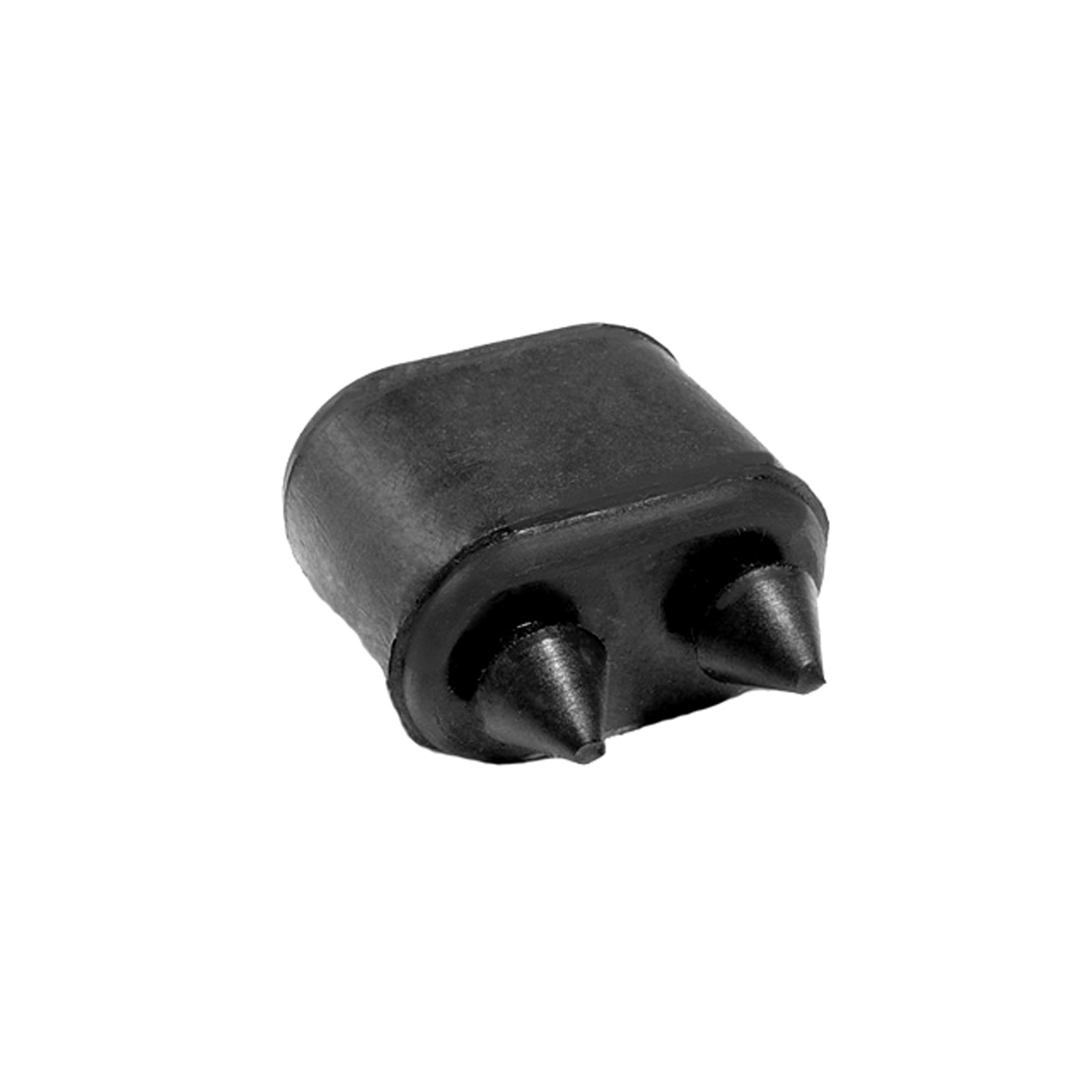 1969 Chevrolet Impala Door Bumper, 57-74 GM Cars, Made with Twin Retainers, Each-SB 35Door Bumper, 57-74 GM Cars, made with twin retainers, Each. Measure 1-1/16" high X 19/32" wide X 1-1/32" long.
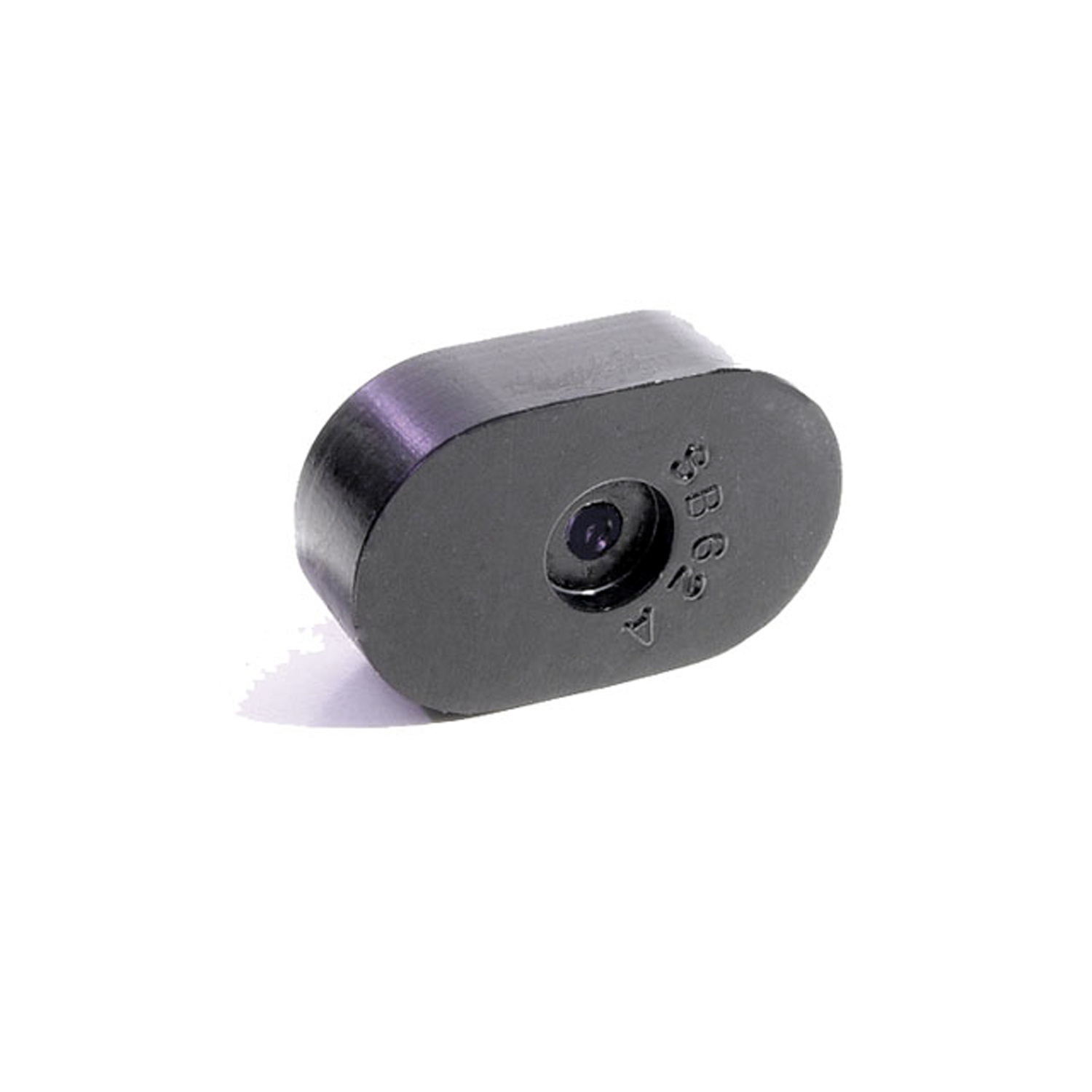 1969 Chevrolet Impala Seat Bumper. Made with steel core like original-SB 62-ASeat Bumper. Made with steel core like original. 1-1/2" long, 7/16" thick. Two used per car. Each
 1969 Chevrolet Impala Bumper Brace to Filler Panel Spacer, 68-71 Chevy A Body, 67-71 GM B Body Exc Wgn-SB 68Bumper Brace to Filler Panel Spacer, 68-71 Chevy A Body Except Wagons, 67-71 GM B Body Except Wagons, Each. Replaces OEM # 3895100.
 1969 Chevrolet Impala Ashtray Bumper. 5/16" wide X 1/2" long X 3/16" high-SB 76Ashtray Bumper. 5/16" wide X 1/2" long X 3/16" high. (Fits some models) Each
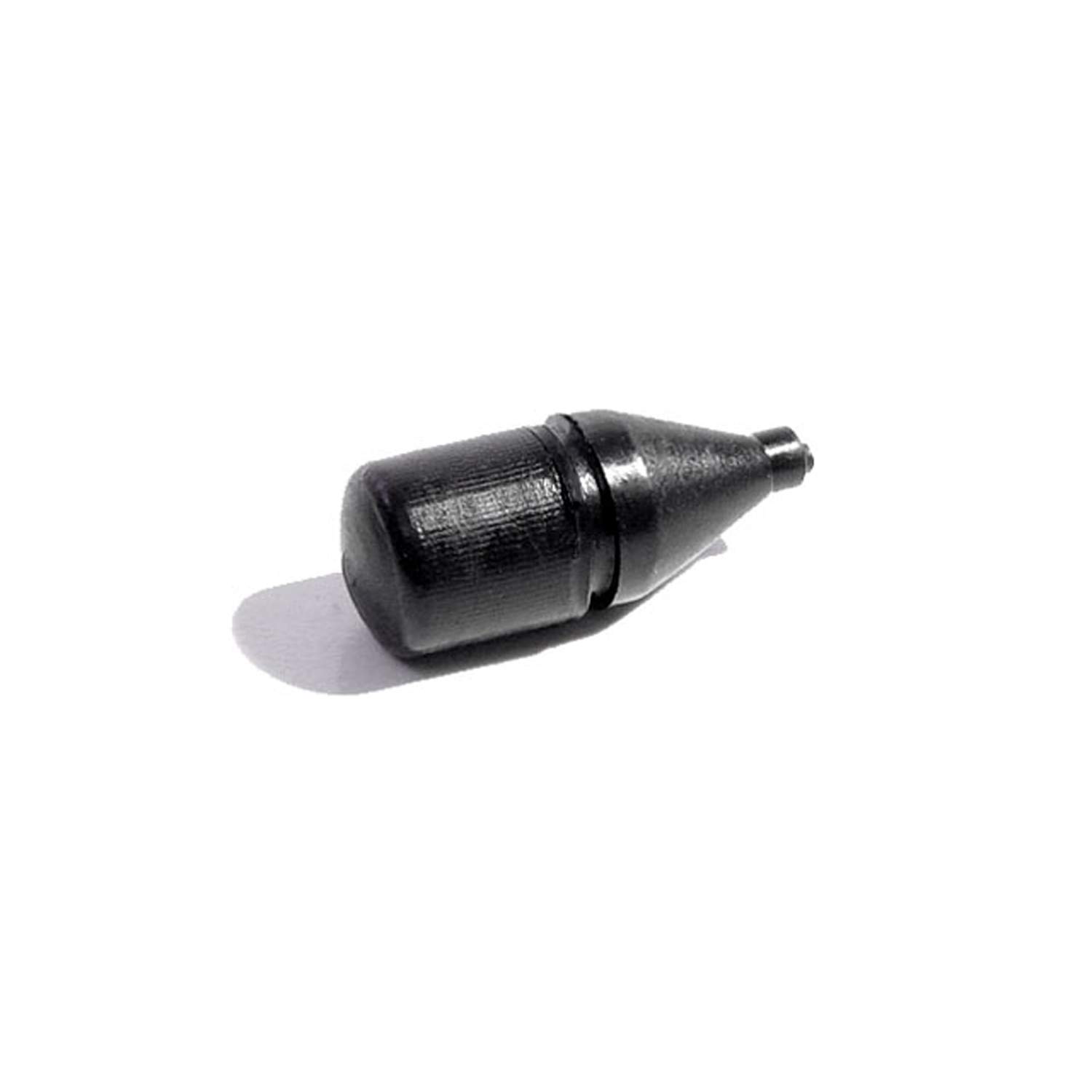 1969 Chevrolet Impala Fuel Door Bumper. 7/8" high, 5/16" O.D. Each-SB 81Fuel Door Bumper. 7/8" high, 5/16" O.D. Each
 1969 Chevrolet Impala Inner Splash Flaps-SI 2004-213Inner Splash Flaps. Used as dust and mud shield to keep engine compartments clean. Made from stiff rubber that is identical to original in composition, texture and color. Pair
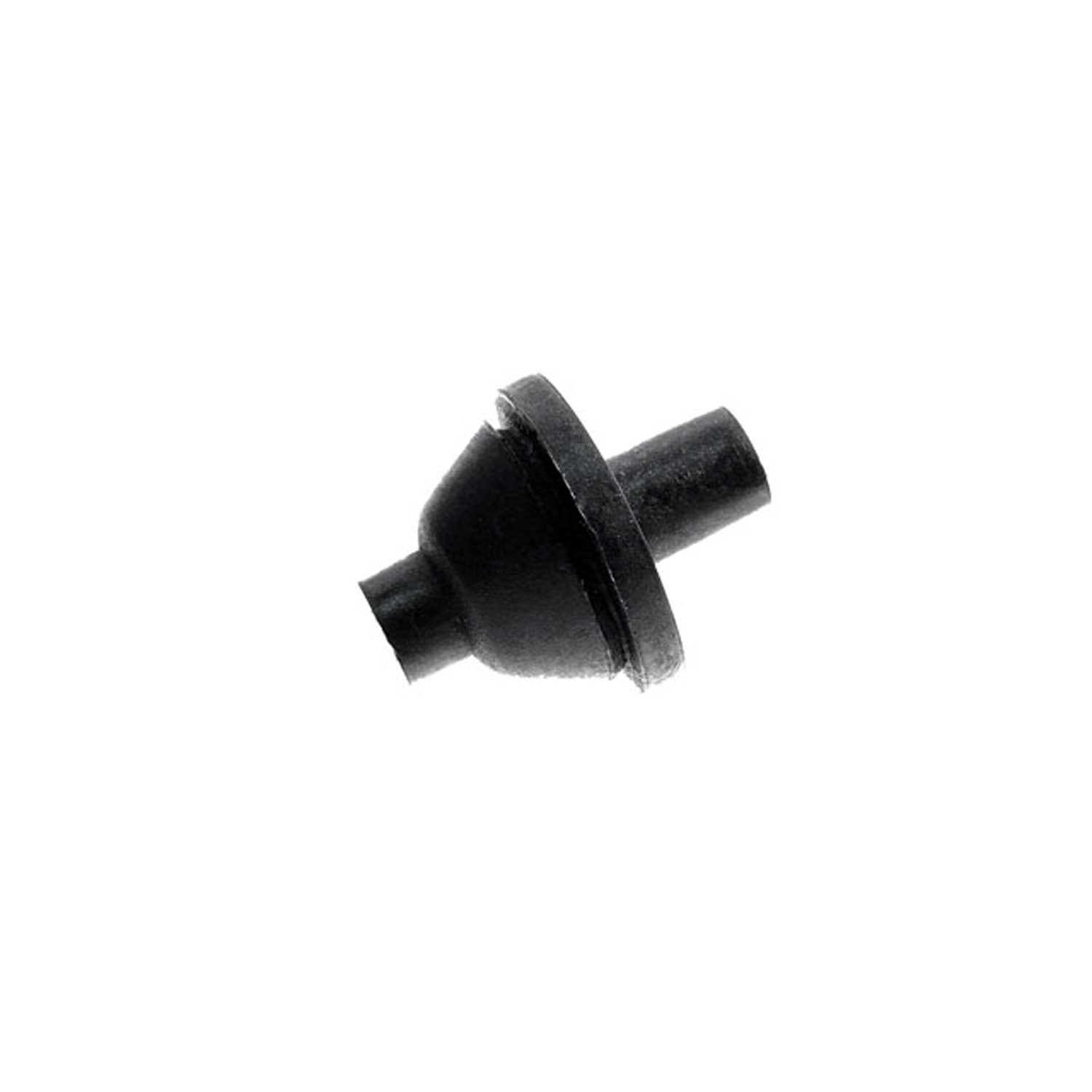 1969 Chevrolet Impala Dash and Firewall Grommet. Single-hole type is for one wire-SM 101Dash and Firewall Grommet. Single-hole type is for one wire. Each
 1969 Chevrolet Impala Dash and Firewall Grommet. Two hole type. Each-SM 101-ADash and Firewall Grommet. Two hole type. Each
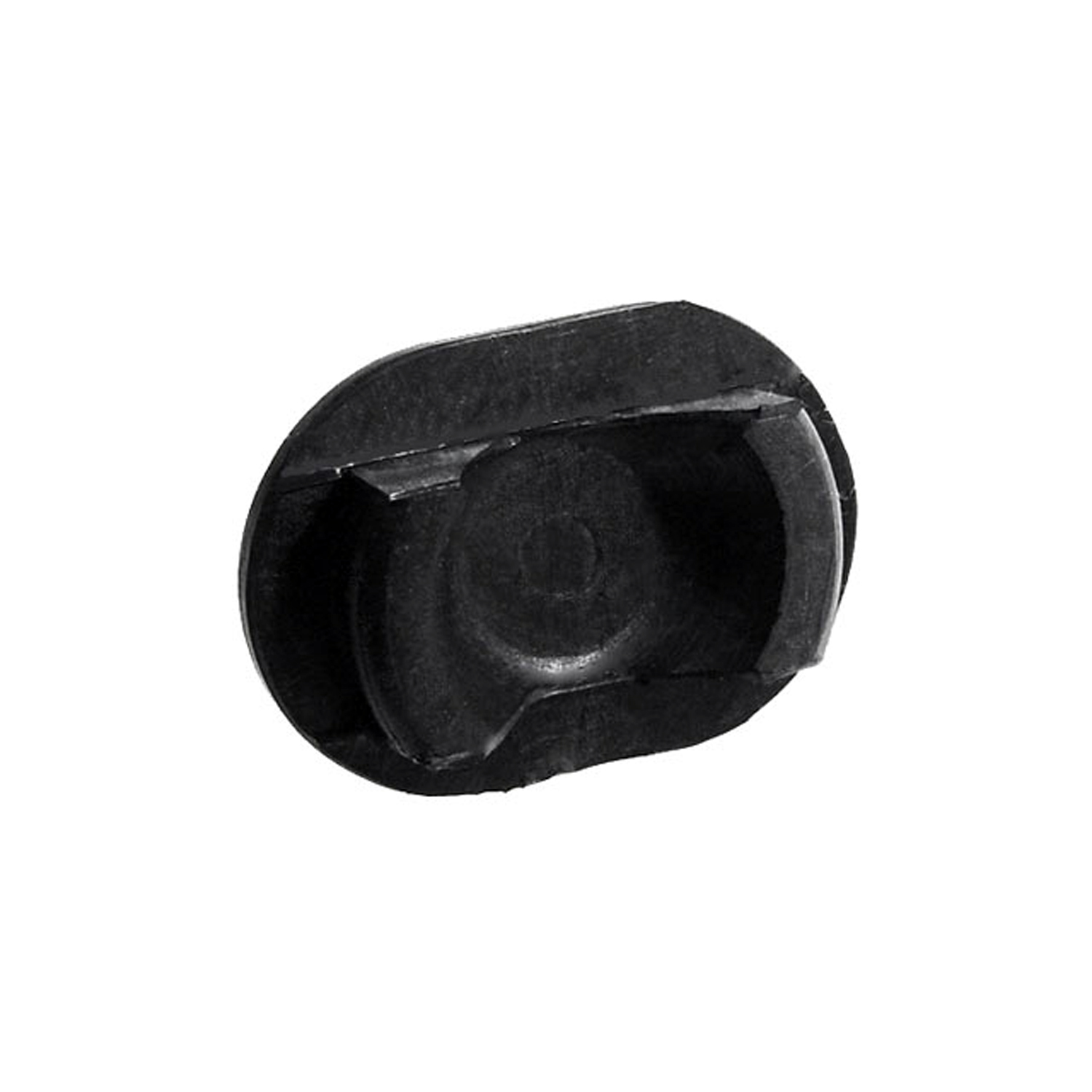 1969 Chevrolet Impala Timing Hole Plug. For 6-cylinder engines. 1-3/4" X 1-1/4"-SM 59Timing Hole Plug. For 6-cylinder engines. 1-3/4" X 1-1/4". Each
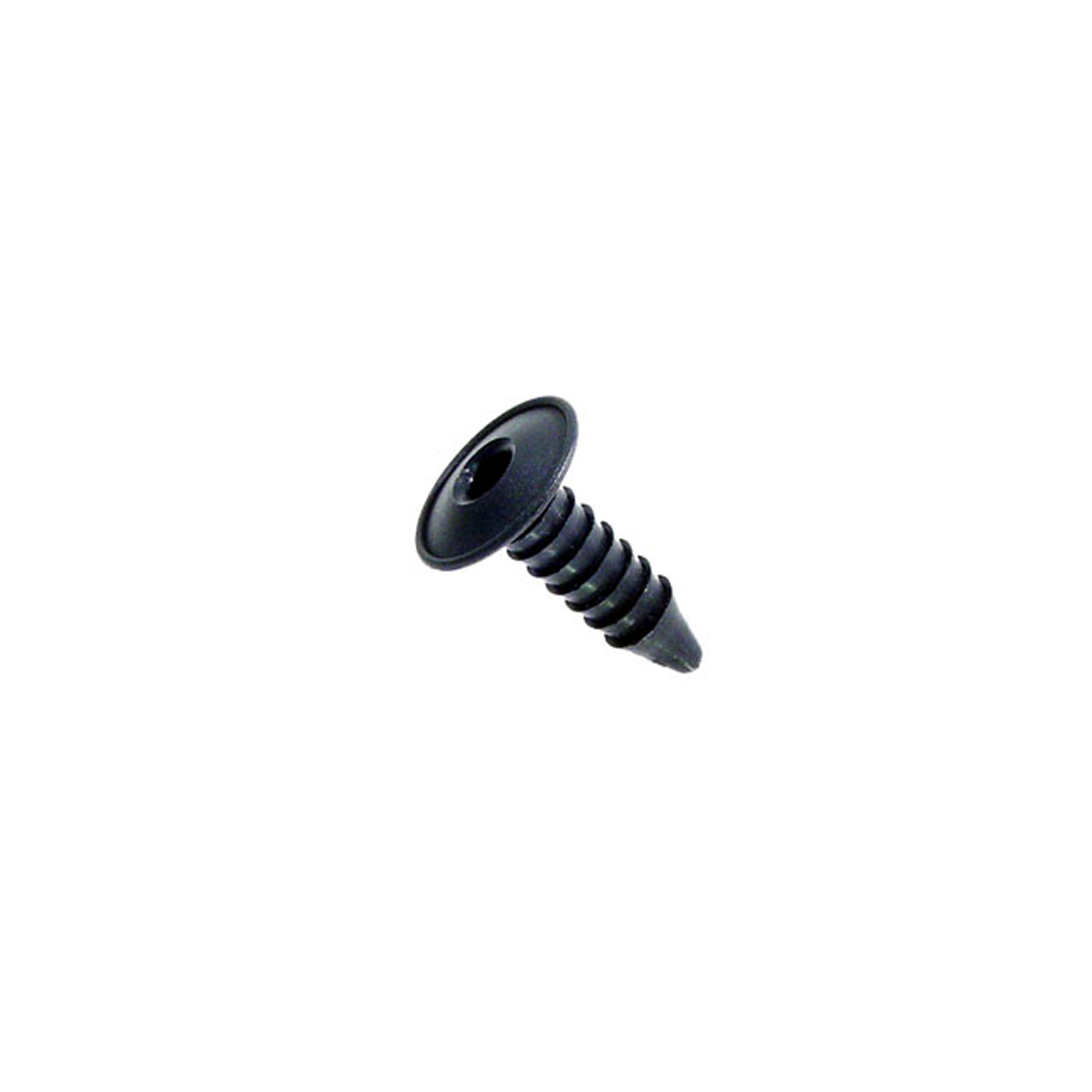 1969 Chevrolet Impala Firewall insulation fastener. 1 in. dia. W head. 1-1/2 in. L-SM 80-AFirewall insulation fastener. 1 in. dia. W head. 1-1/2 in. L. Replaces OEM#'s (GM) 7642589 and (AMC) 4001934. Black. Each.
 1969 Chevrolet Impala Trunk Seal. 18 feet long. Each-TK 46-18Trunk Seal. 18 feet long. Each
 1969 Chevrolet Impala Trunk Mat, for Hardtops-TM 2018Trunk Mat, for Hardtops. High quality reproduction, made specific for vehicle. Each 1969 Chevrolet Impala Trunk Mat, for Convertibles-TM 2018-ATrunk Mat, for Convertibles. High quality reproduction, made specific for vehicle. Each
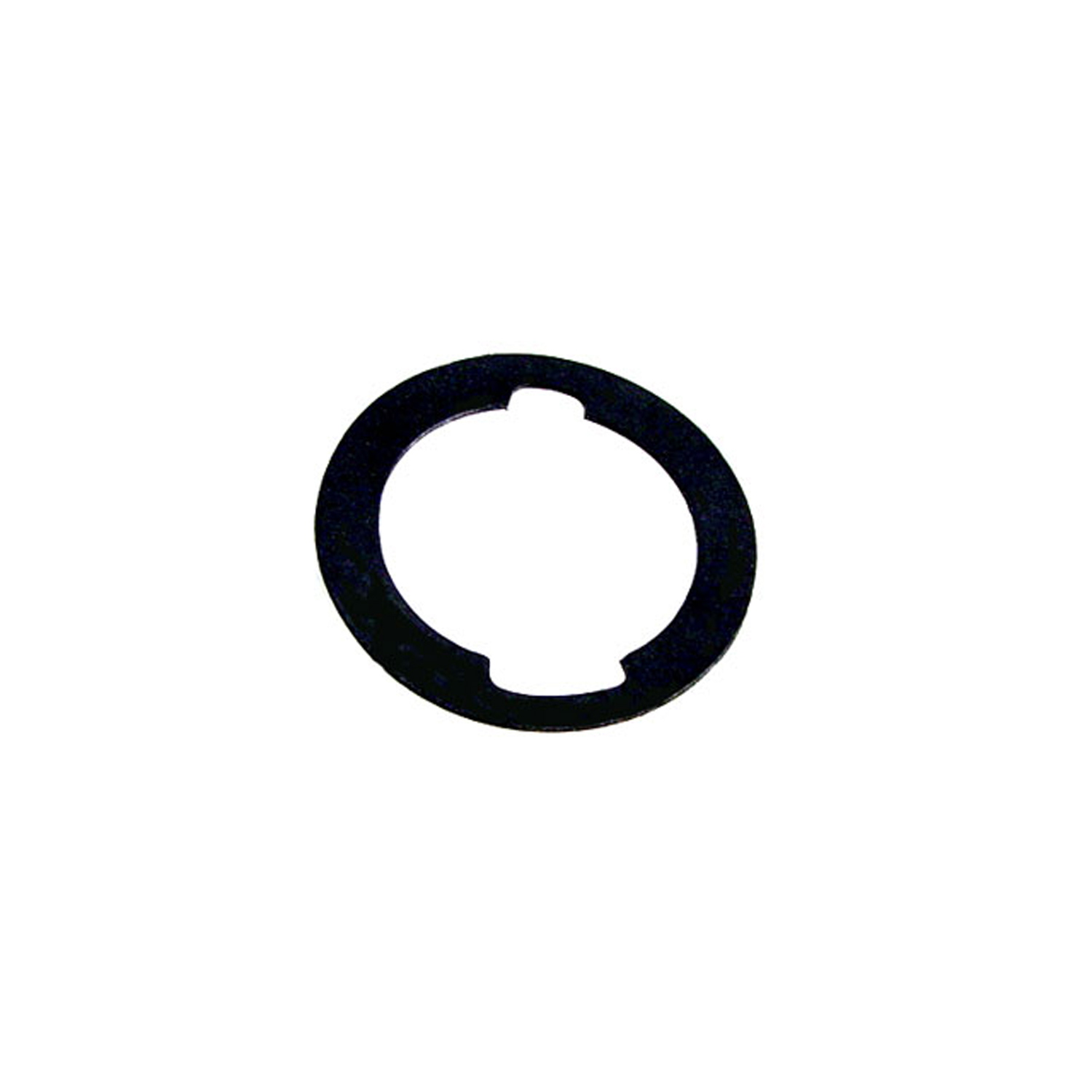 1969 Chevrolet Impala Unbeaded Door and Trunk Lock Gasket. 1-3/16" O.D., 7/8" I.D-UM 1600-100Unbeaded Door and Trunk Lock Gasket. 1-3/16" O.D., 7/8" I.D. Each
 1969 Chevrolet Impala Unbeaded Door Handle Mounting Pads. 4-Piece Set-UM 2005-100Unbeaded Door Handle Mounting Pads. 4-Piece Set
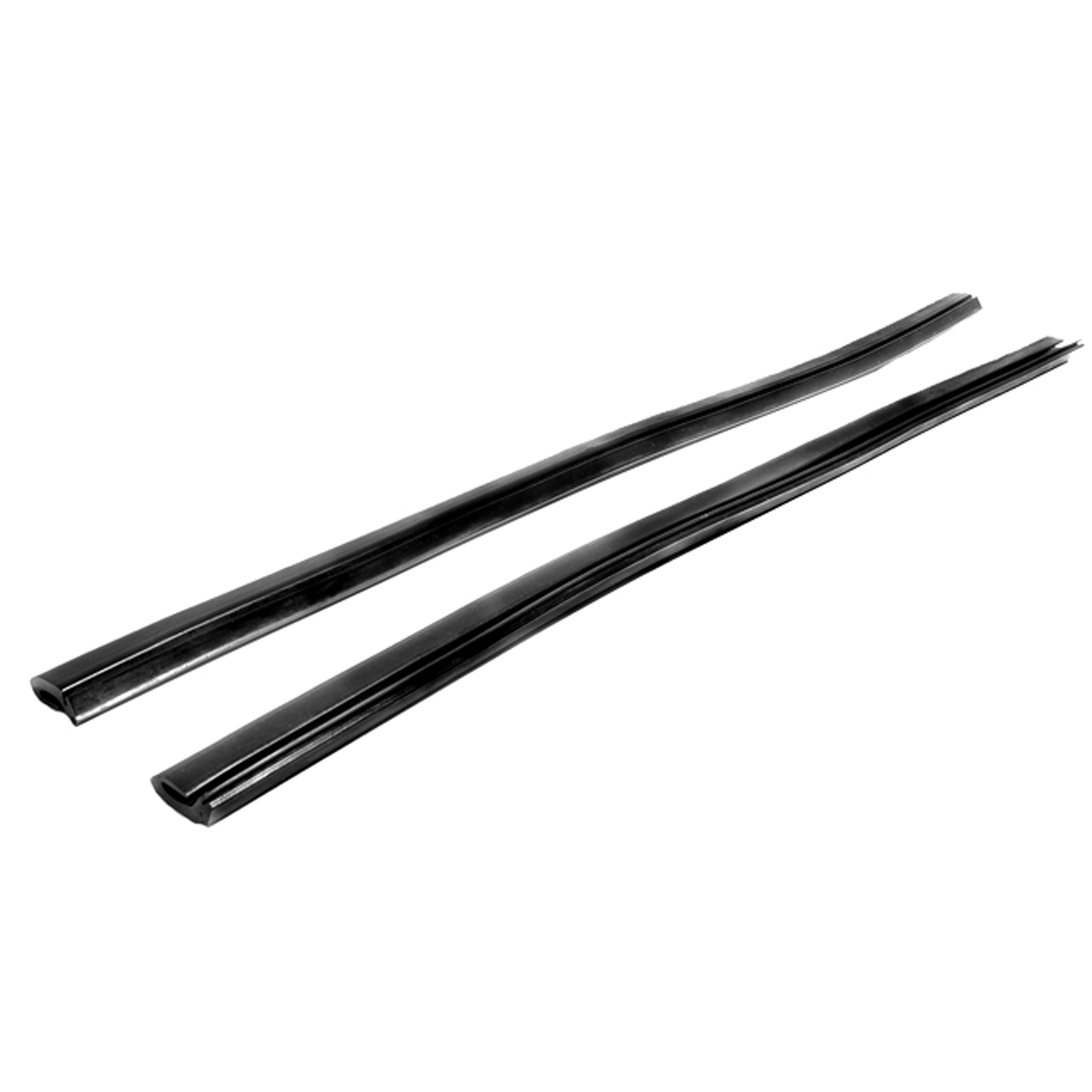 1969 Chevrolet Impala Rear Side Roll-Up Window Seal, for Hardtops and Convertibles-VS 3Rear Side Roll-Up Window Seal, for Hardtops and Convertibles. Two 20" sections slide into metal track. No steel insert. Pair
 1969 Chevrolet Impala Rear Roll-Up Quarter Window Seals-VS 3-MRear Roll-Up Quarter Window Seals, for 2-Door Hardtops and Convertibles. Made with a steel core stiffener. 16-1/2" long. Pair
 1969 Chevrolet Impala Rear Roll-Up Quarter Window Seals-VS 3-MXRear Roll-Up Quarter Window Seals, for 2-Door Hardtops and Convertibles. Made without steel core. 16-1/2" long. Pair
 1969 Chevrolet Impala Window Sweeper Set, 69-70 Chevrolet Impala 2 Door Hardtop, 8 Piece Set-WC 7200-84Window Sweeper Set, 69-70 Chevrolet Impala 2 Door Hardtop. This eight piece set includes inner and outer window felt sweeper weatherstrips for each side window and quarter windows. The parts wipe the side windows when the glass is lowered. These are considered the authentic versions of these seals as they are made from original factory style material.
 1969 Chevrolet Impala Window Sweeper Set, 69-70 Chevrolet Impala Convertible, 8 Piece Set-WC 7200-85This eight piece set includes inner and outer window felt sweeper weatherstrips for each side window and quarter windows. The parts wipe the side windows when the glass is lowered. These are considered the authentic versions of these seals as they are made from original factory style material.
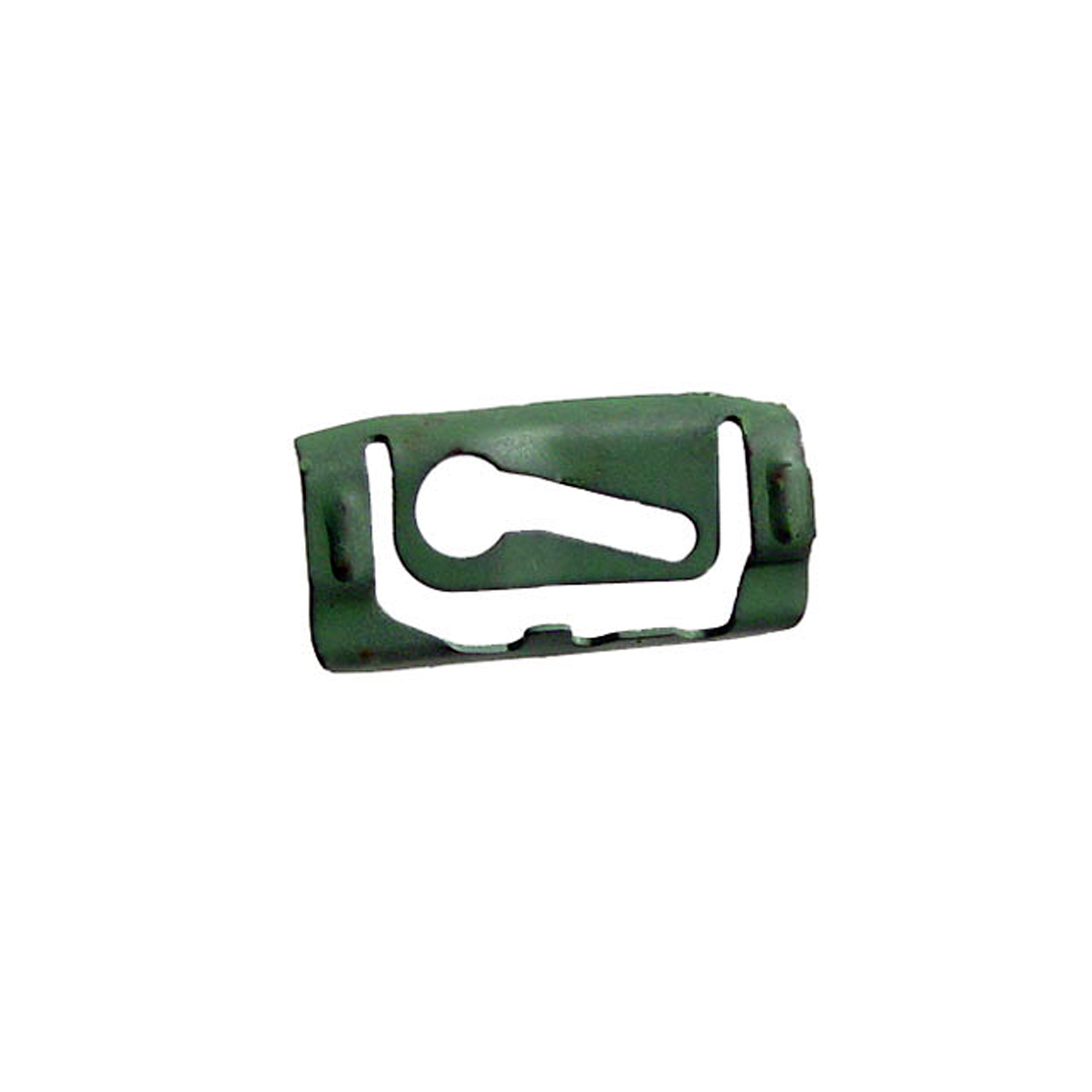 1969 Chevrolet Impala Quarter Window Reveal Molding Clip. Made of Steel-WF 205Quarter Window Reveal Molding Clip. Made of Steel. 1-3/8" X 11/16". Each
 1969 Chevrolet Impala Rear Window Reveal Molding Clip. For Station Wagons-WF 208Rear Window Reveal Molding Clip. For Station Wagons. Made of steel. 5/8" x 3/4". Each
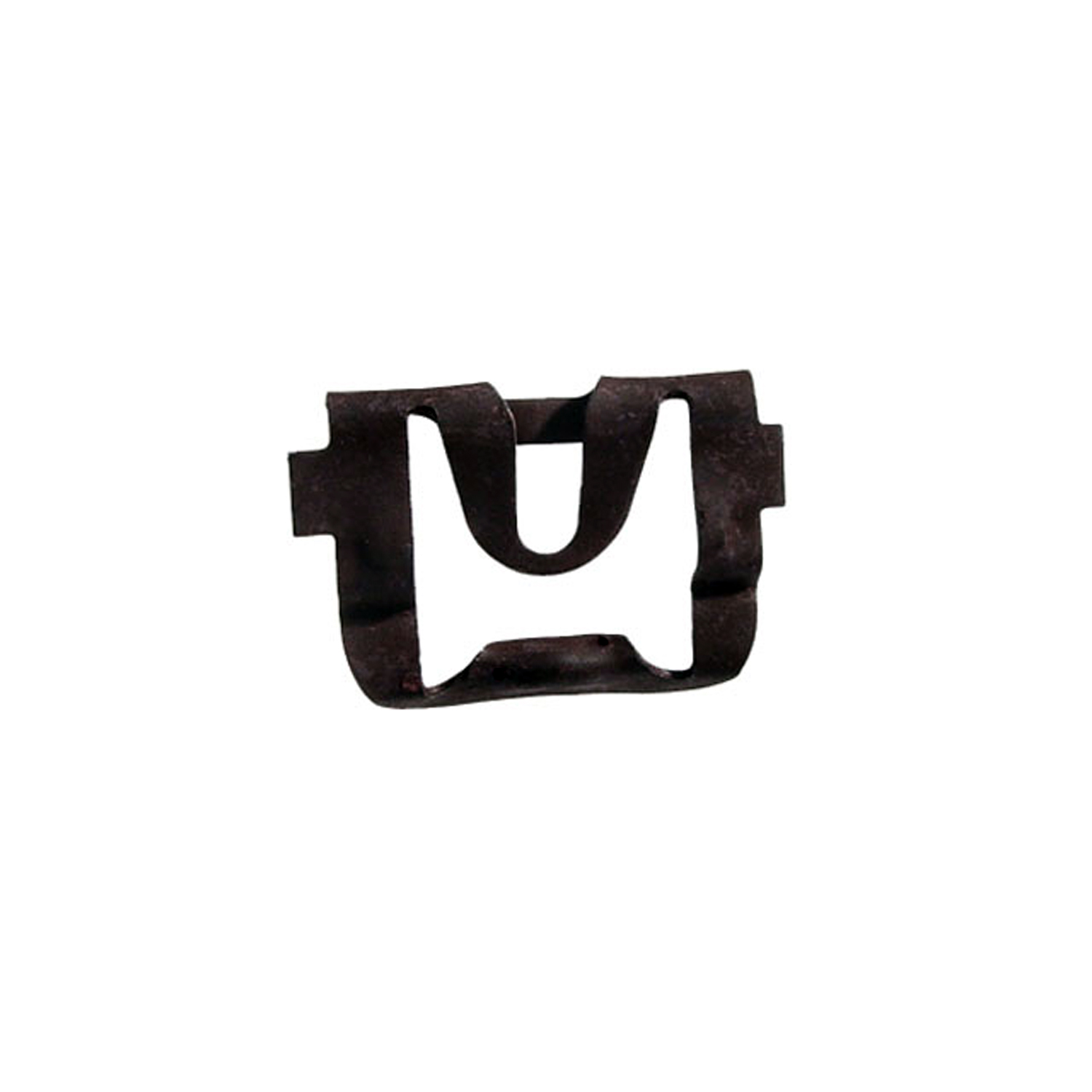 1969 Chevrolet Impala Rear Windshield Reveal Molding Clip. Made of steel-WF 211Rear Windshield Reveal Molding Clip. Made of steel. 15/16" X 3/4". Each
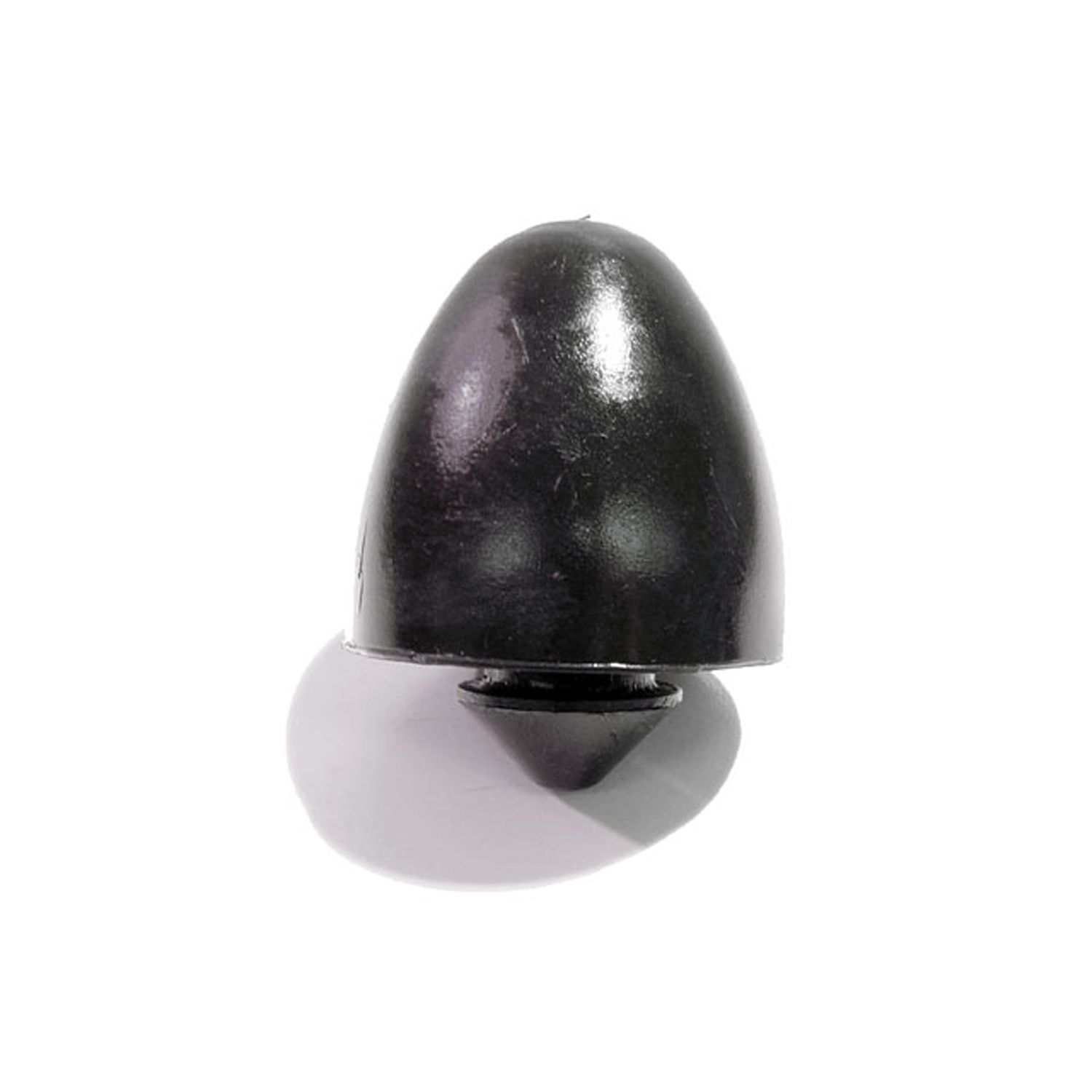 1969 Chevrolet Impala Front Suspension Bumper. For steering knuckle support-XB 20Front Suspension Bumper. For steering knuckle support. 1-3/8" high. Each
Why Choose Metro?
For over 100 years, Metro Moulded Parts has been the pinnacle of quality in classic car restoration parts. Our commitment to precision and authenticity in every component ensures a perfect fit and an OEM-level appearance.
- Expert Craftsmanship & Quality: Each part is a testament to our dedication to reliability and perfection, crafted from original designs and thoroughly tested.
- Advanced Technology: We use cutting-edge techniques to create flawless, long-lasting parts that surpass others in performance.
- SuperSoft Sponge – The Ultimate Door Seal: Not only are our door seals 30% softer than competitors', but they're also guaranteed to never leak. They effectively reduce wind and road noise, enhancing your classic car's comfort and driving experience.
- Proudly American: Our parts are a product of American craftsmanship, made in the USA with a spirit of excellence and heritage.
- Unrivaled Warranty: We back our products with a 30-year industry-leading warranty, a testament to our confidence in their quality.
Join us in preserving the legacy of classic cars with parts that are crafted for perfection, not just made.