
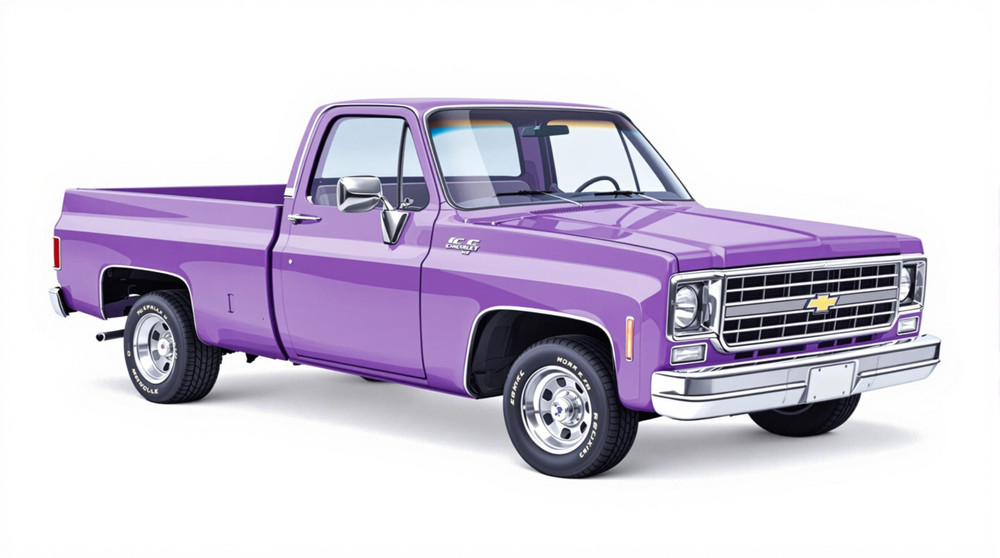
Image of 1979 Chevrolet C10, Note: These illustrations use artistic license and may differ from actual historical models.
Performance Metrics
Fundamental Metrics
Emotional Appeal
MMP Rating
| Engine Specifications | |
|---|---|
| Engine Options: | 250 I6, 292 I6, 305 V8, 350 V8 |
| Displacement Range: | 4.1L - 5.7L |
| Horsepower Range: | 95-170 hp |
| Torque: | 170-275 lb-ft |
| Compression Ratio: | 8.0:1 - 8.5:1 |
| Ignition System: | Conventional breaker point ignition system |
| Cooling System: | Liquid cooled |
| Performance Specifications | |
| 0-60 Time: | Estimated 10-15 seconds |
| 1/4 Mile Time: | Estimated 17-20 seconds |
| Top Speed: | 85-100 mph |
| Transmission and Drive | |
| Drive Type: | Rear wheel drive |
| Transmission Type: | 3-speed automatic, 4-speed manual |
| Fuel and Efficiency | |
| Fuel System Type: | Carburetor |
| MPG: | Estimated 10-15 mpg |
| Dimensions and Brakes | |
| Brakes: | Front disc, rear drum |
| Wheelbase: | 117.5 inches |
| Weight: | 3,500-4,500 lbs |
Note: Specifications for classic cars are given to the best of our ability, considering the limited and variant data available.
1979 Chevrolet C10: The Squarebody Pickup That Endures
The 1979 Chevrolet C10 turns a straightforward work truck into a rolling piece of American design history. Built by Chevrolet, a division of General Motors, it belongs to the long-running C/K pickup family and to the 1973-1987 generation enthusiasts call the “Squarebody.” Its clean, squared-off shape became so recognizable that the name still describes an entire era of Chevrolet trucks.
The C10 was the two-wheel-drive, half-ton member of the range. Its four-wheel-drive counterpart was the K10, while heavier-duty models carried different designations. By 1979, pickup trucks were becoming more than tools for farms and job sites. Buyers increasingly wanted comfort and style alongside hauling ability, and the C10 was well placed to meet that demand.
A notable detail of its history is how well the Squarebody design has aged. Its angular cab and broad, simple surfaces were practical choices when new, but they now make the truck instantly recognizable at car shows and on modern roads. The 1979 model also sits near the midpoint of the Squarebody run, combining the generation’s classic appearance with a more comfort-focused market.
Squarebody Styling and C10 Options
The C10’s styling is defined by straight lines, a broad grille, a flat hood, and a tall, upright cab. Its squared wheel openings and uncluttered body sides give it a sturdy, purposeful stance. Compared with earlier rounded pickups, the Squarebody looked more modern and spacious, while its conventional layout remained easy to service. Depending on trim and equipment, details such as brightwork, grille finish, wheel covers, and exterior moldings could give the truck a basic work-truck look or a more polished presence.
Chevrolet offered the C10 with either a Fleetside bed, which has broad, slab-sided cargo-box panels, or a Stepside bed with distinct rear fenders and a narrow step alongside the box. Fleetside models were the practical mainstream choice, especially with a short bed, while the Stepside remains a favorite among owners who want a more traditional pickup profile. Buyers could also choose different cab and wheelbase configurations, with regular cab trucks forming the heart of the lineup.
Trim names varied across the range and included Custom, Scottsdale, Cheyenne, and the well-known Silverado package. Silverado was the upscale choice, bringing a more finished cabin and additional convenience or appearance equipment, depending on the truck’s original specification. A short-bed Fleetside Silverado is among the most sought-after configurations today, though clean examples of any C10 body style have an audience.
Paint choices ranged from work-friendly solid colors to brighter hues and two-tone combinations. White, red, blue, and earth-tone shades were common sights, while period-correct two-tone paint remains especially popular with restorers. Exact colors and combinations depended on the order and equipment, so a truck’s original paint code is worth checking when judging a restoration.
Cabin Comfort and Period Technology
The 1979 C10’s cabin is straightforward and durable rather than luxurious by modern standards. The dashboard uses a broad, practical layout, with clear instrumentation and controls designed to be operated with work gloves or while bouncing along a rough road. Depending on trim, the interior could have vinyl or cloth upholstery, a bench seat, upgraded door trim, and more decorative details. The materials were built for hard use, not the soft-touch finish expected in a contemporary SUV.
For the era, the C10 could be equipped with useful comfort features such as air conditioning, power steering, power brakes, an automatic transmission, upgraded radio equipment, and other convenience options. Availability depended on trim and the original buyer’s selections. These were meaningful upgrades in a pickup that might spend its day towing, commuting, or crossing a muddy worksite.
Safety and convenience technology were modest by present-day standards. There were no airbags, stability control, backup camera, or modern driver-assistance systems. The C10’s appeal is partly its mechanical simplicity: the driver gets a clear view over the hood, direct controls, and a largely analog driving experience.
Why the C10 Mattered
The C10 did not invent the pickup, but it helped define what a full-size American truck could be as buyers began expecting comfort as well as capacity. Chevrolet’s 1973 redesign brought the C/K line a roomier cab, a more squared-off body, and a more contemporary appearance. Over the following years, trucks like the C10 increasingly served as daily transportation, not just commercial equipment.
That change helped broaden the pickup’s role in American life. Buyers could use a C10 for hauling lumber during the week and family errands on the weekend, particularly when it had a comfortable trim package, automatic transmission, and air conditioning. Its body-on-frame construction and conventional rear-wheel-drive layout also made it adaptable for commercial work, restoration, and customization.
What sets the 1979 C10 apart from many contemporaries is the balance between its plainspoken engineering and strong visual identity. The truck is mechanically familiar, yet its proportions and details are distinctive enough to be recognizable from across a parking lot. Its lasting influence can be seen in the large Squarebody restoration and modification scene, where stock restorations, lowered street trucks, and modernized restomods all share the same basic platform.
Engines, Speed, and Road Manners
Engine and drivetrain availability varied with configuration and market. Common choices included a 250-cubic-inch inline-six and small-block V8s such as the 305 and 350. Some trucks were ordered with larger engine options, including a 400-cubic-inch V8, depending on the model and equipment. Transmission choices included manual gearboxes and automatic units, while axle ratios and tire sizes could make two otherwise similar C10s feel quite different on the road.
There is no single dependable performance figure for every 1979 C10. As a broad estimate, a healthy V8 truck with an automatic transmission might reach 60 mph in roughly 9 to 12 seconds, while an inline-six or a heavily loaded truck would generally take longer. Top speed is also configuration-dependent, but many stock examples are best thought of as comfortable highway cruisers around 90 to 100 mph rather than vehicles intended for sustained high-speed running. These are estimates, not factory figures guaranteed for every engine, axle, and body combination.
On the road, the C10 feels substantial and unhurried. Its steering is typically slower and less precise than a modern pickup’s, though power steering makes low-speed maneuvering easier. The suspension is designed to handle a useful load, so an empty truck can feel firm over sharp bumps and may hop or skip over rough pavement. Add cargo, and the ride often settles down.
On winding roads, the truck’s height, weight, and solid-axle rear suspension call for a measured driving style. It is not a sports truck, and quick direction changes can bring noticeable body roll. In return, the driver gets a commanding view, a straightforward connection to the road, and the satisfying mechanical character of an older vehicle. A V8 adds a familiar low-frequency rumble, while the six-cylinder is generally calmer and more workmanlike.
Living With a 1979 Chevrolet C10
Owners use the C10 in many ways: as a weekend cruiser, a daily driver, a work truck, a show vehicle, or the basis for a custom build. Original-looking restorations appeal to traditional collectors, while lowered trucks, big-wheel builds, and engine-swapped restomods attract a different crowd. Its broad appeal is one reason good examples are no longer easy to overlook at classic-truck events.
Routine maintenance is comparatively approachable for an owner comfortable with basic mechanical work. The V8s and other traditional engines are familiar to many independent shops, and replacement parts are widely available through restoration suppliers and general parts retailers. Brakes, steering, suspension, fuel delivery, and electrical components are all serviceable with ordinary tools and a repair manual.
Age is the main ownership challenge. Before buying, inspect the cab corners, rocker panels, floor, bed, wheel arches, frame, and areas around the windshield for rust or previous repairs. Check for worn suspension and steering parts, brake condition, cooling-system leaks, and evidence of poor wiring or engine modifications. A truck that appears clean on the outside may still need substantial work underneath, so a pre-purchase inspection is money well spent.
Squarebody Facts and Common Criticisms
The “Squarebody” nickname is an enthusiast label for Chevrolet and GMC pickups from the 1973-1987 generation, not an official 1979 trim level. Chevrolet’s C and K designations also have practical meaning: C identifies two-wheel drive, while K identifies four-wheel drive. That distinction makes the C10 a rear-wheel-drive half-ton, rather than a four-wheel-drive truck.
There is no widely accepted production total for the 1979 C10 alone that cleanly separates it from other Chevrolet C/K configurations. The trucks were built in large numbers, but the surviving population is harder to estimate because many were used up as work vehicles, modified, or scrapped. As a result, a specific trim, bed, engine, or original color combination can be much harder to find than the overall production history suggests.
Common criticisms are familiar to anyone who has driven an older pickup: fuel economy is modest, the cabin can be noisy, handling is less composed than a modern truck’s, and safety equipment is limited. Rust and decades of repairs can be bigger headaches than the basic mechanical design. There is no single famous C10 speed or endurance record that defines the model; its reputation comes instead from its widespread working life and its long afterlife as a restoration and custom-truck favorite.
1979 C10 Values and Collectibility
Values vary sharply with condition, originality, configuration, and location. As a broad U.S. market estimate, a project truck may sell for about $3,000 to $10,000, while a usable driver could fall around $10,000 to $25,000. A high-quality stock restoration or especially desirable configuration can bring roughly $30,000 to $60,000 or more. Exceptional builds and professionally finished restomods can exceed that range, but their prices depend heavily on workmanship and buyer taste.
These figures are general guide ranges, not a formal appraisal. A clean, rust-free body often matters more than a freshly painted one, and documented originality can add appeal to collectors. Conversely, an expensive engine swap or custom interior does not automatically increase a truck’s value by the amount spent on the work.
Squarebody C10s have enjoyed strong collector interest, and desirable examples have generally appreciated over the long term. The market is not uniform, however: rough projects and highly personalized builds can be harder to sell at ambitious prices, while clean, well-documented trucks tend to attract the widest audience. Availability remains reasonable compared with truly rare classics, but finding an unmodified truck with solid bodywork is increasingly challenging.
The Lasting Appeal of the 1979 C10
The 1979 Chevrolet C10 blends useful truck engineering with a design that has become an American classic. Its Squarebody styling, range of engines and trims, straightforward mechanical layout, and broad role in everyday life explain why it remains popular with drivers, restorers, and collectors.
It may not offer modern speed, comfort, or safety, but the C10 has something those specifications cannot measure: a direct, honest character that connects the driver to the machine. Nearly five decades after it left the factory, a well-kept 1979 C10 still looks ready to work, cruise, or steal the show.
1979 Chevrolet C10 Catalog of Parts
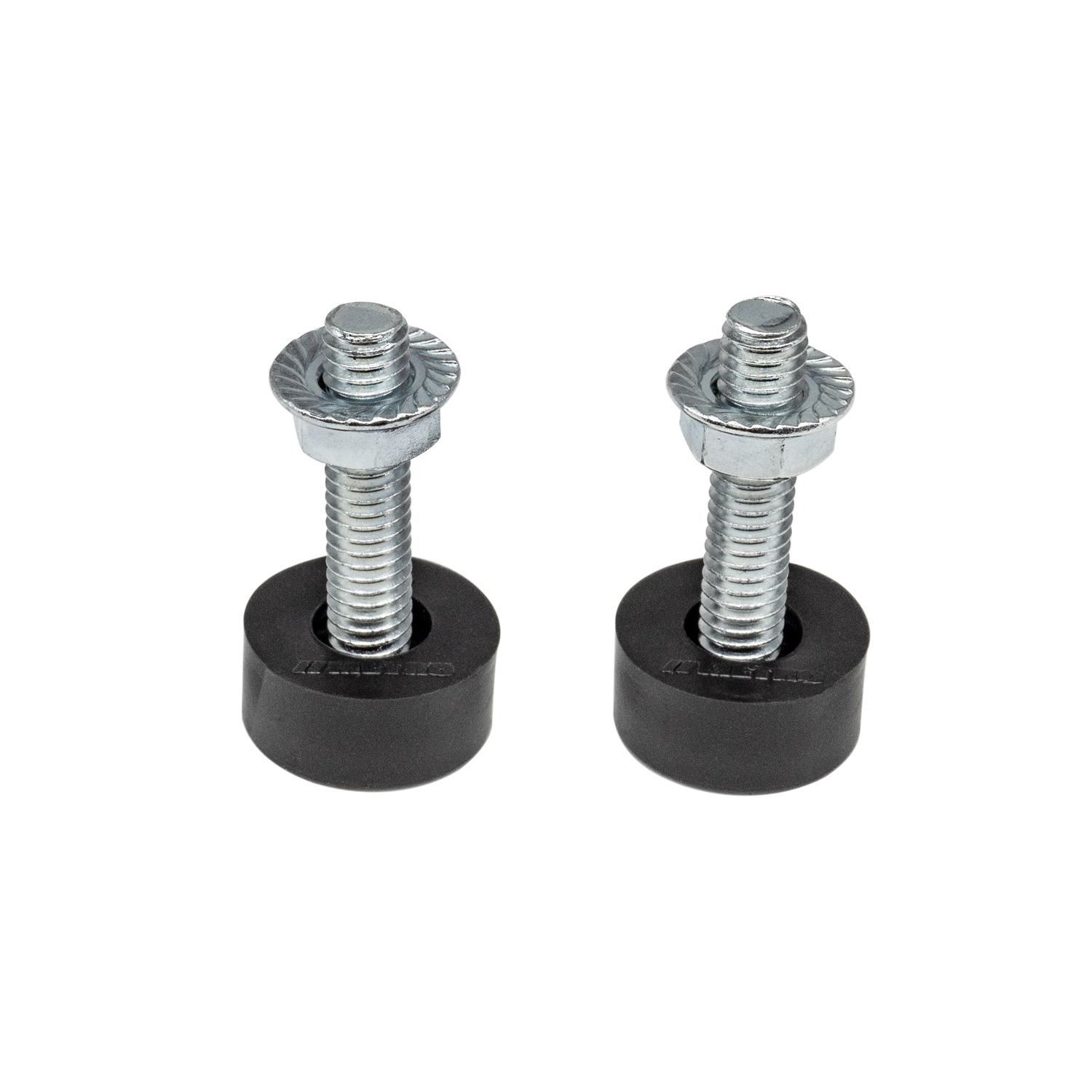 1979 Chevrolet C10 Hood Adjustment Bolt,Nut and Bumper Pair-HA 5-BHood Adjustment Bolt, Nut and Bumper 5/16-18 x 1 1/2 Bolt, 5/16-18 Nut and Bumper 7/8 x 7/16.
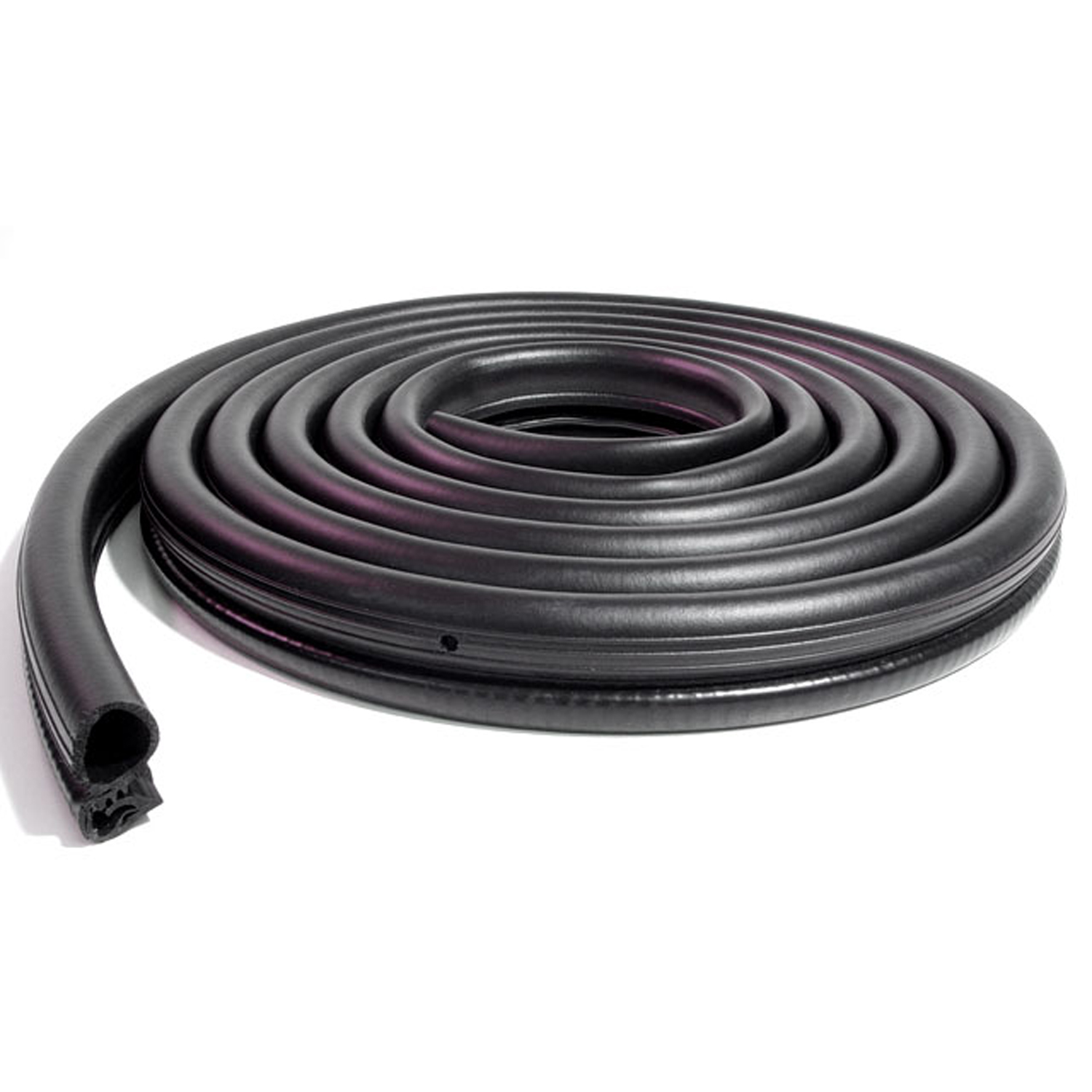 1979 Chevrolet C10 Front Door Seal (Imported). Fits either side. 148" Long-IS-LM 121Front Door Seal (Imported). Fits either side. 148" Long. Each
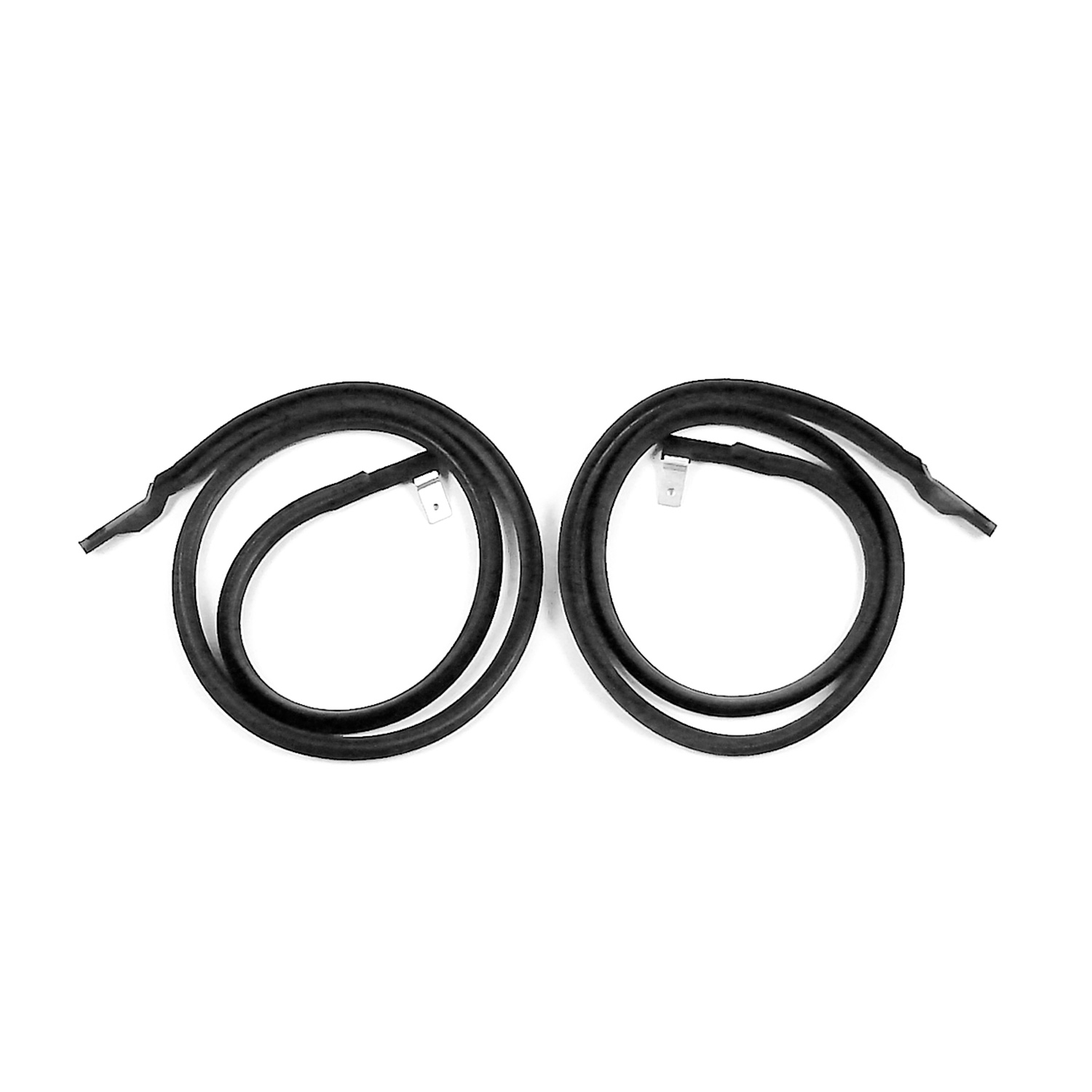 1979 Chevrolet C10 Upper Door Seal, 78-82 GM Full Size Truck and SUV, Fits Right Side Only, Each-LM 121-JUpper Door Seal, 78-82 GM Full Size Truck and SUV, Fits Right Side Only, Each. Replaces OEM # 14016512. This seal mounts on the upper part of the passenger (right) door with weatherstrip adhesive glue (not included). This product is made from the original specs and with high quality ozone resistant EPDM rubber for a great fit and long life.
 1979 Chevrolet C10 Upper Door Seal, 78-82 GM Full Size Truck and SUV, Fits Left Side Only, Each-LM 121-KUpper Door Seal, 78-82 GM Full Size Truck and SUV, Fits Left Side Only, Each. Replaces OEM # 14016511. This seal mounts on the upper part of the driver (left) door with weatherstrip adhesive glue (not included). This product is made from the original specs and with high quality ozone resistant EPDM rubber for a great fit and long life.
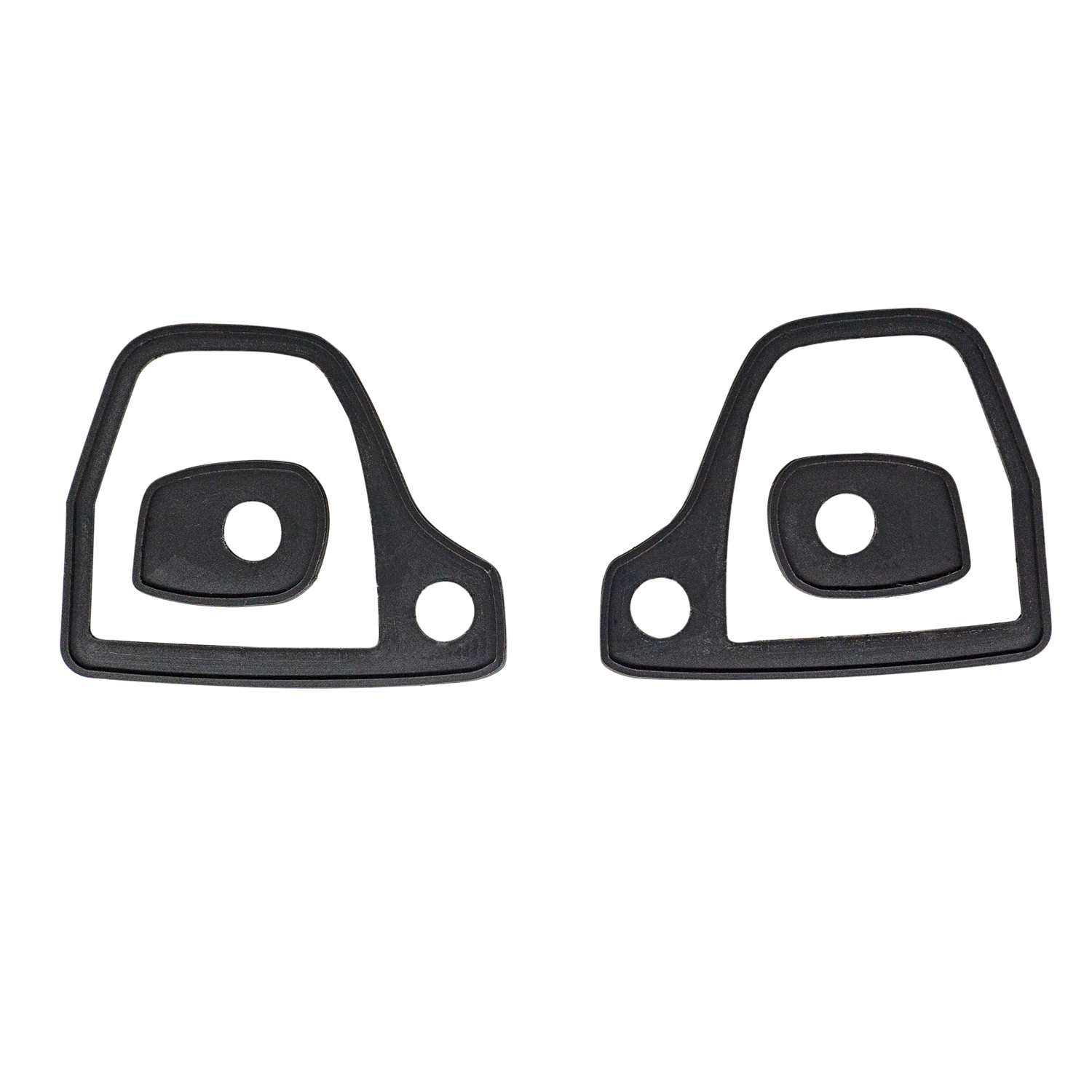 1979 Chevrolet C10 Door Handle Gasket Set Fits 73-87 Chevy and GMC Trucks OEM-Style Molded Lip-MP 806Each component is built by factory measurements and specifications for a direct-fit replacement and simple installation, focusing on restored authenticity. The top-tier USA Made construction and materials ensure durability and longevity for a long-lived replacement that will far outlast your factory stock models.
 1979 Chevrolet C10 Radiator support cushion-RA 4Radiator support cushion. Fits '68-'91 Chevrolet cars and trucks with Big Block engines. (See associated vehicles.) Reproduction rubber insulator cushion with 3.08 in. recess fits upper and lower mounts. Replaces OEM# 6264100. Each.
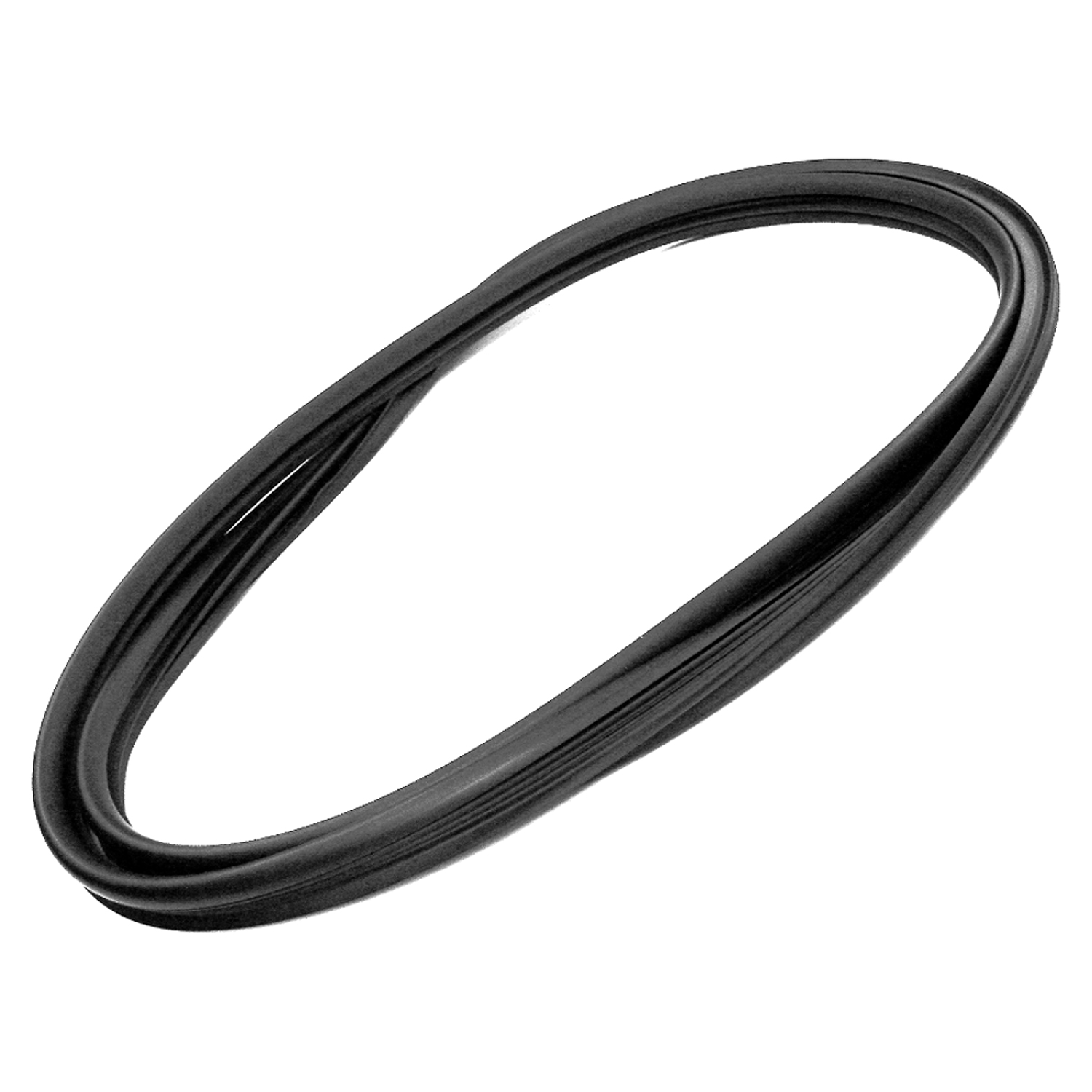 1979 Chevrolet C10 Windshield Seal, 73-87 GM Full Size Truck, 73-91 GM SUV, Without Trim Groove-VWS 7313-DThis windshield seal goes on the body first then the glass is placed in the opening. Tucking in the self locking strip secures the glass in place. It is a standard black gasket without trim groove. This product is made from the original specs and with high quality ozone resistant materials for a great fit and long life. This item is designed to be installed during glass replacement.
 1979 Chevrolet C10 Rear Window Seal, 73-87 GM Full Size Truck, With Trim Groove-VWS 7313-YThis rear window seal goes first on the body then the glass is placed in the opening. Tucking in the self locking strip secures the glass in place. This product is made from the original specs and with high quality ozone resistant materials for a great fit and long life. This item is designed to be installed during glass replacement. Note. This weatherstrip does not work with original sliders.
 1979 Chevrolet C10 Complete Glass Run Window Channel. 2-Piece Set-WC 59Complete Glass Run Window Channel. 2-Piece Set
 1979 Chevrolet C10 Window Channel and Sweeper Kit, for Front Doors-WC 5900-15Window Channel and Sweeper Kit, for Front Doors. 6-Piece Kit
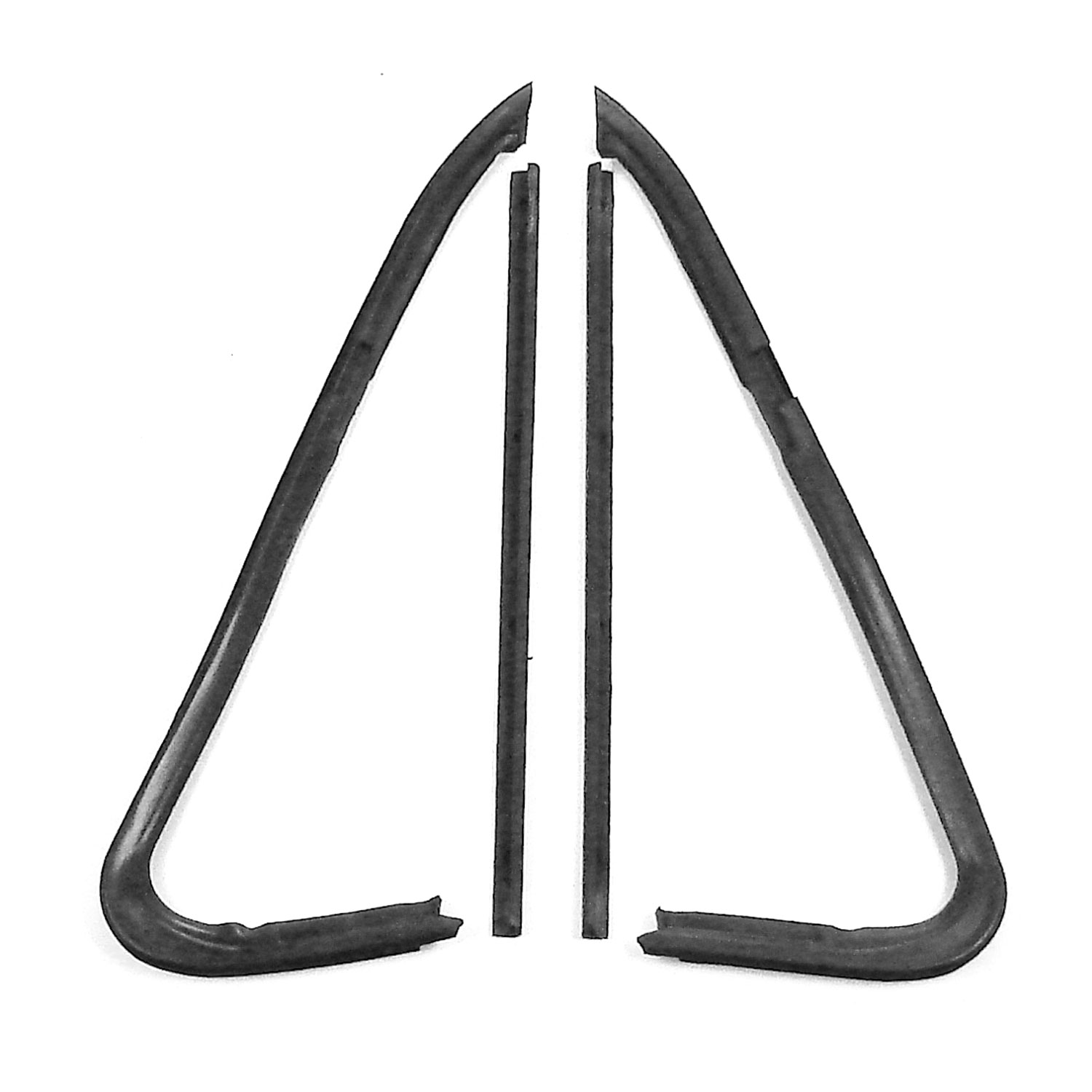 1979 Chevrolet C10 Vent Window Seal,73-80 GM Truck and SUV, Set of Four-WR 2005-BThis 4 piece set replaces both the main driver and passenger door vent window seals and the rear division channel seals as well. Made from high quality ozone resistant EPDM rubber from the original specs for a great fit and long life.
Why Choose Metro?
For over 100 years, Metro Moulded Parts has been the pinnacle of quality in classic car restoration parts. Our commitment to precision and authenticity in every component ensures a perfect fit and an OEM-level appearance.
- Expert Craftsmanship & Quality: Each part is a testament to our dedication to reliability and perfection, crafted from original designs and thoroughly tested.
- Advanced Technology: We use cutting-edge techniques to create flawless, long-lasting parts that surpass others in performance.
- SuperSoft Sponge – The Ultimate Door Seal: Not only are our door seals 30% softer than competitors', but they're also guaranteed to never leak. They effectively reduce wind and road noise, enhancing your classic car's comfort and driving experience.
- Proudly American: Our parts are a product of American craftsmanship, made in the USA with a spirit of excellence and heritage.
- Unrivaled Warranty: We back our products with a 30-year industry-leading warranty, a testament to our confidence in their quality.
Join us in preserving the legacy of classic cars with parts that are crafted for perfection, not just made.