
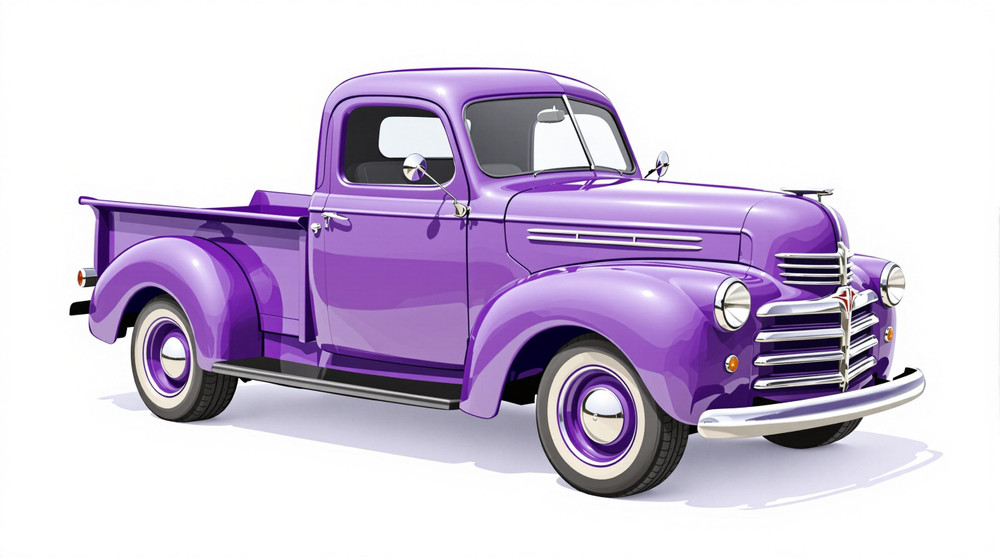
Image of 1946 Dodge Truck, Note: These illustrations use artistic license and may differ from actual historical models.
Performance Metrics
Fundamental Metrics
Emotional Appeal
MMP Rating
| Engine Specifications | |
|---|---|
| Engine: | Inline 6 |
| Displacement: | 230 cubic inches |
| Horsepower: | Estimated 95-105 HP |
| Torque: | 180 lb-ft |
| Compression Ratio: | Estimated 6.7:1 |
| Ignition System: | Distributor and coil |
| Cooling System: | Liquid-cooled |
| Performance Specifications | |
| 0-60 Time: | Not available due to the age and type of vehicle |
| 1/4 Mile Time: | Not available due to the age and type of vehicle |
| Top Speed: | 55-60 mph |
| Transmission and Drive | |
| Drive Type: | Rear-wheel drive |
| Transmission Type: | 3-speed manual |
| Fuel and Efficiency | |
| Fuel System Type: | Carburetor |
| MPG: | Estimated 10-15 mpg |
| Dimensions and Brakes | |
| Brakes: | Drum brakes |
| Wheelbase: | 125 inches |
| Weight: | Estimated 3,500 lbs |
Note: Specifications for classic cars are given to the best of our ability, considering the limited and variant data available.
1946 Dodge Truck: A Workhorse Back on the Road
When American factories returned to civilian production after World War II, Dodge put a familiar sight back to work: the sturdy, no-nonsense truck. The 1946 Dodge truck was part of the brand’s “Job-Rated” range, a broad family of commercial vehicles built by the Dodge division of Chrysler Corporation. These trucks served farms, shops, construction crews, delivery businesses, and local governments at a time when the country was rebuilding and expanding.
There was no single 1946 Dodge truck configuration. Buyers could choose from different chassis, payload ratings, and commercial bodies, while the best-known versions included conventional pickups and, from 1946, the civilian Dodge Power Wagon. That distinction matters: a two-wheel-drive pickup and a four-wheel-drive Power Wagon shared Dodge roots, but they were designed for different kinds of work.
The year carries an intriguing milestone. Dodge introduced the civilian Power Wagon in 1946, drawing on the practical lessons of its military 4x4 trucks. It brought serious off-road capability to civilian customers years before four-wheel-drive pickups became commonplace.
Job-Rated Styling and Cab Details
The 1946 Dodge has the upright, purposeful look of a truck built for labor rather than decoration. Its rounded front fenders frame a tall, broad hood, while the prominent grille and separate headlamps give the nose a distinctly prewar shape. A high stance, narrow running boards, and practical steel body panels complete the profile. The design feels substantial without being oversized by modern standards.
Inside, the cab is straightforward and durable. Drivers sat on a wide bench seat, surrounded by painted metal surfaces, simple gauges, and large, easy-to-reach controls. Materials were selected for serviceability, not luxury: upholstery was commonly cloth or a durable commercial-grade covering, and the dashboard was functional rather than richly trimmed. The cabin’s open, upright layout gives the driver a commanding view, though sound insulation and comfort are modest compared with a modern truck.
These were working vehicles, so color depended on body style, customer, and paint availability. Dark green, blue, red, black, and other solid fleet or commercial colors are associated with period Dodge trucks, but there was no single universal palette across every model and body. Restorers often choose a period-appropriate shade based on the truck’s original paint traces or documentation. Bright red and deep green examples make especially memorable show trucks, while restrained dark colors suit a factory-style restoration.
Body choices ranged from pickups to chassis-cab trucks that could accept stake, utility, service, delivery, or specialty bodies. Panel and express-style commercial bodies were also available within the broader Dodge truck range. The pickup is the most recognizable today, while the Power Wagon is the most iconic off-road variant. Exact offerings depended on model, wheelbase, and conversion or body supplier.
Postwar Engineering and Lasting Influence
Dodge’s Job-Rated approach was about matching a truck to its intended task. Rather than treating every commercial vehicle as a basic pickup, the company offered a range of chassis and payload configurations for different trades. That practical thinking helped make the Dodge truck a flexible platform for businesses and municipalities.
The 1946 Power Wagon made an especially lasting contribution. Its four-wheel-drive layout, transfer case, rugged axles, and available front winch gave civilian buyers a truck capable of reaching remote work sites and handling rough terrain. Its military ancestry was visible in its engineering, but the Power Wagon was adapted for civilian use. It became a benchmark for durable off-road utility trucks and remained in production, with updates, for decades.
Compared with many contemporary light trucks, the Dodge stood out for its work-focused range and the unusual availability of a purpose-built civilian 4x4. Its influence is less about introducing polished comfort features and more about proving that a truck could be designed as a complete working tool, tailored to a job and built for long service.
Engine, Speed, and Road Manners
Most conventional 1946 Dodge trucks used a naturally aspirated, inline flathead six-cylinder engine paired with a manual transmission. Engine displacement and output varied by model and application; common truck sixes were in the roughly 200- to 230-cubic-inch range, with power generally around 70 to 100 horsepower. The Power Wagon used a 230-cubic-inch flathead six, commonly rated at about 94 horsepower. Specifications could vary with configuration and market.
These trucks were geared for pulling and carrying, not quick acceleration. Dodge did not promote a modern-style 0-to-60 mph time, and period performance depended heavily on axle ratio, load, tires, and road conditions. As a reasonable real-world estimate, a typical truck might take roughly 30 to 45 seconds to reach 60 mph, if it could reach that speed comfortably at all. A light, well-maintained two-wheel-drive model may cruise around 50 to 60 mph; the heavier, lower-geared Power Wagon is happier at more modest speeds. Treat these as estimates, not factory test figures.
On a bumpy road, the truck’s sturdy suspension and load-oriented setup feel firm, especially when it is unloaded. Add cargo and the ride generally settles down. Steering is heavy by modern standards, and the tall body can lean through corners. On winding roads, drivers need to plan ahead, keep speeds conservative, and account for the truck’s long stopping distances. In a Power Wagon, low gearing and four-wheel drive help on mud, snow, and uneven ground, but they do not make an old truck immune to poor traction or limited braking performance.
The driving experience is part of the appeal. The flathead six produces a steady mechanical growl, accompanied by the whine of the gearbox, tire noise, and the occasional rattle of an aging cab. The driver shifts deliberately, steers with a firm hand, and feels closely connected to the machinery. It is engaging, but it is not effortless: this is a vintage work truck, not a modern pickup with power steering, ABS, and a quiet automatic transmission.
Owning and Maintaining a 1946 Dodge
Today, most 1946 Dodge trucks are used as weekend drivers, farm or property vehicles, parade entries, and show trucks. Some are restored to original working-truck condition; others receive tasteful upgrades such as improved brakes, modern tires, or carefully chosen electrical updates. The Power Wagon is particularly prized by collectors who want a truck that can still tackle trails or rugged property roads.
Basic mechanical work is relatively accessible for a skilled home mechanic. The flathead engine and straightforward chassis do not depend on electronic control systems, and many repairs can be handled with ordinary shop tools. However, age brings its own challenges. Brake hydraulics, wiring, cooling systems, fuel lines, steering components, and decades-old repairs all deserve close inspection. Parts support is generally good for popular mechanical components, but body panels, trim, correct gauges, and model-specific pieces can take more searching.
Reliability depends more on condition and maintenance than on the badge. A well-restored truck can be dependable for local use, but it should not be expected to match the pace or safety of a modern daily driver. Before buying, check the frame for corrosion or poorly executed repairs, inspect the cab and bed for rust, and confirm that the engine, transmission, brakes, and electrical system have been properly sorted.
1946 Dodge Truck Trivia
The Power Wagon’s story begins with wartime 4x4 engineering. Dodge adapted the experience gained building military trucks into a civilian vehicle that could serve farmers, utility companies, forestry crews, and remote communities. Its reputation came from practical capability rather than speed or luxury.
There is no widely recognized speed or sales record associated with the 1946 Dodge truck. Its achievement was more everyday: it helped businesses and communities get work done during the postwar return to civilian life. Dodge’s truck range also supported a wide variety of specialist bodies, meaning many examples left the factory as a chassis ready for a local or commercial bodybuilder to complete.
Common criticisms are familiar to anyone who has driven a prewar-style truck: slow acceleration, heavy steering, modest brakes, limited cabin comfort, and a firm ride when empty. These are not defects so much as reminders of the truck’s age and mission. Its strengths were durability, useful configurations, and, in the Power Wagon, remarkable traction for its era.
Collector Values and Availability
There is no single authoritative production total for every version of the 1946 Dodge truck. Dodge built trucks in several series and configurations, and surviving records do not always make it easy to separate a single model year from the wider range. As a broad estimate rather than a verified factory figure, total 1946 Dodge truck production across the various types may have been in the tens of thousands, perhaps roughly 50,000 to 80,000. That estimate should not be read as the production count for any one body style or the Power Wagon alone.
Conventional pickups appear periodically on the classic-truck market, but condition and originality vary widely. A rough project may sell for roughly $5,000 to $15,000, while a running driver or solid older restoration may fall around $15,000 to $35,000. A high-quality, correctly restored example can reach approximately $35,000 to $55,000 or more. Early Power Wagons often command a premium, with values commonly ranging from about $30,000 to $80,000 depending on originality, restoration quality, and specification. Exceptional examples can exceed that range.
These are broad U.S. market estimates, not guaranteed sale prices. Local demand, documented history, mechanical condition, and the quality of the restoration matter greatly. Over the long term, well-presented vintage pickups and early Power Wagons have generally gained collector interest, though prices can rise or soften with the wider classic-vehicle market. The strongest values tend to go to sound, complete trucks with correct details rather than expensive but poorly documented restorations.
Why the 1946 Dodge Truck Still Matters
The 1946 Dodge truck captures a pivotal moment: American industry returning to civilian life, businesses expanding, and practical vehicles becoming essential to the country’s next chapter. Its upright styling, simple cab, and work-ready engineering tell that story honestly. The civilian Power Wagon adds a landmark chapter of its own, bringing serious four-wheel-drive capability to a new customer base.
It is not fast, plush, or especially forgiving by modern standards. What it offers instead is mechanical character, honest utility, and a direct link to the postwar era. For collectors and enthusiasts, the 1946 Dodge is more than an old pickup. It is a durable piece of working history, built to earn its place on the road.
1946 Dodge Truck Catalog of Parts
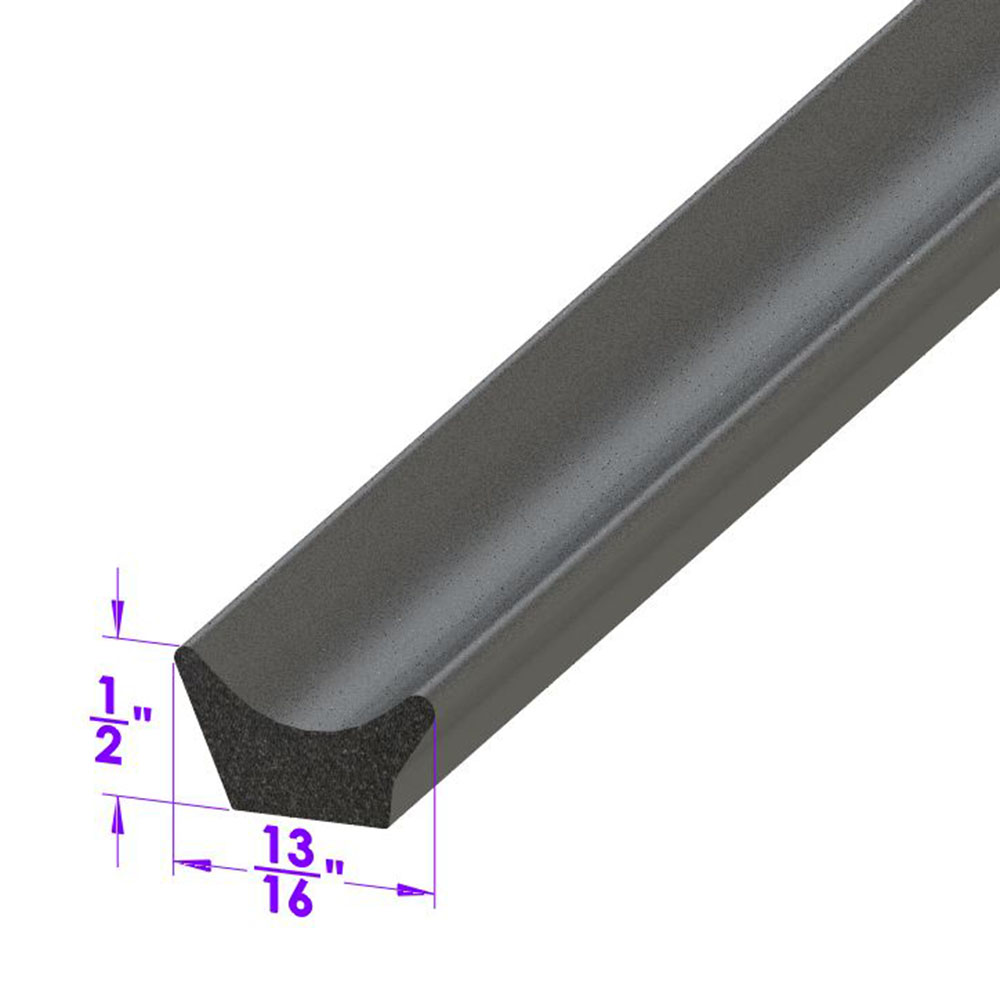 1946 Dodge TRUCK Door side seal. Same as LP 40, but for a lighter seal-LP 40-ADoor side seal. Same as LP 40, but for a lighter seal. Fits many domestic passenger cars and trucks. Universal seal for street rods and customs. Used in Cobra kit cars as door weatherstrip. Per foot.
 1946 Dodge TRUCK Headlight Pads, for 1/2 Ton Pick-Up-MP 649-FHeadlight Pads, for 1/2 Ton Pick-Up. 3-1/4" wide X 5-1/4" long. Pair R&L
 1946 Dodge TRUCK Vent Window Seals. Pair R&L-WR 2701Vent Window Seals. Pair R&L
Why Choose Metro?
For over 100 years, Metro Moulded Parts has been the pinnacle of quality in classic car restoration parts. Our commitment to precision and authenticity in every component ensures a perfect fit and an OEM-level appearance.
- Expert Craftsmanship & Quality: Each part is a testament to our dedication to reliability and perfection, crafted from original designs and thoroughly tested.
- Advanced Technology: We use cutting-edge techniques to create flawless, long-lasting parts that surpass others in performance.
- SuperSoft Sponge – The Ultimate Door Seal: Not only are our door seals 30% softer than competitors', but they're also guaranteed to never leak. They effectively reduce wind and road noise, enhancing your classic car's comfort and driving experience.
- Proudly American: Our parts are a product of American craftsmanship, made in the USA with a spirit of excellence and heritage.
- Unrivaled Warranty: We back our products with a 30-year industry-leading warranty, a testament to our confidence in their quality.
Join us in preserving the legacy of classic cars with parts that are crafted for perfection, not just made.