
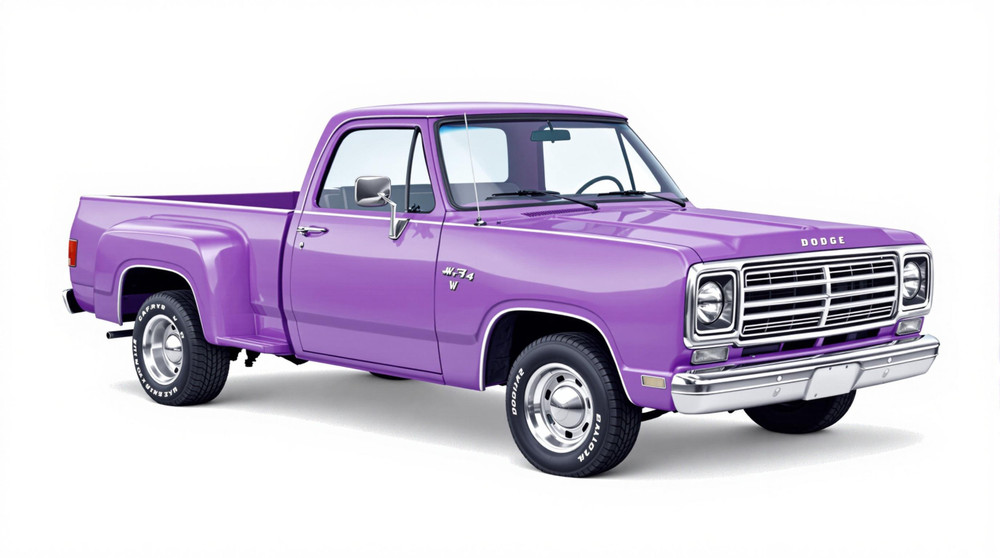
Image of 1974 Dodge W100 Pickup, Note: These illustrations use artistic license and may differ from actual historical models.
Performance Metrics
Fundamental Metrics
Emotional Appeal
MMP Rating
| Engine Specifications | |
|---|---|
| Engine Options: | 318 cu in (5.2 L) V8, 360 cu in (5.9 L) V8, 400 cu in (6.6 L) V8, 440 cu in (7.2 L) V8 |
| Displacement Range: | 318-440 cu in (5.2-7.2 L) |
| Horsepower Range: | 150-280 hp |
| Torque: | 230-390 lb-ft |
| Compression Ratio: | 8.5:1 - 10.3:1 |
| Ignition System: | Electronic Ignition |
| Cooling System: | Liquid-cooled |
| Performance Specifications | |
| 0-60 Time: | Estimated 10-15 seconds |
| 1/4 Mile Time: | Estimated 17-20 seconds |
| Top Speed: | 100 mph |
| Transmission and Drive | |
| Drive Type: | Rear-wheel drive (RWD) or Four-wheel drive (4WD) |
| Transmission Type: | 3-speed automatic, 4-speed manual |
| Fuel and Efficiency | |
| Fuel System Type: | Carburetor |
| MPG: | 10-15 mpg |
| Dimensions and Brakes | |
| Brakes: | Front disc, rear drum |
| Wheelbase: | 131 inches |
| Weight: | 4,500 lbs |
Note: Specifications for classic cars are given to the best of our ability, considering the limited and variant data available.
1974 Dodge W100 Pickup: A Classic 4x4 Workhorse
The 1974 Dodge W100 is the kind of classic pickup that looks ready to leave the pavement before the engine has even started. A four-wheel-drive member of Dodge’s D-series truck family, it combined straightforward work-truck construction with the stance and capability that made early 4x4 pickups appealing to farmers, tradespeople, and outdoor adventurers.
Dodge, part of the Chrysler Corporation, had been building trucks for decades by the time the W100 arrived. The 1974 model belonged to the third-generation D-series, introduced for 1972 with a more modern cab and updated exterior styling. Its timing placed it in an important period for American pickups: trucks were still primarily tools, but buyers were increasingly looking for comfort and versatility as well as hauling ability.
One especially interesting feature of this era’s Dodge 4x4s was the availability of a full-time four-wheel-drive system. Depending on equipment, a W100 could use a New Process 203 transfer case, allowing it to drive all four wheels on ordinary roads without the driver first stopping to engage the system. That made the W100 an early example of a pickup designed to blend everyday usability with four-wheel-drive traction.
Square Shoulders and Practical Styling
The W100 wears the clean, squared-off look that defines many early-1970s pickups. Its broad hood, upright grille, simple rectangular lighting, and nearly flat body sides give it a purposeful profile. The front fenders sit high over the tires, while the raised ride height and rugged 4x4 hardware make the W100 look more substantial than a comparable two-wheel-drive D100.
Dodge offered the D-series in more than one bed style. The Sweptline, or fleetside, used straight, full-width bed sides for a broad, conventional pickup shape. The Utiline step-side had separate rear fenders and a narrower cargo box, with steps ahead of the rear wheels for easier access. The Sweptline is often the most familiar look today, while the Utiline has a distinctive vintage character that appeals to collectors.
Cab and equipment choices varied. Buyers could find a regular cab or, where offered, the roomier Club Cab with additional space behind the front seats. Bed length, trim, drivetrain, and accessories also affected the truck’s appearance. Factory paint choices changed by year and equipment level, but buyers could choose from a broad palette that included shades of white, red, blue, green, yellow, and earthy tones. White and subdued work-truck colors suit the W100’s utilitarian image, while brighter colors make restored examples stand out at shows.
A Work Truck with Useful Technology
The W100’s cabin was designed around function rather than luxury. The dashboard used clear, straightforward instruments, and the large steering wheel and simple controls were easy to operate with work gloves. Depending on trim, the interior could range from basic vinyl upholstery to more comfortable cloth or upgraded trim. Materials were durable and serviceable, though not comparable to the plush interiors found in contemporary passenger cars.
Available conveniences could include an automatic transmission, power steering, power brakes, air conditioning, upgraded seating, and a radio. These were meaningful options in a period when many pickups still came with manual steering, manual windows, and a basic bench seat. The W100 was not packed with electronics, but that simplicity is part of its appeal: there are few systems to mystify an owner or complicate a repair.
Four-wheel-drive equipment was the truck’s defining technology. Depending on configuration, the transfer case could provide selectable four-wheel drive or full-time four-wheel drive. The full-time arrangement was particularly notable because it offered traction on changing surfaces without requiring the driver to get out and lock manual hubs. It was a useful idea for snow, rain, gravel, and mixed road conditions, even if it added mechanical complexity compared with a basic two-wheel-drive pickup.
Why the W100 Matters
The 1974 W100 did not introduce the pickup truck or invent four-wheel drive. Its importance lies in how it brought those ideas together in a practical, familiar package. Dodge offered buyers a 4x4 that could work during the week, handle rough access roads, and serve as general transportation without demanding the specialized treatment of a dedicated off-road vehicle.
Its square styling also helped establish a visual language that remains popular among classic-truck enthusiasts. The broad grille, upright cab, and clear separation between body and chassis make the W100 instantly recognizable. It stands apart from some contemporaries through its combination of Dodge design, available V8 power, and distinctive four-wheel-drive options. The model did not create today’s lifestyle pickup, but it belongs to the generation that helped make a capable 4x4 pickup attractive beyond strictly commercial use.
Engine, Speed, and Road Manners
Engine availability depended on the truck’s original specification and market, but the W100 could be ordered with Dodge’s 225-cubic-inch Slant Six and V8 options such as the 318. Larger V8 availability varied by configuration. The Slant Six was valued for its straightforward design and serviceability, while the V8s delivered stronger acceleration and more useful power for towing or carrying heavy loads.
There is no single reliable factory top-speed or 0-to-60-mph figure for every 1974 W100. Engine, axle gearing, transmission, tires, vehicle condition, and load all make a considerable difference. As a practical estimate, a healthy V8 truck might take roughly 12 to 17 seconds to reach 60 mph, while a six-cylinder example could be slower. A plausible top-speed range is about 85 to 100 mph, though these trucks are far more comfortable at ordinary highway speeds than at their maximum. Treat these figures as estimates, not standardized test results.
On the road, the W100 feels solid and mechanical. The engine’s low, unfiltered note comes through the cab, particularly under acceleration, while wind and tire noise remind the driver that this is an old-fashioned pickup rather than a modern SUV. The ride is firm, and an unloaded rear end can skip or hop over sharp bumps. Add cargo, and the suspension settles into a more composed rhythm.
On winding roads, the W100 rewards smooth inputs. Its tall stance, truck tires, and period suspension produce more body lean than a modern crossover, so it is best driven at a measured pace. On gravel or snow, four-wheel drive can make a real difference, but it does not eliminate the need for sensible speed and good tires. Steering feel varies with equipment and condition, and power steering makes low-speed maneuvering noticeably easier.
Living with a 1974 Dodge W100
Today, owners use W100s as weekend drivers, farm and property trucks, restoration projects, show vehicles, and occasional light-duty haulers. Some are carefully preserved survivors; others have been modified with modern tires, updated brakes, rebuilt engines, or more comfortable interiors. It is not a sensible choice for everyone’s daily commute, but a well-maintained example can handle regular local driving.
Maintenance is generally approachable for an owner with basic mechanical skills. The truck’s carbureted engine, conventional chassis, and accessible components are familiar territory for many independent mechanics. Routine service includes attention to ignition and fuel systems, cooling, brakes, steering, and the four-wheel-drive components. Parts availability is reasonable for common service items, although correct trim, body pieces, and some model-specific components can take more searching.
Rust is a major inspection point. Check the cab corners, floors, rocker panels, wheel openings, bed, and frame, along with the areas around body mounts. On a 4x4, inspect the transfer case, front axle, driveshafts, and steering components for leaks, wear, and signs of hard use. A low purchase price can quickly lose its appeal if the truck needs extensive bodywork or a complete drivetrain rebuild.
W100 Trivia and Common Criticisms
The W100 designation identifies Dodge’s half-ton four-wheel-drive pickup. It is easy to confuse it with the D100, which is the related two-wheel-drive model, or with heavier W-series trucks. That small letter matters when searching for parts, evaluating originality, or comparing a truck’s equipment with period literature.
The 1974 model year also fell during the energy crisis that followed the 1973 oil embargo. Fuel economy suddenly became a more prominent concern for American drivers, making a heavy, four-wheel-drive pickup with a V8 a harder sell as an economical commuter. That context helps explain why the W100 is best appreciated for capability and character rather than low running costs.
There is no widely recognized speed, sales, or endurance record associated specifically with the 1974 W100, and it is not generally known for a famous celebrity owner or a single landmark event. Its appeal is more grounded: it was a working Dodge 4x4 built in an era when trucks were becoming more versatile without losing their practical roots.
Common criticisms include modest fuel economy, a firm ride, dated braking and steering feel, and cabin noise by modern standards. Buyers should also be wary of poorly executed restorations and modifications that hide rust or worn four-wheel-drive parts. Those drawbacks are part of the ownership equation, not reasons to dismiss a sound example.
Collector Value and Availability
Dodge did not publish an easily verifiable production total specifically for 1974 W100 pickups, separate from the broader D-series figures. A reasonable working estimate is roughly 15,000 to 30,000 W100s for the model year, but that should be treated as an informed ballpark rather than an official count. Surviving trucks are fewer, and original, rust-free examples with documented history are harder to find than modified or project vehicles.
As a broad U.S. market guide, a project W100 may sell for about $4,000 to $10,000. A usable driver in solid condition can fall around $10,000 to $22,000, while a high-quality restoration or unusually clean original truck may bring approximately $25,000 to $40,000 or more. Values depend heavily on rust, originality, engine and transmission combination, body style, four-wheel-drive condition, and documentation. Exceptional trucks can exceed these ranges, while major structural problems can put an example below them.
Interest in square-body-era pickups has generally strengthened, and the W100 benefits from the growing popularity of vintage 4x4s. Prices have tended to rise for clean, authentic examples, while project trucks remain sensitive to restoration costs. The strongest long-term prospects belong to trucks with solid bodies, correct equipment, and a well-documented history rather than heavily modified examples with uncertain workmanship.
The Lasting Appeal of the 1974 W100
The 1974 Dodge W100 combines recognizable early-1970s styling, practical construction, and genuine four-wheel-drive capability. It is not quick, quiet, or especially economical, but it offers a direct connection to a time when a pickup’s appeal came from its usefulness and mechanical character.
For enthusiasts, the W100 is more than an old Dodge with a transfer case. It is a sturdy piece of truck history, built to work and increasingly appreciated for the very qualities that once made it ordinary. Find a solid one, keep its mechanicals healthy, and this classic 4x4 can still make every gravel road feel like an invitation.
1974 Dodge W100 Pickup Catalog of Parts
 1974 Dodge W100 Pickup Door Seal (Imported). Replaces OEM #55023781-IS-LM 123Door Seal (Imported). Replaces OEM #55023781. Fits either side. 160" Long. Each
 1974 Dodge W100 Pickup Door seal. Full-size trucks. Fits cab doors either side-LM 123Door seal. Full-size trucks. Fits cab doors either side. 160 in. L. Replaces OEM# 55023781. Each.
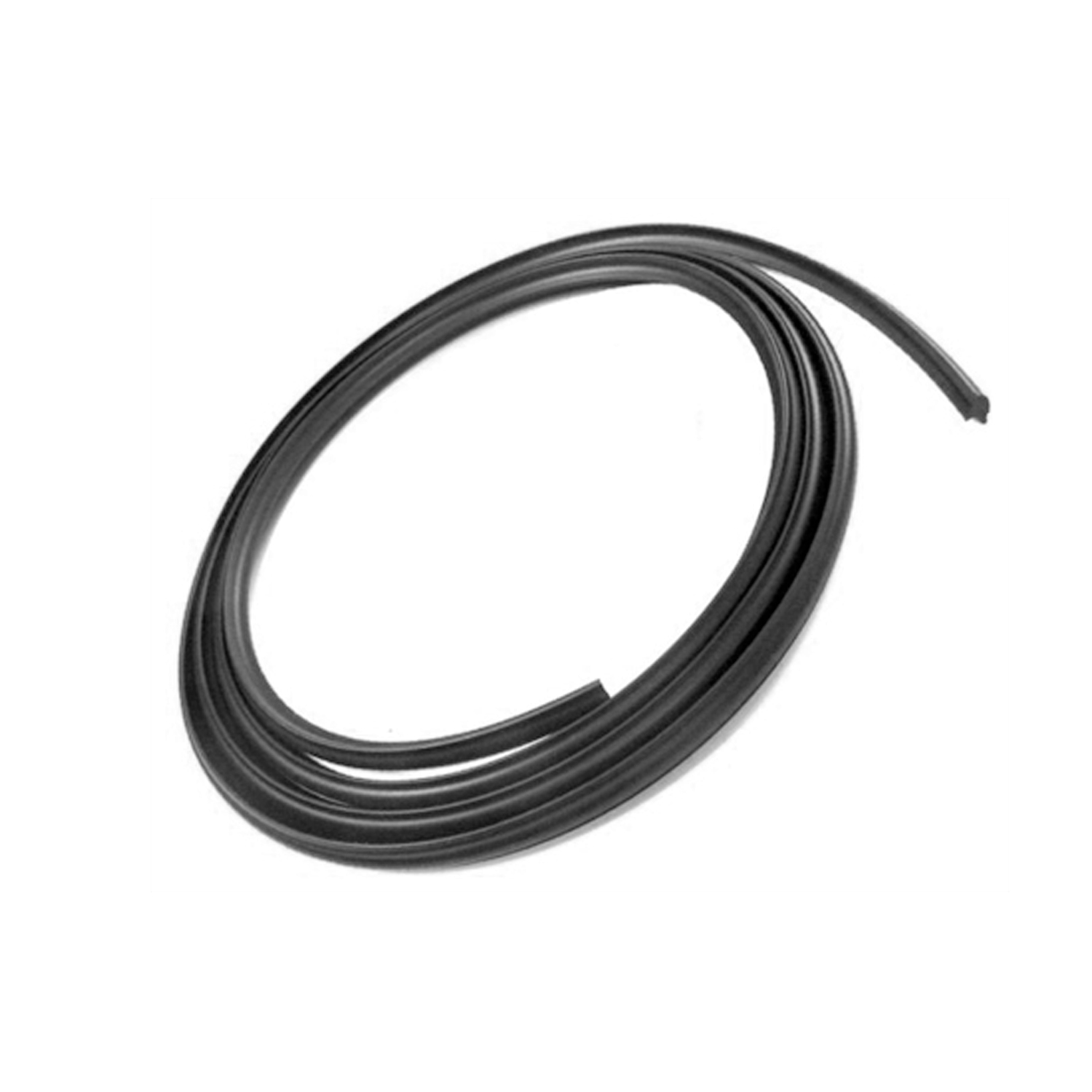 1974 Dodge W100 Pickup Lockstrip Seal, 54-93 Mopar Full Size Truck, Van & SUV, Chromed Plastic Type-LS 2-VLockstrip Seal, 54-93 Mopar Full Size Truck, Van & SUV, Chromed Plastic Type, Each. Works with Metro p/n VWS 2706.
 1974 Dodge W100 Pickup Chrome Windshield Lockstrip-LS 3-CThis chrome lockstrip insert's into the weatherstrip to lock in the glass. Includes center cover clip. It's sold as a single piece to do one application.
 1974 Dodge W100 Pickup Windshield Seal, 72-93 Dodge Full Size Truck, 74-93 Mopar SUV, With Trim Groove-VWS 2720-BThis seal installs first on the body then the glass is placed in the opening. A separate lockstrip (Not Included) inserts into the rubber and secures the glass in place. The part numbers for Lockstrip are Chrome LS 3-C and Black LS 2-A. This product is made from the original specs and with high quality ozone resistant EPDM rubber for a great fit and long life. This item is designed to be installed during glass replacement.
 1974 Dodge W100 Pickup Vent Window Seals, 72-77 Dodge D-Series Truck, Ramcharger / Trailduster, Pair-WR 2702-MVent Window Seals, 72-77 Dodge D-Series Truck, Ramcharger / Trailduster, Pair. R&L.
Why Choose Metro?
For over 100 years, Metro Moulded Parts has been the pinnacle of quality in classic car restoration parts. Our commitment to precision and authenticity in every component ensures a perfect fit and an OEM-level appearance.
- Expert Craftsmanship & Quality: Each part is a testament to our dedication to reliability and perfection, crafted from original designs and thoroughly tested.
- Advanced Technology: We use cutting-edge techniques to create flawless, long-lasting parts that surpass others in performance.
- SuperSoft Sponge – The Ultimate Door Seal: Not only are our door seals 30% softer than competitors', but they're also guaranteed to never leak. They effectively reduce wind and road noise, enhancing your classic car's comfort and driving experience.
- Proudly American: Our parts are a product of American craftsmanship, made in the USA with a spirit of excellence and heritage.
- Unrivaled Warranty: We back our products with a 30-year industry-leading warranty, a testament to our confidence in their quality.
Join us in preserving the legacy of classic cars with parts that are crafted for perfection, not just made.