
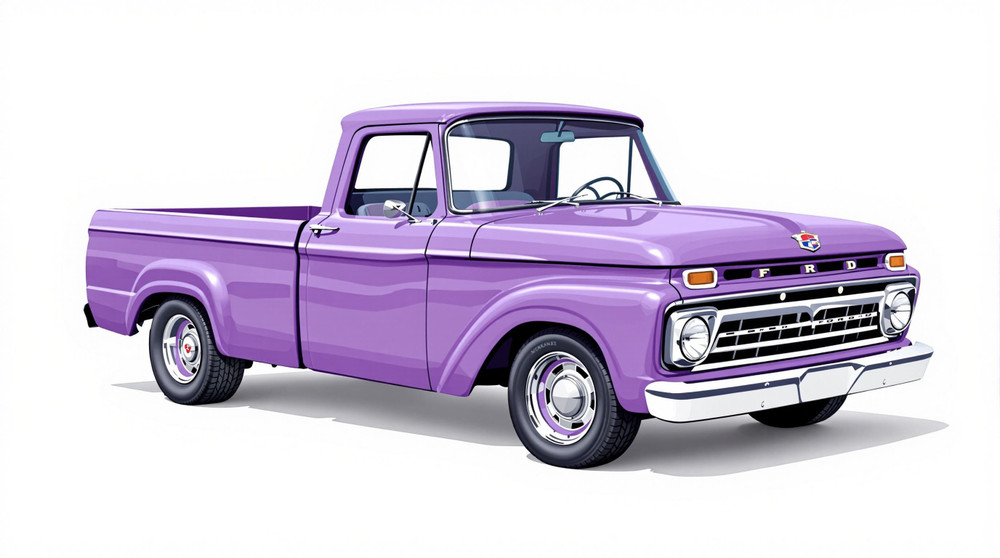
Image of 1964 Ford F-100, Note: These illustrations use artistic license and may differ from actual historical models.
Performance Metrics
Fundamental Metrics
Emotional Appeal
MMP Rating
| Engine Specifications | |
|---|---|
| Engine Options: | 223 CID I6, 292 CID V8 |
| Displacement Range: | 223-292 cubic inches |
| Horsepower Range: | 138-186 hp |
| Torque: | 212-292 lb-ft |
| Compression Ratio: | 8.0:1 - 8.4:1 |
| Ignition System: | Conventional, distributor |
| Cooling System: | Liquid-cooled |
| Performance Specifications | |
| 0-60 Time: | Estimated 10-12 seconds |
| 1/4 Mile Time: | Estimated 17-19 seconds |
| Top Speed: | 90-100 mph |
| Transmission and Drive | |
| Drive Type: | Rear-wheel drive |
| Transmission Type: | 3-speed manual, 4-speed manual |
| Fuel and Efficiency | |
| Fuel System Type: | Carburetor |
| MPG: | Estimated 10-15 mpg |
| Dimensions and Brakes | |
| Brakes: | Drum brakes |
| Wheelbase: | 114.0 inches |
| Weight: | 3,200-3,600 lbs |
Note: Specifications for classic cars are given to the best of our ability, considering the limited and variant data available.
1964 Ford F-100: A Classic Pickup at a Turning Point
The 1964 Ford F-100 is a working truck with a story built into its sheet metal. It belongs to Ford’s fourth-generation F-Series, introduced for 1961, and sits at a turning point between two notable chapters in pickup design: the short-lived unibody experiment and the arrival of Ford’s Twin I-Beam front suspension. Built by the Ford Motor Company, the F-100 was the half-ton member of a lineup aimed at farmers, tradespeople, businesses, and drivers who wanted a truck that could earn its keep without feeling overly complicated.
One detail makes the 1964 model especially interesting: Ford brought back a separate cab and cargo box on its Styleside pickups after experimenting with a cab and bed built as one unit. The change reflected a practical lesson from the field. A pickup bed that flexed with heavy loads could strain the body, so the familiar, separate cab-and-bed arrangement returned. That makes the ’64 more than just another year in the F-Series timeline. It is a transitional truck shaped by real-world feedback.
1964 F-100 Styling and Body Choices
The F-100 wears its purpose plainly. Its upright cab, squared-off fenders, broad hood, and tall stance give it the confident proportions associated with early-1960s American pickups. At the front, round headlamps flank a broad, simple grille, while the straight body lines keep the design easy to repair and refresh. There is little decoration for decoration’s sake. The visual appeal comes from honest proportions, sturdy-looking details, and the unmistakable outline of a vintage Ford work truck.
Buyers could choose a Styleside pickup with smooth, full-width bed sides or a Flareside, Ford’s stepside-style body with exposed rear fenders and running boards alongside the box. The Flareside has become a favorite among enthusiasts for its classic profile, while the Styleside offers a wider, more modern-looking cargo area. Ford also offered different wheelbase and chassis configurations, along with two-wheel-drive and four-wheel-drive versions. Equipment and availability varied by configuration and market.
Factory paint choices varied, but period trucks could be found in shades including red, blue, green, cream, and white, with two-tone combinations available on some configurations. Today, red and white trucks are especially familiar at shows, while original or carefully documented factory colors can add appeal for restoration-minded buyers. The most sought-after look often pairs a clean, original-style color with a short bed and Flareside box, though a well-kept Styleside can be just as compelling.
A Simple, Work-Ready Cabin
The cabin is straightforward by design. A broad bench seat, large steering wheel, clear gauges, and uncomplicated controls put the essentials within easy reach. Surfaces are mostly painted metal and durable vinyl rather than the plush trim found in a passenger car. The materials were chosen to tolerate dust, work clothes, and regular use, and their simplicity is part of the truck’s appeal today.
Available equipment could include a heater, radio, and other convenience options, depending on how the truck was ordered. But even a well-equipped F-100 remains an analog experience: no modern infotainment, electronic driver aids, or sound insulation to isolate the driver from the road. That simplicity also makes the cabin approachable for restoration. Switches, gauges, and trim are generally easier to understand than the systems in a modern vehicle, although original parts and correct finishes can take time to source.
Engines, Technology, and the 1965 Divide
Common engine choices included Ford’s 223-cubic-inch inline-six and 292-cubic-inch Y-block V8, with larger V8 availability depending on configuration and order. A three-speed manual was a familiar choice, while other manual and automatic transmission options were available on some trucks. As with any classic pickup, the equipment on an individual example should be verified by its identification tags, paperwork, and surviving components rather than assumed from the model name alone.
By modern standards, the F-100’s technology is basic, but that was part of its strength. Its mechanical systems were designed to be serviced with ordinary tools, and the truck’s sturdy construction suited work far from a dealership. The 1964 model also marks the final year before Ford introduced Twin I-Beam front suspension on the F-100 for 1965. That later suspension became one of Ford’s signature truck features, but the ’64 retains the earlier front-end arrangement, giving it a distinctly different ride and mechanical character.
Why the 1964 F-100 Matters
The fourth-generation F-Series helped move the American pickup beyond a purely utilitarian image. It remained a working vehicle, but Ford’s more coordinated styling, broader range of configurations, and increasingly comfort-minded options made the F-100 useful to a wider audience. It could serve on a farm during the week and carry a family’s gear on the weekend, a dual-purpose role that became central to the pickup’s place in American life.
The 1964 model stands out because it captures an adjustment in Ford’s design thinking. The return to a separate cab and bed showed that practical durability could outweigh a clever manufacturing concept. Then, just one year later, Twin I-Beam suspension brought another major change to the F-100’s engineering. The result is a truck that sits between two significant developments, with enough traditional hardware to appeal to purists and enough period refinement to feel like a step forward from older work trucks.
Performance and Driving Feel
There is no single reliable performance figure for every 1964 F-100. Engine choice, transmission, rear-axle gearing, tire size, load, and mechanical condition all make a difference. As a broad estimate, a healthy V8 truck might reach 0 to 60 mph in roughly 15 to 20 seconds, while an inline-six version is generally slower. A plausible top-speed range for a stock truck is about 75 to 90 mph, though these pickups are most comfortable at moderate cruising speeds rather than sustained highway pace. These are estimates, not factory guarantees or modern instrumented test results.
Behind the wheel, the F-100 feels solid and mechanical. The steering is heavier and less precise than a modern pickup’s, particularly at low speeds, and the truck responds more slowly to quick inputs. On a bumpy road, its suspension delivers the firm, sometimes choppy ride expected from a vehicle designed to carry cargo. An unloaded truck can hop or bounce over rough pavement; adding a sensible load often settles it down. On winding roads, measured driving is the order of the day, with the tall body and period tires rewarding smooth steering and generous following distance.
The engine gives the experience its soundtrack. The six-cylinder has a steady, workmanlike note, while the V8 adds a deeper rumble under acceleration. You hear the drivetrain, feel the road through the steering wheel, and operate controls that ask for a deliberate hand and foot. That direct connection is a big part of the charm. The F-100 does not disguise its age, and for many owners, that is precisely the point.
Living With a 1964 Ford Pickup
Today, a 1964 F-100 might be a weekend cruiser, a show truck, a farm vehicle, or a vintage shop truck. Some owners restore them to factory-style condition; others build them as street trucks with updated brakes, suspension, steering, or powertrains. Originality matters to collectors, while practical upgrades can make a truck more comfortable and dependable in modern traffic. The right approach depends on whether the goal is historical preservation or regular use.
Routine maintenance is generally accessible for an owner with basic mechanical skills. The engine bay is not crowded by modern electronics, and common service work can often be done at home. Still, age brings familiar challenges: worn suspension and steering parts, leaking seals, tired brakes, rust in the cab or bed, and electrical connections that have deteriorated over decades. Before buying, inspect the frame, cab corners, floors, bed supports, and suspension mounting areas carefully. A truck that looks tidy after a fresh paint job may conceal expensive corrosion underneath.
Parts support remains good for many service and restoration items, but exact original trim, correct interior pieces, and model-specific components can be harder to find. A truck that runs and stops well is not automatically road-ready by modern standards. A thorough check of the brakes, tires, steering, lights, and cooling system is essential before regular driving.
F-100 Facts and Common Criticisms
The 1964 model is often discussed alongside Ford’s brief unibody pickup experiment. The earlier integrated Styleside design is a distinctive piece of F-Series history, but the return to separate cab and bed construction for 1964 is the detail that makes this year especially notable. Another useful point for shoppers is that the 1964 F-100 came before Twin I-Beam suspension, so it should not be confused with the revised 1965-and-later front end.
There is no widely recognized 1964 F-100 land-speed or endurance record that defines the model, and celebrity ownership is not a central part of its story. Its claim to fame is more grounded: it was a high-volume working pickup from a period when Ford was refining the formula that would help make the F-Series a lasting American institution. Ford did not publish an easily verified, commonly cited production total for every 1964 F-100 body and drivetrain combination, so an exact model-specific number is difficult to state confidently.
The truck’s most common criticisms are also easy to understand. It is slow by modern standards, can ride harshly when empty, and lacks contemporary safety features such as airbags and modern crash protection. Steering and braking require more attention than in a newer pickup. Those limitations do not make it a poor classic, but they do make condition, maintenance, and realistic expectations especially important.
1964 Ford F-100 Values and Collectibility
Values vary widely with rust, originality, body style, drivetrain, restoration quality, and location. As a broad current-market guide, a project truck may sell for around $5,000 to $12,000. A usable driver in decent condition often falls in the $12,000 to $25,000 range, while a clean, well-restored example can bring roughly $25,000 to $45,000 or more. Exceptional restorations, desirable configurations, or professionally built customs can exceed that range. These are estimates rather than guaranteed sale prices, and local market conditions matter.
The F-100 is not rare in the sense of being a limited-production collectible, but good, unmodified examples are becoming harder to find. As a rough estimate, total 1964 F-100 production may have been in the low hundreds of thousands, perhaps around 150,000 to 250,000 trucks across configurations. That is a broad estimate, not a verified factory total, and surviving numbers are considerably lower. Four-wheel-drive trucks, particularly original and well-documented examples, are less common than ordinary two-wheel-drive pickups.
Classic truck prices rose strongly during the broader vintage-pickup boom, and clean F-100s continue to attract buyers. The market has since become more selective: rust-free condition, quality workmanship, desirable configurations, and clear documentation matter more than simply having a shiny finish. Original trucks can be especially appealing to collectors, while tasteful customs have their own audience. A solid truck with a realistic price is generally a safer buy than an ambitious restoration project with hidden structural problems.
Why the 1964 F-100 Still Stands Out
The 1964 Ford F-100 combines honest styling, simple mechanicals, and an important place in Ford truck history. It marks the return to separate cab and bed construction after the unibody experiment, and it is the final model year before Twin I-Beam suspension changed the F-100’s front-end design. Its work-first cabin and unhurried performance are reminders of how different a pickup felt before comfort and speed became central selling points.
For collectors, the appeal is not just nostalgia. The ’64 is a tangible snapshot of a hardworking era and a pivotal moment in the evolution of the Ford pickup. Find a sound example, respect its limits, and the F-100 rewards you with character that no modern truck can reproduce.
1964 Ford F-100 Catalog of Parts
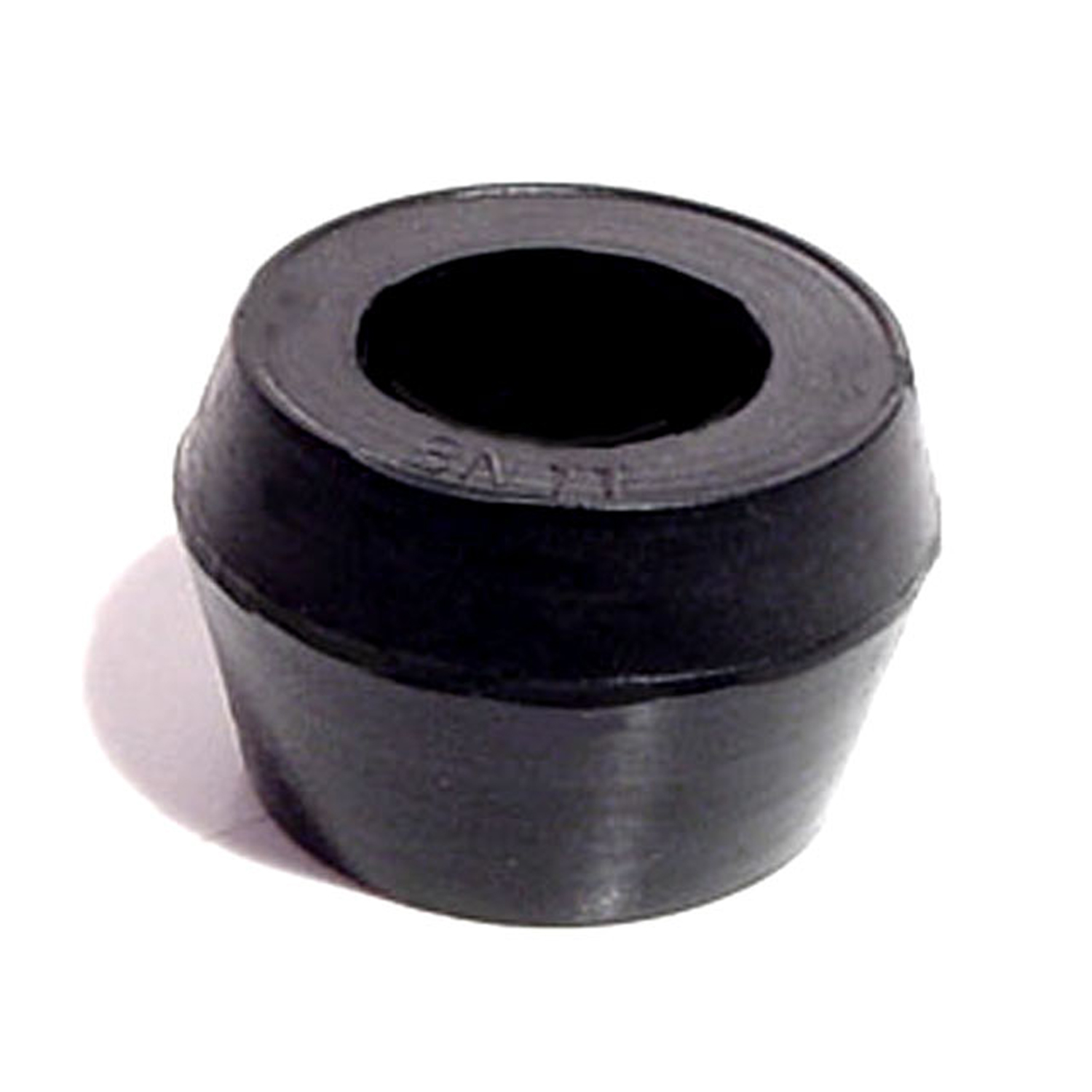 1964 Ford F-100 Shock Absorber Grommet. 1" bottom O.D-BN 11Shock Absorber Grommet. 1" bottom O.D., 3/4" high, with 5/8" I.D. Each
 1964 Ford F-100 Shock Absorber Grommet. 1" bottom O.D., 1-7/16" high-BN 3Shock Absorber Grommet. 1" bottom O.D., 1-7/16" high., with 5/8" I.D. Each
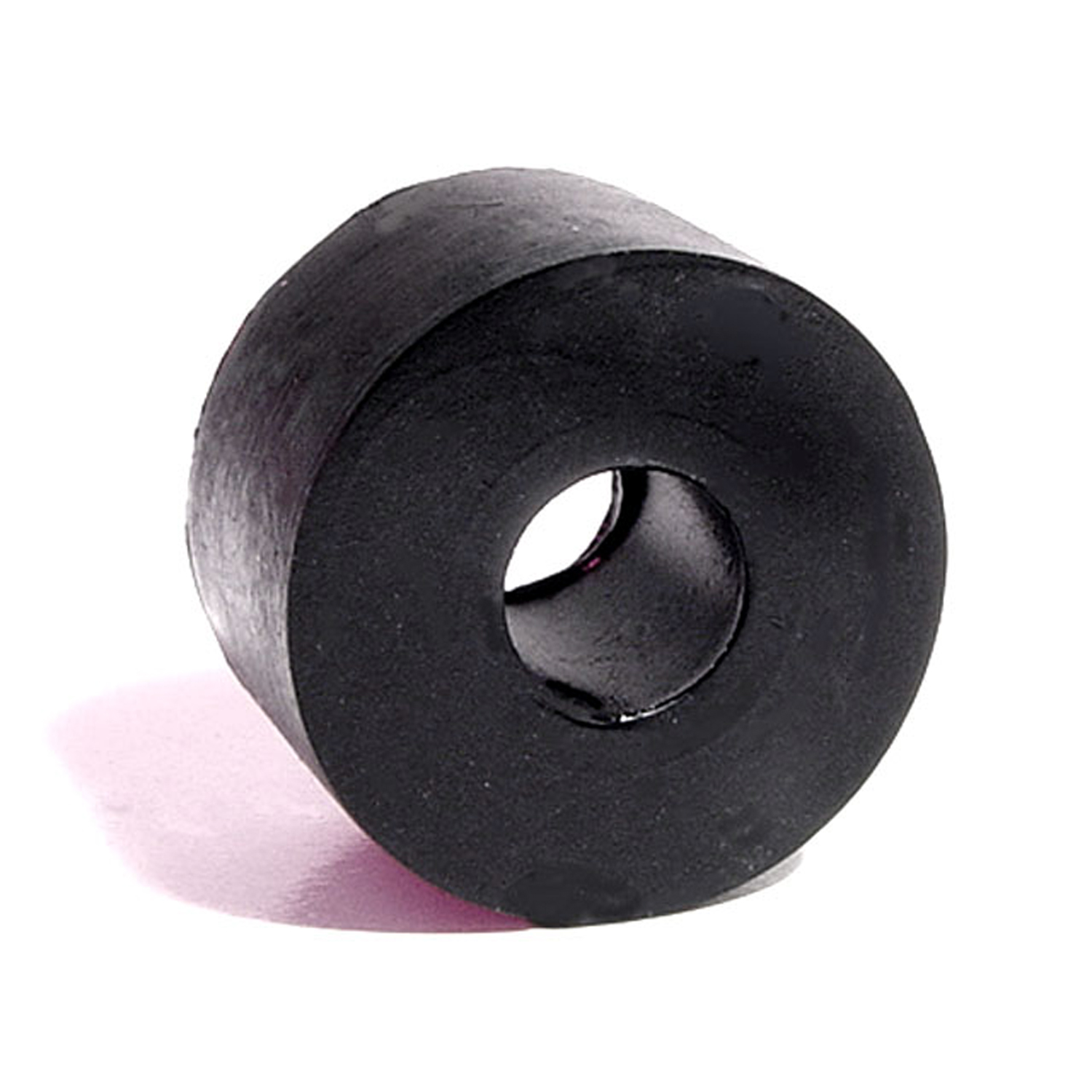 1964 Ford F-100 Shock Absorber Grommet. 1" bottom O.D-BN 6Shock Absorber Grommet. 1" bottom O.D. X 1/2" high, with 3/8" I.D. Each
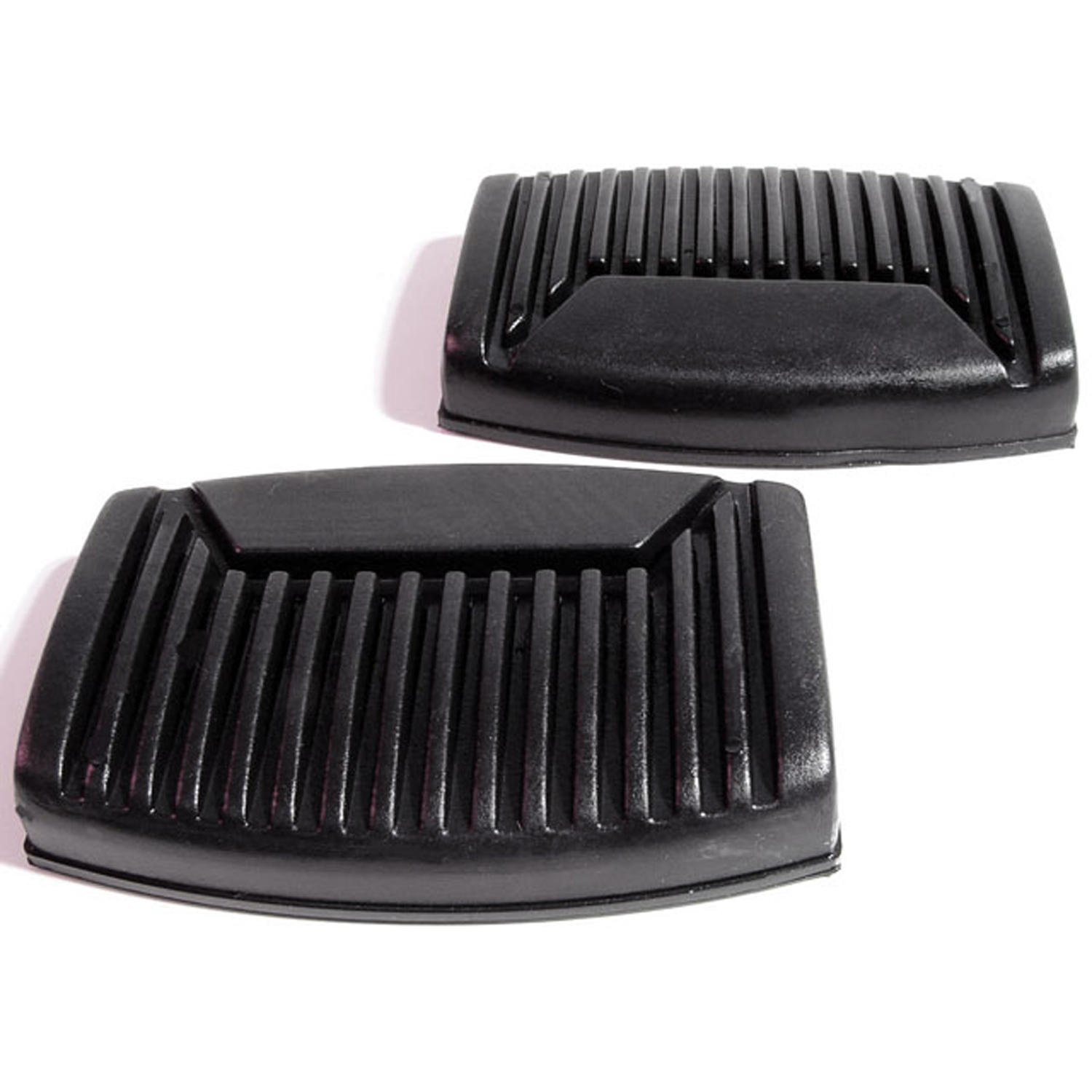 1964 Ford F-100 Clutch and Brake Pedal Pads. 3-1/4" wide X 2-1/4" long-CB 111Clutch and Brake Pedal Pads. 3-1/4" wide X 2-1/4" long. Pair
 1964 Ford F-100 Door Seal, 61-66 Ford Full Size Pickup Trucks, On Body, Pair-LM 110-CDoor Seal, 61-66 Ford Full Size Pickup Trucks, On Body, Pair
 1964 Ford F-100 Door Handle Scratch Guard Pads-MP 739-DDoor Handle Scratch Guard Pads. Replaces OEM #C3TB122418 & 19-A. 3-3/4" wide X 8-3/4" long. Pair
 1964 Ford F-100 Antenna Base Pad. 1-5/8" wide X 2-1/8" long. Each-MP 800-GAntenna Base Pad. 1-5/8" wide X 2-1/8" long. Each
 1964 Ford F-100 Ford Truck Instrument Cluster Housing Dash Seal-RP 50This is a high quality instrument cluster seal for 1961-1966 Ford F-Series trucks. Simple push on design installs in seconds. Comes as a 56" long piece.
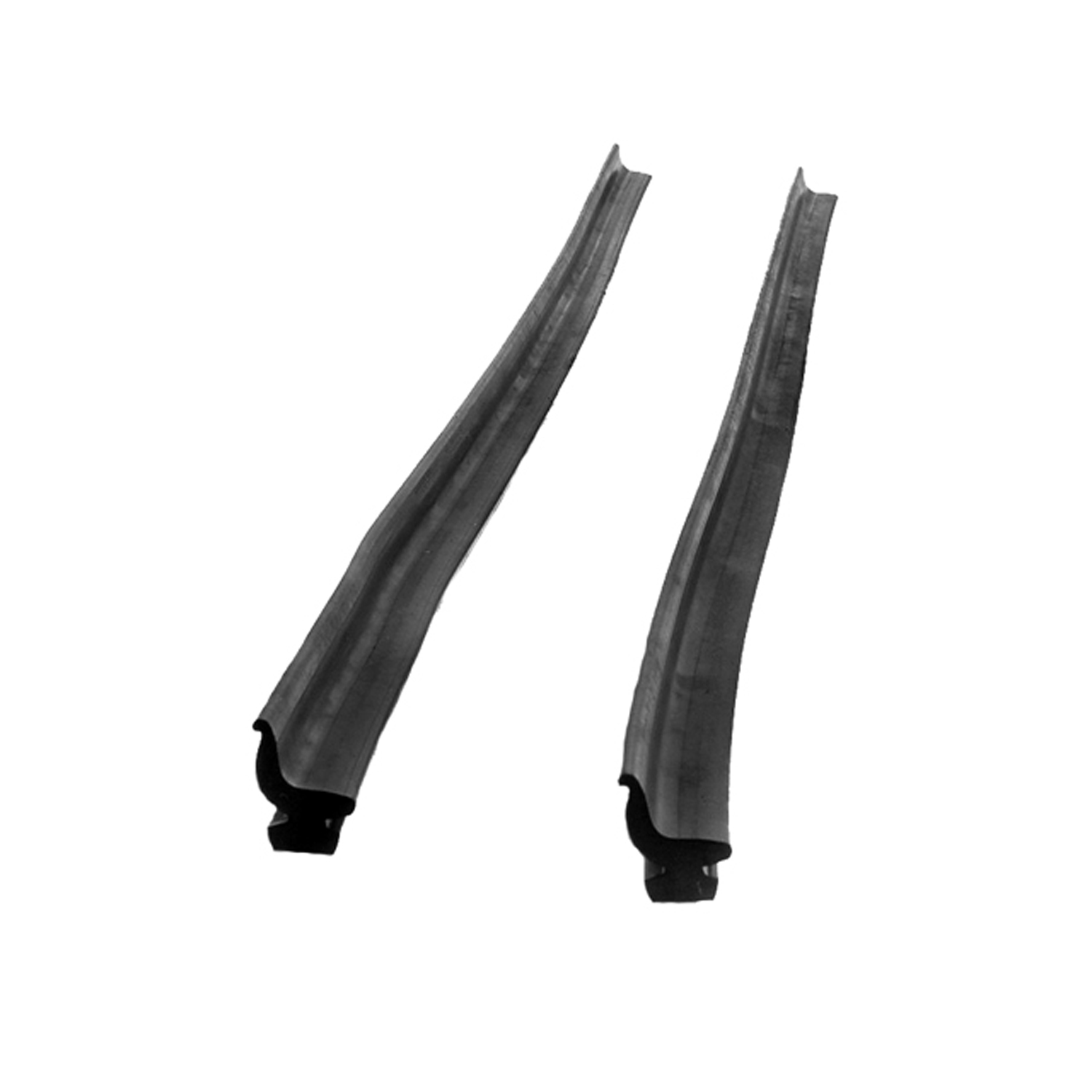 1964 Ford F-100 Rear roll-up Seal. Two 18" sections sliced into metal track-VS 4Rear roll-up Seal. Two 18" sections sliced into metal track. this foot with no steel insert. Pair
 1964 Ford F-100 Windshield Seal, 61-66 Ford Full Size Pickup, Without Trim Groove, Each-VWS 3304-BWindshield Seal, 61-66 Ford Full Size Pickup, Without Trim Groove, Each
 1964 Ford F-100 Rigid division-bar channel-WC 28-96Rigid division-bar channel. Made with stainless steel bead, heavy steel core and pile lining. 96 in. long. Each. NOTE: $20 special shipping charge applies for domestic orders. Call or email for overseas shipping costs. Part can be sectioned in two or three equal lengths to reduce overseas shipping costs.
 1964 Ford F-100 Flexible glass-run channel. Flocked-WC 40-60Flexible glass-run channel. Flocked. For vehicles without framed side glass. 60 in. long. Each. NOTE: $20 special shipping charge applies for domestic orders. Call or email for overseas shipping costs. Part can be sectioned into two equal lengths to reduce overseas shipping costs.
Why Choose Metro?
For over 100 years, Metro Moulded Parts has been the pinnacle of quality in classic car restoration parts. Our commitment to precision and authenticity in every component ensures a perfect fit and an OEM-level appearance.
- Expert Craftsmanship & Quality: Each part is a testament to our dedication to reliability and perfection, crafted from original designs and thoroughly tested.
- Advanced Technology: We use cutting-edge techniques to create flawless, long-lasting parts that surpass others in performance.
- SuperSoft Sponge – The Ultimate Door Seal: Not only are our door seals 30% softer than competitors', but they're also guaranteed to never leak. They effectively reduce wind and road noise, enhancing your classic car's comfort and driving experience.
- Proudly American: Our parts are a product of American craftsmanship, made in the USA with a spirit of excellence and heritage.
- Unrivaled Warranty: We back our products with a 30-year industry-leading warranty, a testament to our confidence in their quality.
Join us in preserving the legacy of classic cars with parts that are crafted for perfection, not just made.