
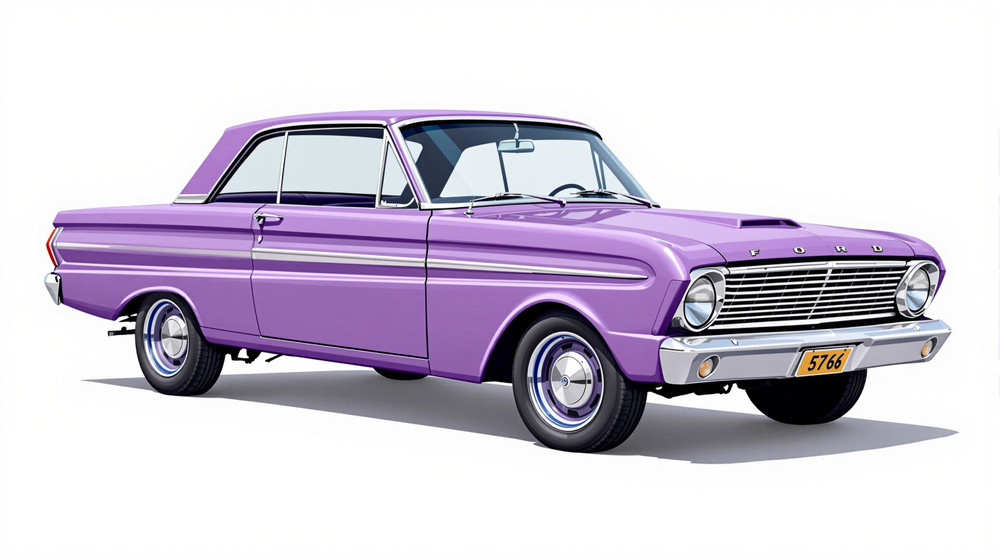
Image of 1964 Ford Falcon, Note: These illustrations use artistic license and may differ from actual historical models.
Performance Metrics
Fundamental Metrics
Emotional Appeal
MMP Rating
| Engine Specifications | |
|---|---|
| Engine Options: | 170 CID I6, 260 CID V8, 289 CID V8 |
| Displacement Range: | 170-289 cubic inches |
| Horsepower Range: | 101-210 hp |
| Torque: | 156-300 lb-ft |
| Compression Ratio: | 8.7:1 - 9.0:1 |
| Ignition System: | Conventional, distributor |
| Cooling System: | Liquid-cooled |
| Performance Specifications | |
| 0-60 Time: | 10-12 seconds |
| 1/4 Mile Time: | 17-19 seconds |
| Top Speed: | 100-120 mph |
| Transmission and Drive | |
| Drive Type: | Rear-wheel drive |
| Transmission Type: | 3-speed manual, 4-speed manual, 2-speed automatic, 3-speed automatic |
| Fuel and Efficiency | |
| Fuel System Type: | Carburetor |
| MPG: | 15-20 mpg |
| Dimensions and Brakes | |
| Brakes: | Drum brakes |
| Wheelbase: | 109.5 inches |
| Weight: | 2,500-2,800 lbs |
Note: Specifications for classic cars are given to the best of our ability, considering the limited and variant data available.
1964 Ford Falcon: The Compact That Helped Create the Mustang
The 1964 Ford Falcon made practical motoring feel lively, proving that an economical compact could be more than basic transportation. Built by Ford Motor Company, the Falcon was introduced in 1959 as a 1960 model to meet growing demand for smaller, lighter, and less expensive American cars. By 1964, it had been refreshed with cleaner styling and a broader range of body styles, from sensible sedans to sporty V8-powered models.
The Falcon’s significance extends well beyond its own sales success. It gave Ford a compact-car foundation that would help shape the original Mustang, which shared important engineering and structural elements with the Falcon. One especially intriguing detail: while the Mustang became the bigger cultural icon, the Falcon supplied much of the practical hardware that helped make the Mustang’s launch possible.
1964 Falcon Styling and Interior
The 1964 Falcon looked neat and purposeful rather than flashy. Its relatively upright shape, simple side panels, and squared-off proportions made good use of the car’s compact footprint. At the front, round headlamps flank a broad horizontal grille, while restrained brightwork and modest tail styling keep the overall look clean. The redesign gave the Falcon a more contemporary face without abandoning the straightforward character that had made it popular.
Inside, the Falcon favored function over luxury. The dashboard was easy to read, the controls were simple to reach, and the cabin made sensible use of its space. Materials were generally durable painted metal, vinyl, and cloth, depending on trim and option package. A Futura or Sprint could add more attractive upholstery, extra bright trim, bucket seats, and a center console, giving the cabin a sportier feel than a base model. By modern standards, sound insulation and soft-touch surfaces are limited, but the layout is refreshingly uncomplicated.
Ford offered the Falcon in a broad period color palette, with choices that included shades such as Rangoon Red, Wimbledon White, Skylight Blue, Pagoda Green, and Silver Smoke Gray. Exact colors depended on body style, trim, and production details. Red and white combinations remain especially eye-catching on sporty cars, while pale blue and green suit the Falcon’s understated design.
Body Styles, Trims, and V8 Options
Few compact cars of the period offered buyers as many ways to configure one vehicle. The 1964 lineup included two- and four-door sedans, station wagons, a two-door hardtop, a convertible, the Ranchero utility vehicle, and a sedan delivery. The Ranchero combined a car-like front cabin with an open cargo bed, giving buyers a smaller alternative to a traditional pickup.
For a blend of style and everyday usefulness, the Futura Sports Coupe is among the most recognizable choices. The Falcon Sprint added a more performance-minded character, with sporty trim and a V8 option. The 260-cubic-inch V8 produced about 164 gross horsepower in period ratings. Six-cylinder buyers could choose the 144-cubic-inch engine, rated at roughly 85 horsepower, or the 170-cubic-inch unit, rated around 101 horsepower. Actual equipment varied by model and order, so a car’s original build sheet or factory documentation is valuable when verifying its specification.
Why the Falcon Mattered
The Falcon’s impact came from getting the compact-car formula right for American buyers. It was smaller and more economical than Ford’s full-size offerings, yet it retained familiar rear-wheel-drive engineering, conventional controls, and body styles that matched everyday needs. Rather than asking customers to embrace an unfamiliar kind of vehicle, Ford made the compact feel like a straightforward, useful Ford.
That formula also made the Falcon a useful engineering base. The first Mustang borrowed heavily from Falcon components and architecture, allowing Ford to bring its new sporty car to market quickly and at an accessible price. The Falcon itself was not a sports car in most configurations, but its platform helped enable one of the most influential American car launches of the 1960s. Its legacy is therefore twofold: a successful compact in its own right and a key part of the Mustang’s origin story.
1964 Ford Falcon Performance and Road Manners
Performance depends greatly on engine, transmission, axle ratio, body style, and vehicle condition. As a general guide, a V8 Falcon Sprint in good tune can reach 0 to 60 mph in roughly 10 to 12 seconds, with a top speed around 100 to 110 mph. A six-cylinder car is more relaxed: expect approximately 15 to 19 seconds to 60 mph and a top speed in the neighborhood of 85 to 95 mph. These are estimates, not guaranteed factory figures, and period testing methods, gearing, and tire condition all affect the results.
The Falcon’s driving character is more about easygoing momentum than sharp-edged performance. Its compact size makes it simple to place in traffic and park, while the light steering and modest dimensions suit everyday errands. The suspension uses independent front suspension with coil springs and a solid rear axle supported by leaf springs. It handles ordinary roads comfortably, but sharp bumps can unsettle the rear, especially in an empty car or wagon. On winding roads, a healthy Falcon feels cooperative and predictable, though its period tires, drum brakes, and body lean are reminders to drive within its limits.
A six-cylinder Falcon makes a modest, smooth mechanical hum, while the 260 V8 adds a deeper exhaust note and stronger response. The cabin is not especially quiet by modern standards, and the driver remains closely connected to the car through its simple instruments and direct controls. With an optional manual gearbox, the Sprint rewards deliberate shifts. The result is an engaging, uncomplicated driving experience rather than a modern high-grip performance car.
Living With a Classic Falcon
Today, a 1964 Falcon can serve as a weekend cruiser, a local-show car, a vintage drag or autocross project, or even a carefully maintained occasional driver. The sedans and wagons suit owners who value practicality and a less common classic profile. The Sprint and Futura Sports Coupe attract buyers seeking the model’s sportier side, while the Ranchero offers a distinctive combination of car and utility vehicle.
Mechanical upkeep is generally approachable for an owner with basic experience. The engines and drivetrains use conventional, well-understood technology, and many service parts are available through classic Ford suppliers. Routine jobs such as ignition service, carburetor adjustment, brake work, and suspension repairs are familiar to many independent shops. Body and trim restoration can be more demanding: rust in floors, rocker panels, wheel arches, and structural areas may require skilled welding, and some model-specific trim or wagon parts can take time to locate.
Before buying, inspect the body carefully and verify that the engine, transmission, and trim match the seller’s claims. A mechanically sound Falcon with a solid body is usually a better starting point than a shiny car hiding corrosion beneath fresh paint. Also check that the cooling, charging, and braking systems have been updated or maintained appropriately for modern traffic.
Falcon Facts and Common Misconceptions
The 1964 Falcon is part of the model’s second-generation era, following the original compact introduced for 1960. The Falcon name covered a wide range of vehicles, including sedans, wagons, sporty coupes, the convertible, and the Ranchero. That breadth helps explain why “a 1964 Falcon” can describe anything from an economical six-cylinder family car to a V8-powered Sprint.
The Falcon is not widely associated with a single celebrity owner or one defining motorsport record. Its more lasting claim to fame is its connection to the Mustang’s development and its success as a practical compact. A common criticism is that ordinary versions can feel underpowered, particularly with the smaller six and an automatic transmission. Other period limitations include drum brakes, relatively basic safety equipment, and less precise handling than a modern car. Those traits are part of the ownership experience, but they matter when choosing one for regular use.
1964 Ford Falcon Collector Values and Rarity
Production estimates vary by source and by which body styles are counted, but a reasonable broad estimate is around 300,000 U.S.-market Falcons for the 1964 model year. That figure includes multiple trims and body styles, not just the Sprint. Standard sedans are generally the easiest versions to find, while well-documented Sprint models, convertibles, Rancheros, and certain wagons can be harder to locate in excellent original condition.
In today’s collector market, a project car may sell for roughly $3,000 to $8,000, while a usable driver often falls around $8,000 to $18,000. Clean, well-restored examples can reach approximately $20,000 to $40,000. Desirable Sprint or convertible cars in exceptional condition, especially with verified original equipment, can exceed that range and may reach $50,000 or more. These are broad estimates: rust, originality, documentation, restoration quality, and local demand can shift a price substantially.
Values have generally benefited from growing interest in accessible 1960s American cars, but the Falcon is not as consistently valuable as a Mustang. Well-presented, rarer versions have the strongest prospects, while ordinary driver-quality cars tend to rise more gradually. As with any classic, condition and provenance matter more than a hopeful badge or an engine swap.
A Compact Ford With a Lasting Legacy
The 1964 Ford Falcon brought together sensible size, straightforward engineering, and a surprisingly wide choice of body styles. It could be an economical six-cylinder commuter, a useful wagon or Ranchero, or a livelier V8 Sprint. Its practical character made it a success in its own right, while its engineering helped lay groundwork for the Mustang’s arrival.
That combination is what makes the Falcon worth remembering: it was not merely a smaller Ford, but a versatile car whose humble platform helped change American automotive history.
1964 Ford Falcon Catalog of Parts
 1964 Ford Falcon Suspension Ball Joint Dust Seal. 3/4" top I.D-BN 101-BSuspension Ball Joint Dust Seal. 3/4" top I.D., 1-11/16" bottom O.D., 3/4" high. For some rare models. Check dimensions against original. Each
 1964 Ford Falcon Power Steering Stop Insulator. Die stamped. 1-7/16" O.D-BN 107-APower Steering Stop Insulator. Die stamped. 1-7/16" O.D., 1-1/16" I.D., .808 thick. Each
 1964 Ford Falcon Rear Spring and Front Hanger Shackle Bushing. 2" bottom O.D-BN 108Rear Spring and Front Hanger Shackle Bushing. 2" bottom O.D., 1-5/8" high, with 3/4" I.D. Each
 1964 Ford Falcon Shock Absorber Grommet. 1-1/4" bottom O.D., 1" high-BN 12Shock Absorber Grommet. 1-1/4" bottom O.D., 1" high., with 3/4" I.D. Each
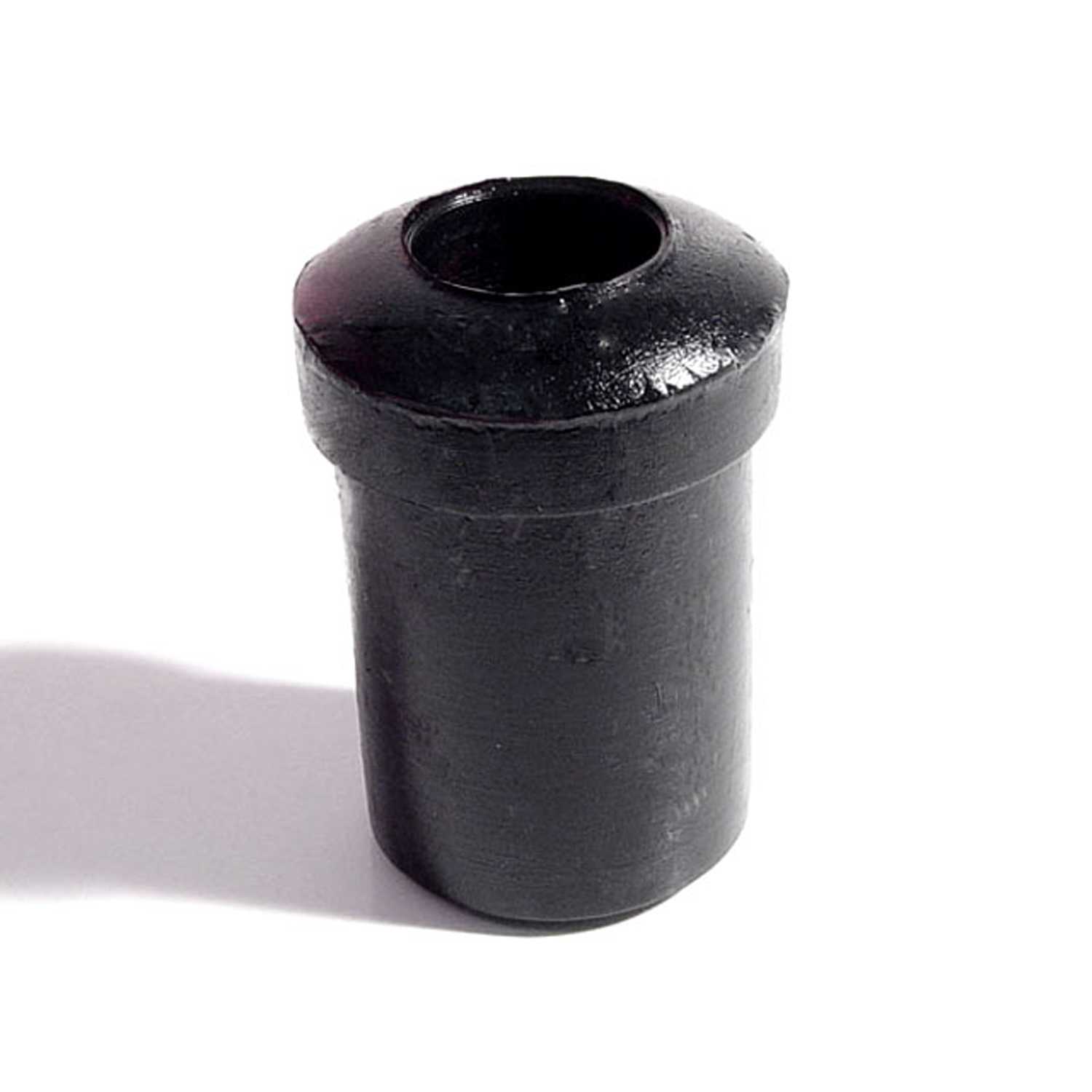 1964 Ford Falcon Spring and Shackle Bushing. 1" bottom O.D-BN 20Spring and Shackle Bushing. 1" bottom O.D. X 1-5/8" high, with 9/16" I.D. Each
 1964 Ford Falcon Stabilizer Bar Bushings-BN 32-DStabilizer Bar Bushings. 1-9/16" long X 1-1/2" wide X 1-5/8" high, 15/16" I.D. Pair
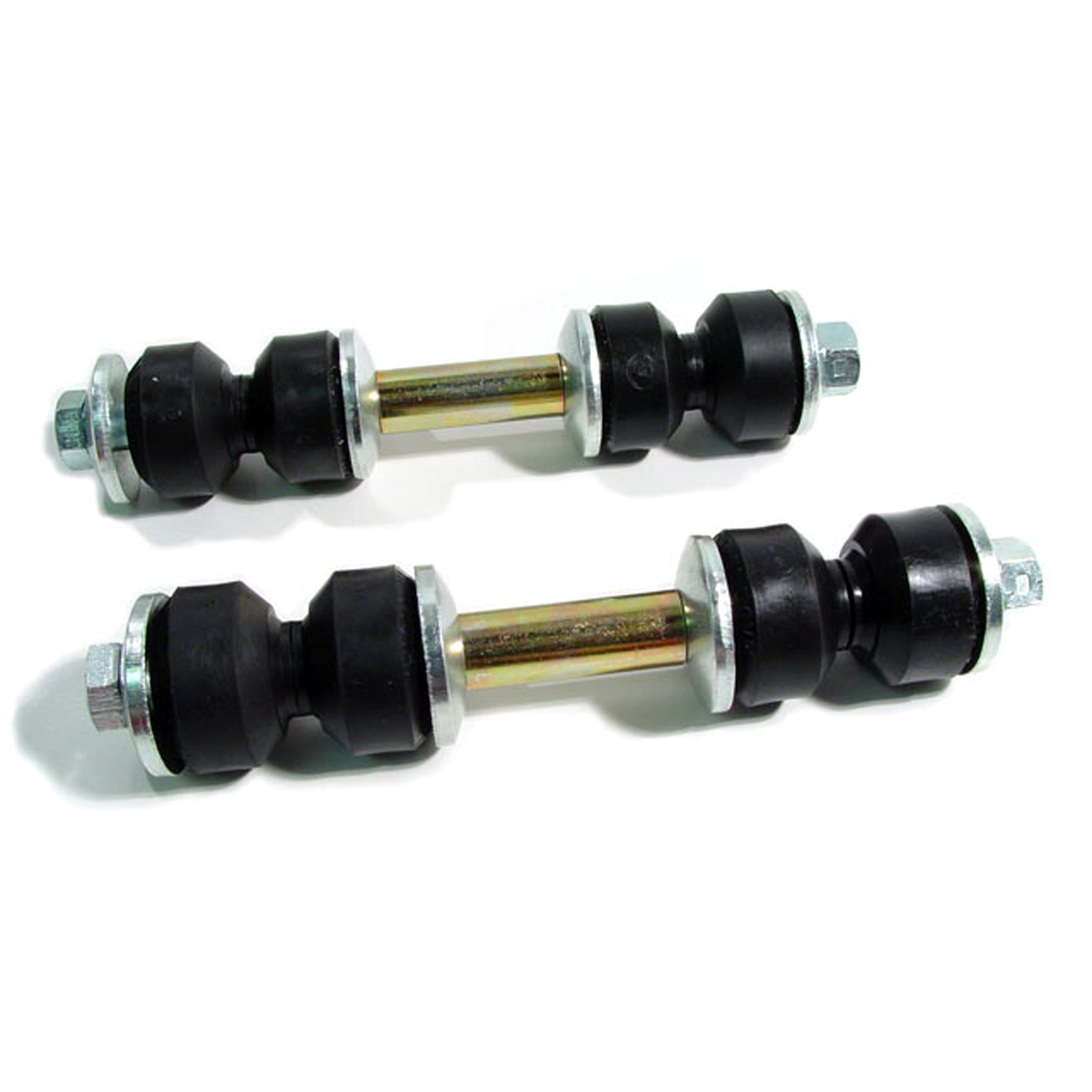 1964 Ford Falcon Front Stabilizer End Repair Kit-BNK 22Front Stabilizer End Repair Kit. 22-piece set for two stabilizer bars. Contains all rubber bushings, washers, bolts and nuts, enough for one front end. Set
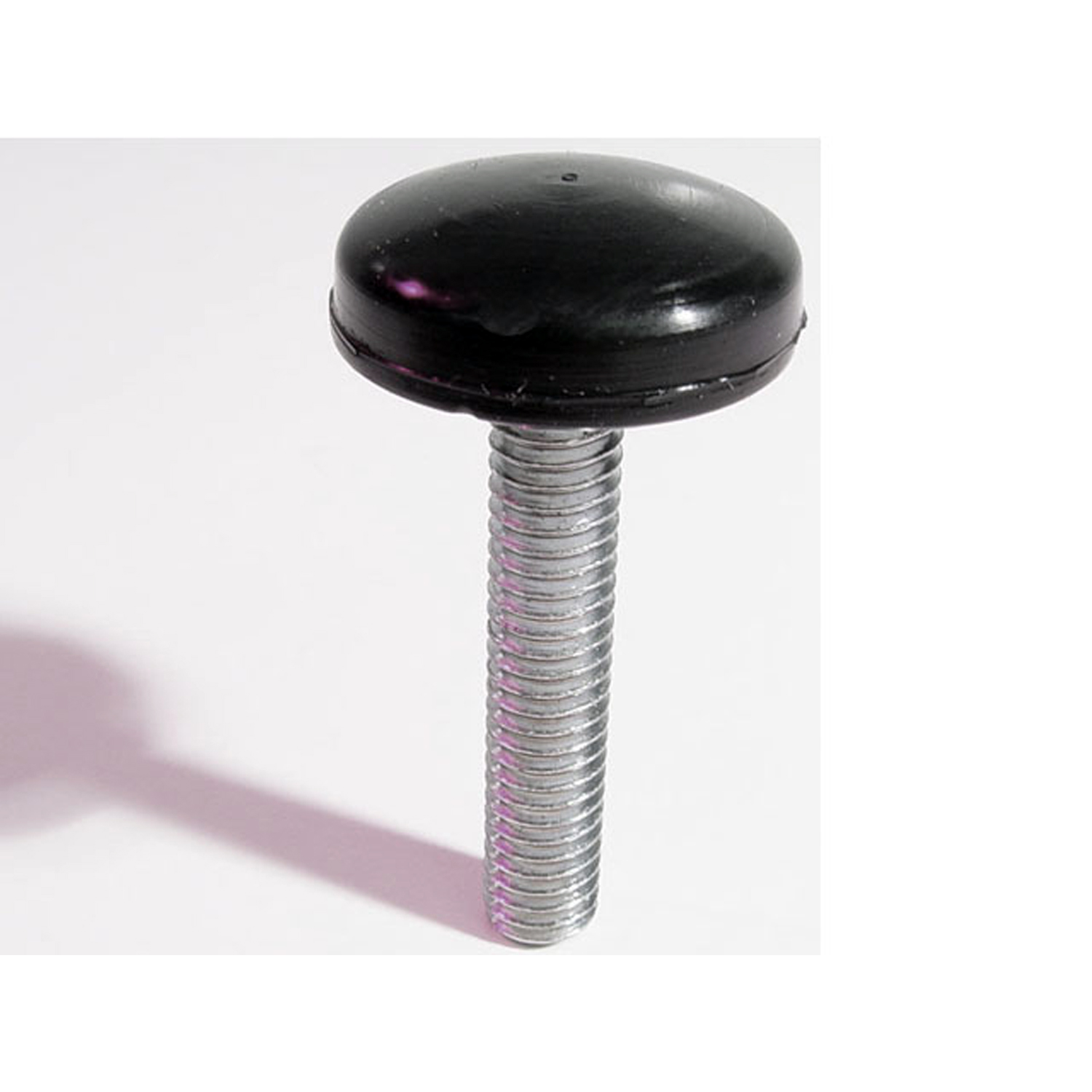 1964 Ford Falcon Hood Adjustment Bolt and Bumper. 1" diameter rubber head-HA 2Hood Adjustment Bolt and Bumper. 1" diameter rubber head. 5/16" thick X 18 threads/inch X 1-3/4" long bolt. Each
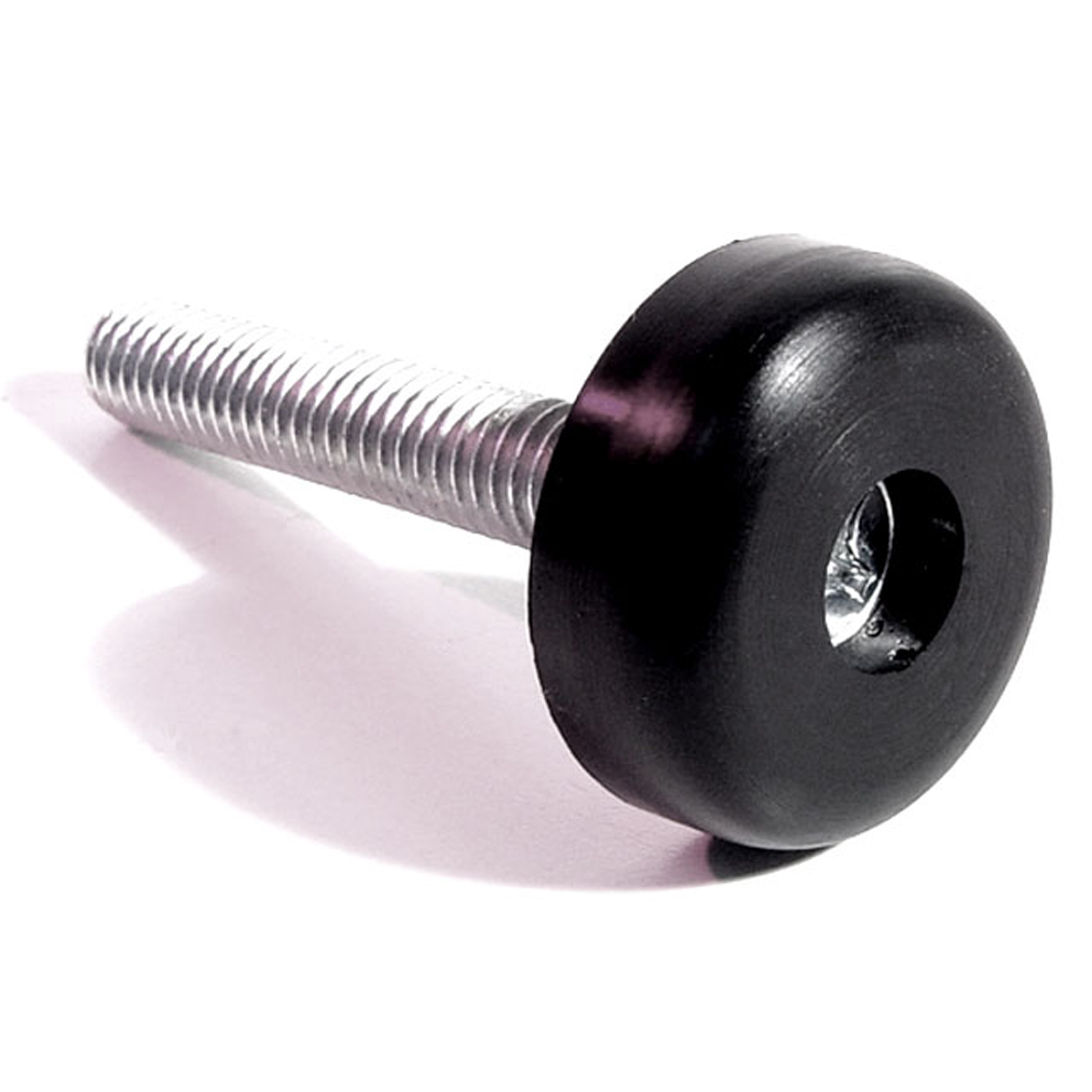 1964 Ford Falcon Hood Adjustment Bolt and Bumper-HA 3Hood Adjustment Bolt and Bumper. 1-1/8" diameter rubber head. 5/16" thick X 18 threads/inch X 2-1/8" long bolt. Each
 1964 Ford Falcon Top Bow to Header Seal for Convertibles-HD 303Top Bow to Header Seal for Convertibles. Made with all notches and holes. Each
 1964 Ford Falcon Hood Bumper. Made with steel core. Held by screw. Each-HF 40Hood Bumper. Made with steel core. Held by screw. Each
 1964 Ford Falcon Door Seals, 63-65 Ford Falcon & Mercury Comet 2 Doors, Pair-LM 10-MDoor Seals, 63-65 Ford Falcon & Mercury Comet 2 Door Hardtops and Convertibles, Pair. This seal mounts on the door with weatherstrip adhesive (not included). This product is made from the original specs and with high quality ozone resistant EPDM rubber for a great fit and long life.
 1964 Ford Falcon Door Weatherstrip Seal Kit fits 1960-1965 Ford Falcon & Ranchero 2 Door Sedan-LM 21-OThese door weatherstrips mount on the door with weatherstrip adhesive glue (not included). They fit the driver's and passenger door on the 2 door sedan/wagon models. It's made from high quality ozone resistant EPDM rubber.
 1964 Ford Falcon Door Handle Pads. Replaces OEM #C34Z6222428A-9A-MP 800-HDoor Handle Pads. Replaces OEM #C34Z6222428A-9A. 2-5/8" long & 1" long. Set R&L
 1964 Ford Falcon Tail-light Assembly to Body Pads. 9" O.D-MP 800-ITail-light Assembly to Body Pads. 9" O.D. Replaces OEM #C4AZ13520-A. Pair
 1964 Ford Falcon Generator Boot. Replaces OEM #C1AZ10170B-RP 2-FGenerator Boot. Replaces OEM #C1AZ10170B. Note: Notch may have to be cut by purchaser. Each
 1964 Ford Falcon Inlet Box Bellows. Fresh air duct to heater-RP 300-HInlet Box Bellows. Fresh air duct to heater. Made of PVC with lower steel core and wire clamp. 7" wide X 9-1/4" long. Each
 1964 Ford Falcon Door Lock Knob. Black Rubber. Each-RP 306Door Lock Knob. Black Rubber. Each
 1964 Ford Falcon Door Lock Knob. 1-1/2" high. Made of red rubber. Each-RP 306-ADoor Lock Knob. 1-1/2" high. Made of red rubber. Each
 1964 Ford Falcon Door Lock Knob. 1-1/2" high. Made of blue rubber. Each-RP 306-BDoor Lock Knob. 1-1/2" high. Made of blue rubber. Each
 1964 Ford Falcon Door Lock Knob. 1-1/2" high. Made of turquoise rubber-RP 306-CDoor Lock Knob. 1-1/2" high. Made of turquoise rubber. Each
 1964 Ford Falcon Door Lock Knob. 1-1/2" high. Made of beige rubber. Each-RP 306-DDoor Lock Knob. 1-1/2" high. Made of beige rubber. Each
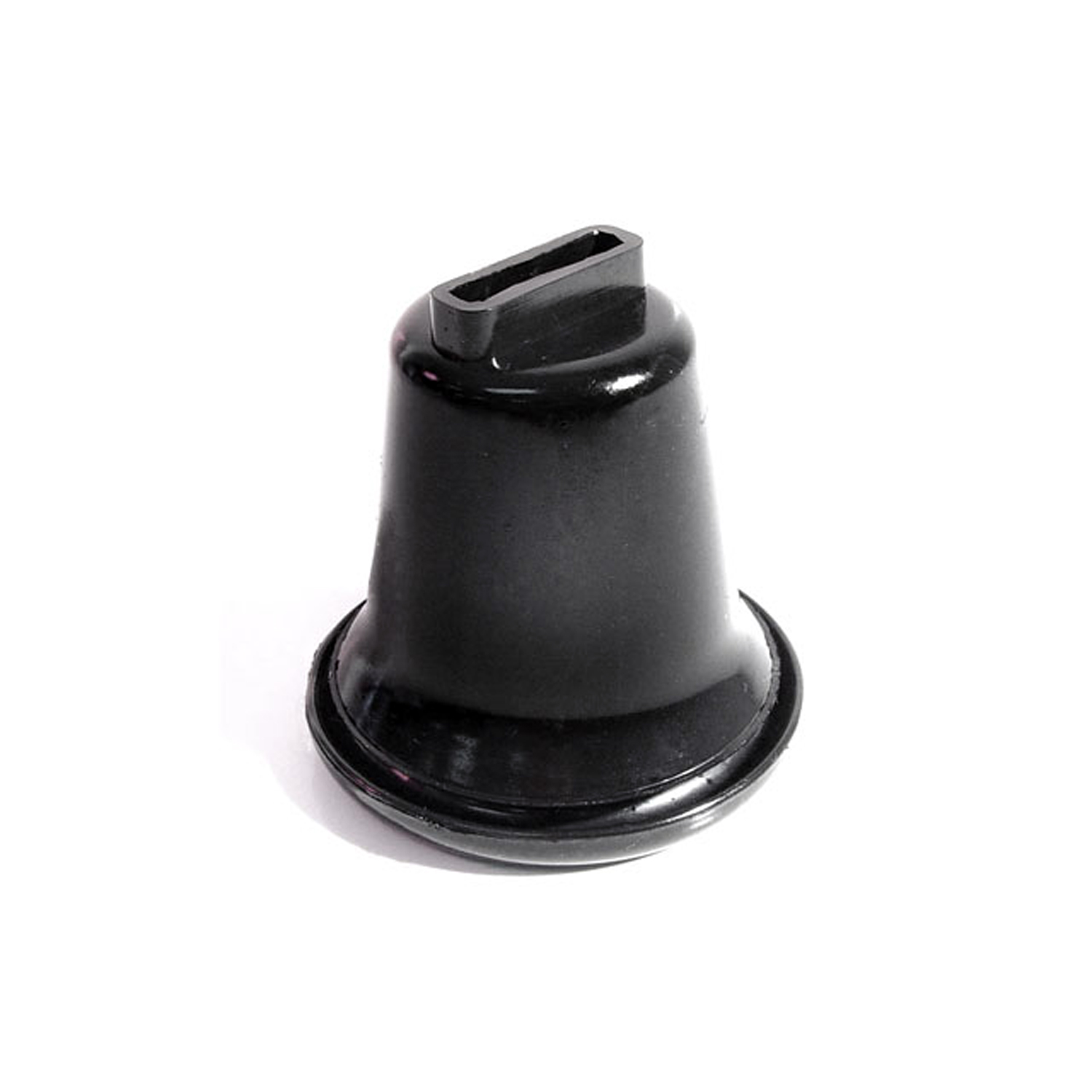 1964 Ford Falcon Brake Booster Boot. Each-RP 32-AABrake Booster Boot. Each
 1964 Ford Falcon Convertible top rail kit including header seal fits 63-67 Falcon and Comet-RR 6300Convertible top-rail kit. '63-'67 Falcon and Comet convertibles only. Includes all left-side and right-side top-rail seals and windshield top header seal. Made from the OEM specs to install and fit for an authentic appearance.
 1964 Ford Falcon Hood Bumper. Snap-in wire base like original. Each-SB 89-AHood Bumper. Snap-in wire base like original. Each
 1964 Ford Falcon Rocker Panel Drain Plug Valve. Two used per car. Each-SM 64Rocker Panel Drain Plug Valve. Two used per car. Each
 1964 Ford Falcon Door & Tailgate Bottom Drain Seal-SM 64-ADoor & Tailgate Bottom Drain Seal. Uses up to 10 per car or 12 per station wagon. Replaces OEM #C3AZ6220700B. 3" Long. Each
 1964 Ford Falcon Trunk Seal. 18 feet long. Each-TK 51-18Trunk Seal. 18 feet long. Each
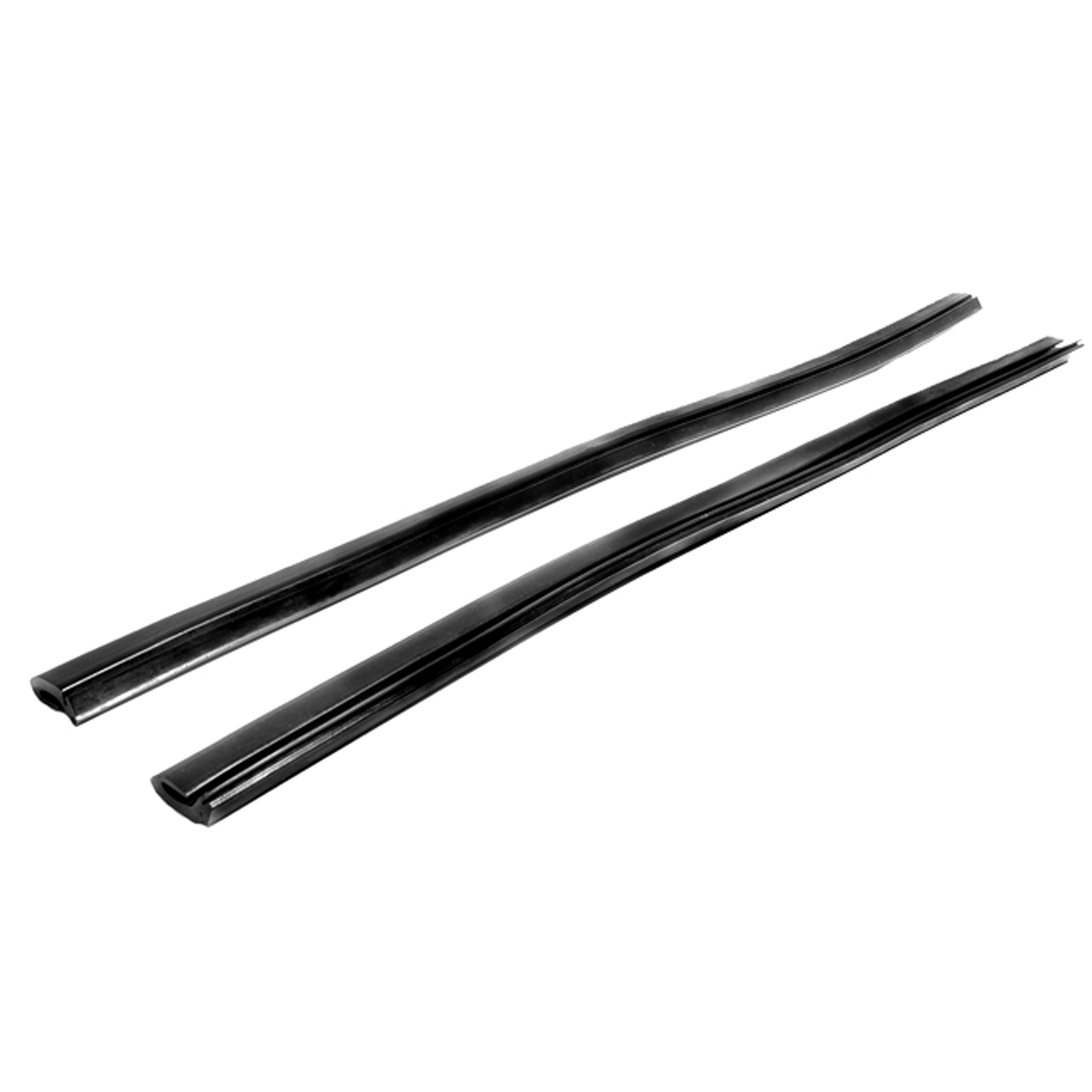 1964 Ford Falcon Rear Side Roll-Up Window Seal, for Hardtops and Convertibles-VS 3Rear Side Roll-Up Window Seal, for Hardtops and Convertibles. Two 20" sections slide into metal track. No steel insert. Pair
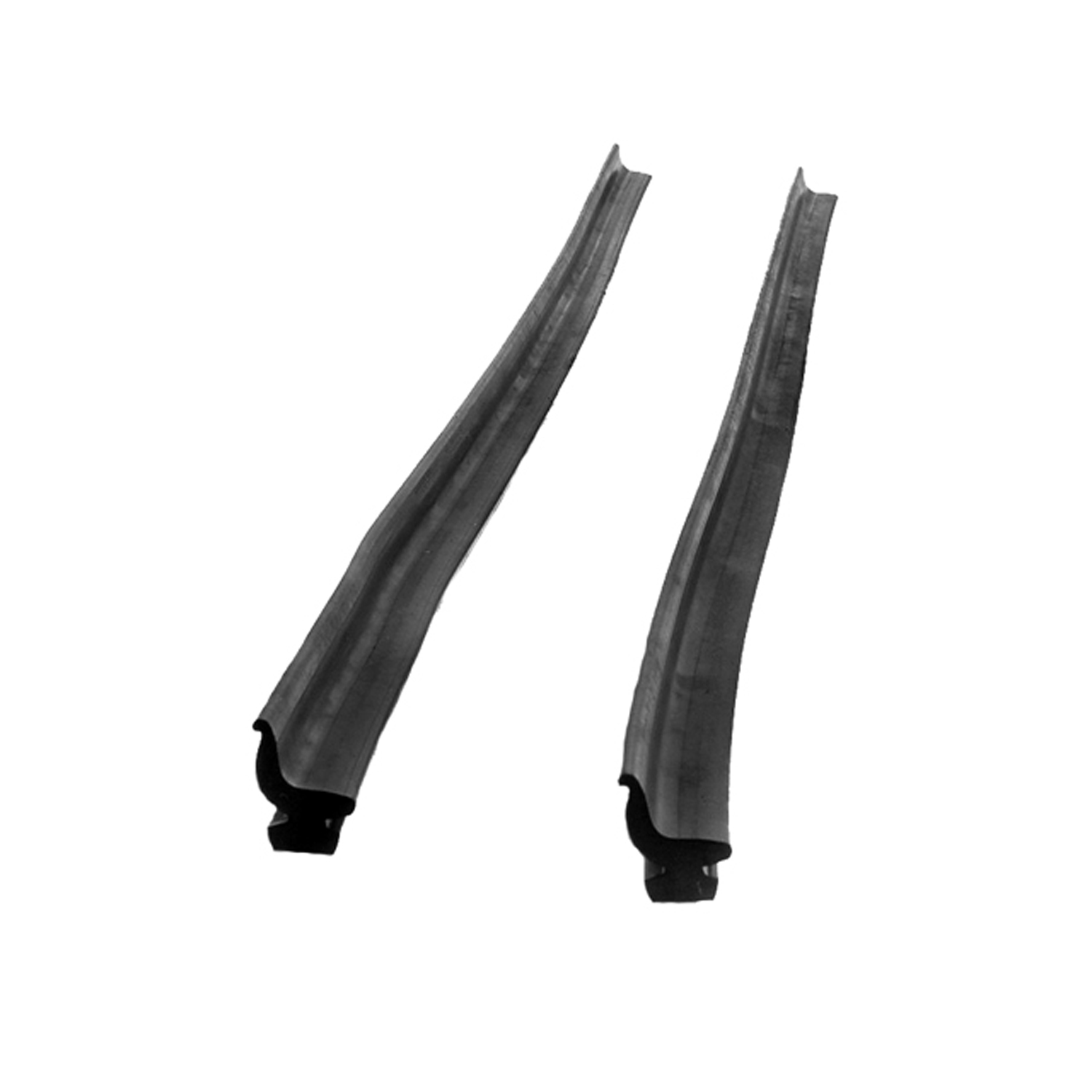 1964 Ford Falcon Rear roll-up Seal. Two 18" sections sliced into metal track-VS 4Rear roll-up Seal. Two 18" sections sliced into metal track. this foot with no steel insert. Pair
 1964 Ford Falcon Rear Roll-up Seals, for Hardtops-VS 4-BRear Roll-up Seals, for Hardtops. Two 13" sections, no steel insert. Pair
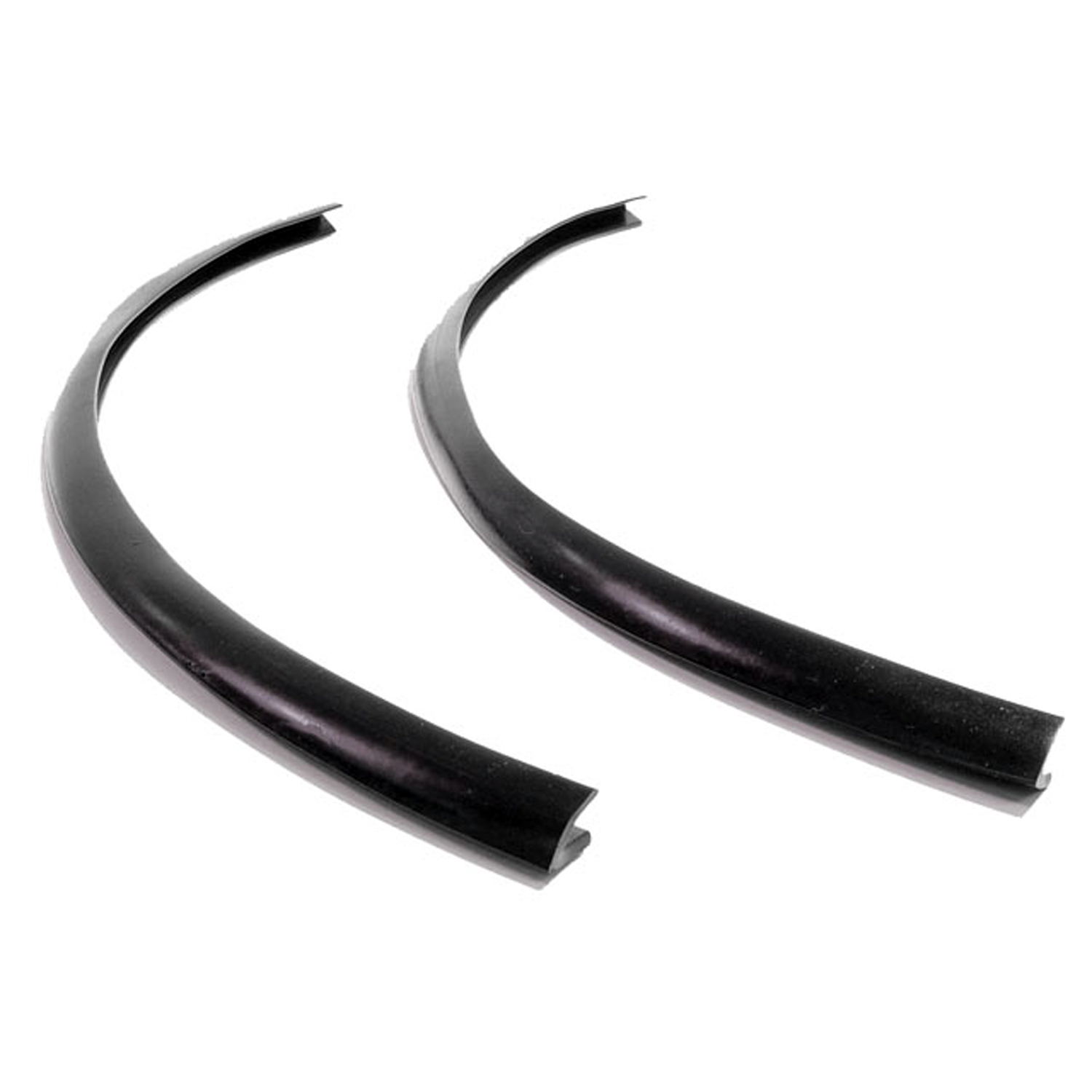 1964 Ford Falcon Vertical Seals for Vent Window. Each piece is 17" long-VS 6Vertical Seals for Vent Window. Each piece is 17" long. Pair
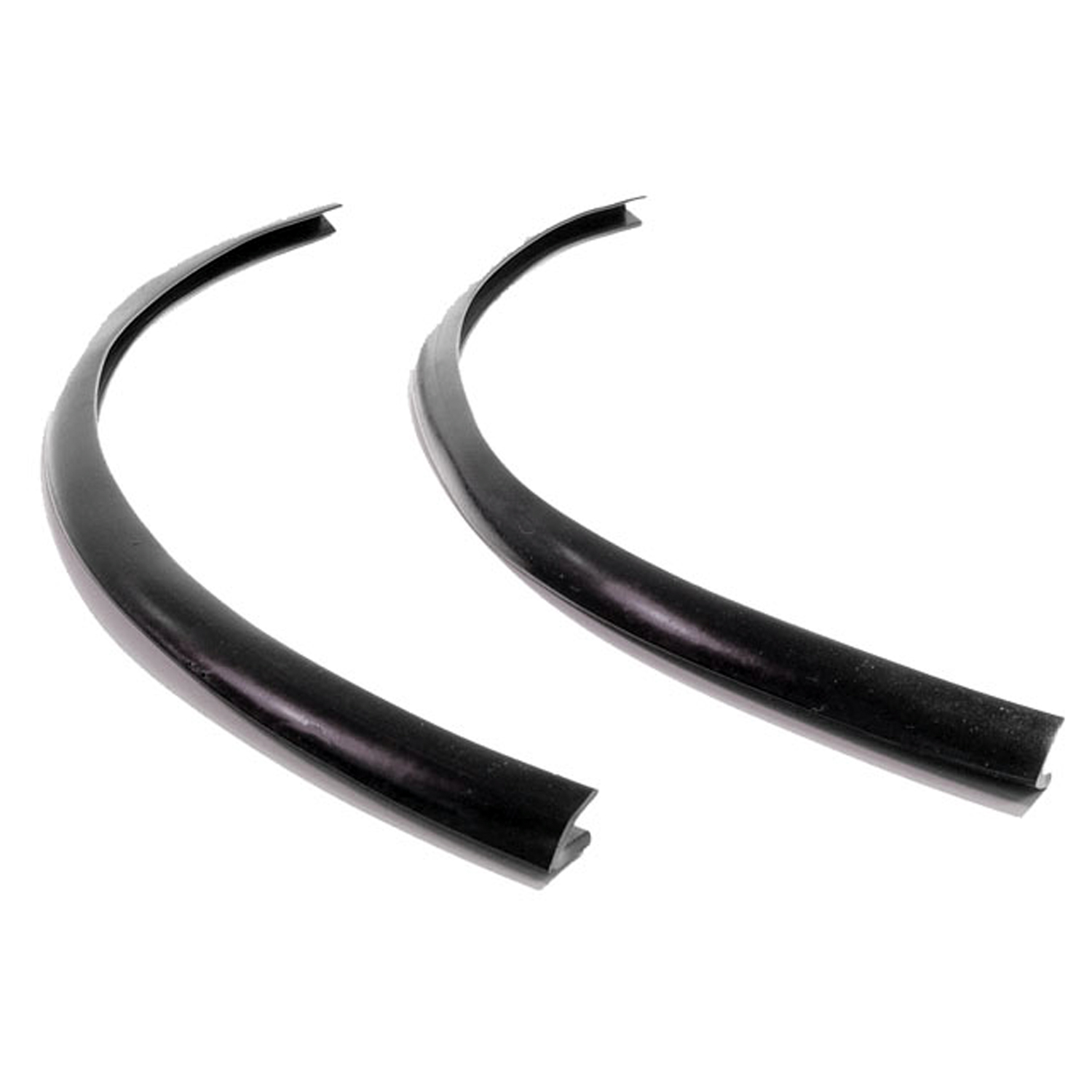 1964 Ford Falcon Vertical Seal for Vent Window. Sold by the foot.-VS 6/FTVertical Seal for Vent Window. Sold by the foot.
 1964 Ford Falcon Window Sweeper Kit Fits 63-65 Falcon/Comet Convertible. 8 piece set-WC 1400-15This eight (8) piece set is a must-have for anyone looking to keep their car's side windows clean. The inner and outer felt beltline weatherstrips are perfect for the door and quarter windows, wiping the glass when it's lowered. They're easy to install, with finished ends and body curvature bends for a factory like appearance.
 1964 Ford Falcon Flexible Sweeper. Made of rubber-WC 23-/FTFlexible Sweeper. Made of rubber. Seal for outside of side window. Sold by the foot
 1964 Ford Falcon Flexible Sweeper. Made of rubber-WC 23-48Flexible Sweeper. Made of rubber. Seal for outside of side window. 48" Piece. Each
 1964 Ford Falcon Flexible Sweeper. Made of rubber-WC 23-96Flexible Sweeper. Made of rubber. Seal for outside of side window. 96" Piece. each
 1964 Ford Falcon Rigid division-bar channel-WC 28-96Rigid division-bar channel. Made with stainless steel bead, heavy steel core and pile lining. 96 in. long. Each. NOTE: $20 special shipping charge applies for domestic orders. Call or email for overseas shipping costs. Part can be sectioned in two or three equal lengths to reduce overseas shipping costs.
Why Choose Metro?
For over 100 years, Metro Moulded Parts has been the pinnacle of quality in classic car restoration parts. Our commitment to precision and authenticity in every component ensures a perfect fit and an OEM-level appearance.
- Expert Craftsmanship & Quality: Each part is a testament to our dedication to reliability and perfection, crafted from original designs and thoroughly tested.
- Advanced Technology: We use cutting-edge techniques to create flawless, long-lasting parts that surpass others in performance.
- SuperSoft Sponge – The Ultimate Door Seal: Not only are our door seals 30% softer than competitors', but they're also guaranteed to never leak. They effectively reduce wind and road noise, enhancing your classic car's comfort and driving experience.
- Proudly American: Our parts are a product of American craftsmanship, made in the USA with a spirit of excellence and heritage.
- Unrivaled Warranty: We back our products with a 30-year industry-leading warranty, a testament to our confidence in their quality.
Join us in preserving the legacy of classic cars with parts that are crafted for perfection, not just made.