
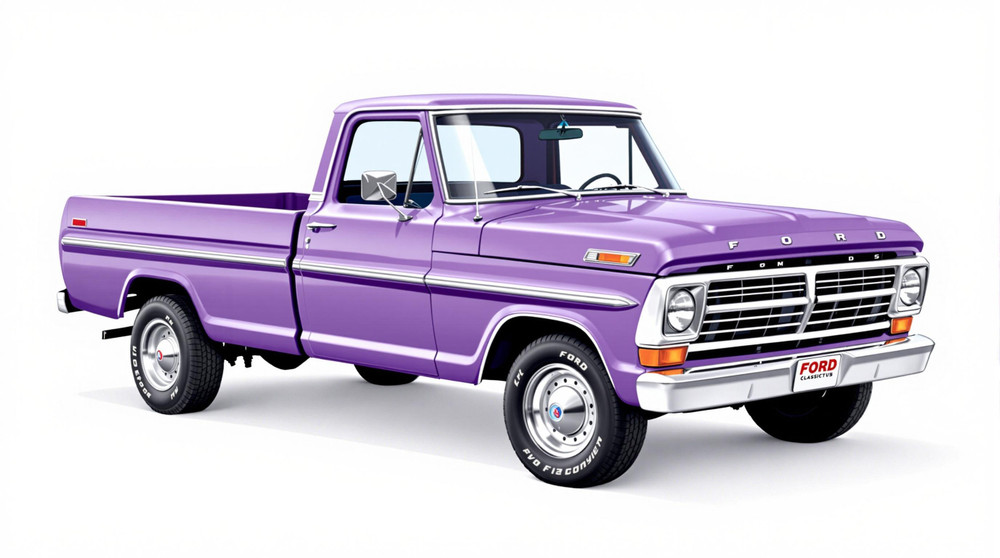
Image of 1968 Ford F-250, Note: These illustrations use artistic license and may differ from actual historical models.
Performance Metrics
Fundamental Metrics
Emotional Appeal
MMP Rating
| Engine Specifications | |
|---|---|
| Engine Options: | 240 I6, 300 I6, 352 V8, 390 V8 |
| Displacement Range: | 240-390 cubic inches |
| Horsepower Range: | 150-265 hp (approximate) |
| Torque: | 235-390 lb-ft (approximate) |
| Compression Ratio: | 8.0:1 - 9.5:1 (approximate) |
| Ignition System: | Conventional, distributor |
| Cooling System: | Liquid-cooled |
| Performance Specifications | |
| 0-60 Time: | Not available due to the vehicle's age and purpose as a work truck |
| 1/4 Mile Time: | Not available due to the vehicle's age and purpose as a work truck |
| Top Speed: | 80-90 mph (estimated) |
| Transmission and Drive | |
| Drive Type: | Rear-wheel drive (4-wheel drive was an option) |
| Transmission Type: | 3-speed manual, 4-speed manual, 3-speed automatic |
| Fuel and Efficiency | |
| Fuel System Type: | Carburetor |
| MPG: | 10-12 mpg (estimated) |
| Dimensions and Brakes | |
| Brakes: | Front disc and rear drum brakes |
| Wheelbase: | 129 inches |
| Weight: | 4,000-5,000 lbs (estimated) |
Note: Specifications for classic cars are given to the best of our ability, considering the limited and variant data available.
1968 Ford F-250: The Bumpside Workhorse
The 1968 Ford F-250 was built to haul, tow, and take hard use in stride, but it also helped define the shape of the American pickup for years to come. Part of Ford’s fifth-generation F-Series, introduced in 1967, it was a three-quarter-ton truck that sat between the lighter F-100 and the heavier-duty F-350. Its squared-off body, broad grille, and famously tough reputation earned this generation the nickname “Bumpside,” a reference to the pronounced crease along its body sides.
Ford was already a major force in the pickup market, and the late-1960s F-Series reflected a changing idea of what a truck could be. It remained a practical tool, but buyers were increasingly looking for more comfort, trim, and versatility. One especially useful detail for today’s enthusiasts: a 1968 F-250 4x4 can be part of the “Highboy” family. That name was never an official Ford trim designation, but it is widely used for certain high-riding four-wheel-drive F-250s with a divorced transfer case.
Bumpside Styling and Cabin Details
The F-250’s design is all straight lines and purposeful proportions. Its tall, flat-sided hood leads into a broad rectangular grille, framed by round headlights and simple, durable trim. A long bed and upright cab give it the unmistakable stance of a working truck. In 1968, federal requirements brought side marker lights to vehicles, adding small but noticeable lamps to the body. The overall look is less ornate than a passenger car of the period, but that is part of its appeal: the styling looks honest and functional.
Buyers could choose a Styleside bed, with smooth, slab-sided body panels, or a Flareside bed, whose separate rear fenders give the truck a more old-fashioned, narrow-bed appearance. Regular-cab pickups are the familiar configuration, while chassis-cab and incomplete-cab versions could be fitted with commercial bodies such as stake beds, service bodies, and flatbeds. Four-wheel drive was available for buyers who needed extra traction.
The cabin was straightforward and built around work. Vinyl upholstery and hard-wearing trim were common, with cloth or upgraded interior appointments available depending on equipment and trim. The dashboard was broad and easy to read, with large controls designed to be used with work gloves. Higher trim and option packages could add a more finished look, but even a well-equipped F-250 kept its practical character.
Factory paint choices varied by configuration and equipment, but the palette included familiar period colors in white, red, blue, green, and other bright shades. Wimbledon White and Rangoon Red are examples often associated with Ford vehicles of the era. Black or white trucks look especially workmanlike, while vivid reds and blues tend to draw attention at shows. Exact availability should be checked against the truck’s original door data and factory documentation.
Engines, Equipment, and Useful Innovations
Engine availability depended on the truck’s configuration and intended use. The 1968 F-250 could be ordered with an inline-six or a V8, with choices commonly including 240- and 300-cubic-inch sixes and 352-, 360-, or 390-cubic-inch V8s. The sixes suited steady work and offered strong low-speed usefulness, while the larger V8s gave buyers more power for towing and carrying heavier loads. A three-speed manual was a common transmission, with other manual and automatic choices available depending on equipment.
Two-wheel-drive models used Ford’s Twin I-Beam front suspension design, introduced on the F-Series earlier in the decade. It gave the front wheels independent movement while retaining a heavy-duty, truck-oriented layout. Four-wheel-drive models used a different front-end arrangement and offered the added traction needed for job sites, rural roads, and winter conditions. Power steering and power brakes were available, making a loaded truck easier to manage, though the basic experience remained far more mechanical than that of a modern pickup.
Ford’s Camper Special package is another notable option for buyers planning to carry a slide-in camper. Depending on equipment, such packages could include features intended to better support camper use, such as additional cooling or electrical capacity. It is a good example of the F-250’s strength as a configurable platform rather than simply a pickup with one fixed purpose.
Why the 1968 F-250 Still Matters
The 1968 F-250 did not introduce a single breakthrough that transformed the entire automotive industry. Its significance comes from how well it brought together durable construction, a more modern look, useful suspension engineering, and a wide range of work-focused configurations. The F-Series was becoming more than a basic farm or fleet vehicle. It could be ordered as a comfortable personal truck, a tow vehicle, a camper hauler, or a commercial chassis.
The Bumpside generation also helped establish a visual formula that remains influential: a broad, upright front end, strong horizontal body lines, and a cab designed around practical visibility and space. Ford’s Twin I-Beam suspension on two-wheel-drive models was a distinctive engineering choice that helped the truck ride differently from older solid-front-axle pickups. The result was a truck that still felt rugged but was better suited to a wider range of everyday driving.
What set the F-250 apart from many contemporaries was its combination of heavy-duty capacity and customization. Buyers could select different engines, drivetrains, beds, trim levels, and commercial bodies. That flexibility is a major reason these trucks remain useful today, not merely collectible.
Performance and Road Manners
There is no single meaningful performance figure for every 1968 F-250. Engine, transmission, axle ratio, tires, load, and drivetrain all make a substantial difference, and these trucks were not designed around acceleration testing. As a broad real-world estimate, an unloaded two-wheel-drive truck with a V8 might reach 60 mph in roughly 14 to 20 seconds. A six-cylinder truck, a four-wheel-drive model, or one carrying a heavy load could take longer. Depending on gearing and condition, an unloaded truck might manage about 80 to 90 mph, but comfortable, safe cruising speeds are generally lower.
On the road, the F-250 feels solid and substantial. The steering is slower and less precise than a modern pickup’s, and parking takes more planning, especially without power steering. Two-wheel-drive versions tend to feel more settled on paved roads, while four-wheel-drive models sit higher and can feel more top-heavy. On rough ground, the suspension is built to carry weight, so an empty truck can ride firmly and bounce over sharp bumps. Add a load, and the ride often becomes more composed.
On winding roads, the tall stance and truck tires encourage a measured pace rather than sporty cornering. Crosswinds can push the broad body around, and drum brakes require more anticipation than modern disc systems, particularly when the truck is loaded. The reward is an engaging, direct driving experience: the engine works audibly, the gear changes are deliberate, and the driver feels closely connected to the machine. A healthy V8 gives the truck a deep, unfiltered rumble, while the six-cylinder engines deliver a more restrained but dependable work soundtrack.
Owning and Maintaining a Bumpside
Today, a 1968 F-250 can serve as a weekend cruiser, a show truck, a vintage tow rig, or a working classic. Restored examples often appear at truck shows, while less polished trucks may still handle farm, property, or light hauling duties. A clean, original truck is usually best preserved rather than pushed into demanding modern work, especially if its brakes, tires, cooling system, and steering components have not been thoroughly updated.
Routine mechanical work is generally approachable for an owner with basic tools and experience. The engines and transmissions are conventional, the engine bay is comparatively accessible, and many service parts remain available through classic-truck specialists. The most important inspection areas are often the unglamorous ones: frame condition, cab and floor rust, bed supports, suspension wear, steering play, brake lines, and evidence of poor previous repairs. Four-wheel-drive components and older electrical systems deserve close attention too.
Reliability depends more on condition and maintenance than on the badge. These trucks were built for service, but decades of hard use can hide worn driveline parts, overheating problems, or structural corrosion. A careful inspection before purchase is money well spent. Owners who keep up with fluid changes, cooling-system service, brake maintenance, and regular chassis checks can enjoy a truck that is remarkably straightforward to live with.
F-250 Facts and Common Criticisms
The “Highboy” nickname is one of the most recognizable pieces of F-Series lore. It refers to certain 1967-1977 four-wheel-drive F-250s, including eligible 1968 examples, that have a notably tall stance and a divorced transfer case. It was an enthusiast’s term, not a factory package name, and not every 1968 4x4 F-250 qualifies under every definition used by collectors.
The Camper Special is another appealing piece of truck history, reflecting the growing popularity of recreational vehicles and pickup campers in the 1960s. The F-250’s mix of payload capacity and configurable equipment made it a natural choice for that role. There is no widely recognized speed, endurance, or sales record specifically associated with the 1968 F-250, and celebrity ownership stories are best treated cautiously unless supported by documentation.
Common criticisms are familiar to anyone who has driven an older heavy pickup: fuel consumption can be high, the ride is firm when empty, cabin noise is substantial, and braking and steering feel dated by modern standards. Rust and wear can also make restoration expensive. Those limitations are part of the ownership calculation, not surprises unique to this Ford.
Collector Values and Availability
As of 2026, rough U.S. market estimates for a 1968 F-250 range from about $3,000 to $8,000 for a project truck, $8,000 to $20,000 for a usable driver, and roughly $25,000 to $50,000 for a well-restored example. Exceptional restorations, rare configurations, and highly desirable four-wheel-drive trucks can exceed that range. Condition, originality, documentation, engine, drivetrain, and the quality of any restoration make a major difference. These are general estimates, not guaranteed sale prices.
There is no simple, consistently published production figure for every 1968 F-250 configuration. As a rough estimate, perhaps 50,000 to 75,000 F-250s were built for the 1968 model year, though that figure should be treated as an informed approximation rather than a verified factory total. Many trucks were used hard, modified, or scrapped, so finding a complete, rust-free example can be more difficult than the original production number suggests.
Values have generally strengthened as interest in vintage pickups has grown, particularly for original trucks, desirable 4x4s, and quality restorations. The market is not uniform: an ordinary project may remain affordable, while a documented Highboy or beautifully restored Camper Special can attract a strong premium. Buyers should compare recent sales for similar body styles and drivetrains rather than relying on the highest advertised asking prices.
A Classic Ford Built to Keep Working
The 1968 Ford F-250 combines the unmistakable Bumpside design with a broad range of engines, drivetrains, and work-ready configurations. Its Twin I-Beam engineering, available four-wheel drive, and practical options helped make it useful well beyond the job site. It is not quiet, quick, or especially refined by modern standards, but it remains approachable to repair and rewarding to drive.
More than a vintage pickup with nostalgic styling, the F-250 represents the moment when trucks began serving as both hardworking tools and everyday companions. That blend of toughness and versatility is why the 1968 Ford F-250 still earns a place on the road, at the show, and in the history of the American pickup.
1968 Ford F-250 Catalog of Parts
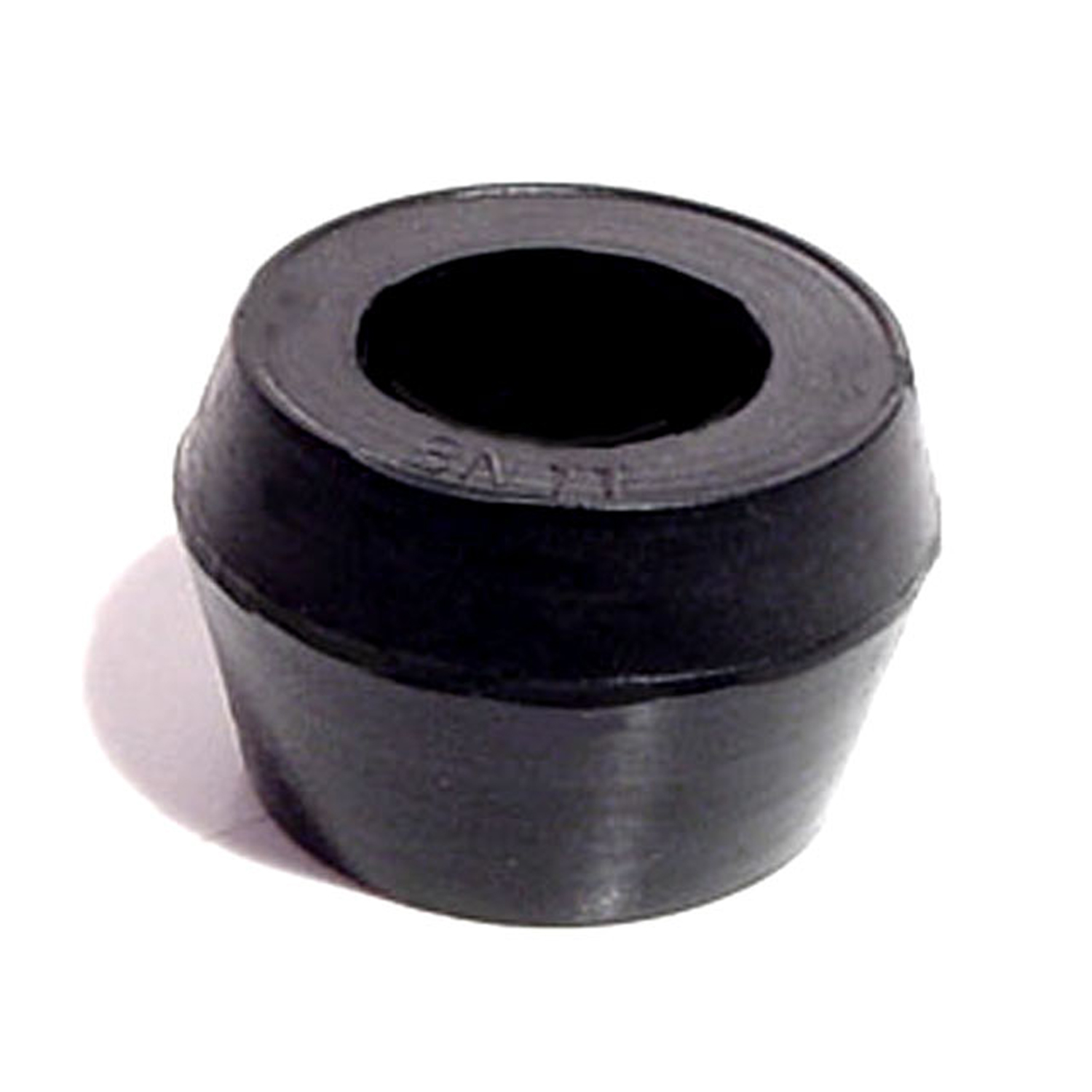 1968 Ford F-250 Shock Absorber Grommet. 1" bottom O.D-BN 11Shock Absorber Grommet. 1" bottom O.D., 3/4" high, with 5/8" I.D. Each
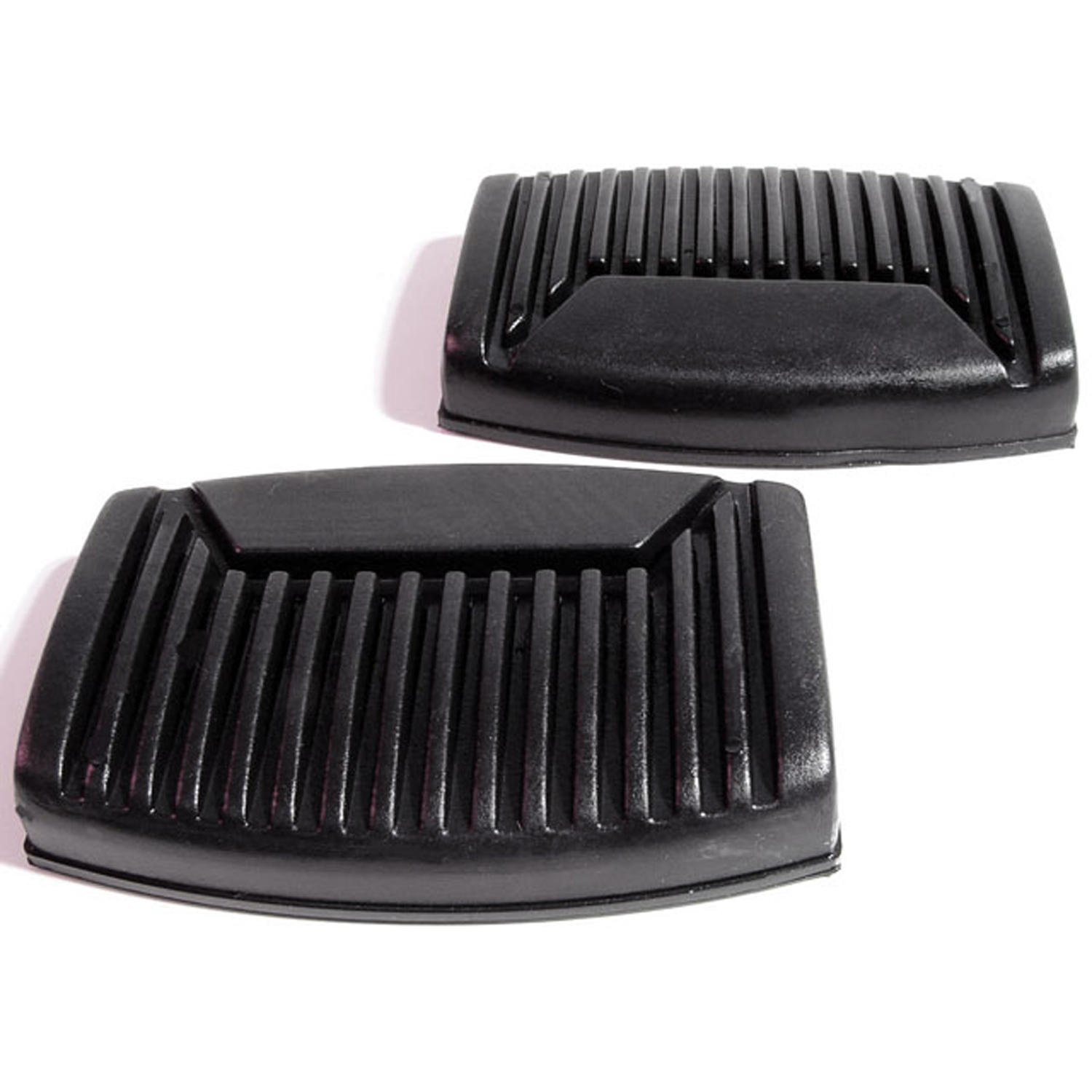 1968 Ford F-250 Clutch and Brake Pedal Pads. 3-1/4" wide X 2-1/4" long-CB 111Clutch and Brake Pedal Pads. 3-1/4" wide X 2-1/4" long. Pair
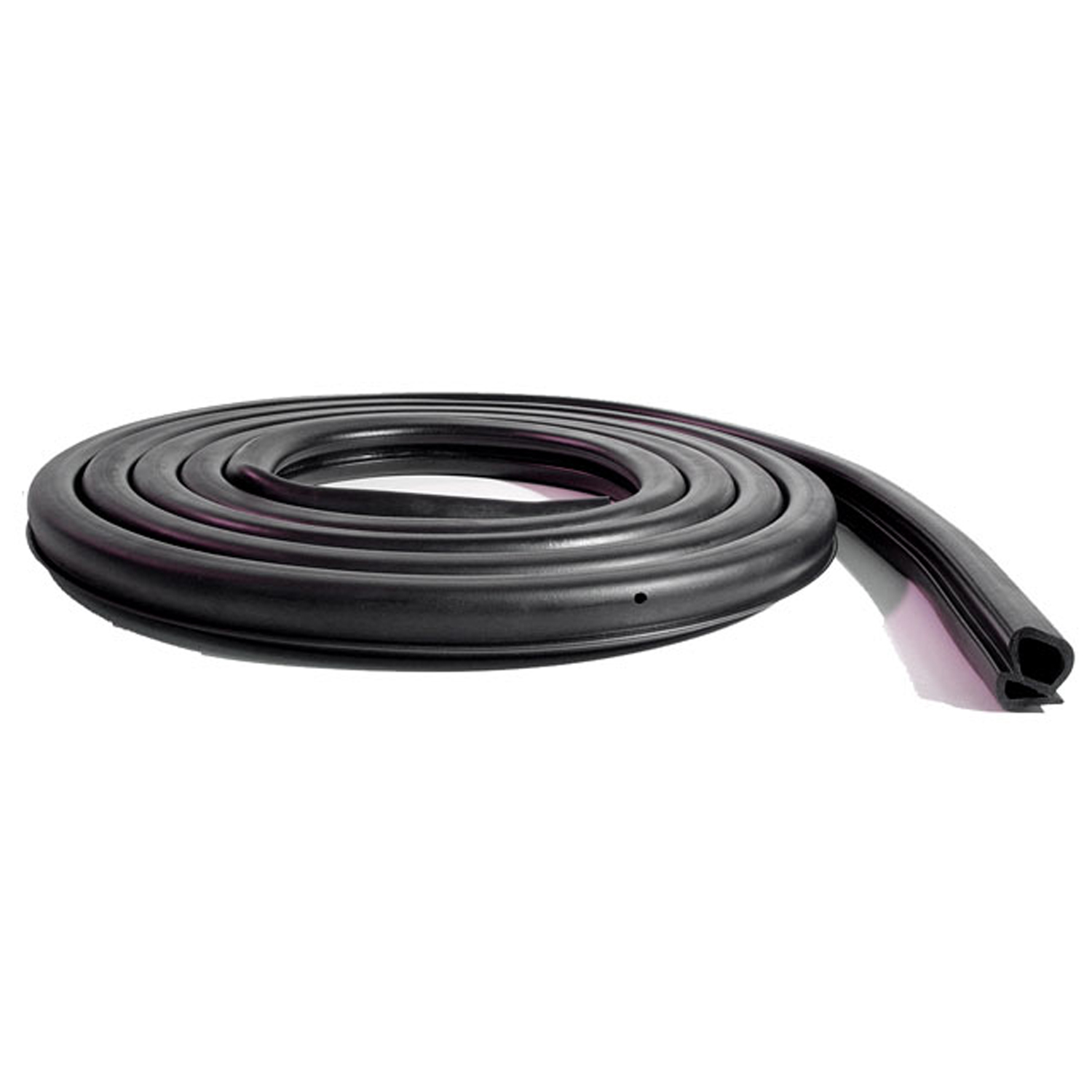 1968 Ford F-250 Door Seal. Fits either side. Each-LM 110-BDoor Seal. Fits either side. Each
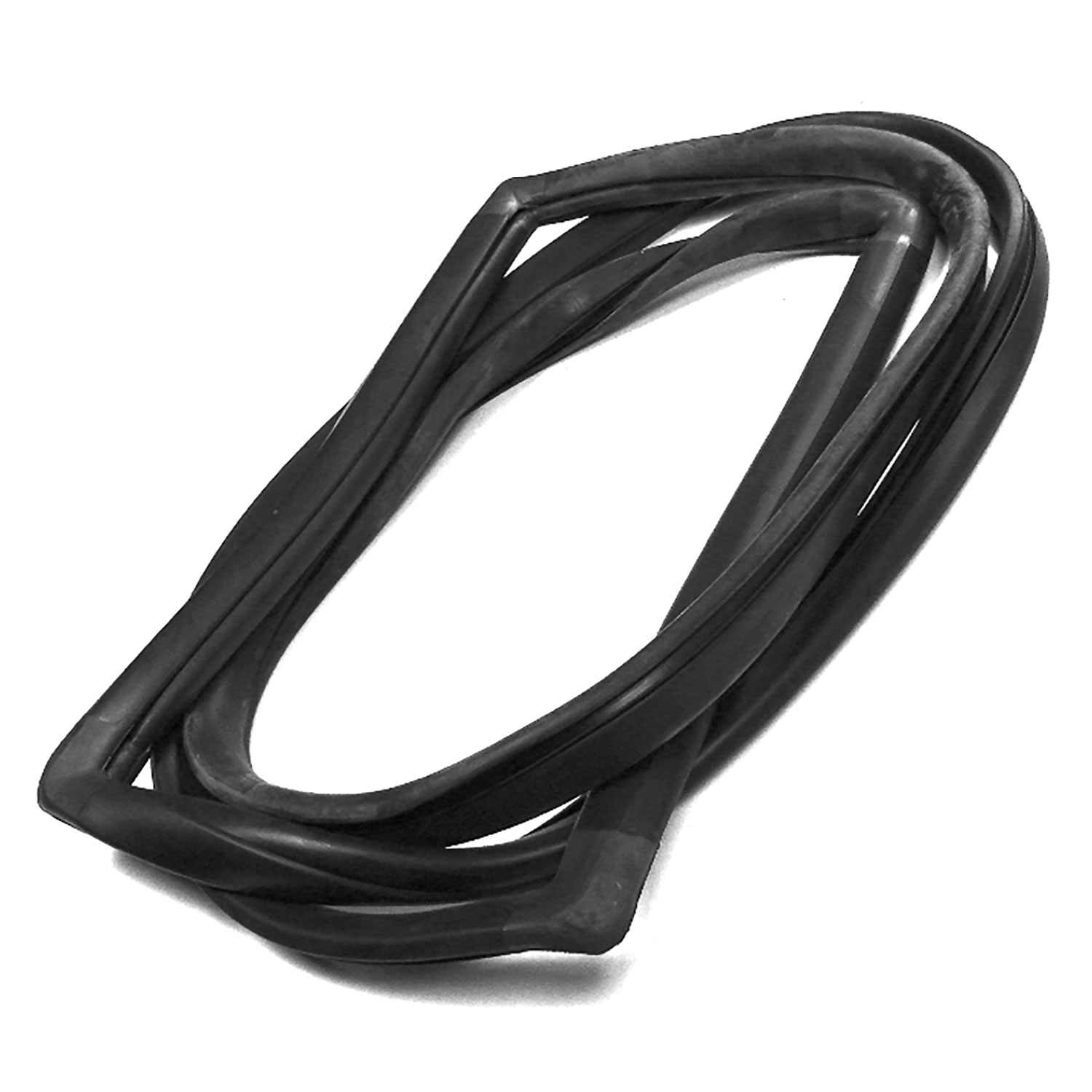 1968 Ford F-250 Windshield Seal, 67-79 Ford Full Size Truck, 78-79 Bronco, Without Trim Groove-VWS 3304-CThis windshield seal goes first on the glass and is installed using the rope-in method. This product is made from the original specs and with high quality ozone resistant EPDM rubber for a great fit and long life. This item is designed to be installed during glass replacement.
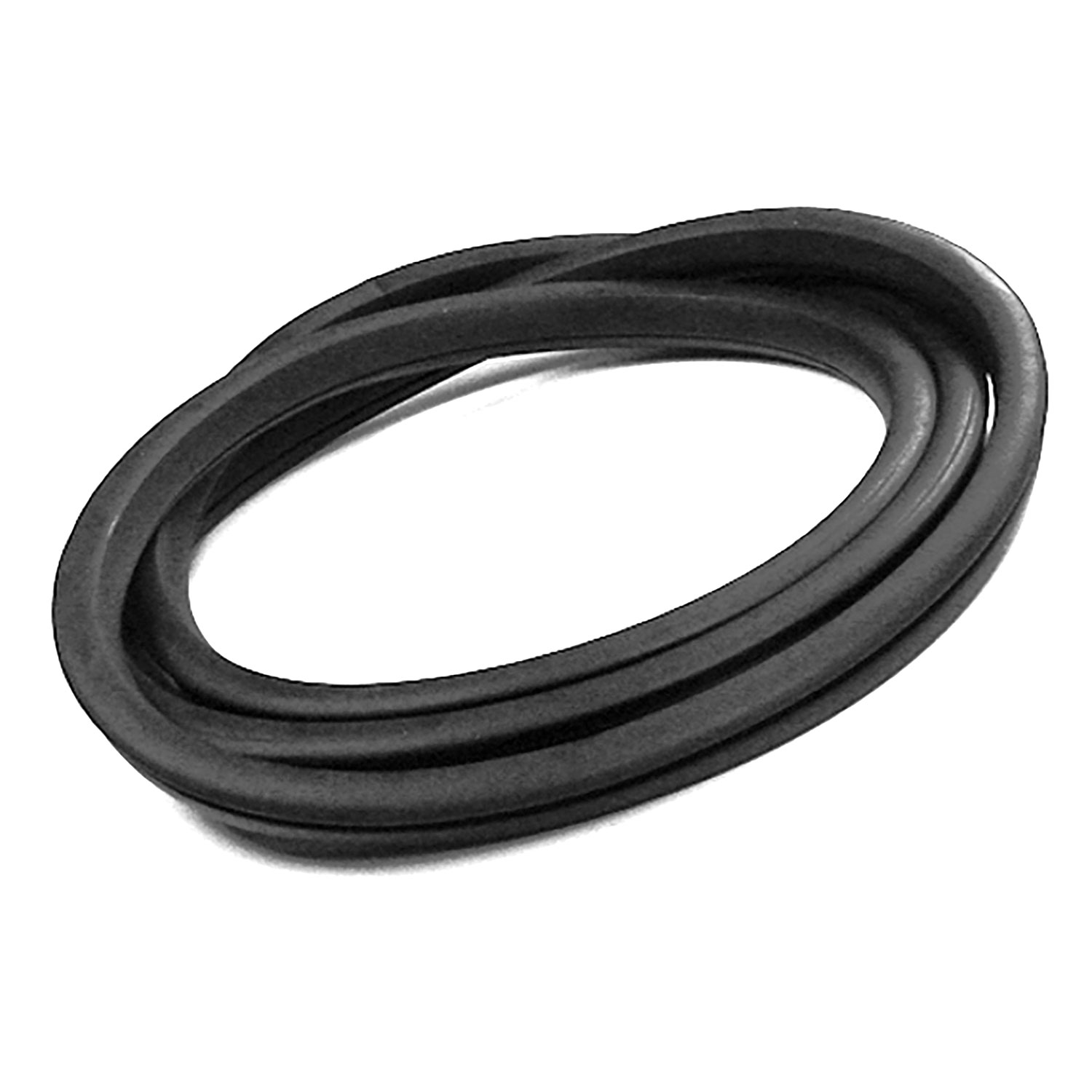 1968 Ford F-250 Rear Window Seal, 67-72 Ford Full Size Truck, Without Trim Groove, Each-VWS 3304-QThis rear window seal goes first on the body then the glass is placed in the opening. It is a standard black gasket without trim groove. This product is made from the original specs and with high quality ozone resistant materials for a great fit and long life. This item is designed to be installed during glass replacement.
Why Choose Metro?
For over 100 years, Metro Moulded Parts has been the pinnacle of quality in classic car restoration parts. Our commitment to precision and authenticity in every component ensures a perfect fit and an OEM-level appearance.
- Expert Craftsmanship & Quality: Each part is a testament to our dedication to reliability and perfection, crafted from original designs and thoroughly tested.
- Advanced Technology: We use cutting-edge techniques to create flawless, long-lasting parts that surpass others in performance.
- SuperSoft Sponge – The Ultimate Door Seal: Not only are our door seals 30% softer than competitors', but they're also guaranteed to never leak. They effectively reduce wind and road noise, enhancing your classic car's comfort and driving experience.
- Proudly American: Our parts are a product of American craftsmanship, made in the USA with a spirit of excellence and heritage.
- Unrivaled Warranty: We back our products with a 30-year industry-leading warranty, a testament to our confidence in their quality.
Join us in preserving the legacy of classic cars with parts that are crafted for perfection, not just made.