
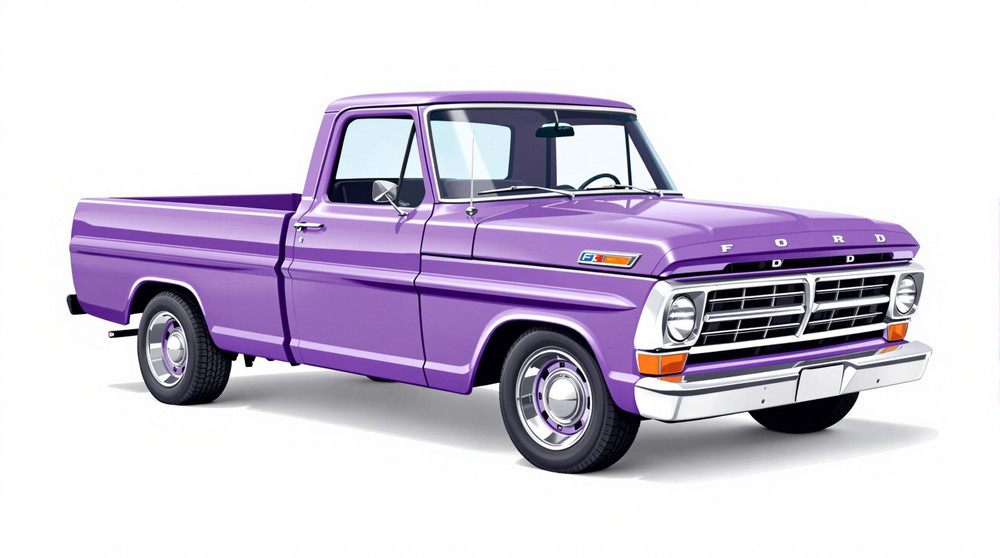
Image of 1969 Ford F-100, Note: These illustrations use artistic license and may differ from actual historical models.
Performance Metrics
Fundamental Metrics
Emotional Appeal
MMP Rating
| Engine Specifications | |
|---|---|
| Engine Options: | 240, 300, 302, 360, 390 CID |
| Displacement Range: | 240-390 cubic inches |
| Horsepower Range: | 150-325 HP |
| Torque: | 240-427 lb-ft |
| Compression Ratio: | 8.0:1 - 10.5:1 |
| Ignition System: | Conventional, distributor |
| Cooling System: | Liquid-cooled |
| Performance Specifications | |
| 0-60 Time: | 10-12 seconds |
| 1/4 Mile Time: | 17-19 seconds |
| Top Speed: | 100-120 mph |
| Transmission and Drive | |
| Drive Type: | Rear-wheel drive |
| Transmission Type: | 3-speed manual, 4-speed manual, 3-speed automatic |
| Fuel and Efficiency | |
| Fuel System Type: | Carburetor |
| MPG: | 10-12 mpg |
| Dimensions and Brakes | |
| Brakes: | Front disc and rear drum brakes |
| Wheelbase: | 115-129 inches |
| Weight: | 3,200-3,800 lbs |
Note: Specifications for classic cars are given to the best of our ability, considering the limited and variant data available.
1969 Ford F-100: The Classic Work Truck
The 1969 Ford F-100 is a square-shouldered, hard-working pickup from an era when trucks were beginning to serve double duty as both job-site tools and everyday transportation. Built by Ford Motor Company, the half-ton F-100 belonged to the fifth-generation F-Series, introduced for 1967 and produced through 1972. Its straightforward construction, broad engine lineup, and unmistakable styling helped make it a familiar sight on farms, construction sites, and suburban driveways.
One detail that makes this generation especially interesting is its Twin I-Beam front suspension on two-wheel-drive models. Ford introduced the design earlier in the decade, and it gave the F-100 a more composed ride than many traditional solid-front-axle pickups while retaining rugged, truck-friendly construction. The 1969 model also sits in an important period for Ford: the F-Series was becoming more comfortable and versatile without losing its practical roots.
1969 F-100 Styling and Trim
The F-100 wears the clean, angular look that defined late-1960s Ford trucks. Its upright cab, broad hood, flat body sides, and simple grille give it a purposeful stance. Dual round headlights and a wide front grille create a face that looks tough without being overdecorated. Compared with many modern pickups, the design is refreshingly uncomplicated: the proportions, brightwork, and paint do most of the talking.
Buyers could choose a Styleside bed, with its smooth, full-width bedside panels, or a Flareside bed, which has separate rear fenders and a narrower cargo box. Styleside trucks are often regarded as the classic all-purpose F-100, while the Flareside has a more old-fashioned, distinctive profile. Wheelbase and bed-length choices varied, and two-wheel drive and four-wheel drive were available. The F-100 could also be ordered as a chassis cab for specialized work.
Ford offered several trim and equipment levels, including Custom Cab and Ranger appointments. Depending on configuration, buyers could add extra exterior trim, upgraded interior details, and convenience equipment. Factory color choices varied by paint and trim combination, but period hues included shades such as Wimbledon White, Candyapple Red, Meadowlark Yellow, and Acapulco Blue. White and red trucks remain especially recognizable today, though original colors are prized by restorers and collectors.
A Simple, Durable Interior
Inside, the F-100 is practical rather than plush. The wide bench seat was typically covered in vinyl or durable cloth-and-vinyl material, while the dashboard used painted metal and a clear, functional instrument cluster. A large steering wheel, straightforward switches, and an uncluttered layout made the cab easy to use with work gloves on. Many trucks had rubber flooring, which could be hosed or swept clean more easily than carpet.
Options such as a radio, heater, upgraded seat trim, and automatic transmission made the truck more comfortable for daily use. Power steering and power brakes were also available, depending on specification. These features could make a noticeable difference, but even a well-equipped 1969 F-100 remains a hands-on vehicle: steering and braking feel more mechanical than they do in a modern pickup.
Engines, Transmissions, and Technology
The engine lineup varied with model, drivetrain, and market. F-100 buyers could find durable inline-six engines, including Ford’s 240- and 300-cubic-inch units, as well as V8 options such as the 360- and 390-cubic-inch engines. Availability and horsepower ratings depended on the exact configuration. Period horsepower figures were generally measured using the older gross-rating method, so they should not be compared directly with modern net horsepower ratings.
Manual transmissions were common, including three-speed and four-speed choices, with an automatic available for drivers who wanted an easier commute. The combination of a simple engine bay, conventional mechanical systems, and widely understood components is one reason the truck is still approachable for home mechanics.
The Twin I-Beam front suspension was a notable engineering feature on two-wheel-drive versions. Instead of using a single solid front axle, Ford used two independent beams pivoting from the frame. It helped the F-100 ride and steer more comfortably on ordinary roads while remaining robust enough for truck use. Four-wheel-drive models used a different front-end arrangement suited to off-road work.
Why the 1969 F-100 Mattered
The 1969 F-100 reflects a broader shift in American pickups. Trucks were still expected to haul materials, tow equipment, and survive rough use, but buyers increasingly wanted comfort and convenience as well. Ford’s fifth-generation trucks answered that demand with more trim choices, useful options, and a road-going suspension design, while keeping a durable body-on-frame construction.
The F-100 did not invent the pickup truck, but it helped define what a mainstream American pickup could be: a work vehicle during the week and useful personal transportation the rest of the time. Its clean styling has aged particularly well. Many later trucks grew larger, more complex, and more electronically equipped; the 1969 Ford remains appealing because its basic purpose and controls are immediately understandable.
1969 Ford F-100 Performance and Road Feel
There is no single acceleration or top-speed figure for every 1969 F-100. Engine choice, transmission, axle ratio, body style, load, and vehicle condition all make a difference. As a general estimate, a six-cylinder truck may take roughly 17 to 20 seconds to reach 60 mph, while a V8 example might manage the run in approximately 14 to 17 seconds. A healthy, lightly loaded truck may reach around 85 to 95 mph, but this is an estimate, not a meaningful measure of its intended performance.
The F-100 is happiest at steady, moderate speeds. The six-cylinder engines deliver useful low-speed pulling power, while the larger V8s add a deeper exhaust note and stronger acceleration. Under throttle, a V8 F-100 produces the familiar burble of a carbureted American truck. The engine sound is present in the cab, and wind and road noise are part of the experience rather than something the truck tries to hide.
On two-wheel-drive models, Twin I-Beam suspension can smooth out broken pavement better than the truck’s old-school appearance might suggest. Still, the ride is firm, especially with an empty bed. A loaded truck often feels more settled. On winding roads, expect slower steering response and more body movement than in a modern pickup. Four-wheel-drive models are better suited to loose surfaces and rough tracks, but their heavier front-end feel and slower steering are noticeable on pavement.
Braking and handling also depend heavily on condition. Worn suspension parts, old tires, neglected steering components, and decades of repairs can make a classic truck feel vague or unsettled. A properly maintained F-100 is far more pleasant and predictable than a tired one.
Living With a Classic Ford Pickup
Today, a 1969 F-100 might be a weekend cruiser, a work truck for light jobs, a restoration project, or a show vehicle. Its versatility is part of its appeal. A clean Styleside can look at home at a local cruise night, while a four-wheel-drive truck or Flareside model often draws attention for its distinctive stance.
Maintenance is generally straightforward for owners comfortable with basic mechanical work. The truck uses familiar, largely mechanical systems, and replacement parts and restoration components are widely available. Routine service includes attention to the carburetor, ignition, cooling system, brakes, suspension, and drivetrain. Rust is a major concern: inspect the cab corners, floors, rocker panels, bed, wheel arches, and frame carefully before buying.
One common issue to check on Twin I-Beam trucks is uneven tire wear. Worn or damaged suspension components and poor alignment can cause problems, so a pre-purchase inspection should include the front end, not just the engine. The fuel economy is modest by modern standards, and an older truck’s drum brakes, manual steering, and lack of contemporary safety equipment can take adjustment for drivers used to newer vehicles.
F-100 Facts and Common Questions
The 1969 F-100 was part of Ford’s fifth-generation F-Series, the 1967–1972 design often nicknamed the “bumpside” generation because of the raised body crease running along the sides. That crease is one of the easiest ways to recognize these trucks. The broader F-Series would go on to become America’s best-selling truck line, but that later success should not be mistaken for a special sales record set by the 1969 F-100 alone.
There is no widely established record for the 1969 F-100 involving speed, endurance, or a singular historical event. Its significance is more everyday than headline-grabbing: these trucks worked across farms, businesses, and households, and many survived because they were built to be repaired. Rare or desirable examples today are usually defined by their configuration and condition, such as an original four-wheel-drive truck, a well-preserved Flareside, or a particularly complete Ranger-trimmed example. Claims of celebrity ownership should be checked against documentation rather than assumed from an old listing.
Its most frequent criticisms are familiar to classic-truck owners: limited safety features, comparatively high fuel use, a firm ride when unladen, and the risk of hidden rust. Those drawbacks are balanced by its mechanical simplicity, strong parts support, and classic Ford styling.
1969 Ford F-100 Collector Values
Values vary sharply with rust, originality, engine, drivetrain, trim, and the quality of any restoration. As a broad current-market estimate, a project truck may sell for around $3,000 to $8,000. A usable driver in fair-to-good condition may fall roughly between $10,000 and $20,000. A well-restored or unusually clean example can reach approximately $25,000 to $45,000, with exceptional, highly original, or especially desirable four-wheel-drive trucks sometimes exceeding that range.
Ford’s published production information is not always broken down cleanly by F-100 configuration. The entire F-Series was produced in large numbers in 1969, with total-series production commonly estimated at roughly 400,000 trucks. The F-100 represented a substantial share, but an exact F-100-only production figure is difficult to establish with confidence. It is not a scarce model in the broad sense, though finding a rust-free, original example can be much harder than finding a project.
In recent years, interest in classic pickups has supported values for solid, well-presented trucks, while rough projects remain much more price-sensitive. The best examples have generally appreciated over the long term, but market prices can rise or cool depending on region, condition, and collector demand. Originality and documented restoration quality tend to matter more than flashy modifications when resale time comes.
The Lasting Appeal of the 1969 F-100
The 1969 Ford F-100 combines recognizable late-1960s styling, practical engineering, and a mechanical simplicity that still rewards careful ownership. Its Twin I-Beam suspension helped make the two-wheel-drive truck more comfortable on the road, while its range of engines and body styles let buyers tailor it to work or personal use. It is not quick, quiet, or economical by modern standards, but it remains useful, repairable, and full of character.
More than half a century later, the F-100’s appeal is easy to understand: it looks like a truck, feels like a truck, and tells its story through every turn of the wheel and rumble from under the hood.
1969 Ford F-100 Catalog of Parts
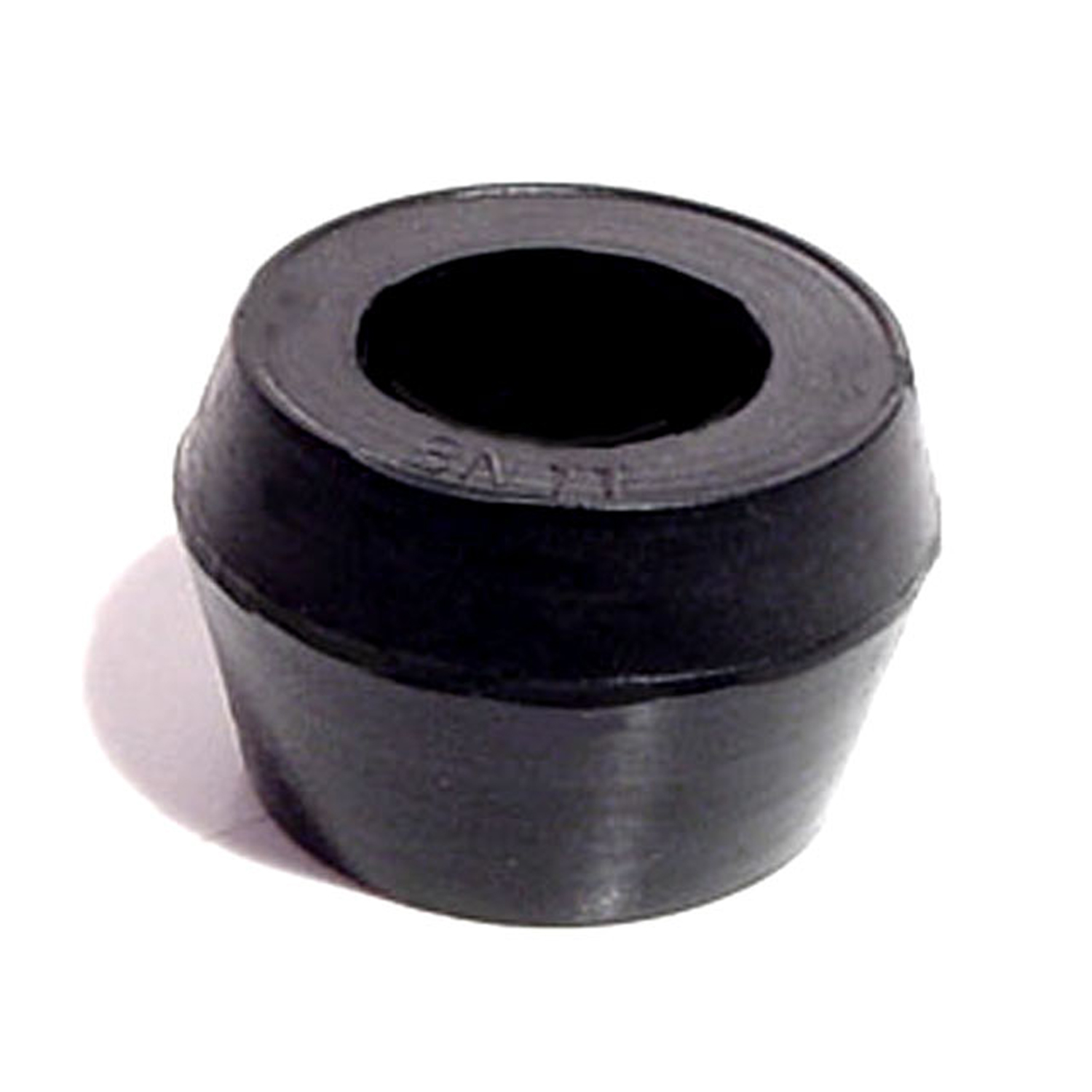 1969 Ford F-100 Shock Absorber Grommet. 1" bottom O.D-BN 11Shock Absorber Grommet. 1" bottom O.D., 3/4" high, with 5/8" I.D. Each
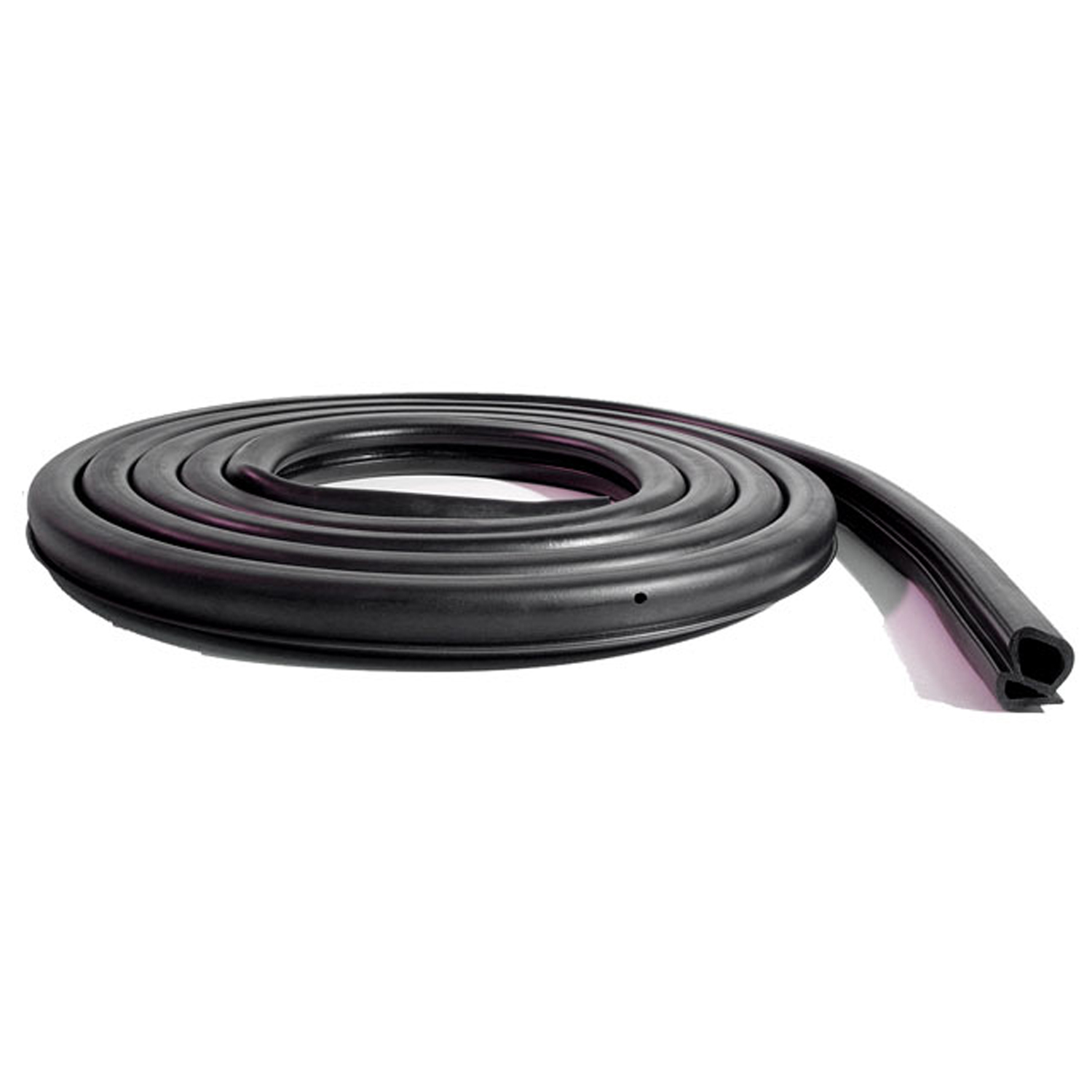 1969 Ford F-100 Door Seal. Fits either side. Each-LM 110-BDoor Seal. Fits either side. Each
 1969 Ford F-100 Window Crank Handle Knob and Attaching Parts. Black. Each-RP 400Window Crank Handle Knob and Attaching Parts. Black. Each
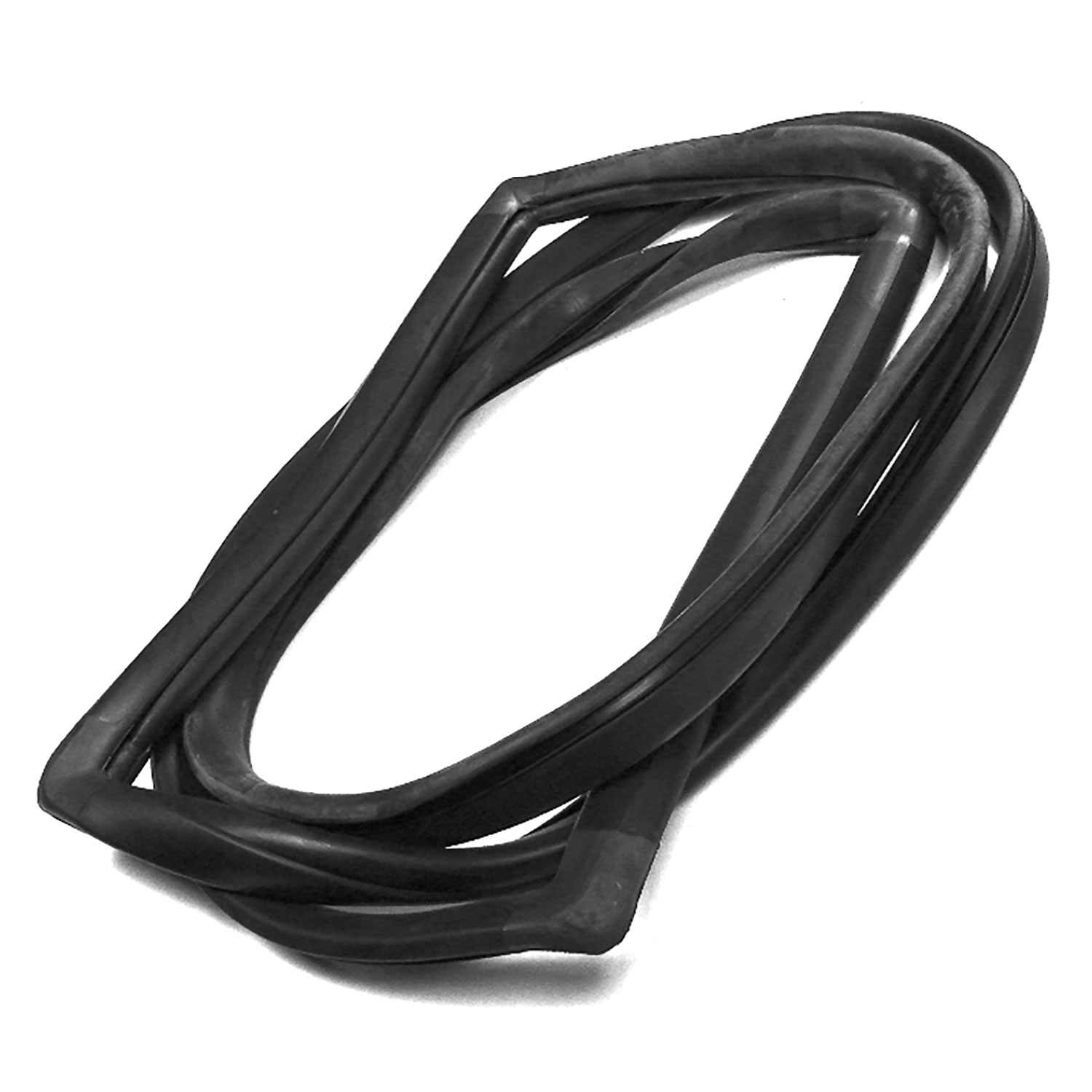 1969 Ford F-100 Windshield Seal, 67-79 Ford Full Size Truck, 78-79 Bronco, Without Trim Groove-VWS 3304-CThis windshield seal goes first on the glass and is installed using the rope-in method. This product is made from the original specs and with high quality ozone resistant EPDM rubber for a great fit and long life. This item is designed to be installed during glass replacement.
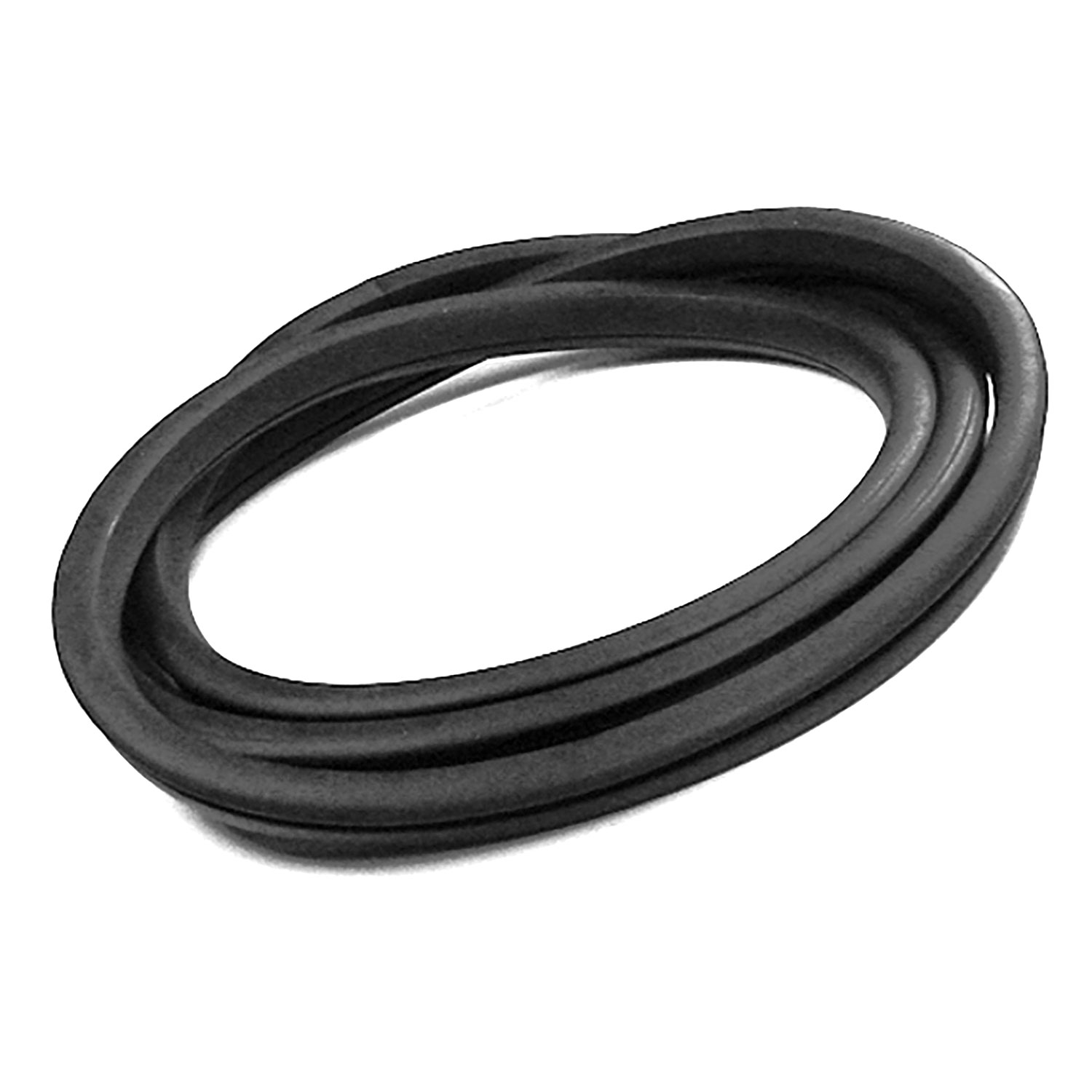 1969 Ford F-100 Rear Window Seal, 67-72 Ford Full Size Truck, Without Trim Groove, Each-VWS 3304-QThis rear window seal goes first on the body then the glass is placed in the opening. It is a standard black gasket without trim groove. This product is made from the original specs and with high quality ozone resistant materials for a great fit and long life. This item is designed to be installed during glass replacement.
Why Choose Metro?
For over 100 years, Metro Moulded Parts has been the pinnacle of quality in classic car restoration parts. Our commitment to precision and authenticity in every component ensures a perfect fit and an OEM-level appearance.
- Expert Craftsmanship & Quality: Each part is a testament to our dedication to reliability and perfection, crafted from original designs and thoroughly tested.
- Advanced Technology: We use cutting-edge techniques to create flawless, long-lasting parts that surpass others in performance.
- SuperSoft Sponge – The Ultimate Door Seal: Not only are our door seals 30% softer than competitors', but they're also guaranteed to never leak. They effectively reduce wind and road noise, enhancing your classic car's comfort and driving experience.
- Proudly American: Our parts are a product of American craftsmanship, made in the USA with a spirit of excellence and heritage.
- Unrivaled Warranty: We back our products with a 30-year industry-leading warranty, a testament to our confidence in their quality.
Join us in preserving the legacy of classic cars with parts that are crafted for perfection, not just made.