
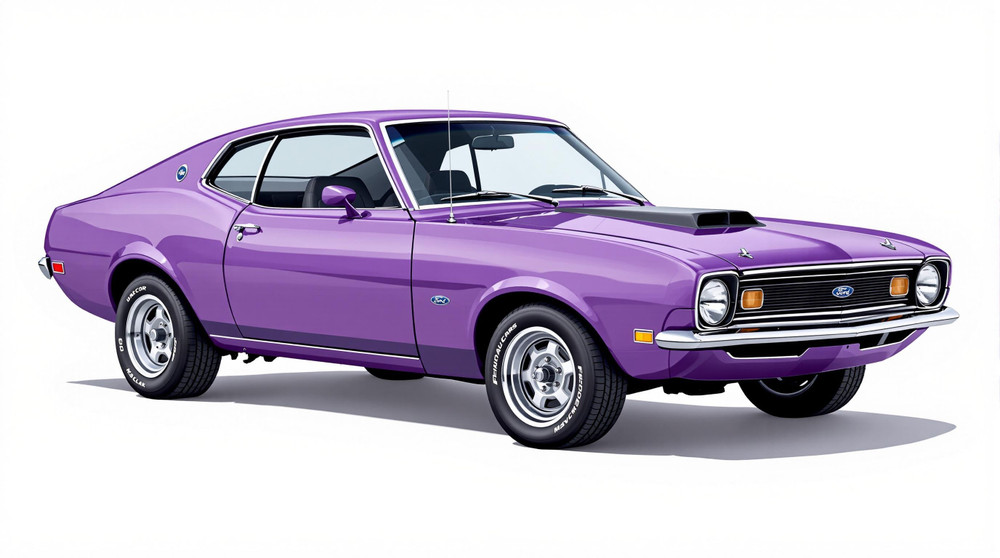
Image of 1970 Ford Maverick, Note: These illustrations use artistic license and may differ from actual historical models.
Performance Metrics
Fundamental Metrics
Emotional Appeal
MMP Rating
| Engine Specifications | |
|---|---|
| Engine: | 170 CID I6, 200 CID I6, 250 CID I6, 302 CID V8 |
| Displacement: | 170-302 cubic inches |
| Horsepower: | 105-210 hp |
| Torque: | 158-296 lb-ft |
| Compression Ratio: | 8.3:1 - 9.0:1 |
| Ignition System: | Conventional, distributor |
| Cooling System: | Liquid-cooled |
| Performance Specifications | |
| 0-60 Time: | 10-12 seconds |
| 1/4 Mile Time: | 17-19 seconds |
| Top Speed: | 105-120 mph |
| Transmission and Drive | |
| Drive Type: | Rear-wheel drive |
| Transmission Type: | 3-speed manual, 3-speed automatic |
| Fuel and Efficiency | |
| Fuel System Type: | Carburetor |
| MPG: | 15-20 mpg |
| Dimensions and Brakes | |
| Brakes: | Front disc, rear drum |
| Wheelbase: | 103.0 inches |
| Weight: | 2,800-3,000 lbs |
Note: Specifications for classic cars are given to the best of our ability, considering the limited and variant data available.
1970 Ford Maverick: Ford’s Affordable Compact
The 1970 Ford Maverick made a big impression by keeping things simple: it was a compact, good-looking car designed to put affordable American motoring within reach. Built by Ford Motor Company, the Maverick arrived in 1969 as a 1970 model, when buyers were paying closer attention to fuel economy and smaller cars were gaining ground against larger domestic models and imported competitors.
Ford based the Maverick on the compact-car thinking behind the Falcon, but gave it fresh styling and a new identity. Its straightforward engineering helped keep the price down, while its long hood and sporty roofline gave it more presence than its budget-friendly mission might suggest. A notable early success followed: Ford built roughly 579,000 Mavericks for the 1970 model year, making its first-year run an extraordinary one for a new model.
Clean Lines and a Grabber Attitude
The original Maverick was a two-door sedan with a long hood, short rear deck, and gently sloping roof. Its simple, nearly full-width grille and tidy body sides gave it a clean, modern look without expensive trim or elaborate ornamentation. The proportions hinted at the Mustang, but the Maverick was smaller and more practical, with a distinctively upright rear end and a compact footprint.
Inside, the Maverick kept to the same value-minded brief. The cabin was functional rather than luxurious, with vinyl upholstery, simple door panels, straightforward controls, and a broad bench seat. Hard-wearing materials were appropriate for an economical car, though buyers looking for plush trim or a richly finished dashboard would have found little of it here. Available equipment could include items such as an upgraded interior, radio, air conditioning, and power conveniences, depending on the car’s configuration.
Technology was modest by design. The Maverick used conventional front-engine, rear-wheel-drive construction, with a compact instrument panel and familiar mechanical controls. Its appeal was not advanced electronics or groundbreaking equipment. It was a car that was easy to understand, easy to build, and relatively easy to service.
Color choices varied by year and trim, but buyers could choose from a range of solid and metallic finishes. Bright, high-impact colors suited the Maverick’s youthful image, while more restrained blues, greens, whites, and earth tones offered a quieter look. The standout choice for enthusiasts was often a bold shade paired with the sporty Grabber package.
The 1970 lineup began as a two-door sedan range. The four-door sedan joined for 1971, so it is not part of the original 1970 body-style offering. The Grabber package, introduced during the Maverick’s early run, added visual punch with distinctive exterior details and sporty trim. For many collectors, a two-door Grabber is the most recognizable and desirable version of the early car.
Why the Maverick Mattered
The Maverick was a timely answer to a changing market. Compact cars had become increasingly important, and Ford needed a simple, affordable model that could compete without asking buyers to sacrifice all style or comfort. Rather than reinventing the automobile, Ford focused on efficient packaging, familiar mechanical components, and a low starting price.
That approach set the Maverick apart from more elaborate cars of its era. Its compact size made it easier to maneuver and park than a full-size sedan, while rear-wheel drive and conventional construction kept it recognizable to American buyers. The car also demonstrated how much value could be built into a basic platform through options and appearance packages. Its legacy is less about introducing a single groundbreaking technology and more about showing how a straightforward compact could become a major sales success.
Six-Cylinder Ease or V8 Punch
Engine availability depended on the specific car and its equipment. Early Mavericks were offered with inline-six engines, including 170- and 200-cubic-inch versions, with a 250-cubic-inch six also available in the lineup. A 302-cubic-inch V8 became an important option for buyers who wanted substantially stronger performance. Transmission choices included manual and automatic setups, with exact availability varying by engine and production timing.
Performance varies considerably between these configurations. A six-cylinder Maverick is best understood as a relaxed, economical compact rather than a muscle car. Period-test figures differ, but a 170-powered example may take roughly 15 to 17 seconds to reach 60 mph. A 302 V8 car can make the same run in around 9 to 11 seconds when properly equipped and in good condition. Top speed also depends on engine, gearing, condition, and test method; roughly 85 to 95 mph is a reasonable ballpark for many six-cylinder cars, while a healthy V8 example may be capable of around 100 mph or somewhat more. These are estimates, not guaranteed factory figures.
On the road, the Maverick feels light and uncomplicated. Its compact dimensions are an advantage in town, and the driver gets a clear view over the hood and relatively simple controls. The suspension is conventional, with independent front suspension and a leaf-sprung rear axle. It can absorb ordinary road imperfections comfortably, but rough pavement may bring some bounce and body movement, particularly in a worn example.
On winding roads, the Maverick is more about an easygoing rhythm than precision handling. Steering feel and effort depend on whether the car has power assistance, and tire condition and suspension wear make a major difference today. A six-cylinder car has a lighter nose and a calmer character. The V8 adds satisfying acceleration and a deeper exhaust note, but it also makes the front end feel heavier. With either engine, expect the direct mechanical feel of a classic car rather than modern levels of grip, braking, or refinement.
From behind the wheel, a well-kept Maverick rewards smooth inputs. The six-cylinder engine has a steady, workmanlike sound, while the V8 delivers the rumble enthusiasts seek. The driving experience is simple and hands-on: you feel the road, hear the engine, and operate controls that do not try to hide the car’s mechanical character.
Living With a Maverick
Today, Mavericks serve as weekend cruisers, show cars, restoration projects, and, in some cases, affordable classic-car drivers. A stock six-cylinder model suits relaxed touring and local use. A V8 car or Grabber makes a stronger choice for someone seeking more performance and visual distinction. Modified Mavericks also appear in drag racing and street-machine circles, though heavily altered examples are a different proposition from original cars.
Mechanical simplicity is one of the Maverick’s ownership advantages. Many repairs are familiar to classic-car mechanics, and commonly serviced items do not require specialized electronics or diagnostic equipment. Parts availability is generally workable, although trim, interior pieces, and some model-specific details can take more searching than routine mechanical components.
Condition matters more than reputation. Before buying, inspect the body and underside carefully for rust, especially around floor pans, lower body sections, wheel openings, and structural areas. Check for evidence of old accident repairs and inspect the suspension, brakes, steering, and cooling system. A car that starts and drives well may still need substantial work if its body or interior has deteriorated.
Maverick Trivia and Common Criticisms
The name “Maverick” suited Ford’s independent, fresh-start image for the car. The Grabber package helped give the compact a sportier personality, and the available V8 meant the Maverick could offer more than basic transportation. Its dramatic first-year production total remains one of the most striking facts in the model’s story.
There is no single famous speed or endurance record that defines the 1970 Maverick, and it is not known for a celebrity connection comparable to some better-publicized classic cars. Its most significant historical achievement was commercial: it quickly established itself as a major success in Ford’s compact lineup.
Common criticisms are straightforward. The base car was spartan, handling and braking were modest by modern standards, and six-cylinder performance could feel leisurely. Rust is a serious concern on surviving cars, as it is with many vehicles of this age. The Maverick also lacks the universal parts and restoration ecosystem of a Mustang, although its relative simplicity remains a strong point.
1970 Ford Maverick Values and Rarity
Values depend on condition, originality, engine, options, and location. As a broad present-day estimate, a project car may sell for about $3,000 to $7,000. A usable driver or decent restoration candidate often falls around $8,000 to $15,000, while a clean, well-restored example may bring approximately $18,000 to $30,000. An especially desirable, correctly presented Grabber or V8 car can exceed that range, with exceptional examples potentially reaching $30,000 to $45,000 or more.
Those figures are general market estimates, not an appraisal. Documentation, rust-free bodywork, original equipment, and restoration quality can shift the price considerably. Buyers should also distinguish between a genuinely well-restored car and one that has received a quick cosmetic refresh.
With roughly 579,000 cars produced for the 1970 model year, the Maverick itself is not rare in the broad sense. The better-preserved examples, desirable engine combinations, and authentic Grabber models are much harder to find. Production numbers for particular option combinations can be difficult to verify, so claims of rarity deserve supporting documentation.
Interest in Mavericks has generally grown as enthusiasts look beyond the most famous 1960s and 1970s muscle cars. Values have strengthened for clean, distinctive examples, especially Grabbers, but the Maverick remains more affordable than many comparable-period performance models. Its market is best described as steadily appreciating for top-quality cars, with ordinary drivers and projects still offering a relatively accessible entry point.
A Compact Classic With Real Character
The 1970 Ford Maverick combined compact dimensions, familiar engineering, and sharp, uncomplicated styling at exactly the right moment. It was not a luxury car or a technological showpiece. Its success came from being affordable, practical, and more engaging in appearance than a basic economy car had to be.
More than half a century later, the Maverick still makes a compelling classic: approachable to own, enjoyable to drive, and increasingly appreciated for its place in Ford history. It may have been built as the sensible choice, but the best examples prove that sensible can still have plenty of style.
1970 Ford Maverick Catalog of Parts
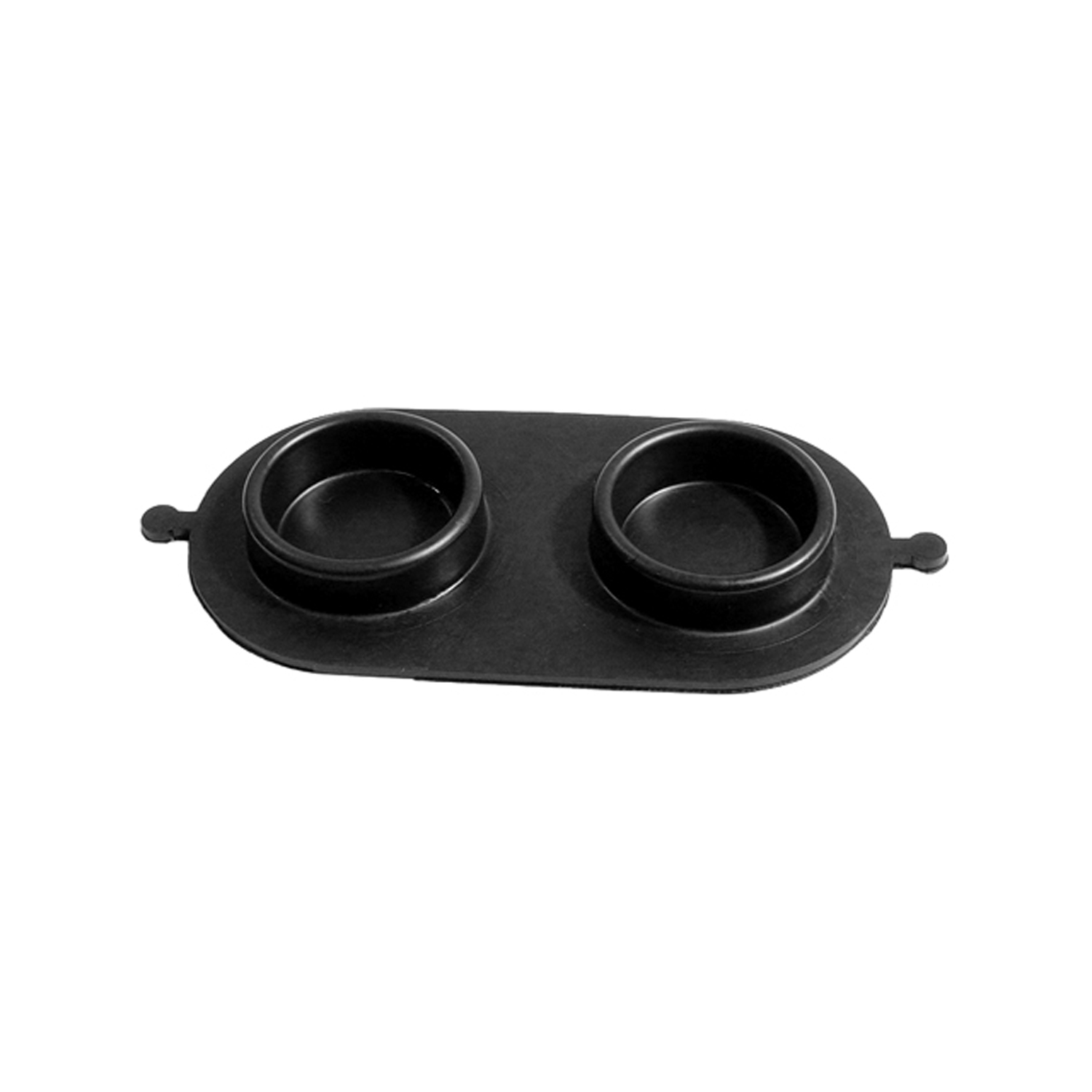 1970 Ford Maverick Brake Master Cylinder Cover Seal. Replaces OEM #C7AZ2167-A-RP 2-BBrake Master Cylinder Cover Seal. Replaces OEM #C7AZ2167-A. Each
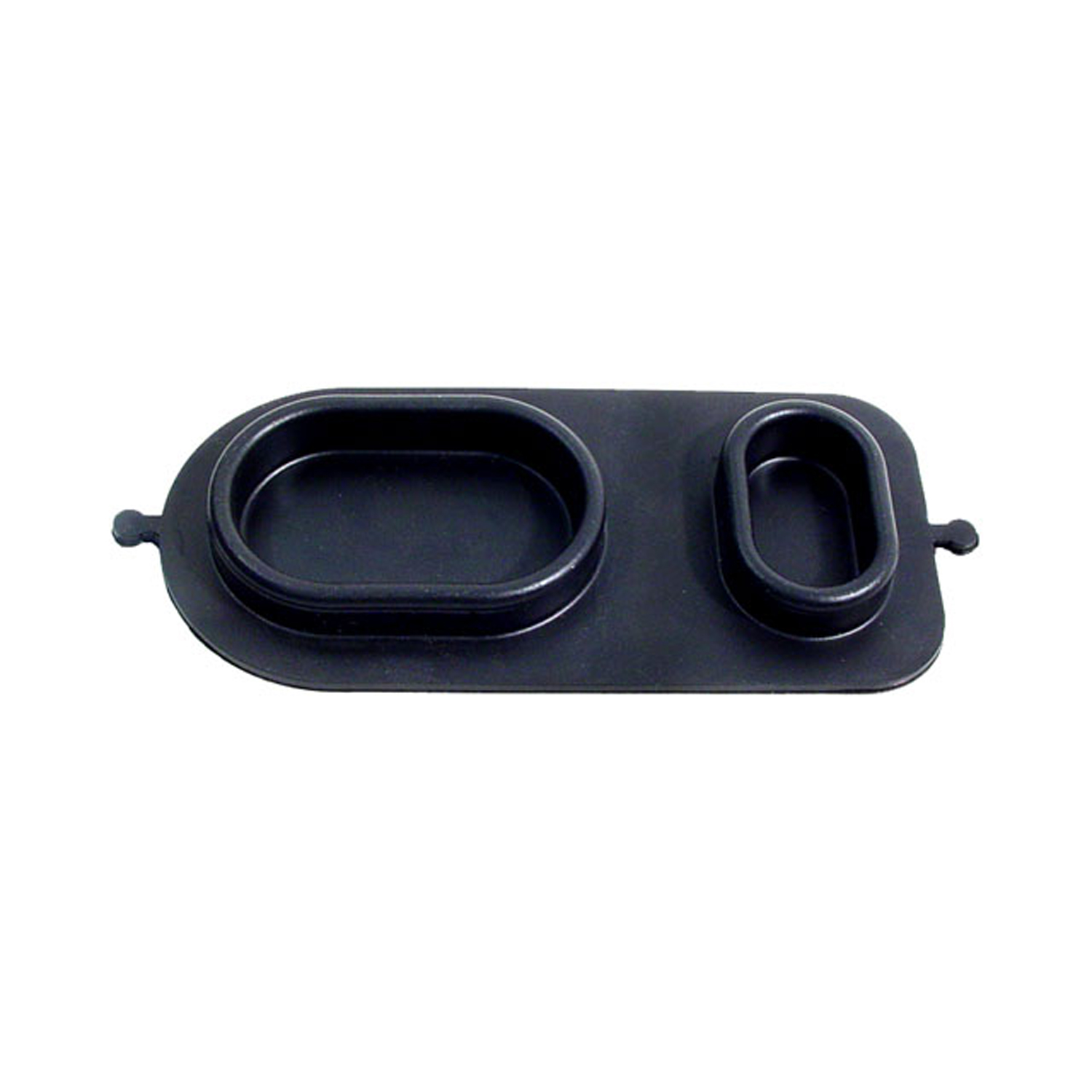 1970 Ford Maverick Brake Master Cylinder Cover Seal. Replaces OEM #5470861-RP 2-CBrake Master Cylinder Cover Seal. Replaces OEM #5470861. 5-9/16" long, 2-5/8" wide. Each
 1970 Ford Maverick Windshield and Rear Windshield Reveal Molding Clip-WF 226Windshield and Rear Windshield Reveal Molding Clip. Made of steel. Each
 1970 Ford Maverick Window Grommet. Plastic. 1-1/2" O.D., 3/8" I.D. Each-WF 981Window Grommet. Plastic. 1-1/2" O.D., 3/8" I.D. Each
Why Choose Metro?
For over 100 years, Metro Moulded Parts has been the pinnacle of quality in classic car restoration parts. Our commitment to precision and authenticity in every component ensures a perfect fit and an OEM-level appearance.
- Expert Craftsmanship & Quality: Each part is a testament to our dedication to reliability and perfection, crafted from original designs and thoroughly tested.
- Advanced Technology: We use cutting-edge techniques to create flawless, long-lasting parts that surpass others in performance.
- SuperSoft Sponge – The Ultimate Door Seal: Not only are our door seals 30% softer than competitors', but they're also guaranteed to never leak. They effectively reduce wind and road noise, enhancing your classic car's comfort and driving experience.
- Proudly American: Our parts are a product of American craftsmanship, made in the USA with a spirit of excellence and heritage.
- Unrivaled Warranty: We back our products with a 30-year industry-leading warranty, a testament to our confidence in their quality.
Join us in preserving the legacy of classic cars with parts that are crafted for perfection, not just made.