
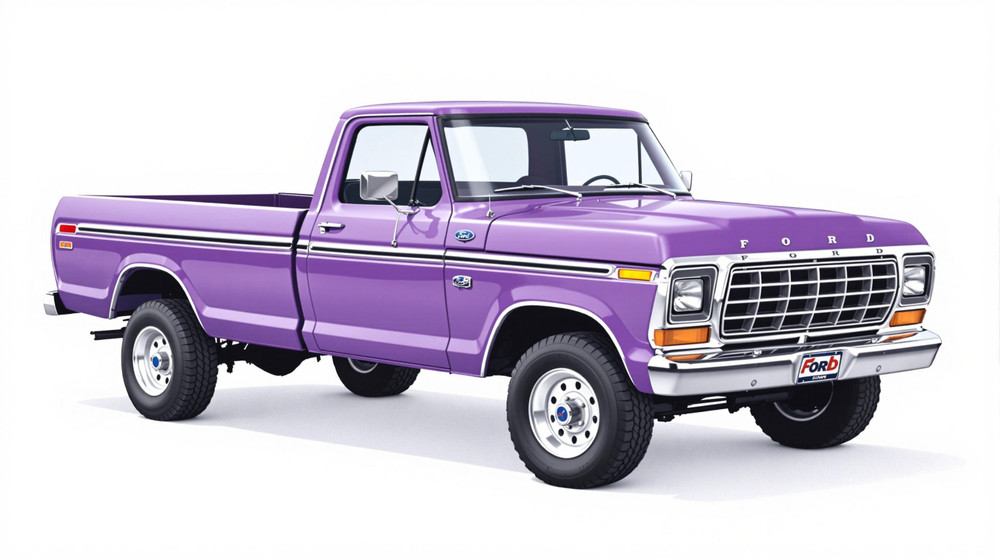
Image of 1978 Ford F-250, Note: These illustrations use artistic license and may differ from actual historical models.
Performance Metrics
Fundamental Metrics
Emotional Appeal
MMP Rating
| Engine Specifications | |
|---|---|
| Engine Options: | 4.9L 300 Cu. In. I6, 5.8L 351 Cu. In. V8, 6.6L 400 Cu. In. V8, 7.5L 460 Cu. In. V8 |
| Displacement Range: | 300-460 Cu. In. |
| Horsepower Range: | 114-225 HP |
| Torque: | 223-388 lb-ft |
| Compression Ratio: | 8.0:1 - 8.4:1 |
| Ignition System: | Conventional Distributor |
| Cooling System: | Liquid Cooled |
| Performance Specifications | |
| 0-60 Time: | Estimated 10-15 seconds |
| 1/4 Mile Time: | Estimated 17-20 seconds |
| Top Speed: | 85-100 mph |
| Transmission and Drive | |
| Drive Type: | Rear Wheel Drive (RWD), Four Wheel Drive (4WD) |
| Transmission Type: | 3-Speed Automatic, 4-Speed Manual |
| Fuel and Efficiency | |
| Fuel System Type: | Carburetor |
| MPG: | Estimated 10-14 MPG |
| Dimensions and Brakes | |
| Brakes: | Front Disc / Rear Drum |
| Wheelbase: | 133-155 inches |
| Weight: | 4,500-5,500 lbs |
Note: Specifications for classic cars are given to the best of our ability, considering the limited and variant data available.
1978 Ford F-250: A Classic Built to Work
The 1978 Ford F-250 was made for jobs that asked more of a truck than simply getting from A to B. Part of Ford’s sixth-generation F-Series, it combined a rugged body-on-frame chassis, a broad choice of engines and configurations, and the kind of straightforward utility that made these pickups familiar sights on farms, construction sites, and highways across America.
Ford introduced the sixth-generation F-Series for 1973, refining the formula behind its popular full-size trucks. By 1978, the F-Series had become a major force in the pickup market, and the F-250 occupied a useful middle ground: more capable than a light-duty F-100, but generally less specialized than an F-350. One detail that helps identify a 1978 model is its updated front styling, including rectangular headlamps that gave the truck a more modern face than earlier sixth-generation F-Series pickups.
Today, the F-250’s appeal is not based on luxury or speed. It is the honest, mechanical character of a truck designed to earn its keep, paired with the unmistakable proportions of a late-1970s Ford.
Square Shoulders and Practical Design
The 1978 F-250 wears the squared-off styling that defined Ford’s trucks of the era. Its long, flat hood leads into a broad grille, while a tall cab, upright windshield, and straight body sides give it a purposeful, no-nonsense profile. Depending on trim and configuration, brightwork could add a little polish, but the basic look remained functional. The rectangular headlights introduced for the 1978 front-end update are one of its clearest visual signatures.
Buyers could choose a regular cab or the roomier SuperCab, along with Styleside and Flareside bed configurations. Styleside models, with their slab-sided bed and wide cargo floor, were the common all-rounders. Flareside trucks used separate rear fenders and a narrower bed, giving the pickup a more traditional, old-school appearance. Two-wheel drive and four-wheel drive were available, and equipment packages such as Camper Special catered to owners hauling campers or towing substantial loads.
Trim levels ranged from work-focused versions to better-equipped Ranger and Ranger XLT models. Inside, the cabin was deliberately simple. Durable vinyl upholstery, easy-clean flooring, large physical controls, and a wide bench seat suited daily work. Higher trims could add carpet, upgraded upholstery, extra bright trim, and woodgrain-style accents. The materials were sturdy rather than plush, and the design favored visibility and ease of use over passenger-car refinement.
Technology was practical for its time. Depending on the truck’s equipment, buyers could order power steering, power brakes, air conditioning, a radio, and an automatic transmission. The F-250 was not an electronics showcase. Its appeal lay in familiar mechanical systems that could be understood and serviced without specialized diagnostic equipment.
Ford offered the truck in a range of solid and metallic colors, with availability depending on trim and production details. White, red, blue, and earth-tone shades all suited the truck’s work-ready character. White and red are particularly common choices seen on surviving examples, while period two-tone paint can make a well-kept truck stand out at a show or cruise night.
Engines, Chassis, and Work-Truck Roots
Engine availability varied by configuration and market, but the 1978 F-250 could be ordered with a 300-cubic-inch inline-six or V8 options that included 351- and 400-cubic-inch engines, as well as the 460-cubic-inch big-block in appropriate configurations. The exact combination depended on factors such as drivetrain and equipment. Manual transmissions and Ford’s C6 automatic were among the available choices.
The F-250’s traditional construction was central to its character. A separate ladder-style frame supported the cab and bed, while heavy-duty suspension and axle components were selected for carrying loads and towing. Four-wheel-drive models added the extra traction needed for rough job sites, snow, and unpaved roads. This was conventional engineering, but it was well suited to the truck’s purpose and helped make repairs familiar to many independent mechanics and owners.
Why the 1978 F-250 Matters
The F-250 did not introduce a revolutionary technology or reshape pickup design on its own. Its significance is more practical: it represents the mature, work-oriented formula that helped make the F-Series a fixture of American life. Ford offered customers a wide range of cab, bed, engine, drivetrain, and trim combinations, letting one basic platform serve as a farm truck, tow vehicle, family pickup, or job-site tool.
That flexibility helped distinguish the F-Series from more narrowly focused vehicles. The F-250 could be ordered as a relatively plain workhorse or equipped for comfort and recreational use. Its body-on-frame layout and conventional mechanicals also made it adaptable to different jobs and easier to keep going in areas where dealership service or specialized equipment might not be close at hand.
Its influence is visible in the continued popularity of full-size pickups that balance work capability with everyday usability. The 1978 model is not a technological landmark, but it captures an important stage in the development of the modern American pickup: useful, configurable, and increasingly at home outside the workplace as well as in it.
Performance and Road Manners
There is no single meaningful 0-to-60-mph or top-speed figure for every 1978 F-250. Engine choice, axle ratio, transmission, cab and bed configuration, tire size, vehicle condition, and load all make a considerable difference. As a broad estimate, a healthy V8 truck might take roughly 12 to 16 seconds to reach 60 mph, while an inline-six or heavily geared truck could be slower. A lightly loaded truck may approach roughly 85 to 95 mph, but it was built for useful pulling power, not high-speed performance. These are general estimates rather than a single factory specification.
On the road, the F-250 feels substantial. Its steering is slower and less precise than that of a modern pickup, and its large footprint is noticeable in parking lots and tight streets. With a load in the bed or a trailer attached, the truck feels more settled. Empty, its heavy-duty suspension can ride firmly, especially over potholes and sharp road joints. Bumps are felt rather than filtered away, which is part of the old-school truck experience.
Windy roads call for a measured approach. The tall body can react to crosswinds, and the truck’s weight and suspension are better suited to steady progress than quick direction changes. Four-wheel-drive models offer traction on loose or slippery surfaces, but four-wheel drive does not make an older truck handle like a modern SUV. Safe tires, sound brakes, tight steering components, and properly maintained suspension matter greatly.
Behind the wheel, the experience is pleasantly physical. You sit high, look out over a broad hood, and work with large, direct controls. A six-cylinder has a steady, workmanlike note; the V8s add a deeper rumble, particularly under load. An automatic makes stop-and-go work easier, while a manual transmission gives the driver a more involved connection to the truck. Either way, the F-250 rewards smooth inputs and a little patience.
Living With a 1978 Ford Truck
These trucks commonly serve as weekend drivers, farm and ranch vehicles, tow rigs, restoration projects, and show trucks. Some owners still use them for regular hauling, while others preserve them as reminders of a time when full-size pickups were simpler and more mechanical. A clean, original truck can draw attention at a local show just as readily as a highly modified one.
Routine maintenance is generally straightforward for an experienced home mechanic. The engine bay is spacious by modern standards, common service jobs are familiar, and many replacement parts remain available through classic-truck suppliers. But age changes the equation. Rust in the cab corners, floor, bed, and frame deserves careful inspection, as do brake lines, fuel-system components, wiring, steering joints, and cooling-system parts. A truck that starts and drives well may still need significant work underneath.
Reliability depends more on condition and maintenance than on the badge alone. A well-serviced engine and transmission can give long service, but a decades-old pickup should not be assumed ready for heavy towing without a thorough inspection. Fuel consumption is another reality: the larger V8 engines can use plenty of gasoline, especially when towing or driving in town.
F-250 Facts and Common Criticisms
The 1978 F-250 belongs to Ford’s sixth-generation F-Series, produced from 1973 through 1979. Its 1978 front-end update makes it easy to distinguish from many earlier trucks in that generation. The range of engines, cabs, beds, trims, and drivetrains means that two F-250s from the same year can have very different personalities.
There is no widely recognized production record, speed achievement, or single celebrity-owned 1978 F-250 that defines the model’s story. Its more notable accomplishment was its everyday usefulness: it was part of a truck line that helped establish Ford as a leading name in the American pickup market. Individual trucks have appeared in films, television, and private collections, but those appearances are not usually specific to one documented factory edition.
Common criticisms are easy to understand. The ride is firm, the cabin is noisy by modern standards, fuel economy is poor compared with newer trucks, and rust can be extensive. Safety equipment and crash protection also fall well short of current expectations. Buyers should treat a classic F-250 as an older vehicle requiring careful inspection, not as a modern truck with vintage styling.
Collector Value and Availability
Values depend heavily on condition, originality, drivetrain, location, and documentation. As a broad 2026 market estimate in the United States, a project truck may sell for about $3,000 to $8,000. A usable driver in fair to good condition might bring roughly $8,000 to $18,000. Clean, well-presented examples commonly fall in the $18,000 to $35,000 range, while exceptional restorations or especially desirable configurations can exceed $40,000.
Four-wheel drive, a factory big-block, a SuperCab, distinctive period equipment, and documented originality can all increase interest. These details do not guarantee a premium, however. Rust-free structure, quality repairs, and mechanical condition usually matter more than an impressive list of options. Modified trucks can be appealing, but an unusual engine swap or non-original interior may narrow the pool of buyers seeking a factory-style example.
Exact 1978 F-250 production totals are not consistently published in an easy-to-verify model-by-model breakdown. The F-Series sold in large numbers, but the F-250 was only one part of the line. A reasonable, non-factory estimate is that production reached the tens of thousands and potentially the low hundreds of thousands, depending on how configurations and markets are counted. It is not a rare truck in the strict sense, though clean, original examples are increasingly harder to find.
Prices for solid classic pickups have generally strengthened over the long term, with especially sharp interest in clean four-wheel-drive trucks. The market is not one-way: restored examples can be expensive to build, and rough trucks may remain hard to sell at ambitious asking prices. Condition and provenance are the best guides to value, rather than broad claims that every vintage pickup is appreciating.
A Workhorse With Lasting Appeal
The 1978 Ford F-250 is a memorable example of a classic American pickup: square-bodied, configurable, mechanically straightforward, and built around real work. Its range of engines and body styles gave buyers plenty of choice, while its durable construction helped it remain useful long after its original working years.
It may not offer modern comfort, quick acceleration, or efficient fuel use, but it has something those figures cannot capture: a direct, hands-on character and a clear connection to the jobs it was built to do. For collectors and owners who appreciate honest old trucks, the 1978 F-250 remains a hard-working piece of Ford history.
1978 Ford F-250 Catalog of Parts
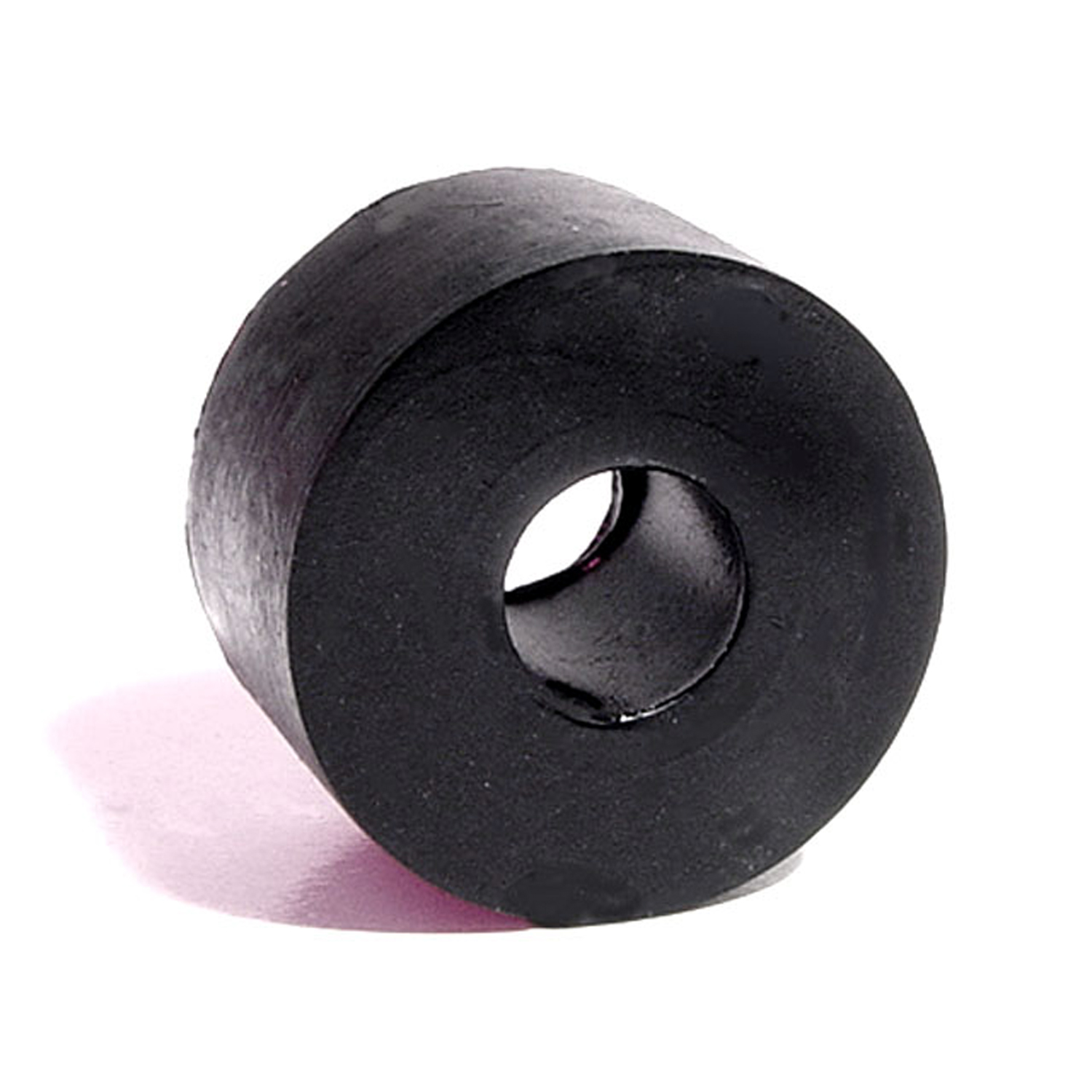 1978 Ford F-250 Shock Absorber Grommet. 1" bottom O.D-BN 6Shock Absorber Grommet. 1" bottom O.D. X 1/2" high, with 3/8" I.D. Each
 1978 Ford F-250 Brake Pedal Pad. 4-3/4" wide X 2-1/4" long-CB 111-NBrake Pedal Pad. 4-3/4" wide X 2-1/4" long. Replaces OEM #'s BC3Z2457B, D3TZ2457A, D3TZ2457B. Each
 1978 Ford F-250 Door seal. '73-'79 Ford F-Series trucks. '78-'79 Ford Bronco-LM 110-ADoor seal. '73-'79 Ford F-Series trucks. '78-'79 Ford Bronco. Fits on cab, either side. Each.
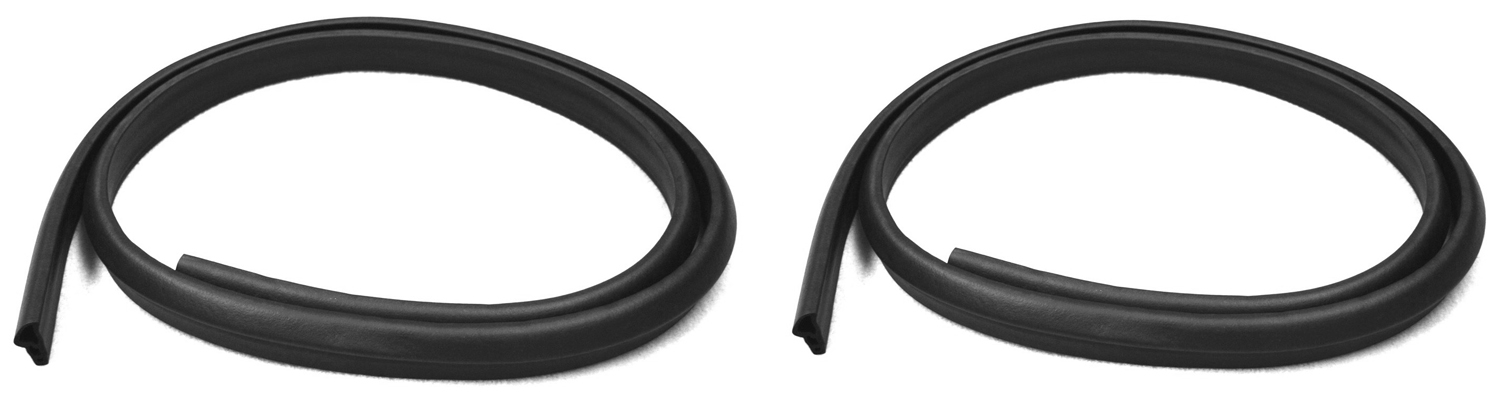 1978 Ford F-250 Upper Door Seal, 73-79 Ford Full Size Truck, 78-79 Ford Bronco, On Door, Pair-LM 110-AUThis auxiliary seal fits on the top portion of the door. It is primarily designed to reduce wind and road noise. It also provides added weatherseal protection and further cushions the door when it is shut closed. This part was stock on the 1978-1979 models but you can use them on any of the '73-'79 models specified.
 1978 Ford F-250 Windshield lockstrip seal, '77-'79 Ford F Series Truck / '78-'79 Ford Bronco-LS 1-AWindshield lockstrip seal, '77-'79 Ford F Series Truck / '78-'79 Ford Bronco, each.
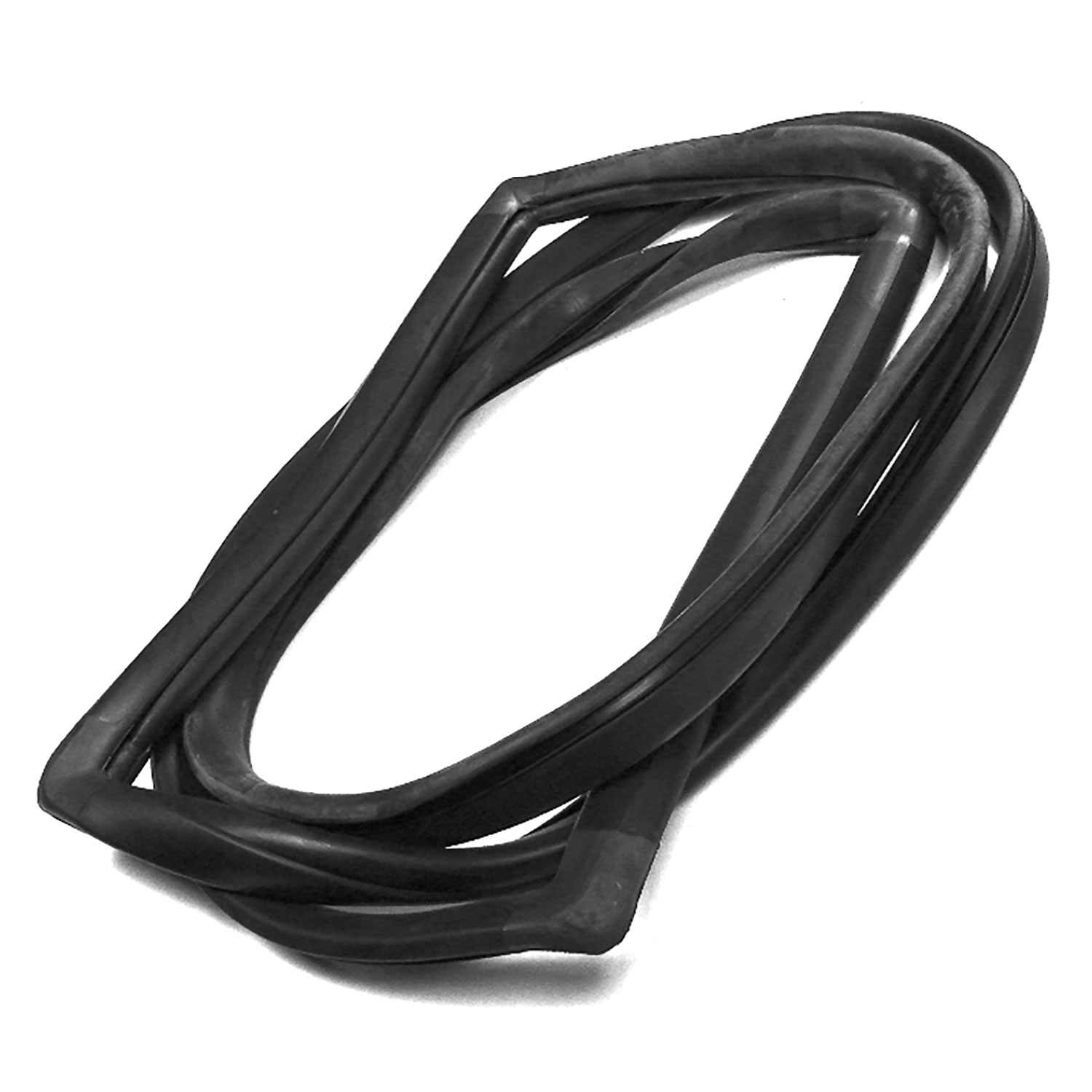 1978 Ford F-250 Windshield Seal, 67-79 Ford Full Size Truck, 78-79 Bronco, Without Trim Groove-VWS 3304-CThis windshield seal goes first on the glass and is installed using the rope-in method. This product is made from the original specs and with high quality ozone resistant EPDM rubber for a great fit and long life. This item is designed to be installed during glass replacement.
 1978 Ford F-250 Windshield seal, '77-'79 Ford F Series Truck / '78-'79 Ford Bronco-VWS 3304-FWindshield seal, '77-'79 Ford F Series Truck / '78-'79 Ford Bronco, with groove to accept trim, each.
 1978 Ford F-250 Rear window seal, '73-'79 Ford F Series Truck without trim groove-VWS 3304-RRear window seal, '73-'79 Ford F Series Truck without trim groove, each. Replaces OEM part # D3TZ-1042084-A.
Why Choose Metro?
For over 100 years, Metro Moulded Parts has been the pinnacle of quality in classic car restoration parts. Our commitment to precision and authenticity in every component ensures a perfect fit and an OEM-level appearance.
- Expert Craftsmanship & Quality: Each part is a testament to our dedication to reliability and perfection, crafted from original designs and thoroughly tested.
- Advanced Technology: We use cutting-edge techniques to create flawless, long-lasting parts that surpass others in performance.
- SuperSoft Sponge – The Ultimate Door Seal: Not only are our door seals 30% softer than competitors', but they're also guaranteed to never leak. They effectively reduce wind and road noise, enhancing your classic car's comfort and driving experience.
- Proudly American: Our parts are a product of American craftsmanship, made in the USA with a spirit of excellence and heritage.
- Unrivaled Warranty: We back our products with a 30-year industry-leading warranty, a testament to our confidence in their quality.
Join us in preserving the legacy of classic cars with parts that are crafted for perfection, not just made.