
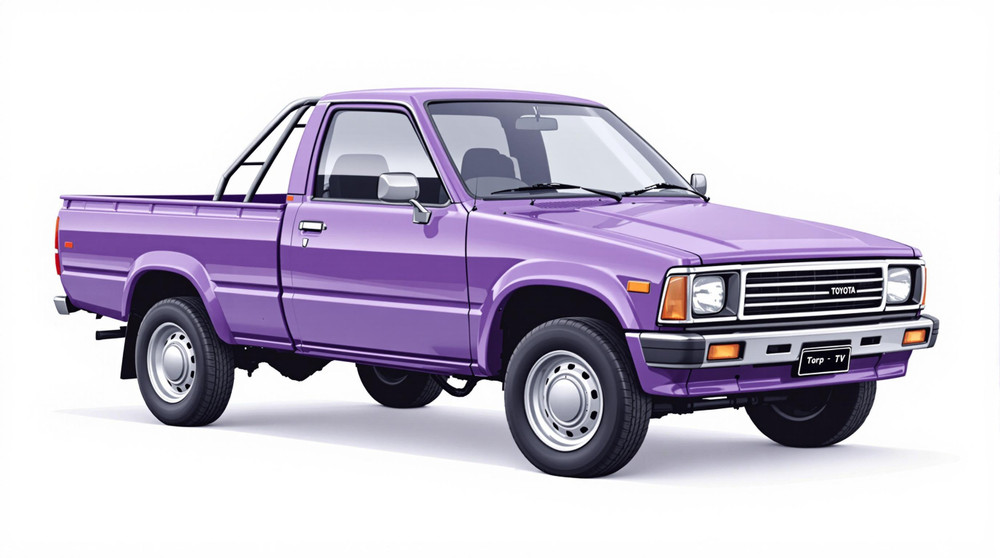
Image of 1984 Toyota Pickup, Note: These illustrations use artistic license and may differ from actual historical models.
Performance Metrics
Fundamental Metrics
Emotional Appeal
MMP Rating
| Engine Specifications | |
|---|---|
| Engine: | 2.4L 4-cylinder |
| Displacement: | 2366cc |
| Horsepower: | 97-108 hp |
| Torque: | 140 lb-ft |
| Compression Ratio: | 9.3:1 |
| Ignition System: | Electronic |
| Cooling System: | Liquid-cooled |
| Performance Specifications | |
| 0-60 Time: | 15 seconds |
| 1/4 Mile Time: | 20 seconds |
| Top Speed: | 105 mph |
| Transmission and Drive | |
| Drive Type: | Rear-wheel drive (RWD) or Four-wheel drive (4WD) |
| Transmission Type: | 4-speed automatic or 5-speed manual |
| Fuel and Efficiency | |
| Fuel System Type: | Carburetor |
| MPG: | 20-25 mpg |
| Dimensions and Brakes | |
| Brakes: | Front disc, rear drum |
| Wheelbase: | 103.5 inches |
| Weight: | 3000-3500 lbs |
Note: Specifications for classic cars are given to the best of our ability, considering the limited and variant data available.
1984 Toyota Pickup: A Compact Truck Built to Last
The 1984 Toyota Pickup turned hard work into a long-term reputation: compact, uncomplicated and famously difficult to wear out. Built by Toyota Motor Corporation, it belonged to the third generation of Toyota’s compact pickup, sold as the Toyota Pickup in North America and as the Hilux in many other markets. Its mix of practical size, sturdy engineering and genuine off-road ability made it a defining truck of the 1980s.
The timing was right. American buyers increasingly wanted trucks that were easier to park and more economical than full-size pickups, but still capable of hauling gear and tackling rough roads. Toyota answered with a truck that felt carefully engineered rather than oversized. One detail that still excites enthusiasts is the 1984 4x4’s solid front axle, a rugged setup prized by off-roaders and replaced by independent front suspension on the 4WD model for 1986.
Boxy Styling, Practical Choices
The 1984 Pickup has the crisp, squared-off look that defines an ’80s compact truck. Its upright grille, rectangular headlamps, flat hood and straight body sides give it a purposeful appearance without unnecessary ornament. The short overhangs and relatively narrow body are more than styling cues: they help the truck fit into tight trails and everyday parking spaces.
Buyers could choose a regular cab or the roomier Xtra Cab, which added a small area behind the front seats for occasional passengers or extra storage. Bed lengths and equipment varied by configuration and market. The most iconic version today is arguably the four-wheel-drive Xtra Cab, often equipped with SR5 trim. It combines the classic raised 4x4 stance with extra space for camping gear, tools or luggage.
Paint choices varied by region and trim, but the period palette included familiar truck colors such as white, red, blue, silver and earthier tones. White and red examples are especially recognizable in period photos, while two-tone paint and contrasting graphics on some higher trims add extra 1980s character. Original paint and trim combinations can matter to collectors, particularly when the truck retains its factory decals and wheels.
A Simple Cabin with Useful Equipment
The interior is straightforward and built around function. The dashboard is upright and easy to read, with clear analog gauges and large, uncomplicated controls. Depending on trim, the seats were covered in durable vinyl or cloth, with more patterned upholstery and convenience features available on better-equipped SR5 models. The materials feel modest by modern standards, but they suit a truck intended for work and outdoor use.
Comfort and amenities were basic. Power steering, air conditioning, upgraded audio and other conveniences depended on the truck’s specification. The 1984 Pickup did not offer modern driver-assistance systems, airbags or today’s infotainment features. Its notable technology was more mechanical than electronic: proven engines, selectable four-wheel drive on 4x4 models, and a sturdy chassis designed to handle real loads and rough terrain.
Why the 1984 Pickup Mattered
Toyota did not invent the compact pickup, but it helped establish the idea that a smaller truck could be more than an inexpensive runabout. The Pickup offered useful cargo capacity and off-road capability in a more manageable package than a full-size American truck. Its reputation for dependable service helped Toyota gain trust among buyers who wanted a vehicle they could keep for years.
The 1984 model also sits at an important point in the truck’s development. Its 4WD version retained a solid front axle, valued for strength and articulation on rough trails. Later Toyota pickups moved to independent front suspension, improving road manners while changing the way the trucks behaved off-road. That distinction has made early- and mid-1980s solid-axle trucks particularly appealing to trail enthusiasts.
Its influence is visible in the compact and midsize truck market that followed. The formula was clear: keep the footprint manageable, make the mechanicals durable, and offer useful four-wheel-drive hardware. The 1984 Pickup helped make that formula a Toyota calling card.
22R Power and Trail-Ready Handling
In the U.S. market, the familiar engine was Toyota’s 2.4-liter 22R four-cylinder. It was generally carbureted in this model year, with output commonly listed at roughly 97 horsepower and about 129 lb-ft of torque, though figures varied with emissions equipment and market specification. Engine availability differed outside the United States. Manual transmissions were common, with four- and five-speed gearboxes depending on configuration; automatic availability also varied.
Acceleration was workmanlike rather than quick. Period performance and gearing suggest a 0-to-60 mph time in roughly the 14-to-18-second range, depending on engine, transmission, cab, drivetrain and load. A representative truck might reach around 85 to 95 mph at the top end, but it was not designed for sustained high-speed cruising. These are estimates, not a single universal factory figure, and a 4x4 with larger tires or extra equipment will feel slower.
On the road, the Pickup feels narrow, upright and mechanical. The 22R produces a steady four-cylinder growl, and the manual gearbox gives the driver a direct connection to the engine. It rewards deliberate shifts and does not mind working hard, but passing on a highway takes planning. The ride is firm, especially when the bed is empty, and sharp bumps can make the rear end hop.
On winding roads, its modest dimensions make it easier to place than a full-size truck, although the tall stance and older suspension call for sensible cornering speeds. On dirt, snow and rocky trails, the 4x4’s low-range gearing and solid front axle make it a capable companion. The ride can be busy over washboard surfaces, but the truck’s simple controls and visible corners help the driver manage tight terrain.
Living with a 1984 Toyota Pickup
Today, these trucks serve as daily drivers, work vehicles, camping rigs, trail builds and weekend classics. A sound, mostly stock example is attractive to owners who want an older truck that remains usable, while modified 4x4s often wear lift kits, larger tires, bumpers and recovery equipment. The regular-cab 2WD is typically the more basic choice; the 4x4 Xtra Cab is the version many enthusiasts seek.
Routine maintenance is approachable for a mechanically minded owner. The 22R is a simple engine by modern standards, and many common service jobs can be handled with ordinary tools and a repair manual. Parts availability remains reasonably good for popular service items and restoration components, though trim-specific pieces, unmodified interior parts and clean body panels can take more searching.
Age is the bigger challenge than complexity. Inspect the frame, cab corners, floorboards, bed, wheel arches and windshield area for rust, and check carefully for poor-quality repairs. On 4x4s, examine the front axle, suspension, transfer case and driveline for leaks or wear. A truck that has spent decades in a dry climate and received regular maintenance can be far easier to own than a cheaper example with hidden corrosion or neglected modifications.
Notable Facts and Common Complaints
The 1984 Pickup is part of the Hilux family, a name that became internationally associated with durability. The Hilux later gained especially wide attention through endurance demonstrations and televised tests, but those stories should not be confused with a specific 1984 model-year record. Toyota’s pickups have also appeared in rally and off-road competition over the years, helping reinforce the brand’s rugged image.
There is no widely verified production total for every 1984 configuration, and Toyota’s model-year figures are not consistently published in a way that separates cab, engine and drivetrain. As a broad, unofficial estimate, global production of the model year may have been in the low hundreds of thousands, perhaps around 150,000 to 250,000 trucks. Treat that as an informed approximation, not a factory-confirmed count. The model was not rare when new; surviving, unmodified 4x4s are far less common now.
Its most frequent criticisms are easy to understand: slow acceleration, a firm ride, limited cabin space and fewer safety features than a modern truck. Rust and previous off-road abuse can also make a seemingly inexpensive example costly to restore. And while the 1984 Pickup has a strong enthusiast following, claims of famous celebrity ownership or a unique record-setting run should be checked carefully rather than accepted as established fact.
1984 Toyota Pickup Values and Collectibility
Prices depend heavily on rust, originality, drivetrain, cab style and local demand. As a broad 2026 U.S. market guide, a rough project or heavily corroded truck may sell for about $1,500 to $5,000. Usable drivers commonly fall around $5,000 to $12,000, while clean, well-maintained examples can bring roughly $12,000 to $22,000. A particularly tidy, original 4x4 Xtra Cab or a high-quality restoration may reach $25,000 to $35,000 or more. Exceptional trucks can exceed that range, but they are outliers rather than typical sales.
Values have generally strengthened as buyers have rediscovered small, simple 4x4s, especially solid-front-axle models. Clean examples are appreciating in many markets, while rusty or heavily modified trucks remain much more condition-sensitive. Originality can be a major advantage for collectors, though a tasteful, well-documented off-road build may appeal to a different buyer.
A Small Truck with a Long Shadow
The 1984 Toyota Pickup is not fast, plush or technologically sophisticated. Its appeal lies in a more lasting combination: compact dimensions, honest utility, straightforward mechanicals and genuine four-wheel-drive ability. It helped define Toyota’s reputation for durable trucks and remains a rewarding classic for owners who value function as much as nostalgia.
In an era of ever-larger, more complex pickups, the 1984 Toyota stands as a reminder that a truck does not need to be huge to be capable. It just needs to be built for the long road, the rough trail and the next job waiting in the bed.
1984 Toyota Pickup Catalog of Parts
 1984 Toyota Pickup Door seals. '84-'88 Toyota 4-Runner & pick-up trucks. Pair-LM 135Door seals. '84-'88 Toyota 4-Runner & pick-up trucks. Pair. R&L.
Why Choose Metro?
For over 100 years, Metro Moulded Parts has been the pinnacle of quality in classic car restoration parts. Our commitment to precision and authenticity in every component ensures a perfect fit and an OEM-level appearance.
- Expert Craftsmanship & Quality: Each part is a testament to our dedication to reliability and perfection, crafted from original designs and thoroughly tested.
- Advanced Technology: We use cutting-edge techniques to create flawless, long-lasting parts that surpass others in performance.
- SuperSoft Sponge – The Ultimate Door Seal: Not only are our door seals 30% softer than competitors', but they're also guaranteed to never leak. They effectively reduce wind and road noise, enhancing your classic car's comfort and driving experience.
- Proudly American: Our parts are a product of American craftsmanship, made in the USA with a spirit of excellence and heritage.
- Unrivaled Warranty: We back our products with a 30-year industry-leading warranty, a testament to our confidence in their quality.
Join us in preserving the legacy of classic cars with parts that are crafted for perfection, not just made.