

Image of 1955 Metropolitan Series B, Note: These illustrations use artistic license and may differ from actual historical models.
Performance Metrics
Fundamental Metrics
Emotional Appeal
MMP Rating
| Engine Specifications | |
|---|---|
| Engine: | 1.5L Austin A-Series I4 |
| Displacement: | 1.5L (1489 cc) |
| Horsepower: | 42-52 hp |
| Torque: | 72 lb-ft |
| Compression Ratio: | 7.2:1 |
| Ignition System: | Distributor and coil |
| Cooling System: | Water-cooled |
| Performance Specifications | |
| 0-60 Time: | 30 seconds |
| 1/4 Mile Time: | Not available |
| Top Speed: | 75 mph |
| Transmission and Drive | |
| Drive Type: | RWD (Rear Wheel Drive) |
| Transmission Type: | 3-speed manual |
| Fuel and Efficiency | |
| Fuel System Type: | Single carburetor |
| MPG: | 30-35 mpg |
| Dimensions and Brakes | |
| Brakes: | Drum brakes on all wheels |
| Wheelbase: | 85 inches |
| Weight: | 1800 lbs |
Note: Specifications for classic cars are given to the best of our ability, considering the limited and variant data available.
1955 Metropolitan Series B: A Tiny American Original
The 1955 Metropolitan Series B made a bold automotive statement with less than a dozen feet of car: small could be stylish, economical, and distinctly American in purpose. Though its compact proportions suggested a European runabout, the Metropolitan was created for North American buyers and sold through Nash dealerships. It was designed in the United States, engineered with help from British partners, and built by Austin in England.
The Metropolitan arrived as Americans were becoming more interested in imported cars and fuel economy. Nash-Kelvinator president George W. Mason backed the idea of a small car for city driving, while industrial designer William J. Flajole developed the design. Austin supplied production expertise and the powertrain, and its Longbridge factory assembled the cars for export. A notable twist in the story is that the Metropolitan was not simply an Austin with a Nash badge. It was conceived specifically for the American market, then shipped across the Atlantic for sale in the United States and Canada.
The Series B belongs to the Metropolitan’s early, 1,200 cc era. It carried forward the basic formula of the first cars while representing an early production revision. The exact details can vary by build and source, so collectors often use the car’s chassis and production records to confirm its precise specification.
Two-Door Style, Big Personality
The Metropolitan’s styling is cheerful and unmistakable. Its rounded hood, upright grille, bulbous fenders, and short rear deck give it a cartoon-like charm without making it look flimsy. The front end has the visual confidence of a much larger American car, while the wheels pushed toward the corners give the little body a tidy, planted stance. Bright trim and two-tone paint helped the Metropolitan look fashionable rather than merely economical.
Metropolitans were offered as two-door hardtops and convertibles. Both have a compact cabin and a small rear seat, but the hardtop’s uninterrupted roofline gives it a crisp, coupe-like profile. The convertible is the most eye-catching choice, especially with its top folded down, while hardtops are frequently encountered and make practical all-weather classics.
Paint choices varied by year and market, with bright single-tone and two-tone combinations among the car’s visual signatures. Red and white, blue and white, green and white, and other contrasting combinations suit the Metropolitan especially well. Original color combinations matter to restorers, so it is worth checking the car’s identification and trim information rather than assuming every surviving example wears factory-correct paint.
A Simple, Welcoming Cabin
Inside, the Metropolitan is straightforward rather than luxurious. The cabin typically features a painted metal dashboard, simple instruments, a front bench seat, and durable vinyl upholstery. Contrasting colors often carried the cheerful exterior theme into the interior. The materials were practical for a low-cost car, but the bright finishes and tidy layout made the cabin feel more intentional than bare-bones.
There is room for two adults up front, while the rear seat is best viewed as occasional seating for children or short trips. Storage is limited, and the small luggage area calls for sensible packing. The controls are uncomplicated, which is part of the car’s charm: there is little to distract from the basic tasks of steering, shifting, and enjoying the scenery.
Engineering for Everyday Motoring
Power comes from an Austin-sourced 1,200 cc inline-four, producing about 42 horsepower in the early Metropolitan specification. It drives the rear wheels through a three-speed manual gearbox, commonly operated by a column-mounted shifter. The chassis pairs independent front suspension with a live rear axle and leaf springs, while drum brakes handle stopping duties at all four corners.
By mid-1950s standards, the Metropolitan was not loaded with advanced equipment. Its appeal was its efficient packaging and straightforward mechanical layout. The small engine, conventional rear-wheel-drive arrangement, and simple suspension made it economical to build and relatively approachable to service. It was a different kind of innovation: instead of adding complexity, the Metropolitan made a small, purpose-built car work for American roads and buyers.
Why the Metropolitan Mattered
The Metropolitan arrived before small domestic cars became common in the United States. American manufacturers were still focused largely on full-size sedans, while the Metropolitan offered a compact alternative for commuting, shopping, and crowded city streets. It helped make the case that a small car could be friendly and fashionable, not just austere or foreign-looking.
Its international production arrangement was also unusual. Nash developed and marketed the car, Austin built it in Britain, and the Metropolitan was tailored to North American tastes. That cross-border partnership anticipated the increasingly global nature of the auto industry. After Nash and Hudson merged to form American Motors Corporation, the car was also sold through Hudson dealers. It later became known simply as the Metropolitan.
The Metropolitan did not set a major speed or racing record, and it was never intended to. Its lasting importance lies in its distinctive approach to the small-car market and its memorable design. It remains one of the earliest American-market subcompacts to achieve broad recognition as a personality car rather than merely an economy tool.
What It Feels Like to Drive
With roughly 42 horsepower and a small-displacement engine, the Series B is best enjoyed at a relaxed pace. Period performance estimates put top speed in the neighborhood of 70 mph, while 0-to-60 mph acceleration can take roughly 20 to 25 seconds, depending on vehicle condition, gearing, and testing method. Those figures are estimates, not modern test results, and the car feels much happier keeping pace with ordinary local traffic than charging onto a fast highway.
The four-cylinder engine has a light, purposeful buzz, and the three-speed gearbox rewards smooth, deliberate shifts. The column shifter takes a little practice for drivers accustomed to a floor-mounted lever. Steering is direct and the car’s short dimensions make it easy to place on narrow streets or in tight parking spots.
On bumpy roads, the short wheelbase and modest suspension travel make the ride busier than that of a full-size sedan. Broken pavement can send more movement through the cabin, and crosswinds or passing trucks are more noticeable because the car is small and light. On a winding back road, however, its compact size and easy steering make for a playful, unhurried drive. The key is to enjoy its nimbleness rather than expect modern grip, braking, or acceleration.
Living With a Series B
Today, most Metropolitans serve as show cars, weekend cruisers, parade vehicles, or cheerful second cars. A sound example can manage local errands and relaxed drives, but many owners avoid using one as a daily driver on high-speed roads. Modern traffic moves much faster than the Metropolitan was designed to handle, and its braking and safety equipment reflect its era.
Mechanical servicing is generally approachable for an experienced home mechanic. The Austin engine has a long parts and service history, and many routine jobs are conventional. However, age and parts sourcing still matter. Some mechanical components are easier to find than correct trim, glass, upholstery details, and Series-specific pieces. Rust deserves close inspection, especially around the floors, sills, lower body panels, and structural mounting areas. A shiny paint job can hide expensive corrosion repairs.
Reliability depends heavily on restoration quality. A well-maintained car with a healthy cooling system, properly adjusted ignition, sound brakes, and good tires can be dependable for gentle use. A neglected example may need substantial work before it is safe or enjoyable. The Metropolitan is simple by modern standards, but it is still a nearly 70-year-old car, so careful inspection is more valuable than optimistic assumptions.
Metropolitan Facts and Myths
The Metropolitan’s most unusual fact may be its origin story: it was designed for American buyers but assembled in Britain. It was also sold through both Nash and Hudson dealer networks during the transition to American Motors. The Series B itself was a refinement in the car’s early development, not a separate body style or a high-performance edition.
There are no widely recognized Series B speed records or endurance achievements. Its legacy is rooted in sales and cultural visibility rather than competition. Nor is there a universally documented celebrity-owner story that defines the model. Its long-running appeal comes instead from its unmistakable shape and its role as a friendly, approachable alternative to the big American cars of its day.
Common criticisms are easy to understand: limited power, a cramped rear seat, modest luggage space, and a ride that can feel unsettled on rough or fast roads. Those shortcomings are part of the trade-off for its tiny footprint. Buyers seeking a comfortable highway cruiser may find it frustrating, while fans of compact classics see those same traits as part of its character.
Collector Values and Availability
Metropolitan production from 1953 through 1961 is commonly reported at about 95,000 cars across all versions. A precise Series B production total is harder to pin down because published counts are often grouped by year or broader production series. A reasonable estimate is that Series B cars number in the low tens of thousands, perhaps around 10,000 to 15,000, but buyers should treat that as an informed approximation rather than a definitive factory tally.
Series B examples appear on the market regularly, though condition, originality, body style, and documentation make a major difference. As a broad current-market guide, a project car may bring roughly $3,000 to $7,000, a usable driver around $8,000 to $16,000, and a well-restored example about $18,000 to $30,000 or more. Exceptional restorations, rare specifications, and especially desirable convertibles can exceed that range. These are approximate U.S. values, and actual sale prices vary with location and market conditions.
Metropolitan values have generally been steady to gradually stronger for clean, correctly restored cars, with especially appealing examples attracting the most attention. They are not typically bought as investments, and restoration costs can quickly outrun a car’s resale value. For most collectors, the reward is a distinctive, usable classic with a story that sets it apart from more familiar American cars.
A Small Car With a Lasting Story
The 1955 Metropolitan Series B combined a bright, unmistakable design with simple Austin mechanicals and a distinctly American mission. It was not fast, spacious, or sophisticated, but it offered something different at a time when domestic cars were growing ever larger. Its transatlantic origins, friendly styling, and easygoing character have kept it memorable long after its production ended.
For collectors, the Metropolitan is a reminder that automotive significance is not measured only in horsepower or size. Sometimes a small car leaves a big impression by daring to be exactly what it is.
1955 Metropolitan Series B Catalog of Parts
 1955 Metropolitan Series B Accessory Floor Mat - 12"X17"-AC 52Accessory Floor Mat - made of high quality black rubber with molded original emblem. Also designed to be sewn into new carpets. 12"X17", Each
 1955 Metropolitan Series B Spring Bushing, for Leaf Springs. 1-1/2" bottom O.D-BN 34-ASpring Bushing, for Leaf Springs. 1-1/2" bottom O.D. X 1-1/4" high, with 1/2" I.D. Each
 1955 Metropolitan Series B Clutch and Brake Pedal Pads. 2-5/8" Diameter. Pair-CB 167Clutch and Brake Pedal Pads. 2-5/8" Diameter. Pair
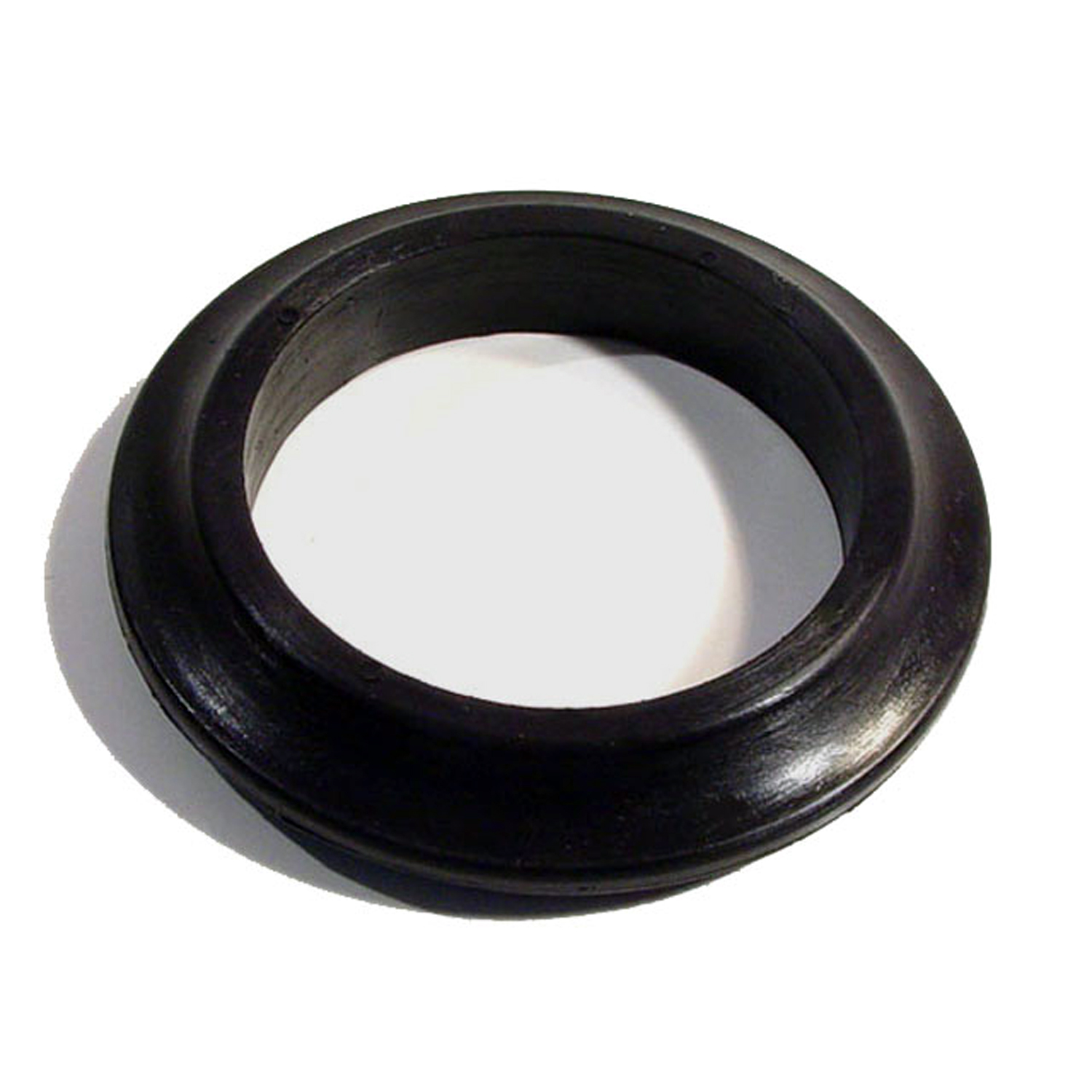 1955 Metropolitan Series B Gas Filler Grommet. 2-1/4" I.D., 3-5/16" O.D. Each-GF 21Gas Filler Grommet. 2-1/4" I.D., 3-5/16" O.D. Each
 1955 Metropolitan Series B Headlight Ring Seal. 8-1/4" O.D., 6-3/8" I.D. Pair-HR 3Headlight Ring Seal. 8-1/4" O.D., 6-3/8" I.D. Pair
 1955 Metropolitan Series B Tail-light Lens Gasket. Slips into groove-LG 7100-100Tail-light Lens Gasket. Slips into groove. Made of neoprene. 1/4" X 13-3/4" X 1/8". Each
 1955 Metropolitan Series B Top Bow to Header Seal, for Convertibles. Sold by the foot-LP 112-MTop Bow to Header Seal, for Convertibles. Sold by the foot
 1955 Metropolitan Series B Roof Rail Seal, for Convertibles and Hardtops (early series)-LP 12-DRoof Rail Seal, for Convertibles and Hardtops (early series). For upper side window. Sold by the foot
 1955 Metropolitan Series B Mirror Pad. 1-1/2" wide X 4" long. Each-MP 1104-AMirror Pad. 1-1/2" wide X 4" long. Each
 1955 Metropolitan Series B Door Handle Pads. 2-5/8" long & 1" long. Set of 4 R&L-MP 1104-BDoor Handle Pads. 2-5/8" long & 1" long. Set of 4 R&L
 1955 Metropolitan Series B Trunk Handle Pad. 2-1/8" O.D. Each-MP 1104-CTrunk Handle Pad. 2-1/8" O.D. Each
 1955 Metropolitan Series B Trunk Hinge Pads. 1-1/8" wide X 5" long. Set-MP 1104-DTrunk Hinge Pads. 1-1/8" wide X 5" long. Set
 1955 Metropolitan Series B Door Handle Pads. 2-1/2" long & 3/4" long. Set-MP 1104-EDoor Handle Pads. 2-1/2" long & 3/4" long. Set
 1955 Metropolitan Series B Oil Level Dipstick Dust Cap. Top hole has 1/4" I.D-RP 8-AOil Level Dipstick Dust Cap. Top hole has 1/4" I.D. Bottom hole has 1-1/4" O.D. Cap is 1-1/2" tall. Each
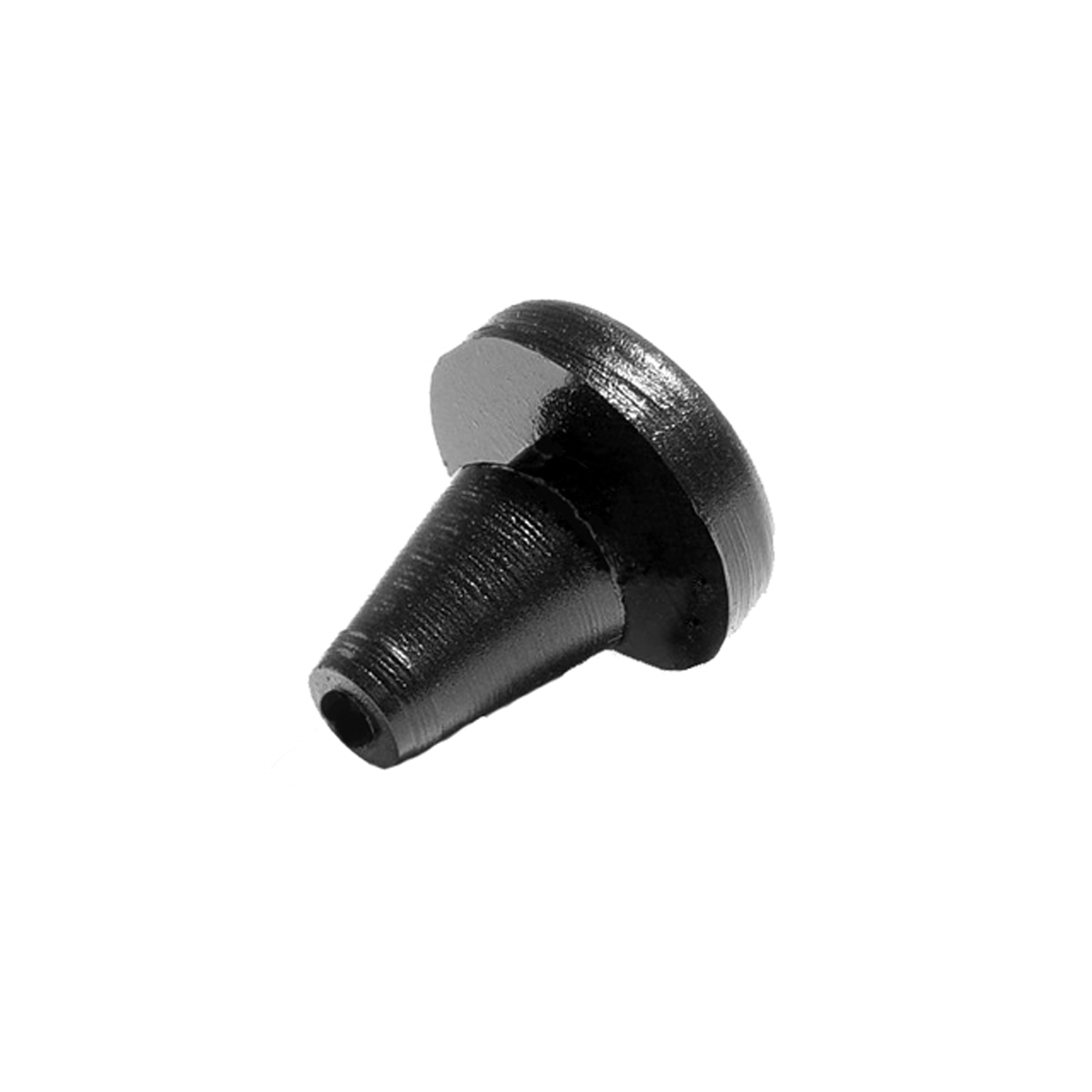 1955 Metropolitan Series B Hood Side Bumper. 5/8" O.D.,5/8" High. Each-SB 11Hood Side Bumper. 5/8" O.D.,5/8" High. Each
 1955 Metropolitan Series B Main Wire Harness Grommet at Firewall. 1-7/8" O.D., 5/8" I-SM 100-BMain Wire Harness Grommet at Firewall. 1-7/8" O.D., 5/8" I.D., Fits 1-1/4" hole. Each
 1955 Metropolitan Series B Sheet Metal Grommet-SM 102Sheet Metal Grommet. Used for choke cable, starter cable, horn wire, wiper wires and license plate lamp wires. Fits 9/16" hole. 3/16" center hole. Each
 1955 Metropolitan Series B Pivot Grommet. 3/4" high X 3/16" I.D. Each-SM 5Pivot Grommet. 3/4" high X 3/16" I.D. Each
 1955 Metropolitan Series B Door End Plug. Four used per car. Each-SM 59-ADoor End Plug. Four used per car. Each
 1955 Metropolitan Series B Shift Linkage Grommet-SM 93Shift Linkage Grommet. Use your original steel bushing in center. Each
 1955 Metropolitan Series B Trunk Mat-TM 7100Trunk Mat. High quality reproduction, made specific for vehicle. Does not have snaps. Each
 1955 Metropolitan Series B Flexible Sweeper. Made of rubber-WC 23-/FTFlexible Sweeper. Made of rubber. Seal for outside of side window. Sold by the foot
 1955 Metropolitan Series B Flexible Sweeper. Made of rubber-WC 23-48Flexible Sweeper. Made of rubber. Seal for outside of side window. 48" Piece. Each
 1955 Metropolitan Series B Flexible Sweeper. Made of rubber-WC 23-96Flexible Sweeper. Made of rubber. Seal for outside of side window. 96" Piece. each
 1955 Metropolitan Series B Front Vent Window Seals with Division Bar-WR 7100Front Vent Window Seals with Division Bar. Molded in exact configuration. Pair R&L
Why Choose Metro?
For over 100 years, Metro Moulded Parts has been the pinnacle of quality in classic car restoration parts. Our commitment to precision and authenticity in every component ensures a perfect fit and an OEM-level appearance.
- Expert Craftsmanship & Quality: Each part is a testament to our dedication to reliability and perfection, crafted from original designs and thoroughly tested.
- Advanced Technology: We use cutting-edge techniques to create flawless, long-lasting parts that surpass others in performance.
- SuperSoft Sponge – The Ultimate Door Seal: Not only are our door seals 30% softer than competitors', but they're also guaranteed to never leak. They effectively reduce wind and road noise, enhancing your classic car's comfort and driving experience.
- Proudly American: Our parts are a product of American craftsmanship, made in the USA with a spirit of excellence and heritage.
- Unrivaled Warranty: We back our products with a 30-year industry-leading warranty, a testament to our confidence in their quality.
Join us in preserving the legacy of classic cars with parts that are crafted for perfection, not just made.