

Image of 1950 Aston Martin Db2, Note: These illustrations use artistic license and may differ from actual historical models.
Performance Metrics
Fundamental Metrics
Emotional Appeal
MMP Rating
| Engine Specifications | |
|---|---|
| Engine: | 2.6 L Lagonda I6 |
| Displacement: | 2.6 L (2580 cc) |
| Horsepower: | 105 hp |
| Torque: | 135 lb-ft |
| Compression Ratio: | 8.16:1 |
| Ignition System: | Coil ignition |
| Cooling System: | Water-cooled |
| Performance Specifications | |
| 0-60 Time: | 11.2 seconds |
| 1/4 Mile Time: | Estimated at around 18 seconds |
| Top Speed: | 116 mph |
| Transmission and Drive | |
| Drive Type: | Rear-wheel drive |
| Transmission Type: | 4-speed manual |
| Fuel and Efficiency | |
| Fuel System Type: | Twin SU carburetors |
| MPG: | Estimated at around 20 mpg |
| Dimensions and Brakes | |
| Brakes: | Drum brakes |
| Wheelbase: | 99 inches |
| Weight: | 2,700 lbs |
Note: Specifications for classic cars are given to the best of our ability, considering the limited and variant data available.
1950 Aston Martin DB2: The Grand Tourer That Launched a Legend
The 1950 Aston Martin DB2 turned a struggling British marque into a serious international contender, blending a race-bred engine, elegant coachwork and genuine grand-touring ability. It was the first production Aston Martin developed under industrialist David Brown, whose initials would become part of the company’s most famous model names.
Introduced in 1950, the DB2 grew from Aston Martin’s postwar racing ambitions and David Brown’s 1947 purchase of the company. Brown later acquired Lagonda, bringing with it an advanced 2.6-litre straight-six engine designed by W. O. Bentley and his colleague Willie Watson. The DB2 paired that sophisticated powerplant with a new chassis and sleek bodywork, setting a template for Aston Martin’s road cars for decades.
Its credentials were established quickly. DB2 prototypes raced at Le Mans in 1949, and in 1950 the production-based team cars won first and second in their class. That achievement gave the young model a compelling mix of showroom appeal and competition credibility.
Fastback Style and Hand-Finished Detail
The DB2’s shape is unmistakably early Aston Martin: a long, rounded bonnet, compact cabin and smoothly tapering fastback tail. Its broad front grille gives the car a purposeful expression, while the flowing roofline and restrained chrome keep the overall look refined rather than flashy. The large bonnet opens forward, making the engine bay easier to access and adding to the car’s distinctive profile.
The cabin is intimate and carefully finished. Leather upholstery, wool carpeting and a polished dashboard give it the feel of a traditional British grand tourer. Smiths instruments sit within easy view, and the driving position is low, with a slim steering wheel and a clear connection to the car’s mechanical controls. Rear accommodation in the saloon is best suited to occasional passengers or extra luggage, rather than adults on a long journey.
Under the bonnet is the DB2’s defining piece of engineering: a 2,580 cc, twin-overhead-camshaft straight-six with twin SU carburettors. Standard cars produced about 105 horsepower, while the optional Vantage specification raised output to roughly 125 horsepower through engine tuning. A four-speed manual gearbox sent power to the rear wheels. For its time, the twin-cam layout was a notably sophisticated feature in a road-going British sports car.
Period colors varied, and many cars were ordered to individual taste. Deep green, dark blue, black, silver, cream and maroon all suit the DB2’s restrained lines. British racing green is an especially popular choice today, though original color and documented history matter more to collectors than any single fashionable shade.
The most familiar DB2 body is the fastback saloon, generally described as a coupe today. Aston Martin also offered a Drophead Coupe, a more open and elegant alternative with a folding soft top. Both versions were built in small numbers, but the saloon is the model most closely associated with the DB2’s competition-inspired image.
Why the DB2 Mattered
The DB2 was more than a handsome new model. It helped establish Aston Martin’s postwar identity as a maker of fast, technically ambitious road cars that could also compete. Its combination of a purpose-built chassis, independent front suspension and a powerful twin-cam engine set it apart from many contemporaries that relied on less advanced engines or more conventional layouts.
Its strongest rival in the British performance-car conversation was the Jaguar XK120. The Jaguar offered remarkable speed for its price, while the Aston Martin delivered a rarer, more bespoke experience and a direct link to international racing. Le Mans success gave the DB2 valuable credibility and helped make competition history part of Aston Martin’s road-car appeal.
The model also established a naming tradition. “DB” referred to David Brown, and the DB2 was the first in a long line of cars to carry those initials. Its successor, the DB2/4, built on the same foundations with more room and greater practicality. The DB2 therefore stands at the start of the best-known chapter in Aston Martin’s history.
Performance and Road Manners
A standard DB2 could reach approximately 110 mph, with the Vantage version capable of more. Period performance figures vary by car and specification, but a representative 0-to-60 mph time is around 11 seconds. Those figures made it a genuinely quick grand tourer in 1950, especially given its polished road-going character.
The independent front suspension helps the DB2 feel composed on uneven roads, while its long bonnet and relatively compact cabin give the driver a classic sports-car view of the road. On winding routes, the car rewards smooth inputs. Its steering is more demanding at low speeds than that of a modern car, but it becomes more natural once underway. The chassis feels planted at a steady touring pace, though narrow tires and period suspension mean it should not be driven like a contemporary sports car over rough surfaces.
The straight-six is a major part of the experience. It has a distinctive mechanical murmur at low revs and a harder, more urgent note as the driver works through the gears. The manual transmission, clutch and steering all ask for more involvement than modern controls do. That is part of the appeal: the DB2 makes a journey feel like an event, rather than simply a way to cover distance.
Living with a DB2
Today, a DB2 is more commonly used for club events, touring rallies, historic motoring gatherings and concours displays than as a daily driver. A well-sorted example can cover road miles, but its age, value and specialist maintenance needs make routine modern commuting a less practical role.
Maintenance is manageable for an experienced classic-car owner, but the DB2 is not an inexpensive car to learn on. The twin-cam engine rewards careful servicing, and parts or repairs can require specialist knowledge. Before buying, a thorough inspection should cover the chassis, suspension, engine, gearbox, electrical system and the condition of the alloy bodywork. Restoration work can become costly, particularly if a car has hidden structural corrosion or a history of poorly documented repairs.
Reliability depends heavily on the quality of the restoration and ongoing care. A correctly maintained example can be a rewarding touring car, but neglect can turn a complicated, rare machine into a major project. Buyers should prioritize a detailed history and an inspection by an Aston Martin specialist over an attractive finish alone.
Le Mans, Rarity and Other DB2 Details
One of the most notable facts about the DB2 is how quickly it earned its competition reputation. The Le Mans prototypes of 1949 helped preview the production car, and the 1950 class result demonstrated that the DB2 was not merely styled to look sporting. It had the performance and durability to back up its image.
Aston Martin built approximately 411 DB2s between 1950 and 1953. Around 102 were Drophead Coupes, making the open version particularly scarce. Production figures are small by any standard, and surviving cars vary considerably in condition, originality and specification.
The DB2’s most common criticism is its limited practicality. The cabin is snug, luggage space is not generous, and the driving controls require more effort than those in later grand tourers. The early car’s performance is also modest by modern standards. These are fair compromises to acknowledge, but they are part of what makes the DB2 feel like a product of its era rather than a modern car wearing vintage styling.
Collector Values and Availability
As a broad current-market guide, a DB2 saloon in sound, usable condition may fall roughly in the US$250,000 to US$450,000 range. Exceptional, highly original or concours-quality cars can sell for more. Drophead Coupes typically command a premium because of their lower production and open-top appeal, with strong examples potentially reaching around US$350,000 to US$600,000 or higher. These are estimates, not fixed values: provenance, condition, restoration quality and matching numbers can shift a price substantially.
DB2s have generally strengthened in value over the long term as collectors have placed greater emphasis on early Aston Martin history and documented competition links. Prices can still move with the wider collector-car market, and top-end restorations do not always recover their full cost. With only about 411 built, examples are scarce, and suitable cars do not appear on the market every day.
Aston Martin’s First Great DB
The 1950 Aston Martin DB2 brought together elegant fastback styling, a sophisticated twin-cam engine and real competition success. It was quick, carefully made and demanding enough to keep its driver involved, while its Le Mans achievements gave the new model a reputation that went beyond appearance alone.
More than a rare postwar sports car, the DB2 was the beginning of Aston Martin’s defining DB lineage. Its blend of craftsmanship, speed and racing ambition still captures the essence of the marque today.
1950 Aston Martin Db2 Catalog of Parts
 1950 Aston Martin DB2 Steering Column Dust Seal at Firewall-BL 5Steering Column Dust Seal at Firewall. 1-1/8" wide hole at top, 4-1/2" O.D. at base. Replaces AM part #50999. Each
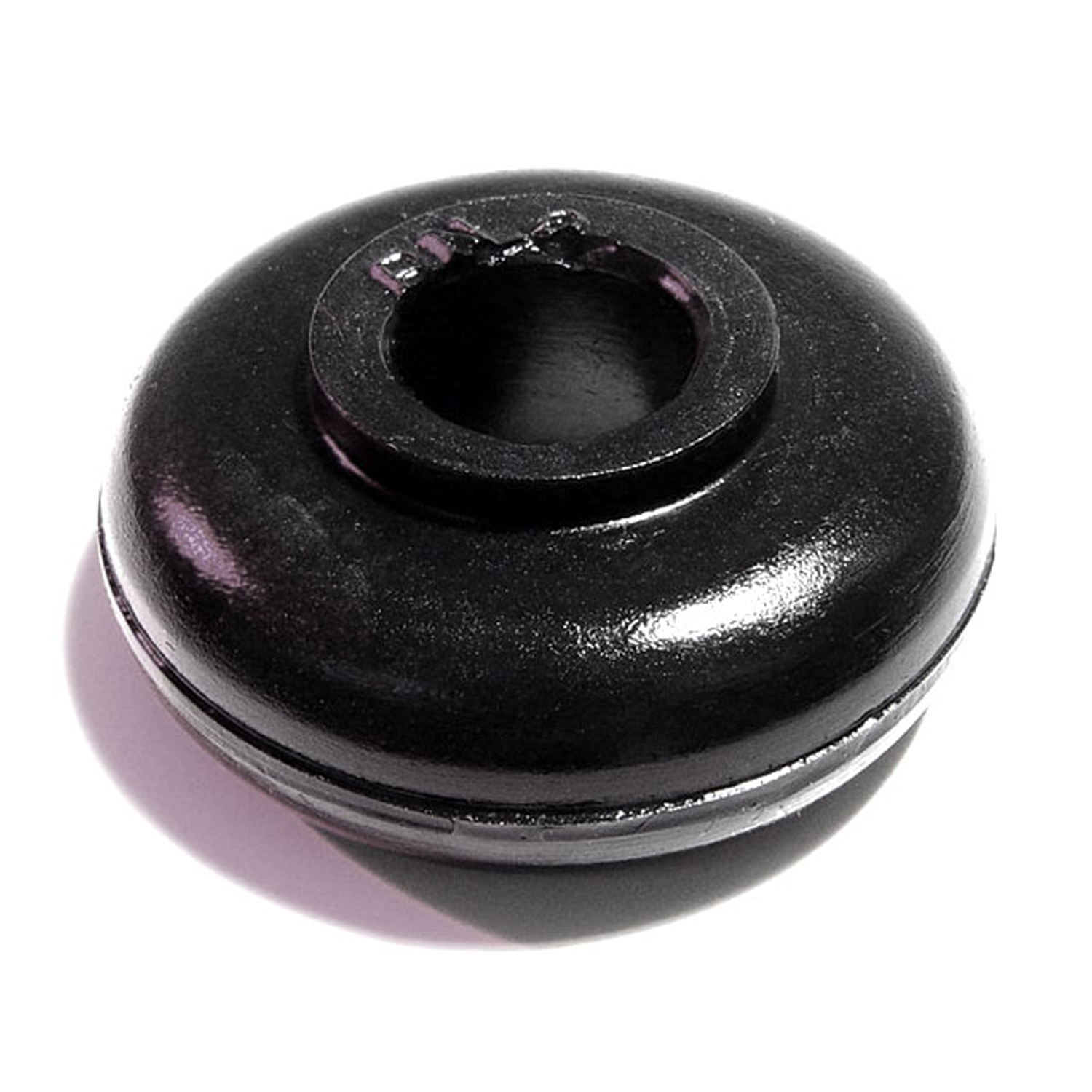 1950 Aston Martin DB2 Roll Bar Bushing. 1/2" high, with 1/2" hole. Each-BN 2Roll Bar Bushing. 1/2" high, with 1/2" hole. Each
 1950 Aston Martin DB2 Shock Grommet. 9/16" high, 3/8" hole. Each-BN 2-AShock Grommet. 9/16" high, 3/8" hole. Each
 1950 Aston Martin DB2 Clutch and Brake Pedal Pads. Perfect reproduction-CB 175Clutch and Brake Pedal Pads. Perfect reproduction. 1-3/4" wide X 3-1/4" long. Pair
 1950 Aston Martin DB2 Radiator Rod Cushion. 1/4" thick, 3/8" hole, 1" O.D-RA 1Radiator Rod Cushion. 1/4" thick, 3/8" hole, 1" O.D. Eight used per car. Each
 1950 Aston Martin DB2 Spark Plug Boot. Each-RP 1-ZSpark Plug Boot. Each
Why Choose Metro?
For over 100 years, Metro Moulded Parts has been the pinnacle of quality in classic car restoration parts. Our commitment to precision and authenticity in every component ensures a perfect fit and an OEM-level appearance.
- Expert Craftsmanship & Quality: Each part is a testament to our dedication to reliability and perfection, crafted from original designs and thoroughly tested.
- Advanced Technology: We use cutting-edge techniques to create flawless, long-lasting parts that surpass others in performance.
- SuperSoft Sponge – The Ultimate Door Seal: Not only are our door seals 30% softer than competitors', but they're also guaranteed to never leak. They effectively reduce wind and road noise, enhancing your classic car's comfort and driving experience.
- Proudly American: Our parts are a product of American craftsmanship, made in the USA with a spirit of excellence and heritage.
- Unrivaled Warranty: We back our products with a 30-year industry-leading warranty, a testament to our confidence in their quality.
Join us in preserving the legacy of classic cars with parts that are crafted for perfection, not just made.