

Image of 1951 Aston Martin Db3, Note: These illustrations use artistic license and may differ from actual historical models.
Performance Metrics
Fundamental Metrics
Emotional Appeal
MMP Rating
| Engine Specifications | |
|---|---|
| Engine: | 2.6L Lagonda I6 |
| Displacement: | 2.6L |
| Horsepower: | 140 HP |
| Torque: | Estimated 178 lb-ft |
| Compression Ratio: | 8.16:1 |
| Ignition System: | Coil ignition |
| Cooling System: | Water-cooled |
| Performance Specifications | |
| 0-60 Time: | 10 seconds |
| 1/4 Mile Time: | Estimated 17 seconds |
| Top Speed: | 120 mph |
| Transmission and Drive | |
| Drive Type: | Rear-wheel drive |
| Transmission Type: | 4-speed manual |
| Fuel and Efficiency | |
| Fuel System Type: | Twin SU carburetors |
| MPG: | Estimated 15-20 MPG |
| Dimensions and Brakes | |
| Brakes: | Drum brakes |
| Wheelbase: | 99 inches |
| Weight: | 2,315 lbs |
Note: Specifications for classic cars are given to the best of our ability, considering the limited and variant data available.
1951 Aston Martin DB3: The Racing Aston That Bridged Two Eras
The 1951 Aston Martin DB3 was built for one purpose: to take on the world’s toughest sports-car races. It was not a luxurious road car with a racing stripe, but a purpose-developed competition machine that helped establish Aston Martin as a serious postwar force in international motorsport.
Developed under the ownership of industrialist David Brown, the DB3 combined Aston Martin’s refined six-cylinder engine with chassis engineering shaped by Austrian designer Eberan von Eberhorst. It arrived in 1951 as a successor to the DB2-based racing effort and a stepping stone toward the lighter, more successful DB3S. One of its standout moments came at Goodwood in 1952, when an Aston Martin DB3 took victory in the nine-hour race, delivering the marque an important breakthrough on home soil.
Long Bonnet, Purposeful Bodywork
The DB3’s shape is all business: a long bonnet, rounded front wings, a low windscreen and a short tail designed to keep the car compact and slippery. Its open, two-seat bodywork gave the driver a clear view of the road and track, while the flowing aluminum panels softened the look of what was fundamentally a competition tool. The grille and headlamps give it unmistakable Aston Martin character, but the overall stance is more muscular and purposeful than that of a touring car.
Inside, the cabin is sparse by road-car standards. Expect a simple instrument panel, exposed or minimally trimmed surfaces, and controls arranged for use in competition rather than comfort. Aluminum body panels helped keep weight in check, while the cockpit’s practical finish reflected the realities of endurance racing. There was little sound insulation or luxury trim to soften the experience.
Technology was focused on performance and durability. The DB3 used a front-mounted, twin-overhead-cam straight-six, rear-wheel drive and a four-speed manual gearbox. Its suspension and chassis were designed for fast circuit work, and its braking system used drum brakes, as was common for the period. These were serious engineering choices for a car expected to survive long races, although tire, brake and chassis technology of the early 1950s still demanded considerable skill from the driver.
The DB3 was not offered with a normal showroom paint and trim menu. Works cars are most strongly associated with British Racing Green, while customer competition cars could appear in other colors depending on their owners and racing teams. Its defining body style was the open two-seat racer. The DB3 should not be confused with the later DB3S, which was a separate, lighter model developed from the same broad racing program.
A Key Chapter in Aston Martin Racing
The DB3 helped move Aston Martin beyond the use of lightly modified production cars and toward purpose-built sports-racing machinery. Its development brought together David Brown’s resources, Aston Martin’s engine expertise and von Eberhorst’s experience designing competition cars. The result was a more focused platform for endurance racing, where speed had to be balanced with strength and mechanical dependability.
It was not an instant answer to every rival. The DB3 was relatively large and heavy, and competitors such as the Jaguar C-Type set a formidable standard. That makes the DB3’s importance less about dominating every race and more about what it contributed to Aston Martin’s progress. The knowledge gained from the car helped shape the DB3S, which became a more competitive and enduring racing model. The DB3 is therefore a crucial link between Aston Martin’s early postwar efforts and its later sports-car successes.
Performance and the Feel Behind the Wheel
DB3 specifications varied as the cars developed, so performance figures are best treated as period estimates rather than a single universal factory rating. Early examples used a 2.6-liter version of Aston Martin’s twin-cam straight-six, producing around 133 horsepower. Later cars received an enlarged engine of roughly 2.9 liters, with output commonly quoted at about 163 horsepower. Depending on engine specification, gearing and body configuration, top speed is often estimated at around 125 to 140 mph. A 0-to-60-mph time in the neighborhood of eight to ten seconds is a reasonable estimate, but surviving cars can differ considerably.
The driving experience would be direct and demanding. The straight-six delivers a distinctive mechanical rasp that builds into a hard-edged racing howl, while the four-speed gearbox asks for deliberate, well-timed shifts. The steering and controls offer little of the isolation expected in a modern car, leaving the driver closely connected to the engine, tires and road surface.
On a smooth circuit, the DB3’s low-slung stance and competition suspension would reward a confident driver. On bumpy roads, the ride would feel firm, and the car’s age, racing setup and vintage tire technology would make rough surfaces a serious consideration. On a winding road, its front-engine, rear-drive layout offers the classic sports-car balance, but an unhurried approach is sensible: drum brakes, period tires and a valuable historic chassis are not invitations to drive like it is 1952.
Owning and Maintaining a DB3
A DB3 is not a daily driver. It is a historic competition car, most at home in carefully chosen vintage events, private collections, specialist displays and concours gatherings. Some examples may still be exercised on the road, but regular use requires planning, specialist knowledge and a willingness to accept the compromises of a 1950s racer.
Maintenance is a job for experienced Aston Martin and vintage-racing specialists. The twin-cam engine, competition gearbox, suspension and braking system all need knowledgeable attention, and parts may require specialist sourcing or careful fabrication. The mechanical layout is less electronically complicated than a modern car, but that does not make repairs simple or inexpensive. An average owner should not expect to maintain a DB3 without expert support, especially if the car is actively raced.
Reliability depends heavily on the quality of restoration, setup and ongoing care. A properly prepared car can be used in historic competition, but endurance racing places substantial stress on a rare machine. Many owners prioritize preservation and selective participation over frequent hard use.
Racing Stories and Little-Known Details
The DB3’s most celebrated result was Aston Martin’s 1952 Goodwood nine-hour victory, a landmark achievement for the company’s postwar racing program. DB3s also appeared in major sports-car contests, including the Le Mans 24 Hours, where the demands of speed, traffic and endurance tested both machine and crew.
The DB3 is rare by any measure. Approximately 10 examples are commonly cited as having been built, although totals can vary depending on how prototypes, works cars and later developments are counted. That small production run, combined with the surviving cars’ racing histories, means every example has a distinct story. The DB3 is not especially associated with celebrity ownership; its strongest claim to fame is its competition record and its role in Aston Martin’s engineering development.
Its main criticism is also part of its historical character: compared with some rivals, it could be heavier and less nimble. It did not enjoy the same level of success as the DB3S that followed. But judging it only by wins misses the point. The DB3 was a development racer, and its value lies in the progress it made possible as much as in its own results.
Collector Value and Rarity
DB3s seldom appear on the open market, so any estimate must allow for substantial differences in provenance, condition, originality and competition history. As a broad current-market guide, a genuine, well-documented example might fall somewhere around US$2.5 million to US$6 million. A car with exceptional works history, strong originality or a particularly important racing record could exceed that range, while a less complete or more heavily reconstructed example may be valued differently.
These cars have generally benefited from the long-term strength of the market for significant competition Aston Martins. Their rarity and historical importance support collector interest, though prices can fluctuate with the wider classic-car market and the details of each individual car. With so few examples and such limited availability, a DB3 is unlikely to be a regular sight in auction listings. Its value is determined not just by its model name, but by its documented identity and life in competition.
Why the DB3 Still Matters
The 1951 Aston Martin DB3 was a focused, imperfect and important racing car. Its long-nosed aluminum body, twin-cam straight-six and purposeful cockpit tell the story of a manufacturer learning how to compete at the highest level after the war. Its Goodwood victory brought a memorable result, while its engineering helped lay the groundwork for the more successful DB3S.
Rare, demanding and rich in racing history, the DB3 is more than an early Aston Martin sports racer. It is a pivotal chapter in the story of how the marque found its competition stride, one determined lap at a time.
1951 Aston Martin Db3 Catalog of Parts
 1951 Aston Martin DB3 Steering Column Dust Seal at Firewall-BL 5Steering Column Dust Seal at Firewall. 1-1/8" wide hole at top, 4-1/2" O.D. at base. Replaces AM part #50999. Each
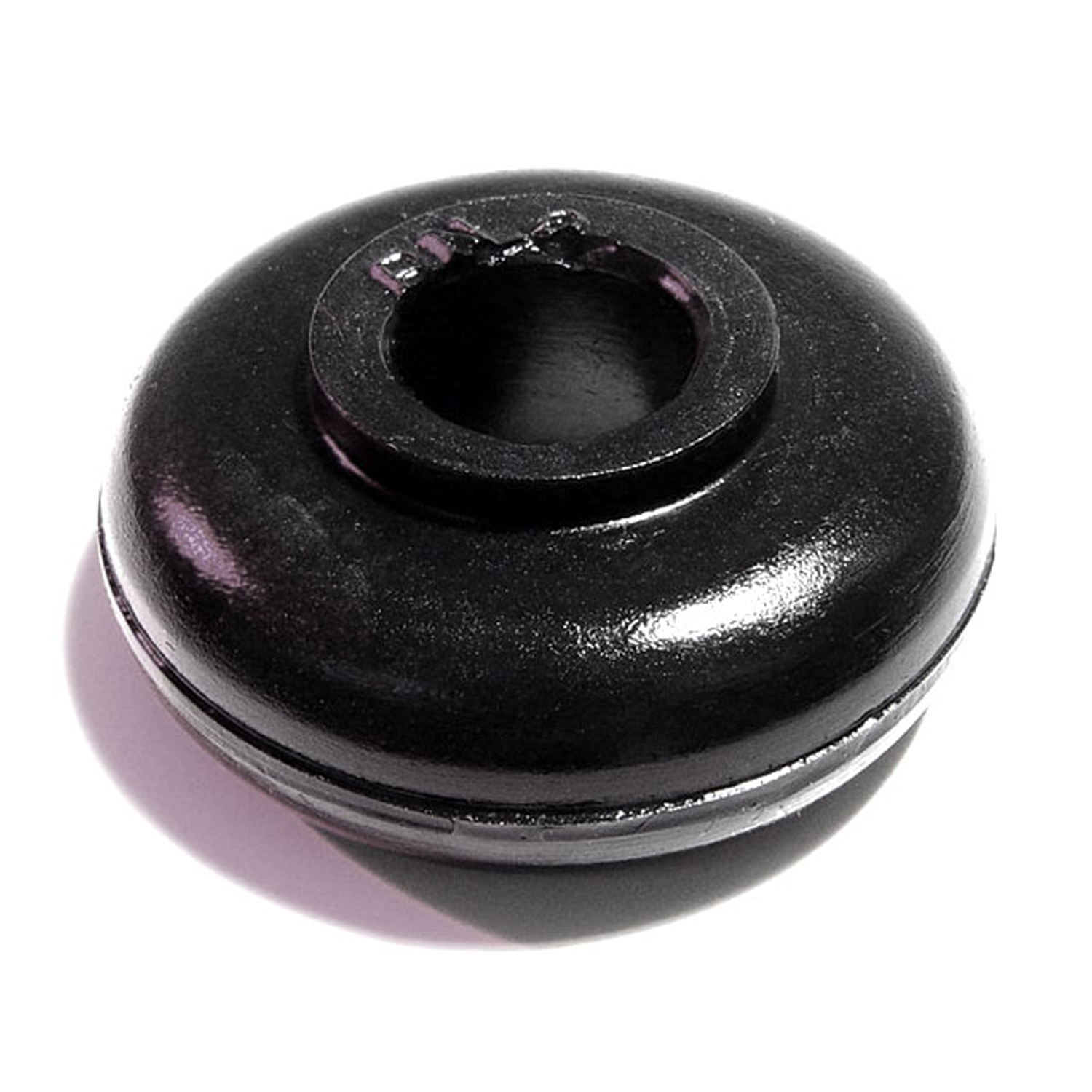 1951 Aston Martin DB3 Roll Bar Bushing. 1/2" high, with 1/2" hole. Each-BN 2Roll Bar Bushing. 1/2" high, with 1/2" hole. Each
 1951 Aston Martin DB3 Shock Grommet. 9/16" high, 3/8" hole. Each-BN 2-AShock Grommet. 9/16" high, 3/8" hole. Each
 1951 Aston Martin DB3 Clutch and Brake Pedal Pads. Perfect reproduction-CB 175Clutch and Brake Pedal Pads. Perfect reproduction. 1-3/4" wide X 3-1/4" long. Pair
 1951 Aston Martin DB3 Radiator Rod Cushion. 1/4" thick, 3/8" hole, 1" O.D-RA 1Radiator Rod Cushion. 1/4" thick, 3/8" hole, 1" O.D. Eight used per car. Each
 1951 Aston Martin DB3 Spark Plug Boot. Each-RP 1-ZSpark Plug Boot. Each
Why Choose Metro?
For over 100 years, Metro Moulded Parts has been the pinnacle of quality in classic car restoration parts. Our commitment to precision and authenticity in every component ensures a perfect fit and an OEM-level appearance.
- Expert Craftsmanship & Quality: Each part is a testament to our dedication to reliability and perfection, crafted from original designs and thoroughly tested.
- Advanced Technology: We use cutting-edge techniques to create flawless, long-lasting parts that surpass others in performance.
- SuperSoft Sponge – The Ultimate Door Seal: Not only are our door seals 30% softer than competitors', but they're also guaranteed to never leak. They effectively reduce wind and road noise, enhancing your classic car's comfort and driving experience.
- Proudly American: Our parts are a product of American craftsmanship, made in the USA with a spirit of excellence and heritage.
- Unrivaled Warranty: We back our products with a 30-year industry-leading warranty, a testament to our confidence in their quality.
Join us in preserving the legacy of classic cars with parts that are crafted for perfection, not just made.