

Image of 1952 Aston Martin Db2, Note: These illustrations use artistic license and may differ from actual historical models.
Performance Metrics
Fundamental Metrics
Emotional Appeal
MMP Rating
| Engine Specifications | |
|---|---|
| Engine: | 2.6 L Lagonda I6 |
| Displacement: | 2.6 L (2580 cc) |
| Horsepower: | 105-125 hp |
| Torque: | Estimated 130 lb-ft |
| Compression Ratio: | 8.16:1 |
| Ignition System: | Coil ignition |
| Cooling System: | Water-cooled |
| Performance Specifications | |
| 0-60 Time: | 11.2 seconds |
| 1/4 Mile Time: | Estimated 18 seconds |
| Top Speed: | 116 mph |
| Transmission and Drive | |
| Drive Type: | Rear-wheel drive |
| Transmission Type: | 4-speed manual |
| Fuel and Efficiency | |
| Fuel System Type: | Twin SU carburetors |
| MPG: | Estimated 20-25 mpg |
| Dimensions and Brakes | |
| Brakes: | Drum brakes |
| Wheelbase: | 99 in |
| Weight: | 2,700 lbs |
Note: Specifications for classic cars are given to the best of our ability, considering the limited and variant data available.
1952 Aston Martin DB2: A British Grand Tourer Comes of Age
The 1952 Aston Martin DB2 paired a hand-built British body with a twin-cam six-cylinder engine and the ambition to take on Europe’s finest sports cars. It was among the first models created under industrialist David Brown, who bought Aston Martin in 1947 and soon added Lagonda, bringing the advanced engine that would help define the new car.
Built at Aston Martin’s Feltham works, the DB2 arrived in 1950 as a fast, elegant road car with genuine competition credentials. Its name began a lineage that eventually included the DB4, DB5 and DB6. A notable early chapter came at the 1950 24 Hours of Le Mans, where DB2s took first and second in the three-litre class and finished fifth and sixth overall. For a young postwar marque, that was a formidable calling card.
Fastback Elegance and Hand-Finished Craft
The DB2’s most recognizable form is its fixed-head coupe, with a long bonnet, rounded front wings and a fastback roof that flows into a short, tapered tail. The low nose and enclosed grille give it a purposeful look, while delicate chrome details and slim bumpers keep the overall effect refined rather than aggressive. Designer Frank Feeley’s shape looks at home both outside a country house and on a race circuit.
The coupe is often described as a 2+2, though its small rear seats are better suited to children or occasional luggage than full-sized adults. A drophead coupe offered open-air motoring and is now especially sought after. Both versions were produced in small numbers, with coachwork made using traditional hand-built methods and lightweight aluminum panels.
Inside, the DB2 is a focused grand tourer rather than a modern luxury car. The cabin features leather upholstery, a wood-trimmed dashboard, clear instruments and substantial metal switchgear. Materials and finish were premium for the period, but the layout is straightforward: the driver gets a large steering wheel, a manual gear lever and an array of gauges that make the car feel like a sporting machine. Buyers could choose from a range of paint and trim combinations. British Racing Green, silver, dark reds and black suit the car particularly well, although colors varied with individual orders.
Technology That Gave Aston Martin an Edge
At the heart of the DB2 is a 2,580cc inline-six derived from the Lagonda engine program. Its twin overhead camshafts were advanced for a production sports car of the time, helping the engine breathe freely and deliver its power smoothly. The standard version produced about 105 horsepower, while the optional Vantage specification raised output to roughly 125 horsepower through higher compression and revised tuning.
A four-speed manual transmission, independent front suspension and a live rear axle made the DB2 a blend of sporting engineering and established practice. Its drum brakes were typical of the era, but they require more planning and effort than modern disc brakes, especially during repeated hard stops. The car’s combination of a sophisticated engine, relatively light construction and road-going comfort helped distinguish it from many heavier, less refined rivals.
Why the DB2 Mattered
The DB2 helped establish Aston Martin as a serious maker of high-performance grand tourers. It was not simply a stylish road car with a prestigious badge: its competition results demonstrated that the company’s engineering could withstand demanding endurance racing. That link between road-car elegance and motorsport credibility became an important part of Aston Martin’s identity.
The car also marked the beginning of the David Brown model era. Its twin-cam Lagonda-derived six-cylinder engine set a technical tone for the marque, while the DB2’s long-bonnet proportions and fastback roof helped define the classic British sports-car silhouette. Later Aston Martins became more powerful and more famous, but the DB2 established the basic recipe: a beautiful body, a refined engine and the ability to cover long distances quickly.
Performance and the Feel from Behind the Wheel
Period figures vary with engine tune, body style and test conditions. A standard DB2 was capable of approximately 110 mph and could accelerate from 0 to 60 mph in around 11 seconds. The Vantage version was quicker, with a top speed that could approach 120 mph and a 0-to-60 time in the region of 9 to 10 seconds. Those were impressive figures for an early-1950s grand tourer.
On the road, the DB2 rewards a smooth, deliberate driving style. The front suspension helps it settle into corners, and its balanced proportions make winding roads a natural setting. The rear axle and period tires can feel less composed over sharp bumps than a modern sports car, while narrow roads and crosswinds call for steady hands. Steering is unassisted, so it feels heavier at parking speeds but communicates the road clearly once the car is moving.
The engine is a major part of the experience. It starts with a mechanical, distinctly six-cylinder note, then builds into a smooth, hard-edged growl as the revs rise. The manual gearbox asks for thoughtful shifts, and the driver is closely involved in every part of the journey. A DB2 is quick by vintage standards, but its charm is just as much about the sound, feel and occasion as outright speed.
Owning a DB2: Character Comes with Care
Most DB2s today are used for weekend touring, classic-car events, concours displays and historic motoring gatherings. Some have competition histories, but preserving an original car is usually more important to owners than using it for regular racing. It can manage longer journeys, though its age, limited luggage space and lack of modern safety equipment make it a specialized choice rather than an everyday commuter.
Maintenance requires a workshop familiar with early Aston Martins and the Lagonda-derived engine. Routine servicing is manageable for a skilled classic-car mechanic, but parts, specialist labor and careful tuning can be expensive. Carburetion, ignition, cooling and the braking system all need regular attention. Repairs may be more straightforward than on a modern car electronically, but the hand-built construction and scarcity of components mean the average owner should not expect inexpensive or instant fixes.
Reliability depends heavily on the quality of previous restoration and ongoing care. A well-sorted DB2 can be a rewarding touring car, while one with neglected mechanicals can quickly become a major project. A thorough inspection by an Aston Martin specialist is essential before purchase.
Racing Roots and Other DB2 Facts
The DB2’s competition story began before the production car reached customers. Aston Martin’s early prototypes raced at Le Mans in 1949, and the production model made a strong impression the following year by sweeping the three-litre class. DB2s continued to compete in international events, helping build the experience and reputation that supported Aston Martin’s later racing efforts.
The name “Vantage” first appeared as a higher-performance DB2 specification, giving buyers a factory route to more power. The DB2 also has an important place in the company’s history as the first successful production model of the David Brown era. It does not hold a famous modern speed or sales record, but its class-winning Le Mans result remains a standout achievement for the model.
Common criticisms are part of its period character: drum brakes need sensible use, the cabin can feel compact, and the car lacks the weather protection, comfort and safety features expected today. Its hand-built nature also means that two examples may differ in details. Those traits are worth remembering when assessing originality, restoration quality and value.
Collector Values and How Rare They Are
Aston Martin built approximately 411 DB2s between 1950 and 1953. Commonly cited production figures divide that total into roughly 309 fixed-head coupes and 102 drophead coupes. The 1952 cars are part of that small overall run, not a separate high-volume series, and surviving examples vary considerably in condition, originality and history.
As a broad collector-market estimate, a standard fixed-head coupe might sell for roughly $250,000 to $450,000, with exceptional, correctly restored examples potentially reaching about $600,000 or more. Drophead coupes can command approximately $400,000 to $700,000, depending on condition and provenance. Vantage specification, documented competition history, matching numbers and high-quality restoration can lift values; incomplete cars or major restoration projects can fall well below these ranges. These are general estimates, and actual results depend on the car and the market at the time of sale.
The DB2 remains rare and is not frequently available compared with more widely produced classic sports cars. Over the long term, the model has generally benefited from the growing appreciation of early Aston Martins and historically important British cars. Prices can still move with the wider collector-car market, and restoration costs can exceed expectations, so a rising reputation does not guarantee a profit on every example.
The Aston Martin That Set the Pattern
The 1952 Aston Martin DB2 brings together the qualities that made the marque famous: elegant hand-built styling, a sophisticated twin-cam engine, genuine endurance-racing credibility and a highly involving drive. It is less polished and convenient than a modern grand tourer, but that is exactly where much of its appeal lies. As the car that helped launch Aston Martin’s defining DB era, the DB2 is not just a collectible classic. It is the beginning of a legend.
1952 Aston Martin Db2 Catalog of Parts
 1952 Aston Martin DB2 Steering Column Dust Seal at Firewall-BL 5Steering Column Dust Seal at Firewall. 1-1/8" wide hole at top, 4-1/2" O.D. at base. Replaces AM part #50999. Each
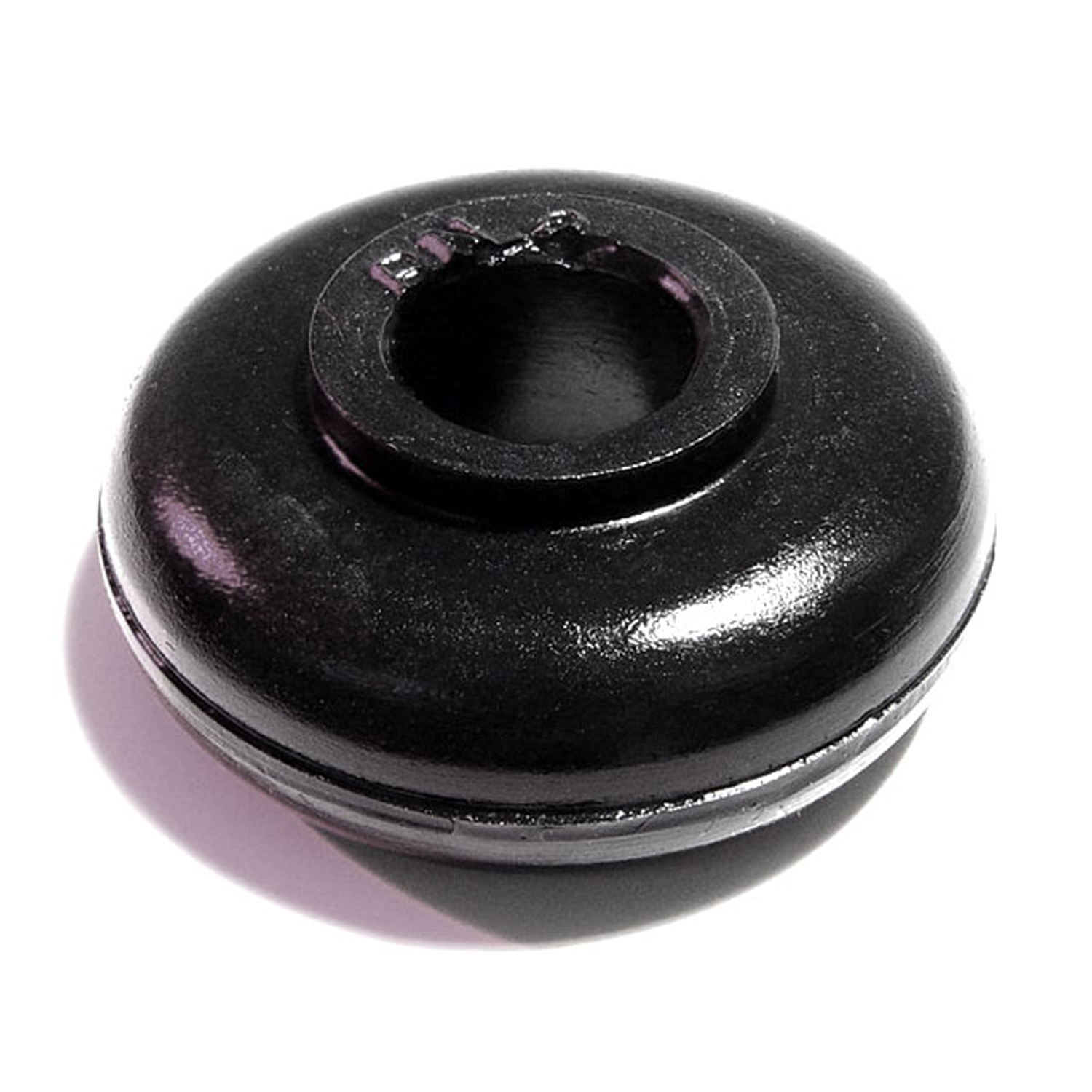 1952 Aston Martin DB2 Roll Bar Bushing. 1/2" high, with 1/2" hole. Each-BN 2Roll Bar Bushing. 1/2" high, with 1/2" hole. Each
 1952 Aston Martin DB2 Shock Grommet. 9/16" high, 3/8" hole. Each-BN 2-AShock Grommet. 9/16" high, 3/8" hole. Each
 1952 Aston Martin DB2 Clutch and Brake Pedal Pads. Perfect reproduction-CB 175Clutch and Brake Pedal Pads. Perfect reproduction. 1-3/4" wide X 3-1/4" long. Pair
 1952 Aston Martin DB2 Radiator Rod Cushion. 1/4" thick, 3/8" hole, 1" O.D-RA 1Radiator Rod Cushion. 1/4" thick, 3/8" hole, 1" O.D. Eight used per car. Each
 1952 Aston Martin DB2 Spark Plug Boot. Each-RP 1-ZSpark Plug Boot. Each
Why Choose Metro?
For over 100 years, Metro Moulded Parts has been the pinnacle of quality in classic car restoration parts. Our commitment to precision and authenticity in every component ensures a perfect fit and an OEM-level appearance.
- Expert Craftsmanship & Quality: Each part is a testament to our dedication to reliability and perfection, crafted from original designs and thoroughly tested.
- Advanced Technology: We use cutting-edge techniques to create flawless, long-lasting parts that surpass others in performance.
- SuperSoft Sponge – The Ultimate Door Seal: Not only are our door seals 30% softer than competitors', but they're also guaranteed to never leak. They effectively reduce wind and road noise, enhancing your classic car's comfort and driving experience.
- Proudly American: Our parts are a product of American craftsmanship, made in the USA with a spirit of excellence and heritage.
- Unrivaled Warranty: We back our products with a 30-year industry-leading warranty, a testament to our confidence in their quality.
Join us in preserving the legacy of classic cars with parts that are crafted for perfection, not just made.