

Image of 1953 Aston Martin Db2, Note: These illustrations use artistic license and may differ from actual historical models.
Performance Metrics
Fundamental Metrics
Emotional Appeal
MMP Rating
| Engine Specifications | |
|---|---|
| Engine Options: | 2.6 L Lagonda I6, 2.9 L Lagonda I6 |
| Displacement Range: | 2.6 - 2.9 L |
| Horsepower Range: | 105 - 140 hp |
| Torque: | Estimated 120 - 160 lb-ft |
| Compression Ratio: | 8.16:1 |
| Ignition System: | Coil ignition |
| Cooling System: | Water-cooled |
| Performance Specifications | |
| 0-60 Time: | 11.2 seconds |
| 1/4 Mile Time: | Estimated 18 seconds |
| Top Speed: | 116 mph |
| Transmission and Drive | |
| Drive Type: | Rear-wheel drive |
| Transmission Type: | 4-speed manual |
| Fuel and Efficiency | |
| Fuel System Type: | Twin SU carburetors |
| MPG: | Estimated 20 mpg |
| Dimensions and Brakes | |
| Brakes: | Hydraulic drum brakes |
| Wheelbase: | 99 inches |
| Weight: | 2,700 lbs |
Note: Specifications for classic cars are given to the best of our ability, considering the limited and variant data available.
1953 Aston Martin DB2: A Postwar British Sports-Car Icon
The 1953 Aston Martin DB2 brought racing-bred engineering and hand-finished British style together in a car that helped put Aston Martin back on the international map. Built by Aston Martin under the ownership of industrialist David Brown, the DB2 was the company’s first major postwar production sports car and the model that established the “DB” name.
Its origins reach back to 1947, when Brown bought Aston Martin and then acquired Lagonda, gaining access to a remarkable 2.6-liter straight-six engine developed by a team led by W.O. Bentley. The DB2 made its public debut at the 1949 New York Auto Show and entered production in 1950. One memorable early endorsement came from the race track: DB2s showed their promise at the 1949 24 Hours of Le Mans, where an Aston Martin finished third overall and the cars claimed strong results in their class.
By 1953, the DB2 was nearing the end of its run, with the roomier DB2/4 arriving that year. That overlap can make “1953 Aston Martin” descriptions worth checking carefully: some cars from the period are DB2s, while others are early DB2/4s.
DB2 Styling and Coachwork
The DB2’s long bonnet, rounded nose, narrow grille, and flowing fastback roofline give it a purposeful yet elegant profile. The grille sits low and wide beneath a small bonnet scoop, while the headlights are neatly integrated into the front wings. At the rear, the roof sweeps down into a compact tail, creating a shape that looks just as convincing outside a country house as it does on a starting grid.
Most DB2s were fixed-head coupes, often described by Aston Martin as Sports Saloons. A smaller number were built as Drophead Coupes, with a folding fabric roof for open-air touring. The closed coupe is the best-known and most numerous version, while the Drophead is especially appealing to buyers who want the same sporting character with a more relaxed, open-top feel.
The body used lightweight aluminum panels over a steel structure, a practical choice for reducing weight in a performance car. Original paint choices varied, and period Aston Martins could be ordered in a range of colors. Dark green, British racing green, silver, black, and deep red or blue shades are all popular with collectors today, though a car’s documented original color is often more important than a fashionable repaint.
Hand-Finished Cabin and Period Technology
Inside, the DB2 is intimate and driver-focused. Connolly leather upholstery, wool carpeting, and a carefully finished dashboard give the cabin a distinctly handcrafted character. The instruments are laid out for easy reading, with prominent dials and traditional switches rather than the modern convenience features drivers expect today. Luggage space is limited, but the cabin and rear shelf suit the car’s role as a sporting grand tourer rather than a family saloon.
For its time, the DB2’s most important technology was under the bonnet. Its 2,580cc Lagonda straight-six used twin overhead camshafts, a sophisticated arrangement that helped it breathe and rev freely. Twin SU carburetors fed the engine, and power reached the rear wheels through a four-speed manual gearbox. Independent front suspension helped deliver more controlled handling than the simple live-axle arrangements common on many sports cars of the era. Braking was by drum brakes, so stopping distances and fade resistance are naturally different from those of a modern car.
Some DB2s were equipped with the optional Vantage specification. Engine changes, including higher compression and revised carburetion, lifted output from roughly 105 horsepower to around 125 horsepower. These cars offered stronger performance while retaining the DB2’s understated appearance.
Why the DB2 Mattered
The DB2 was significant because it gave Aston Martin a competitive, modern sports car at a pivotal moment in the company’s history. David Brown’s investment brought together the Aston Martin name, Lagonda’s advanced engine, and a clear ambition to compete in both road-car and motorsport markets. The result was not simply a handsome coupe, but a credible international competitor.
Against contemporaries such as the Jaguar XK120, the DB2 was less common and generally more exclusive. Its twin-cam engine, carefully built chassis, and hand-finished cabin helped distinguish it from mass-produced sports cars. The DB2 also created the foundation for a family of David Brown-era models, including the DB2/4 and the later DB4, DB5, and DB6. Its lasting influence is visible in Aston Martin’s enduring combination of sporting engineering and refined grand-touring style.
Performance and Road Manners
A standard DB2 produces about 105 horsepower, while Vantage versions are commonly quoted at roughly 125 horsepower. Depending on specification, condition, gearing, and test method, period performance figures place top speed at around 110 mph for a standard car, with Vantage models capable of more. Zero to 60 mph takes approximately 11 seconds in a healthy standard example. Those numbers were impressive for a refined British sports car of the early 1950s.
On a winding road, the DB2 feels composed and purposeful, with independent front suspension helping it deal with imperfect surfaces. Its steering gives the driver a direct sense of the road, though it is heavier at low speeds than modern power-assisted systems. The rear live axle can be unsettled by sharp bumps, especially if the suspension is worn or the car is pushed hard over uneven pavement. Narrow period tires and drum brakes also call for measured inputs rather than modern, last-minute braking.
The straight-six is a major part of the experience. It delivers a smooth mechanical growl that builds into a more urgent note as the revs rise, while the four-speed manual keeps the driver closely involved. The ride is firm by modern luxury-car standards, but the DB2 rewards a steady pace with a satisfying blend of road feel, engine character, and long-distance comfort.
Living with a 1953 DB2
Today, a DB2 is most often used for classic-car touring, concours events, historic rallies, and occasional club motorsport. It can cover meaningful distances when properly prepared, but its age, rarity, and value make regular daily use impractical for most owners. A well-maintained example is best enjoyed as a specialist classic, with careful attention to warm-up, fluid levels, and the condition of its brakes and tires.
Maintenance is not especially straightforward for an average owner. The basic mechanical layout is understandable to a skilled vintage-car mechanic, but parts can be scarce, and work on the engine, aluminum body, trim, or original electrical systems calls for experience. Specialist Aston Martin workshops are often the safest choice for major repairs. A full restoration can be expensive, so a thorough inspection and strong service history matter greatly before purchase.
DB2 Facts, Racing, and Common Criticisms
Aston Martin built approximately 411 DB2s, generally counted as 309 fixed-head coupes and 102 Drophead Coupes. Production figures can vary slightly in references depending on how individual cars and special bodies are classified, but the model was unquestionably a low-volume car. Its direct connection to the Lagonda engine also gave it an unusual blend of Aston Martin identity and Bentley engineering heritage.
The DB2’s competition record helped establish the brand’s postwar sporting credentials. Its early Le Mans results demonstrated that Aston Martin could build a serious endurance racer as well as an elegant road car. The DB2 also helped create the sporting image that the company would carry into later decades. It is not known for a single headline speed or sales record; its significance lies more in its racing results and its role in reviving Aston Martin’s international reputation.
Common criticisms are practical rather than romantic. The cabin is tight, the luggage capacity is modest, parts and specialist labor can be costly, and drum brakes require more planning than modern braking systems. Some owners also find the ride busy on rough roads. Those compromises are part of the car’s period character, but they are worth understanding before buying one.
Collector Value and Availability
DB2 values vary sharply with condition, originality, history, and body style. As a broad 2026 estimate, a project or heavily compromised car may fall around $150,000 to $250,000 USD, while a sound, usable example may be roughly $250,000 to $450,000. A superbly restored, highly original, or especially well-documented car can reach approximately $500,000 to $700,000 or more. A significant competition history or exceptional provenance can push a car beyond those typical ranges.
Drophead Coupes, Vantage-specification cars, and examples with compelling ownership or racing histories may command a premium, but condition and authenticity remain decisive. DB2s appear on the market only occasionally, and the relatively small production total means buyers may need patience to find the right specification. In general, the model has shown long-term strength as a collectible, although individual auction results move with restoration quality, provenance, and wider classic-car market conditions.
The Aston Martin That Set the Course
The 1953 Aston Martin DB2 combined a sophisticated twin-cam engine, lightweight coachwork, competition credibility, and beautifully restrained styling. It was not the easiest classic to maintain or the most practical sports car of its era, but it gave Aston Martin a powerful foundation for the celebrated DB generations that followed.
More than seven decades later, the DB2 remains a compelling reminder of the moment Aston Martin turned postwar ambition into a lasting identity: a hand-built grand tourer with a racer’s heart.
1953 Aston Martin Db2 Catalog of Parts
 1953 Aston Martin DB2 Steering Column Dust Seal at Firewall-BL 5Steering Column Dust Seal at Firewall. 1-1/8" wide hole at top, 4-1/2" O.D. at base. Replaces AM part #50999. Each
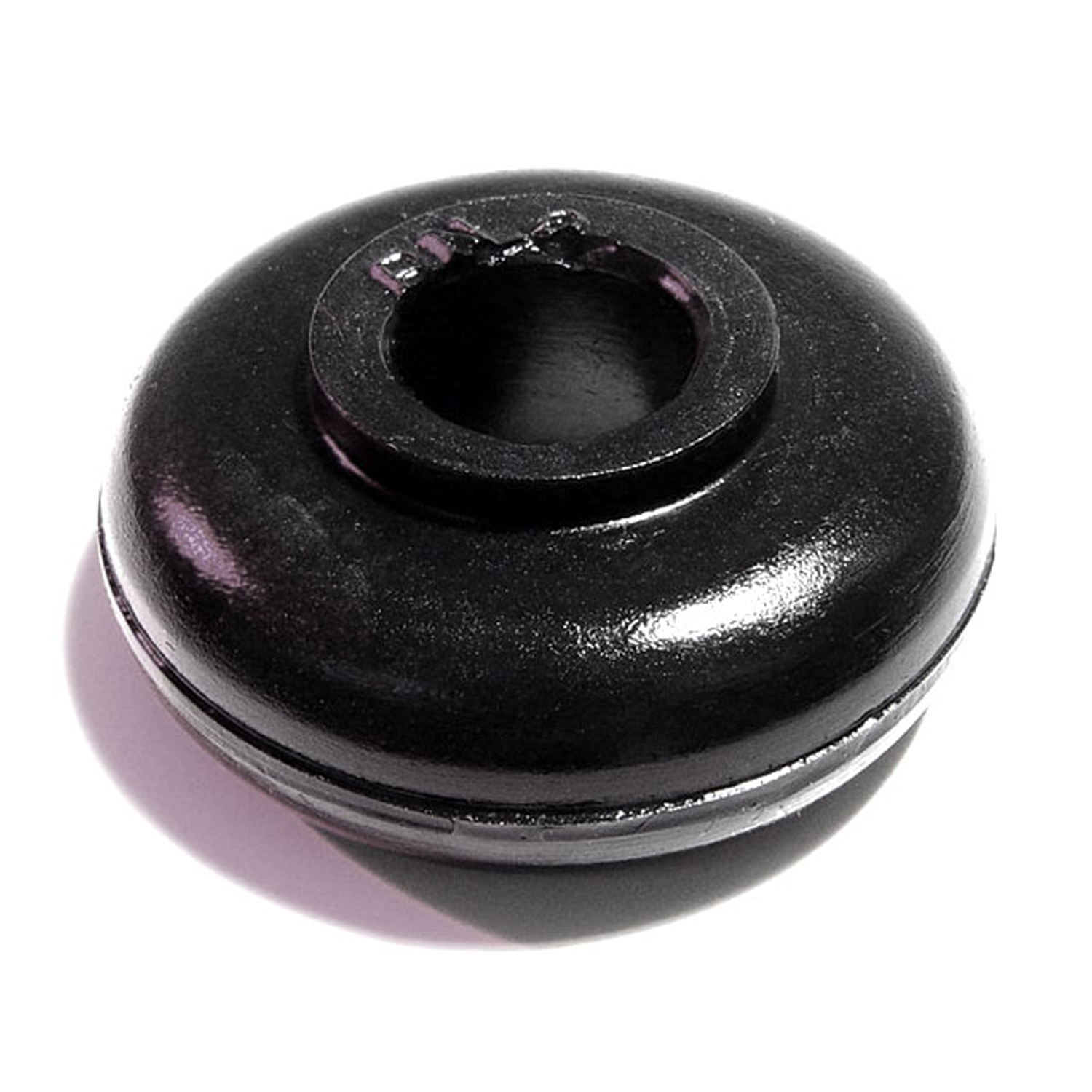 1953 Aston Martin DB2 Roll Bar Bushing. 1/2" high, with 1/2" hole. Each-BN 2Roll Bar Bushing. 1/2" high, with 1/2" hole. Each
 1953 Aston Martin DB2 Shock Grommet. 9/16" high, 3/8" hole. Each-BN 2-AShock Grommet. 9/16" high, 3/8" hole. Each
 1953 Aston Martin DB2 Clutch and Brake Pedal Pads. Perfect reproduction-CB 175Clutch and Brake Pedal Pads. Perfect reproduction. 1-3/4" wide X 3-1/4" long. Pair
 1953 Aston Martin DB2 Radiator Rod Cushion. 1/4" thick, 3/8" hole, 1" O.D-RA 1Radiator Rod Cushion. 1/4" thick, 3/8" hole, 1" O.D. Eight used per car. Each
 1953 Aston Martin DB2 Spark Plug Boot. Each-RP 1-ZSpark Plug Boot. Each
Why Choose Metro?
For over 100 years, Metro Moulded Parts has been the pinnacle of quality in classic car restoration parts. Our commitment to precision and authenticity in every component ensures a perfect fit and an OEM-level appearance.
- Expert Craftsmanship & Quality: Each part is a testament to our dedication to reliability and perfection, crafted from original designs and thoroughly tested.
- Advanced Technology: We use cutting-edge techniques to create flawless, long-lasting parts that surpass others in performance.
- SuperSoft Sponge – The Ultimate Door Seal: Not only are our door seals 30% softer than competitors', but they're also guaranteed to never leak. They effectively reduce wind and road noise, enhancing your classic car's comfort and driving experience.
- Proudly American: Our parts are a product of American craftsmanship, made in the USA with a spirit of excellence and heritage.
- Unrivaled Warranty: We back our products with a 30-year industry-leading warranty, a testament to our confidence in their quality.
Join us in preserving the legacy of classic cars with parts that are crafted for perfection, not just made.