

Image of 1955 Aston Martin Db3, Note: These illustrations use artistic license and may differ from actual historical models.
Performance Metrics
Fundamental Metrics
Emotional Appeal
MMP Rating
| Engine Specifications | |
|---|---|
| Engine: | Inline 6 |
| Displacement: | 2922 cc |
| Horsepower: | 140-163 hp |
| Torque: | Not available |
| Compression Ratio: | 8.5:1 |
| Ignition System: | Coil ignition |
| Cooling System: | Water-cooled |
| Performance Specifications | |
| 0-60 Time: | 10 seconds |
| 1/4 Mile Time: | Not available |
| Top Speed: | 120 mph |
| Transmission and Drive | |
| Drive Type: | Rear-wheel drive |
| Transmission Type: | 4-speed manual |
| Fuel and Efficiency | |
| Fuel System Type: | Twin SU carburetors |
| MPG: | Not available |
| Dimensions and Brakes | |
| Brakes: | Hydraulic drum brakes |
| Wheelbase: | 99 inches |
| Weight: | 2100 lbs |
Note: Specifications for classic cars are given to the best of our ability, considering the limited and variant data available.
1955 Aston Martin DB3: The DB3S Racing Legend
The 1955 Aston Martin most people mean when they say “DB3” is the DB3S, a purpose-built sports racer that helped establish Aston Martin as a serious force in international endurance racing. The distinction matters: the earlier DB3 was a larger racing car, while the lighter, more agile DB3S became the celebrated model of the mid-1950s.
Built by Aston Martin in Britain, the DB3S was created for competition, not as a road-going grand tourer. Its sleek body, powerful twin-cam engine, and focused chassis made it a formidable rival to cars from Jaguar, Ferrari, and Mercedes-Benz. One of its standout achievements came at the 1955 24 Hours of Le Mans, where an Aston Martin DB3S finished second overall, demonstrating that the marque could challenge the leading endurance racers of the era.
Low, Long, and Built for Speed
The DB3S has the purposeful proportions of a classic front-engine sports racer: a long bonnet, compact cockpit, wide track, and low-set grille. Its curving front wings flow into a rounded tail, while the open cockpit and minimal overhangs leave little doubt about its competition-first mission. The bodywork was lightweight aluminum, shaped to reduce drag and keep mass down.
Most DB3S cars were open roadsters, the iconic form associated with the model. A small number of works cars were also built with closed coupe bodies for endurance events, where reduced wind resistance and some protection from the elements could be useful. These coupes are especially distinctive, but the open roadster remains the best-known silhouette.
The cockpit is sparse by modern standards. Drivers sat close to the mechanicals, surrounded by functional instruments, simple controls, and little in the way of sound insulation or comfort equipment. Materials and trim varied with the car’s purpose and specification. This was not a leather-lined luxury cabin like a road-going Aston Martin, but a hard-wearing racing workspace designed to keep the driver informed and in control.
British Racing Green is the color most closely associated with Aston Martin’s competition cars, and it is a natural favorite among DB3S enthusiasts. However, the cars were competition machines with individual histories, so liveries and details could vary. Racing numbers, event markings, and restoration choices often give each surviving example its own visual identity.
Engineering for the Race Track
At the heart of the DB3S is a 2,922 cc, double-overhead-camshaft inline-six. Depending on specification and tuning, output is generally quoted in the region of 210 to 220 horsepower. A four-speed manual gearbox sends power to the rear wheels. That output may sound modest beside a modern sports car, but in a lightweight machine of the 1950s it delivered genuinely serious performance.
The chassis and suspension were engineered for competition, with independent front suspension and a de Dion rear arrangement. The combination helped keep the rear wheels aligned under load while giving the car the balance needed for fast cornering. Drum brakes were typical for the period. They could be effective when properly set up, but required more attention and careful management than modern disc brakes, especially during repeated hard stops.
There was no electronic driver assistance, power steering, or modern safety net. The DB3S relied on mechanical grip, a well-developed chassis, and the driver’s judgment. Its most important technologies were the ones built into its engine, lightweight construction, and race-focused suspension.
Why the DB3S Mattered
The DB3S was a significant step forward from the earlier DB3. Aston Martin reduced weight and refined the car’s handling, creating a more compact and competitive package. The work helped the company develop the engineering knowledge and racing reputation that would support its later sports-racing successes, including the DBR1.
It also showed how a relatively small British manufacturer could compete at the highest level of endurance racing. Rather than relying on sheer engine size alone, the DB3S combined a strong six-cylinder engine with careful chassis development and aerodynamic bodywork. Its competition record and elegant shape helped define Aston Martin’s image as a maker of fast, sophisticated sports cars.
The DB3S did not make every rival obsolete, and it was not without compromises. It was a specialized race car, and its drum brakes, demanding cockpit, and period-correct reliability challenges could make it less forgiving than a modern performance car. Its lasting influence is found in the blend of purposeful engineering and understated style that became central to Aston Martin’s sporting identity.
Performance and Driving Feel
Period performance varied with gearing, body style, engine tune, and track conditions. A well-prepared DB3S is commonly estimated to reach roughly 135 to 145 mph, with 0-to-60 mph acceleration in the neighborhood of five to six seconds. These are approximate figures rather than guaranteed factory results for every car, particularly because surviving examples have different histories and specifications.
On a smooth, winding circuit, the DB3S feels light on its feet and responsive to the driver’s inputs. Its relatively low weight helps it change direction quickly, while the rear suspension design supports stability when accelerating out of a corner. On bumpy roads, however, it behaves like the competition machine it is: firm, noisy, and less forgiving than a road car. A fast, uneven public road demands respect, especially given the car’s age and the limitations of its brakes and tires.
The straight-six is a major part of the experience. It builds to a hard, mechanical howl as the revs rise, accompanied by intake noise and the sound of a close, purposeful drivetrain. The steering, clutch, and gear changes require more physical involvement than a modern car. There is little between the driver and the machinery, which is exactly what makes the DB3S so engaging for experienced drivers.
Owning a DB3S Today
A DB3S is most at home in historic racing, carefully managed demonstrations, concours events, and private collections. It is not a practical daily driver. Even when maintained to a very high standard, it is an old competition car with limited weather protection, a focused cockpit, and mechanical systems that require regular inspection.
Maintenance is specialized. Engine, gearbox, suspension, brakes, and aluminum bodywork should be handled by technicians familiar with historic Aston Martins and racing machinery. Some repairs are straightforward in principle, but original components, correct specifications, and competition history make work costly and exacting. This is not a car for the average owner to service using ordinary workshop tools and a generic parts catalog.
Reliability depends heavily on preparation and use. A properly rebuilt and carefully maintained example can be enjoyed in appropriate events, but age, hard competition use, and the value of original components all demand a conservative approach. Many owners preserve their cars through expert preparation rather than treating them as ordinary road vehicles.
Racing Records and Rare Details
Aston Martin produced 31 DB3S cars between 1953 and 1956, commonly counted as 11 works cars and 20 customer cars. That small production run makes the model exceptionally rare. The 1955 Le Mans second-place finish is a notable highlight, and the DB3S also competed successfully in other major sports-car events during the decade.
The DB3S’s most important distinction is not a production or land-speed record. It is the combination of a small production total, a substantial competition history, and a direct link to Aston Martin’s rise as an international racing marque. Its period rivals included the Jaguar D-Type and Ferrari sports racers, machines that could be equally quick and often had their own advantages depending on circuit and conditions.
One common misconception is that every 1955 Aston Martin DB3 is a standard road car. In reality, a car described as a “1955 DB3” is usually being identified as a DB3S, and the exact chassis, body, and competition history are essential to understanding what it is. Another criticism is that its racing pedigree can make it intimidating to drive and expensive to maintain. Those concerns are fair, but they are part of the reality of owning a rare, mid-century competition car.
Collector Value and Availability
With only 31 DB3S cars built, availability is extremely limited. Examples rarely appear on the open market, and any sale depends on the car’s chassis identity, originality, restoration quality, race history, and provenance. A documented works car or a car with important period results can command a significant premium over an example with less prominent history.
As a broad estimate, a DB3S might sell in the range of roughly $2 million to $6 million, with exceptional works cars or unusually important examples potentially exceeding that range. These figures are not a fixed price guide: auction timing, condition, documentation, and buyer competition can have a major effect. The market has generally treated historically significant Aston Martin racers as long-term collectible assets, though values can still rise or fall with broader economic conditions.
For a 1955 example, buyers should have marque specialists verify the chassis number and establish whether the car is a DB3S, a works or customer car, and how much of its current specification is historically correct. In this category, provenance is not a footnote. It is a central part of the car’s identity and value.
Aston Martin’s Fast, Focused Classic
The 1955 Aston Martin DB3S brings together lightweight construction, a high-revving twin-cam six, competition-developed handling, and one of the most recognizable shapes of 1950s sports-car racing. It is rare, demanding, and costly to own, but those qualities come with a remarkable history and an unusually direct driving experience.
More than a beautiful vintage racer, the DB3S is a key chapter in Aston Martin’s competition story: a car that proved the marque could fight at the front and helped shape the sporting identity that still defines Aston Martin today.
1955 Aston Martin Db3 Catalog of Parts
 1955 Aston Martin DB3 Steering Column Dust Seal at Firewall-BL 5Steering Column Dust Seal at Firewall. 1-1/8" wide hole at top, 4-1/2" O.D. at base. Replaces AM part #50999. Each
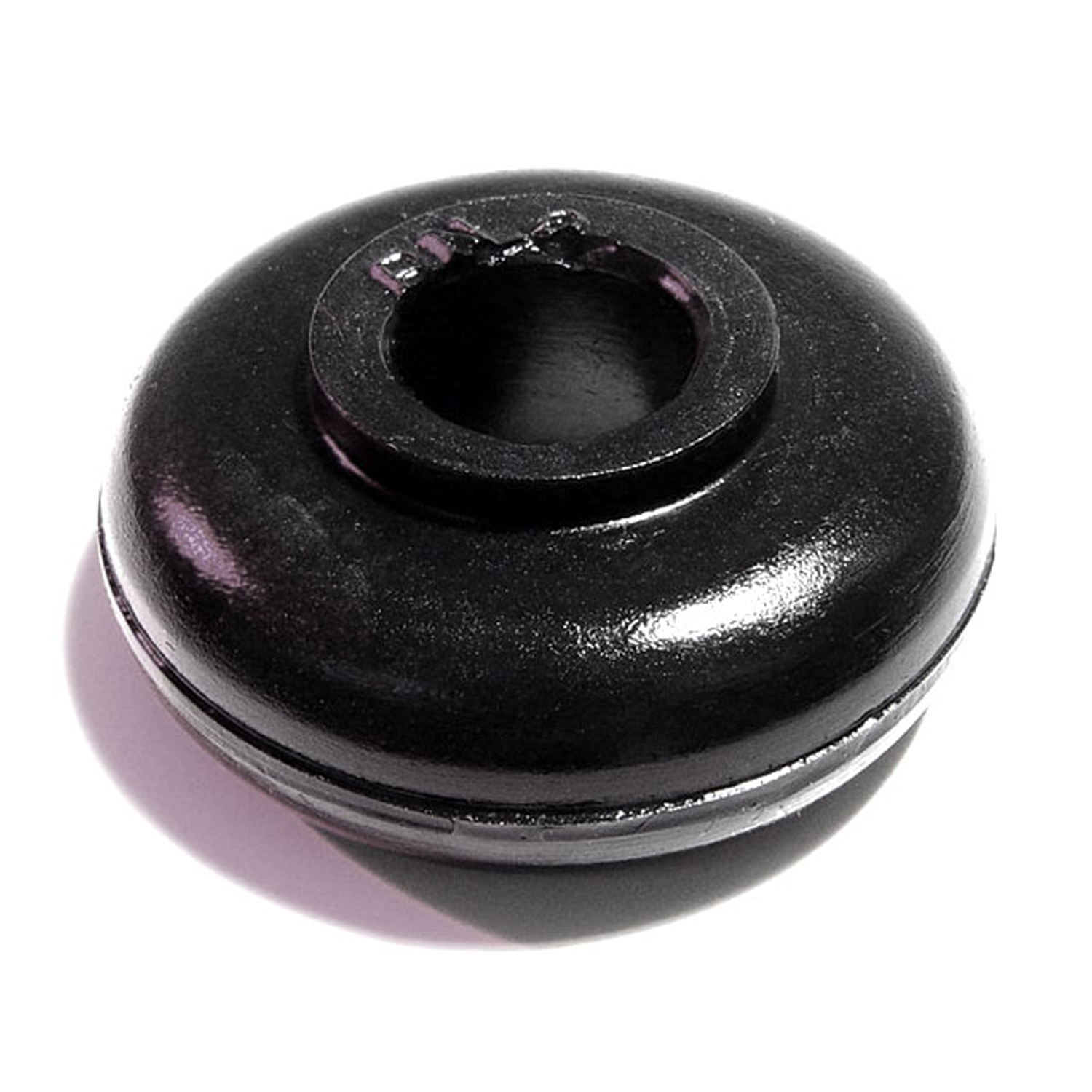 1955 Aston Martin DB3 Roll Bar Bushing. 1/2" high, with 1/2" hole. Each-BN 2Roll Bar Bushing. 1/2" high, with 1/2" hole. Each
 1955 Aston Martin DB3 Shock Grommet. 9/16" high, 3/8" hole. Each-BN 2-AShock Grommet. 9/16" high, 3/8" hole. Each
 1955 Aston Martin DB3 Clutch and Brake Pedal Pads. Perfect reproduction-CB 175Clutch and Brake Pedal Pads. Perfect reproduction. 1-3/4" wide X 3-1/4" long. Pair
 1955 Aston Martin DB3 Radiator Rod Cushion. 1/4" thick, 3/8" hole, 1" O.D-RA 1Radiator Rod Cushion. 1/4" thick, 3/8" hole, 1" O.D. Eight used per car. Each
 1955 Aston Martin DB3 Spark Plug Boot. Each-RP 1-ZSpark Plug Boot. Each
Why Choose Metro?
For over 100 years, Metro Moulded Parts has been the pinnacle of quality in classic car restoration parts. Our commitment to precision and authenticity in every component ensures a perfect fit and an OEM-level appearance.
- Expert Craftsmanship & Quality: Each part is a testament to our dedication to reliability and perfection, crafted from original designs and thoroughly tested.
- Advanced Technology: We use cutting-edge techniques to create flawless, long-lasting parts that surpass others in performance.
- SuperSoft Sponge – The Ultimate Door Seal: Not only are our door seals 30% softer than competitors', but they're also guaranteed to never leak. They effectively reduce wind and road noise, enhancing your classic car's comfort and driving experience.
- Proudly American: Our parts are a product of American craftsmanship, made in the USA with a spirit of excellence and heritage.
- Unrivaled Warranty: We back our products with a 30-year industry-leading warranty, a testament to our confidence in their quality.
Join us in preserving the legacy of classic cars with parts that are crafted for perfection, not just made.