

Image of 1957 Aston Martin Db, Note: These illustrations use artistic license and may differ from actual historical models.
Performance Metrics
Fundamental Metrics
Emotional Appeal
MMP Rating
| Engine Specifications | |
|---|---|
| Engine: | DOHC Inline-6 |
| Displacement: | 2922 cc |
| Horsepower: | 140-210 hp |
| Torque: | 240 Nm |
| Compression Ratio: | 8.6:1 |
| Ignition System: | Twin-Spark Ignition System |
| Cooling System: | Liquid Cooled |
| Performance Specifications | |
| 0-60 Time: | 9.3 seconds |
| 1/4 Mile Time: | 17 seconds |
| Top Speed: | 120-140 mph |
| Transmission and Drive | |
| Drive Type: | Rear Wheel Drive |
| Transmission Type: | 4-Speed Manual / Optional Overdrive |
| Fuel and Efficiency | |
| Fuel System Type: | Triple SU Carburetors |
| MPG: | 15-20 mpg |
| Dimensions and Brakes | |
| Brakes: | Disc Brakes |
| Wheelbase: | 2515 mm |
| Weight: | 1300 kg |
Note: Specifications for classic cars are given to the best of our ability, considering the limited and variant data available.
1957 Aston Martin DB Mark III: A British Grand Tourer Comes of Age
The 1957 Aston Martin DB Mark III brought a new face, sharper engineering and serious grand-touring pace to Aston Martin’s postwar lineup. Built by the British marque at its Feltham works, it was the most developed version of the DB2 family and a crucial stepping stone toward the celebrated DB4. The name can cause some confusion: the model is properly called the DB Mark III, not the DB3, which was a separate racing sports car.
Introduced in 1957, the DB Mark III arrived during a period when British manufacturers were competing to build cars that could cross countries quickly while still offering genuine comfort and craftsmanship. One especially memorable claim to fame came in fiction: Ian Fleming gave James Bond a DB Mark III in the 1959 novel Goldfinger. The film adaptation later substituted the DB5, but Bond’s literary Aston was this earlier model.
Signature Grille and Hand-Finished Cabin
The DB Mark III’s most recognizable feature is its broad, gently curved grille, a shape inspired by Aston Martin’s DB3S racing car. It established the distinctive front-end identity that would become a lasting Aston Martin hallmark. The grille sits between rounded headlamps and sculpted front wings, while the long bonnet, flowing roofline and compact tail give the car the poised proportions of a classic British GT.
Its bodywork was coachbuilt by Tickford, the body company Aston Martin had acquired. Buyers could choose a fixed-roof saloon, a Drophead Coupe with a folding fabric roof, or the very rare Fixed Head Coupe. The saloon was by far the most common and is the version most often associated with the model. The Drophead Coupe offered open-air touring, while the Fixed Head Coupe is now a particularly unusual sight.
Inside, the DB Mark III feels like a hand-finished sporting car rather than a mass-produced luxury sedan. Connolly leather upholstery, polished wood trim, wool carpeting and a carefully arranged instrument panel gave the cabin warmth and a distinctly British character. The rear seat made the car more practical than a two-seat sports car, though it is best suited to children or shorter journeys for adults.
Period paint choices varied, and special-order colors were possible. British Racing Green, dark blue, silver, red and understated cream shades all suit the car’s lines. As with many coachbuilt classics, the exact color palette depended on the original order, so a surviving car’s factory records can be more informative than a general list of available finishes.
Engineering for the Open Road
Power came from Aston Martin’s 2,922 cc, twin-overhead-cam inline-six, developed from the Lagonda engine designed under W. O. Bentley. In standard form it produced about 162 horsepower. Higher-output versions were available, with output commonly quoted at roughly 178 horsepower and, in rare special specification, as much as 195 horsepower. Exact figures depend on engine and market specification.
A four-speed manual gearbox was standard, with overdrive available on some cars. One notable step forward was the adoption of Girling front disc brakes as standard equipment, giving the DB Mark III stronger, more consistent stopping power than the drum-braked cars many buyers still knew. The combination of a sophisticated engine, a proper manual transmission and improved brakes made it a capable long-distance machine for its day.
Contemporary performance figures vary by engine and test conditions, but a standard DB Mark III could reach approximately 120 mph and accelerate from 0 to 60 mph in around 9 seconds. Those numbers made it a genuinely fast road car in the late 1950s, not merely a handsome luxury coupe.
How the DB Mark III Drives
The straight-six is the heart of the experience. It delivers a smooth, cultured note at cruising speed, then develops a more purposeful mechanical growl as the revs rise. The manual gearbox asks for deliberate, well-timed shifts, and the driver feels connected to the car in a way that modern power-assisted grand tourers rarely replicate.
On a winding road, the DB Mark III feels composed and rewarding when driven smoothly. Its steering communicates the road, though it can feel heavy during slow parking maneuvers. The suspension is designed for touring comfort, so it takes ordinary bumps with a supple, period-correct motion rather than the tautness of a modern sports car. On rough surfaces, the car’s age and condition matter greatly: worn dampers, tired bushings or incorrect tires can make it feel unsettled.
At speed, its long bonnet and stable stance suit open highways and sweeping bends. It is not a lightweight competition car, and tight corners reward measured inputs rather than abrupt steering or braking. The best way to enjoy one is as a fast, elegant tourer, allowing the engine to work smoothly and the chassis to settle into a rhythm.
Why the 1957 Aston Martin Matters
The DB Mark III was the final and most refined evolution of the DB2 line. Its styling helped establish the grille design that became a defining Aston Martin cue, while its blend of performance, craftsmanship and usable luggage space demonstrated what a modern British grand tourer could be. It also arrived just before the DB4, which would carry the marque into a new era of design and engineering.
What separated the DB Mark III from many contemporaries was its unusual balance. It offered genuine high-speed ability without abandoning a finished, comfortable cabin, and it paired sporting character with a degree of practicality. Front disc brakes added meaningful stopping performance, while the powerful twin-cam six gave the car the pace to match its elegant appearance.
Living with a DB Mark III Today
Today, most DB Mark IIIs are used for touring, club events and concours displays rather than daily commuting. A well-sorted example can cover distance confidently, but regular use requires attentive maintenance and a specialist familiar with Aston Martin’s period engineering. The engine is robust when maintained properly, yet the car’s age, hand-built construction and limited parts supply make preventive care essential.
Routine work is manageable for an experienced classic-car owner, but this is not an inexpensive car to learn mechanics on. Engine, gearbox, brake and suspension work can require specialist knowledge, and restoration of coachwork or interior trim can become costly. Buyers should look closely at service history, chassis condition, engine identity, previous restoration quality and the availability of original parts. A pre-purchase inspection by an Aston Martin specialist is money well spent.
Rare Production and Bond’s Literary Aston
Aston Martin built approximately 551 DB Mark IIIs between 1957 and 1959. Around 462 were saloons, about 84 were Drophead Coupes, and only a handful were Fixed Head Coupes. These figures make the model rare by any standard, with the open and fixed-head variants especially scarce.
The James Bond connection is a standout piece of trivia. In Fleming’s Goldfinger, Bond drives a DB Mark III, complete with special equipment in the novel. The 1964 film instead introduced the DB5 as Bond’s signature car, which became far more famous on screen. The DB Mark III therefore has a place in Bond history, even if it is often overshadowed by its successor.
It was not built in the numbers needed to set broad production or sales records, nor was it primarily a factory racing model. Its achievement was more subtle: it brought racing-derived styling cues and improved braking into a refined road car, and it helped bridge Aston Martin’s postwar designs with the models that followed. Common criticisms today include limited rear-seat room, expensive upkeep and the difficulty of finding correct parts. Those are real ownership considerations, but they are also part of the reality of a rare, hand-built 1950s GT.
Collector Values and Market Outlook
As a general 2026 estimate, a DB Mark III saloon in sound, usable condition might fall around US$250,000 to US$450,000. A high-quality restoration, strong provenance and matching-number components can push values higher. Drophead Coupes generally command a premium, and exceptional examples may reach roughly US$500,000 to US$700,000 or more. Rare Fixed Head Coupes are difficult to price because so few appear on the market. These are broad estimates, not a substitute for a current appraisal of a specific car.
Availability is limited. With only about 551 built and many now held in long-term collections, buyers may wait years for the right specification and condition. Values have generally benefited from the wider rise in interest in important Aston Martins, though prices can fluctuate with restoration quality, provenance and the classic-car market. The strongest cars are likely to remain the most resilient, while a poorly documented or badly restored example can be costly to bring up to standard.
A Lasting Aston Martin Landmark
The 1957 Aston Martin DB Mark III combines a memorable new grille, a refined twin-cam six, improved braking and the craftsmanship of a hand-built grand tourer. It is rare enough to feel special, yet practical enough to travel as its designers intended. More than a link between the DB2 and DB4, it is a distinctive Aston Martin in its own right, and one that helped define the look and spirit of the marque for generations.
1957 Aston Martin Db Catalog of Parts
 1957 Aston Martin DB Steering Column Dust Seal at Firewall-BL 5Steering Column Dust Seal at Firewall. 1-1/8" wide hole at top, 4-1/2" O.D. at base. Replaces AM part #50999. Each
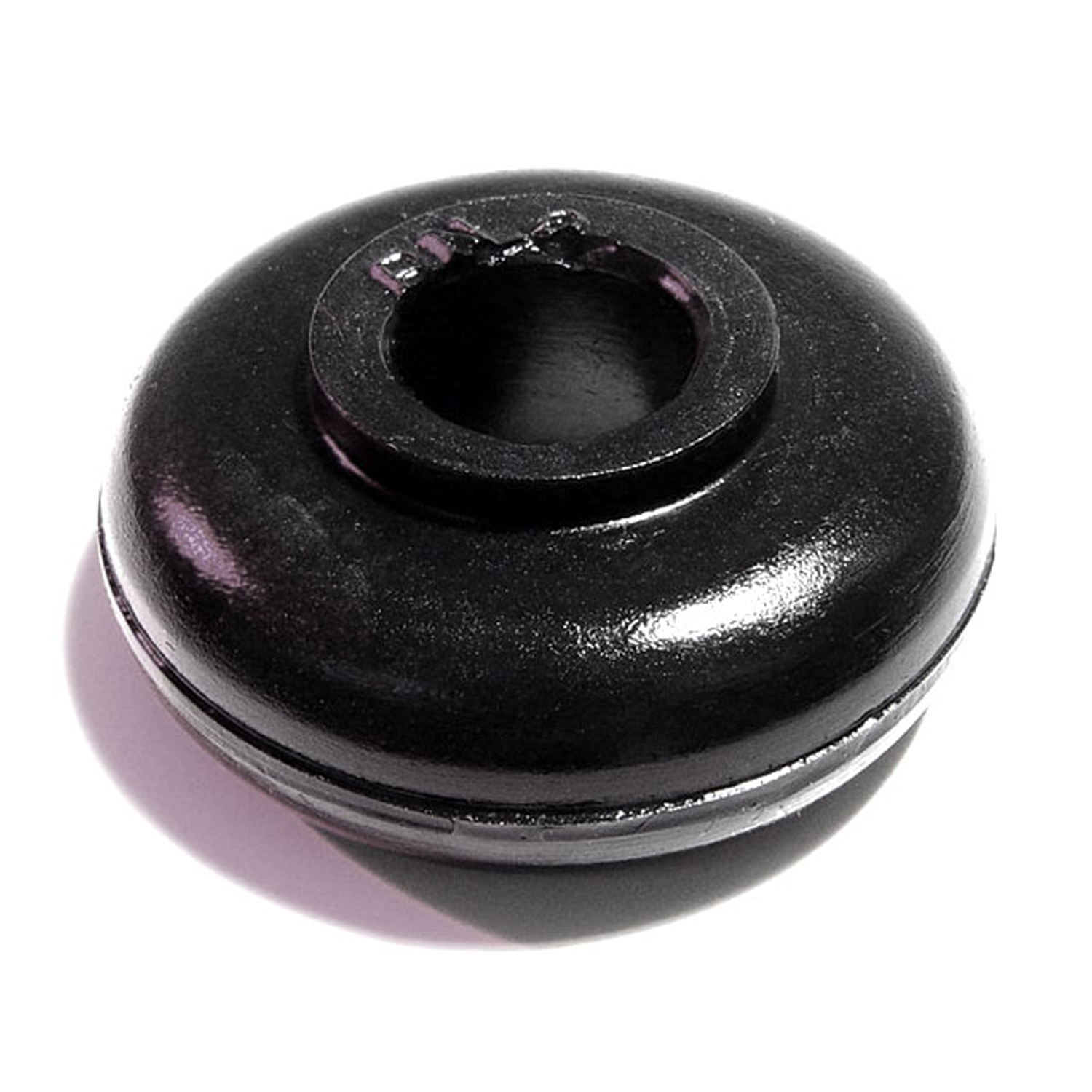 1957 Aston Martin DB Roll Bar Bushing. 1/2" high, with 1/2" hole. Each-BN 2Roll Bar Bushing. 1/2" high, with 1/2" hole. Each
 1957 Aston Martin DB Shock Grommet. 9/16" high, 3/8" hole. Each-BN 2-AShock Grommet. 9/16" high, 3/8" hole. Each
 1957 Aston Martin DB Clutch and Brake Pedal Pads. Perfect reproduction-CB 175Clutch and Brake Pedal Pads. Perfect reproduction. 1-3/4" wide X 3-1/4" long. Pair
 1957 Aston Martin DB Radiator Rod Cushion. 1/4" thick, 3/8" hole, 1" O.D-RA 1Radiator Rod Cushion. 1/4" thick, 3/8" hole, 1" O.D. Eight used per car. Each
 1957 Aston Martin DB Spark Plug Boot. Each-RP 1-ZSpark Plug Boot. Each
Why Choose Metro?
For over 100 years, Metro Moulded Parts has been the pinnacle of quality in classic car restoration parts. Our commitment to precision and authenticity in every component ensures a perfect fit and an OEM-level appearance.
- Expert Craftsmanship & Quality: Each part is a testament to our dedication to reliability and perfection, crafted from original designs and thoroughly tested.
- Advanced Technology: We use cutting-edge techniques to create flawless, long-lasting parts that surpass others in performance.
- SuperSoft Sponge – The Ultimate Door Seal: Not only are our door seals 30% softer than competitors', but they're also guaranteed to never leak. They effectively reduce wind and road noise, enhancing your classic car's comfort and driving experience.
- Proudly American: Our parts are a product of American craftsmanship, made in the USA with a spirit of excellence and heritage.
- Unrivaled Warranty: We back our products with a 30-year industry-leading warranty, a testament to our confidence in their quality.
Join us in preserving the legacy of classic cars with parts that are crafted for perfection, not just made.