

Image of 1959 Aston Martin Db, Note: These illustrations use artistic license and may differ from actual historical models.
Performance Metrics
Fundamental Metrics
Emotional Appeal
MMP Rating
| Engine Specifications | |
|---|---|
| Engine: | DOHC Inline 6 |
| Displacement: | 3.7L |
| Horsepower: | 240-280 hp |
| Torque: | 240 lb-ft |
| Compression Ratio: | 9.3:1 |
| Ignition System: | Coil ignition |
| Cooling System: | Water-cooled |
| Performance Specifications | |
| 0-60 Time: | 8.1 seconds |
| 1/4 Mile Time: | 16 seconds |
| Top Speed: | 140 mph |
| Transmission and Drive | |
| Drive Type: | Rear-wheel drive |
| Transmission Type: | 4-speed manual or optional 3-speed automatic |
| Fuel and Efficiency | |
| Fuel System Type: | Triple SU carburetors |
| MPG: | 15-20 mpg |
| Dimensions and Brakes | |
| Brakes: | Disc brakes |
| Wheelbase: | 98 inches |
| Weight: | 2,700 lbs |
Note: Specifications for classic cars are given to the best of our ability, considering the limited and variant data available.
1959 Aston Martin DB4: The Grand Tourer That Changed Aston Martin
The 1959 Aston Martin DB4 was fast enough to challenge the supercars of its day, yet refined enough for a long-distance drive across Europe. It marked a fresh chapter for Aston Martin: a modern, Italian-influenced grand tourer built around a powerful new engine and advanced chassis technology.
Produced by British manufacturer Aston Martin, the DB4 debuted at the 1958 Paris Motor Show and entered production that year. The 1959 model belongs to the car’s early production period, when Aston Martin was establishing the formula that would define its best-known road cars. One intriguing detail: the DB4’s engine was designed by Polish-born engineer Tadek Marek, and its development helped lay the groundwork for the celebrated DB5 that followed.
Touring-Inspired Design and Hand-Finished Luxury
The DB4’s shape was designed by Carrozzeria Touring of Milan and built using the company’s Superleggera, or “super-light,” construction method. Aluminum body panels were formed over a framework of small steel tubes, creating a sleek body with less weight than a comparable all-steel design. The long bonnet, low nose, restrained grille, curved roofline, and neat tail gave the car a poised, purposeful look without sacrificing elegance.
Inside, the DB4 combined sporting intent with traditional British craftsmanship. The cabin featured leather upholstery, a wood-trimmed dashboard, deep carpeting, and clear, individually arranged instruments. Materials and finish were a major part of the appeal, though the car was not as spacious as a modern luxury coupe. Its cabin was designed for the driver and front passenger, with only limited room for occasional rear-seat use.
Buyers could order a range of exterior colors and leather combinations, and surviving cars reflect a broad palette of period shades. Dark greens, reds, blues, silver, and restrained metallic tones suit the DB4 particularly well, but there was no single color that defined every 1959 example. Original specification, condition, and documented history matter more to collectors than any one shade.
The most iconic body style was the two-door coupe, which formed the heart of the DB4 range. Aston Martin later expanded the family with the more powerful DB4 GT, the open DB4 Convertible, and the lightweight DB4 GT Zagato. The GT and Zagato are especially famous, but they are distinct, rarer versions rather than the standard 1959 DB4 coupe.
Engineering That Moved Aston Martin Forward
The DB4 stood apart from many contemporary British touring cars by pairing sophisticated construction with serious performance. Its Superleggera body structure reduced weight, while four-wheel disc brakes gave it strong stopping power for the era. The DB4 is often credited as the first British production car equipped with disc brakes on all four wheels, a notable step forward as performance and road speeds continued to rise.
Its 3,670 cc, twin-overhead-camshaft straight-six was another defining feature. Designed by Tadek Marek, the all-alloy engine gave Aston Martin a modern powerplant that could be developed for both road and competition use. The DB4’s combination of Italian styling, British coachbuilding traditions, and advanced engineering helped establish a template for the company’s later DB models.
Compared with many rivals, the DB4 offered an unusually compelling mix of speed, braking, and long-distance comfort. It was not simply a luxurious car with a large engine. It was a properly capable grand tourer, and that balance remains central to its reputation.
DB4 Performance and Road Manners
A standard 1959 DB4 was powered by a 3.7-liter straight-six producing approximately 240 bhp, depending on specification and measurement method. Period figures and later tests vary, but a top speed around 140 mph and a 0-to-60 mph time of roughly nine seconds are widely cited. Those numbers made the DB4 exceptionally quick for a road car of its time.
On a smooth, open road, the engine delivers its performance with a rising mechanical howl rather than the sharp, high-revving character of a modern sports car. The four-speed manual gearbox asks for deliberate shifts, and the driver is closely involved in managing the car’s power. Steering is unassisted, so it can feel heavy at parking speeds but becomes more communicative once moving.
The DB4’s suspension is tuned for fast touring rather than cushioned isolation. It can feel firm over broken pavement, and bumps may remind the driver that this is a sporting car with a relatively light body structure. On a winding road, however, its balanced chassis and responsive steering make it rewarding to place through a sequence of corners. As with any car of this age, tire choice, suspension condition, and careful setup have a major effect on how it behaves.
Owning a 1959 Aston Martin DB4
Today, a DB4 is more likely to be used for weekend touring, historic rallies, club events, or concours displays than for everyday commuting. It can cover distance comfortably when properly maintained, but its age, value, and specialist mechanical needs make regular all-weather use a costly proposition for most owners.
Maintenance requires an understanding of classic British engineering. The straight-six is robust when correctly rebuilt and serviced, but neglected examples can need expensive attention to the engine, gearbox, brakes, suspension, or cooling system. The aluminum body and Superleggera framework also require specialist inspection: poor repairs, corrosion in structural areas, or an old accident can dramatically affect both safety and value.
Some routine jobs are straightforward for an experienced home mechanic, but the average owner should not expect modern-car convenience. Parts and expertise are available through marque specialists, yet restoration work can be labor-intensive and costly. A detailed pre-purchase inspection, verified chassis and engine numbers, and thorough service records are essential.
DB4 Facts, Famous Variants, and Common Criticisms
The DB4’s most famous relative is the DB4 GT Zagato, a lighter, more competition-focused car with distinctive Italian coachwork. Only about 19 original Zagatos were built, making them extraordinarily rare and valuable. The standard DB4 also helped establish the visual and mechanical direction that led to the DB5, though the two are separate models. James Bond’s best-known silver screen Aston Martin was a DB5, not a DB4.
A frequent criticism is that the DB4 can be expensive to restore and demanding to keep in top condition. Some owners also find the cabin tight, the ride firm, and the unassisted steering heavy at low speeds. Those drawbacks are balanced by the car’s character, performance, craftsmanship, and the pleasure of driving a genuinely historic Aston Martin.
Collector Value and Availability
Aston Martin produced approximately 1,110 DB4s across the model’s full production run from 1958 to 1963. That total includes several versions, and the number of standard coupes from any particular year is much smaller. A 1959 DB4 is therefore scarce, although it is not nearly as rare as a DB4 GT or GT Zagato.
As a broad 2026 estimate, a standard DB4 coupe may sell for roughly $300,000 to $650,000, with exceptional, highly original, or expertly restored examples potentially exceeding that range. Cars needing major work can be worth substantially less. GT and Zagato models occupy a different market, with values commonly reaching into the millions. These figures are approximate: provenance, originality, specification, restoration quality, and auction conditions all make a major difference.
DB4 values have benefited from the model’s historical importance and enduring appeal, but the classic-car market is not a straight upward line. Prices can soften, and restoration costs do not always translate into an equal increase in sale value. The strongest cars tend to attract the most interest, while condition issues or questionable history can limit demand.
Why the 1959 DB4 Still Matters
The 1959 Aston Martin DB4 brought together Italian-inspired design, British craftsmanship, an advanced all-alloy engine, and four-wheel disc brakes in a fast, beautifully balanced grand tourer. It was quick, elegant, and technically ambitious, while also setting the direction for the Aston Martins that followed.
More than six decades later, the DB4 remains compelling not just as a collectible, but as a driver’s car with a clear sense of purpose. It is a landmark Aston Martin that turned speed and sophistication into a single, unmistakable shape.
1959 Aston Martin Db Catalog of Parts
 1959 Aston Martin DB Steering Column Dust Seal at Firewall-BL 5Steering Column Dust Seal at Firewall. 1-1/8" wide hole at top, 4-1/2" O.D. at base. Replaces AM part #50999. Each
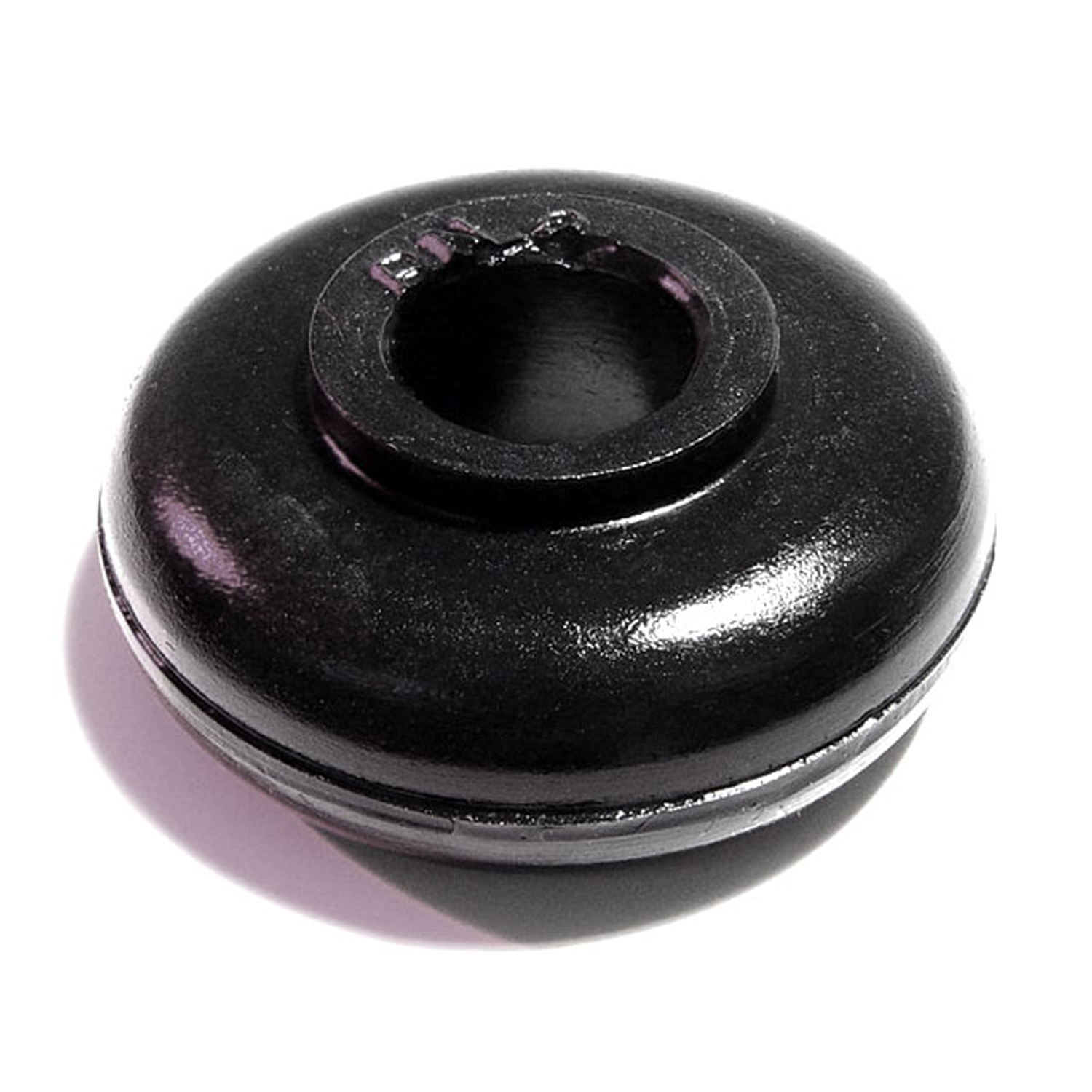 1959 Aston Martin DB Roll Bar Bushing. 1/2" high, with 1/2" hole. Each-BN 2Roll Bar Bushing. 1/2" high, with 1/2" hole. Each
 1959 Aston Martin DB Shock Grommet. 9/16" high, 3/8" hole. Each-BN 2-AShock Grommet. 9/16" high, 3/8" hole. Each
 1959 Aston Martin DB Clutch and Brake Pedal Pads. Perfect reproduction-CB 175Clutch and Brake Pedal Pads. Perfect reproduction. 1-3/4" wide X 3-1/4" long. Pair
 1959 Aston Martin DB Front Brake Caliper, Dust Excluder. For V-8 models-DE 10Front Brake Caliper, Dust Excluder. For V-8 models. 2-1/8" I.D., 3-1/4" O.D. Each
 1959 Aston Martin DB Radiator Rod Cushion. 1/4" thick, 3/8" hole, 1" O.D-RA 1Radiator Rod Cushion. 1/4" thick, 3/8" hole, 1" O.D. Eight used per car. Each
 1959 Aston Martin DB Spark Plug Boot. Each-RP 1-ZSpark Plug Boot. Each
Why Choose Metro?
For over 100 years, Metro Moulded Parts has been the pinnacle of quality in classic car restoration parts. Our commitment to precision and authenticity in every component ensures a perfect fit and an OEM-level appearance.
- Expert Craftsmanship & Quality: Each part is a testament to our dedication to reliability and perfection, crafted from original designs and thoroughly tested.
- Advanced Technology: We use cutting-edge techniques to create flawless, long-lasting parts that surpass others in performance.
- SuperSoft Sponge – The Ultimate Door Seal: Not only are our door seals 30% softer than competitors', but they're also guaranteed to never leak. They effectively reduce wind and road noise, enhancing your classic car's comfort and driving experience.
- Proudly American: Our parts are a product of American craftsmanship, made in the USA with a spirit of excellence and heritage.
- Unrivaled Warranty: We back our products with a 30-year industry-leading warranty, a testament to our confidence in their quality.
Join us in preserving the legacy of classic cars with parts that are crafted for perfection, not just made.