

Image of 1959 Aston Martin Dbd, Note: These illustrations use artistic license and may differ from actual historical models.
Performance Metrics
Fundamental Metrics
Emotional Appeal
MMP Rating
| Engine Specifications | |
|---|---|
| Engine Options: | Inline 6 |
| Displacement Range: | 2922 cc |
| Horsepower Range: | 210-240 hp |
| Torque: | Estimated 240 lb-ft |
| Compression Ratio: | 8.6:1 |
| Ignition System: | Twin-Spark with Dual Distributor |
| Cooling System: | Water-cooled |
| Performance Specifications | |
| 0-60 Time: | 8.5 seconds |
| 1/4 Mile Time: | Estimated 16 seconds |
| Top Speed: | 140 mph |
| Transmission and Drive | |
| Drive Type: | Rear Wheel Drive |
| Transmission Type: | 4-speed manual or optional 3-speed automatic |
| Fuel and Efficiency | |
| Fuel System Type: | Triple SU carburetors |
| MPG: | Estimated 15-20 mpg |
| Dimensions and Brakes | |
| Brakes: | Disc brakes |
| Wheelbase: | 2515 mm |
| Weight: | 1300 kg |
Note: Specifications for classic cars are given to the best of our ability, considering the limited and variant data available.
1959 Aston Martin DB4: Britain’s New Grand Touring Star
The 1959 Aston Martin DB4 could cross a continent at speed, then arrive looking ready for a black-tie dinner. Built by Aston Martin and styled in Italy, it marked a major step forward for the British marque and laid the groundwork for the famous DB5.
One quick note on the name: Aston Martin did not sell a model officially called the “DBD.” This guide covers the 1959 DB4, the likely intended car. The DB4 arrived in 1958, and 1959 examples belong to its earliest production period. They are distinct from later DB4 versions, including the more powerful Vantage and the lightweight DB4 GT.
The DB4 was developed as a fast, refined grand tourer for drivers who wanted more than a comfortable boulevard car. Its 3.7-liter engine, advanced chassis and elegant body made it one of the most capable British road cars of its day. A notable point of distinction: the DB4 was the first Aston Martin produced at the company’s Newport Pagnell factory, which became closely associated with the marque for decades.
Italian Lines, British Craft
The DB4’s shape came from Carrozzeria Touring of Milan. Its long bonnet, low roofline and rounded tail give the coupe a balanced, almost athletic stance. The slim grille and paired headlamps are framed by smooth front wings, while restrained chrome trim keeps the design elegant rather than flashy. The body was made using Touring’s Superleggera construction, with lightweight alloy panels attached to a framework of small steel tubes.
Inside, the DB4 combines sporting intent with traditional craftsmanship. The cabin is trimmed in Connolly leather, with deep carpeting, carefully finished switchgear and supportive front seats. The dashboard presents its instruments clearly, giving the driver useful information without the pared-back feel of a competition car. Materials and trim could vary according to customer specification, so surviving cars are not all identical.
The 1959 DB4 was offered as a two-door coupe, or saloon in British terminology. Aston Martin later added convertible and high-performance variants to the DB4 range, but these were not the defining body styles for a 1959 example. Touring’s coupe is the iconic shape most people picture. Factory paint choices varied, and period Aston Martins could be ordered in a range of colors. Silver and muted metallic shades suit the DB4 particularly well, while darker greens, reds and blues also appear on surviving cars.
For the period, the DB4’s engineering was as significant as its styling. Its all-alloy, twin-overhead-camshaft straight-six was a sophisticated engine, and disc brakes on all four wheels provided strong stopping power. The car also paired independent front suspension with a live rear axle, a practical arrangement that balanced road comfort with high-speed stability.
Why the DB4 Mattered
The DB4 helped establish the template for the modern Aston Martin grand tourer: a powerful front-engine coupe with genuine long-distance comfort and unmistakable coachbuilt character. Its Superleggera body construction was an important part of the recipe, reducing weight while allowing Touring to create clean, flowing surfaces.
It also arrived at a time when European manufacturers were raising expectations for performance cars. The DB4 could hold its own against fast Italian and German rivals, while offering a more traditional luxury interior. Its combination of speed, finish and understated style helped Aston Martin compete internationally and gave the company a strong foundation for the DB5 that followed.
The DB4’s legacy is easy to see in later Aston Martins. The long bonnet, compact cabin and confident grand touring proportions became recurring themes. The DB4 GT and DB4 GT Zagato took the same basic idea toward competition, but they should not be confused with a standard 1959 DB4. The GT was lighter and more focused, while the Zagato-bodied cars are among the rarest and most valuable Aston Martins ever built.
DB4 Performance and Road Manners
A standard early DB4 uses a 3,670cc, all-alloy straight-six. Period output is generally quoted at around 240 horsepower, though figures can vary with specification and how they are reported. A healthy example could reach roughly 140 mph and accelerate from 0 to 60 mph in about nine seconds. Those were serious figures for a refined four-seat grand tourer in the late 1950s.
On a smooth road, the DB4 feels composed and eager. Its long bonnet makes the engine’s presence part of the experience, while the steering and chassis reward a measured, deliberate driving style. On a winding road, the car feels more substantial than a modern sports coupe, but it can be satisfying and sure-footed when driven smoothly. The suspension gives useful compliance over imperfect pavement, though tired components, worn bushes or incorrect setup can make a classic DB4 feel loose or unsettled.
The straight-six is a major part of the car’s appeal. It produces a cultured mechanical growl that builds into a harder-edged note as the revs rise. The gearbox, steering and controls require more effort and attention than those in a contemporary car, which is part of the charm for some owners and a learning curve for others. The DB4 is best enjoyed as a fast, involving tourer, not as a modern car with vintage styling.
Living With a 1959 DB4
Most DB4s today are used for special drives, touring events, club gatherings and concours shows rather than daily commuting. A carefully maintained car can cover meaningful distances, but age, value and the cost of repairs make routine everyday use a considered choice. Owners tend to preserve these cars with sympathetic use and regular professional attention.
Maintenance is not especially simple for the average home mechanic. The engine and chassis are specialist pieces of engineering, and parts, correct restoration work and experienced labor can be expensive. Mechanical repairs are possible, but body restoration is particularly demanding because of the hand-built alloy panels and Superleggera structure. Hidden corrosion or poor previous repairs can turn an apparently straightforward project into a major undertaking.
Reliability depends heavily on the quality of maintenance and restoration. Cooling-system condition, lubrication, carburetor tuning, electrical connections and the integrity of the body structure all deserve careful inspection. Before buying, a prospective owner should seek an inspection from a specialist familiar with early DB4s, along with a detailed review of the car’s history and matching-number status.
DB4 Trivia and Common Criticisms
The DB4 was not the Aston Martin driven by James Bond in the best-known films. That distinction belongs to the DB5, its successor. The DB4 nevertheless supplied much of the design and engineering direction that made the DB5 such an enduring icon.
Another common source of confusion is the DB4 GT. It was a separate, lighter and more powerful model, built in limited numbers for road and competition use. The famous DB4 GT Zagato added Italian coachwork and is exceptionally rare. Production figures vary according to whether related GT versions are counted together, but total DB4-family production is commonly put at roughly 1,100 cars. Standard DB4 coupes make up the great majority; the GT and Zagato versions account for only a small fraction.
Owners and critics alike point to the same compromises: the DB4 is expensive to maintain, parts and specialist labor can be costly, and its alloy body requires expert care. It is also less forgiving in heavy traffic than a modern luxury car. In return, it offers craftsmanship, sound and character that are difficult to reproduce in a newer vehicle.
Collector Value and Rarity
A standard 1959 DB4 is a rare and highly collectible car, but condition and provenance have a major effect on price. As a broad 2026 estimate, a sound, usable example may fall around $500,000 to $800,000, while a superbly restored or exceptionally original car can reach approximately $800,000 to $1.2 million or more. These are guide ranges, not fixed valuations: specification, history, originality and restoration quality can shift the result substantially.
DB4 GTs command a much higher level of attention and value, often reaching several million dollars. Genuine DB4 GT Zagatos are rarer still and can sell for many millions. Those figures should not be used to value an ordinary DB4, since the models differ significantly in rarity and desirability.
Long-term interest in early Aston Martins has generally supported strong values, especially for original, well-documented cars. Prices can still move with the wider collector-car market, and restoration costs are substantial. The most desirable cars tend to be those with a clear history, correct specification and high-quality preservation or restoration.
The DB4’s Lasting Appeal
The 1959 Aston Martin DB4 brought together Italian design, British craftsmanship and ambitious engineering in a car built for serious distance driving. Its alloy straight-six, four-wheel disc brakes and Superleggera body made it technically impressive, while its proportions gave it lasting visual appeal.
It is not an easy or inexpensive classic to own, and it asks for more attention than a modern grand tourer. But for collectors and enthusiasts, that is part of its identity. The DB4 remains one of the clearest expressions of Aston Martin’s grand touring spirit: fast, beautifully made and unmistakably special.
1959 Aston Martin Dbd Catalog of Parts
 1959 Aston Martin DBD Steering Column Dust Seal at Firewall-BL 5Steering Column Dust Seal at Firewall. 1-1/8" wide hole at top, 4-1/2" O.D. at base. Replaces AM part #50999. Each
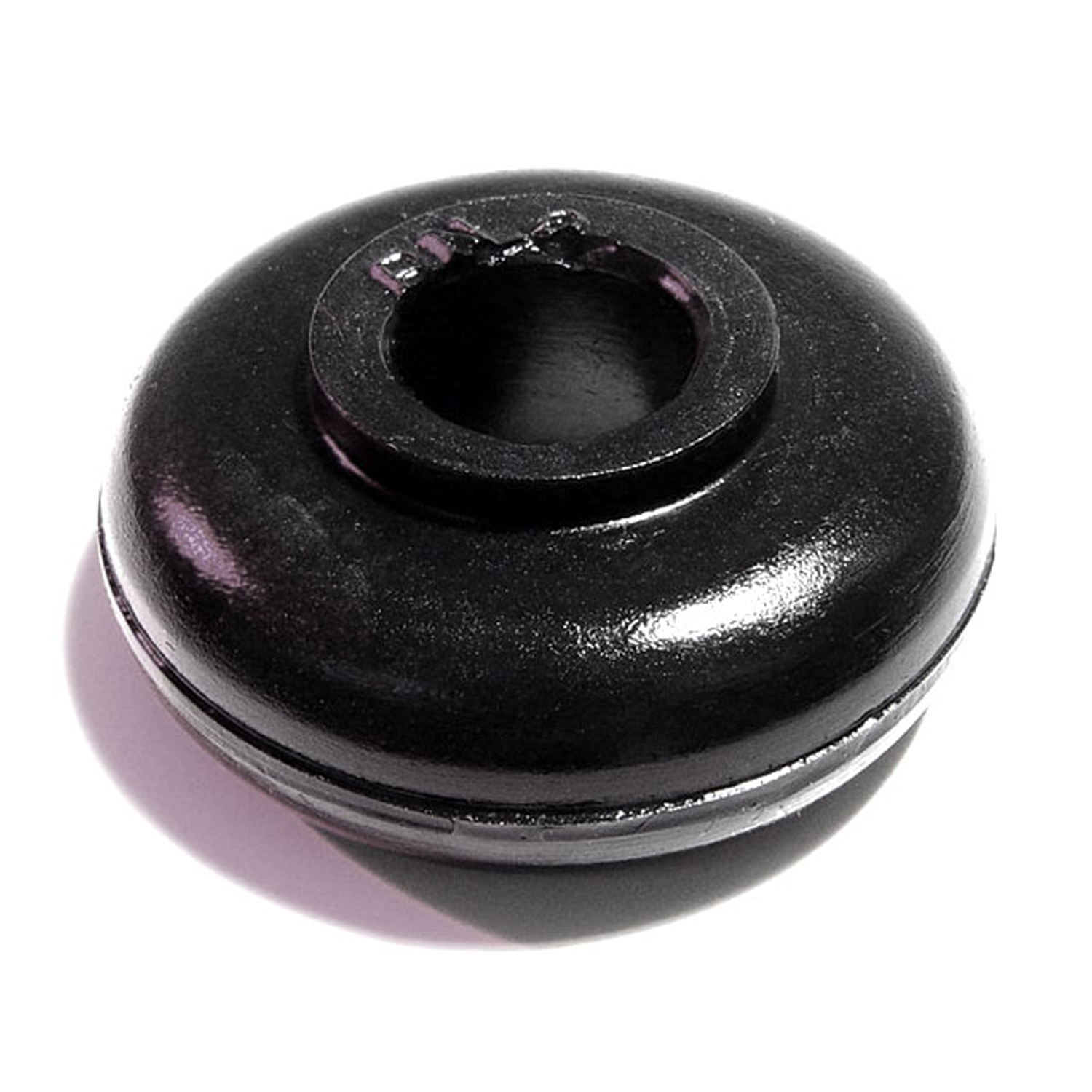 1959 Aston Martin DBD Roll Bar Bushing. 1/2" high, with 1/2" hole. Each-BN 2Roll Bar Bushing. 1/2" high, with 1/2" hole. Each
 1959 Aston Martin DBD Shock Grommet. 9/16" high, 3/8" hole. Each-BN 2-AShock Grommet. 9/16" high, 3/8" hole. Each
 1959 Aston Martin DBD Clutch and Brake Pedal Pads. Perfect reproduction-CB 175Clutch and Brake Pedal Pads. Perfect reproduction. 1-3/4" wide X 3-1/4" long. Pair
 1959 Aston Martin DBD Front Brake Caliper, Dust Excluder. For V-8 models-DE 10Front Brake Caliper, Dust Excluder. For V-8 models. 2-1/8" I.D., 3-1/4" O.D. Each
 1959 Aston Martin DBD Radiator Rod Cushion. 1/4" thick, 3/8" hole, 1" O.D-RA 1Radiator Rod Cushion. 1/4" thick, 3/8" hole, 1" O.D. Eight used per car. Each
 1959 Aston Martin DBD Spark Plug Boot. Each-RP 1-ZSpark Plug Boot. Each
Why Choose Metro?
For over 100 years, Metro Moulded Parts has been the pinnacle of quality in classic car restoration parts. Our commitment to precision and authenticity in every component ensures a perfect fit and an OEM-level appearance.
- Expert Craftsmanship & Quality: Each part is a testament to our dedication to reliability and perfection, crafted from original designs and thoroughly tested.
- Advanced Technology: We use cutting-edge techniques to create flawless, long-lasting parts that surpass others in performance.
- SuperSoft Sponge – The Ultimate Door Seal: Not only are our door seals 30% softer than competitors', but they're also guaranteed to never leak. They effectively reduce wind and road noise, enhancing your classic car's comfort and driving experience.
- Proudly American: Our parts are a product of American craftsmanship, made in the USA with a spirit of excellence and heritage.
- Unrivaled Warranty: We back our products with a 30-year industry-leading warranty, a testament to our confidence in their quality.
Join us in preserving the legacy of classic cars with parts that are crafted for perfection, not just made.