

Image of 1965 Aston Martin Db6, Note: These illustrations use artistic license and may differ from actual historical models.
Performance Metrics
Fundamental Metrics
Emotional Appeal
MMP Rating
| Engine Specifications | |
|---|---|
| Engine: | Inline 6 |
| Displacement: | 3,995 cc (approximately 243.8 cu in) |
| Horsepower: | 282 hp at 5,500 rpm |
| Torque: | 400 Nm (295 lb-ft) at 4,500 rpm |
| Compression Ratio: | 8.9:1 |
| Ignition System: | Twin ignition with two distributors |
| Cooling System: | Water-cooled |
| Performance Specifications | |
| 0-60 Time: | 8.4 seconds |
| 1/4 Mile Time: | 16 seconds |
| Top Speed: | 148 mph |
| Transmission and Drive | |
| Drive Type: | Rear-wheel drive |
| Transmission Type: | 5-speed manual or optional 3-speed automatic |
| Fuel and Efficiency | |
| Fuel System Type: | Triple SU carburetors |
| MPG: | 14.3 mpg (estimated) |
| Dimensions and Brakes | |
| Brakes: | Servo-assisted disc brakes all round |
| Wheelbase: | 2,591 mm (102 in) |
| Weight: | 1,474 kg (3,249 lb) |
Note: Specifications for classic cars are given to the best of our ability, considering the limited and variant data available.
1965 Aston Martin DB6: The British Grand Tourer Refined
The 1965 Aston Martin DB6 made a fast, elegant journey across Europe feel like the main event, not just the trip between destinations. Revealed at the 1965 London Motor Show, it was built by Aston Martin as the successor to the DB5, carrying forward that car’s hand-finished glamour while adding more room, improved high-speed stability, and greater comfort for long-distance driving.
The DB6 arrived during a golden stretch for British grand touring cars. Aston Martin had earned international attention through both road cars and competition, and the DB5 had become a celebrated symbol of the marque. Rather than simply restyle its predecessor, Aston Martin developed the DB6 into a more usable high-speed touring car. One of its most distinctive changes was a short, upturned rear spoiler, known as a Kamm tail, designed to help keep the car stable at speed.
DB6 Design: Kamm Tail and Hand-Finished Cabin
The DB6 is instantly recognizable, but its shape is more than a graceful variation on the DB5. Its longer wheelbase, taller roofline, and reworked rear body gave passengers more space, particularly in the back. The profile still has the long bonnet, elegant front wings, and compact greenhouse associated with Aston Martin, while the clipped tail gives the car a purposeful finish. That small rear lip is a defining detail, adding visual tension to the otherwise flowing coachwork.
Like its predecessors, the DB6 used Superleggera-style construction: alloy body panels fitted over a lightweight framework, mounted to a steel platform structure. The result was a suitably light and beautifully sculpted body, though it also means restoration requires specialist knowledge. Aluminum panels can be repaired, but the underlying structure and its condition are just as important when inspecting a car today.
Inside, the DB6 was a traditional British luxury car, trimmed in Connolly leather with wool carpeting and polished wood details. The dashboard placed its instruments and switches within easy reach, with clear dials set into a carefully finished fascia. It was designed to feel special without being delicate: a place for a driver to settle in for a serious journey, surrounded by materials that improved with age when properly cared for.
Buyers could specify a wide range of paint and trim combinations, from discreet silver, dark green, and blue shades to richer reds and other bespoke colors. Aston Martin’s custom-order approach meant that two cars could have very different characters. Silver Birch became one of the marque’s most recognizable colors, while many DB6s were ordered in less famous hues chosen to suit their first owners.
The best-known body style is the fixed-head coupe, often described by Aston Martin as the Saloon. The DB6 was also offered as the open Volante, introduced in 1966, and as a small number of coachbuilt Shooting Brakes. The coupe remains the classic DB6 silhouette, while the Volante offers the added appeal of open-air touring. The Shooting Brake is exceptionally unusual, with only a handful built.
Engineering and Historical Significance
The DB6’s importance lies in how it developed the grand touring formula. It preserved the DB5’s character but addressed practical shortcomings, especially passenger space and stability at high speed. The extended wheelbase and roomier cabin made it a more convincing four-seat touring car, while the Kamm tail helped manage airflow at the back of the car. It was a measured evolution rather than a radical change, and that balance is part of its appeal.
Its engineering was advanced for a hand-built British GT of the period. The DB6 had four-wheel disc brakes and a five-speed ZF manual gearbox, with an automatic transmission available for buyers who preferred a more relaxed drive. Power steering and air conditioning were among the comfort-oriented options. These features helped make the car capable of crossing long distances quickly without giving up the traditional involvement of a manual, rear-wheel-drive sports car.
The DB6 also demonstrated that aerodynamic thinking could be incorporated into a distinctly elegant road-car design. Its rear spoiler was a practical feature, not simply decoration. The car did not define the entire future of automotive aerodynamics, but it showed how a subtle change in body shape could support high-speed road manners while preserving a recognizable marque identity.
DB6 Performance and Road Manners
Power came from Aston Martin’s 4.0-liter, 3995 cc, twin-overhead-camshaft straight-six. In standard tune, it produced about 282 horsepower. The optional Vantage specification raised output to roughly 325 horsepower, with higher-performance induction and engine tuning. A five-speed manual was the enthusiast’s choice, while an automatic was available for more relaxed touring.
Performance figures depend on specification, condition, gearing, and the source of the test. A standard DB6 is commonly quoted at around 140 to 150 mph, with zero to 60 mph taking roughly 6.5 to 7 seconds. A Vantage can be quicker, with period and modern estimates often putting the sprint in the low-six-second range and top speed around 150 mph or higher. These are fast figures for a substantial luxury car from the mid-1960s.
On the road, the DB6 feels more like a grand tourer than a lightweight sports car. Its straight-six delivers a deep, smooth mechanical note that becomes more urgent as the revs rise. The steering is communicative, the long bonnet gives the driver a strong sense of the car’s proportions, and the manual gearbox rewards deliberate, well-timed shifts. It is not a modern effortless cruiser: the driver remains involved in managing the car’s power, weight, and controls.
The longer wheelbase helps the DB6 settle over undulating roads, and its suspension is better suited to covering distance than attacking a circuit. It can feel composed on flowing country roads, though its size and age demand respect on tight, narrow lanes. On uneven surfaces, the ride has the supple character expected of a luxury GT, but worn dampers, tired bushes, or incorrect setup can make an old example feel unsettled. In strong crosswinds, the rear spoiler and revised bodywork contribute to stability, but the car still requires attentive hands at speed.
Living With a 1965 Aston Martin
Most DB6s today are used for weekend touring, club events, historic gatherings, and concours displays. A well-maintained example can still cover meaningful distances, and touring is exactly what the car was built to do. However, its age, value, and specialist construction make it an uncommon daily driver. Owners generally preserve it for considered use rather than expose it to heavy traffic, tight parking, and unpredictable weather every day.
Maintenance is manageable for an experienced classic-car specialist, but it is not inexpensive. The six-cylinder engine is robust when serviced properly, and routine mechanical work is familiar to marque experts. The bigger concerns are corrosion in the steel structure, deterioration around body and chassis mounting points, aging electrical components, cooling-system condition, and the cost of repairing hand-formed aluminum panels. A pre-purchase inspection by an Aston Martin specialist is essential.
The DB6 is not an ideal car for an owner expecting to do every repair in an ordinary home garage. Basic servicing and careful upkeep are possible for a capable enthusiast, but bodywork, structural repairs, engine rebuilding, and correct restoration demand specialist tools and experience. Records, matching numbers where applicable, quality of past work, and evidence of proper corrosion protection all matter greatly.
Famous Owners and DB6 Trivia
One of the most famous DB6 stories belongs to Paul McCartney, who owned a DB6 Volante in the 1960s. The car became associated with the era’s psychedelic style after it was painted in a vivid design. Another well-known example was presented to Prince Charles by Queen Elizabeth II and Prince Philip for his 21st birthday. Decades later, Aston Martin modified that car to run on a biofuel made from surplus English wine, giving a royal classic a very modern talking point.
The DB6 was not built to chase a single headline speed or endurance record. Its achievement was more practical: it combined genuine high-speed performance with comfort and improved passenger space in a hand-built British car. Nor was it a mass-production model. Aston Martin made cars in relatively small numbers, and the DB6’s coachbuilt variants are especially scarce.
Common criticisms are part of the ownership conversation. The DB6 is expensive to maintain, can be challenging in congested modern traffic, and does not offer the precision or safety equipment of a contemporary car. Its rear seat is more useful than the DB5’s, but it is still best thought of as occasional seating rather than a spacious family-car bench. The manual controls and unassisted systems in some examples also require more effort than modern drivers may expect.
DB6 Collector Values and Rarity
Aston Martin DB6 production across the model’s run from 1965 to 1970 is generally estimated at about 1,788 cars, including coupes, Volantes, and special coachbuilt versions. Exact totals vary slightly among references and according to how individual body styles and later versions are counted. The ordinary coupe is scarce by modern standards, while the Volante and Shooting Brake are much harder to find.
As a broad 2026 collector-market estimate, a sound, well-presented standard DB6 coupe may sell for roughly US$350,000 to US$600,000. A desirable Vantage, a particularly original car, or an example with exceptional history can reach approximately US$600,000 to over US$900,000. Volantes often command more, with approximate values from US$700,000 to well above US$1 million depending on specification and condition. The very rare Shooting Brakes can exceed those figures substantially. These are guide ranges, not guaranteed prices: provenance, restoration quality, originality, and market timing can move a result considerably.
Over the long term, the DB6 has benefited from the strength of the Aston Martin name and the appeal of its 1960s design. Values have generally trended upward over time, but the classic-car market is not a straight line. Costs of restoration have risen, and buyers increasingly distinguish between properly documented, high-quality cars and examples with deferred work or questionable repairs. The best cars are likely to remain the most resilient, while a cheap purchase can quickly become expensive if structural or body repairs are needed.
Why the 1965 DB6 Still Matters
The 1965 Aston Martin DB6 brought together the marque’s traditional craftsmanship, a powerful straight-six, improved high-speed stability, and a more accommodating cabin. Its Kamm tail gives it a distinctive profile, while the coupe, Volante, and rare Shooting Brake versions offer different expressions of the same grand-touring idea. It is beautiful, but its appeal goes beyond appearance: the DB6 was engineered to cover distance quickly and comfortably in an era when that combination was a serious achievement.
More than six decades on, the DB6 remains a vivid reminder of what a British grand tourer could be: elegant without being timid, fast without sacrificing comfort, and individual in a way few modern cars can replicate. It is not merely a famous Aston Martin. It is a hand-built piece of motoring history made to be driven.
1965 Aston Martin Db6 Catalog of Parts
 1965 Aston Martin DB6 Ball Joint Grease Cap. Made of neoprene. 2-3/8" O.D-BL 6Ball Joint Grease Cap. Made of neoprene. 2-3/8" O.D. at base, 7/8" I.D. hole at top. Each
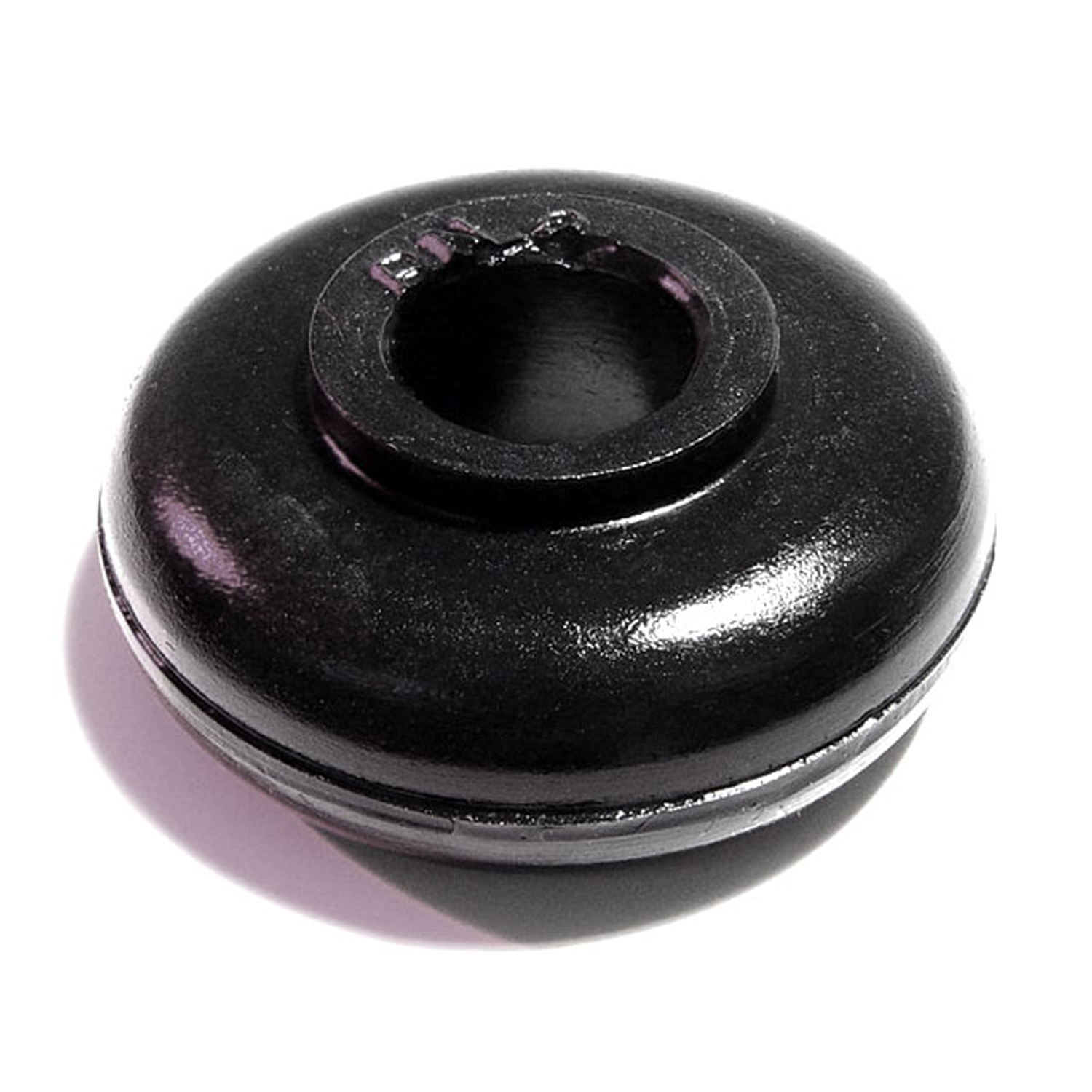 1965 Aston Martin DB6 Roll Bar Bushing. 1/2" high, with 1/2" hole. Each-BN 2Roll Bar Bushing. 1/2" high, with 1/2" hole. Each
 1965 Aston Martin DB6 Shock Grommet. 9/16" high, 3/8" hole. Each-BN 2-AShock Grommet. 9/16" high, 3/8" hole. Each
 1965 Aston Martin DB6 Clutch and Brake Pedal Pads. Perfect reproduction-CB 175Clutch and Brake Pedal Pads. Perfect reproduction. 1-3/4" wide X 3-1/4" long. Pair
 1965 Aston Martin DB6 Muffler Hanger Insulator-EH 101Muffler Hanger Insulator. 5-15/16" long X 1-9/16" wide X 3/4" high. Each
 1965 Aston Martin DB6 Park Light Pads. Fits a 1-1/2" base. 1/8" thick-MP 110-MPark Light Pads. Fits a 1-1/2" base. 1/8" thick. Replaces OEM #52-37-343/1A. 1-3/4" O.D. Pair
 1965 Aston Martin DB6 Radiator Rod Cushion. 1/4" thick, 3/8" hole, 1" O.D-RA 1Radiator Rod Cushion. 1/4" thick, 3/8" hole, 1" O.D. Eight used per car. Each
 1965 Aston Martin DB6 Spark Plug Boot, for Coupes. Replaces OEM #20-07-135-RP 1-XSpark Plug Boot, for Coupes. Replaces OEM #20-07-135. Each
 1965 Aston Martin DB6 Cam Cover Plug. For models with 6-cylinder engines-RP 8-CCam Cover Plug. For models with 6-cylinder engines. 1-3/8" long X 7/16" thick. Each
Why Choose Metro?
For over 100 years, Metro Moulded Parts has been the pinnacle of quality in classic car restoration parts. Our commitment to precision and authenticity in every component ensures a perfect fit and an OEM-level appearance.
- Expert Craftsmanship & Quality: Each part is a testament to our dedication to reliability and perfection, crafted from original designs and thoroughly tested.
- Advanced Technology: We use cutting-edge techniques to create flawless, long-lasting parts that surpass others in performance.
- SuperSoft Sponge – The Ultimate Door Seal: Not only are our door seals 30% softer than competitors', but they're also guaranteed to never leak. They effectively reduce wind and road noise, enhancing your classic car's comfort and driving experience.
- Proudly American: Our parts are a product of American craftsmanship, made in the USA with a spirit of excellence and heritage.
- Unrivaled Warranty: We back our products with a 30-year industry-leading warranty, a testament to our confidence in their quality.
Join us in preserving the legacy of classic cars with parts that are crafted for perfection, not just made.