

Image of 1974 Aston Martin V-8, Note: These illustrations use artistic license and may differ from actual historical models.
Performance Metrics
Fundamental Metrics
Emotional Appeal
MMP Rating
| Engine Specifications | |
|---|---|
| Engine Options: | V8 |
| Displacement Range: | 5340 cc |
| Horsepower Range: | 310-315 hp |
| Torque: | 288-295 lb-ft |
| Compression Ratio: | 9.3:1 |
| Ignition System: | Electronic |
| Cooling System: | Water-cooled |
| Performance Specifications | |
| 0-60 Time: | 6.2 seconds |
| 1/4 Mile Time: | 14.5 seconds |
| Top Speed: | 160 mph |
| Transmission and Drive | |
| Drive Type: | Rear-wheel drive |
| Transmission Type: | 5-speed manual or 3-speed automatic |
| Fuel and Efficiency | |
| Fuel System Type: | Fuel injection |
| MPG: | 10-15 mpg |
| Dimensions and Brakes | |
| Brakes: | Disc brakes |
| Wheelbase: | 102.8 inches |
| Weight: | 3990 lbs |
Note: Specifications for classic cars are given to the best of our ability, considering the limited and variant data available.
1974 Aston Martin V8: The British Grand Tourer with Muscle
The 1974 Aston Martin V8 is a hand-built British grand tourer with the manners of a luxury saloon and the muscle of a sports car. Its long bonnet, deeply upholstered cabin and sonorous 5.3-litre V8 made it a distinctly Aston Martin answer to the era’s fast luxury cars.
The model grew out of the DBS V8, introduced in 1969. When Aston Martin dropped the six-cylinder DBS in 1972, the V8-powered car simply became the Aston Martin V8. A 1974 example belongs to the Series 3 generation, recognizable for its four Weber carburettors and traditional coupe body. The engine was designed by Polish-born Aston Martin engineer Tadek Marek, whose V8 would power the company’s flagship for years.
Its timing was dramatic. The 1973 oil crisis had made big, thirsty engines a harder sell, yet Aston continued to build a powerful, meticulously finished car for buyers who wanted effortless high-speed touring. That contrast is part of the V8’s appeal: it was unapologetically grand at a moment when the automotive world was being forced to rethink excess.
Series 3 Styling and Craftsmanship
The V8’s shape was penned by designer William Towns. It is low and wide, with a long, gently rising bonnet, a prominent grille and four round headlamps set into the front wings. A subtle bonnet bulge hints at the engine underneath. The cabin sits well back, while the short rear deck gives the coupe a purposeful, slightly muscular stance. It looks elegant rather than delicate, with enough visual presence to stand apart from more understated luxury cars of the period.
Inside, the emphasis is on traditional craftsmanship. Connolly leather, polished walnut veneer and thick carpeting create a warm, almost club-like atmosphere. The seats are broad and comfortable for long-distance driving, and the dashboard places clear instruments and useful controls within reach. Power steering, electric windows and air conditioning were available, though equipment could vary by market and individual specification. These comforts were welcome in a car capable of sustained high-speed travel, even if its cabin was more hand-finished than cutting-edge.
For Series 3, Aston Martin replaced the earlier fuel-injection setup with four twin-choke Weber carburettors. The change gave the car a distinctive induction sound and helped define the character of this generation. A five-speed ZF manual gearbox was offered, with a three-speed Chrysler Torqueflite automatic available for buyers who preferred relaxed cruising. The car also used power-assisted steering, four-wheel disc brakes and a De Dion rear suspension arrangement designed to keep the rear wheels controlled over changing road surfaces.
There was no single standard colour palette in the modern mass-production sense. Buyers could choose from a broad range of Aston Martin finishes, often paired with contrasting or complementary leather and trim. Dark greens, deep blues, silver, red and understated metallic shades all suit the car’s formal shape. Many cars were ordered to individual tastes, so a striking original colour combination can be part of a particular example’s story.
The 1974 V8 was a two-door fixed-head coupe, often described as a 2+2. Aston Martin did not offer a factory convertible version of this exact model year. The V8 Volante arrived later, in 1978, while the more powerful V8 Vantage also became a separate and especially sought-after branch of the range. For 1974, the coupe is the definitive form.
Why the Aston Martin V8 Mattered
The V8 helped establish the formula that would define Aston Martin’s flagship grand tourers: a hand-built body, a large home-grown engine, luxurious accommodation and serious performance. Rather than chasing the lightness and single-minded focus of a specialist sports car, Aston combined speed with comfort and presence. The result was a car designed to cross countries quickly, not merely to impress on a short drive.
That blend set it apart from many contemporaries. It offered more theatre and exclusivity than a typical executive saloon, while its four-seat cabin and touring equipment made it more usable than a narrowly focused exotic. Its long production life also speaks to the strength of the basic idea. The V8 shape and mechanical concept evolved through later Series cars, Vantage versions and the Volante, keeping the model central to Aston Martin’s identity into the late 1980s.
Performance, Ride and Road Manners
The 5,340 cc all-alloy V8 gives the Series 3 its defining character. Period and later published figures vary according to market, tuning and test conditions, but European-specification cars are commonly associated with output around 310 bhp. A healthy example can reach 60 mph in roughly 6 to 6.5 seconds, with a top speed in the region of 145 to 150 mph. Export and emissions-controlled versions may deliver different figures, so a specific car’s original specification matters.
On a flowing road, the V8 feels less like a nimble sports car and more like a powerful express train. The engine has ample low- and mid-range torque, so it can gather speed without constant downshifting. The manual gearbox gives the driver more involvement, while the automatic suits the car’s relaxed touring mission. The power steering makes low-speed manoeuvres manageable, though it does not provide the sharp, lightweight feel of a modern sports coupe.
The suspension is tuned for composure and comfort. It absorbs ordinary road imperfections well for a car of its age and weight, but sharp bumps can remind the driver that this is a substantial machine with substantial wheels and tyres. On a winding road, it rewards smooth inputs and a measured pace. Its size, weight and touring-focused setup mean it is best driven with respect rather than hustled like a lightweight sports car.
Then there is the sound. The V8 produces a deep, cultured rumble at low speeds, building into a hard-edged roar as the Weber carburettors draw in air and the revs rise. That sound, combined with the view down the long bonnet and the solid feel of the controls, makes the car’s performance feel mechanical and immediate. It is a grand tourer that invites its driver to participate, especially with the five-speed manual.
Living with a 1974 Aston Martin V8
Today, most examples are used for weekend drives, touring, club events and shows rather than as everyday transport. A well-sorted V8 can cover long distances comfortably, but fuel consumption is heavy by modern standards. The cars are also old enough that condition and maintenance history matter more than the mileage displayed on the odometer.
Maintenance is not especially friendly to the average home mechanic. The engine and many systems are accessible to an experienced specialist, but the four-carburettor setup needs careful tuning, and complex electrical, cooling and fuel-system issues can become costly if neglected. Parts and expertise are available through Aston Martin specialists, but repairs can be expensive and may take time. Rust deserves particular attention: inspect the chassis, structural areas and bodywork thoroughly before buying, and do not assume that a glossy restoration has addressed hidden corrosion.
Reliability is best understood as condition-dependent. A properly maintained car can be a rewarding touring companion, while a neglected one can quickly become a project requiring substantial investment. A pre-purchase inspection by a marque specialist is money well spent, especially on the structure, engine, gearbox, suspension and history of previous repairs.
V8 Facts, Myths and Talking Points
The 1974 car belongs to the Series 3 run, produced from 1973 to 1978. Published production summaries commonly put Series 3 V8 output at about 967 cars in total. That is a generation-wide figure, not the number built in 1974 alone; exact year-by-year totals are not consistently reported. In any case, the V8 was hand-built in small numbers compared with mainstream luxury cars, and surviving examples are far less common than their imposing size might suggest.
The Aston Martin V8 is often linked with James Bond, but the famous Bond connection needs a little precision. The V8 featured in The Living Daylights was a later V8 Vantage Volante and related Vantage coupe, not a 1974 Series 3 car. The connection still reflects the V8 family’s enduring image: powerful, stylish and unmistakably British.
There is no major speed or endurance record that defines the 1974 V8’s reputation. Its achievement was different: Aston Martin kept producing a fast, luxurious V8 grand tourer through a period of fuel shortages, changing regulations and shifting tastes. Common criticisms are equally straightforward. The car is thirsty, maintenance is costly, its dimensions can feel imposing on narrow roads, and its build quality requires careful upkeep. Those drawbacks are part of the ownership equation, not surprises to discover after purchase.
Collector Values and Availability
Values vary considerably with originality, condition, provenance, specification and the quality of any restoration. As a broad 2026 estimate, a standard Series 3 V8 coupe might sell for around US$70,000 to US$140,000. Exceptional, correctly restored examples can exceed that range, while cars needing structural or mechanical work may fall below it. In the UK, a rough guide might be approximately £50,000 to £100,000, with top-quality cars commanding more. These are market estimates, not guaranteed sale prices, and currency, location and specialist inspection can make a substantial difference.
Prices for classic Aston Martins have generally strengthened over the long term, but the market is selective. The best cars attract serious interest, while condition issues and restoration costs can limit the value of rough examples. The 1974 V8 is usually more attainable than a V8 Vantage, whose rarity and extra performance often bring a premium. Buyers should compare like with like and confirm whether a car is an original standard V8, a later variant or a modified example.
With roughly 967 Series 3 cars built across the full production run, the model is rare without being impossible to find. Cars do appear through specialist dealers, auctions and Aston Martin networks, but the right combination of sound structure, documented history and attractive specification can take patience to locate. A complete, honest car is often a better starting point than a cheaper example with uncertain repairs.
The Lasting Appeal of the 1974 Aston Martin V8
The 1974 Aston Martin V8 brought together a powerful all-alloy engine, hand-finished luxury and a distinctive William Towns design at a time when the future of large-capacity cars was uncertain. It was fast, comfortable and lavishly individual, but it also demanded the care and expense expected of a low-volume British grand tourer.
More than fifty years later, its appeal is easy to understand. The Series 3 V8 is not simply a classic coupe with impressive numbers; it is a characterful piece of Aston Martin history, built for the open road and remembered for the sound of its Weber-fed engine. For collectors and drivers who value craftsmanship as much as speed, it remains one of the great British V8 grand tourers.
1974 Aston Martin V-8 Catalog of Parts
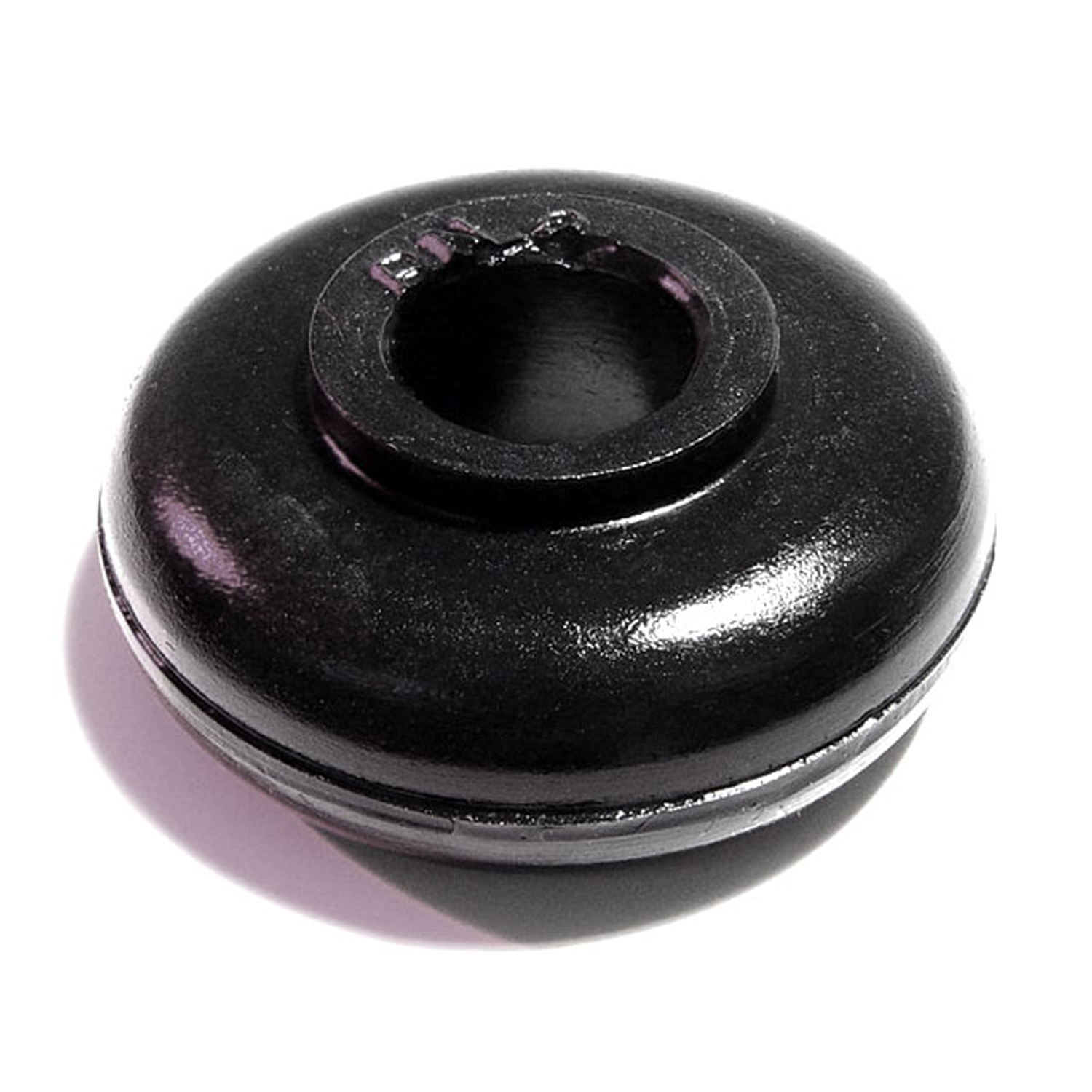 1974 Aston Martin V-8 Roll Bar Bushing. 1/2" high, with 1/2" hole. Each-BN 2Roll Bar Bushing. 1/2" high, with 1/2" hole. Each
 1974 Aston Martin V-8 Lower 'A' Arm Bushing. Fits on rear part of 'A' arm-BN 23-BLower 'A' Arm Bushing. Fits on rear part of 'A' arm. Four used per car. 3-1/8" O.D., 7/8" I.D., 3/4" thick. Each
 1974 Aston Martin V-8 Shock Grommet. 9/16" high, 3/8" hole. Each-BN 2-AShock Grommet. 9/16" high, 3/8" hole. Each
 1974 Aston Martin V-8 Clutch and Brake Pedal Pads. Perfect reproduction-CB 175Clutch and Brake Pedal Pads. Perfect reproduction. 1-3/4" wide X 3-1/4" long. Pair
 1974 Aston Martin V-8 Upper Door Waist Seal for 2-Door Coupes w/V-8-LP 104-MUpper Door Waist Seal for 2-Door Coupes w/V-8. Fits between chrome and body. When window down arm rests on it. Sold by the foot
 1974 Aston Martin V-8 Spark Plug Boot. For V-8 engines only. Each-RP 1-QSpark Plug Boot. For V-8 engines only. Each
 1974 Aston Martin V-8 Cam Cover Plug. For models with 8-cylinder engines-RP 8-DCam Cover Plug. For models with 8-cylinder engines. 1-1/4" long X 3/8" thick. Each
 1974 Aston Martin V-8 Outside Door Window Sweeper. All rubber. Sold by the foot-WC 27-/FTOutside Door Window Sweeper. All rubber. Sold by the foot.
 1974 Aston Martin V-8 Outside Door Window Sweeper. All rubber. 48" Piece. Each-WC 27-48Outside Door Window Sweeper. All rubber. 48" Piece. Each
 1974 Aston Martin V-8 Outside Door Window Sweeper. All rubber. 96" Piece. Each-WC 27-96Outside Door Window Sweeper. All rubber. 96" Piece. Each
 1974 Aston Martin V-8 Outside Window Sweeper. Sold by the foot-WC 27-A/FTOutside Window Sweeper. Sold by the foot
Why Choose Metro?
For over 100 years, Metro Moulded Parts has been the pinnacle of quality in classic car restoration parts. Our commitment to precision and authenticity in every component ensures a perfect fit and an OEM-level appearance.
- Expert Craftsmanship & Quality: Each part is a testament to our dedication to reliability and perfection, crafted from original designs and thoroughly tested.
- Advanced Technology: We use cutting-edge techniques to create flawless, long-lasting parts that surpass others in performance.
- SuperSoft Sponge – The Ultimate Door Seal: Not only are our door seals 30% softer than competitors', but they're also guaranteed to never leak. They effectively reduce wind and road noise, enhancing your classic car's comfort and driving experience.
- Proudly American: Our parts are a product of American craftsmanship, made in the USA with a spirit of excellence and heritage.
- Unrivaled Warranty: We back our products with a 30-year industry-leading warranty, a testament to our confidence in their quality.
Join us in preserving the legacy of classic cars with parts that are crafted for perfection, not just made.