

Image of 1979 Aston Martin Lagonda, Note: These illustrations use artistic license and may differ from actual historical models.
Performance Metrics
Fundamental Metrics
Emotional Appeal
MMP Rating
| Engine Specifications | |
|---|---|
| Engine: | 5.3L V8 |
| Displacement: | 5340 cc |
| Horsepower: | 280-300 hp |
| Torque: | 302 lb-ft |
| Compression Ratio: | 9.5:1 |
| Ignition System: | Electronic |
| Cooling System: | Liquid-cooled |
| Performance Specifications | |
| 0-60 Time: | 8.8 seconds |
| 1/4 Mile Time: | Estimated 16.5 seconds |
| Top Speed: | 143 mph |
| Transmission and Drive | |
| Drive Type: | Rear-wheel drive |
| Transmission Type: | 3-speed automatic |
| Fuel and Efficiency | |
| Fuel System Type: | Fuel injection |
| MPG: | Estimated 10-12 mpg |
| Dimensions and Brakes | |
| Brakes: | Disc brakes |
| Wheelbase: | 2916 mm |
| Weight: | 2180 kg |
Note: Specifications for classic cars are given to the best of our ability, considering the limited and variant data available.
1979 Aston Martin Lagonda: The Digital Wedge
The 1979 Aston Martin Lagonda looked less like a traditional luxury saloon and more like a message from the future. With its sharply creased, wedge-shaped body and an electronic dashboard unlike anything else on the road, it became one of the most daring and talked-about British cars of its era.
Built by Aston Martin in Newport Pagnell, England, the Lagonda was a costly, hand-finished four-door luxury car powered by the company’s famous V8. The model’s roots stretched back to the Lagonda marque, which Aston Martin had acquired in 1947. The modern Lagonda name returned as a standalone Aston Martin model in the 1970s, aimed at buyers who wanted the performance and craftsmanship of an Aston with limousine-like space.
The wedge-shaped Series 2 arrived in 1976, but production examples reached customers from the late 1970s. A 1979 car belongs to this groundbreaking early generation. Its most memorable distinction was its dashboard: electronic digital displays and touch-sensitive controls gave the Lagonda a science-fiction feel years before such technology became commonplace in cars.
William Towns’ Wedge-Shaped Design
British designer William Towns gave the Series 2 Lagonda a profile that seemed drawn with a ruler. The long, low bonnet, steeply raked windscreen, crisp body creases and sharply cut-off rear made it instantly recognizable. Its flat surfaces and geometric lines were a dramatic break from the rounded, chrome-heavy luxury cars that still dominated the period.
The shape was not just a styling exercise. Its low nose and long roof helped give the car a distinctive, slippery profile, while the extended wheelbase provided generous cabin space. The result was an imposing saloon that looked substantial without relying on the upright, formal styling of a conventional limousine.
Inside, the Lagonda paired hand-built luxury with experimental technology. Owners could expect fine leather upholstery, plush carpeting and carefully finished trim, with individual cars often specified to suit their first buyers. Leather shades, piping, carpets and exterior paint could vary, as was typical of a low-volume British luxury car. Deep reds, dark greens, blues, silver and restrained metallic shades all suited the angular body, but many Lagondas were ordered in bespoke colors. There was no single factory color combination that defines every 1979 example.
The Series 2 was offered as a four-door saloon, not as a range of body styles. Its unusual proportions and digital cockpit are the defining features that separate it from the earlier, more conventionally shaped Series 1. The automatic transmission was the common choice for relaxed grand touring, while a manual gearbox was available on some cars and is now an unusual specification.
Electronics Ahead of Their Time
The Lagonda’s cabin was the headline technological feature. Instead of conventional analog dials and rows of ordinary switches, the early Series 2 used electronic instrument displays and touch-sensitive control panels. At a time when most luxury cars still relied on mechanical gauges, this was a remarkably ambitious attempt to make the automobile’s interface look as advanced as its styling.
That ambition came with a cost. The electronic systems could be temperamental, and the technology was difficult to diagnose and repair compared with conventional instruments. The displays and controls became part of the car’s legend, but also a frequent source of owner frustration. In modern restorations, maintaining the original appearance while making the electronics dependable is a specialized task.
The Lagonda’s influence is easiest to see in how confidently it connected futuristic design with an advanced digital cabin. It did not make electronic dashboards instantly reliable or universal, but it demonstrated that a production luxury car could treat its instruments and controls as a major design statement. Later digital dashboards were more practical, yet the Lagonda remains one of the boldest early examples.
V8 Performance and Grand-Touring Manners
Power came from Aston Martin’s 5.3-litre, all-alloy V8, a four-camshaft engine also used in the company’s other high-performance models. Output figures vary by market and specification, but period figures are commonly around 280 horsepower, with some versions quoted higher. Most cars paired the engine with a three-speed automatic transmission, delivering smooth, relaxed progress rather than sharp, modern shifts.
Published performance figures also vary, but a 0-to-60 mph time of roughly eight to nine seconds and a top speed in the region of 140 to 145 mph are reasonable guides. Those numbers made the Lagonda genuinely quick for a large luxury saloon of the late 1970s. Its V8 did not need to shout constantly: under gentle throttle it could cruise with a restrained, deep burble, then produce a fuller growl when asked to accelerate hard.
On the road, the Lagonda is best understood as a fast grand tourer, not a sports car. Its long wheelbase and substantial weight help it settle into a steady, comfortable stride on open roads. The suspension is designed to absorb bumps and keep the cabin composed, though a car this old will feel only as good as its springs, dampers, tyres and suspension joints. Winding roads reveal the car’s size and weight, while strong crosswinds and narrow lanes call for measured inputs rather than hurried corrections.
The driving position gives the driver a broad view of the angular bonnet and a cockpit unlike that of any ordinary saloon. The steering and transmission are products of their era, so the car rewards anticipation and smooth driving. A well-maintained example can feel surprisingly capable at speed, but it asks its driver to enjoy the occasion rather than chase modern sports-sedan precision.
Living With a 1979 Lagonda
Today, a Lagonda is most often used as a collector car, a show car or a special-occasion grand tourer. It can cover long distances, and some owners do use their cars regularly, but it is rarely a carefree daily driver. Fuel consumption is heavy, parts can be expensive, and the electronic systems require knowledge that an average general repair shop may not have.
Mechanical maintenance is manageable for a specialist familiar with Aston Martin V8s, but the car’s hand-built construction and limited production make many jobs more involved than they would be on a mass-produced saloon. The engine, transmission and chassis need careful inspection, and a thorough pre-purchase check should include the electrical system, instrument displays, control panels, cooling system, suspension and evidence of corrosion or previous repairs.
The most important ownership lesson is to buy the quality of the restoration, not just the appearance of the car. A beautifully polished Lagonda with unreliable electronics or neglected mechanicals can quickly become an expensive project. Conversely, a properly sorted example offers a memorable combination of V8 character, handmade luxury and futuristic design.
Lagonda Facts and Famous Criticisms
The Series 2’s electronic dashboard was so unusual that it became one of the car’s most widely reported features. It also became a symbol of the risks of pushing new technology into low-volume production before it was fully dependable. Early displays and touch controls could fail, and the Lagonda’s complexity helped cement its reputation as both a technological trailblazer and a demanding classic to maintain.
The model was never designed as a racing car and is not known for a major competition record. Its significance lies instead in its road-car design and engineering. It was among the most expensive and conspicuous luxury cars of its day, aimed at an international clientele able to afford a hand-built British flagship.
Common criticisms remain familiar: the electronics can be troublesome, fuel use is high, and specialist repairs are costly. Its angular styling also divided opinion when new. Those same qualities now help explain its appeal. The Lagonda was never intended to blend in, and its boldness has aged into a distinctive form of classic-car charm.
Production Numbers and Collector Values
Aston Martin produced roughly 645 Lagondas across the model’s different series from the 1970s through 1990. Published totals and breakdowns can differ, and the exact number of 1979 cars is not consistently stated. The Series 2 accounts for several hundred examples and is the generation most people picture when they hear the name Lagonda.
For a 1979 Series 2, condition and documentation make an enormous difference to value. As a broad 2026 guide, a car needing significant work might fall around £25,000 to £45,000, while a sound, usable example could be approximately £45,000 to £80,000. A highly restored, exceptionally original or particularly well-documented car may reach £80,000 to £120,000 or more. In the United States, that broadly translates to roughly $30,000 to $150,000, depending on condition, specification and the exchange rate.
These are indicative ranges, not guaranteed sale prices. The market is small, and a car’s running condition, restoration quality, originality and service history can matter more than its model year alone. Interest has strengthened as collectors have come to value the Lagonda’s unusual design and historical importance, though it is a niche classic rather than a consistently fast-appreciating investment.
A British Classic That Refused to Blend In
The 1979 Aston Martin Lagonda brought together a powerful 5.3-litre V8, handcrafted luxury and a design that challenged almost every convention of the traditional saloon. Its digital dashboard was ambitious, sometimes troublesome and undeniably influential as a statement of what a luxury car could be.
More than four decades later, the Lagonda remains an unforgettable sight: part grand tourer, part design experiment and wholly Aston Martin. It is a reminder that the most significant classics are not always the ones that played it safe.
1979 Aston Martin Lagonda Catalog of Parts
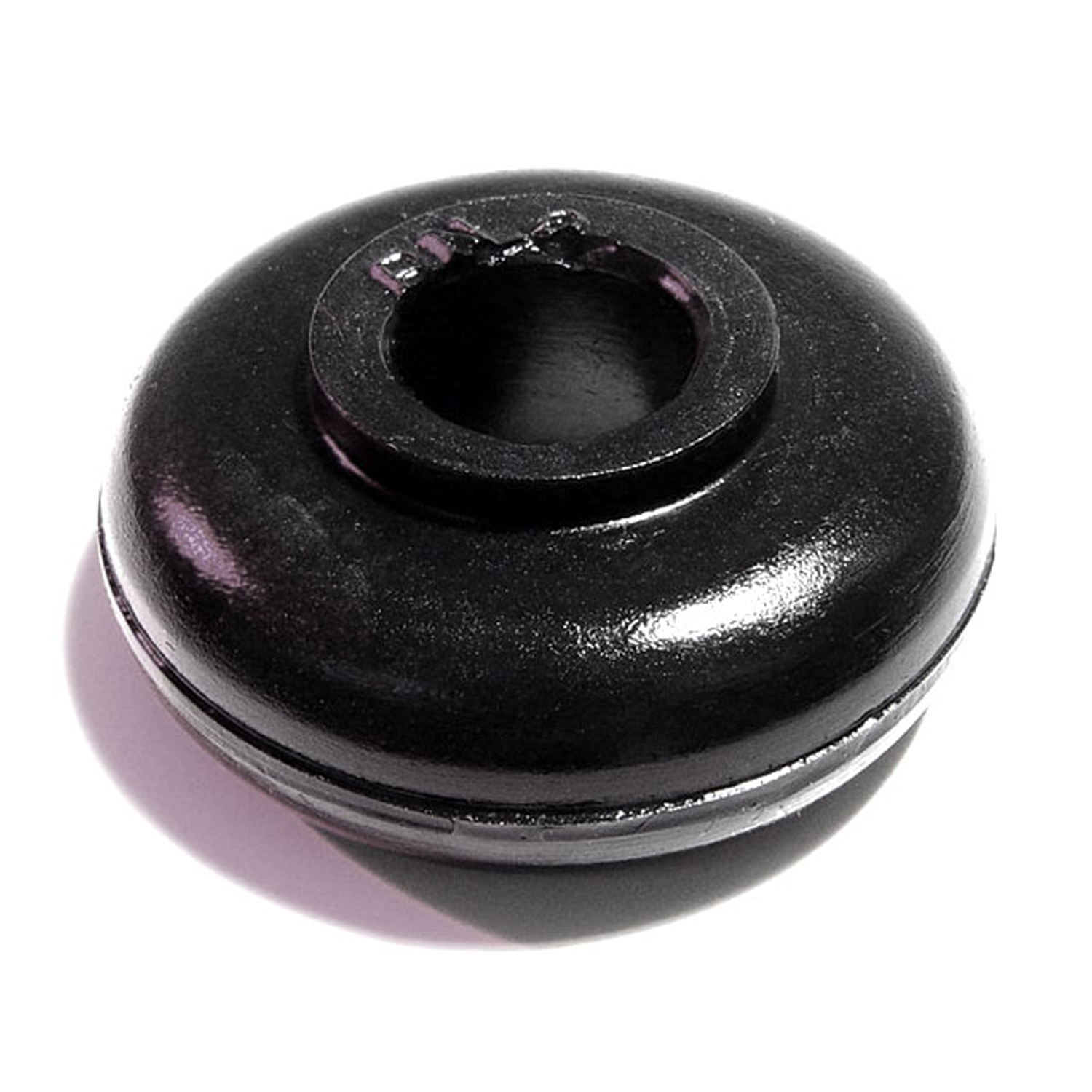 1979 Aston Martin Lagonda Roll Bar Bushing. 1/2" high, with 1/2" hole. Each-BN 2Roll Bar Bushing. 1/2" high, with 1/2" hole. Each
 1979 Aston Martin Lagonda Shock Grommet. 9/16" high, 3/8" hole. Each-BN 2-AShock Grommet. 9/16" high, 3/8" hole. Each
 1979 Aston Martin Lagonda Clutch and Brake Pedal Pads. Perfect reproduction-CB 175Clutch and Brake Pedal Pads. Perfect reproduction. 1-3/4" wide X 3-1/4" long. Pair
Why Choose Metro?
For over 100 years, Metro Moulded Parts has been the pinnacle of quality in classic car restoration parts. Our commitment to precision and authenticity in every component ensures a perfect fit and an OEM-level appearance.
- Expert Craftsmanship & Quality: Each part is a testament to our dedication to reliability and perfection, crafted from original designs and thoroughly tested.
- Advanced Technology: We use cutting-edge techniques to create flawless, long-lasting parts that surpass others in performance.
- SuperSoft Sponge – The Ultimate Door Seal: Not only are our door seals 30% softer than competitors', but they're also guaranteed to never leak. They effectively reduce wind and road noise, enhancing your classic car's comfort and driving experience.
- Proudly American: Our parts are a product of American craftsmanship, made in the USA with a spirit of excellence and heritage.
- Unrivaled Warranty: We back our products with a 30-year industry-leading warranty, a testament to our confidence in their quality.
Join us in preserving the legacy of classic cars with parts that are crafted for perfection, not just made.