

Image of 1981 Aston Martin Lagonda, Note: These illustrations use artistic license and may differ from actual historical models.
Performance Metrics
Fundamental Metrics
Emotional Appeal
MMP Rating
| Engine Specifications | |
|---|---|
| Engine: | 5.3L V8 |
| Displacement: | 5340 cc |
| Horsepower: | 280-300 hp |
| Torque: | 302 lb-ft |
| Compression Ratio: | 9.5:1 |
| Ignition System: | Electronic |
| Cooling System: | Liquid-cooled |
| Performance Specifications | |
| 0-60 Time: | 8.8 seconds |
| 1/4 Mile Time: | Estimated 16.5 seconds |
| Top Speed: | 143 mph |
| Transmission and Drive | |
| Drive Type: | Rear-wheel drive |
| Transmission Type: | 3-speed automatic |
| Fuel and Efficiency | |
| Fuel System Type: | Fuel injection |
| MPG: | Estimated 10-12 mpg |
| Dimensions and Brakes | |
| Brakes: | Disc brakes |
| Wheelbase: | 114.8 inches |
| Weight: | 4398 lbs |
Note: Specifications for classic cars are given to the best of our ability, considering the limited and variant data available.
1981 Aston Martin Lagonda: Britain’s Digital-Age Luxury Saloon
The 1981 Aston Martin Lagonda looked less like a traditional luxury car and more like a concept car that had escaped the motor show floor. Its long, low wedge shape and electronic dashboard made it one of the most startling road cars of its era. Beneath the futuristic styling, however, it was a hand-built British saloon powered by Aston Martin’s celebrated V8.
The Lagonda name had a long history before Aston Martin revived it. Aston Martin acquired the Lagonda company in 1947, and the name later became part of the marque’s plan to offer an especially exclusive four-door model. The modern Lagonda was unveiled in 1976, during a difficult period for Aston Martin, and the 1981 model belongs to the second-generation, or Series 2, version. It combined traditional coachbuilt craftsmanship with technology that was startlingly ambitious for a production car.
One of the car’s most memorable claims to fame was its dashboard. Digital displays and touch-sensitive controls gave the Lagonda a science-fiction cockpit years before screens became commonplace in luxury cars. That innovation made headlines, though it also became a source of frustration when the complex electronics proved less dependable than the car’s mechanical components.
Wedge Styling and a High-Tech Cabin
Designed by William Towns, the Lagonda’s exterior was defined by straight lines, crisp edges and a remarkably low nose. Its long bonnet flowed into a steeply raked windscreen, while the roofline and rear deck formed a sharp, almost architectural profile. Pop-up headlights kept the front end clean when the lamps were off. The result was unmistakably a product of the late 1970s and early 1980s, yet it still looks dramatic today.
The cabin offered a striking contrast between futuristic instruments and traditional luxury. Owners could expect hand-finished trim, leather upholstery, carpeting and extensive woodwork, with much of the interior assembled by skilled craftsmen. The dashboard’s digital readouts and touch-sensitive control panels replaced the familiar sweep of analogue gauges and rows of conventional switches. In concept, the layout was years ahead of its time. In practice, early electronic systems could be temperamental and costly to diagnose.
Paint and trim were often tailored to the buyer, as was typical of a low-volume luxury car. Period Lagondas appeared in restrained metallic shades, including silver, grey and dark blue, as well as richer reds and other bespoke colors. There was no single defining factory color: a well-preserved car’s original specification is often part of its appeal.
The 1981 Lagonda came as a four-door saloon. There was no regular production coupe, convertible or estate version, and the long, low saloon is the shape most closely associated with the name. Coachbuilt and one-off Lagonda variations appeared over the broader model history, but they were exceptions rather than standard choices.
Why the Lagonda Mattered
The Lagonda made a bold statement about what a luxury car could be. Many of its contemporaries relied on familiar styling and conventional instruments. The Aston instead presented an entirely new visual language, inside and out. Its digital dashboard and touch-operated controls anticipated features that later became common, even if the electronics of the early 1980s were not yet robust enough to make them effortless.
Its influence is best understood as inspiration rather than a direct blueprint for later cars. The Lagonda showed that digital displays could be part of a luxury-car experience and that a production saloon could look radically different from the established executive-car norm. Its wedge profile also became one of the defining shapes of the era’s futuristic automotive design.
The car was developed when Aston Martin was financially vulnerable and the market for large, thirsty luxury cars faced pressure from fuel costs and economic uncertainty. Building such a technically ambitious model was a considerable gamble. That it reached customers at all, in small numbers and with hand-built construction, is part of what makes the Lagonda remarkable.
V8 Performance and Grand-Touring Manners
Power came from Aston Martin’s all-alloy 5.3-litre V8, a four-cam engine with two valves per cylinder. In typical Series 2 specification, output was around 280 horsepower, although figures could vary with market and specification. A three-speed Chrysler TorqueFlite automatic transmission sent power to the rear wheels.
Period performance figures vary, but a 0-to-60-mph time in the region of nine seconds and a top speed of roughly 140 to 145 mph give a fair idea of the Lagonda’s abilities. Those figures were impressive for a large luxury saloon, particularly one built with comfort and refinement in mind.
On the road, the Lagonda feels substantial and composed rather than agile. Its soft, luxury-oriented suspension helps it glide over ordinary road imperfections, while the long wheelbase settles the car at speed. Broken surfaces and sharp bumps can still make its mass apparent, and a narrow, twisting lane is not where the Lagonda feels most at home. On a flowing road or motorway, it is in its element.
The V8 supplies a deep, restrained growl that becomes more pronounced under acceleration. The automatic transmission suits the car’s relaxed character, and the driver’s experience is less about chasing corners than covering distance in quiet comfort. The low bonnet and wide body demand attention when parking or threading through tight spaces, but the cabin’s sense of occasion is hard to mistake.
Living with a Lagonda
A 1981 Lagonda is best thought of as a special-occasion classic or a show car, not an uncomplicated daily driver. Its size, fuel consumption, age and complex electrical systems make regular commuting a demanding proposition. A well-sorted example can still undertake long journeys, but it rewards owners who plan ahead and have access to specialists familiar with Aston Martin V8s and period electronics.
Routine mechanical work is based on well-known Aston Martin V8 engineering, but that does not make maintenance inexpensive. Parts, labor and specialist knowledge can all be costly. The electronics require particular care: working displays and controls are desirable, and faults may call for careful investigation rather than a simple parts swap. Before buying, check the service history, engine condition, transmission, suspension, body structure and every electrical function.
Reliability is highly dependent on upkeep and the quality of previous repairs. An average owner can handle basic checks and simple maintenance, but major mechanical or electrical work is generally best left to an experienced specialist. A bargain purchase can quickly become expensive if it needs extensive restoration or has undocumented electrical problems.
Lagonda Trivia and Common Criticisms
The Lagonda’s most enduring trivia is also its most famous weakness: its high-tech dashboard was famously troublesome. The displays and controls were a bold attempt to bring advanced electronics into a hand-built car, but early components could fail or behave unpredictably. Today, a functioning, properly repaired dashboard is a major selling point.
The model is also closely associated with the era’s international luxury market. Its bold styling and custom finish appealed to wealthy buyers, including customers in the Middle East. The Lagonda did not establish a major speed, endurance or sales record. Its distinction was different: it was an unusually ambitious and visually radical production saloon from a small British manufacturer.
Common criticisms include the car’s thirst for fuel, substantial weight, high maintenance costs and fragile electronics. Its wedge styling can also divide opinion. For admirers, those qualities are inseparable from the Lagonda’s character; for practical owners, they are reasons to choose carefully.
Collector Values and Rarity
Production totals for the full Lagonda run are reported differently across sources, but a reasonable estimate is about 650 cars across the model’s various series. A 1981 example is one part of that small overall population, and surviving cars vary widely in condition. They appear on the market infrequently, so buyers may need patience to find the right specification and history.
As a broad current-market estimate, a running 1981 Lagonda in presentable condition might sell for approximately US$50,000 to US$100,000. Exceptional, well-documented cars with sorted electronics can reach higher figures, while projects or cars with significant faults may be worth considerably less. Values depend heavily on condition, originality, service records and the state of the electrical systems.
The Lagonda has generally remained a niche collector car rather than matching the market strength of Aston Martin’s best-known sports cars. Interest in its design and technological ambition has helped the best examples hold their appeal, and values for excellent cars may rise gradually. The ownership and restoration costs, however, limit how much buyers are willing to pay. For this model, condition matters more than simply finding the lowest mileage.
Aston Martin’s Most Audacious Saloon
The 1981 Aston Martin Lagonda brought together a muscular 5.3-litre V8, hand-finished luxury and a design that refused to blend into the traffic. Its digital dashboard was imperfect, its upkeep can be demanding and its shape remains unconventional. Those very qualities help explain why it still fascinates classic-car enthusiasts.
More than a rare four-door Aston Martin, the Lagonda is a snapshot of a moment when British engineering dared to make the future by hand. It remains one of the boldest luxury saloons ever built.
1981 Aston Martin Lagonda Catalog of Parts
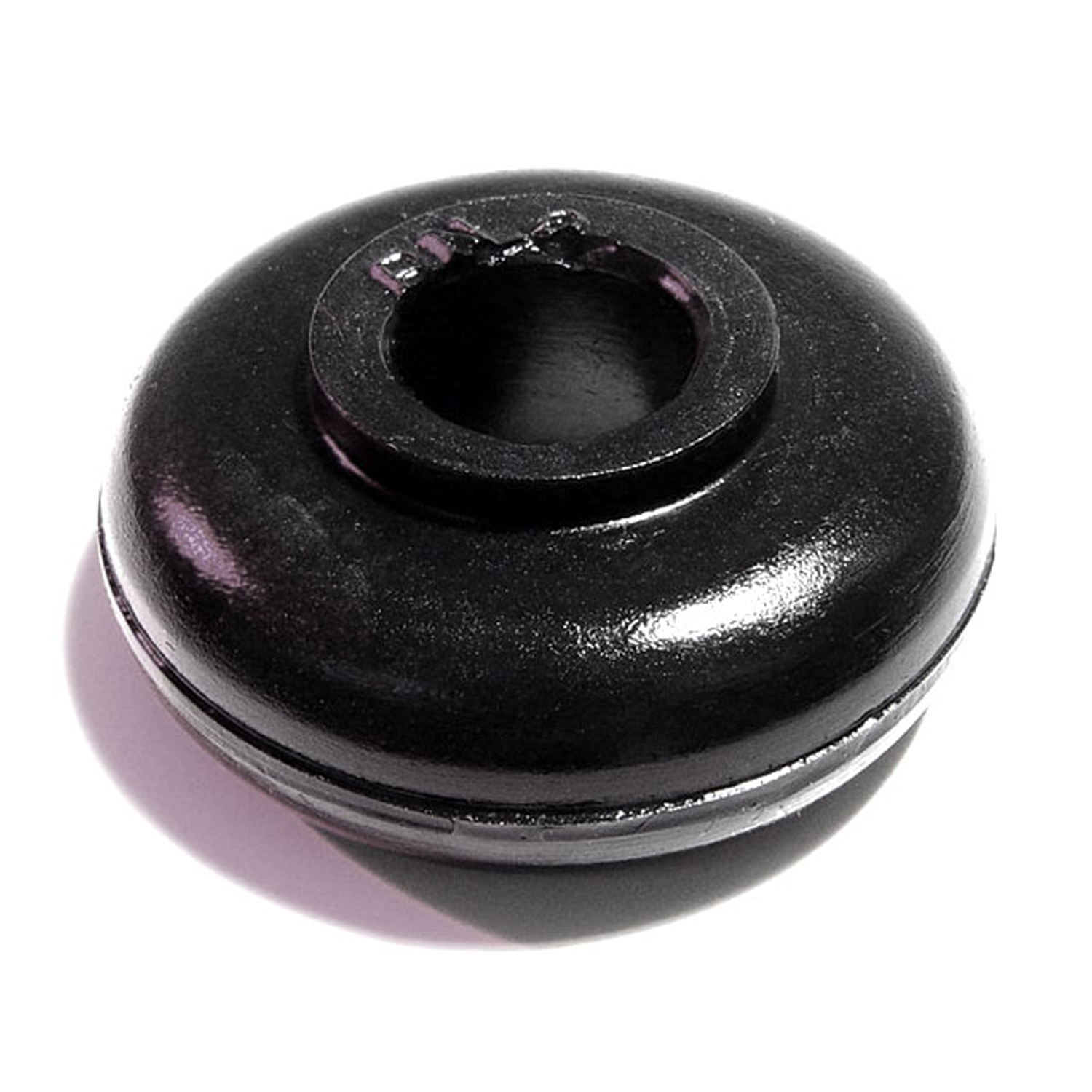 1981 Aston Martin Lagonda Roll Bar Bushing. 1/2" high, with 1/2" hole. Each-BN 2Roll Bar Bushing. 1/2" high, with 1/2" hole. Each
 1981 Aston Martin Lagonda Shock Grommet. 9/16" high, 3/8" hole. Each-BN 2-AShock Grommet. 9/16" high, 3/8" hole. Each
 1981 Aston Martin Lagonda Clutch and Brake Pedal Pads. Perfect reproduction-CB 175Clutch and Brake Pedal Pads. Perfect reproduction. 1-3/4" wide X 3-1/4" long. Pair
Why Choose Metro?
For over 100 years, Metro Moulded Parts has been the pinnacle of quality in classic car restoration parts. Our commitment to precision and authenticity in every component ensures a perfect fit and an OEM-level appearance.
- Expert Craftsmanship & Quality: Each part is a testament to our dedication to reliability and perfection, crafted from original designs and thoroughly tested.
- Advanced Technology: We use cutting-edge techniques to create flawless, long-lasting parts that surpass others in performance.
- SuperSoft Sponge – The Ultimate Door Seal: Not only are our door seals 30% softer than competitors', but they're also guaranteed to never leak. They effectively reduce wind and road noise, enhancing your classic car's comfort and driving experience.
- Proudly American: Our parts are a product of American craftsmanship, made in the USA with a spirit of excellence and heritage.
- Unrivaled Warranty: We back our products with a 30-year industry-leading warranty, a testament to our confidence in their quality.
Join us in preserving the legacy of classic cars with parts that are crafted for perfection, not just made.