

Image of 1983 Aston Martin Lagonda, Note: These illustrations use artistic license and may differ from actual historical models.
Performance Metrics
Fundamental Metrics
Emotional Appeal
MMP Rating
| Engine Specifications | |
|---|---|
| Engine: | 5.3L V8 |
| Displacement: | 5340 cc |
| Horsepower: | 280-300 HP |
| Torque: | 301 lb-ft |
| Compression Ratio: | 9.5:1 |
| Ignition System: | Electronic |
| Cooling System: | Liquid-cooled |
| Performance Specifications | |
| 0-60 Time: | 8.8 seconds |
| 1/4 Mile Time: | Estimated 16.5 seconds |
| Top Speed: | 143 mph |
| Transmission and Drive | |
| Drive Type: | Rear-wheel drive |
| Transmission Type: | 3-speed automatic |
| Fuel and Efficiency | |
| Fuel System Type: | Fuel Injection |
| MPG: | Estimated 10-12 MPG |
| Dimensions and Brakes | |
| Brakes: | Disc brakes |
| Wheelbase: | 114.8 inches |
| Weight: | 4398 lbs |
Note: Specifications for classic cars are given to the best of our ability, considering the limited and variant data available.
1983 Aston Martin Lagonda: A Digital-Age Luxury Saloon
The 1983 Aston Martin Lagonda looked less like a traditional luxury car than a wedge-shaped vision from the future, and that was exactly the point. Built in Newport Pagnell, England, by Aston Martin, it paired the company’s powerful V8 with a lavish four-door cabin and dashboard technology that seemed almost science fiction in the early 1980s.
The Lagonda name had a long history before this car arrived. Aston Martin acquired the Lagonda company in 1947, and the name was used for a range of prestigious models. The angular Lagonda introduced in 1976 became the most radical interpretation yet. The 1983 model belongs to the Series 2 generation, which kept the striking wedge shape and developed the original car’s ambitious electronic interior. A notable first: the Lagonda is widely recognized as one of the earliest production cars to offer a fully digital instrument display and touch-sensitive dashboard controls.
William Towns’ Wedge Design
Designed by William Towns, the Lagonda has a long, flat bonnet, sharply creased body sides, a high tail and a low roofline. Its squared-off proportions make it unmistakable, even among the flamboyant luxury cars of the 1980s. Pop-up headlamps kept the nose remarkably clean when the lights were off, while a narrow grille and crisp edges gave the front end a serious, almost architectural look.
At close to five metres long, the Lagonda was imposing without relying on the rounded, upright styling common to many luxury saloons of its era. The design was also unusually aerodynamic for a large four-door car. It made a bold statement in an age when prestige often meant chrome, ornament and traditional shapes. The Lagonda’s message was that luxury could look modern, technical and uncompromising.
Handcrafted Comfort and Digital Controls
Inside, the car combined traditional British craftsmanship with futuristic equipment. Owners could expect deep Connolly leather upholstery, plush carpeting and carefully finished trim. Many cars featured rich wood veneer, though the overall dashboard design was far more restrained and modern than the wood-heavy interiors of many rivals. As with other hand-built Astons, specifications and finishes could vary according to the first owner’s order.
The most talked-about feature was the electronic dashboard. Digital readouts replaced conventional dials, and touch-sensitive controls were arranged across the fascia. The effect was clean and striking, but the technology was still developing. Early systems could be temperamental, and the Lagonda’s complex electronics became part of its reputation as both an engineering showpiece and a challenging car to keep in perfect working order. By 1983, the design had been refined from its earliest form, but it remained specialist equipment rather than simple, off-the-shelf technology.
There was only one regular body style: a four-door saloon. The Series 2 shape is the best-known and most iconic version of the Lagonda, and the 1983 car is firmly part of that distinctive generation. Exterior paint was ordered in a wide range of colours, including bespoke shades. Dark green, blue, silver, black and burgundy are all fitting, frequently seen choices, though there was no single official “most popular” colour across the production run.
Why the Lagonda Mattered
The Lagonda challenged ideas about what a luxury car should look like and how its controls should work. Its wedge styling was a dramatic break from the conservative shapes of Rolls-Royce, Bentley and many Mercedes-Benz models. Its digital instruments and touch controls anticipated the electronic interfaces that would become commonplace decades later, even if the technology was not yet reliable enough to make the transition painless.
That combination of old and new is central to the car’s significance. Beneath the futuristic dashboard was a hand-built British grand tourer with a large, familiar V8. The Lagonda was not a mass-market technology experiment: it was an expensive flagship, developed in small numbers by a manufacturer working with limited resources. Its ambition made it stand apart, while its bold styling helped establish the wedge as one of the defining shapes of the era.
V8 Performance and Road Manners
Power comes from Aston Martin’s 5.3-litre, all-aluminium V8, fitted in the 1983 Series 2 with four Weber carburettors. Output is commonly quoted at about 280 horsepower, although specifications can vary by market and emissions equipment. A three-speed Chrysler Torqueflite automatic sends power to the rear wheels. Period performance figures put the 0-to-60 mph sprint at roughly 8 to 9 seconds and top speed at around 143 to 145 mph.
Those numbers are impressive for a large luxury saloon of the period, but the Lagonda is best understood as a fast, long-distance car rather than a sports saloon. The V8 delivers a deep, muscular note, becoming more pronounced under acceleration. The automatic transmission suits relaxed cruising, while the car’s substantial power makes overtaking feel effortless when it is in good tune.
On smooth roads, the Lagonda feels composed and luxurious. Its long wheelbase helps it settle into a steady cruise, and its suspension is designed to absorb imperfections rather than chase sharp cornering responses. On broken surfaces, a well-maintained example should remain comfortable, though age, worn suspension components and tired tyres can quickly undermine that ride quality. Narrow, winding roads reveal its size and weight: it can cover ground briskly, but it does not feel as nimble as a smaller sports car. Strong crosswinds and uneven pavement also remind the driver that this is a large, low-bodied saloon.
Living with a Lagonda
Today, most 1983 Lagondas are used as collector cars, special-occasion drivers or show cars, rather than daily transportation. They are capable of long journeys, but their age, fuel consumption and specialist electronics make regular use a commitment. Expect fuel economy to be modest, often in the region of 10 to 14 miles per gallon depending on condition, driving style and traffic.
Routine mechanical work is manageable for a mechanic familiar with Aston Martin V8s, but this is not an easy car for the average owner to repair at home. Carburettor tuning, cooling-system upkeep and transmission servicing all require appropriate knowledge. The digital dashboard and touch controls are the bigger concern: faults can be difficult to diagnose, and repairing or restoring the original electronics may call for a specialist. Parts availability and expertise are limited compared with more common classic cars, so a pre-purchase inspection by a marque expert is essential.
Condition matters enormously. A car with documented electrical work, a properly maintained V8 and a history of specialist servicing is likely to be a far more enjoyable ownership prospect than a cheaper example with unresolved faults. Buyers should budget for ongoing maintenance rather than treating the purchase price as the full cost of ownership.
Lagonda Facts and Common Criticisms
The 1983 Lagonda did not hold a speed or endurance record, but its unusual combination of performance, four-door practicality and electronic instrumentation made it a landmark luxury car. It was also famously expensive when new, reflecting its hand-built construction and advanced equipment. Its most memorable “record” may be its status as one of the boldest digital-dashboard experiments to reach production in the period.
Production figures depend on how the different generations are counted. Estimates commonly put Series 2 output at about 460 cars, while total production of the wedge-shaped Lagonda across its later revisions is often given at roughly 645. These figures are best treated as approximate, but they make the car rare by any ordinary standard. A specific 1983 production total is less consistently reported.
The car’s common criticisms are well known: its electronics can be unreliable, its mechanical and electrical systems are expensive to maintain, and its styling is not for everyone. Some drivers also find the dashboard’s touch controls less intuitive than conventional switches. Yet those drawbacks are inseparable from what makes the Lagonda fascinating. It was a production car willing to take risks that more cautious luxury manufacturers avoided.
Collector Values and Availability
As a guide for the current collector market, a 1983 Lagonda may sell for roughly $45,000 to $100,000, with condition, provenance, originality and the state of its electronics making a substantial difference. A project car or one with significant unresolved faults can fall below that range. An exceptional, well-restored example with strong documentation could reach approximately $120,000 to $180,000, though top-end results depend on finding the right buyer.
Cars appear infrequently, and the pool of well-sorted examples is smaller still. Values have generally become more attractive as collectors recognize the Lagonda’s design and technological importance, but the market remains selective. Rather than rising steadily across the board, prices tend to reward excellent condition and specialist preparation. A neglected car can be costly to revive, while a documented example is easier to sell and more likely to hold its value.
Aston Martin Lagonda: A Future Classic from the Past
The 1983 Aston Martin Lagonda brought together a hand-built V8, a sumptuous cabin and technology that was decades ahead of its time. Its bold, angular styling set it apart from traditional luxury saloons, while its digital dashboard made it an early glimpse of the electronically controlled car interior to come. It demands specialist care and rewards buyers who understand its quirks, but few classics make such a strong statement. The Lagonda remains a rare, fascinating reminder that Aston Martin once dared to put the future on four wheels.
1983 Aston Martin Lagonda Catalog of Parts
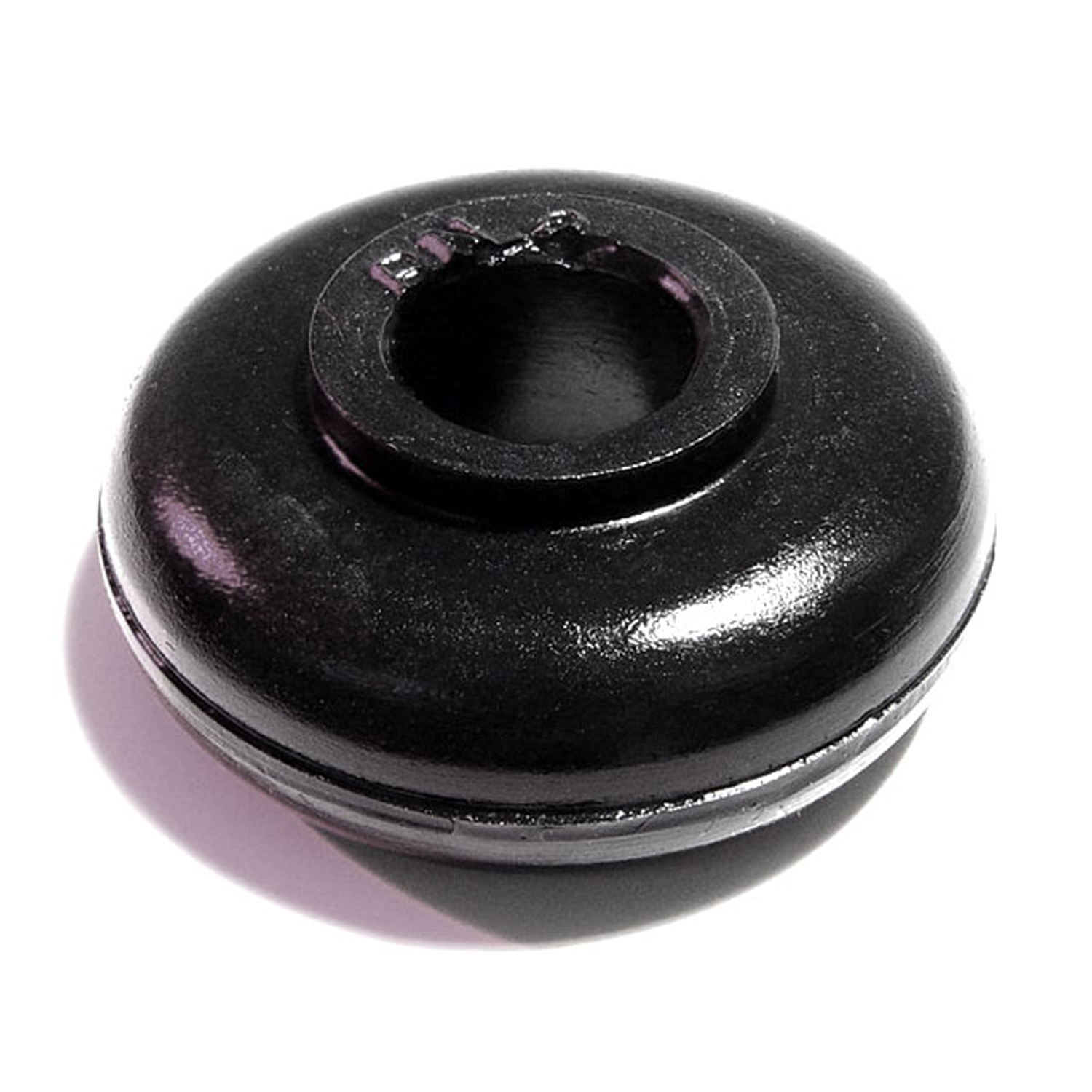 1983 Aston Martin Lagonda Roll Bar Bushing. 1/2" high, with 1/2" hole. Each-BN 2Roll Bar Bushing. 1/2" high, with 1/2" hole. Each
 1983 Aston Martin Lagonda Shock Grommet. 9/16" high, 3/8" hole. Each-BN 2-AShock Grommet. 9/16" high, 3/8" hole. Each
 1983 Aston Martin Lagonda Clutch and Brake Pedal Pads. Perfect reproduction-CB 175Clutch and Brake Pedal Pads. Perfect reproduction. 1-3/4" wide X 3-1/4" long. Pair
Why Choose Metro?
For over 100 years, Metro Moulded Parts has been the pinnacle of quality in classic car restoration parts. Our commitment to precision and authenticity in every component ensures a perfect fit and an OEM-level appearance.
- Expert Craftsmanship & Quality: Each part is a testament to our dedication to reliability and perfection, crafted from original designs and thoroughly tested.
- Advanced Technology: We use cutting-edge techniques to create flawless, long-lasting parts that surpass others in performance.
- SuperSoft Sponge – The Ultimate Door Seal: Not only are our door seals 30% softer than competitors', but they're also guaranteed to never leak. They effectively reduce wind and road noise, enhancing your classic car's comfort and driving experience.
- Proudly American: Our parts are a product of American craftsmanship, made in the USA with a spirit of excellence and heritage.
- Unrivaled Warranty: We back our products with a 30-year industry-leading warranty, a testament to our confidence in their quality.
Join us in preserving the legacy of classic cars with parts that are crafted for perfection, not just made.