
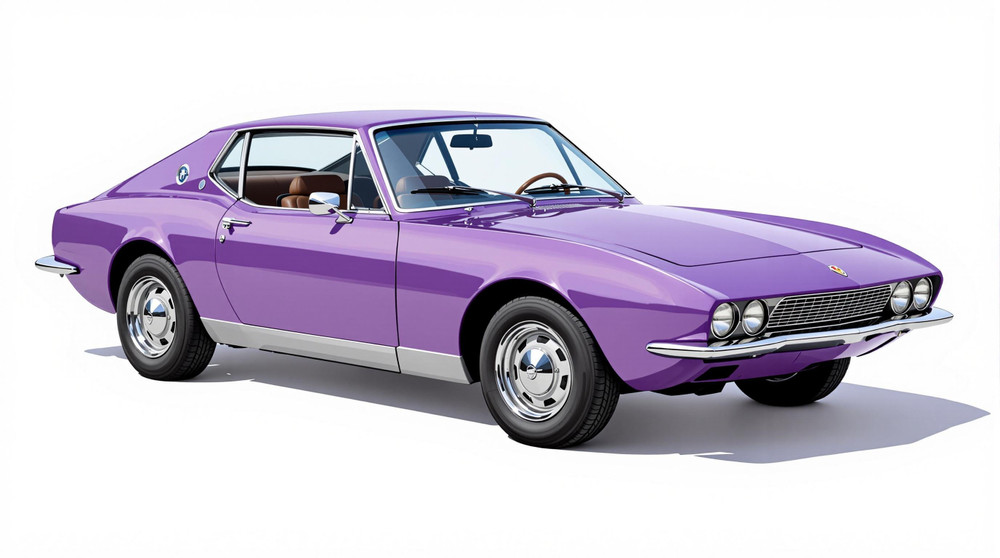
Image of 1964 Avanti Ii, Note: These illustrations use artistic license and may differ from actual historical models.
Performance Metrics
Fundamental Metrics
Emotional Appeal
MMP Rating
| Engine Specifications | |
|---|---|
| Engine Options: | 327 cu in (5.4 L) V8 |
| Displacement Range: | 327 cu in (5.4 L) |
| Horsepower Range: | 240-300 hp |
| Torque: | 340 lb-ft |
| Compression Ratio: | 10.5:1 |
| Ignition System: | Conventional points ignition system |
| Cooling System: | Liquid-cooled |
| Performance Specifications | |
| 0-60 Time: | 7.5 seconds |
| 1/4 Mile Time: | 15.5 seconds |
| Top Speed: | 120 mph |
| Transmission and Drive | |
| Drive Type: | Rear-wheel drive |
| Transmission Type: | 3-speed automatic or 4-speed manual |
| Fuel and Efficiency | |
| Fuel System Type: | Carburetor |
| MPG: | 15-20 mpg |
| Dimensions and Brakes | |
| Brakes: | Front disc brakes and rear drum brakes |
| Wheelbase: | 109 in |
| Weight: | 3,400 lbs |
Note: Specifications for classic cars are given to the best of our ability, considering the limited and variant data available.
1964 Avanti II: A Quick Model-Year Correction
The Avanti II is a rare case of a car living on after its original manufacturer left the scene, but there was no 1964 Avanti II. The name belongs to the revived Avanti introduced for the 1965 model year by Avanti Motor Corporation. A car described as a 1964 Avanti is generally an original Studebaker Avanti, not an Avanti II. The distinction matters to collectors, so this guide focuses on the first-generation Avanti II while explaining its connection to the 1964 Studebaker.
After Studebaker ended U.S. automobile production in December 1963, former Studebaker dealers Nate Altman and Leo Newman bought the Avanti name, tooling, and related assets. They restarted production in South Bend, Indiana, with the goal of keeping the striking fiberglass coupe alive. One of the model’s most remarkable twists is that a car designed as a bold new Studebaker became an independent, low-volume specialty car almost overnight.
Studebaker Style, Chevrolet Power
The Avanti II retained the original car’s unmistakable shape: a long, low hood, slim grille opening, sharply angled nose, sculpted front fenders, and fastback roof that flows into a short rear deck. Raymond Loewy’s design team gave it a clean, almost futuristic profile, with minimal chrome and a distinctive recessed area in the hood. Fiberglass construction allowed those complex curves without the expense of building conventional steel body dies.
Rather than make a fresh design, the new company preserved the Avanti’s established form and updated its mechanical package. The early Avanti II used a Chevrolet 327-cubic-inch V8, commonly quoted at 300 horsepower, paired with a manual or automatic transmission depending on the car’s specification. It kept the Studebaker-based chassis, giving the revived coupe familiar underpinnings while making Chevrolet engine parts easier to source.
Inside, the Avanti II aimed for a more personal, upscale feel than an ordinary production coupe. Buyers could find leather upholstery, carpeting, a full complement of gauges, and convenience equipment such as power windows and air conditioning, depending on the year and order. Materials and finish could vary between individual cars because Avanti production was small and much of the work was done by hand. That bespoke character is part of the appeal, but it also means equipment and trim should be checked car by car.
The Avanti II was offered as a two-door fiberglass coupe, not as a sedan or convertible. Exterior colors and interior combinations were selected through the company’s changing order options, so there is no single definitive palette for every early car. White, silver, red, and black are among the colors often seen on surviving examples. Buyers could also specify different upholstery, transmission, and comfort features, making originality and documentation especially useful when evaluating a particular car.
Why the Avanti II Mattered
The Avanti II’s significance is partly in what it represented: an independent maker preserving a distinctive American design after a major automaker had abandoned it. That was unusual in an era when new cars generally came from large manufacturers with enormous production facilities. The small South Bend operation showed that a specialist company could keep a desirable model in production through careful sourcing, hand assembly, and a loyal customer base.
Its design legacy began with the original Studebaker Avanti, whose fiberglass body, dramatic proportions, and advanced-for-the-time safety and braking features helped set it apart from mainstream American coupes. The Avanti II carried that visual identity forward rather than trying to imitate the latest Detroit styling trends. Its continued production also helped establish the Avanti as a long-running, evolving nameplate instead of a short-lived Studebaker curiosity.
The car did not revolutionize the industry in the way a mass-market model might. Its influence is more visible in its survival story and its enduring design. The Avanti became a recognizable example of the American personal luxury coupe, with a shape that remained distinctive even as its mechanical details changed over the years.
V8 Performance and Road Manners
Early Avanti II performance figures vary by engine, transmission, condition, and testing method. With the Chevrolet 327 V8, period-style estimates put 0-to-60 mph acceleration in roughly the seven-to-nine-second range and top speed around 120 to 130 mph. Treat those as approximate figures rather than guaranteed factory test results. The Avanti II was a brisk grand-touring coupe, not a lightweight sports car built solely for track work.
On the road, the V8 provides a deep, familiar American rumble, while the car’s long hood and low seating position make the cockpit feel more dramatic than its dimensions alone suggest. The steering and suspension reflect the car’s Studebaker roots and its era: expect a substantial, old-school feel rather than the quick, precise responses of a modern sports coupe. It is most at home on open roads, where its torque and comfortable cabin suit relaxed, fast-distance cruising.
Over broken pavement, condition is crucial. A well-sorted Avanti II should feel composed for a 1960s car, but worn suspension bushings, tired shocks, misaligned steering, or deteriorated tires can make it wander or ride harshly. On winding roads, its weight and period chassis design favor smooth, deliberate driving over aggressive cornering. The driver gets a strong sense of the machinery, along with the satisfying sound and vibration of a traditional V8.
Owning and Maintaining an Avanti II
Most owners use an Avanti II as a weekend cruiser, touring car, or show vehicle rather than as a daily commuter. Its comfortable interior and V8 make it suitable for longer drives, but low production and aging parts make it less convenient than a common classic with a large reproduction-parts catalog.
The Chevrolet engine and transmission are a practical advantage. Many routine service parts are widely available, and a competent independent mechanic familiar with classic GM V8s can handle much of the powertrain work. The fiberglass body will not rust like steel, but that does not make the car maintenance-free. Cracks, old repairs, water leaks, and damage around mounting points require careful inspection. Chassis condition, electrical work, interior trim, glass, and model-specific components can be more challenging or costly to put right.
For an average owner, basic upkeep is manageable with research and access to marque specialists. The key is to buy a complete, well-documented car rather than assuming a low purchase price means an inexpensive restoration. Before buying, inspect the frame and suspension, test all electrical equipment, look closely at fiberglass repairs, and confirm which engine and options the car actually carries.
Avanti Facts and Common Criticisms
The Avanti II’s story is often mixed up with the achievements of the original Studebaker Avanti. In 1963, Studebaker-backed drivers set celebrated speed records with specially prepared Avantis at Bonneville, including a run exceeding 170 mph. Those records belong to the original Avanti program, not to ordinary Avanti II production cars. The distinction is worth remembering when a seller uses a racing or speed-record story to describe a later car.
There is no single body-style choice to hunt for: the Avanti II was a coupe. Its rarity comes from its low production, hand-built character, and long but small-scale history. Critics sometimes point to its high price when new, modest production support, uneven finish quality, and the difficulty of finding certain trim and body parts today. Its ride and handling also feel dated beside contemporary sports cars, even when the car is mechanically sound.
These are not reasons to dismiss the Avanti II. They are reminders that it is a specialist classic. Buyers who value its design and independent history often see the unusual details and quirks as part of its personality.
Avanti II Values and Rarity
Production totals are difficult to summarize because the Avanti name continued through several ownership changes and model updates. A reasonable estimate for Avanti II production during the original company’s early era, from 1965 into the early 1980s, is around 3,000 cars, though totals vary by source and by which production years are included. That makes the car uncommon, but it is not impossible to find one through marque clubs, specialist dealers, and online classic-car listings.
As a broad 2026 market estimate, an early Avanti II needing work might sell for roughly $10,000 to $20,000. A sound, usable driver could fall around $20,000 to $40,000, while a very well-restored or exceptional example may reach approximately $40,000 to $65,000 or more. These are general ranges, not formal appraisals. Condition, originality, documentation, engine specification, and the quality of any fiberglass repairs can move a car’s value substantially.
Values have tended to be more measured than those of the most celebrated muscle cars. The Avanti II has a committed following, but its specialist appeal limits the pool of buyers. Good examples may hold value or appreciate gradually, especially when they are original and well maintained, while cars needing major restoration can remain difficult to sell at ambitious prices. Comparing recent sales of similar cars is more useful than relying on a single asking price.
A Lasting American Original
The Avanti II was not a 1964 model, but it grew directly from the 1964 Studebaker Avanti and carried that design into a new chapter. With its fiberglass body, unmistakable Loewy-era styling, Chevrolet V8 power, and hand-built character, it offered a different path from the mass-produced American coupe.
For enthusiasts, the Avanti II is more than an unusual shape or a rare badge. It is a survivor of a bold design and a reminder that sometimes a car’s story becomes most interesting after its original manufacturer has moved on.
1964 Avanti Ii Catalog of Parts
 1964 Avanti II Front and Rear Bumper Arm Grommets-BG 67Front and Rear Bumper Arm Grommets. 2-3/4" wide X 5-3/8" long, with 1-3/4" long inner slot. Pair
Why Choose Metro?
For over 100 years, Metro Moulded Parts has been the pinnacle of quality in classic car restoration parts. Our commitment to precision and authenticity in every component ensures a perfect fit and an OEM-level appearance.
- Expert Craftsmanship & Quality: Each part is a testament to our dedication to reliability and perfection, crafted from original designs and thoroughly tested.
- Advanced Technology: We use cutting-edge techniques to create flawless, long-lasting parts that surpass others in performance.
- SuperSoft Sponge – The Ultimate Door Seal: Not only are our door seals 30% softer than competitors', but they're also guaranteed to never leak. They effectively reduce wind and road noise, enhancing your classic car's comfort and driving experience.
- Proudly American: Our parts are a product of American craftsmanship, made in the USA with a spirit of excellence and heritage.
- Unrivaled Warranty: We back our products with a 30-year industry-leading warranty, a testament to our confidence in their quality.
Join us in preserving the legacy of classic cars with parts that are crafted for perfection, not just made.