
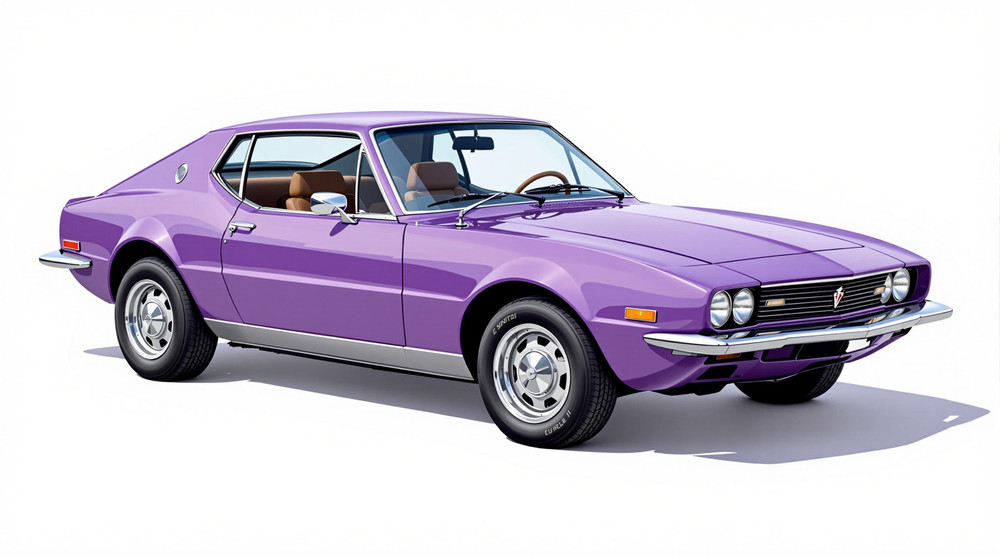
Image of 1976 Avanti Ii, Note: These illustrations use artistic license and may differ from actual historical models.
Performance Metrics
Fundamental Metrics
Emotional Appeal
MMP Rating
| Engine Specifications | |
|---|---|
| Engine: | Chevrolet 350 cu in (5.7 L) V8 |
| Displacement: | 350 cu in (5.7 L) |
| Horsepower: | 180-200 hp |
| Torque: | 275-290 lb-ft |
| Compression Ratio: | 8.5:1 |
| Ignition System: | Electronic Ignition |
| Cooling System: | Liquid-cooled |
| Performance Specifications | |
| 0-60 Time: | 10 seconds |
| 1/4 Mile Time: | 17 seconds |
| Top Speed: | 120 mph |
| Transmission and Drive | |
| Drive Type: | Rear-wheel drive |
| Transmission Type: | 3-speed automatic |
| Fuel and Efficiency | |
| Fuel System Type: | Carburetor |
| MPG: | 15-18 mpg |
| Dimensions and Brakes | |
| Brakes: | Disc brakes |
| Wheelbase: | 109 in |
| Weight: | 3,400 lbs |
Note: Specifications for classic cars are given to the best of our ability, considering the limited and variant data available.
1976 Avanti II: A Studebaker Legend Reborn
The 1976 Avanti II was a rare American luxury coupe with an unusual backstory: it kept the name and shape of Studebaker’s dramatic Avanti alive after Studebaker stopped building cars. The original Avanti was designed for Studebaker by a team led by industrial designer Raymond Loewy. When the automaker ended production in 1963, South Bend Studebaker dealers Nate Altman and Leo Newman acquired the Avanti rights and restarted production under the name Avanti Motor Corporation. Their successor car, the Avanti II, paired the familiar fiberglass body with a Chevrolet V8 and hand-finished, made-to-order construction.
By 1976, the Avanti II was a distinctive alternative to mass-produced luxury coupes from Cadillac, Lincoln, and Buick. It was not a new design, but that was part of its appeal: its sleek, early-1960s lines stood apart in a decade increasingly defined by larger bumpers and heavier styling. One intriguing detail is that the car’s production continued in South Bend, Indiana, the same city where Studebaker had built the original Avanti.
Fiberglass Style and Handcrafted Comfort
The Avanti II’s silhouette remained its strongest calling card. A long hood, low roof, tapered fastback tail, and sculpted fenders gave the coupe a look that was both futuristic and unmistakably American. Its smooth nose had no conventional grille, while the distinctive hood contours and deeply curved side glass added character. The body was made of fiberglass, a material that resisted ordinary steel-body rust and allowed the designers to create flowing shapes without conventional stamped-metal panels.
Inside, the Avanti II aimed for personal-luxury comfort rather than stripped-down sports-car simplicity. Buyers could expect carpeting, a center console, full instrumentation, and richly upholstered seating, often in leather. Wood trim and other comfort details helped distinguish it from a standard production coupe. Air conditioning, power accessories, cruise control, and upgraded upholstery were among the kinds of features buyers could specify, though equipment could vary from car to car because Avantis were built in low numbers and commonly ordered to individual preferences.
The 1976 Avanti II was offered as a two-door coupe. Convertibles came later in the Avanti’s history, so they are not a regular 1976 body style. Color choices were similarly personal rather than tied to a large, uniform mass-market production run. Surviving examples appear in shades such as white, silver, blue, green, burgundy, and black, with upholstery combinations often selected to suit the first owner. White and silver are familiar choices among surviving cars, but there is no dependable production ranking that establishes one color as the clear favorite.
What Made the Avanti II Different
The Avanti II’s significance lies in its survival as much as in its engineering. When Studebaker withdrew from automobile production, Altman and Newman found a way to continue building the car in small numbers. That made the Avanti II an early example of an independent specialty automaker carrying on a discontinued model, long before niche manufacturers and continuation cars became familiar parts of the collector world.
The 1976 car also preserved design features associated with the original Avanti, including its fiberglass body and Studebaker-derived chassis architecture. The original 1963 Avanti had been notable for features such as standard front disc brakes and its safety-conscious design. Those innovations belong to the original Avanti story, rather than being new developments introduced by the 1976 model. The Avanti II’s own distinction was its combination of an iconic body, American V8 power, and small-scale craftsmanship.
That formula set it apart from contemporary luxury coupes. A buyer did not get the broad dealer network or uniform production quality of a Big Three model. Instead, the Avanti offered rarity, an unmistakable shape, and a closer connection to the people who built it. Its lasting influence is less about a particular technology than about the appeal of keeping an admired design alive through specialist manufacturing.
Chevrolet V8 Performance and Road Manners
For 1976, the Avanti II used a Chevrolet 400-cubic-inch V8, generally quoted at about 180 horsepower, paired with a three-speed Turbo-Hydramatic automatic transmission. Exact figures can vary by source and by the condition or specification of an individual car. The engine was chosen for dependable, readily available American V8 power, not for high-revving sports-car character.
Period performance figures are not as consistent as they are for high-volume models. A reasonable estimate for a well-running 1976 Avanti II is a 0-to-60-mph time in roughly the nine-to-ten-second range, with a top speed around 115 to 120 mph. Those are estimates, not guaranteed factory test results. The car’s weight, gearing, tune, and condition all make a difference.
On the road, the Avanti II feels like a personal luxury coupe with a muscular engine, rather than a lightweight sports car. The V8 delivers a relaxed, low-pitched rumble, and the automatic transmission suits easy highway cruising. Its long hood and substantial body give the driver a sense of occasion, while power assistance on many examples makes everyday steering less demanding. The suspension can absorb ordinary road imperfections comfortably, though worn components, old tires, or poorly repaired fiberglass can affect the ride and feel.
On winding roads, the Avanti can be enjoyable at a measured pace, but its size and weight are apparent. It is not as nimble as a contemporary sports coupe, and quick direction changes are not its natural territory. In crosswinds, its long, low profile and touring-car character make it more suited to steady progress than aggressive cornering. A sound example should feel composed, but a pre-purchase inspection is essential because age and decades of repairs can matter more than the original specification.
Living With a 1976 Avanti II
Most owners use an Avanti II for weekend drives, touring, club events, and shows. Some can serve as occasional-use drivers, especially when maintained carefully, but their rarity and unique body parts make them less convenient than a regular 1970s Chevrolet or Buick. They are not typically chosen for racing, and their value is better enjoyed on the road or at a show than exposed to track use.
The Chevrolet engine and automatic transmission are practical advantages. Many mechanical service items are familiar to American-car shops, and replacement parts for the basic powertrain are generally easier to source than parts for the Avanti-specific body and trim. The fiberglass body will not rust like steel, but it can crack, suffer impact damage, or show poor repairs. The steel frame, suspension, brakes, wiring, interior fittings, and body alignment deserve close inspection.
For an average owner, routine maintenance is manageable if the car is complete and in good condition. Specialized fiberglass work, hard-to-find trim, and restoration of unique details can become expensive. Before buying, check for frame corrosion, evidence of collision repairs, uneven panel gaps, electrical faults, worn suspension, and signs that the car has been stored for long periods. A specialist familiar with Avantis can help identify issues that a general inspection might miss.
Avanti II Facts and Common Criticisms
The most famous speed achievement associated with the Avanti belongs to the original Studebaker Avanti, not the 1976 Avanti II. In 1963, specially prepared Avantis set speed records at the Bonneville Salt Flats, helping give the model a performance reputation that outlived Studebaker’s automobile business. The 1976 Avanti II carried forward the name and styling, but it was a luxury touring coupe rather than a record-setting machine.
One of the car’s enduring curiosities is that it combined a body design from the early 1960s with a Chevrolet V8 and continued low-volume assembly years after the original manufacturer had left the market. That mix is also the source of some common criticism. The design was already more than a decade old in 1976, the car was expensive for its performance, and hand-built production could result in differences in finish and fit. Its specialty-maker status also meant a smaller service network and fewer dedicated replacement parts than owners of mainstream luxury cars enjoyed.
1976 Avanti II Values and Rarity
Exact production figures for individual Avanti II model years can be difficult to pin down, and published counts vary. A reasonable working estimate for 1976 is roughly 150 to 200 cars, making it a rare sight rather than a high-volume classic. That estimate should be treated as a best guess, not a definitive factory total. Cars do appear on the market, but buyers may need patience to find one with the right condition, history, and specification.
As a broad 2026 market estimate, a driver-quality 1976 Avanti II may sell for about $15,000 to $25,000. A clean, well-maintained example can fall in the $25,000 to $40,000 range, while an exceptional, highly original, or comprehensively restored car may reach approximately $40,000 to $60,000 or more. These are general ranges, not appraisals. Condition, documentation, originality, restoration quality, and local demand can move the price substantially.
Avanti II values tend to be niche and condition-sensitive. The model has a devoted following, but its market is smaller than that for more familiar American classics, so a high asking price does not always translate into a quick sale. Well-presented examples with documented history are likely to attract the strongest interest. Buyers should also compare the cost of restoration with the value of a finished car, since specialty body and trim work can quickly outweigh the initial purchase price.
A Rare American Luxury Coupe With a Long Afterlife
The 1976 Avanti II brought together a memorable Raymond Loewy-era design, a Chevrolet V8, and the unusual story of a car revived by the dealers who believed it deserved to live on. Its fiberglass body, tailored interior, and low-volume construction made it unlike the mainstream luxury coupes of its time. It was not the newest or quickest choice in 1976, but it offered something less common: a direct link between Studebaker’s boldest design and the independent-car tradition that followed.
For collectors, the Avanti II is a distinctive piece of American automotive history. For drivers, it is a relaxed, charismatic cruiser that rewards careful ownership. Its significance is written not only in its dramatic shape, but in the fact that the Avanti story continued long after Studebaker’s final cars left the factory.
1976 Avanti Ii Catalog of Parts
 1976 Avanti II Front and Rear Bumper Arm Grommets-BG 67Front and Rear Bumper Arm Grommets. 2-3/4" wide X 5-3/8" long, with 1-3/4" long inner slot. Pair
Why Choose Metro?
For over 100 years, Metro Moulded Parts has been the pinnacle of quality in classic car restoration parts. Our commitment to precision and authenticity in every component ensures a perfect fit and an OEM-level appearance.
- Expert Craftsmanship & Quality: Each part is a testament to our dedication to reliability and perfection, crafted from original designs and thoroughly tested.
- Advanced Technology: We use cutting-edge techniques to create flawless, long-lasting parts that surpass others in performance.
- SuperSoft Sponge – The Ultimate Door Seal: Not only are our door seals 30% softer than competitors', but they're also guaranteed to never leak. They effectively reduce wind and road noise, enhancing your classic car's comfort and driving experience.
- Proudly American: Our parts are a product of American craftsmanship, made in the USA with a spirit of excellence and heritage.
- Unrivaled Warranty: We back our products with a 30-year industry-leading warranty, a testament to our confidence in their quality.
Join us in preserving the legacy of classic cars with parts that are crafted for perfection, not just made.