
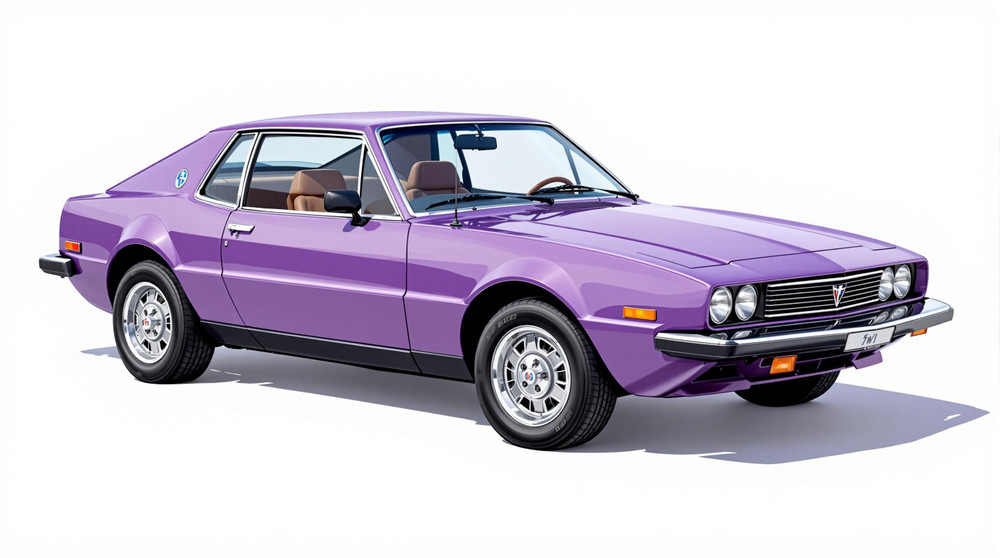
Image of 1982 Avanti Ii, Note: These illustrations use artistic license and may differ from actual historical models.
Performance Metrics
Fundamental Metrics
Emotional Appeal
MMP Rating
| Engine Specifications | |
|---|---|
| Engine: | GM 305 V8 |
| Displacement: | 5.0L (305 cu in) |
| Horsepower: | 145-155 hp |
| Torque: | 240-245 lb-ft |
| Compression Ratio: | 8.6:1 |
| Ignition System: | Electronic Ignition |
| Cooling System: | Liquid-cooled |
| Performance Specifications | |
| 0-60 Time: | 10 seconds |
| 1/4 Mile Time: | 17 seconds |
| Top Speed: | 120 mph |
| Transmission and Drive | |
| Drive Type: | RWD (Rear Wheel Drive) |
| Transmission Type: | 3-speed automatic |
| Fuel and Efficiency | |
| Fuel System Type: | Carburetor |
| MPG: | 15-20 mpg |
| Dimensions and Brakes | |
| Brakes: | Disc Brakes |
| Wheelbase: | 109 inches |
| Weight: | 3,400 lbs |
Note: Specifications for classic cars are given to the best of our ability, considering the limited and variant data available.
1982 Avanti II: A Hand-Built American Original
The 1982 Avanti II was a rare kind of American luxury coupe: a distinctive fiberglass-bodied car with a design rooted in the early 1960s and a Chevrolet V8 beneath its long hood. It was built by Avanti Motor Corporation in South Bend, Indiana, where a small team continued the Avanti story long after Studebaker had left the automobile business.
The car began with a bold design by industrial designer Raymond Loewy and his team. Studebaker introduced the original Avanti in 1962, but the company ended automobile production in 1963. South Bend businessmen Nate Altman and Leo Newman acquired the Avanti rights, tooling, and remaining parts, then launched the Avanti II in 1965. The 1982 model was part of that remarkable independent-car revival: a hand-assembled continuation of a design most major manufacturers would have replaced years earlier.
One detail that captures the Avanti’s unusual history is that its successor kept the original car’s distinctive shape while changing the mechanical recipe. By 1982, the Avanti II used a Chevrolet small-block V8 rather than a Studebaker engine. The result was a car with an unmistakably old-school profile and familiar, serviceable American powertrain components.
Avanti II Design: Fiberglass, Fastback, and Fine Trim
The Avanti II’s styling still looked daring in 1982. Its long, low nose flowed into a sleek fastback roof, with a sharply tapered tail and a near-absence of conventional grillework. The body’s rounded surfaces and pronounced wheel arches gave it a sculpted, almost aircraft-inspired appearance. Chrome trim was restrained compared with many luxury cars of the era, allowing the dramatic body shape to do most of the talking.
Fiberglass construction helped preserve the original Avanti formula. It avoided the rust problems common to steel bodies, though fiberglass cars still require careful inspection for cracks, stress damage, old repairs, and paint issues. The Avanti’s shape was not simply a vintage styling exercise, either. Its designers had paid close attention to aerodynamics, and the smooth nose and sloping rear gave the car a purposeful, wind-cheating look.
Inside, the Avanti II aimed for a personal-luxury feel rather than a stripped-down sports-car cabin. Buyers could expect a broad, comfortable front seating area, a full instrument panel, carpeting, and generous use of leather or vinyl upholstery, depending on the car’s specification. Many examples were ordered with leather, air conditioning, power windows, power steering, power brakes, and other comfort features. Because production was low-volume and cars could be tailored to individual buyers, materials, trim, and equipment can vary from one 1982 Avanti II to another.
Color choice was similarly personal. Avanti buyers could select from a range of solid and metallic exterior colors, with coordinated interior trim. White, silver, red, and darker luxury shades suit the car particularly well, but there was no single color that defined the model. Original paint and upholstery combinations are worth checking against the car’s records, especially when assessing an example for restoration or collector value.
The coupe was the Avanti II’s signature body style. Limited convertibles were also associated with the early-1980s Avanti range, but production and availability were far more restricted than for the coupe. Anyone considering a convertible should verify its factory status and documentation, since conversions and later modifications can complicate the story of a specific car.
Why the Avanti II Matters
The Avanti II’s significance lies partly in what it refused to do. It did not chase annual styling changes or try to compete with mass-produced luxury coupes on volume. Instead, it carried forward a memorable design through years of corporate upheaval, using hand assembly and a small-production approach. That makes it an important example of the American specialty-car tradition.
The original Avanti had already made a mark in automotive history. In 1963, specially prepared Avantis set speed records at the Bonneville Salt Flats, helping establish the model’s performance credentials. Those record-setting cars were not standard 1982 Avanti IIs, but the achievement remained part of the nameplate’s identity.
Compared with a contemporary Cadillac Eldorado or Lincoln Mark VI, the Avanti II was far less common and more individual. Its fiberglass body, dramatic fastback profile, and low-volume construction made it stand apart in a market dominated by large, mass-produced luxury cars. Its continuing influence is most evident in its status as a design icon and in the lasting appeal of its unconventional, grille-free front end.
The tradeoff was that the Avanti relied on an aging basic concept. By 1982, its design and underlying architecture felt less modern than those of newer luxury coupes. That did not erase its appeal, but it made the Avanti II a distinctive alternative rather than a technological benchmark.
1982 Avanti II Performance and Road Manners
Most 1982 Avanti IIs are associated with a Chevrolet 305-cubic-inch V8 paired with an automatic transmission, though equipment and specifications can vary. Exact factory figures are not consistently documented across surviving cars. A reasonable estimate for a sound, largely stock example is roughly 9 to 11 seconds from 0 to 60 mph, with a top speed in the neighborhood of 110 to 120 mph. Treat those figures as estimates rather than guaranteed test results, since tune, gearing, engine specification, and vehicle condition all make a difference.
The V8 delivers the kind of relaxed, low-speed torque suited to a personal luxury coupe. It is not a modern high-revving performance engine, and the 1982 car’s emphasis was comfort rather than outright acceleration. From the driver’s seat, the experience is more about a steady V8 rumble, an easy automatic shift, and the sense of traveling in something unusual than about chasing lap times.
The Avanti’s ride is generally best appreciated on open roads and sweeping routes. Its substantial size and comfort-oriented setup help soften ordinary pavement imperfections, though a worn suspension can make bumps feel sharper and reduce confidence. On winding roads, the long hood and coupe proportions give the driver a strong sense of the car’s size. Steering and handling are more grand-touring than sports-car sharp, and tire condition, alignment, and suspension upkeep make a noticeable difference.
At highway speed, the Avanti II feels composed when properly maintained, with the V8 turning the journey into an easy cruise. It is less suited to modern stop-and-go traffic if the cooling system, fuel system, or air conditioning needs attention. A well-sorted example can be a comfortable touring car, but age and low production mean condition matters more than the model’s reputation alone.
Living With a Hand-Built Avanti
Owners typically use the 1982 Avanti II for weekend drives, touring, club events, and car shows. Its rarity makes it an appealing conversation piece, but it can also be driven regularly if the mechanical systems are in good order. It is not generally chosen as a race car, and its value is better preserved through careful road use and sympathetic maintenance.
The Chevrolet V8 and automatic transmission are among the car’s practical advantages. Many routine engine and transmission parts are easier to source than they would be for a unique, low-volume powertrain. Brakes, suspension pieces, electrical components, and trim can require more research, however. The fiberglass body avoids steel-body rust, but specialist knowledge may be needed for structural repairs, paintwork, and matching older body panels.
Before buying, inspect the chassis and suspension, cooling system, brakes, electrical equipment, and the quality of any fiberglass repairs. Check whether the air conditioning and power accessories work, and look closely for water leaks or poorly fitted trim. Documentation is especially helpful because equipment and construction details can differ between cars. A specialist familiar with Avantis can often spot issues that a general pre-purchase inspection might miss.
Avanti II Facts and Common Complaints
The Avanti story includes one of the more unusual survival acts in American carmaking: a design created for a major manufacturer continued in production under independent ownership after that manufacturer exited the business. The Avanti’s connection to the 1963 Bonneville speed records is another memorable chapter, though those records belong to specially prepared earlier cars, not the 1982 model.
Common criticisms include the Avanti II’s high original price, uneven build quality between individual hand-built cars, and its increasingly dated platform. Some owners also find that sourcing unique trim and body-related parts takes patience. On the positive side, the Chevrolet V8 gives the car a familiar mechanical foundation, and the distinctive design is difficult to mistake for anything else on the road.
1982 Avanti II Values and Rarity
Production figures for individual Avanti II model years are not always presented consistently, and the small company did not build cars in mass-market numbers. A reasonable estimate for 1982 is roughly 50 to 100 cars, with about 75 a useful working estimate rather than a confirmed total. That places the model in genuinely low-volume territory, although it is not so rare that examples never appear for sale.
As a broad current-market guide, a 1982 Avanti II in driver condition might sell for about $15,000 to $30,000. A clean, well-maintained example could bring roughly $30,000 to $45,000, while an exceptionally preserved or carefully restored car may reach around $45,000 to $60,000 or more. These are estimates, not fixed price brackets. Provenance, originality, mechanical condition, documentation, and the quality of fiberglass and paint repairs can shift a car’s value substantially.
Values have generally been steady to modestly stronger for desirable, well-kept examples, rather than following the steep appreciation seen in some famous muscle cars. The Avanti II’s limited audience and specialist maintenance needs tend to restrain prices, while its distinctive design and rarity support continued collector interest. Buyers should prioritize condition and completeness over a low asking price.
A Distinctive Chapter in American Motoring
The 1982 Avanti II combined a landmark design, hand-built character, fiberglass bodywork, and familiar Chevrolet V8 power in a package few other cars could match. It was not the newest or quickest luxury coupe of its era, but it offered something more individual: a direct link to Studebaker’s most adventurous design and to the small manufacturers who kept the Avanti alive.
For collectors and drivers alike, the Avanti II is a reminder that automotive history is not made only by high-volume winners. Sometimes it is made by a beautifully unusual car that simply refuses to disappear.
1982 Avanti Ii Catalog of Parts
 1982 Avanti II Front and Rear Bumper Arm Grommets-BG 67Front and Rear Bumper Arm Grommets. 2-3/4" wide X 5-3/8" long, with 1-3/4" long inner slot. Pair
Why Choose Metro?
For over 100 years, Metro Moulded Parts has been the pinnacle of quality in classic car restoration parts. Our commitment to precision and authenticity in every component ensures a perfect fit and an OEM-level appearance.
- Expert Craftsmanship & Quality: Each part is a testament to our dedication to reliability and perfection, crafted from original designs and thoroughly tested.
- Advanced Technology: We use cutting-edge techniques to create flawless, long-lasting parts that surpass others in performance.
- SuperSoft Sponge – The Ultimate Door Seal: Not only are our door seals 30% softer than competitors', but they're also guaranteed to never leak. They effectively reduce wind and road noise, enhancing your classic car's comfort and driving experience.
- Proudly American: Our parts are a product of American craftsmanship, made in the USA with a spirit of excellence and heritage.
- Unrivaled Warranty: We back our products with a 30-year industry-leading warranty, a testament to our confidence in their quality.
Join us in preserving the legacy of classic cars with parts that are crafted for perfection, not just made.