
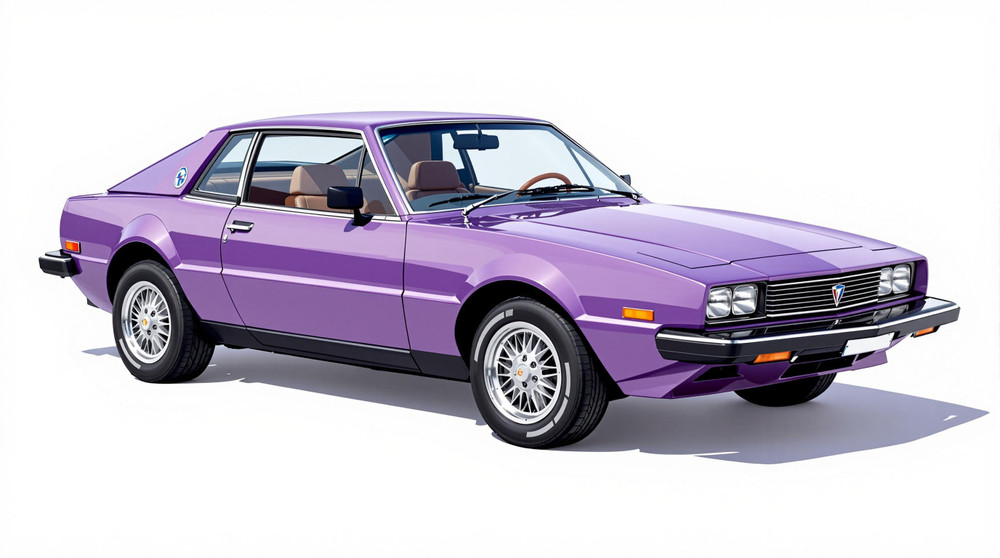
Image of 1983 Avanti Ii, Note: These illustrations use artistic license and may differ from actual historical models.
Performance Metrics
Fundamental Metrics
Emotional Appeal
MMP Rating
| Engine Specifications | |
|---|---|
| Engine: | GM 305 V8 |
| Displacement: | 5.0L (305 cu in) |
| Horsepower: | 145-170 hp |
| Torque: | 240-250 lb-ft |
| Compression Ratio: | 9.5:1 |
| Ignition System: | Electronic Ignition |
| Cooling System: | Liquid-cooled |
| Performance Specifications | |
| 0-60 Time: | 10 seconds |
| 1/4 Mile Time: | 17 seconds |
| Top Speed: | 120 mph |
| Transmission and Drive | |
| Drive Type: | RWD (Rear Wheel Drive) |
| Transmission Type: | 3-speed automatic |
| Fuel and Efficiency | |
| Fuel System Type: | Carburetor |
| MPG: | 15-20 mpg |
| Dimensions and Brakes | |
| Brakes: | Disc brakes |
| Wheelbase: | 109 inches |
| Weight: | 3,400 lbs |
Note: Specifications for classic cars are given to the best of our ability, considering the limited and variant data available.
1983 Avanti II: A Studebaker Legacy with a New Heart
The 1983 Avanti II is a rare American grand-touring coupe with an unusual pedigree: it carried forward a dramatic Studebaker design after Studebaker itself had left the car business. Built by Avanti Motors in South Bend, Indiana, the Avanti II paired a fiberglass body inspired by the original Avanti with a Chevrolet V8, giving buyers a hand-finished alternative to mass-produced luxury cars.
The story began with the original Studebaker Avanti, introduced in 1962 and styled by Raymond Loewy’s design team. When Studebaker ended production in 1963, former Studebaker dealers Nate Altman and Leo Newman acquired the rights, tooling, and remaining parts. They revived the car as the Avanti II in 1965. By 1983, the model had become a small-volume specialty car, assembled with considerable attention to individual customer preferences.
One of the Avanti’s most intriguing claims to fame dates to its Studebaker years: the original Avanti set multiple American speed records at Bonneville, including a production-car record run above 170 mph. The 1983 Avanti II was not a record-setting machine, but it inherited the name and the bold styling of a car born with a genuine need for speed.
Loewy’s Shape, Hand-Finished
The Avanti II’s body remained its most arresting feature. Its long hood, short rear deck, low nose, and fastback roofline made it look more like a European grand tourer than a conventional American luxury coupe. The fiberglass construction allowed the sculpted forms to be produced without the expense of large steel body dies. Signature details included the distinctive grilleless front end, deeply inset headlamps, and the pronounced front fenders that flowed into the doors.
Inside, the Avanti II offered a more personal, handcrafted feel than a typical production car. Buyers could specify leather upholstery, carpeting, trim, and other cabin details, so equipment and finish varied from car to car. The cabin was designed for comfortable long-distance touring, with supportive seats, a full instrument panel, and more room for passengers and luggage than the low roofline might suggest. Materials and fit could be appealingly luxurious, though hand-built cars were not always as uniform as high-volume rivals.
Power equipment and convenience features varied by build, but power steering, power brakes, air conditioning, automatic transmission, and upgraded audio equipment were among the kinds of amenities customers could find or request. The car’s technology was not cutting-edge by 1983 standards. Its appeal lay instead in its V8 power, distinctive body, and bespoke character.
Avanti buyers could order a range of paint and interior combinations rather than choose from a tightly controlled mass-market palette. Solid colors, metallic finishes, and custom combinations were available, with white, silver, red, and darker metallic shades particularly suited to the car’s sculpted body. Because many cars were ordered to individual taste, no single color combination defines the 1983 model.
The two-door coupe was the signature Avanti II body style and the one most closely associated with the Loewy design. A four-door sedan had also joined the Avanti family by this period, offering the same distinctive styling in a more practical package. The sedan is much less common, while the coupe remains the model’s most recognizable form.
A Design That Outlived Its Maker
The Avanti II’s importance is not that it transformed the industry with new mass-production technology. Its achievement was more unusual: it kept a striking design alive through changing corporate fortunes and a major shift in the American car market. When safety rules, emissions requirements, and rising costs made low-volume manufacturing increasingly difficult, Avanti Motors continued to build a small number of cars for customers who wanted something outside the showroom mainstream.
That independence set the Avanti II apart from contemporaries such as the Cadillac Eldorado and personal-luxury coupes from Ford and Chrysler. Those cars were larger-scale products, backed by extensive dealer networks and substantial development budgets. The Avanti was a hand-built specialty car with a fiberglass body and Chevrolet mechanical components. Using familiar GM hardware made servicing more practical, while the unusual body and low production volume gave the car an identity no factory luxury coupe could easily duplicate.
The Avanti’s broader influence is visible in the enduring appeal of small manufacturers that combine familiar powertrains with distinctive, limited-production bodies. It also remains a notable example of how a design can survive the company that created it. The 1983 model was among the final Avanti IIs built during the original South Bend era, before ownership and production arrangements changed.
Chevrolet V8 Touring Performance
Exact specifications can differ between individual cars, so a build sheet or original paperwork is the best guide to a particular example. Many 1983 Avanti IIs are reported with a Chevrolet small-block V8, commonly a 305-cubic-inch engine, paired with an automatic transmission and rear-wheel drive. Equipment and powertrain details could vary according to the car’s order and production sequence, so buyers should verify the engine and transmission rather than assume every 1983 car is identical.
With a small-block V8 and an automatic, the Avanti II delivered relaxed, traditional American performance rather than sports-car acceleration. A reasonable period-style estimate for a typical example is roughly 9 to 11 seconds from 0 to 60 mph, with top speed in the neighborhood of 110 to 120 mph. Actual results depend on the engine, gearing, vehicle condition, and the accuracy of available specifications. The car’s strongest suit was comfortable highway pace, not outright speed.
On the road, the V8 provides a familiar low-frequency burble, and the automatic transmission suits the Avanti’s grand-touring character. The long hood gives the driver a clear sense of the car’s presence, while the low seating position and sweeping bodywork make ordinary journeys feel a little more special. Steering and ride behavior depend on the specific chassis and suspension setup, but a well-maintained car is best enjoyed at a steady touring pace.
Like many cars of its era, it can feel less composed over sharp bumps than a modern luxury coupe. On winding roads, its size and weight favor smooth, deliberate inputs over aggressive cornering. Strong crosswinds can also remind the driver that this is a large, low-bodied car rather than a lightweight sports coupe. Its reward is a distinctive combination of V8 sound, individual styling, and comfortable cruising.
Living with an Avanti II
Today, most 1983 Avanti IIs are used as weekend drivers, touring cars, or show vehicles. A carefully maintained example can be driven regularly, but its low production volume and specialized body make it a less carefree daily choice than a common Chevrolet or Ford. The GM-sourced engine and transmission are a practical advantage: many routine mechanical parts are easier to identify and service than the Avanti-specific components.
Maintenance is still a matter of inspecting the whole car, not just the engine. Buyers should check the fiberglass body for cracks or previous repairs, examine the chassis and suspension for corrosion or wear, and test electrical systems, air conditioning, power accessories, and weather seals. Fiberglass does not rust like steel, but repairing damaged panels or achieving a high-quality paint match can be time-consuming and expensive. The hand-built nature of the car also means that parts, trim, and fittings may not be perfectly interchangeable between examples.
For a mechanically capable owner, routine V8 service is manageable. Specialist knowledge is more valuable when dealing with the body, interior trim, and model-specific details. Before purchasing, look for maintenance records, confirm the drivetrain, and consult an Avanti specialist or owners’ group if originality or restoration quality matters.
Rare Production, Individual Cars
The 1983 Avanti II is a low-volume car, and production figures for individual years are not always reported consistently. A reasonable estimate is that only several dozen to around a hundred examples were built for 1983, with the exact total depending on how production and model-year records are counted. Across the Avanti II’s long run from 1965 through 1983, estimates generally place production in the low thousands, often around 3,000 cars.
The Avanti II is also notable for how personal its specifications could be. Two cars from the same year may differ in paint, upholstery, equipment, and detail choices. That variation adds character, but it means that “correct” equipment can be harder to assess than on a high-volume model. Records and documentation are especially helpful when evaluating originality.
There is no widely recognized 1983 Avanti II speed, sales, or endurance record. The major record story belongs to the original Studebaker Avanti at Bonneville, not the later Avanti II. The 1983 car’s distinction is its rarity and its place near the end of the original South Bend production era.
Common criticisms include the model’s limited parts supply for body and trim components, inconsistent build quality, modest performance by modern standards, and the challenge of valuing a highly individual car. Some buyers may also find its styling polarizing. Those drawbacks are balanced by the car’s rarity, striking design, and use of familiar Chevrolet mechanicals.
1983 Avanti II Values and Collectibility
As a broad present-day guide, a 1983 Avanti II in fair, usable condition might sell for roughly $15,000 to $25,000. A well-kept, documented example could bring about $25,000 to $40,000, while an exceptional restoration or especially desirable, well-equipped car may exceed that range. A project car can be worth considerably less, particularly if it needs fiberglass, paint, interior, or chassis work. These are estimates, not guaranteed sale prices; condition, provenance, location, and buyer interest make a substantial difference.
Values have generally been steady to selective rather than consistently climbing. The Avanti has a devoted following, but its limited audience and the cost of specialized repairs can restrain prices. Strong examples with good documentation are likely to attract the most interest, while neglected cars may be expensive to bring back to standard. The coupe is the more familiar choice, while a four-door can appeal to collectors seeking a rarer variation.
Availability is limited but not impossible. A few cars may appear through specialist dealers, online auctions, or marque-owner networks in a given year. Because production was small, buyers should be prepared to wait for the right combination of condition, documentation, and price rather than expect a large selection.
A Hand-Built American Original
The 1983 Avanti II combines the dramatic silhouette of Raymond Loewy’s Avanti with the practical appeal of Chevrolet V8 power and the individuality of hand-built production. It is not the quickest or easiest classic to own, and its specialist bodywork deserves careful inspection. But few cars tell such an unusual story of a design surviving its original manufacturer.
For collectors and drivers who value character over conformity, the Avanti II remains a striking reminder that a great automotive design can keep moving long after the company that created it has disappeared.
1983 Avanti Ii Catalog of Parts
 1983 Avanti II Front and Rear Bumper Arm Grommets-BG 67Front and Rear Bumper Arm Grommets. 2-3/4" wide X 5-3/8" long, with 1-3/4" long inner slot. Pair
Why Choose Metro?
For over 100 years, Metro Moulded Parts has been the pinnacle of quality in classic car restoration parts. Our commitment to precision and authenticity in every component ensures a perfect fit and an OEM-level appearance.
- Expert Craftsmanship & Quality: Each part is a testament to our dedication to reliability and perfection, crafted from original designs and thoroughly tested.
- Advanced Technology: We use cutting-edge techniques to create flawless, long-lasting parts that surpass others in performance.
- SuperSoft Sponge – The Ultimate Door Seal: Not only are our door seals 30% softer than competitors', but they're also guaranteed to never leak. They effectively reduce wind and road noise, enhancing your classic car's comfort and driving experience.
- Proudly American: Our parts are a product of American craftsmanship, made in the USA with a spirit of excellence and heritage.
- Unrivaled Warranty: We back our products with a 30-year industry-leading warranty, a testament to our confidence in their quality.
Join us in preserving the legacy of classic cars with parts that are crafted for perfection, not just made.