
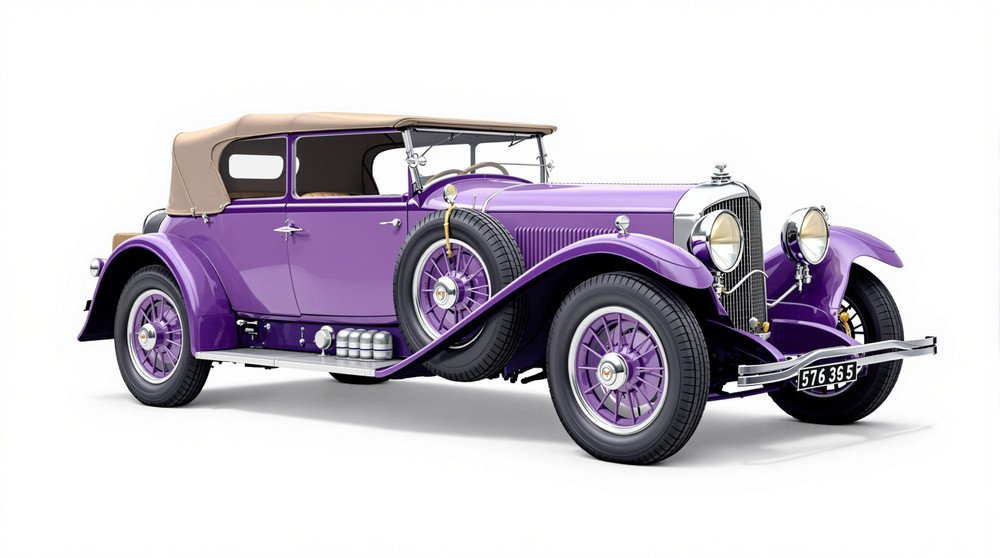
Image of 1926 Bentley 6.5 Litre, Note: These illustrations use artistic license and may differ from actual historical models.
Performance Metrics
Fundamental Metrics
Emotional Appeal
MMP Rating
| Engine Specifications | |
|---|---|
| Engine: | 6.5 L Bentley 6½ Litre I6 |
| Displacement: | 6.5 L (6600 cc/400 cu in) |
| Horsepower: | 147-180 hp |
| Torque: | Not available |
| Compression Ratio: | Not available |
| Ignition System: | Magneto ignition |
| Cooling System: | Water-cooled |
| Performance Specifications | |
| 0-60 Time: | Not available |
| 1/4 Mile Time: | Not available |
| Top Speed: | 80-100 mph |
| Transmission and Drive | |
| Drive Type: | Rear-wheel drive |
| Transmission Type: | 4-speed manual |
| Fuel and Efficiency | |
| Fuel System Type: | Twin SU carburetors |
| MPG: | Not available |
| Dimensions and Brakes | |
| Brakes: | Drum brakes |
| Wheelbase: | 132 in (3353 mm) |
| Weight: | 3,700 lbs |
Note: Specifications for classic cars are given to the best of our ability, considering the limited and variant data available.
1926 Bentley 6.5 Litre: The Silent Sports Car
The 1926 Bentley 6.5 Litre paired the presence of a grand touring car with the mechanical ambition of a racing machine. Built by Bentley Motors in Cricklewood, north London, it arrived during the height of the Bentley Boys era, when speed, endurance and sporting glamour were becoming central to the marque’s identity.
The 6.5 Litre was introduced in 1926 as a larger, more powerful companion to Bentley’s 3 Litre. Its 6,597cc straight-six engine gave it effortless pace for long journeys, while its substantial chassis could carry a range of bodies commissioned from independent coachbuilders. One important distinction: the famous Le Mans-winning Speed Six was a more highly developed version of the 6.5 Litre, not simply the standard model with a different name.
Bentley’s reputation was being forged on the racetrack. The company had won the 24 Hours of Le Mans in 1924 and would take further victories in 1927, 1928, 1929 and 1930. The 6.5 Litre belongs to that same energetic period, when Bentley’s road cars reflected the marque’s racing interests and its customers’ taste for fast, imposing machinery.
Long Bonnet, Coachbuilt Character
There was no single, fixed 1926 Bentley 6.5 Litre body shape. Bentley supplied the rolling chassis, and a specialist coachbuilder created the finished car to the owner’s requirements. That arrangement means two surviving 6.5 Litres can look dramatically different even when their mechanical foundations are closely related.
The chassis’s long wheelbase and large engine invited elegant, stretched proportions. Depending on its body, a 6.5 Litre might wear sweeping wings, a tall radiator, prominent headlamps and a spare wheel mounted along the side or at the rear. Open tourers and four-seat bodies emphasized its sporting character; formal saloons and limousines gave it a more luxurious, chauffeur-friendly presence. The most visually iconic examples are often open tourers, whose exposed cockpit and long bonnet make the car’s performance intent immediately clear.
Paint and trim were also shaped by individual orders and the coachbuilder rather than by a simple factory color chart. Owners could select restrained dark shades, deep greens, blues and burgundies, along with contrasting coachlines or upholstery. British racing green has enduring appeal today, but it was not a universal factory specification. The cabin might feature quality leather, polished wood, deep carpets and carefully finished metal fittings, with the exact materials and layout reflecting the commission.
Engineering Beneath the Bonnet
The 6.5 Litre’s defining feature was its large, overhead-camshaft straight-six. The engine used four valves per cylinder, an advanced arrangement for a road car of the 1920s, and delivered power smoothly across a broad range of engine speeds. Its exact output varied with specification and period measurement, but roughly 147 horsepower is commonly quoted for the standard 6.5 Litre. The later Speed Six received more extensive performance development and should not be confused with that figure.
A four-speed manual gearbox put the driver in direct control of the engine, while four-wheel brakes with a mechanical servo system helped bring the large car to a halt. The servo assistance was a notable practical advantage for a heavy vehicle with serious performance potential. Even so, this remained a machine that demanded attention: there were no modern conveniences such as power steering, electronic driver aids or synchronized, effortless controls across every gear change.
Because the car was coachbuilt, there was no single standard interior, body weight or color combination. That variety is part of the model’s appeal, but it also means an individual car’s specification and condition matter more than a generic brochure description.
A Road Car with Racing Ambitions
The 6.5 Litre helped establish a template for the high-performance British grand tourer: a powerful engine, a substantial chassis, long-distance capability and coachwork tailored to the buyer. Its technical sophistication, particularly the four-valve-per-cylinder engine, set it apart from many contemporaries that relied on simpler side-valve designs or less ambitious engine layouts.
Its influence is closely tied to Bentley’s competition program. The Speed Six, developed from the 6.5 Litre, won Le Mans in 1929 and 1930. Those results reinforced Bentley’s image as a maker of cars capable of covering great distances at speed, not merely looking imposing outside a country house. The standard 6.5 Litre was not itself the Le Mans-winning Speed Six, but it shared the family’s engineering philosophy and helped make that racing development possible.
The model also illustrates the strengths and limitations of the coachbuilt era. Buyers enjoyed a remarkable degree of personalization, while the finished vehicle could be heavy, expensive and very different from another car carrying the same Bentley name. That bespoke approach remains a major part of the model’s historical and collector appeal.
Speed, Steering and the Driving Experience
A standard 6.5 Litre could reach roughly 90 mph, though top speed depended on its gearing, body style, condition and final weight. There is no single dependable factory 0-to-60 mph figure for every version. As a broad modern estimate, a well-maintained car might take around 18 to 25 seconds, with a heavier saloon likely slower than a lighter open body. These numbers should be treated as indicative rather than as standardized test results.
On the road, the big six-cylinder engine is best understood as a source of sustained, relaxed force rather than a modern, high-revving rush. The car’s long wheelbase can help it feel composed on open roads, while its weight and period suspension reward a measured approach over rough surfaces. Bumps are felt through the chassis, and narrow, winding roads call for planning: the driver must manage the car’s mass, steering effort, braking distance and broad turning circle.
The experience is tactile and involving. The engine’s sound is a deep mechanical murmur that grows more pronounced under load, accompanied by the movement of the gearbox and the rhythm of the chassis over the road. Steering and controls require more physical input than a modern car, and the driver has to anticipate rather than rely on electronic assistance. In return, the 6.5 Litre offers a sense of connection that is increasingly rare: the driver is actively managing a powerful, substantial machine.
Owning and Maintaining a Vintage Bentley
Today, a 1926 Bentley 6.5 Litre is best suited to touring, concours events, historic motoring gatherings and carefully chosen road use. It is not a sensible everyday driver for most owners. Its age, size, value and maintenance needs make regular modern traffic a demanding environment, even for a car that has been restored and properly prepared.
Maintenance is specialist work. The engine, brakes, gearbox and chassis all need knowledgeable inspection, and replacement parts or repairs may require traditional engineering skills. A mechanically experienced owner can handle some routine work, but the average owner should not expect modern-car ease or inexpensive servicing. Condition, documented restoration and the availability of specialists are key considerations before purchase.
Reliability depends heavily on the individual car. A correctly restored example, maintained by a workshop familiar with vintage Bentleys, can be used for planned touring. A neglected or poorly repaired car may require substantial recommissioning. Before buying, a prospective owner should arrange an inspection by a marque specialist and review the chassis history, engine work, coachwork and parts provenance.
Blue Train Lore and Bentley Trivia
The 6.5 Litre family is often mentioned alongside one of the most famous stories in Bentley history: Woolf Barnato’s 1929 race against the Blue Train in France. Barnato made the celebrated run in a Speed Six, not an ordinary standard 6.5 Litre. The episode helped cement the image of the big Bentley as a transcontinental express, though later retellings have sometimes blurred the details of the car and the contest.
The standard 6.5 Litre was produced in relatively small numbers, and each coachbuilt example has its own identity. Bentley built approximately 362 6.5 Litre chassis between 1926 and 1930. The separately developed Speed Six added roughly 182 more, but those figures refer to distinct versions and should not be combined when describing the standard model alone.
A common criticism is that these cars can be physically demanding to drive and expensive to maintain. They are also too large and valuable to suit every road or owner. Yet those drawbacks are part of the honest character of a pre-war, high-performance Bentley: it is a major machine, not a vintage car made to imitate a modern one.
Collector Values and Availability
Values vary widely according to originality, restoration quality, coachwork, history and mechanical condition. As a broad 2026 market estimate, a standard Bentley 6.5 Litre might sell for approximately US$500,000 to US$1.5 million. Exceptional cars with celebrated provenance, rare coachwork or major concours history can exceed that range, while projects or cars needing extensive work may be worth considerably less.
Only around 362 standard 6.5 Litre chassis were built, and surviving examples are not commonly available. A buyer may wait a long time for a car with the right body, history and condition. Because each vehicle was coachbuilt, comparing asking prices requires more than checking the model name: two cars can differ substantially in authenticity, restoration quality and collector appeal.
Vintage Bentley values have generally benefited from the model’s rarity, racing associations and strong marque recognition, but prices can still move with the wider collector-car market. Well-documented, highly original or exceptionally restored examples tend to be the most resilient. Buyers should treat any value range as a guide, not a guarantee, and account for the considerable cost of specialist upkeep.
Why the 6.5 Litre Still Matters
The 1926 Bentley 6.5 Litre brought advanced engine design, serious road performance and bespoke coachwork together in one imposing package. Its long bonnet and individual bodywork make it an unmistakable product of the coachbuilt era, while its connection to the Speed Six and Bentley’s Le Mans successes gives it a place in the marque’s racing story.
More than a handsome pre-war collectible, the 6.5 Litre represents an ambitious idea of what a road car could be: powerful enough for sustained speed, refined enough for long-distance travel and distinctive enough to be built around its owner. Nearly a century later, it remains a Bentley with real presence, and one that asks its driver to earn every mile.
1926 Bentley 6.5 Litre Catalog of Parts
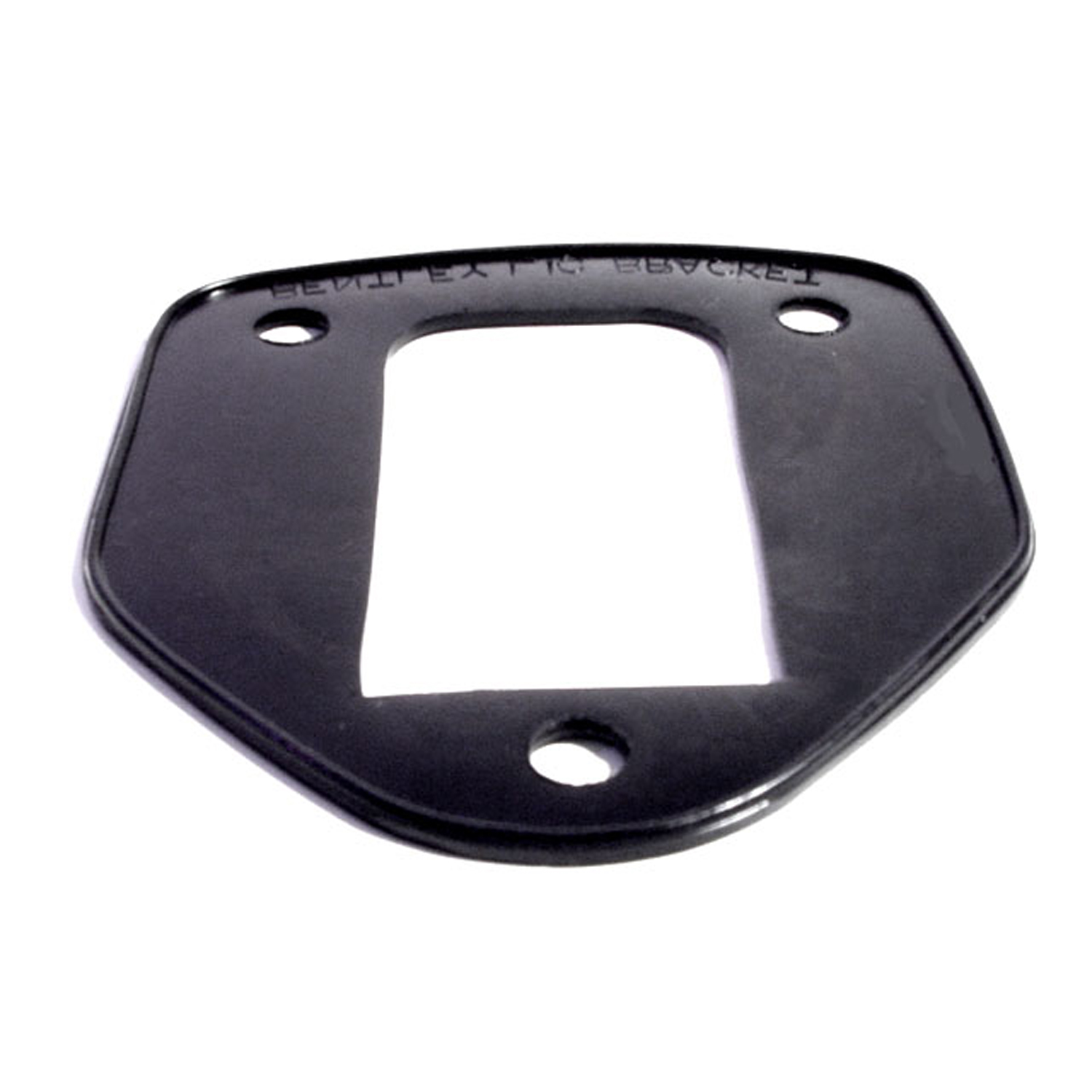 1926 Bentley 6.5 LITRE License Bracket Pad. 4-3/8" wide X 5" long. Each-MP 112-JLicense Bracket Pad. 4-3/8" wide X 5" long. Each
Why Choose Metro?
For over 100 years, Metro Moulded Parts has been the pinnacle of quality in classic car restoration parts. Our commitment to precision and authenticity in every component ensures a perfect fit and an OEM-level appearance.
- Expert Craftsmanship & Quality: Each part is a testament to our dedication to reliability and perfection, crafted from original designs and thoroughly tested.
- Advanced Technology: We use cutting-edge techniques to create flawless, long-lasting parts that surpass others in performance.
- SuperSoft Sponge – The Ultimate Door Seal: Not only are our door seals 30% softer than competitors', but they're also guaranteed to never leak. They effectively reduce wind and road noise, enhancing your classic car's comfort and driving experience.
- Proudly American: Our parts are a product of American craftsmanship, made in the USA with a spirit of excellence and heritage.
- Unrivaled Warranty: We back our products with a 30-year industry-leading warranty, a testament to our confidence in their quality.
Join us in preserving the legacy of classic cars with parts that are crafted for perfection, not just made.