
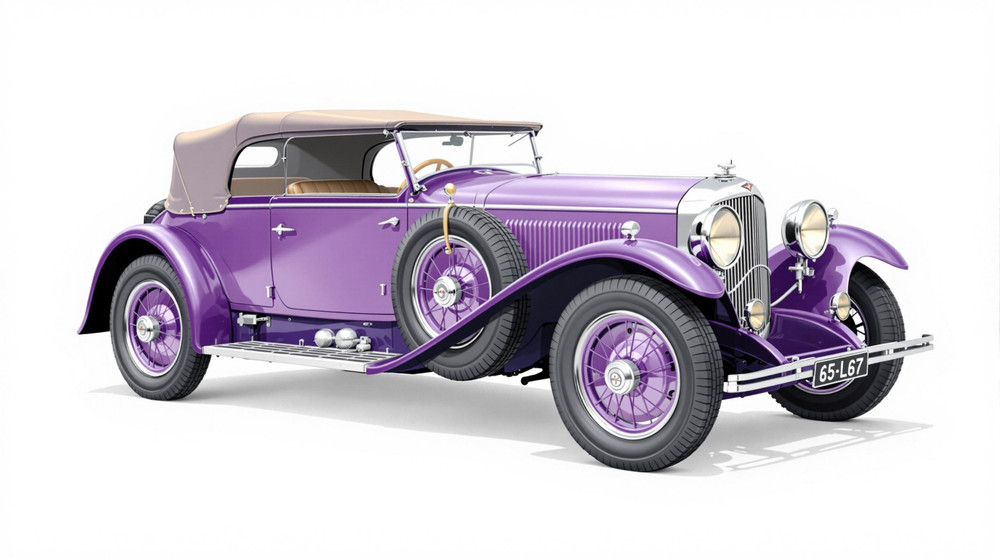
Image of 1927 Bentley 4 1/2-Litre, Note: These illustrations use artistic license and may differ from actual historical models.
Performance Metrics
Fundamental Metrics
Emotional Appeal
MMP Rating
| Engine Specifications | |
|---|---|
| Engine: | 4.4 L I4 |
| Displacement: | 4398 cc |
| Horsepower: | 110 hp |
| Torque: | Not available |
| Compression Ratio: | Not available |
| Ignition System: | Magneto ignition system |
| Cooling System: | Water-cooled |
| Performance Specifications | |
| 0-60 Time: | Not available |
| 1/4 Mile Time: | Not available |
| Top Speed: | 90 mph |
| Transmission and Drive | |
| Drive Type: | Rear-wheel drive |
| Transmission Type: | 4-speed manual |
| Fuel and Efficiency | |
| Fuel System Type: | Twin SU carburetors |
| MPG: | Not available |
| Dimensions and Brakes | |
| Brakes: | Drum brakes |
| Wheelbase: | 130 inches |
| Weight: | 3,300 lbs |
Note: Specifications for classic cars are given to the best of our ability, considering the limited and variant data available.
1927 Bentley 4½-Litre: A Sporting Bentley Takes Shape
The 1927 Bentley 4½-Litre was built for fast, demanding motoring, with a competition-bred engine and the presence of a hand-crafted British touring car. Made by Bentley Motors in Cricklewood, London, it arrived when long-distance racing was helping define the character of the young marque. One of its greatest achievements came just a year later: a 4½-Litre Bentley won the 1928 24 Hours of Le Mans, proving the model could turn speed into stamina.
Designed under company founder W. O. Bentley, the 4½-Litre was part of Bentley’s pre-war generation of large, powerful cars. It was not a single standardized body style in the modern sense. Bentley supplied the chassis and running gear, while specialist coachbuilders shaped each car to its buyer’s specifications. That means two 1927 examples can look and feel quite different, even though they share the same essential mechanical package.
Coachbuilt Style and Sporting Detail
The 4½-Litre has the classic proportions of a substantial 1920s sports car: a long bonnet, upright radiator, sweeping front wings, exposed headlamps, and a tall windscreen. Its chassis looks purposeful rather than delicate, and the big wheels and narrow tires give it a distinctive, upright stance. On an open tourer, the folded hood and exposed cockpit make the car feel ready for a fast run, while a saloon or limousine body gives the same chassis a more formal presence.
Bodywork was commissioned from coachbuilders such as Vanden Plas, H. J. Mulliner, and others. Open four-seat tourers were especially well suited to the car’s sporting character, and Vanden Plas-style bodies are among the most recognizable. Buyers could also choose coupés, saloons, drophead coupés, and other bespoke designs. There was no universal factory paint palette: customers selected colors through the coachbuilder. Dark green, black, blue, and maroon are all associated with period Bentleys, but individual specifications varied. British racing green is an enduring favorite today, though it should not be mistaken for the only original choice.
Inside, the finish depended on the body and buyer, but quality materials were central to the appeal. Expect leather upholstery, polished wood trim on many bodies, a clear instrument panel, and substantial metal fittings. It is a driver-focused cabin by modern standards, with little insulation and few comforts, but the craftsmanship gives it a warm, bespoke character. Each car was more like a tailored suit than a mass-produced product.
Four-Valve Engineering Before Its Time
At the heart of the 4½-Litre is a 4,398 cc inline-four with an overhead camshaft and four valves per cylinder. That arrangement was advanced for a road car of the period and helped the engine breathe efficiently at speed. Output is generally quoted at about 100 horsepower, though exact figures and performance depended on specification, condition, gearing, and bodywork.
The car also had four-wheel mechanical brakes, a valuable feature in an era when many cars still relied on less effective braking arrangements. Its manual transmission and substantial chassis were built for serious driving rather than effortless cruising. These were not electronic innovations, of course, but they show how Bentley combined competition experience with robust road-car engineering.
Racing Pedigree and Lasting Influence
The 4½-Litre helped establish the Bentley image as a maker of powerful, durable sporting cars. Its Le Mans victory in 1928, driven by Woolf Barnato and Bernard Rubin, was a particularly important achievement. The endurance race rewarded more than outright speed: a car had to keep running over a full day of hard use. The win strengthened Bentley’s reputation for combining performance with toughness.
The model’s significance also comes from its place in the Bentley story. It helped define the marque’s large-engine, long-distance sporting identity during the years of the “Bentley Boys,” the wealthy and adventurous drivers who became closely associated with the company. Later Bentleys and many British grand tourers would carry forward the same broad idea: a substantial, luxurious car that could cover distance at speed.
One useful distinction for enthusiasts is the difference between the standard 4½-Litre and the supercharged “Blower” Bentley. The Blower arrived later, in 1929, and was a much more dramatic, specialized version. It became famous through racing and popular culture, but it did not win Le Mans. The 1928 Le Mans victory belonged to a normally aspirated 4½-Litre, not a Blower.
Performance on the Open Road
A healthy 4½-Litre can reach roughly 85 to 90 mph, with the exact top speed influenced by its body, axle ratio, and mechanical condition. A 0-to-60 mph time in the region of 13 to 16 seconds is a reasonable modern estimate, but period cars did not always publish acceleration figures in today’s standardized way. Treat those numbers as indicative rather than as a guarantee for every surviving example.
Behind the wheel, the engine’s character matters as much as the numbers. The four-cylinder produces a deep, purposeful mechanical note, accompanied by the sounds of intake, exhaust, and moving machinery. The clutch and gearbox require deliberate operation, and the steering is heavy at low speeds compared with a modern car. At a steady pace, the engine’s torque and the car’s long-legged feel make open-road driving its natural habitat.
On winding roads, the Bentley rewards anticipation and smooth inputs. It is a large, heavy machine with a traditional chassis, not a nimble modern sports car. Leaf springs and period tires make rough surfaces very noticeable, although the substantial construction helps it feel composed when driven sympathetically. Mechanical brakes demand more planning and effort than modern power-assisted systems, especially in wet conditions. A crosswind can be felt through the body and steering, particularly with an open touring body.
Living with a 1920s Bentley
Today, most 4½-Litres are used for touring, rallies, concours events, and historic motoring gatherings rather than daily transport. They can cover long distances, but regular use calls for a knowledgeable owner and a maintenance routine suited to a pre-war performance car. Lubrication, ignition, cooling, brakes, and drivetrain wear all deserve careful attention. A well-maintained example can be dependable for its age, but neglect and improvised repairs can quickly become expensive.
Many mechanical jobs are accessible to an experienced vintage-car mechanic, and the car’s straightforward systems are less electronically complex than those of a modern vehicle. That does not make it an easy project for the average home mechanic: parts can be costly, specialist knowledge matters, and the quality of previous restoration work makes a major difference. Owners should also confirm that any modifications, replacement components, or reconstructed coachwork are properly documented.
Rarity, Famous Variants, and Common Myths
Approximately 720 Bentley 4½-Litres were built between 1927 and 1931, including around 55 supercharged Blower cars. The standard, normally aspirated cars make up the larger share, but they remain rare by any ordinary measure. The exact specification of a 1927 car depends on its chassis history and coachwork, so buyers should research the individual example rather than rely on the model name alone.
The Blower has attracted special attention through its association with racing driver Sir Henry “Tim” Birkin and through its appearances in popular fiction. It is often confused with the standard 4½-Litre, and the two should not be treated as interchangeable when discussing performance, rarity, or value. Another common mix-up is the celebrated “Blue Train” Bentley, which was a Speed Six, not a 4½-Litre.
One criticism of the 4½-Litre is that its fame can overshadow the realities of ownership. It is heavy, physically demanding to drive, and less comfortable than its grand appearance might suggest. It also needs attentive upkeep. Those traits are part of its appeal for some enthusiasts, but they are worth understanding before buying.
Collector Values and Market Outlook
As a broad estimate, a standard 4½-Litre with sound provenance and good-quality restoration might sell for roughly US$1 million to US$2.5 million. Exceptional cars with desirable coachwork, outstanding originality, or important history can exceed that range. Blower Bentleys occupy a much higher tier, with values often several million dollars and particularly significant examples reaching into the many millions. Condition, authenticity, documented history, and the quality of restoration can move prices substantially.
The market is small, and suitable examples do not appear regularly. Values for important pre-war Bentleys have generally remained strong over the long term, though auction results can vary with economic conditions and the quality of each car. The best examples tend to be the ones with clear provenance and carefully preserved or documented histories. For a prospective buyer, a thorough inspection by a marque specialist is essential.
A Bentley Built for the Long Run
The 1927 Bentley 4½-Litre brought advanced engine design, bespoke coachbuilt style, and genuine endurance-racing ability together in one memorable package. Its Le Mans success helped secure Bentley’s sporting reputation, while its long bonnet, four-valve engine, and hand-finished cabin have made it one of the defining British cars of its era. More than a valuable collector’s car, it remains a vivid reminder of a time when speed, craftsmanship, and mechanical courage shared the same road.
1927 Bentley 4 1/2-Litre Catalog of Parts
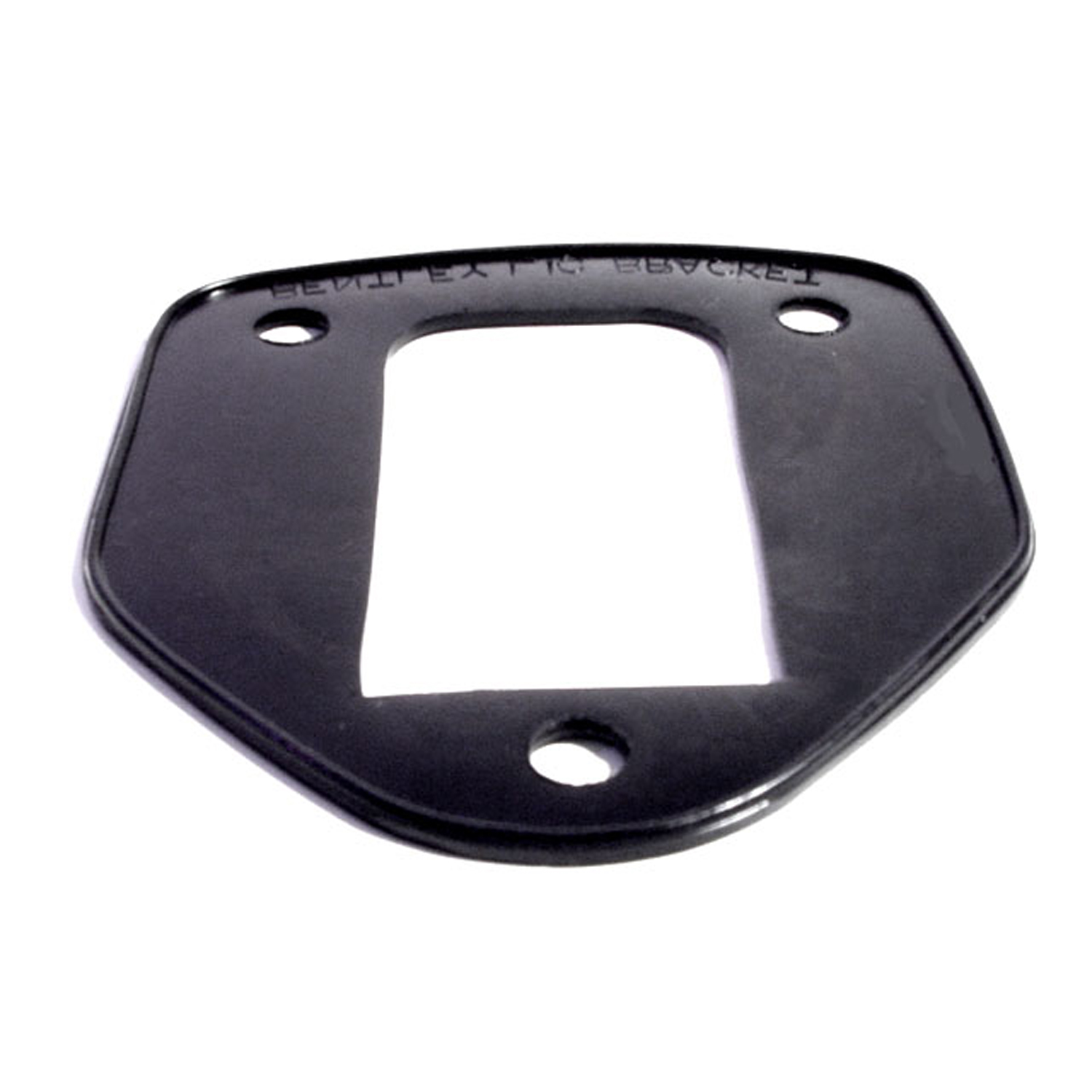 1927 Bentley 4 1/2-Litre License Bracket Pad. 4-3/8" wide X 5" long. Each-MP 112-JLicense Bracket Pad. 4-3/8" wide X 5" long. Each
Why Choose Metro?
For over 100 years, Metro Moulded Parts has been the pinnacle of quality in classic car restoration parts. Our commitment to precision and authenticity in every component ensures a perfect fit and an OEM-level appearance.
- Expert Craftsmanship & Quality: Each part is a testament to our dedication to reliability and perfection, crafted from original designs and thoroughly tested.
- Advanced Technology: We use cutting-edge techniques to create flawless, long-lasting parts that surpass others in performance.
- SuperSoft Sponge – The Ultimate Door Seal: Not only are our door seals 30% softer than competitors', but they're also guaranteed to never leak. They effectively reduce wind and road noise, enhancing your classic car's comfort and driving experience.
- Proudly American: Our parts are a product of American craftsmanship, made in the USA with a spirit of excellence and heritage.
- Unrivaled Warranty: We back our products with a 30-year industry-leading warranty, a testament to our confidence in their quality.
Join us in preserving the legacy of classic cars with parts that are crafted for perfection, not just made.