
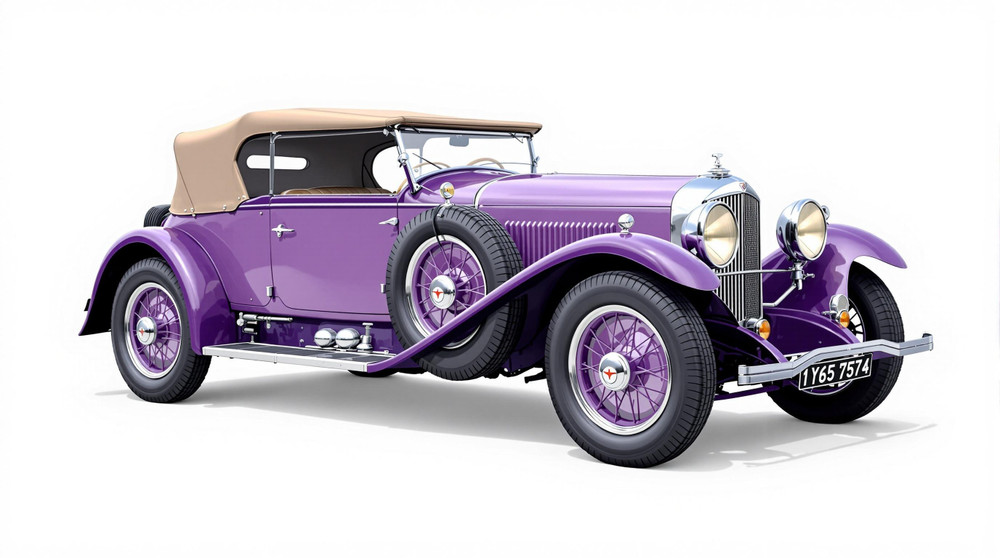
Image of 1927 Bentley 6.5 Litre, Note: These illustrations use artistic license and may differ from actual historical models.
Performance Metrics
Fundamental Metrics
Emotional Appeal
MMP Rating
| Engine Specifications | |
|---|---|
| Engine: | 6.5 LITRE Inline-6 |
| Displacement: | 6597 cc |
| Horsepower: | 147-180 HP |
| Torque: | Not available |
| Compression Ratio: | Not available |
| Ignition System: | Magneto ignition |
| Cooling System: | Water-cooled |
| Performance Specifications | |
| 0-60 Time: | Not available |
| 1/4 Mile Time: | Not available |
| Top Speed: | 90-100 mph |
| Transmission and Drive | |
| Drive Type: | Rear-wheel drive |
| Transmission Type: | 4-speed manual |
| Fuel and Efficiency | |
| Fuel System Type: | Twin SU carburetors |
| MPG: | Not available |
| Dimensions and Brakes | |
| Brakes: | Drum brakes |
| Wheelbase: | 130 inches |
| Weight: | 3,700 lbs |
Note: Specifications for classic cars are given to the best of our ability, considering the limited and variant data available.
1927 Bentley 6½ Litre: A Grand Bentley with Racing DNA
The 1927 Bentley 6½ Litre was built for owners who wanted a fast, imposing touring car without giving up the toughness that had made Bentley famous on the racetrack. Introduced by Bentley Motors in 1926, it paired a large, smooth-running six-cylinder engine with a separate chassis that could be dressed in coachwork to suit its buyer.
The car arrived during the Bentley Boys era, when wealthy drivers and sporting enthusiasts helped turn the marque into a symbol of speed and daring. Its engine measured 6,597 cc, and its generous capacity delivered strong, flexible power for long-distance motoring. One intriguing twist in its story is that the celebrated Speed Six, winner of the 24 Hours of Le Mans in 1929 and 1930, grew from the 6½ Litre platform. The standard 6½ was not itself the Le Mans-winning model, but it provided the foundation for one of Bentley’s great racing cars.
Coachbuilt Style and Bentley Craftsmanship
The 6½ Litre was sold as a rolling chassis rather than a complete, standardized car. Buyers chose a coachbuilder to create the body, so no two examples were necessarily alike. Long bonnets, upright radiators, sweeping wings, exposed headlamps and running boards gave the car a purposeful, unmistakably British profile. Depending on the body, it could look like a sporting machine ready for a country road or a formal motorcar suited to arriving at a grand hotel.
Inside, finish depended on the coachbuilder and the customer’s specification. High-quality leather, polished wood, substantial metal fittings and carefully tailored upholstery were typical. The cabin was generous by sporting-car standards, though the layout and comfort varied considerably between an open tourer, a closed saloon and a limousine. These were hand-built cars, not products with a single standard trim package.
Paint was similarly bespoke. Dark greens, deep blues, black, maroon and restrained two-tone combinations suited the car’s proportions and were popular period choices. British racing green has become an especially evocative look for a sporting Bentley, but buyers could select colors to match personal taste, family style or a coachbuilder’s design.
Body styles included open tourers, four-seat tourers, saloons, coupés and limousines. The open tourer is perhaps the most immediately recognizable sporting form, with its exposed cockpit and long bonnet, while formal closed bodies made the big Bentley a serious long-distance luxury car. Coachbuilders associated with Bentley chassis included firms such as H.J. Mulliner, Park Ward and Gurney Nutting.
Engineering Ahead of Its Time
At the heart of the 6½ Litre was an overhead-camshaft inline-six with four valves per cylinder, an advanced arrangement for a production car of the 1920s. Its 6,597 cc displacement supplied the low-speed torque needed to move a substantial car without constant gear changes. A four-speed manual gearbox sent power to the rear wheels, and four-wheel brakes helped rein in the car’s considerable mass.
The 6½ Litre also reflected a useful shift in Bentley’s character. The earlier 3 Litre had established the company’s sporting credentials, but the larger model brought more effortless performance and greater refinement for touring. Bentley’s approach remained firmly mechanical and driver-focused: robust engineering, a substantial chassis and components designed to tolerate hard use rather than delicate treatment.
That combination set the model apart from many luxury cars of its day. It was not simply a quiet, formal limousine, nor was it a stripped-down competition special. With the right body, it could cover long distances at speed, carry passengers in comfort and still feel connected to the sporting side of the Bentley name. Its most lasting influence was its role as the basis for the Speed Six, which carried Bentley’s endurance-racing reputation to a higher level.
Speed, Road Manners and the Driving Experience
Period performance figures vary with chassis specification, gearing, condition and, especially, body style. A well-prepared 6½ Litre could reach roughly 85 to 90 mph, with lighter sporting bodies generally having an advantage over heavy saloons and limousines. A modern estimate for 0 to 60 mph is around 13 to 16 seconds, but there was no single factory figure that applies to every coachbuilt example. These numbers should be treated as broad estimates, not precise test results.
On a smooth open road, the engine’s strength is its relaxed pull rather than a dramatic rush of power. The six-cylinder motor produces a deep mechanical note, and the car gathers speed with a steady, substantial feel. The four-speed gearbox asks the driver to work deliberately, while the large steering wheel and period controls make the experience physical in a way modern cars rarely are.
The long chassis can settle into a composed rhythm on sweeping roads, but the car is large and heavy. Narrow lanes, tight bends and uneven surfaces demand anticipation. Its leaf-spring suspension can absorb ordinary road imperfections, yet a big bump may send a noticeable movement through the chassis, particularly with a firm sporting body. Windy roads reward smooth inputs and careful braking rather than abrupt changes of direction. It is a fast vintage car, not a modern sports car in disguise.
Living with a Vintage Bentley
Today, a 1927 Bentley 6½ Litre is primarily a collector car, a show car and a machine for rallies or carefully planned touring events. It can still be driven, but using one as a routine daily driver would be impractical. Traffic, limited weather protection on open cars, period braking performance and the value of the vehicle all encourage selective use.
Maintenance calls for specialist knowledge and regular attention. Owners need to monitor lubrication, cooling, ignition, fuel delivery, brakes, tires and the condition of the chassis. Parts and expertise are available through the vintage Bentley community, but repairs are rarely as simple or inexpensive as they would be on a common postwar classic. An owner with strong mechanical skills may handle routine checks, but engine, gearbox and brake work is best entrusted to a shop familiar with prewar Bentleys.
Reliability depends heavily on upkeep and history. The design was made for demanding use, but age, previous repairs and decades of storage can matter more than the original engineering. A documented, properly maintained car is a very different ownership prospect from an attractive example with hidden mechanical needs.
Notable Stories and Common Criticisms
Approximately 362 Bentley 6½ Litre chassis were built, though surviving cars vary widely in bodywork, specification and originality. That production figure refers to the 6½ Litre model overall, not solely to 1927 cars. Each chassis could become a distinct coachbuilt car, and some have since been rebodied or altered, making provenance and chassis records especially important.
The most famous story connected to the model’s family is the Speed Six’s Le Mans success in 1929 and 1930. Another celebrated Bentley tale is Woolf Barnato’s 1930 race against the Blue Train across France. The car associated with that episode was a Speed Six, not an ordinary 6½ Litre, an important distinction often blurred in retellings.
Common criticisms are practical rather than romantic: the cars are large, thirsty, demanding to maintain and less comfortable or predictable than modern vehicles. Braking distances, steering effort and weather protection can be challenging by current standards. The open bodies in particular make the driver part of the forecast, not a protected observer of it.
Collector Values and Market Outlook
Values depend on far more than the model name. Originality, coachwork, restoration quality, documented history, matching components and mechanical condition can all move the price substantially. As a broad guide, a sound, correctly identified 6½ Litre might fall in the region of US$500,000 to US$1.5 million. Exceptional examples with desirable coachwork, strong provenance or important history can exceed US$2 million, while cars requiring major restoration may sell for less. These are indicative estimates, not a live appraisal, and individual auction results can vary sharply.
The 6½ Litre is scarce and does not appear on the open market often. Its limited production, bespoke bodies and connection to the Speed Six help support long-term collector interest. Over the long run, significant prewar Bentleys have generally held appeal, but prices are not guaranteed to rise steadily. Restoration costs, changing collector tastes and the condition of a particular car can all affect value. Buyers should commission a marque specialist to inspect the chassis, engine, bodywork and documentation before making a commitment.
Why the 1927 Bentley 6½ Litre Still Matters
The 1927 Bentley 6½ Litre brought together the essential ingredients of a great vintage grand tourer: a powerful and technically advanced engine, a rugged chassis, custom coachwork and a direct link to Bentley’s racing ambitions. It was refined enough for long journeys, strong enough for hard driving and adaptable enough to reflect the personality of its first owner.
Its greatest legacy may be the Speed Six it made possible, but the 6½ Litre deserves recognition in its own right. More than a handsome prewar classic, it captures the moment Bentley learned to make a large touring car feel every bit as purposeful as its racing reputation.
1927 Bentley 6.5 Litre Catalog of Parts
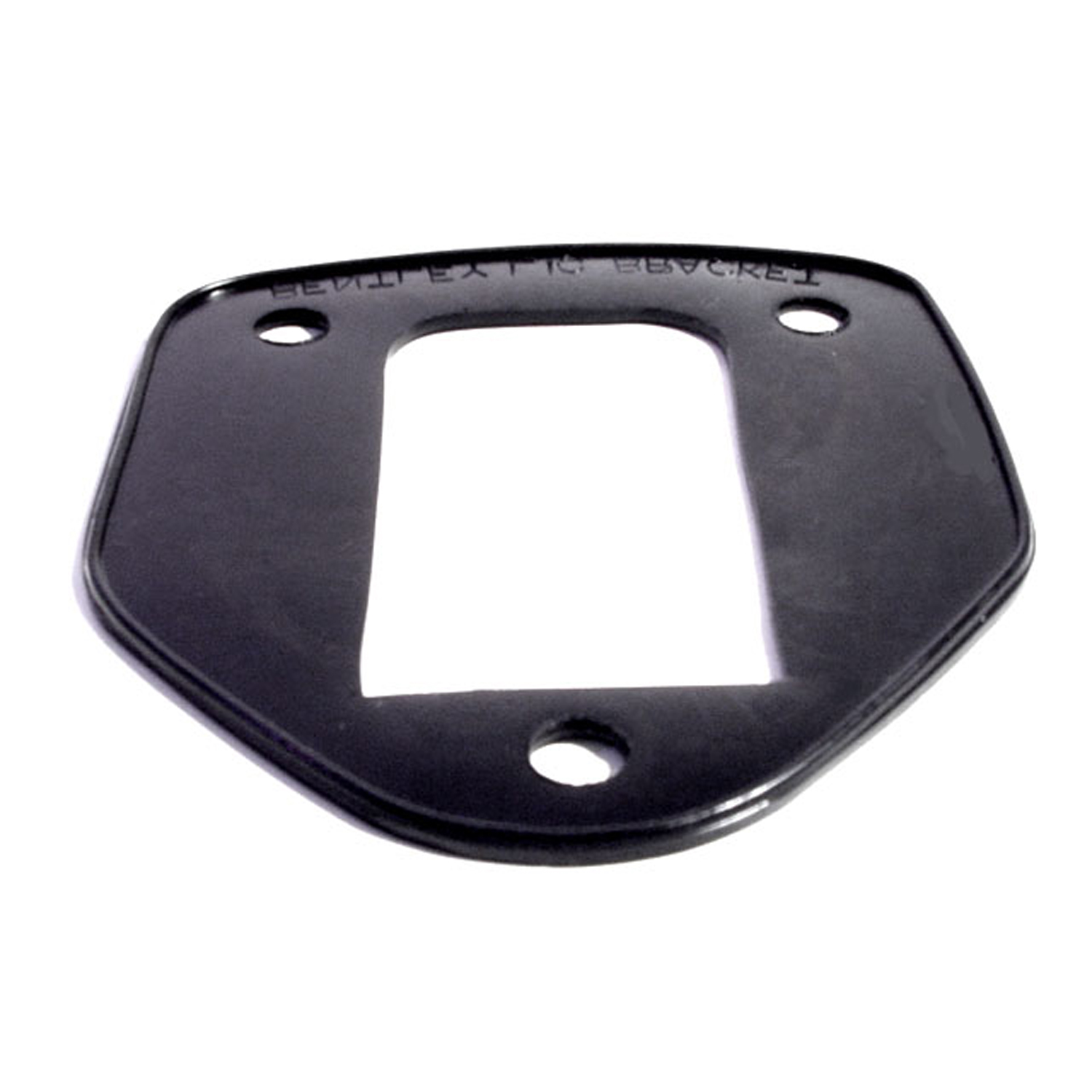 1927 Bentley 6.5 LITRE License Bracket Pad. 4-3/8" wide X 5" long. Each-MP 112-JLicense Bracket Pad. 4-3/8" wide X 5" long. Each
Why Choose Metro?
For over 100 years, Metro Moulded Parts has been the pinnacle of quality in classic car restoration parts. Our commitment to precision and authenticity in every component ensures a perfect fit and an OEM-level appearance.
- Expert Craftsmanship & Quality: Each part is a testament to our dedication to reliability and perfection, crafted from original designs and thoroughly tested.
- Advanced Technology: We use cutting-edge techniques to create flawless, long-lasting parts that surpass others in performance.
- SuperSoft Sponge – The Ultimate Door Seal: Not only are our door seals 30% softer than competitors', but they're also guaranteed to never leak. They effectively reduce wind and road noise, enhancing your classic car's comfort and driving experience.
- Proudly American: Our parts are a product of American craftsmanship, made in the USA with a spirit of excellence and heritage.
- Unrivaled Warranty: We back our products with a 30-year industry-leading warranty, a testament to our confidence in their quality.
Join us in preserving the legacy of classic cars with parts that are crafted for perfection, not just made.