
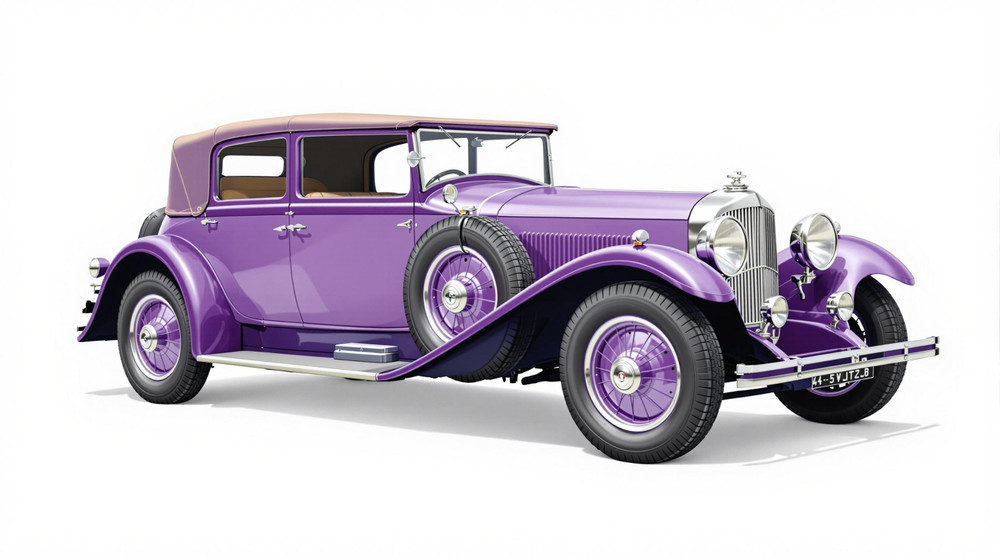
Image of 1928 Bentley 4 1/2-Litre, Note: These illustrations use artistic license and may differ from actual historical models.
Performance Metrics
Fundamental Metrics
Emotional Appeal
MMP Rating
| Engine Specifications | |
|---|---|
| Engine: | 4.4 L I4 |
| Displacement: | 4398 cc |
| Horsepower: | 110 hp |
| Torque: | Estimated at 200 lb-ft |
| Compression Ratio: | 5.3:1 |
| Ignition System: | Magneto ignition |
| Cooling System: | Water-cooled |
| Performance Specifications | |
| 0-60 Time: | Not available due to the age of the vehicle |
| 1/4 Mile Time: | Not available due to the age of the vehicle |
| Top Speed: | 90 mph |
| Transmission and Drive | |
| Drive Type: | Rear-wheel drive |
| Transmission Type: | 4-speed manual |
| Fuel and Efficiency | |
| Fuel System Type: | Twin SU carburetors |
| MPG: | Not available due to the age of the vehicle |
| Dimensions and Brakes | |
| Brakes: | Drum brakes |
| Wheelbase: | 130 inches |
| Weight: | 3,300 lbs |
Note: Specifications for classic cars are given to the best of our ability, considering the limited and variant data available.
1928 Bentley 4½-Litre: A Racing Legend for the Road
The 1928 Bentley 4½-Litre was built for drivers who wanted a fast, durable car that could take on the toughest roads and races of its era. Created by Bentley Motors under founder W. O. Bentley, it combined a powerful four-cylinder engine with a substantial chassis and coachbuilt bodywork. It became one of the defining cars of the Bentley Boys era, and in 1928 it helped Bentley claim victory at the 24 Hours of Le Mans.
The 4½-Litre arrived as Bentley was establishing its reputation for endurance racing. The company had been founded in 1919, and its early cars were engineered around W. O. Bentley’s belief that a powerful engine should also be dependable. The 1928 Le Mans win offered a memorable demonstration: Woolf Barnato and Bernard Rubin drove their Bentley 4½-Litre through a grueling 24 hours to take first place. That achievement gave the model a lasting connection to one of motorsport’s most demanding events.
Coachbuilt Style and Sporting Detail
A 1928 Bentley 4½-Litre was not a single, standardized-looking car. Bentley supplied the rolling chassis, and specialist coachbuilders shaped the body to suit the buyer. The result could be an open tourer with a long bonnet and sweeping fenders, a more enclosed saloon, or an elegant coupe. Of these, the sporting tourer is the image most closely associated with the model: upright radiator, prominent headlamps, exposed running boards, wire wheels, and a purposeful stance.
The cabin was practical but richly finished. Depending on the coachbuilder and specification, occupants might find leather upholstery, polished wood trim, carefully made instruments, and a broad dashboard. Open cars offered little protection from wind and weather by modern standards, but their simple, exposed layout was part of the appeal. Buyers could specify details such as seating, hood arrangements, luggage fittings, and paintwork, so no single color was universal. Dark green became a popular sporting choice and is often linked with British racing cars, while individual cars were also ordered in other colors to suit their owners.
Under the bodywork, the 4½-Litre featured a 4,398 cc inline-four with a single overhead camshaft and four valves per cylinder. Twin ignition helped the engine breathe and fire reliably, while a four-speed manual gearbox sent power to the rear wheels. Four-wheel brakes were an important feature for a high-performance car of the period. Some examples used a servo assistance system to reduce the effort needed at the pedal, although braking still requires more anticipation and skill than in a modern car.
Why the 4½-Litre Mattered
The Bentley 4½-Litre stood apart from many contemporaries through its combination of speed, sturdy construction, and endurance-racing credentials. Its engine design was advanced for a production car of the 1920s, and its substantial chassis was intended to cope with fast driving over rough roads rather than simply deliver comfort on smooth ones. The car was not the first to use overhead camshafts or multiple valves, but Bentley brought these features together in a durable, high-performance package.
Its influence was as much cultural as technical. The Bentley Boys, a group of wealthy, adventurous drivers and racers, made the marque a symbol of sporting confidence. The 4½-Litre helped cement the idea that a road car could be both a formidable competition machine and a prestigious possession. Its reputation also encouraged later enthusiasts to value mechanical toughness and endurance as much as outright speed.
The model is often discussed alongside the supercharged “Blower” Bentley. The Blower used a large Roots-type supercharger mounted ahead of the radiator, creating a striking and unmistakable appearance. It became famous through racing and popular culture, but it is distinct from the naturally aspirated 4½-Litre that won Le Mans in 1928. The two versions share the same model family, yet offer different mechanical character and collector appeal.
Performance and the Driving Experience
Performance varied with the engine’s condition, gearing, tyres, and the weight and shape of the coachwork. A sound, normally aspirated 4½-Litre could reach roughly 85 to 90 mph, with lighter sporting bodies generally better placed to approach the upper end. A 0-to-60-mph time of around 16 to 20 seconds is a reasonable period-style estimate, not a single factory figure that applies to every surviving car. The supercharged Blower could be faster, but its figures should not be confused with those of the standard model.
Behind the wheel, the Bentley feels substantial and mechanical. Steering can be heavy at low speeds, and the driver must work the gearbox rather than rely on effortless modern shifting. On a winding road, the car rewards anticipation: choose a gear early, carry momentum, and use the brakes with care. Its suspension can cope with uneven surfaces, but the ride is firm and lively compared with a modern luxury car. Open tourers also expose occupants to wind, road spray, and engine heat.
The engine’s voice is a major part of the experience. At low revs it has a deep, deliberate beat; as the car gathers speed, the four-cylinder engine takes on a sharper, more urgent note. There is no power steering, electronic assistance, or isolation from the road. The driver feels the controls, hears the machinery, and stays involved throughout the journey. That directness is precisely what many classic-car enthusiasts seek.
Living with a Vintage Bentley
Today, a 1928 4½-Litre is far more likely to appear at a concours, historic rally, or vintage race meeting than serve as everyday transport. It can still cover long distances when properly maintained, but age, value, and the availability of secure storage make routine commuting impractical for most owners.
Maintenance is specialist work. The engine, gearbox, brakes, and chassis need regular inspection, and careful lubrication is essential. Many repairs are mechanically understandable to an experienced vintage-car enthusiast, but parts, correct machining, and period expertise can be expensive. A prospective owner should look closely at the car’s restoration history, engine condition, chassis integrity, and whether the coachwork and components are correctly represented. “Simple” vintage engineering does not mean cheap or easy ownership.
Reliability depends heavily on upkeep and use. A well-sorted example can be a dependable touring car by vintage standards, but neglect can quickly turn small issues into major repairs. Owners also need to plan around limited weather protection, vintage tyres, modest lighting, and braking distances that demand a cautious driving style.
Racing Stories and Bentley Trivia
The most important chapter in the 4½-Litre’s story is its 1928 Le Mans victory. Barnato and Rubin’s win reinforced Bentley’s standing in endurance racing and added a landmark result to the company’s competition record. Bentley also won Le Mans in 1924 and from 1927 through 1930, though those victories involved different models across the years.
The supercharged Blower version is among the most recognizable pre-war Bentleys. Around 55 production Blowers were built, alongside special competition cars. One of the most famous was driven by Sir Henry “Tim” Birkin, a leading member of the Bentley Boys. The Blower did not win Le Mans, but its dramatic design and racing history made it an enduring icon in its own right.
There is no single “correct” body for a 4½-Litre, because coachbuilders produced many interpretations. That variety is part of the model’s charm, but it can also complicate restoration and valuation. A car with compelling competition history, original components, or exceptional coachwork may command a substantial premium. Common criticisms include heavy controls, high fuel consumption, limited weather protection, and the cost of keeping a century-old performance car in top condition.
Collector Values and Availability
Production figures are generally given as about 665 normally aspirated 4½-Litre cars, with roughly 55 production Blowers built separately. Exact totals can vary by how chassis and special competition examples are counted. Many cars have survived, but they are not commonly available, and a particular body style or documented racing history can be difficult to find.
As a broad 2026 guide, a standard 4½-Litre in good, usable condition might sell for approximately US$500,000 to US$1.2 million. A highly original, exceptionally restored, or historically significant example can exceed that range, sometimes by a wide margin. Blowers are in another price category: depending on authenticity, condition, and provenance, they may sell for several million dollars. These are estimates, not fixed price tags, and auction results can vary considerably.
Over the long term, the model has benefited from its racing record, limited production, and enduring name recognition. Values have generally been resilient and have tended to appreciate for top-quality, well-documented examples, although the market can soften and restoration costs are high. Provenance, originality, coachwork quality, and mechanical condition matter more than a simple model-year comparison.
A Bentley Built to Be Driven
The 1928 Bentley 4½-Litre brought together advanced-for-its-day engineering, bespoke coachbuilding, and the toughness required for endurance competition. Its Le Mans triumph secured its place in racing history, while its variety of bodies and highly involving driving character continue to attract collectors. It is demanding, costly, and very much a product of another age, but that is part of its appeal: the 4½-Litre is not merely a vintage Bentley to admire. It is a machine built to make every mile feel earned.
1928 Bentley 4 1/2-Litre Catalog of Parts
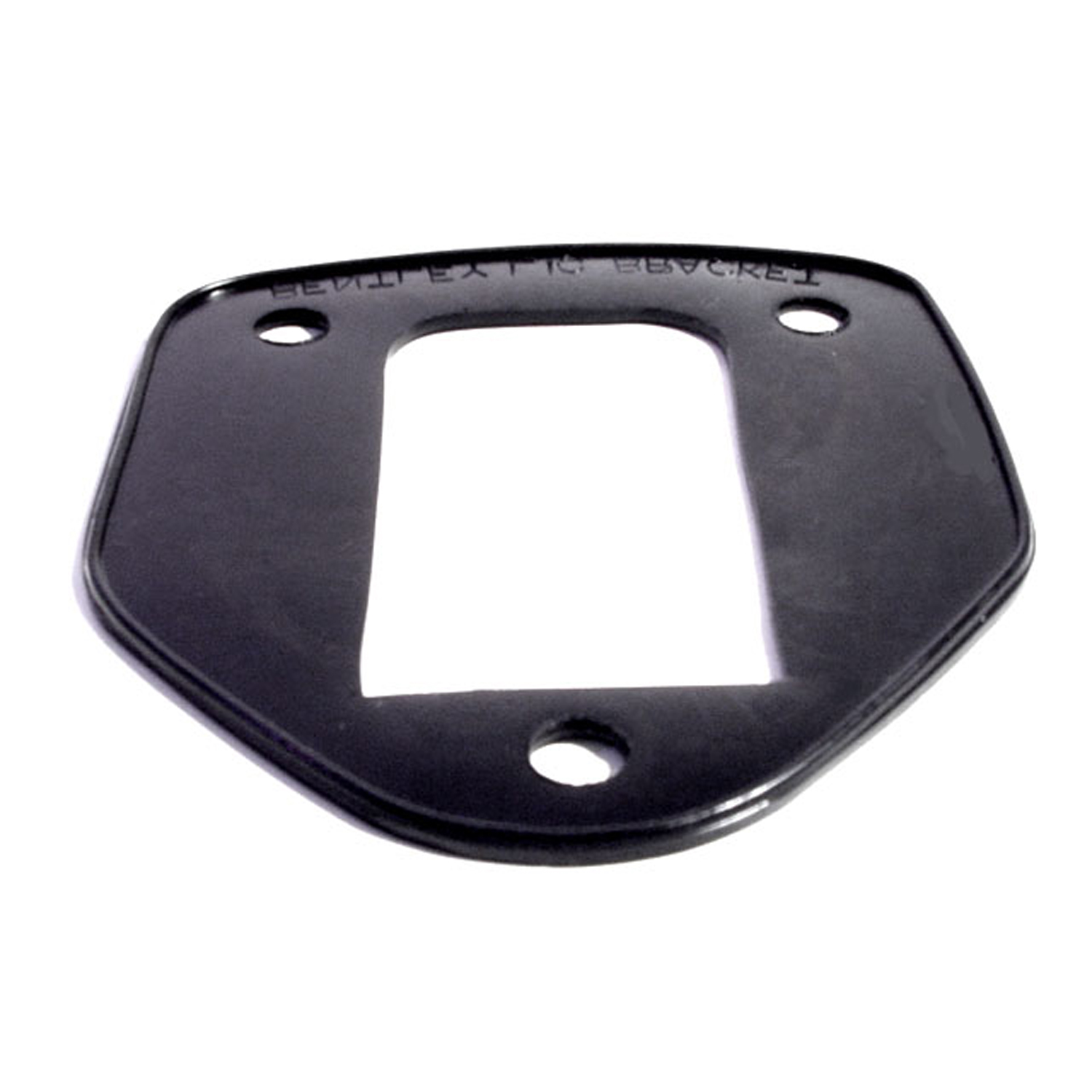 1928 Bentley 4 1/2-Litre License Bracket Pad. 4-3/8" wide X 5" long. Each-MP 112-JLicense Bracket Pad. 4-3/8" wide X 5" long. Each
Why Choose Metro?
For over 100 years, Metro Moulded Parts has been the pinnacle of quality in classic car restoration parts. Our commitment to precision and authenticity in every component ensures a perfect fit and an OEM-level appearance.
- Expert Craftsmanship & Quality: Each part is a testament to our dedication to reliability and perfection, crafted from original designs and thoroughly tested.
- Advanced Technology: We use cutting-edge techniques to create flawless, long-lasting parts that surpass others in performance.
- SuperSoft Sponge – The Ultimate Door Seal: Not only are our door seals 30% softer than competitors', but they're also guaranteed to never leak. They effectively reduce wind and road noise, enhancing your classic car's comfort and driving experience.
- Proudly American: Our parts are a product of American craftsmanship, made in the USA with a spirit of excellence and heritage.
- Unrivaled Warranty: We back our products with a 30-year industry-leading warranty, a testament to our confidence in their quality.
Join us in preserving the legacy of classic cars with parts that are crafted for perfection, not just made.