
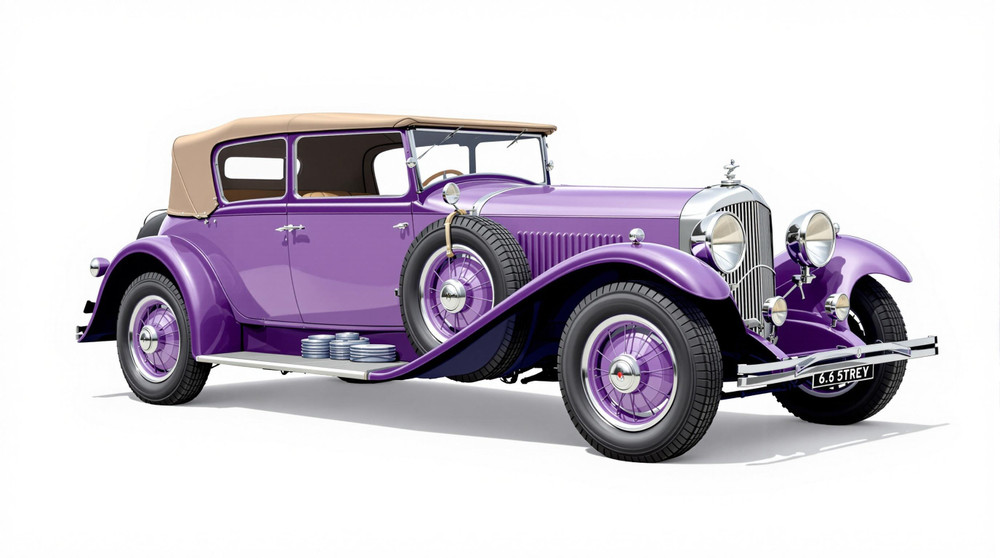
Image of 1928 Bentley 6.5 Litre, Note: These illustrations use artistic license and may differ from actual historical models.
Performance Metrics
Fundamental Metrics
Emotional Appeal
MMP Rating
| Engine Specifications | |
|---|---|
| Engine: | 6.5 LITRE Inline-6 |
| Displacement: | 6597 cc |
| Horsepower: | 180-200 HP |
| Torque: | Estimated 400-420 lb-ft |
| Compression Ratio: | 5.3:1 |
| Ignition System: | Magneto Ignition |
| Cooling System: | Water-cooled |
| Performance Specifications | |
| 0-60 Time: | Estimated 16 seconds |
| 1/4 Mile Time: | Not available |
| Top Speed: | 90-100 mph |
| Transmission and Drive | |
| Drive Type: | Rear-wheel drive |
| Transmission Type: | 4-speed manual |
| Fuel and Efficiency | |
| Fuel System Type: | Twin SU carburetors |
| MPG: | Not available |
| Dimensions and Brakes | |
| Brakes: | Drum brakes |
| Wheelbase: | 132 inches |
| Weight: | Estimated 5000 lbs |
Note: Specifications for classic cars are given to the best of our ability, considering the limited and variant data available.
1928 Bentley 6½ Litre: A British Grand Tourer with Racing Blood
The 1928 Bentley 6½ Litre was built for drivers who wanted immense power, long-distance comfort, and the presence of a hand-crafted British car. Created by Bentley Motors in Cricklewood, London, under founder W.O. Bentley, it combined advanced engineering with the freedom to choose a body built by an independent coachbuilder. Its lasting fame is sometimes overshadowed by the faster Speed Six, but the standard 6½ Litre was an impressive machine in its own right.
When the model arrived in 1926, Bentley was expanding beyond the successful 3 Litre and aiming at the luxury-car market occupied by formidable rivals such as Rolls-Royce. The 6½ Litre offered a larger, smoother engine and a substantial chassis suited to touring. One useful distinction for readers: the celebrated Speed Six was a more powerful development of the 6½ Litre, not simply another name for every car in the range.
Long Bonnet, Coachbuilt Character
The 6½ Litre’s proportions announced its purpose. A long bonnet housed the six-cylinder engine, while a tall, upright radiator, separate front wings, running boards, and large exposed headlamps gave the car a dignified, unmistakably prewar profile. Its appearance varied dramatically from one example to another because Bentley supplied the chassis and mechanicals, while specialist coachbuilders created the body.
Buyers could choose everything from an open tourer to a formal saloon or limousine. Coupés and sporting bodies were also available. Open touring coachwork is among the most recognizable and evocative forms today, but there was no single factory body that defined every 6½ Litre. The body’s maker, design, and condition can have a major effect on a car’s character and value.
Inside, the experience depended on the coachbuilder, but quality was generally the point: leather upholstery, polished wood, substantial metal fittings, and carefully finished instruments were typical ingredients. These were bespoke automobiles, so cabin layouts and trim could be tailored to the first owner. Exterior colors were likewise selected to order rather than limited to one standardized palette. Deep blues, dark reds, black, and racing green suit the period; British racing green is especially associated with the Bentley name, though it should not be treated as the only or universal factory choice.
Engineering Ahead of Its Era
At the heart of the 6½ Litre was a 6,597 cc inline-six with a single overhead camshaft and four valves per cylinder. That multi-valve layout was sophisticated for a road car of the 1920s, helping the engine breathe effectively across a broad rev range. Twin ignition was another notable feature of Bentley’s large six-cylinder design. Power is commonly quoted at around 147 bhp for the standard 6½ Litre, though specifications and published figures can vary by year and configuration.
The car used rear-wheel drive and a manual gearbox, with a robust chassis designed to carry a wide variety of coachbuilt bodies. Four-wheel brakes were a major safety advantage for the period, and many cars used a mechanical servo assistance system to reduce the effort required at the pedal. It was not modern technology in today’s sense, but it reflected Bentley’s emphasis on making a heavy, fast car controllable as well as powerful.
Production figures are usually given as roughly 362 standard 6½ Litre cars, with about 182 Speed Sixes built separately. Totals vary slightly among sources and according to how chassis are classified, but the combined figure is commonly placed at around 544 cars. Either way, surviving examples are rare, and each is shaped by its particular chassis history and coachwork.
How the 6½ Litre Changed the Conversation
The 6½ Litre showed that a luxury car could be engineered around strong performance without sacrificing the ability to cover serious distances. Its large, refined engine, advanced valve gear, substantial chassis, and four-wheel braking helped set a high standard for the sporting grand tourer. Rather than relying on a single mass-produced body style, Bentley’s chassis-and-coachbuilder approach also made customization part of the car’s appeal.
The model’s most important legacy is closely connected to the Speed Six. Bentley developed that higher-performance version from the 6½ Litre, and it became one of the marque’s great competition cars. Speed Six Bentleys won the 24 Hours of Le Mans in 1929 and 1930. Those victories helped cement the image of the Bentley Boys: wealthy, adventurous drivers who raced hard and toured even farther.
The standard 6½ Litre should not be credited with those Speed Six victories, but it belongs to the same engineering family and helped establish the foundation for them. That distinction matters, especially when evaluating a car advertised as a “Le Mans Bentley.” Chassis provenance and exact model specification are essential.
Performance on the Open Road
Exact performance depended on the car’s weight, gearing, mechanical condition, and coachwork. A standard 6½ Litre could approach roughly 90 to 100 mph in favorable specification, although a heavy limousine would not perform like a light sporting tourer. Period cars were not tested using today’s consistent methods, so modern 0–60 mph figures should be treated as estimates rather than factory-certified results. For a standard car, a rough estimate of about 15 to 20 seconds is more credible than a precise claim, with body style and condition making a substantial difference.
Behind the wheel, the engine’s character is more about effortless strength than frantic acceleration. The six-cylinder motor produces a deep, measured mechanical note, and the long wheelbase helps the car settle into a steady rhythm on open roads. Its size and weight are always present, especially in tight turns or when braking, but a well-maintained example can feel composed on a sweeping road. The long bonnet also makes the driver very aware of the machinery working ahead.
On rough surfaces, the car’s substantial chassis and period suspension provide a different kind of ride from a modern luxury vehicle. It can absorb ordinary road imperfections, but sharp bumps, worn components, and uneven roads are felt through the structure. On winding routes, steering is deliberate rather than light, and the driver must plan braking and corner entry well in advance. This is a car that rewards smooth, thoughtful driving, not abrupt inputs.
Living with a 1928 Bentley
Today, a 6½ Litre is more likely to be seen at concours events, historic rallies, touring meets, or in a private collection than used as everyday transport. In its own era it was built to travel, but modern traffic, the car’s value, and the need to preserve original components make routine commuting an impractical choice for most owners.
Maintenance is specialist work. The engine, transmission, brakes, and chassis were built to be serviced, but age and bespoke construction mean that parts, tolerances, and previous repairs need expert attention. The average owner should not expect straightforward DIY maintenance without experience, workshop facilities, and reliable parts support. A pre-purchase inspection by a marque specialist is particularly important, including checks on engine condition, chassis integrity, brake function, coachwork, and documented history.
Reliability depends heavily on care and correct restoration. A properly maintained car can participate in touring events, but neglect can turn small issues into expensive repairs. For a collector, a detailed maintenance record and a well-documented restoration are as important as polished paint and bright chrome.
Famous Associations and Common Mix-Ups
The 6½ Litre is part of the story behind Bentley’s prewar racing reputation, but several famous tales belong to related models rather than to the standard car. The Bentley that won Le Mans in 1928 was a 4½ Litre, while the celebrated 1929 and 1930 victories came from Speed Sixes. The famous “Blue Train” episode is also associated with a Speed Six, not a standard 6½ Litre. These distinctions do not diminish the 6½ Litre; they make its place in Bentley history clearer.
One common criticism is that the car is large, heavy, and demanding by modern standards. It also lacks the convenience and predictable braking of a contemporary vehicle. Those drawbacks are part of the ownership reality, but they are balanced by the car’s craftsmanship, mechanical presence, and ability to make even a modest-speed drive feel like an event.
Collector Values and Market Outlook
There is no single price for a 1928 Bentley 6½ Litre. Condition, originality, documented provenance, coachbuilder, body style, and restoration quality all influence value. As a broad 2026 estimate, a standard 6½ Litre might sell in the region of about US$600,000 to US$1.8 million. Exceptional examples with highly desirable coachwork or notable history can exceed that range. Speed Sixes are a separate, generally more valuable category and can command several million dollars, with particularly important examples selling for much more.
These cars are extremely scarce on the open market. Only a small number of the original production total remain available at any given time, and many are held in long-term collections. Values for important prewar Bentleys have generally been supported by their rarity and historical importance, but prices are not guaranteed to rise steadily. Market conditions, restoration costs, authenticity, and the quality of a particular example all matter. Buyers should treat auction records as comparisons, not as automatic valuations for every car.
A Bentley Built for the Long Road
The 1928 Bentley 6½ Litre brought together advanced engine design, a formidable chassis, bespoke coachwork, and the promise of serious long-distance performance. It was not the model that took every famous racing victory later attached to the Bentley name, but it helped create the engineering foundation and sporting character that made those achievements possible.
More than a century after its creation, the 6½ Litre remains compelling because it is both machine and commission: a powerful Bentley chassis transformed into an individual work of coachbuilding. Its lasting appeal is not just the speed it could reach, but the confidence, craftsmanship, and ambition it represents.
1928 Bentley 6.5 Litre Catalog of Parts
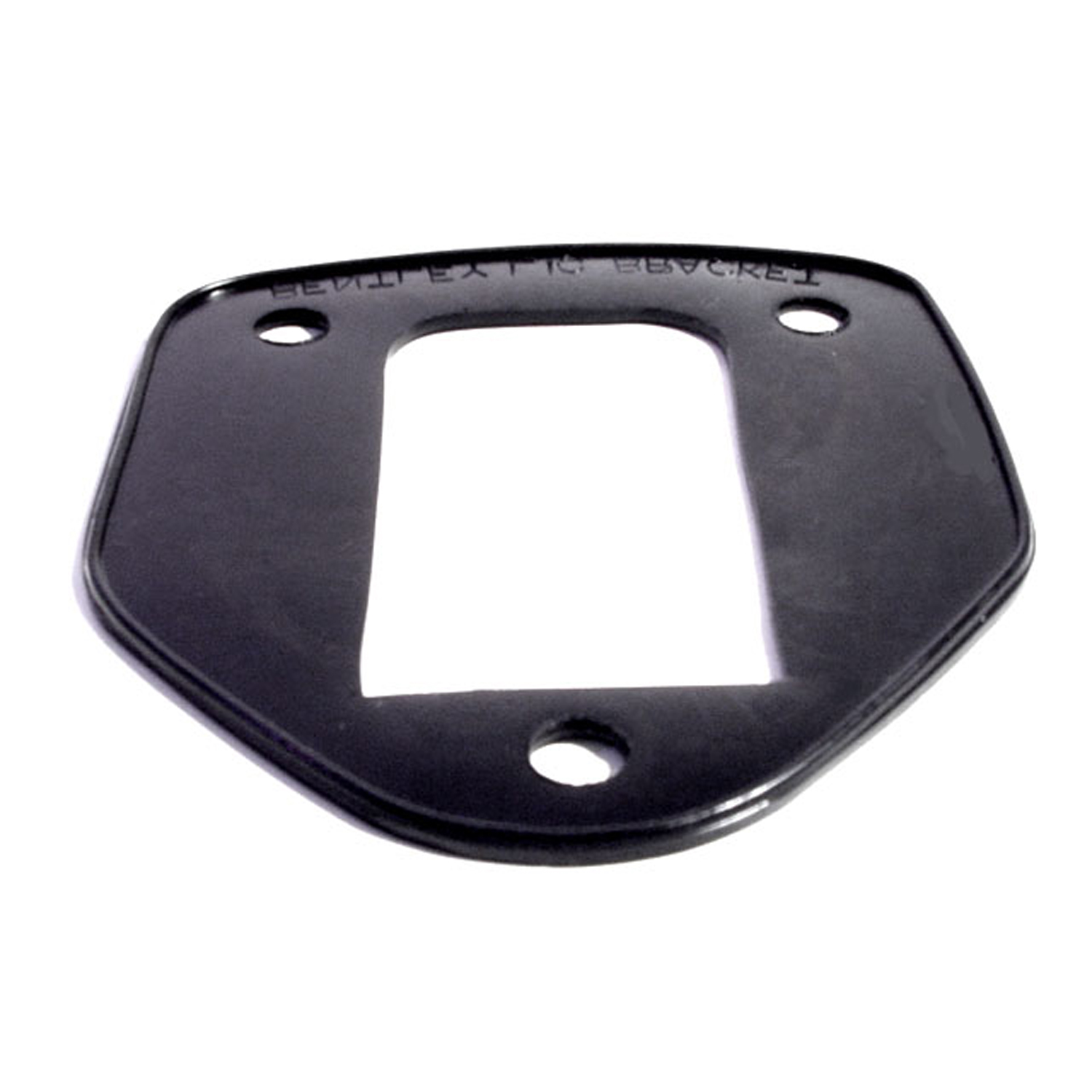 1928 Bentley 6.5 LITRE License Bracket Pad. 4-3/8" wide X 5" long. Each-MP 112-JLicense Bracket Pad. 4-3/8" wide X 5" long. Each
Why Choose Metro?
For over 100 years, Metro Moulded Parts has been the pinnacle of quality in classic car restoration parts. Our commitment to precision and authenticity in every component ensures a perfect fit and an OEM-level appearance.
- Expert Craftsmanship & Quality: Each part is a testament to our dedication to reliability and perfection, crafted from original designs and thoroughly tested.
- Advanced Technology: We use cutting-edge techniques to create flawless, long-lasting parts that surpass others in performance.
- SuperSoft Sponge – The Ultimate Door Seal: Not only are our door seals 30% softer than competitors', but they're also guaranteed to never leak. They effectively reduce wind and road noise, enhancing your classic car's comfort and driving experience.
- Proudly American: Our parts are a product of American craftsmanship, made in the USA with a spirit of excellence and heritage.
- Unrivaled Warranty: We back our products with a 30-year industry-leading warranty, a testament to our confidence in their quality.
Join us in preserving the legacy of classic cars with parts that are crafted for perfection, not just made.