
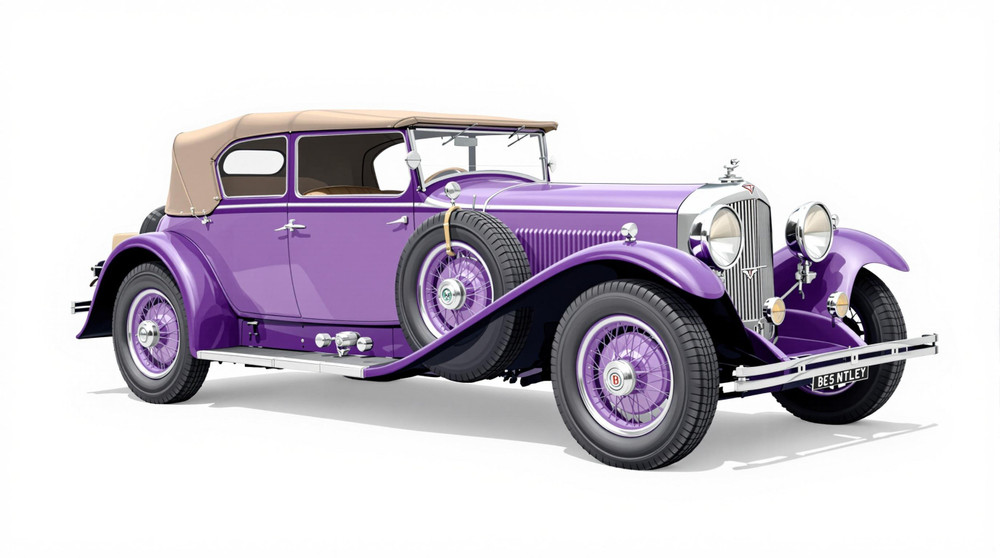
Image of 1929 Bentley 3-Litre, Note: These illustrations use artistic license and may differ from actual historical models.
Performance Metrics
Fundamental Metrics
Emotional Appeal
MMP Rating
| Engine Specifications | |
|---|---|
| Engine: | 4-cylinder in-line |
| Displacement: | 2996 cc |
| Horsepower: | Estimated 70-80 hp |
| Torque: | Not available |
| Compression Ratio: | Not available |
| Ignition System: | Magneto ignition |
| Cooling System: | Water-cooled |
| Performance Specifications | |
| 0-60 Time: | Not available |
| 1/4 Mile Time: | Not available |
| Top Speed: | 80 mph |
| Transmission and Drive | |
| Drive Type: | Rear-wheel drive |
| Transmission Type: | 4-speed manual |
| Fuel and Efficiency | |
| Fuel System Type: | Carburetor |
| MPG: | Not available |
| Dimensions and Brakes | |
| Brakes: | Drum brakes |
| Wheelbase: | 117.5 inches |
| Weight: | Estimated 3,300 lbs |
Note: Specifications for classic cars are given to the best of our ability, considering the limited and variant data available.
1929 Bentley 3-Litre: A Sporting Bentley Before the Legend
The 1929 Bentley 3-Litre was built for drivers who wanted to cross long distances quickly, and it helped establish the sporting character that still defines the marque. Created by engineer Walter Owen Bentley and his team in England, the 3-Litre was the company’s first production car. Its combination of a powerful four-cylinder engine, robust chassis and coachbuilt body made it a standout in the 1920s.
A 1929 example is among the final cars in the model’s production run, which began in 1921. The 3-Litre also earned real competition credentials: a 3-Litre Bentley won the 24 Hours of Le Mans in 1924. That victory was an early, memorable demonstration of the model’s stamina and helped put the young Bentley company on the international map.
One distinction matters when discussing the car’s racing story. The 3-Litre’s 1924 Le Mans win belongs to the model’s history, but it should not be confused with Bentley’s later Le Mans successes in larger-engined cars. The model’s reputation was built on its own blend of speed and durability, not just on the fame of the Bentley name that followed.
Coachbuilt Style and Hand-Finished Comfort
The 3-Litre was sold as a rolling chassis, meaning buyers generally chose a specialist coachbuilder to create the body. As a result, there was no single standard appearance. Some cars wore sleek open tourer bodies with long bonnets, sweeping front wings and minimal weather protection. Others were fitted with more enclosed saloons, coupés or sporting two-seaters. The open four-seat tourer, often associated with Vanden Plas, is among the most recognizable looks.
Whichever body it carried, the car had a purposeful presence. Its tall radiator, separate lamps, exposed running boards and large wire wheels gave it the upright, mechanical character of a sporting machine from the period. The long hood made room for the engine, while the coachwork could be tailored to suit a buyer’s taste, intended use and budget.
Inside, owners could expect materials selected by the coachbuilder rather than a single standardized Bentley specification. Leather upholstery, polished wood or metal dashboard trim, clear instrument dials and a large steering wheel were common features. The cabin was handsome but functional, with controls that put the driver in direct contact with the machinery. It offered craftsmanship and character, not modern levels of sound insulation or comfort.
Paint colors were similarly personal. Dark green, black, deep blue and maroon all suited the car’s formal, sporting lines, but a buyer could commission other shades. British racing green is now a popular choice in the imagination of enthusiasts, though it was not the only color associated with Bentleys of the era.
Four-Valve Engineering for the 1920s
At the heart of the 3-Litre was a 2,996 cc inline-four with a single overhead camshaft and four valves per cylinder. That layout was advanced for a production car in the early 1920s. Depending on specification and period, output is commonly quoted at around 70 to 80 horsepower. Power went to the rear wheels through a four-speed manual gearbox.
The car also had mechanical brakes on all four wheels, a significant feature for a sporting car of its time. Four-wheel braking was not unique to Bentley, but it gave the 3-Litre useful stopping power compared with cars that relied on rear-wheel brakes alone. Its sturdy chassis, leaf-spring suspension and substantial mechanical components reflected W.O. Bentley’s preference for strength and endurance.
There was no mass-market color chart or single body package to choose from. Instead, the rolling chassis gave owners considerable freedom, and coachbuilders shaped the finished car to suit its role. A light, open tourer was a natural choice for sporting use, while heavier closed bodies offered more protection from weather and were better suited to formal touring.
Why the 3-Litre Mattered
The 3-Litre helped establish a template for the sporting grand tourer: a substantial, durable car capable of covering serious distance at speed. It was not a lightweight racing special in the modern sense. Rather, it brought competition-minded engineering into a road car that an owner could tour, drive to an event and, in suitable form, race.
Its Le Mans victory in 1924 was particularly important. The endurance race tested not only outright speed but also mechanical reliability, and the Bentley’s performance helped prove the value of its strong engine and chassis. The win gave the company credibility at a moment when Bentley was still a young manufacturer.
The car also set expectations for later Bentleys: engineering substance, sporting performance and an emphasis on long-distance capability. Its four-valve engine and four-wheel brakes were impressive features for the period, while the coachbuilt approach gave buyers a degree of individuality that mass-produced cars could not match.
Performance and Road Manners
Exact performance depended on the engine specification, gearing and, especially, the weight and shape of the body. A relatively light 3-Litre could reach roughly 80 mph, while faster versions and favorable configurations could do more. A period-style 0-to-60 mph figure is harder to pin down because consistent tests were not common. As a broad modern estimate, expect somewhere around 20 to 25 seconds for many road-going examples, with substantial variation between cars.
On the road, the 3-Litre feels mechanical and purposeful. The engine’s steady four-cylinder beat is more workmanlike than silky, and it becomes more urgent as revs rise. The driver operates a manual gearbox without modern convenience features such as synchromesh, so smooth changes reward practice. Steering and braking also ask for more effort than a driver would expect from a contemporary car.
The suspension and tall tires can take the edge off ordinary road bumps, but the car’s age, body style and setup make a major difference to ride quality. On a winding road, its relatively narrow tires and vintage chassis call for a measured pace. It can be rewarding and composed in experienced hands, but it does not have modern grip, braking or crash protection. At speed, wind noise and weather are part of the experience, particularly in an open tourer.
Living With a Bentley 3-Litre
Today, most 3-Litres are collector cars used for historic motoring events, touring rallies, concours displays and occasional drives. An appropriately prepared example can still cover meaningful distances, but it is rarely a sensible daily driver. Weather protection, starting routine, traffic compatibility and the attention required by an old mechanical car all make regular modern commuting a challenge.
Maintenance is manageable for an experienced vintage-car mechanic, but it is not a casual do-it-yourself project for every owner. The car needs careful lubrication, regular inspection and knowledgeable attention to its engine, gearbox, brakes and chassis. Parts and specialist services are available through the vintage Bentley community, although restoration work can be costly. Originality also matters: a car with a correct, well-documented body and major components is generally more attractive to collectors than one with uncertain history.
Reliability was central to the model’s reputation, but age changes the equation. Even a robust Bentley can suffer from decades of wear, poor storage or repairs made without regard to its original engineering. A thorough pre-purchase inspection by a marque specialist is essential.
Racing Stories and Other Facts
The Bentley Boys, a group of wealthy, sporting drivers associated with the marque in the 1920s, helped turn Bentley into a symbol of fast, adventurous motoring. The 3-Litre was part of the foundation of that image, and its 1924 Le Mans win remains a landmark in the company’s early history.
One of the model’s most appealing quirks is how individual each car can be. Two 3-Litres with the same basic chassis may have entirely different bodies, interiors and road manners because they were completed by different coachbuilders for different owners. That variety is a major part of their charm, but it can also make comparisons between cars difficult.
Common criticisms are familiar to anyone who drives a prewar car: the 3-Litre can be noisy, physically demanding and slow to operate by modern standards. Its open bodies offer limited weather protection, and its brakes and handling require a conservative approach. Those are not defects so much as reminders that the car belongs to a very different era of motoring.
Collector Value and Rarity
Approximately 1,622 Bentley 3-Litre cars were built, though individual histories and specifications vary. That makes the model rare by ordinary production-car standards, and the number of examples that appear on the market in any given year is limited. Some surviving cars have been restored, modified or rebodied over time, so condition and provenance are especially important.
As a broad estimate, a presentable, correctly identified 3-Litre might sell in the region of $250,000 to $700,000. Exceptional examples with desirable coachwork, strong provenance, competition history or outstanding restoration can exceed $1 million. Less original or more demanding projects may fall below the usual range. These are general estimates rather than a valuation of any particular car; auction results vary substantially with specification and condition.
Over the long term, the model has benefited from its early Bentley history and competition pedigree. Values at the top end tend to be supported by rarity and provenance, while the broader vintage-car market can rise or soften with economic conditions. Buyers are increasingly selective, and documented originality, quality restoration and a well-known history can make a significant difference.
A Bentley That Earned Its Reputation
The 1929 Bentley 3-Litre combined advanced-for-its-time engineering with coachbuilt individuality and genuine endurance-racing credentials. Its four-valve engine, four-wheel brakes and robust chassis made it more than a handsome period machine; they helped define the sporting character of the Bentley marque.
Nearly a century later, it remains a car to experience rather than simply admire. Its sound, demanding controls and tailored bodywork bring the early era of performance motoring vividly to life, one carefully chosen gear at a time.
1929 Bentley 3-Litre Catalog of Parts
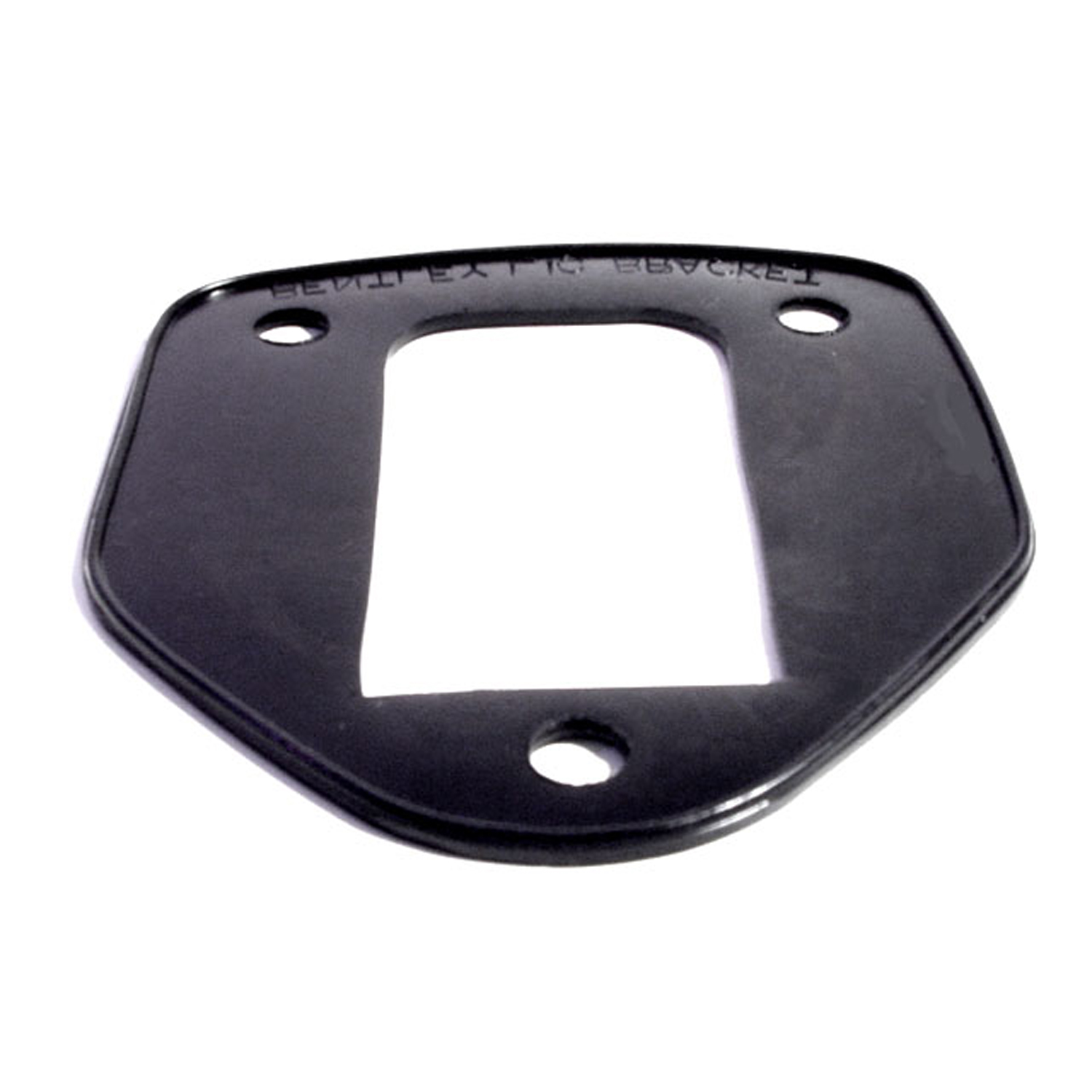 1929 Bentley 3-Litre License Bracket Pad. 4-3/8" wide X 5" long. Each-MP 112-JLicense Bracket Pad. 4-3/8" wide X 5" long. Each
Why Choose Metro?
For over 100 years, Metro Moulded Parts has been the pinnacle of quality in classic car restoration parts. Our commitment to precision and authenticity in every component ensures a perfect fit and an OEM-level appearance.
- Expert Craftsmanship & Quality: Each part is a testament to our dedication to reliability and perfection, crafted from original designs and thoroughly tested.
- Advanced Technology: We use cutting-edge techniques to create flawless, long-lasting parts that surpass others in performance.
- SuperSoft Sponge – The Ultimate Door Seal: Not only are our door seals 30% softer than competitors', but they're also guaranteed to never leak. They effectively reduce wind and road noise, enhancing your classic car's comfort and driving experience.
- Proudly American: Our parts are a product of American craftsmanship, made in the USA with a spirit of excellence and heritage.
- Unrivaled Warranty: We back our products with a 30-year industry-leading warranty, a testament to our confidence in their quality.
Join us in preserving the legacy of classic cars with parts that are crafted for perfection, not just made.