
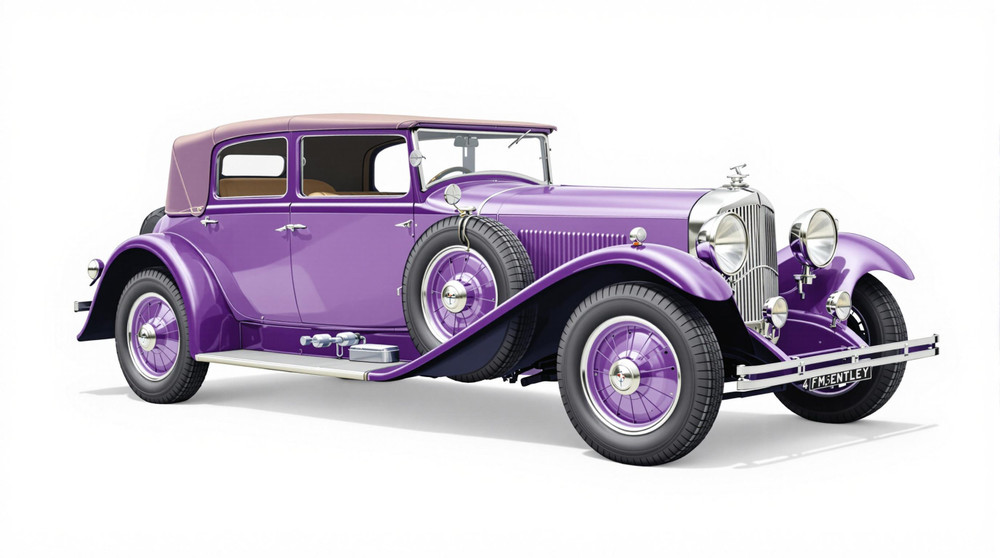
Image of 1929 Bentley 4 1/2-Litre, Note: These illustrations use artistic license and may differ from actual historical models.
Performance Metrics
Fundamental Metrics
Emotional Appeal
MMP Rating
| Engine Specifications | |
|---|---|
| Engine: | 4.4 L I4 |
| Displacement: | 4398 cc |
| Horsepower: | 110 hp |
| Torque: | Estimated at 184 lb-ft |
| Compression Ratio: | 5.3:1 |
| Ignition System: | Magneto ignition |
| Cooling System: | Water-cooled |
| Performance Specifications | |
| 0-60 Time: | Estimated at 16 seconds |
| 1/4 Mile Time: | Not available |
| Top Speed: | 90 mph |
| Transmission and Drive | |
| Drive Type: | Rear-wheel drive |
| Transmission Type: | 4-speed manual |
| Fuel and Efficiency | |
| Fuel System Type: | Twin SU carburetors |
| MPG: | Not available |
| Dimensions and Brakes | |
| Brakes: | Drum brakes |
| Wheelbase: | 130 inches |
| Weight: | 3,300 lbs |
Note: Specifications for classic cars are given to the best of our ability, considering the limited and variant data available.
1929 Bentley 4½-Litre: The Grand Tourer with a Racing Heart
The 1929 Bentley 4½-Litre was built for drivers who wanted more than quiet luxury: it paired imposing coachbuilt style with the stamina and speed of a serious competition car. Created by Bentley Motors, founded by engineer W.O. Bentley in 1919, the 4½-Litre became one of the marque’s defining pre-war models and a star of the celebrated “Bentley Boys” era.
Its four-cylinder engine was an enlarged development of Bentley’s earlier 3-Litre design. The extra capacity delivered stronger performance for road and race use, and in 1928 a 4½-Litre won the 24 Hours of Le Mans. A year later, it was the supercharged “Blower” version that captured the public imagination, thanks in part to racing driver Sir Henry “Tim” Birkin. The Blower did not win Le Mans, but its dramatic appearance and Birkin’s determination helped make it one of the most famous Bentleys ever built.
Coachbuilt Style and Bentley Craftsmanship
A 4½-Litre was supplied as a rolling chassis, then finished by an independent coachbuilder chosen by the owner. That means no two examples need look exactly alike. The long bonnet, upright radiator, separate front wings, exposed headlamps and large wire wheels gave the car a purposeful silhouette. Its proportions could seem stately with a formal saloon body or overtly sporting beneath an open tourer’s low windscreen.
Vanden Plas, H.J. Mulliner, Gurney Nutting, Barker and Freestone & Webb were among the coachbuilders associated with Bentleys of the period. The Vanden Plas-style open tourer is one of the most recognizable and sought-after configurations, particularly for cars with documented original bodywork. Other bodies included two-door coupés, saloons, sports tourers and limousine-style designs. The choice affected not only appearance but also weight, top speed and the car’s character on the road.
Inside, the finish depended on the body and its commission. Owners could expect substantial leather seating, polished wood trim and a neatly arranged instrument panel, with large, readable gauges suited to a fast car. This was traditional craftsmanship rather than modern convenience: the driver had to monitor the instruments, manage the controls and work the gearbox with care.
Paint was usually a matter of individual specification rather than a fixed factory palette. Dark greens, blues, maroons and black all suited the car, while contrasting wings or body panels added a sporting touch. British racing green is an especially popular modern choice, but it should not be mistaken for the only, or necessarily the original, finish for every example.
Engineering for the Road and the Track
The 4½-Litre’s 4,398 cc inline-four used a single overhead camshaft and four valves per cylinder, an advanced layout for a production car of its time. In naturally aspirated form, output is commonly quoted at around 100 bhp, although exact figures vary with specification and historical measurement methods. Power went to the rear wheels through a four-speed manual gearbox.
Four-wheel mechanical brakes were another important feature, and many cars were equipped with a vacuum servo to reduce pedal effort. Suspension used traditional beam axles and leaf springs, a robust arrangement that suited the rougher roads and demanding long-distance events of the period. The technology was not effortless by modern standards, but the combination of a strong engine, capable brakes and durable construction made the Bentley a formidable fast touring car.
The supercharged Blower added an Amherst Villiers supercharger mounted prominently ahead of the radiator. It gave the car a distinctive mechanical face and more power, but W.O. Bentley was famously unimpressed by supercharging the engine. The disagreement between the company’s engineering founder and Birkin’s racing ambitions remains one of the model’s best-known stories.
Le Mans Legacy and Lasting Influence
The 4½-Litre helped establish Bentley’s reputation for building cars that could sustain high speeds over long distances. Its 1928 Le Mans victory, achieved by Woolf Barnato and Bernard Rubin, demonstrated the value of endurance, reliability and speed working together. Bentley’s later Le Mans dominance in 1929 and 1930 was led by the larger Speed Six, but the 4½-Litre remains closely tied to the team’s golden era.
Unlike many luxury cars of its day, the Bentley was not simply a comfortable chassis dressed in elegant coachwork. Its competition roots shaped its engineering and its public image. Owners could travel quickly between cities, then enter the car in demanding events. That dual-purpose character helped define the high-performance grand tourer, a type of car that combines long-distance comfort with genuine sporting ability.
The model’s influence is also visible in the enduring appeal of the “Bentley Boys”: wealthy, adventurous owners who raced their own cars and treated motorsport as an extension of fast road travel. The image could be glamorous, but the cars earned their reputation through hard use rather than styling alone.
Performance and Driving Experience
Performance depended heavily on the engine’s condition, gearing, tyres and coachwork. A naturally aspirated 4½-Litre is often credited with a top speed in the region of 90 to 100 mph, with lighter sporting bodies generally better placed to approach the upper end. Period-style estimates put 0-to-60 mph acceleration at roughly 13 to 15 seconds. These are useful guide figures, not guaranteed results for every surviving car.
On the move, the engine delivers a deep, purposeful four-cylinder beat rather than the smooth hush of a modern luxury car. The long bonnet and upright driving position make the car feel substantial, while the manual gearbox rewards deliberate shifts and, on many examples, double-declutching. Steering can be heavy at parking speeds, and the mechanical controls demand more physical involvement than a contemporary driver may expect.
On a winding road, a well-maintained car feels composed and capable, but its size, solid axles and period tyres set clear limits. Broken surfaces are absorbed with the resilient, sometimes busy feel typical of vintage leaf-spring suspension. The brakes are impressive for their age when correctly adjusted, though they require more anticipation than modern disc brakes. This is a car to drive with attention, not to treat like a current sports saloon.
Living with a 1929 Bentley
Today, the 4½-Litre is most often seen at concours events, historic rallies, touring gatherings and vintage racing meetings. Some owners do drive their cars regularly, but the cost and rarity of original components make casual daily use unusual. A carefully prepared example can cover long distances, provided it receives thoughtful maintenance and is not expected to behave like a modern car in traffic.
Routine work includes monitoring lubrication, cooling, ignition, fuel delivery, brakes and the condition of the chassis and suspension. The mechanical layout is comparatively accessible to a specialist familiar with pre-war Bentleys, and many repairs are understandable in principle. That does not make the car an easy project for the average owner: parts can be expensive, coachwork repairs require specialist skills, and incorrect restoration work can harm both safety and value.
Reliability is closely tied to maintenance history. A well-sorted 4½-Litre can be a durable touring machine, but age, mileage and decades of repairs mean every car needs a thorough inspection. Buyers should pay particular attention to engine condition, chassis integrity, brake operation, gearbox behavior and whether the body and major components are correctly documented.
Facts, Myths and the Blower Story
Bentley produced approximately 720 4½-Litre chassis between 1927 and 1931, though surviving-car counts and production totals can vary by source and by how variants are classified. Around 55 supercharged Blower chassis were built. These figures include cars from the broader production run, not just the 1929 model year.
The Blower is famous partly because it was so visually different, with its large external supercharger and distinctive nose. Birkin’s high-profile challenge to the Mercedes-Benz SSK at the 1930 Le Mans race became part of Bentley lore, even though the Blower did not take the overall victory. The episode captures the car’s appeal: bold, fast and spectacular, even when it was not the most successful solution on the results sheet.
A common criticism is that the 4½-Litre can be physically demanding, noisy and temperamental by modern standards. Its heavy steering, unassisted-feeling controls and vintage braking distances are real considerations. The counterpoint is that those characteristics are part of its direct, mechanical driving experience, and its competition history gives the car substance beyond its looks.
Collector Value and Market Rarity
Values vary enormously according to originality, coachbuilder, condition, competition history and the quality of restoration. As a broad guide, a well-presented, documented standard 4½-Litre might sell for roughly $1 million to $3 million. Exceptional cars with important provenance or especially desirable coachwork can exceed that range. Authentic Blowers are in a different category and may command several million dollars, with outstanding examples potentially reaching well beyond $5 million.
Only a small number of these cars appear on the market in any given year, and genuine, well-documented examples are especially scarce. Replicas and recreations exist, particularly of the Blower, so buyers should verify chassis identity, engine numbers, body history and restoration records with marque specialists.
Over the long term, top-quality pre-war Bentleys have generally benefited from strong collector interest, though auction results can fluctuate with the wider market and the specific car’s history. The strongest values tend to go to cars with authenticity, provenance and a respected restoration. A poorly documented or heavily altered example may be harder to sell, regardless of its appearance.
Why the 4½-Litre Still Matters
The 1929 Bentley 4½-Litre brought together coachbuilt elegance, advanced engineering and the toughness required for endurance racing. Its Le Mans success helped cement Bentley’s sporting reputation, while the dramatic Blower turned a particular version into an icon. It is not an effortless classic, nor was it designed to be one. Its appeal lies in the way it makes the driver part of the machinery.
Nearly a century on, the 4½-Litre remains a vivid expression of Bentley’s original ambition: build a fast, durable car that could cross great distances and compete at the highest level. Few vintage cars make that idea feel as tangible from behind the wheel.
1929 Bentley 4 1/2-Litre Catalog of Parts
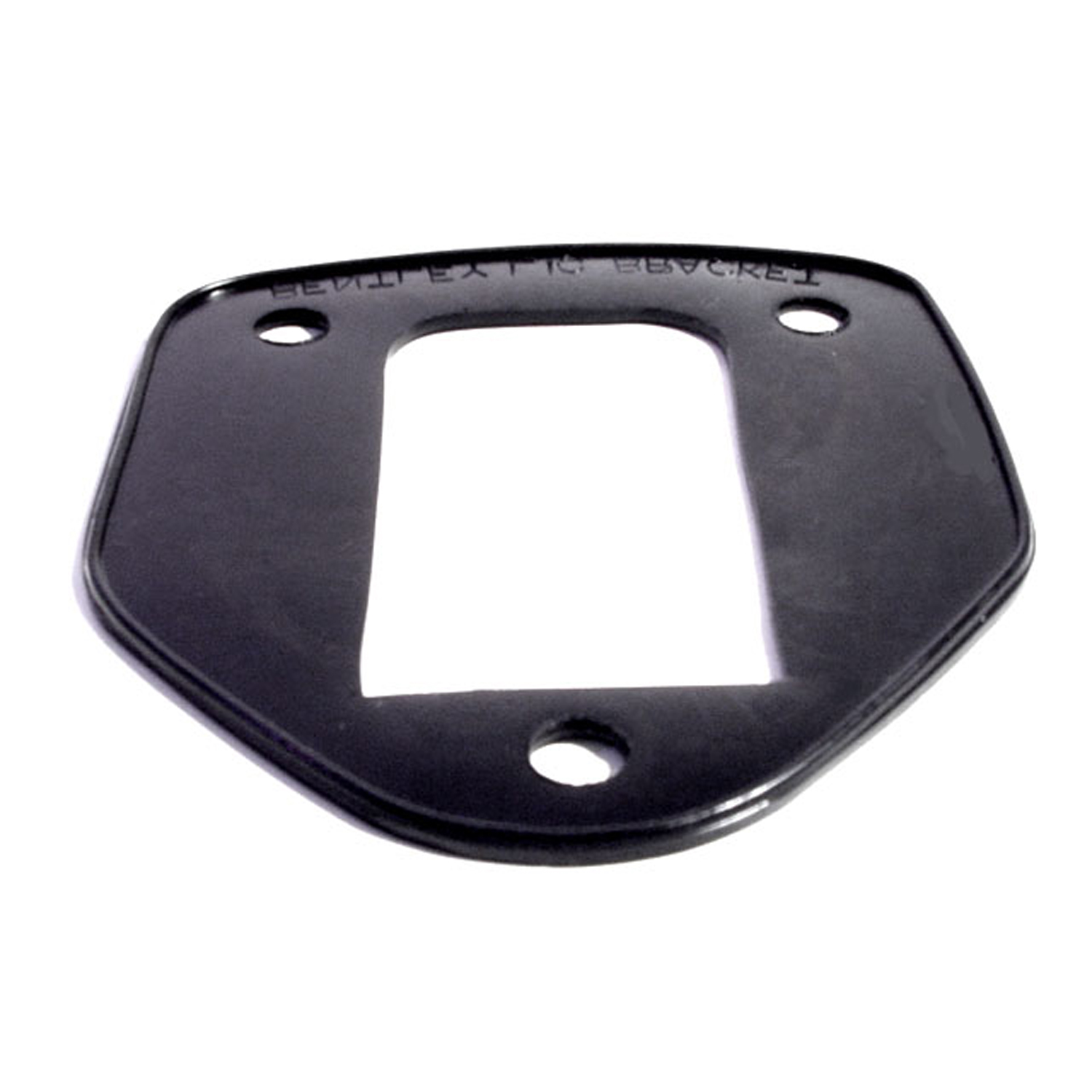 1929 Bentley 4 1/2-Litre License Bracket Pad. 4-3/8" wide X 5" long. Each-MP 112-JLicense Bracket Pad. 4-3/8" wide X 5" long. Each
Why Choose Metro?
For over 100 years, Metro Moulded Parts has been the pinnacle of quality in classic car restoration parts. Our commitment to precision and authenticity in every component ensures a perfect fit and an OEM-level appearance.
- Expert Craftsmanship & Quality: Each part is a testament to our dedication to reliability and perfection, crafted from original designs and thoroughly tested.
- Advanced Technology: We use cutting-edge techniques to create flawless, long-lasting parts that surpass others in performance.
- SuperSoft Sponge – The Ultimate Door Seal: Not only are our door seals 30% softer than competitors', but they're also guaranteed to never leak. They effectively reduce wind and road noise, enhancing your classic car's comfort and driving experience.
- Proudly American: Our parts are a product of American craftsmanship, made in the USA with a spirit of excellence and heritage.
- Unrivaled Warranty: We back our products with a 30-year industry-leading warranty, a testament to our confidence in their quality.
Join us in preserving the legacy of classic cars with parts that are crafted for perfection, not just made.