
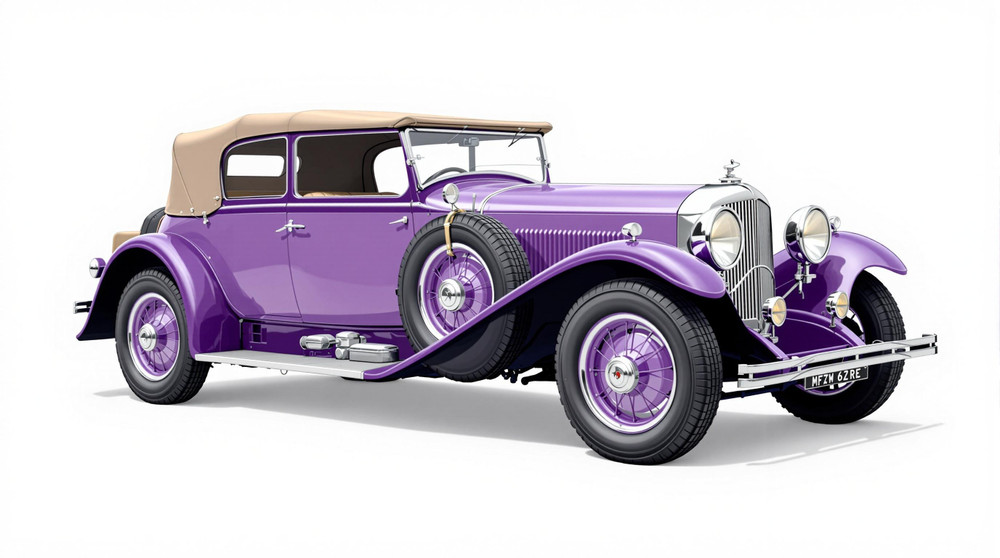
Image of 1929 Bentley 6.5 Litre, Note: These illustrations use artistic license and may differ from actual historical models.
Performance Metrics
Fundamental Metrics
Emotional Appeal
MMP Rating
| Engine Specifications | |
|---|---|
| Engine: | 6.5 LITRE Inline-6 |
| Displacement: | 6.5 LITRE (6500cc) |
| Horsepower: | Estimated 180-200 HP |
| Torque: | Not Available |
| Compression Ratio: | Not Available |
| Ignition System: | Magneto Ignition System |
| Cooling System: | Water-cooled |
| Performance Specifications | |
| 0-60 Time: | Not Available |
| 1/4 Mile Time: | Not Available |
| Top Speed: | 100 mph |
| Transmission and Drive | |
| Drive Type: | Rear-Wheel Drive |
| Transmission Type: | 4-speed manual |
| Fuel and Efficiency | |
| Fuel System Type: | Carburetor |
| MPG: | Not Available |
| Dimensions and Brakes | |
| Brakes: | Drum Brakes |
| Wheelbase: | 130 inches |
| Weight: | 5000 lbs |
Note: Specifications for classic cars are given to the best of our ability, considering the limited and variant data available.
1929 Bentley 6.5 Litre: The Grand Tourer That Became a Racing Legend
The 1929 Bentley 6.5 Litre was built for fast, confident travel on the rough roads of its day, yet its engineering also laid the groundwork for one of endurance racing’s most famous machines. Created by Bentley Motors under founder W.O. Bentley, it combined a sophisticated six-cylinder engine with a substantial, coachbuilt chassis. Its racing derivative, the Speed Six, went on to win the 24 Hours of Le Mans in both 1929 and 1930, giving the 6.5 Litre family a place in motoring history far beyond the grand touring market.
The 6.5 Litre arrived in 1926 as a larger, more refined companion to Bentley’s successful 3 Litre. Bentley wanted a car that could cover long distances at speed without feeling strained. A memorable twist followed: the standard car proved to be an excellent foundation for the competition-focused Speed Six. That famous racer was a distinct, more powerful model, but its success helped define the reputation of the entire 6.5 Litre line.
Coachbuilt Style and Hand-Finished Luxury
A 1929 Bentley 6.5 Litre is best understood as a chassis paired with a body selected by its first owner. Bentley supplied the rolling chassis, while specialist coachbuilders created the finished car. The result could be a formal limousine, a sporting saloon, a drophead coupé or an open tourer. Vanden Plas tourers are among the most recognizable sporting forms, while bodies by firms such as H.J. Mulliner gave the car a more enclosed, elegant character.
Whatever the body style, the long bonnet, upright radiator, prominent headlamps and sweeping wings gave the Bentley an unmistakably imposing stance. Open cars showed off the length of the chassis and the polished hardware, while enclosed bodies could look stately without sacrificing the car’s purposeful proportions. No single exterior color was prescribed. Owners chose finishes with their coachbuilder, ranging from dark greens, blues and maroons to more restrained black and subtle two-tone combinations. British racing green is an especially evocative choice today, though it was not a universal factory standard.
Inside, the finish depended on the commission, but quality was central to the experience. Expect substantial leather upholstery, polished wood trim, carefully fitted carpets and traditional metal fittings. The cabin was designed for long journeys, with generous space and an elevated driving position compared with many sporting cars of the period. A bespoke body could include individual details such as extra luggage space, folding seats or a tailored arrangement of instruments.
Under the bonnet sat a 6,597 cc inline-six with an overhead camshaft and four valves per cylinder, advanced engineering for the 1920s. The car also used a four-speed manual gearbox, rear-wheel drive and four-wheel drum brakes with servo assistance. Those features helped make a large, heavy automobile more capable at speed, though operating the gearbox and brakes still demanded more attention and physical effort than a modern driver might expect.
Why the 6.5 Litre Mattered
The Bentley 6.5 Litre represented an important step in the company’s move from relatively compact sporting cars toward powerful, long-distance grand tourers. Its multi-valve, overhead-cam engine reflected W.O. Bentley’s interest in performance through engineering rather than mere size. The robust chassis and substantial brakes were equally important: a fast car needed to remain controllable when the road became uneven or a corner appeared quickly.
What set the Bentley apart was the combination of speed, durability and individuality. Many luxury cars of the era emphasized comfort and formal appearance; the Bentley could be ordered that way, but it also had genuine sporting ability. Its coachbuilt nature meant that no two examples needed to look quite alike. Meanwhile, the Speed Six carried the same basic idea into competition, helping establish Bentley as a marque associated with endurance as well as prestige.
That racing legacy should be credited accurately. The Le Mans victories in 1929 and 1930 belonged to Speed Six competition cars, not ordinary 6.5 Litre road models. Still, the relationship between the two is central to the model’s significance. The road car provided the foundation, and the racing version demonstrated just how far Bentley’s engineering could be pushed.
Performance on the Open Road
Performance figures vary according to engine specification, gearing and, above all, the weight and shape of the coachbuilt body. Standard 6.5 Litre cars are commonly associated with power in the neighborhood of 100 to 147 horsepower, while the Speed Six had a more highly tuned engine and greater output. A well-specified road car could approach roughly 85 to 90 mph, but a heavy saloon would not perform like a light open tourer.
Reliable period 0-to-60 mph figures are scarce, so any number should be treated as an estimate rather than a factory promise. Depending on bodywork and condition, a standard car might take approximately 16 to 20 seconds to reach 60 mph. Its real strength was sustained, relaxed progress rather than stoplight acceleration. Once moving, the large engine delivered a deep, steady pull that suited long roads and high cruising speeds.
On broken surfaces, the Bentley’s mass and long chassis helped it feel settled, though its suspension could not erase the sharp impacts of poor roads. On winding routes, the driver had to plan ahead. Steering was substantial, the car’s size was always apparent, and the brakes required anticipation despite their servo assistance. From behind the wheel, the experience was mechanical and involving: engine note, gear changes and road texture all came through clearly. It was a fast car for a skilled driver, not a modern luxury car that isolates its occupants from the work of driving.
Ownership, Maintenance and Reliability
In period, the 6.5 Litre could serve as a long-distance touring car, a formal conveyance or a sporting machine. Today, most examples are treated as collector cars, used for historic rallies, concours events and occasional touring rather than daily transport. Their sturdy engineering can be durable when properly maintained, but age and complexity make condition more important than reputation alone.
Routine work involves close attention to lubrication, ignition, cooling, brakes and the many adjustments required by a prewar car. Parts and specialist knowledge are available through the vintage Bentley community, but repairs are not generally a do-it-yourself proposition for an average owner. Coachwork also needs expert care, especially where timber framing, leather, paint and period fittings are concerned. A thorough inspection by a marque specialist is essential before purchase, and ownership budgets should include ongoing maintenance, not just the purchase price.
Notable Facts and Common Criticisms
Approximately 545 cars were produced across the 6.5 Litre family, including both standard 6.5 Litre and Speed Six versions. A commonly cited breakdown is around 362 standard cars and roughly 182 Speed Sixes, though totals can vary slightly between references. That makes surviving examples scarce, and a particular body style, coachbuilder or documented history can make an individual car rarer still.
The 6.5 Litre’s racing connection has inspired occasional confusion with the famous 1930 “Blue Train” story. Woolf Barnato’s celebrated wager involved a Speed Six, not a standard 6.5 Litre. The episode nevertheless reflects the Bentley character of the era: fast touring, bold owners and a willingness to measure a luxury car against ambitious challenges.
Criticisms are part of the ownership picture. The car is large, thirsty by modern standards and demanding to drive in traffic. Its braking and steering require anticipation, and a poorly maintained example can become expensive quickly. Those traits are not defects so much as reminders that the 6.5 Litre belongs to a very different era of motoring.
Collector Value and Market Outlook
As a best-estimate guide for the current collector market, a standard 1929 Bentley 6.5 Litre in usable, well-presented condition might sell for roughly US$500,000 to US$1.5 million. A car needing substantial restoration could fall below that range, while an exceptional example with important provenance, desirable coachwork or competition history could exceed US$2 million. These are broad estimates, not fixed prices: condition, originality, documentation, body style and specialist inspection findings can have a major effect.
Values for significant prewar Bentleys have generally been supported by their scarcity and sporting heritage, though the market can move unevenly. The best-preserved and most historically important cars tend to attract the strongest interest. Less distinctive examples may take longer to sell, and restoration costs can be substantial. Overall, the 6.5 Litre is better viewed as a rare, historically important collector car than as a short-term investment.
A Bentley Built for More Than Speed
The 1929 Bentley 6.5 Litre brought together advanced engine design, coachbuilt elegance and the strength needed for serious long-distance motoring. Its standard road-going form offered owners a remarkably capable grand tourer, while the Speed Six transformed the family’s engineering into an endurance-racing legend. More than a beautiful prewar automobile, the 6.5 Litre is a vivid expression of Bentley’s early identity: powerful, individual and built to cover ground with purpose.
1929 Bentley 6.5 Litre Catalog of Parts
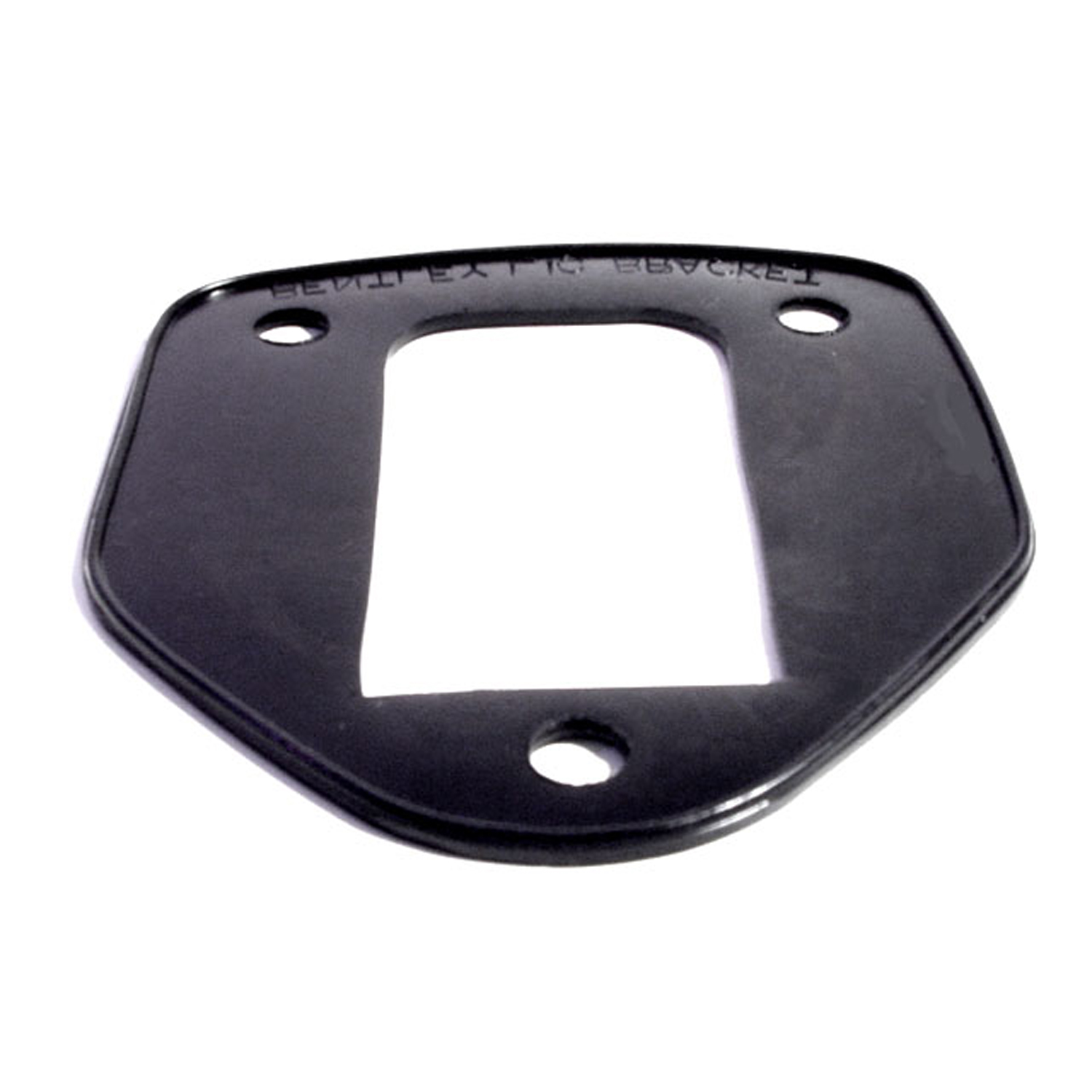 1929 Bentley 6.5 LITRE License Bracket Pad. 4-3/8" wide X 5" long. Each-MP 112-JLicense Bracket Pad. 4-3/8" wide X 5" long. Each
Why Choose Metro?
For over 100 years, Metro Moulded Parts has been the pinnacle of quality in classic car restoration parts. Our commitment to precision and authenticity in every component ensures a perfect fit and an OEM-level appearance.
- Expert Craftsmanship & Quality: Each part is a testament to our dedication to reliability and perfection, crafted from original designs and thoroughly tested.
- Advanced Technology: We use cutting-edge techniques to create flawless, long-lasting parts that surpass others in performance.
- SuperSoft Sponge – The Ultimate Door Seal: Not only are our door seals 30% softer than competitors', but they're also guaranteed to never leak. They effectively reduce wind and road noise, enhancing your classic car's comfort and driving experience.
- Proudly American: Our parts are a product of American craftsmanship, made in the USA with a spirit of excellence and heritage.
- Unrivaled Warranty: We back our products with a 30-year industry-leading warranty, a testament to our confidence in their quality.
Join us in preserving the legacy of classic cars with parts that are crafted for perfection, not just made.