
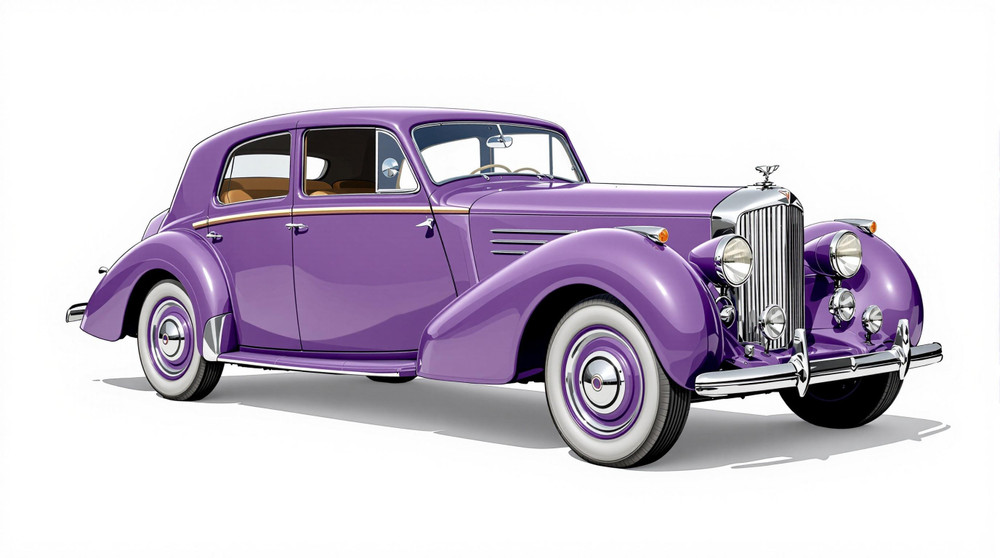
Image of 1940 Bentley 4.25 Litre, Note: These illustrations use artistic license and may differ from actual historical models.
Performance Metrics
Fundamental Metrics
Emotional Appeal
MMP Rating
| Engine Specifications | |
|---|---|
| Engine: | Inline 6-cylinder engine |
| Displacement: | 4.25 Litres |
| Horsepower: | Estimated 125-130 HP |
| Torque: | Not available |
| Compression Ratio: | Not available |
| Ignition System: | Coil ignition |
| Cooling System: | Water-cooled |
| Performance Specifications | |
| 0-60 Time: | Not available |
| 1/4 Mile Time: | Not available |
| Top Speed: | 100 mph |
| Transmission and Drive | |
| Drive Type: | Rear-wheel drive |
| Transmission Type: | 4-speed manual |
| Fuel and Efficiency | |
| Fuel System Type: | Twin SU carburetors |
| MPG: | Not available |
| Dimensions and Brakes | |
| Brakes: | Drum brakes |
| Wheelbase: | 126 inches |
| Weight: | 3500 lbs |
Note: Specifications for classic cars are given to the best of our ability, considering the limited and variant data available.
1940 Bentley 4.25 Litre: The Last of the Prewar “Silent Sports Cars”
The 1940 Bentley 4.25 Litre is a handsome prewar grand tourer from an era when a car’s chassis was only the beginning of its story. Built by Bentley Motors in England and finished by independent coachbuilders, each example could wear a distinctive body, from a formal saloon to a sleek two-door coupé. One important historical detail: Bentley’s 4¼ Litre was produced from 1936 to 1939, so a car described as a “1940” model is generally a late-built or coachbuilt example completed, registered, or first used around that year, rather than a separate 1940 factory model. The approach of war soon brought civilian production to a halt.
The model belonged to Bentley’s “Silent Sports Car” tradition, combining brisk performance with the refinement expected of a luxury marque. A particularly intriguing relative is the streamlined Embiricos Bentley, a 4¼ Litre-bodied special that raced at Le Mans after the war. It finished sixth in the 1949 race, showing that a prewar Bentley could still be a serious endurance machine a decade after its design was new.
Coachbuilt Style and Bespoke Luxury
There was no single standard 4.25 Litre appearance. Bentley supplied a rolling chassis, and specialist coachbuilders shaped the body to the buyer’s taste. The result might have long, flowing wings and a dignified upright radiator, or a lower, more sporting profile with a sloping rear. The familiar Bentley grille, tall bonnet, and separate front fenders gave the car a commanding presence, while details such as headlamps, running boards, spare-wheel placement, and window lines varied from one coachbuilt body to another.
Well-known firms including Park Ward, H.J. Mulliner, Vanden Plas, and Thrupp & Maberly produced bodies for Bentley chassis. Four-door saloons were popular choices for owners wanting comfortable, all-weather touring. Two-door coupés and drophead coupés offered a sportier character, while rarer bodies could be tailored to individual commissions. The most memorable style depends on the particular car: the 4¼ Litre’s appeal is precisely that it was not a mass-produced shape.
Paint was similarly a matter of personal preference rather than a short, fixed factory palette. Deep greens, dark blues, black, maroon, and two-tone combinations suited the car’s formal lines, while lighter shades could emphasize a sporting or continental look. On surviving examples, the original color and coachbuilder’s finish can be important parts of the car’s history and collector value.
Inside, the mood was restrained but lavish. Owners could expect quality leather upholstery, polished wood veneers, deep carpeting, and carefully finished metal fittings. Depending on the body and commission, the cabin might include folding occasional seats, a rear compartment with generous legroom, or luggage space designed for long-distance touring. Because each coachbuilder interpreted the brief differently, cabin layout and trim can vary substantially between cars.
Engineering Behind the Bentley Badge
At the heart of the 4.25 Litre was a 4,257 cc inline-six with overhead valves. It was a smooth, flexible engine designed to deliver strong performance without demanding constant high revs. Power was commonly quoted at about 110 bhp, although published figures and real-world output can vary by specification and condition. A four-speed manual gearbox gave the driver direct control, and the later cars benefited from synchromesh on the higher gears, making shifts easier than in many earlier prewar designs.
The car’s advanced character was not about flashy gadgets. It lay in the combination of a capable six-cylinder engine, substantial chassis, mechanical refinement, and a body built for its intended owner. Bentley engineering provided the foundation; the coachbuilder then added a tailored interior and exterior. That separation between chassis maker and body specialist was an established luxury-car practice, but the 4¼ Litre carried it out with an unusually convincing blend of performance and polish.
Prewar Performance on the Open Road
A well-maintained 4.25 Litre with a relatively light body could approach 95 to 100 mph. A brisk example might reach 60 mph in roughly 16 to 20 seconds, though body weight, gearing, engine condition, and road conditions make any single figure only a guide. A heavy saloon will not accelerate like a light coupé, and modern traffic can make the car feel slower than its period reputation suggests.
On a smooth road, the six-cylinder engine pulls with a quiet, steady surge. The steering is more deliberate than that of a modern car, and the driver must plan gear changes and braking well ahead. The suspension can take the edge off ordinary road imperfections, but the Bentley’s substantial chassis and vintage running gear are not designed to isolate occupants from every bump. On a winding road, it rewards a smooth rhythm and thoughtful inputs rather than abrupt steering or hard braking.
The sound is part of the experience: a subdued mechanical hum at a cruise, becoming more purposeful as the engine works harder. It is not silent in the modern sense, but its refinement was striking for its time. Driving one is an active partnership with the machine. The driver feels the weight, works the gearbox, and listens to the engine, while the coachbuilt cabin makes a long journey feel like an event rather than a commute.
Why the 4.25 Litre Still Matters
The 4¼ Litre helped define the prewar luxury sports car: a machine capable of covering long distances quickly while carrying its occupants in comfort. Its significance lies as much in its balance as in its speed. Bentley combined a robust, sporting chassis with coachbuilt elegance, giving customers a car that could serve as both a refined touring vehicle and a spirited high-speed machine.
That formula influenced the way enthusiasts think about grand touring cars: performance need not come at the expense of comfort, and luxury need not mean sluggishness. The 4¼ Litre also represents the close relationship between a marque and the independent coachbuilders that gave its cars their individual character. In an era of increasing standardization, each body was a visible expression of its first owner’s preferences.
Ownership, Maintenance, and Reliability
Today, a 4.25 Litre is most often used for touring, historic motoring events, concours gatherings, and occasional show appearances. It can cover real road distances, but it is not a carefree daily driver. Age, scarcity, and the value of original components make regular use a considered choice, and many owners prefer to preserve the car while still exercising it enough to keep its systems in working order.
Maintenance calls for experience with prewar British cars. The engine, gearbox, brakes, electrical system, and chassis need regular inspection, and long periods of inactivity can create as many problems as frequent use. The mechanical layout is generally approachable for a specialist, but repairs are not necessarily easy or inexpensive for an average owner. Coachwork and interior restoration can be especially demanding because body construction and trim differ from car to car. Before buying, a prospective owner should commission a detailed inspection by a marque-aware mechanic and verify the chassis, engine, coachbuilder, and restoration history.
Common ownership concerns include the condition of the cooling system, oil leaks, worn suspension or steering components, brake performance, and the quality of previous repairs. Parts and specialist knowledge are available through the classic Bentley community, but a poorly documented or incorrectly restored example can require substantial time and money to put right.
Rare Details and a Le Mans Connection
The 4¼ Litre’s production run was limited by modern standards. Bentley produced approximately 1,234 chassis between 1936 and 1939, though the number of surviving cars, complete cars, and cars with their original coachwork is smaller. The “1940” description should therefore be checked against the chassis records and registration history: it may refer to completion or first registration rather than a distinct model-year production run.
The Embiricos special remains one of the model’s most celebrated stories. Commissioned by Greek shipping magnate André Embiricos, it wore an aerodynamic body designed by Georges Paulin and built by the French coachbuilder Pourtout. Its postwar Le Mans performances, including sixth place in 1949, gave the 4¼ Litre a remarkable second life on the circuit.
One criticism of the car is that its present-day image can make it sound easier to own than it is. A big prewar Bentley is heavy, mechanically complex, and costly to maintain, and not every example is suited to fast driving simply because the badge says Bentley. Another challenge is variation: two cars from the same production period may have very different bodies, equipment, and restoration needs. Their individuality is a major attraction, but it makes careful research essential.
Collector Values and Market Outlook
As a broad 2026 estimate, a 4¼ Litre with an attractive, well-documented coachbuilt body and sound mechanical condition might sell for roughly US$150,000 to US$350,000. Exceptional, rare, or concours-quality examples can exceed that range, while cars needing major mechanical or coachwork restoration may be worth considerably less. The Embiricos Bentley is a special case and should not be treated as representative of ordinary 4¼ Litre values.
Availability is limited, and suitable cars do not appear on the market every day. Prices depend heavily on coachbuilder, originality, restoration quality, matching or documented components, and provenance. In recent years, the market has generally favored exceptional, historically significant cars, while less distinctive examples have seen more variable results. Long-term appreciation is possible for well-preserved and important cars, but restoration costs, economic conditions, and the small pool of specialist buyers can affect resale performance. A 4.25 Litre is best bought for the experience and history, not as a guaranteed short-term investment.
A Bentley Built to Be Remembered
The 1940 Bentley 4.25 Litre is best understood as a late chapter in the prewar 4¼ Litre story: a powerful six-cylinder chassis, finished in a body shaped by a skilled coachbuilder and an individual owner. Its blend of speed, comfort, bespoke craftsmanship, and competition pedigree made it one of the defining British grand tourers of its era. More than eighty years later, it remains a car with real presence, inviting its driver not merely to travel, but to take part in the journey.
1940 Bentley 4.25 Litre Catalog of Parts
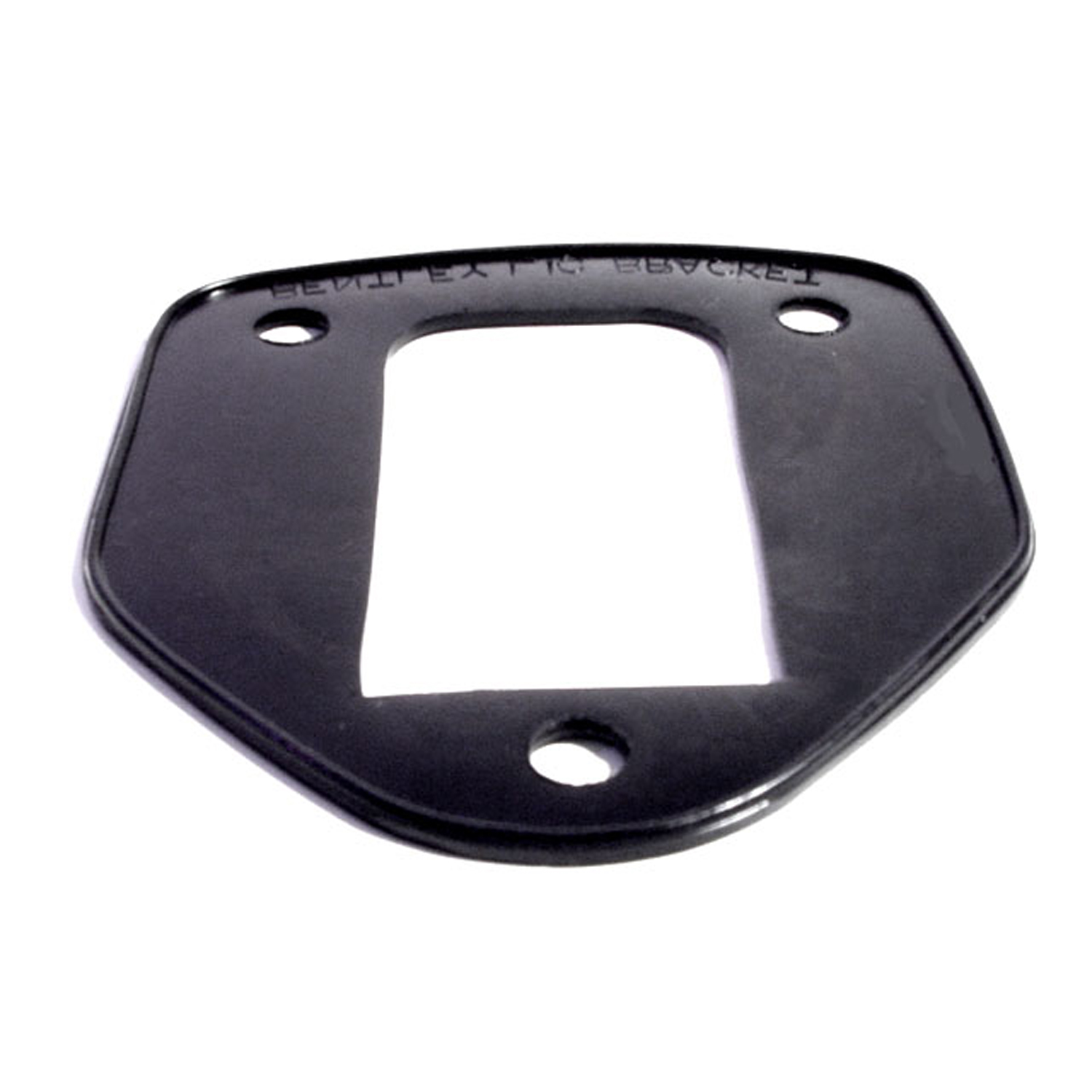 1940 Bentley 4.25 LITRE License Bracket Pad. 4-3/8" wide X 5" long. Each-MP 112-JLicense Bracket Pad. 4-3/8" wide X 5" long. Each
Why Choose Metro?
For over 100 years, Metro Moulded Parts has been the pinnacle of quality in classic car restoration parts. Our commitment to precision and authenticity in every component ensures a perfect fit and an OEM-level appearance.
- Expert Craftsmanship & Quality: Each part is a testament to our dedication to reliability and perfection, crafted from original designs and thoroughly tested.
- Advanced Technology: We use cutting-edge techniques to create flawless, long-lasting parts that surpass others in performance.
- SuperSoft Sponge – The Ultimate Door Seal: Not only are our door seals 30% softer than competitors', but they're also guaranteed to never leak. They effectively reduce wind and road noise, enhancing your classic car's comfort and driving experience.
- Proudly American: Our parts are a product of American craftsmanship, made in the USA with a spirit of excellence and heritage.
- Unrivaled Warranty: We back our products with a 30-year industry-leading warranty, a testament to our confidence in their quality.
Join us in preserving the legacy of classic cars with parts that are crafted for perfection, not just made.