
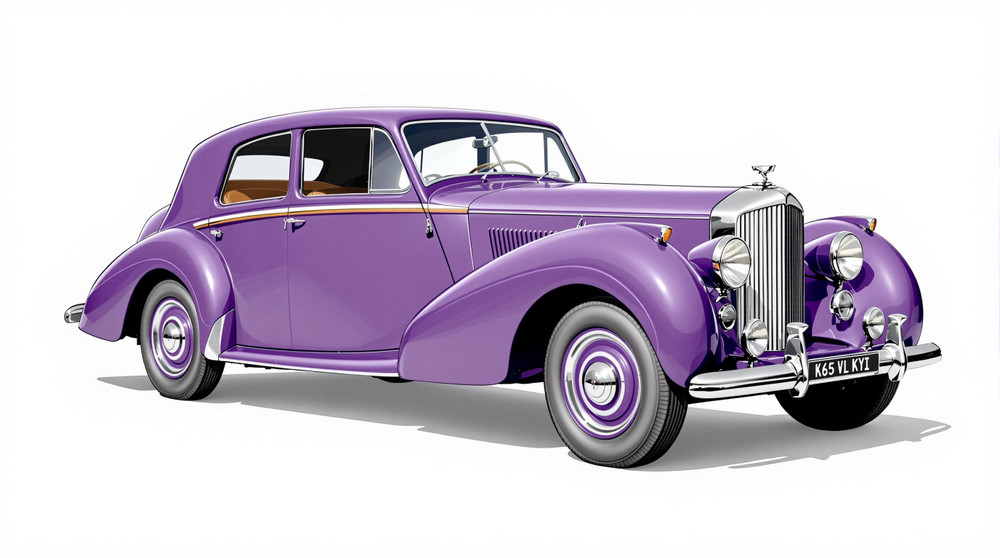
Image of 1946 Bentley Mk Vi, Note: These illustrations use artistic license and may differ from actual historical models.
Performance Metrics
Fundamental Metrics
Emotional Appeal
MMP Rating
| Engine Specifications | |
|---|---|
| Engine: | 4.3 L F-head I6 |
| Displacement: | 4257 cc |
| Horsepower: | 130 hp |
| Torque: | Not available |
| Compression Ratio: | Not available |
| Ignition System: | Coil ignition |
| Cooling System: | Water-cooled |
| Performance Specifications | |
| 0-60 Time: | Not available |
| 1/4 Mile Time: | Not available |
| Top Speed: | 100 mph |
| Transmission and Drive | |
| Drive Type: | Rear-wheel drive |
| Transmission Type: | 4-speed manual |
| Fuel and Efficiency | |
| Fuel System Type: | Twin SU carburetors |
| MPG: | Not available |
| Dimensions and Brakes | |
| Brakes: | Drum brakes |
| Wheelbase: | 120 inches |
| Weight: | 1850 kg |
Note: Specifications for classic cars are given to the best of our ability, considering the limited and variant data available.
The 1946 Bentley Mark VI brought postwar Britain back to the business of building world-class motor cars, one hand-finished saloon at a time. Produced by Bentley Motors under Rolls-Royce ownership, it was the marque’s first postwar model and the first Bentley assembled at the company’s Crewe factory. Its combination of traditional craftsmanship and a factory-built all-steel body made it a turning point for the firm, while its smooth six-cylinder engine gave it the pace to match its stately appearance.
The Mark VI is best known as a 1946–1952 model, so a car described as a “1946 Bentley Mk VI” is an early example from the beginning of the series. Most were built with the handsome Standard Steel Saloon body, but customers could also order a chassis for a specialist coachbuilder. That choice between a relatively standardized luxury car and a one-off body is part of what makes the Mark VI so fascinating today.
Postwar Bentley at Crewe
Bentley had become part of Rolls-Royce in 1931. During the Second World War, the company’s Crewe plant was devoted to aircraft-engine production. After the war, Crewe became the home of Bentley’s new passenger cars, and the Mark VI was the first model to emerge from this chapter of the company’s history.
The timing mattered. Britain was rebuilding, materials were scarce, and coachbuilt cars remained expensive and labor-intensive. The Mark VI offered something unusual for a prestigious British marque: a production Bentley with a complete, factory-built steel body. It was not a mass-market car, but it was more standardized and available in greater numbers than an individually bodied luxury chassis.
A striking detail is how the car bridged two eras. Buyers could choose the practical Standard Steel Saloon, or purchase a bare chassis and commission a body from firms such as H.J. Mulliner, Park Ward, James Young, or Freestone & Webb. In one model range, Bentley accommodated both the postwar push toward efficient production and the old tradition of bespoke coachbuilding.
Steel Saloon Style and Craftsmanship
The Standard Steel Saloon has a restrained, upright presence. Its long bonnet, tall radiator grille, separate front wings, rounded headlamps, and flowing rear bodywork give it the unmistakable proportions of a prewar luxury car, but the integrated steel body looks more modern and cohesive than many earlier coachbuilt designs. The upright grille remains the visual centerpiece, framed by carefully shaped front wings and a prominent bonnet ornament.
Inside, the Mark VI is quiet, formal, and richly finished. Depending on specification and condition, occupants encounter polished walnut trim, leather upholstery, wool carpeting, a deep dashboard, and generous rear-seat space. Folding picnic tables were available on some cars, adding a touch of private-club comfort for rear passengers. These are durable materials when properly cared for, but aged leather, cracked veneer, and worn carpets can require specialist restoration.
Factory and coachbuilder color choices varied, especially on bespoke examples. Black, dark blue, grey, green, and maroon are all seen, along with two-tone combinations that emphasize the car’s long body lines. Dark, understated finishes are especially associated with the Mark VI’s formal character, though a well-chosen lighter or two-tone scheme can make the separate wings and sculpted bodywork stand out.
The Standard Steel Saloon is the most recognizable and commonly encountered body style. Coachbuilt versions range from elegant four-door saloons to more individual two-door designs and drophead coupés. Their shapes, trim, and proportions differ substantially, so a coachbuilt Mark VI can feel like a distinct car even though it shares the same basic mechanical platform.
Engineering for Quiet Speed
Early Mark VIs, including the 1946 cars, used a 4,257 cc inline-six engine with an inlet-over-exhaust, or F-head, valve layout. The design was a continuation of Bentley and Rolls-Royce engineering practice, tuned for smoothness and strong low-speed pulling power rather than high-revving theatrics. Later in the Mark VI’s production run, the engine grew to 4.5 litres, so the larger capacity should not be assumed for a 1946 example.
Power was sent through a four-speed manual gearbox. The chassis combined independent front suspension with a live rear axle, aiming to provide a composed ride over imperfect roads. The braking arrangement was an unusual period hybrid, using hydraulic operation at the front and mechanical operation at the rear, with servo assistance. It worked within the expectations of its time, but it is not comparable to a modern, fully hydraulic braking system with electronic safety aids.
The Mark VI’s historical importance lies partly in this mix of old and new. Its steel body represented a move toward more efficient production, while its chassis, engine, materials, and coachbuilt alternatives preserved Bentley’s traditional luxury-car identity. It helped establish the pattern for the postwar Bentley saloons that followed: substantial, quiet cars capable of covering long distances at speed.
Performance on the Open Road
For an early 4.25-litre Mark VI, a top speed of about 100 mph is a reasonable period figure for a healthy Standard Steel Saloon. A 0–60 mph time in the region of 15 to 17 seconds is a useful modern estimate, rather than a precise factory specification. Body style, mechanical condition, gearing, passenger load, and the accuracy of the speedometer all affect the figures. In period terms, this was impressive performance for a large, fully trimmed luxury saloon.
The engine is best understood as a smooth, unhurried powerhouse. It delivers a subdued six-cylinder murmur, with more mechanical presence under acceleration but little need for dramatic revving. The gearbox asks for deliberate, well-timed shifts, and the car rewards a driver who anticipates traffic rather than treating it like a modern automatic luxury sedan.
On a straight road, the Mark VI feels planted and reassuring. Its suspension softens many bumps, though the car’s weight and age mean that sharp-edged potholes can still unsettle it. On winding roads, it is capable and composed when driven at a measured pace, but it is not a sports car: expect body lean, slower steering responses, and a need to plan braking well ahead. A sound example should feel smooth, not loose or vague. Excessive steering play, harsh suspension knocks, or poor braking deserve attention before a long drive.
Owning and Maintaining a Mark VI
Most Mark VIs today are used for classic-car touring, local drives, concours events, and club gatherings. The Standard Steel Saloon is comfortable enough for longer journeys, and the car’s quiet, stately manner suits scenic roads particularly well. It is rarely a sensible daily driver in the modern sense, given its age, fuel consumption, size, and lack of contemporary safety equipment.
Mechanical repairs are manageable for an experienced enthusiast, but the Mark VI is not an inexpensive car for an owner to learn on. It combines substantial machinery with specialist details, and routine work is best handled by a mechanic familiar with Rolls-Royce and Bentley vehicles of the period. Parts and expertise remain available through marque specialists, but labor and restoration costs can be significant.
Before buying, pay close attention to the steel body, chassis, cooling system, engine condition, gearbox, electrical equipment, and brakes. Rust repair can be costly, while neglected woodwork and leather can add considerably to a restoration bill. A detailed service history and a thorough inspection by a Bentley specialist are usually more valuable than fresh paint or a polished sales presentation.
Noteworthy Mark VI Facts
The Mark VI’s Standard Steel Saloon was a landmark for Bentley because it brought a complete steel-bodied car into regular production. The body was produced by Pressed Steel, while final assembly and finishing took place at Crewe. The model did not end coachbuilding, however. More than a thousand Mark VIs received bodies from specialist firms, preserving a route to genuinely individual cars.
There is no single famous speed or endurance record that defines the Mark VI. Its achievement was more practical: it was a refined, capable luxury car in a difficult postwar period, and its advertised ability to approach 100 mph gave it a strong touring reputation. Its standard saloon body also helped Bentley serve customers who wanted a complete car without commissioning a separate coachbuilt body.
One common criticism is that the Standard Steel Saloon can look conservative beside the more dramatic coachbuilt versions. Some drivers also find the manual gearbox and period braking system demanding by modern standards. Those are fair observations, but they reflect the car’s age and purpose. The Mark VI was designed for smooth, controlled progress, not sharp handling or effortless modern convenience.
Collector Values and Rarity
Bentley built approximately 5,208 Mark VIs between 1946 and 1952. Roughly 4,000 were Standard Steel Saloons, with the remainder fitted with coachbuilt bodies. Those totals make the model relatively accessible compared with many bespoke prewar Bentleys, but individual body styles, original condition, provenance, and restoration quality create a wide range of rarity and value.
As a broad 2026 market estimate, a usable but imperfect Standard Steel Saloon might sell for around US$35,000 to $60,000. A well-maintained, attractive example can fall in the US$60,000 to $100,000 range, while exceptional cars may exceed it. Coachbuilt Mark VIs often command more, with many falling roughly between US$90,000 and $200,000 or higher, depending on coachbuilder, body style, history, and condition. These are approximate international-market guide figures, not guaranteed sale prices.
Values have generally been selective rather than uniformly rising. Excellent, well-documented cars and distinctive coachbuilt examples tend to attract the strongest interest. Standard saloons offer comparatively approachable entry prices, but restoration costs can easily outweigh the value of a finished car. For buyers, condition and provenance matter more than the promise of future appreciation.
A Bentley Built for Its Moment
The 1946 Bentley Mark VI paired a smooth six-cylinder engine and composed chassis with an important new approach to production: a complete steel-bodied Bentley available straight from the factory. Its Standard Steel Saloon is the best-known form, while its coachbuilt siblings show that individuality remained central to the marque’s identity.
Today, the Mark VI is a rewarding classic for someone who values craftsmanship, history, and relaxed long-distance motoring. It may not have the sharpness of a sports car or the ease of a modern luxury sedan, but it carries the character of a company rebuilding its future after the war. The Mark VI did more than bring Bentley back to the road. It helped define what a postwar Bentley could be.
1946 Bentley Mk Vi Catalog of Parts
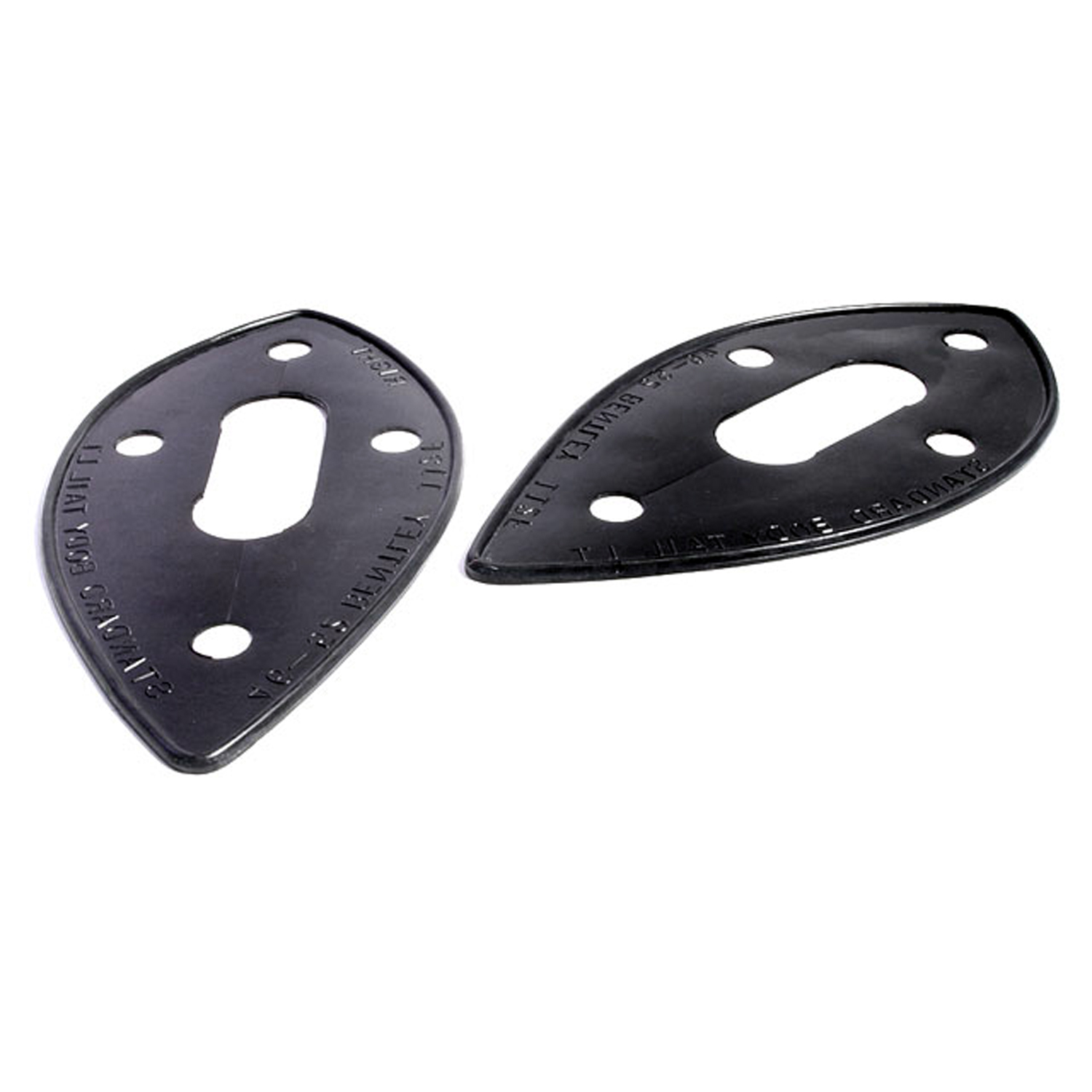 1946 Bentley Mk VI Standard Body Tail-light Pads. 3-7/8" wide X 7-3/8" long-MP 112-FStandard Body Tail-light Pads. 3-7/8" wide X 7-3/8" long. Pair R&L
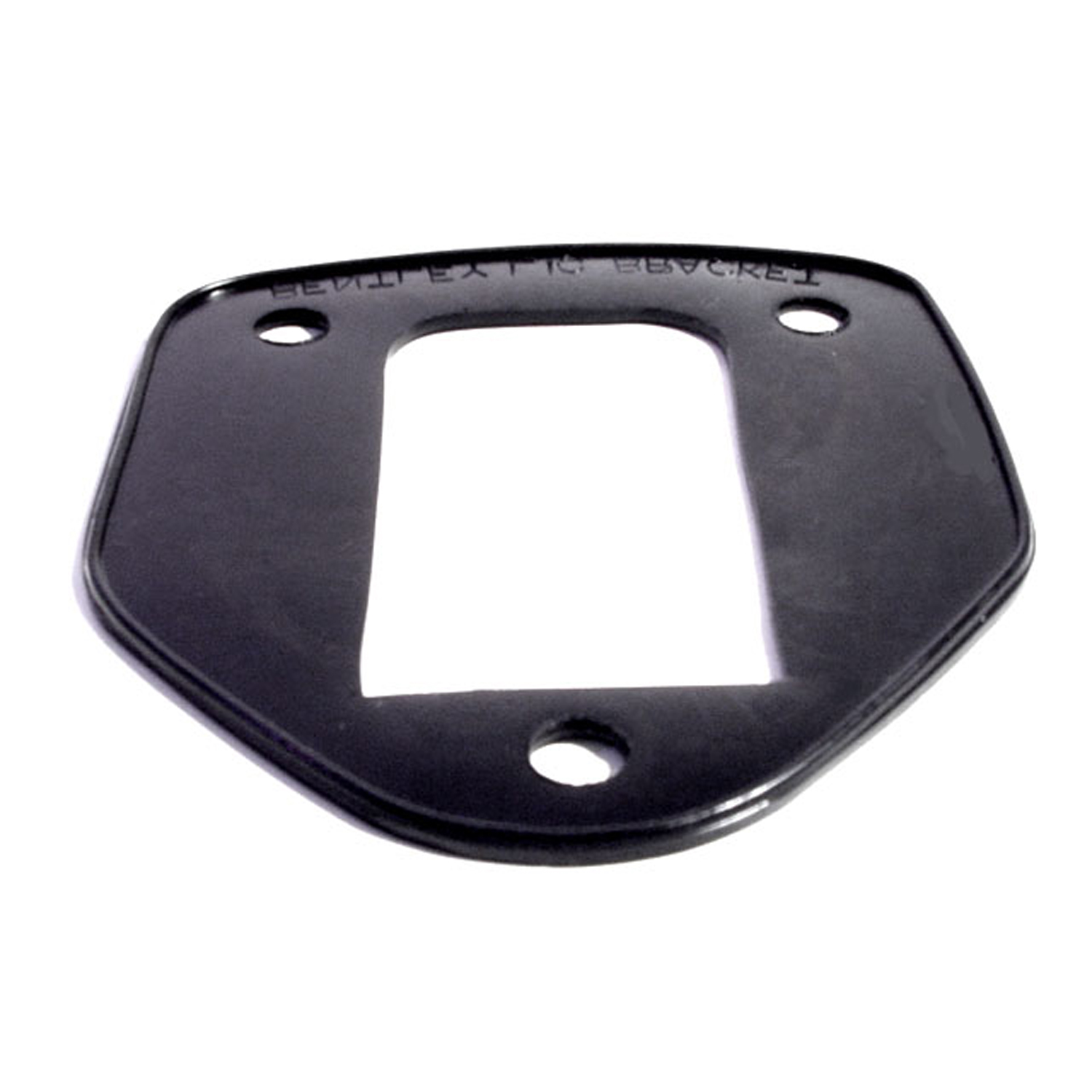 1946 Bentley Mk VI License Bracket Pad. 4-3/8" wide X 5" long. Each-MP 112-JLicense Bracket Pad. 4-3/8" wide X 5" long. Each
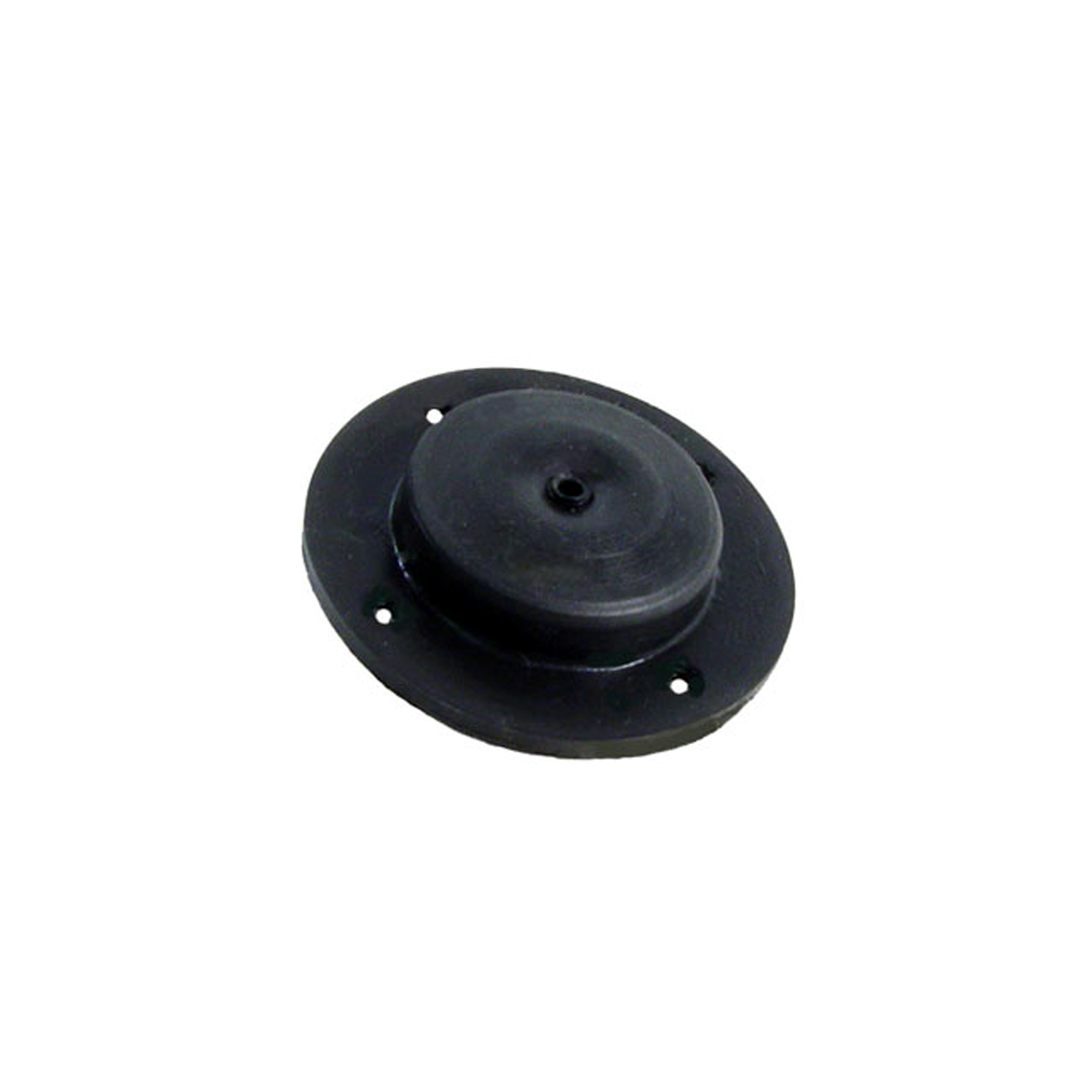 1946 Bentley Mk VI Thermo Tube through Dash Grommet. 2-3/8" O.D. Each-SM 70Thermo Tube through Dash Grommet. 2-3/8" O.D. Each
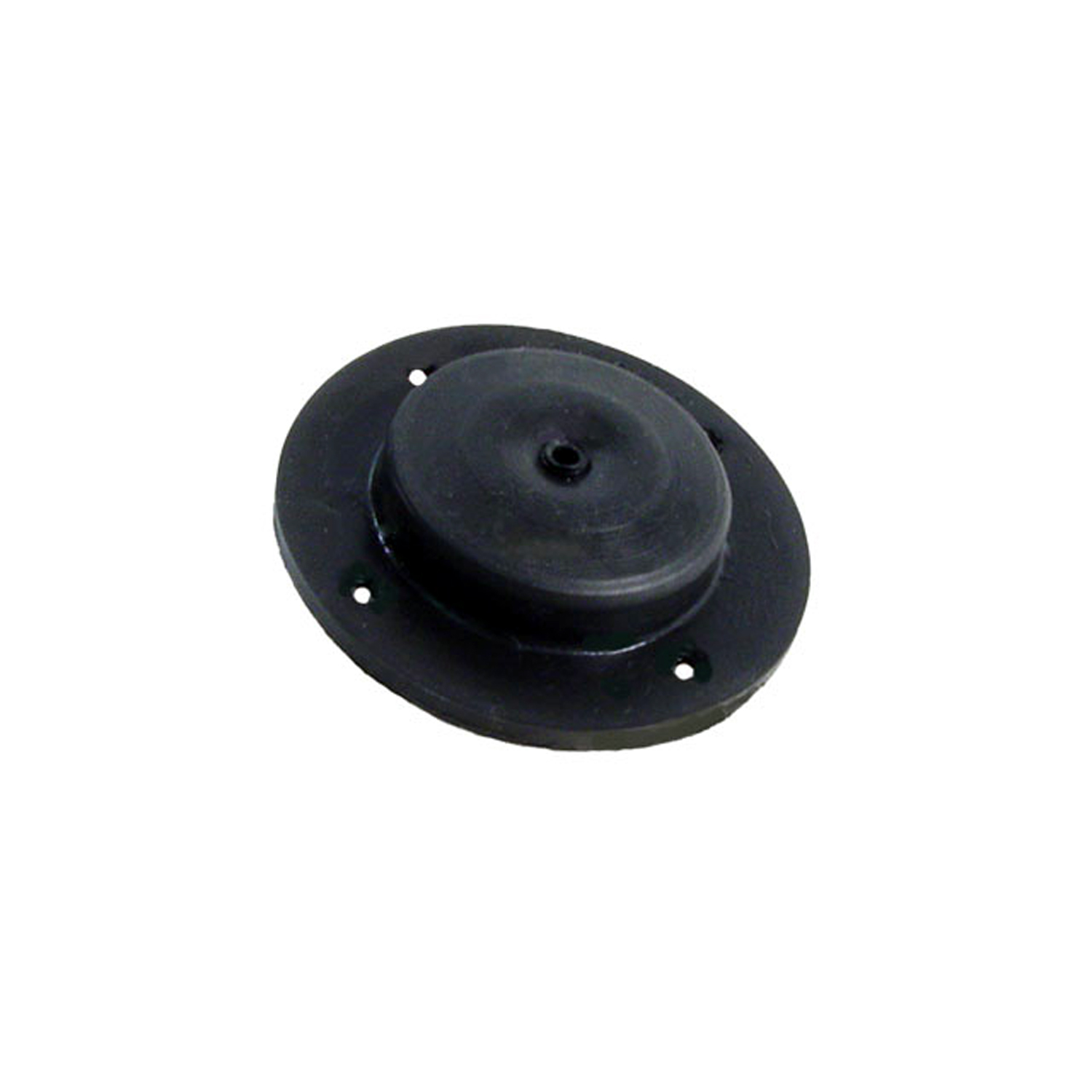 1946 Bentley Mk VI Speedometer Cable through Dash Grommet. 2-3/8" O.D. Each-SM 70-ASpeedometer Cable through Dash Grommet. 2-3/8" O.D. Each
Why Choose Metro?
For over 100 years, Metro Moulded Parts has been the pinnacle of quality in classic car restoration parts. Our commitment to precision and authenticity in every component ensures a perfect fit and an OEM-level appearance.
- Expert Craftsmanship & Quality: Each part is a testament to our dedication to reliability and perfection, crafted from original designs and thoroughly tested.
- Advanced Technology: We use cutting-edge techniques to create flawless, long-lasting parts that surpass others in performance.
- SuperSoft Sponge – The Ultimate Door Seal: Not only are our door seals 30% softer than competitors', but they're also guaranteed to never leak. They effectively reduce wind and road noise, enhancing your classic car's comfort and driving experience.
- Proudly American: Our parts are a product of American craftsmanship, made in the USA with a spirit of excellence and heritage.
- Unrivaled Warranty: We back our products with a 30-year industry-leading warranty, a testament to our confidence in their quality.
Join us in preserving the legacy of classic cars with parts that are crafted for perfection, not just made.