

Image of 1956 Bentley Continental, Note: These illustrations use artistic license and may differ from actual historical models.
Performance Metrics
Fundamental Metrics
Emotional Appeal
MMP Rating
| Engine Specifications | |
|---|---|
| Engine: | 4.9L Inline 6 |
| Displacement: | 4887 cc |
| Horsepower: | 178-200 hp |
| Torque: | Estimated 230-250 lb-ft |
| Compression Ratio: | 8.0:1 |
| Ignition System: | Coil and distributor |
| Cooling System: | Water-cooled |
| Performance Specifications | |
| 0-60 Time: | Estimated 10-12 seconds |
| 1/4 Mile Time: | Not available |
| Top Speed: | 120 mph |
| Transmission and Drive | |
| Drive Type: | Rear-wheel drive |
| Transmission Type: | 4-speed automatic |
| Fuel and Efficiency | |
| Fuel System Type: | Twin SU carburetors |
| MPG: | Estimated 10-15 mpg |
| Dimensions and Brakes | |
| Brakes: | Drum brakes |
| Wheelbase: | 120.5 inches |
| Weight: | 3950 lbs |
Note: Specifications for classic cars are given to the best of our ability, considering the limited and variant data available.
1956 Bentley Continental: The Fast Grand Tourer
The 1956 Bentley Continental was built for a rare kind of driver: someone who wanted the comfort of a hand-finished luxury car and the pace to cross a continent at speed. Based on the Bentley S1, it paired a powerful six-cylinder engine with bespoke coachwork, making each car both a grand tourer and a personal commission.
Bentley Motors, then part of Rolls-Royce, introduced the S1 in 1955. The Continental was its high-performance, long-distance counterpart, succeeding the celebrated R-Type Continental. Rather than mass-producing a single body design, Bentley supplied a chassis that specialist coachbuilders dressed in individual bodies. The result was a small family of cars with shared mechanicals but plenty of visual variety.
One detail captures the Continental’s purpose: period descriptions placed its top speed at around 120 mph, an extraordinary figure for a refined four-seat car of the mid-1950s. It was not simply a luxury saloon with a larger engine. It was engineered to make long, fast journeys feel composed and effortless.
Fastback Style and Hand-Finished Luxury
The most recognizable 1956 Continental is the two-door fastback coupe by H.J. Mulliner. Its long bonnet, low roofline and gently sloping rear gave the car a sleek, purposeful profile. The brightwork was restrained, the grille unmistakably Bentley, and the overall shape balanced elegance with the practical aim of reducing resistance at speed. Other coachbuilders interpreted the Continental in their own ways, so details such as the roof, windows, rear treatment and trim could differ from car to car.
Inside, the atmosphere was traditional and richly appointed. Owners could expect supple leather upholstery, deep wool carpets, polished wood veneers and carefully finished metal fittings. The materials and trim were selected to suit the customer, rather than drawn from a short, fixed options list. As a result, two cars from the same year can have notably different cabins.
Paint choices were similarly personal. Solid dark colors such as black, deep blue and British racing green suited the Continental’s formal character, while silver and lighter shades emphasized its long, streamlined body. Two-tone combinations were also popular, especially on coachbuilt examples, though the exact palette depended on the customer’s order. The car’s hand-built nature means that original color and trim records can be important to collectors.
The Continental was available in several coachbuilt forms across the S1 Continental production run, including coupes, drophead coupes and saloon bodies. The H.J. Mulliner fastback coupe remains the signature version, but an open-top car or a more upright four-door body can be equally compelling for buyers who value individuality over the best-known silhouette.
Engineering for the Open Road
Under the bonnet sits Bentley’s 4,887 cc inline-six, commonly described as a 4.9-litre engine. In Continental specification, it was tuned for more performance than the standard S1. Published power figures vary, but around 178 bhp is commonly cited. Power passed through a four-speed automatic transmission, based on the Hydramatic design and built under licence.
For its time, the Continental combined several features that helped make fast touring less tiring. It had independent front suspension, power assistance for steering on many examples, and a smooth automatic gearbox. Its coachbuilt bodywork and attention to weight also reflected the priorities of a high-speed touring car. It did not have modern electronic systems, of course, but it offered a remarkably polished package for the 1950s.
Period performance figures vary by body, gearing and test conditions. A sound S1 Continental is generally associated with a top speed close to 120 mph and a 0-to-60 mph time in roughly the 11-to-13-second range. Those numbers were impressive for a substantial, fully trimmed luxury car. They are best treated as historical estimates, not guarantees for a particular car today.
How a 1956 Continental Drives
The straight-six delivers its power with a smooth, measured surge rather than a sharp burst. The engine’s subdued mechanical note and the automatic transmission encourage a relaxed rhythm: ease onto the throttle, let the gearbox respond, and allow the car to gather speed. The Continental’s appeal is less about dramatic acceleration than about maintaining a fast, quiet cruise with little fuss.
On a rough road, the suspension favors comfort and composure. It can absorb many bumps gracefully, although a car this age will only ride as well as its springs, dampers, bushes and tires allow. On winding roads, the steering is more deliberate than that of a modern sports car, and the car’s size and mass reward smooth inputs. It feels most at home flowing through broad bends and covering open-road distances.
Braking and cornering also need to be considered in period context. The car lacks modern stability control, anti-lock braking and contemporary tire technology. Its drum brakes and substantial weight call for planning, especially in modern traffic. A well-maintained example can be reassuring and capable, but it should be driven with respect for its age and mechanical limits.
Why the Continental Mattered
The S1 Continental carried forward an idea established by its R-Type predecessor: a Bentley could be both a deeply comfortable luxury car and one of the fastest four-seat production cars available. Its distinctive blend of pace, quietness and coachbuilt elegance set it apart from many contemporaries, which often leaned more heavily toward either sporting performance or formal luxury.
Its influence was not a single piece of mass-market technology. Instead, the Continental helped define the modern grand touring ideal: a car with enough performance for sustained high-speed travel, enough comfort for long days behind the wheel, and enough style to make the journey feel like an occasion. That formula remains central to Bentley’s identity.
Coachbuilding was also part of its significance. The Continental showed how a manufacturer could combine a carefully engineered chassis with the work of specialist body firms. The result was a recognizable model range without forcing every buyer into the same shape or specification. Today, that approach is a major part of the car’s appeal and its complexity as a collector purchase.
Ownership, Maintenance and Reliability
Most 1956 Continentals are now used as collector cars, touring cars and concours or club-event entrants rather than everyday transport. A well-sorted example can still undertake long trips, but regular use demands careful maintenance and a realistic budget. The car’s age, bespoke construction and low production volume make it a very different ownership proposition from a modern luxury vehicle.
Routine servicing is manageable for a specialist familiar with Rolls-Royce and Bentley cars of the period. The engine and transmission are durable when maintained correctly, but neglected cooling systems, worn suspension, aging electrical components and brake issues can become expensive. Body repairs may be especially challenging because coachwork differs by builder and replacement panels are not always simple to source.
This is not an ideal car for an owner who expects every repair to be straightforward or inexpensive. Specialist knowledge matters, as does a thorough inspection before purchase. Prospective buyers should pay close attention to chassis condition, corrosion, engine health, transmission behavior, brake operation and the quality of any prior restoration. Originality and documentation can be just as important as a glossy finish.
Rare Details and Common Criticisms
There were approximately 431 Bentley S1 Continentals built across the model’s production run from 1955 to 1959. That figure covers the wider S1 Continental series, not just cars produced in 1956. Exact annual numbers are harder to pin down, and each coachbuilder’s body style creates further distinctions among surviving cars.
The Continental’s reputation as an exceptionally fast four-seat car is one of its most enduring claims. Its coachbuilt bodies also mean that the phrase “1956 Bentley Continental” does not describe one uniform appearance. A Mulliner fastback, a drophead coupe and a four-door body can share the same basic model identity while looking like very different commissions.
Common criticisms are practical rather than mysterious: ownership is expensive, the car is large, braking distances are long by modern standards, and bespoke parts can take time and money to address. Some examples may also lack conveniences that buyers now expect, such as air conditioning. Those compromises come with the territory of a hand-built 1950s grand tourer, but they are worth understanding before buying.
Collector Values and Availability
Values vary widely according to coachbuilder, body style, condition, provenance, originality and restoration quality. As a broad current-market guide, a project or heavily compromised car might fall around $250,000 to $400,000. A sound, usable example could be roughly $450,000 to $1.2 million, while a particularly desirable, beautifully restored or exceptionally documented car may exceed $1.5 million. These are estimates in U.S. dollars, not a substitute for a current appraisal or recent comparable sales.
The S1 Continental has generally shown long-term collector appeal, supported by its rarity, nameplate and bespoke construction. Values can still move with the wider classic-car market, and top examples do not necessarily track the prices of average cars. Condition and provenance matter enormously. Buyers should also budget for ongoing care, since a low purchase price can be quickly outweighed by deferred mechanical or coachwork repairs.
Only a small number appear on the market at any one time. With about 431 built across the full S1 Continental run, finding a car is possible, but finding the right body style, specification and history takes patience. The finest examples are often sold through specialist dealers, marque networks and major classic-car auctions.
The Lasting Appeal of the 1956 Bentley Continental
The 1956 Bentley Continental brought together a refined 4.9-litre six-cylinder engine, genuine high-speed ability and individually crafted coachwork. Its most famous form, the H.J. Mulliner fastback, remains one of the defining shapes of postwar British motoring, but the model’s wider appeal lies in how personal each car could be.
More than a rare old Bentley, the Continental is an early expression of the grand touring car as we understand it today: fast enough to make distance disappear, comfortable enough to make the journey enjoyable, and distinctive enough to turn every arrival into an event.
1956 Bentley Continental Catalog of Parts
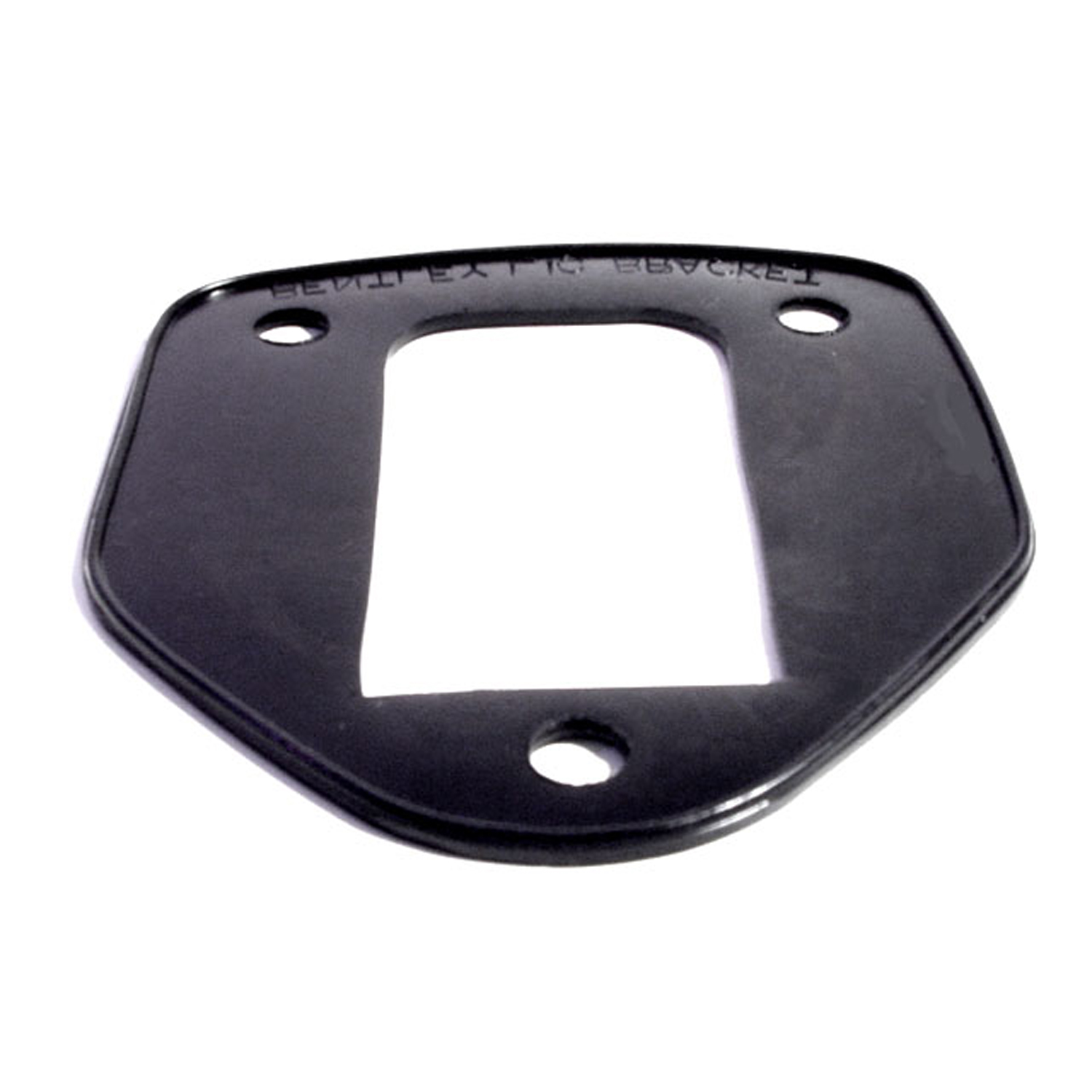 1956 Bentley Continental License Bracket Pad. 4-3/8" wide X 5" long. Each-MP 112-JLicense Bracket Pad. 4-3/8" wide X 5" long. Each
Why Choose Metro?
For over 100 years, Metro Moulded Parts has been the pinnacle of quality in classic car restoration parts. Our commitment to precision and authenticity in every component ensures a perfect fit and an OEM-level appearance.
- Expert Craftsmanship & Quality: Each part is a testament to our dedication to reliability and perfection, crafted from original designs and thoroughly tested.
- Advanced Technology: We use cutting-edge techniques to create flawless, long-lasting parts that surpass others in performance.
- SuperSoft Sponge – The Ultimate Door Seal: Not only are our door seals 30% softer than competitors', but they're also guaranteed to never leak. They effectively reduce wind and road noise, enhancing your classic car's comfort and driving experience.
- Proudly American: Our parts are a product of American craftsmanship, made in the USA with a spirit of excellence and heritage.
- Unrivaled Warranty: We back our products with a 30-year industry-leading warranty, a testament to our confidence in their quality.
Join us in preserving the legacy of classic cars with parts that are crafted for perfection, not just made.