

Image of 1957 Bentley Continental, Note: These illustrations use artistic license and may differ from actual historical models.
Performance Metrics
Fundamental Metrics
Emotional Appeal
MMP Rating
| Engine Specifications | |
|---|---|
| Engine Options: | 4.9L I6 |
| Displacement Range: | 4887 cc |
| Horsepower Range: | 178-200 hp |
| Torque: | Estimated 300 lb-ft |
| Compression Ratio: | 8.0:1 |
| Ignition System: | Coil and distributor |
| Cooling System: | Water-cooled |
| Performance Specifications | |
| 0-60 Time: | 13 seconds |
| 1/4 Mile Time: | Estimated 19 seconds |
| Top Speed: | 120 mph |
| Transmission and Drive | |
| Drive Type: | Rear-wheel drive |
| Transmission Type: | 4-speed automatic |
| Fuel and Efficiency | |
| Fuel System Type: | Twin SU carburetors |
| MPG: | Estimated 10-15 mpg |
| Dimensions and Brakes | |
| Brakes: | Drum brakes |
| Wheelbase: | 120 inches |
| Weight: | 4000 lbs |
Note: Specifications for classic cars are given to the best of our ability, considering the limited and variant data available.
1957 Bentley Continental: The Coachbuilt Grand Tourer
The 1957 Bentley Continental was built for a rare kind of journey: crossing a continent at speed without giving up the calm, tailored comfort of a luxury saloon. Produced by Bentley Motors, then part of Rolls-Royce, it was a special, lighter and more sporting version of the Bentley S1. Rather than receiving one standard body, each Continental chassis went to a coachbuilder, making every finished car a collaboration between Bentley engineering and bespoke British craftsmanship.
The S1 Continental arrived in 1955 as the successor to the celebrated R-Type Continental. Its mission was much the same: combine high-speed touring with room for passengers and luggage. A 1957 example belongs to the S1 Continental’s four-year production run, which ended in 1959. One detail that still catches enthusiasts’ attention is that the factory supplied a rolling chassis, not a finished, identically styled car. The bodywork, cabin details and even the car’s personality depended heavily on the coachbuilder and the original buyer.
Fastback Lines and Bespoke Craft
The most recognizable S1 Continental is the two-door fastback by H.J. Mulliner. Its long bonnet, upright Bentley grille and flowing roofline give it a poised, forward-moving profile. The rear slopes neatly into the boot, creating a shape that looks elegant at rest and purposeful on the open road. The proportions are restrained rather than flamboyant, with the body sitting low over the shorter Continental chassis.
H.J. Mulliner’s fastback is the best-known style, but it was not the only one. Customers could commission Continental coachwork from firms including Park Ward, James Young and Freestone & Webb. These coachbuilders produced coupes, drophead coupes and other individual designs, with a small number of less conventional body configurations. The fastback is generally regarded as the iconic choice, but the variety is part of the model’s appeal: no single shape tells the whole story.
Inside, the Continental was finished as a personal luxury car. Hand-fitted leather upholstery, polished walnut veneer, wool carpets and carefully worked metal trim were typical ingredients. Buyers could choose colors and details to suit their tastes, so there was no single universal factory palette. Deep green, dark blue, black, silver and two-tone combinations all suit the car’s period character, while lighter paintwork can emphasize the sculpted roof and long flanks.
Its technology was advanced in a less showy way. The S1 Continental combined a refined six-cylinder engine with a four-speed automatic transmission, power-assisted steering and suspension designed to keep the car composed over long distances. These features did not make it a modern sports car, but they helped turn high-speed touring into a relaxed rather than exhausting experience.
What Made the Continental Different
The S1 Continental was based on the Bentley S1, but it was not simply a standard saloon with two doors removed. Its shorter chassis, higher gearing and Continental-specific engine specification were matched to lighter, coachbuilt bodies. The result was a more focused grand tourer that could cover ground quickly while retaining the silence, finish and passenger comfort expected of a Bentley.
That balance set it apart from many contemporaries. Some performance cars were fast but cramped or noisy; many luxury cars were comfortable but less suited to sustained high-speed travel. The Continental occupied the space between them. Its lineage also helped establish a name that Bentley would return to decades later, most visibly with the modern Continental GT. The cars are very different in construction and technology, but both express the same basic idea: a luxurious Bentley made for long-distance driving.
Performance and Road Manners
Power came from Bentley’s 4.9-liter F-head straight-six, with an aluminum-alloy cylinder head and twin SU carburetors. Factory output figures were not always promoted in the way they are today, but period estimates commonly place the engine in the neighborhood of 170 to 180 horsepower, depending on specification. A healthy car could reach roughly 120 mph, while 0 to 60 mph took around 13 seconds. Those figures were impressive for a substantial luxury car of the 1950s, especially one built to carry passengers in comfort.
On a smooth, open road, the Continental feels composed and unhurried. The automatic gearbox delivers its shifts gently, and the engine’s strength is best understood as a broad, smooth surge rather than a high-revving rush. Steering assistance makes low-speed maneuvering easier than the car’s size might suggest, while the suspension is tuned to absorb distance and road imperfections rather than sharpen every corner.
Over bumps, a well-maintained example should feel supple, though it will not isolate occupants like a current luxury car. On a winding road, the Continental rewards a measured pace. Its weight, vintage tires and period suspension call for anticipation, not abrupt inputs. The engine note is subdued but unmistakably substantial, and the driving experience involves more mechanical feedback and planning than it would in a modern Bentley. It is a grand tourer in the original sense: best enjoyed steadily, with the road stretching ahead.
Living With a 1957 Bentley Continental
Today, the S1 Continental is most often used for touring, concours events, historic motoring gatherings and special occasions. Some owners drive their cars regularly, but few would choose one as an everyday commuter. Its size, fuel consumption, limited modern safety equipment and bespoke parts make routine city use less practical than a contemporary vehicle.
The straight-six has a reputation for smoothness and durability when serviced correctly, but age changes the ownership equation. Cooling systems, fuel delivery, electrical components, suspension and brakes all need careful attention. A buyer should seek a specialist inspection and detailed service records rather than relying on a polished exterior. Mechanical work is manageable for a well-equipped specialist, but the average owner is unlikely to find every repair simple or inexpensive.
Coachwork and cabin restoration can be especially demanding. A hand-built body may contain unique details, and replacing aged leather, wood veneer or trim to the right standard takes skilled labor. Aluminum body panels also require experienced repair techniques. The best ownership experience usually comes from a car with sound structure, documented maintenance and a support network familiar with Rolls-Royce and Bentley models of the period.
Rare Details and Common Criticisms
Bentley built approximately 431 S1 Continentals between 1955 and 1959. That figure covers the model’s full production run, not just 1957, and surviving cars are spread across several coachbuilders and body styles. The exact number of 1957 examples is not commonly summarized as a single definitive figure, so it is more useful to identify a car by its chassis and coachwork than by year alone.
The Continental’s bespoke construction is both its greatest charm and a practical challenge. Two cars from the same year can differ significantly in appearance and equipment, and parts for one coachbuilt body may not suit another. The model is also sometimes criticized for being expensive to restore and less sporting in tight corners than its elegant profile might imply. It was built to travel quickly and comfortably, not to behave like a lightweight racing car.
Its most enduring claim to fame is its role in extending Bentley’s reputation for fast, refined touring beyond the R-Type Continental. It was not a mass-market speed-record car, and there is no single production-wide record that defines it. Its achievement was more subtle: offering period buyers exceptional pace, coachbuilt exclusivity and long-distance comfort in one remarkably polished package.
Collector Values and Market Outlook
Values vary widely according to coachbuilder, body style, originality, condition and restoration quality. As a broad 2026 guide in U.S. dollars, a car needing substantial work might be valued around $200,000 to $350,000. A sound, usable example could fall roughly between $350,000 and $700,000, while exceptional, well-documented cars can reach $800,000 to $1.2 million or more. Particularly desirable coachwork, rare specifications or concours-quality restoration can push a car beyond that range. These are estimates, not a substitute for a current appraisal or comparable auction results.
With only about 431 built across the entire S1 Continental run, availability is limited. Cars do appear at specialist dealers and major auctions, but buyers may wait for the right coachbuilder, specification and condition. Over the long term, the Continental has benefited from its rarity and place in Bentley history. Recent values, however, are selective rather than uniformly rising: exceptional examples attract strong interest, while cars requiring extensive restoration can be held back by the cost of bringing them up to standard.
Why the S1 Continental Still Matters
The 1957 Bentley Continental brought together a smooth 4.9-liter engine, long-distance performance and individually commissioned coachwork in a way few cars could match. Its fastback design remains the signature image, but the wider range of coachbuilt bodies makes the model even more compelling. It is rare, costly to maintain and very much a product of its era, yet its combination of craftsmanship and genuine touring ability still feels special.
More than a luxury car with a famous badge, the S1 Continental is a rolling expression of Bentley’s grand touring ideal: build a car that can cross great distances quickly, then make the journey feel effortless.
1957 Bentley Continental Catalog of Parts
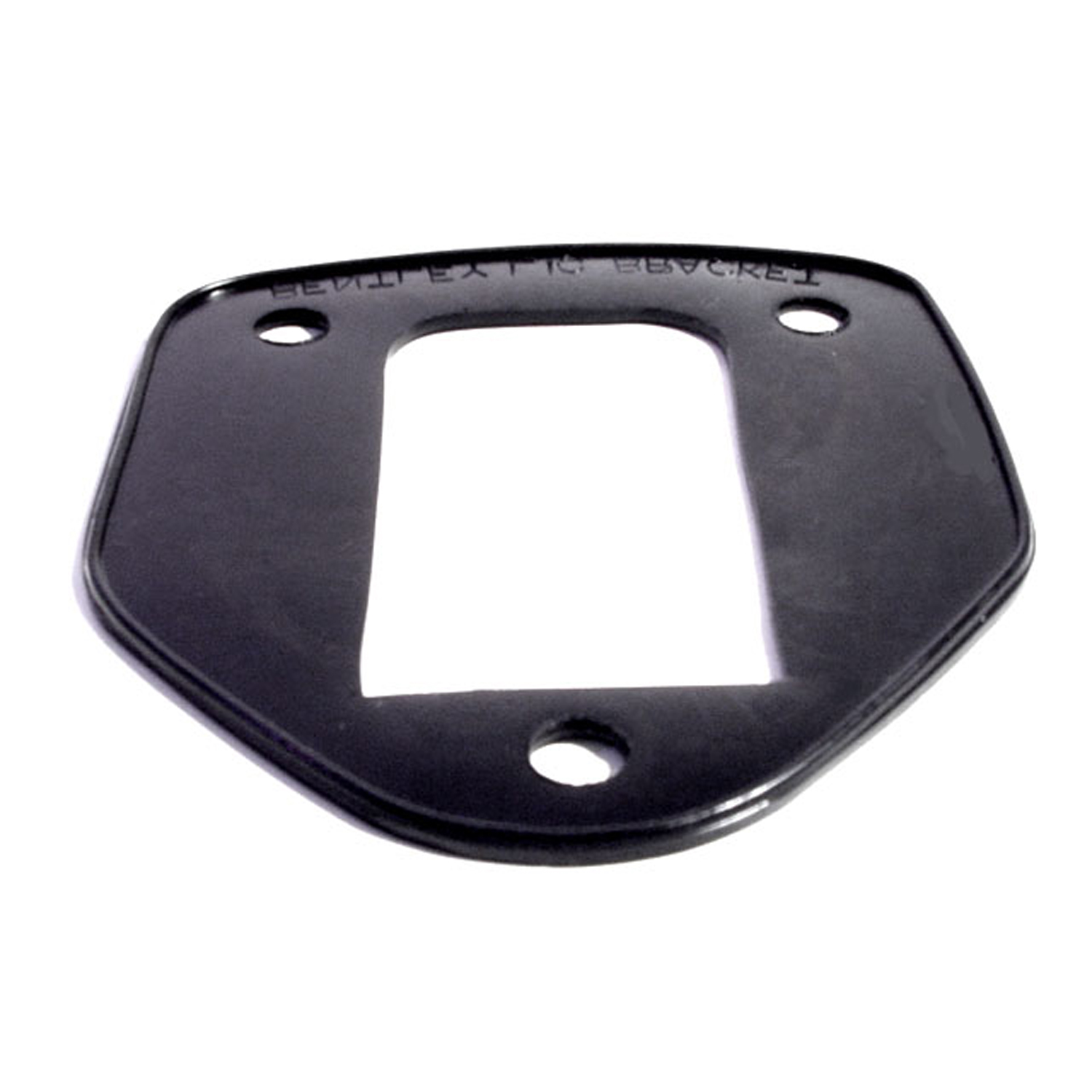 1957 Bentley Continental License Bracket Pad. 4-3/8" wide X 5" long. Each-MP 112-JLicense Bracket Pad. 4-3/8" wide X 5" long. Each
Why Choose Metro?
For over 100 years, Metro Moulded Parts has been the pinnacle of quality in classic car restoration parts. Our commitment to precision and authenticity in every component ensures a perfect fit and an OEM-level appearance.
- Expert Craftsmanship & Quality: Each part is a testament to our dedication to reliability and perfection, crafted from original designs and thoroughly tested.
- Advanced Technology: We use cutting-edge techniques to create flawless, long-lasting parts that surpass others in performance.
- SuperSoft Sponge – The Ultimate Door Seal: Not only are our door seals 30% softer than competitors', but they're also guaranteed to never leak. They effectively reduce wind and road noise, enhancing your classic car's comfort and driving experience.
- Proudly American: Our parts are a product of American craftsmanship, made in the USA with a spirit of excellence and heritage.
- Unrivaled Warranty: We back our products with a 30-year industry-leading warranty, a testament to our confidence in their quality.
Join us in preserving the legacy of classic cars with parts that are crafted for perfection, not just made.