

Image of 1957 Bentley S1 Series, Note: These illustrations use artistic license and may differ from actual historical models.
Performance Metrics
Fundamental Metrics
Emotional Appeal
MMP Rating
| Engine Specifications | |
|---|---|
| Engine: | 4.9L I6 |
| Displacement: | 4887 cc |
| Horsepower: | 178 hp |
| Torque: | 300 lb-ft |
| Compression Ratio: | 8.0:1 |
| Ignition System: | Coil and distributor |
| Cooling System: | Water-cooled |
| Performance Specifications | |
| 0-60 Time: | 13 seconds |
| 1/4 Mile Time: | Not available |
| Top Speed: | 103 mph |
| Transmission and Drive | |
| Drive Type: | Rear-wheel drive |
| Transmission Type: | 4-speed automatic |
| Fuel and Efficiency | |
| Fuel System Type: | Twin SU carburetors |
| MPG: | 10-15 mpg |
| Dimensions and Brakes | |
| Brakes: | Drum brakes |
| Wheelbase: | 123 inches |
| Weight: | 4100 lbs |
Note: Specifications for classic cars are given to the best of our ability, considering the limited and variant data available.
1957 Bentley S1: British Luxury in Its Most Elegant Form
The 1957 Bentley S1 made quiet luxury feel effortless, combining stately British design with the smooth power of a large six-cylinder engine. Built by Bentley Motors in Crewe, England, the S1 was part of the postwar generation of Bentleys that made the marque’s traditional craftsmanship more comfortable and accessible without sacrificing its prestige.
The S1 was introduced in 1955 as the successor to the R Type and shared much of its engineering with the Rolls-Royce Silver Cloud I. That relationship was close, but Bentley gave the car its own identity through distinctive badging, trim details, and a slightly more sporting image. Production continued through 1959, making a 1957 example part of the model’s middle years.
One especially intriguing branch of the S1 story was the S1 Continental. With coachbuilt, lightweight bodies and a higher top speed, it was one of the era’s notably swift four-seat grand touring cars. It showed that a Bentley could be both an exceptionally comfortable limousine and a serious long-distance performer.
Elegant Lines and Hand-Finished Comfort
The standard S1 saloon has a formal, upright presence. Its tall radiator grille, sculpted bonnet, separate headlamps, and flowing front wings give it a dignified profile, while the gently rounded rear keeps the overall shape from feeling severe. The proportions are substantial, but the detailing is restrained. The car announces its status through craftsmanship rather than ornament.
Inside, the S1 surrounds its occupants with traditional British materials: polished wood veneers, thick carpeting, generous leather seating, and carefully finished metal fittings. The cabin was designed for relaxed travel, with a high seating position, broad seats, and the sort of quiet, well-appointed atmosphere expected of a Bentley. Many cars were specified or later restored with individual trim choices, so interiors can vary considerably from one example to another.
Buyers could choose from a broad range of paint and trim combinations. Solid dark shades such as black, deep blue, and dark green suited the formal saloon, while two-tone schemes were popular on some coachbuilt cars. The appeal of a particular color is often personal, but period-correct paint and well-preserved original trim can matter to collectors.
The most common body was the four-door standard steel saloon. Longer-wheelbase versions offered additional rear-seat space, while specialist coachbuilders including H.J. Mulliner, Park Ward, and James Young produced more individual bodies. These included two-door coupés and drophead coupés. The S1 Continental, often fitted with sleek, lightweight coachwork, is the most coveted and visually distinctive version of the family.
Engineering Behind the Quiet Ride
Power came from Bentley’s 4,887 cc, or 4.9-liter, F-head inline-six. Its aluminum-alloy cylinder head and twin SU carburetors helped deliver smooth, flexible performance. Bentley did not emphasize an official horsepower figure in the way many manufacturers did, but the engine is commonly estimated at around 178 horsepower. A four-speed automatic transmission was a major part of the S1’s relaxed character.
The S1’s engineering favored refinement over novelty for its own sake. Independent front suspension helped improve ride comfort, while power assistance made steering a heavy luxury car less demanding. The design combined a substantial chassis and carefully developed suspension with a well-insulated cabin. In period, those qualities made the S1 feel exceptionally composed on long journeys.
Why the S1 Mattered
The S1 helped define the postwar Bentley formula: traditional styling, meticulous coachwork, smooth mechanicals, and comfort suited to covering serious distances. It also marked an important transition from the more overtly prewar character of earlier Bentleys toward a modern luxury saloon that could be driven with comparatively little effort.
What set it apart from many contemporaries was its balance. Some luxury cars prioritized imposing size and plushness; sporting cars often asked occupants to tolerate a firmer ride and more road noise. The S1 brought those qualities together. The Continental models pushed the idea further, pairing the Bentley’s comfort with lighter bodies and higher-speed touring ability.
The S1 did not introduce a single technology that transformed the whole industry. Its lasting influence is more about the complete package: a refined engine, thoughtful chassis tuning, coachbuilt individuality, and a cabin made for quiet travel. That blend remains central to how many people picture a classic British luxury car.
Performance and Road Manners
Performance figures vary with body style, condition, gearing, and testing method. A standard S1 saloon is generally quoted at a top speed of about 100 to 105 mph, with 0 to 60 mph taking roughly 13 seconds. The lighter Continental versions could reach around 115 mph, giving them a meaningful advantage on open roads.
Those numbers do not tell the whole story. The six-cylinder engine delivers power smoothly, with a subdued mechanical note rather than a dramatic roar. The automatic gearbox suits the car’s mission, shifting unobtrusively as the Bentley gathers speed. In a well-maintained example, the result feels less like a powerful launch and more like an unhurried surge.
On uneven roads, the suspension absorbs bumps with the measured softness expected of a luxury saloon of the period. The body is large and weighty, so tight bends call for a calm approach, but the car feels stable on sweeping roads and relaxed at touring speeds. Strong crosswinds, narrow lanes, and modern traffic can make its size apparent, and its steering and braking feel distinctly vintage compared with a contemporary car.
Living with a 1957 Bentley S1
Today, most S1s are used as weekend tourers, show cars, or special-occasion vehicles rather than everyday transport. A sound example can cover long distances comfortably, but owners need to plan around its age, size, fuel consumption, and lack of modern safety equipment. It is most at home on a measured drive through open countryside, not in stop-and-go city traffic.
Maintenance is best handled by a specialist familiar with Rolls-Royce and Bentley cars of the period. Routine servicing is manageable for an experienced home mechanic, but the S1 is not an inexpensive car to learn on. Parts, specialist labor, and restoration work can be costly, and careful inspection is important before purchase. The engine, automatic transmission, suspension, brakes, electrical system, woodwork, and leather all deserve close attention.
Reliability depends heavily on maintenance history. These cars were built to a high standard, but age can expose neglected cooling systems, worn suspension components, tired seals, or previous repair work of uneven quality. A well-documented, regularly serviced car is a far safer choice than an apparently cheap example that needs extensive mechanical or cosmetic restoration.
Notable S1 Facts and Common Criticisms
Bentley produced approximately 3,538 S1 cars between 1955 and 1959. That total includes standard saloons and less common variants, while the S1 Continental accounted for only a small share of the production. Exact figures can differ depending on how body variations and coachbuilt cars are counted, but the Continental is unquestionably the rarer and more valuable version.
The S1 was not built to set speed or endurance records, and its appeal was never based on racing. Its achievement was making high-speed touring feel calm and civilized. The Continental models are the standout exception to the standard saloon’s performance profile, with their lighter construction and faster bodies earning them a special place among 1950s grand tourers.
Common criticisms are practical rather than mysterious: high running costs, thirsty fuel consumption, a large footprint, and the need for specialist care. Some drivers also find the standard car less brisk than its imposing appearance suggests. The Continental addresses some of that concern, but rarity and restoration costs make it a much more expensive proposition.
Collector Values and Availability
As a broad 2026 estimate, a standard Bentley S1 saloon in usable, presentable condition might sell for roughly $40,000 to $100,000, with exceptional, correctly restored examples sometimes reaching around $120,000 or more. Project cars can be substantially cheaper, but a major restoration can quickly exceed the purchase-price savings.
S1 Continentals occupy a different market. Depending on coachbuilder, originality, condition, and provenance, they can range from several hundred thousand dollars to well over $1 million. These figures are approximate and can vary by country, auction venue, and currency. A rare body style or exceptional history can have a major effect on the final price.
Standard saloons are available from time to time, but good examples are not everyday finds. Coachbuilt cars and Continentals are considerably scarcer. Over the long term, the market has generally favored well-preserved, original, or professionally restored cars, especially rare coachbuilt models. Standard S1 values tend to depend more on condition and maintenance than on a rising market alone, so buyers should focus first on the quality of the car rather than the promise of future appreciation.
A Bentley Built for the Long Road
The 1957 Bentley S1 is a compelling blend of hand-finished luxury, classic British styling, and smooth grand-touring performance. Its roomy saloon form made it an accomplished luxury car, while the Continental and coachbuilt versions revealed a more exclusive, sporting side. It asks for specialist care and a generous ownership budget, but rewards its owner with a kind of composed, unhurried travel that few modern cars can reproduce.
More than a handsome old saloon, the S1 captures a turning point in Bentley history: a marque adapting its traditions to the demands of modern motoring. That quiet confidence is precisely what makes the S1 memorable today.
1957 Bentley S1 Series Catalog of Parts
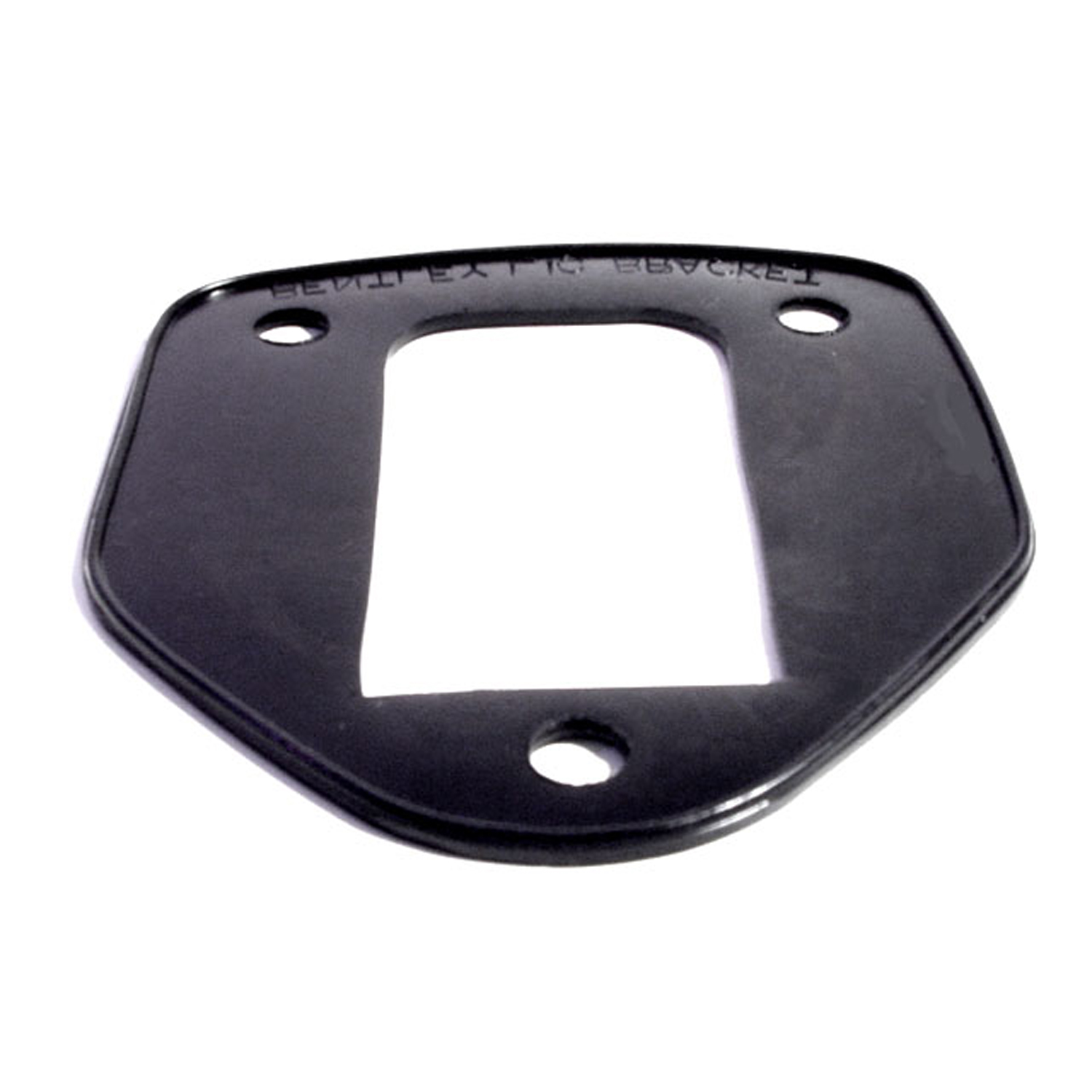 1957 Bentley S1 Series License Bracket Pad. 4-3/8" wide X 5" long. Each-MP 112-JLicense Bracket Pad. 4-3/8" wide X 5" long. Each
Why Choose Metro?
For over 100 years, Metro Moulded Parts has been the pinnacle of quality in classic car restoration parts. Our commitment to precision and authenticity in every component ensures a perfect fit and an OEM-level appearance.
- Expert Craftsmanship & Quality: Each part is a testament to our dedication to reliability and perfection, crafted from original designs and thoroughly tested.
- Advanced Technology: We use cutting-edge techniques to create flawless, long-lasting parts that surpass others in performance.
- SuperSoft Sponge – The Ultimate Door Seal: Not only are our door seals 30% softer than competitors', but they're also guaranteed to never leak. They effectively reduce wind and road noise, enhancing your classic car's comfort and driving experience.
- Proudly American: Our parts are a product of American craftsmanship, made in the USA with a spirit of excellence and heritage.
- Unrivaled Warranty: We back our products with a 30-year industry-leading warranty, a testament to our confidence in their quality.
Join us in preserving the legacy of classic cars with parts that are crafted for perfection, not just made.