
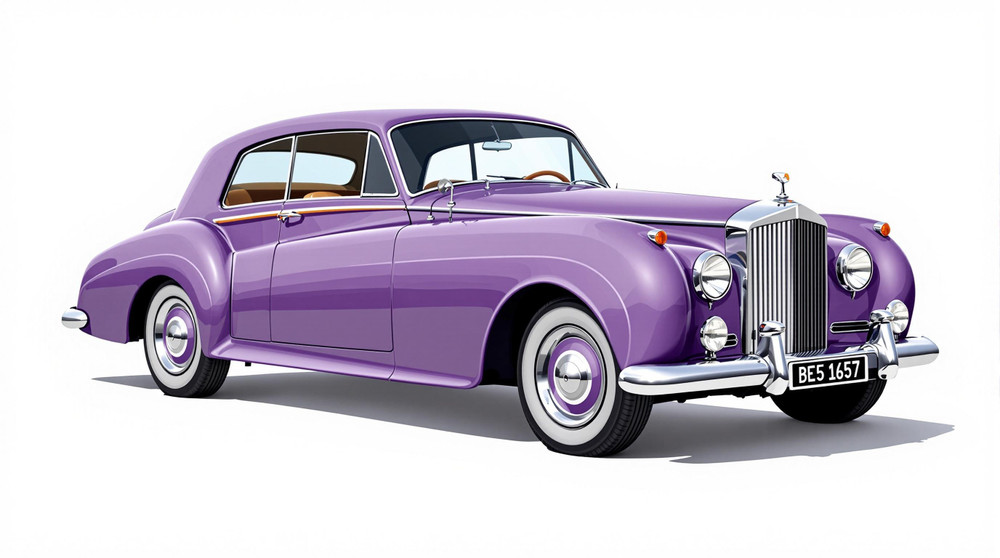
Image of 1958 Bentley Continental, Note: These illustrations use artistic license and may differ from actual historical models.
Performance Metrics
Fundamental Metrics
Emotional Appeal
MMP Rating
| Engine Specifications | |
|---|---|
| Engine: | 6.2L V8 |
| Displacement: | 6.2L |
| Horsepower: | 200-250 HP |
| Torque: | Estimated 300-350 lb-ft |
| Compression Ratio: | 8.0:1 |
| Ignition System: | Distributor ignition |
| Cooling System: | Liquid-cooled |
| Performance Specifications | |
| 0-60 Time: | Estimated 10-12 seconds |
| 1/4 Mile Time: | Estimated 17-19 seconds |
| Top Speed: | 120 mph |
| Transmission and Drive | |
| Drive Type: | Rear-wheel drive |
| Transmission Type: | 4-speed automatic |
| Fuel and Efficiency | |
| Fuel System Type: | Carburetor |
| MPG: | Estimated 10-12 mpg |
| Dimensions and Brakes | |
| Brakes: | Drum brakes |
| Wheelbase: | 123 inches |
| Weight: | Estimated 4500 lbs |
Note: Specifications for classic cars are given to the best of our ability, considering the limited and variant data available.
1958 Bentley Continental: The Fast Grand Tourer
The 1958 Bentley Continental was built for crossing countries at speed, then arriving with the sort of quiet authority that made an entrance unnecessary. It was part of the Bentley S1 Continental series, produced from 1955 to 1959 by Bentley Motors, then operating under the Rolls-Royce umbrella. Beneath its coachbuilt bodywork sat a powerful-for-its-day six-cylinder engine and a chassis developed for high-speed touring.
The Continental continued an idea established by the Bentley R-Type Continental: a relatively light, exceptionally fast four-seat car for drivers who wanted genuine performance without giving up refinement. A particularly intriguing detail is that there was no single standard Continental body. Customers selected a design from an independent coachbuilder, so two cars from the same year could have strikingly different shapes and interiors.
Coachbuilt Style and Bespoke Comfort
The S1 Continental’s appearance depended on its coachbuilder, but the most recognizable version is the two-door fastback by H.J. Mulliner. Its long bonnet, flowing roofline and tapered tail give it a purposeful, almost aircraft-like profile. Sweeping wings and carefully integrated headlamps keep the design elegant rather than aggressive. The proportions are unmistakably 1950s, yet the fastback still looks remarkably streamlined.
Other coachbuilders offered fixed-head coupes, drophead coupes and, in smaller numbers, four-door saloons. Park Ward and James Young were among the firms responsible for Continental bodies, while H.J. Mulliner produced the famous Flying Spur four-door design. The Flying Spur combined Continental performance with more practical rear-seat access, making it one of the most distinctive choices in the range.
Inside, the emphasis was on craftsmanship and comfort. Buyers could expect high-quality leather, polished wood veneers, deep carpeting and carefully finished metal fittings. Seating, trim and equipment were tailored to the owner’s preferences, so surviving cars may differ considerably in detail. Color was similarly personal: Bentley did not limit Continental customers to a short, fixed palette. Dark blues, black, burgundy and silver tones suit the car especially well, while two-tone combinations were also available.
The result was not simply a luxury car with a special body. It was a bespoke automobile, with the coachbuilder shaping the exterior and the buyer influencing the cabin’s finish and equipment.
Engineering for Fast Touring
The S1 Continental used Bentley’s 4,887 cc, 4.9-liter inline-six. Rolls-Royce and Bentley did not publish official horsepower figures in the modern fashion, but period estimates commonly put output at roughly 180 horsepower, with variations depending on specification and body. A four-speed automatic transmission was typical, helping make long-distance driving smooth and relatively effortless.
Continental versions were prepared for higher-speed travel than an ordinary luxury saloon. Their chassis and gearing suited sustained cruising, while their coachbuilt bodies were generally designed with weight and aerodynamic shape in mind. Contemporary performance figures vary by body and condition, but a sound example is often estimated to reach about 115 to 120 mph and accelerate from 0 to 60 mph in roughly 10 to 12 seconds. Those numbers remain estimates, not a universal factory specification for every 1958 car.
For its era, the car also offered reassuring comfort features such as independent front suspension and an available power-steering system. The automatic transmission was a major part of its relaxed character. Rather than asking the driver to work hard in traffic, the Continental made the journey feel composed and unhurried, even when covering ground quickly.
Why the Continental Mattered
The S1 Continental helped define the high-performance luxury grand tourer. It was not a stripped-down sports car, nor merely a large limousine with a more powerful engine. It brought together speed, passenger comfort and individually designed coachwork in a way that few manufacturers could match.
That formula distinguished Bentley from many contemporaries. Owners could travel at serious speed with luggage and passengers aboard, while enjoying the finish and quietness expected of a prestige car. The Continental also demonstrated the value of specialist coachbuilding at a time when mass-produced bodies were becoming increasingly dominant. Its influence can be seen in the later tradition of fast, luxurious Bentley coupes, even as modern construction methods replaced the hand-built approach.
The S1 Continental was also part of a transition. The classic coachbuilt era was approaching its end, and the industry was moving toward more standardized bodies and production methods. In that context, each Continental stands as a highly individual example of a disappearing craft.
On the Road: Quiet Pace, Grand-Touring Poise
Behind the wheel, the Continental is best understood as a fast touring car rather than a sports car. The straight-six delivers its power smoothly, and the automatic transmission favors calm, progressive acceleration. The engine’s sound is typically a restrained mechanical hum rather than a dramatic roar. At speed, the car’s purpose becomes clear: cover long distances in comfort, with enough reserve performance for confident overtaking.
On a well-maintained road, the suspension helps absorb small bumps and uneven surfaces, while the long wheelbase gives the car a settled feel. Narrow, winding roads demand more patience. The Continental is large and substantial, and its steering, brakes and body control feel different from those of a modern car. It rewards smooth inputs and a driver who looks well ahead, rather than sudden changes of direction.
Its historic performance figures should also be treated with perspective. Tires, brakes and suspension technology have advanced considerably since the 1950s. A well-preserved Continental can still be an enjoyable touring car, but it is wise to leave generous stopping distances and avoid treating old speed claims as an invitation to drive it like a contemporary sports coupe.
Owning a 1958 Bentley Continental
Today, most examples are used for special outings, touring events and concours shows rather than daily commuting. Their rarity, value and bespoke construction make regular use possible but demanding. A car that has been properly maintained can be rewarding on the road, but neglect is expensive to correct.
Routine mechanical work is familiar to experienced classic-car specialists, but the Continental is not an easy project for the average owner. Parts may be available through marque suppliers, yet coachbuilt body repairs, trim restoration and correct specification work can require specialist knowledge. Before buying, inspect the chassis and structure carefully, check the engine and transmission, and confirm that the body and interior are suitable for the specific coachbuilder and model. Provenance and restoration records matter.
Common ownership challenges include aging electrical systems, wear in steering and suspension components, and the cost of restoring hand-crafted bodywork. The quality of a repair matters as much as the fact that it has been done. An inexpensive car with an incomplete restoration can quickly become a more costly proposition than a well-documented example.
Rare Details and Collector Values
Bentley produced 431 S1 Continentals across the model’s 1955 to 1959 production run. That figure covers the series, not just 1958, and includes cars with different coachbuilt bodies. The number of 1958 examples is only a portion of that total, and each body style and specification affects its rarity. The H.J. Mulliner fastback is among the best-known forms, while the Flying Spur is especially appealing to buyers seeking four doors and Continental character.
There is no widely recognized production-speed record associated with the 1958 S1 Continental. Its distinction is more about combining high performance with luxury and bespoke construction. Nor is there one simple “celebrity version” that defines the model. The more meaningful collector story is that every car reflects an individual commission, and some coachbuilder designs are far scarcer than others.
As a broad 2026 market guide in U.S. dollars, an S1 Continental needing substantial restoration might fall around $150,000 to $250,000. A sound, usable example may bring approximately $250,000 to $500,000, while exceptional, highly original or meticulously restored cars can exceed $600,000. Particularly desirable coachwork, condition and documented history can push a rare example higher. These are general estimates, not formal appraisals, and sales vary by market and specification.
Values for the best examples have generally been supported by the car’s rarity and the continuing interest in coachbuilt Bentleys. However, restoration costs are substantial, and less desirable or poorly documented cars do not automatically follow the strongest prices. Buyers tend to pay premiums for originality, quality of work, provenance and a sought-after body style. In other words, condition and specification matter more than the year alone.
A Bentley Built to Travel in Style
The 1958 Bentley Continental brought together a smooth 4.9-liter six, high-speed touring ability and hand-finished coachwork at a turning point in automotive history. Its performance was impressive, but its greater achievement was making speed feel composed and luxurious. With its distinctive body designs and individually tailored interiors, the S1 Continental remains more than a classic Bentley: it is a reminder of when a grand tourer could be built around one owner’s exact idea of elegance.
1958 Bentley Continental Catalog of Parts
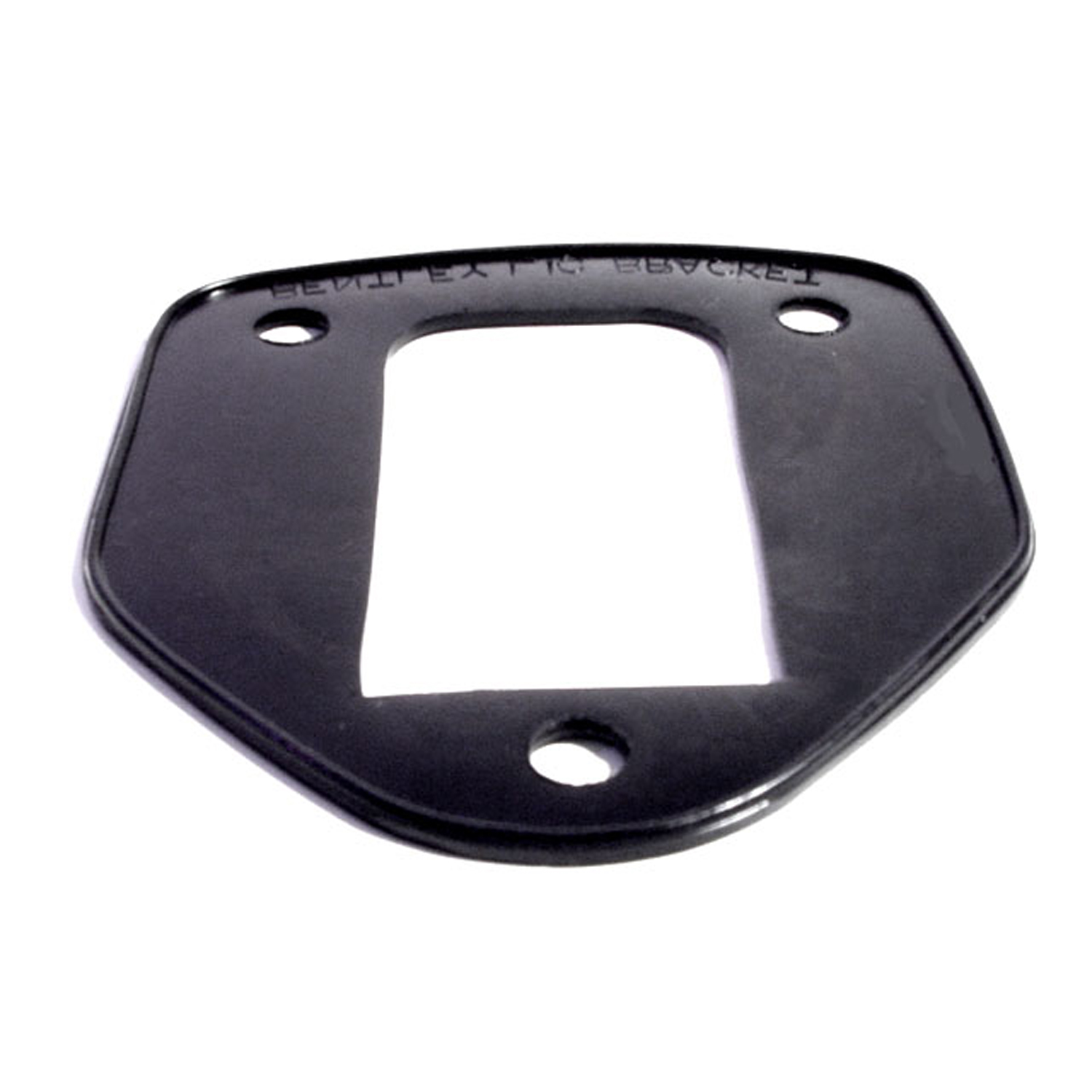 1958 Bentley Continental License Bracket Pad. 4-3/8" wide X 5" long. Each-MP 112-JLicense Bracket Pad. 4-3/8" wide X 5" long. Each
Why Choose Metro?
For over 100 years, Metro Moulded Parts has been the pinnacle of quality in classic car restoration parts. Our commitment to precision and authenticity in every component ensures a perfect fit and an OEM-level appearance.
- Expert Craftsmanship & Quality: Each part is a testament to our dedication to reliability and perfection, crafted from original designs and thoroughly tested.
- Advanced Technology: We use cutting-edge techniques to create flawless, long-lasting parts that surpass others in performance.
- SuperSoft Sponge – The Ultimate Door Seal: Not only are our door seals 30% softer than competitors', but they're also guaranteed to never leak. They effectively reduce wind and road noise, enhancing your classic car's comfort and driving experience.
- Proudly American: Our parts are a product of American craftsmanship, made in the USA with a spirit of excellence and heritage.
- Unrivaled Warranty: We back our products with a 30-year industry-leading warranty, a testament to our confidence in their quality.
Join us in preserving the legacy of classic cars with parts that are crafted for perfection, not just made.