
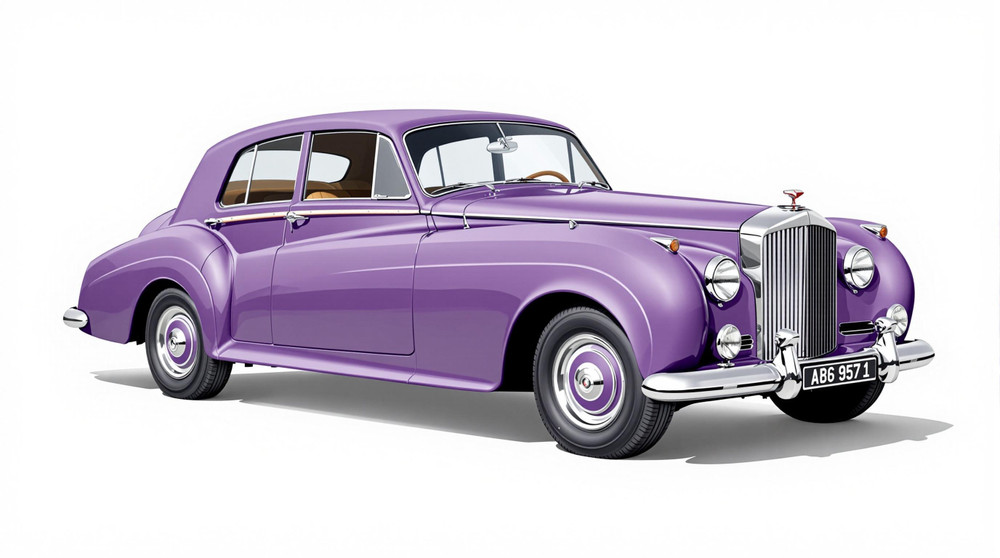
Image of 1958 Bentley S1 Series, Note: These illustrations use artistic license and may differ from actual historical models.
Performance Metrics
Fundamental Metrics
Emotional Appeal
MMP Rating
| Engine Specifications | |
|---|---|
| Engine: | 4.9L I6 |
| Displacement: | 4887 cc |
| Horsepower: | 178 hp |
| Torque: | Estimated 300 lb-ft |
| Compression Ratio: | 8.0:1 |
| Ignition System: | Coil and distributor |
| Cooling System: | Water-cooled |
| Performance Specifications | |
| 0-60 Time: | 13.5 seconds |
| 1/4 Mile Time: | Estimated 19.5 seconds |
| Top Speed: | 103 mph |
| Transmission and Drive | |
| Drive Type: | Rear-wheel drive |
| Transmission Type: | 4-speed automatic |
| Fuel and Efficiency | |
| Fuel System Type: | Twin SU carburetors |
| MPG: | Estimated 10-12 mpg |
| Dimensions and Brakes | |
| Brakes: | Drum brakes |
| Wheelbase: | 123 inches |
| Weight: | 4100 lbs |
Note: Specifications for classic cars are given to the best of our ability, considering the limited and variant data available.
1958 Bentley S1: British Luxury in Its Purest Form
The 1958 Bentley S1 turned a quiet journey into an occasion, combining stately British styling with the effortless pull of a large straight-six engine. Built by Bentley Motors in Crewe, England, the S1 was introduced in 1955 as the successor to the R-Type and remained in production until 1959. It was closely related to the Rolls-Royce Silver Cloud I, but its distinctive grille, winged-B badges and sporting heritage gave it a character of its own.
The S1 arrived in a period when postwar Britain was rebuilding its manufacturing strength and wealthy buyers were looking for cars that paired traditional craftsmanship with modern comfort. The 1958 model represents a mature version of the design, with the S1 formula well established and the more powerful V8-powered S2 still to come. A particularly intriguing part of its story is that the S1 Continental was promoted as one of the world’s fastest four-seat cars, showing that a Bentley could be both a luxury motor car and a genuinely swift grand tourer.
Elegant Lines and Hand-Finished Comfort
The standard S1 saloon has a commanding but restrained profile. Its upright radiator grille, topped by the Flying B mascot, anchors a long bonnet and gently rounded front wings. Separate headlamps, a tall glasshouse and a generous rear compartment give it the unmistakable proportions of a formal British luxury car. Subtle rear fins add a touch of late-1950s fashion without overwhelming the car’s clean, dignified shape.
Inside, the S1 was designed around comfort and craftsmanship rather than visual flash. Buyers could expect rich wood veneers, deep carpeting, fine leather upholstery and carefully finished metal fittings. The spacious cabin offered a relaxed driving position up front and a notably comfortable rear seat. Coachbuilt cars could be finished to an individual customer’s specifications, making material choices and details part of the car’s identity.
Paint choices were highly customizable, so there was no single definitive S1 color. Dark greens, deep blues, black and understated two-tone combinations suited the car’s formal character, while lighter shades could make its generous bodywork appear especially elegant. The most appealing choice often depended on the car’s trim and body style, rather than a factory trend alone.
Saloon, Long-Wheelbase and Coachbuilt Variants
Most S1s were four-door saloons with a factory-built steel body. A long-wheelbase version offered additional rear-seat space, while a limited number of customers commissioned special bodies from established coachbuilders. Names associated with Bentley coachwork include H.J. Mulliner, Park Ward and James Young.
The most celebrated sporting interpretation was the S1 Continental. Built in much smaller numbers than the standard saloon, it was available with distinctive coachbuilt bodies, including fastback designs. Its lighter construction and performance-oriented specification made it the most iconic and collectible branch of the S1 family. These cars should not be confused with the far more common standard steel saloon, even though they share the same basic model lineage.
Engineering That Favored Effortless Progress
Under the bonnet sits a 4,887 cc, or 4.9-litre, inline-six engine. Bentley did not emphasize a headline horsepower figure in the way many manufacturers do today. Instead, the engine was tuned to deliver smooth, flexible power with little need for high revs. A four-speed automatic transmission was standard, helping make the S1 exceptionally easy to drive for a large car of its era.
The chassis used independent front suspension and a live rear axle, with drum brakes and power assistance available for steering. These were conventional, robust arrangements by luxury-car standards of the 1950s. The S1 did not rely on radical new technology; its innovation lay in bringing a high standard of refinement, finish and ease of use together in a carefully developed package.
Individual cars could be ordered with different equipment and trim, and coachbuilt examples expanded the possibilities further. Features such as air conditioning and power steering were available depending on specification and market. As with any hand-finished luxury car, buyers should check the equipment on the specific example rather than assume every S1 left the factory identically equipped.
A Lasting Place in Bentley History
The S1 helped define the postwar Bentley road car: luxurious, dignified and capable of covering long distances at speed without demanding much from its driver. Its close relationship to the Silver Cloud made it part of a broader Rolls-Royce and Bentley engineering family, but the Bentley retained a more overt connection to the marque’s sporting image.
Its lasting significance also comes from its position at the end of an era. The S1’s straight-six was the last engine of its type used in this Bentley line before the S2 introduced a V8 in 1959. The S1 therefore captures a distinct combination of traditional British engineering and the increasingly powerful, modern luxury cars that followed. Its restrained design has also aged gracefully, influencing expectations of what a formal British saloon should look and feel like.
Performance and the S1 Driving Experience
Exact performance varies with body style, condition and specification. A standard S1 is commonly quoted at a top speed of about 100 to 105 mph, with a 0-to-60 mph time in the region of 13 to 14 seconds. Those figures are estimates, not a promise for every surviving car. The lighter, more sporting Continental versions could be quicker and are often associated with a top speed around 115 mph.
On the road, the S1 is less about sharp cornering than calm, composed progress. Its suspension takes the edge off broken pavement, while the long wheelbase helps it feel settled on open roads. On a winding route, the steering is deliberate rather than quick, and the car’s size and weight reward a smooth, considered driving style. Strong crosswinds and narrow roads require the same care they would in any large, high-sided classic saloon.
The straight-six delivers its power with a subdued, cultured sound rather than a dramatic exhaust note. The automatic transmission shifts unobtrusively when properly maintained, and the car’s best quality is how little effort it asks of its driver. A good S1 feels substantial but not ponderous, with a ride that emphasizes comfort and a cabin that insulates occupants from much of the commotion outside.
Owning a Bentley S1 Today
Today, the S1 is most often used for weekend touring, classic-car events, weddings and collecting. Some owners do drive their cars regularly, but its age, size, fuel consumption and maintenance costs make it less practical as an everyday vehicle than a modern luxury car. It is not a racing car, although the Continental’s sporting character gives it more performance appeal than the standard saloon.
Maintenance is best handled by a specialist familiar with postwar Rolls-Royce and Bentley cars. The mechanical layout is understandable to an experienced classic-car technician, but the S1 is not an inexpensive vehicle for an average owner to repair. Parts, specialist labor and the time required to restore coachwork or interior trim can add up quickly. Routine inspections should pay close attention to the engine’s cooling system, oil leaks, automatic transmission, brakes, suspension and electrical components.
Condition matters more than a tidy appearance. Buyers should check the body and chassis carefully for corrosion, inspect the wood and leather for age-related deterioration, and confirm that the car has a credible service history. A well-maintained example can be a rewarding touring car. A neglected one can quickly become a major restoration project.
Rare Details and Common Criticisms
Factory production figures are commonly cited at about 3,072 Bentley S1 saloons, although totals can vary depending on how particular body styles and related Continental models are counted. The standard saloon is therefore uncommon but not exceptionally rare in the collector-car world. Coachbuilt Continentals are far scarcer and substantially more valuable.
One frequent criticism is that the standard S1’s performance feels measured by modern standards, especially given its imposing size and premium image. Its fuel economy is also modest, and restoration costs can be disproportionate to the purchase price of an ordinary saloon. Those drawbacks are balanced by its craftsmanship, comfort and elegant presence. There is no widely recognized S1 speed or endurance record; the Continental’s reputation rests chiefly on its impressive pace for a luxurious four-seat car of its time.
Collector Values and Market Outlook
Values vary sharply with condition, originality, history and body style. As a broad current-market estimate, a standard S1 saloon in usable but imperfect condition may sell for roughly $40,000 to $80,000. Well-presented, properly maintained examples can reach approximately $80,000 to $150,000, with exceptional cars sometimes exceeding that range. These are general estimates, not formal appraisals, and individual auction results can differ considerably.
Coachbuilt S1s and Continental models occupy a different market. Their rarity and distinctive bodies can place them in the several-hundred-thousand-dollar range, with especially desirable examples potentially selling for much more. For the standard saloon, prices have tended to be condition-sensitive rather than driven by rarity alone. The S1’s enduring appeal supports long-term collector interest, but restoration expense and the limited pool of buyers for large pre-1960 luxury cars can temper appreciation.
Why the 1958 Bentley S1 Still Matters
The 1958 Bentley S1 brings together graceful postwar styling, carefully finished coachwork and an exceptionally smooth straight-six engine. It was comfortable enough for formal travel, capable enough for long-distance touring and, in Continental form, remarkably quick for a four-seat luxury car of its day. Its role as the final straight-six Bentley of this generation gives it a special place in the marque’s history.
More than a badge or a set of performance figures, the S1 is a reminder of a time when luxury meant quiet confidence, skilled craftsmanship and effortless travel. Find a sound example, give it the specialist care it deserves, and this elegant Bentley still knows how to make every mile feel important.
1958 Bentley S1 Series Catalog of Parts
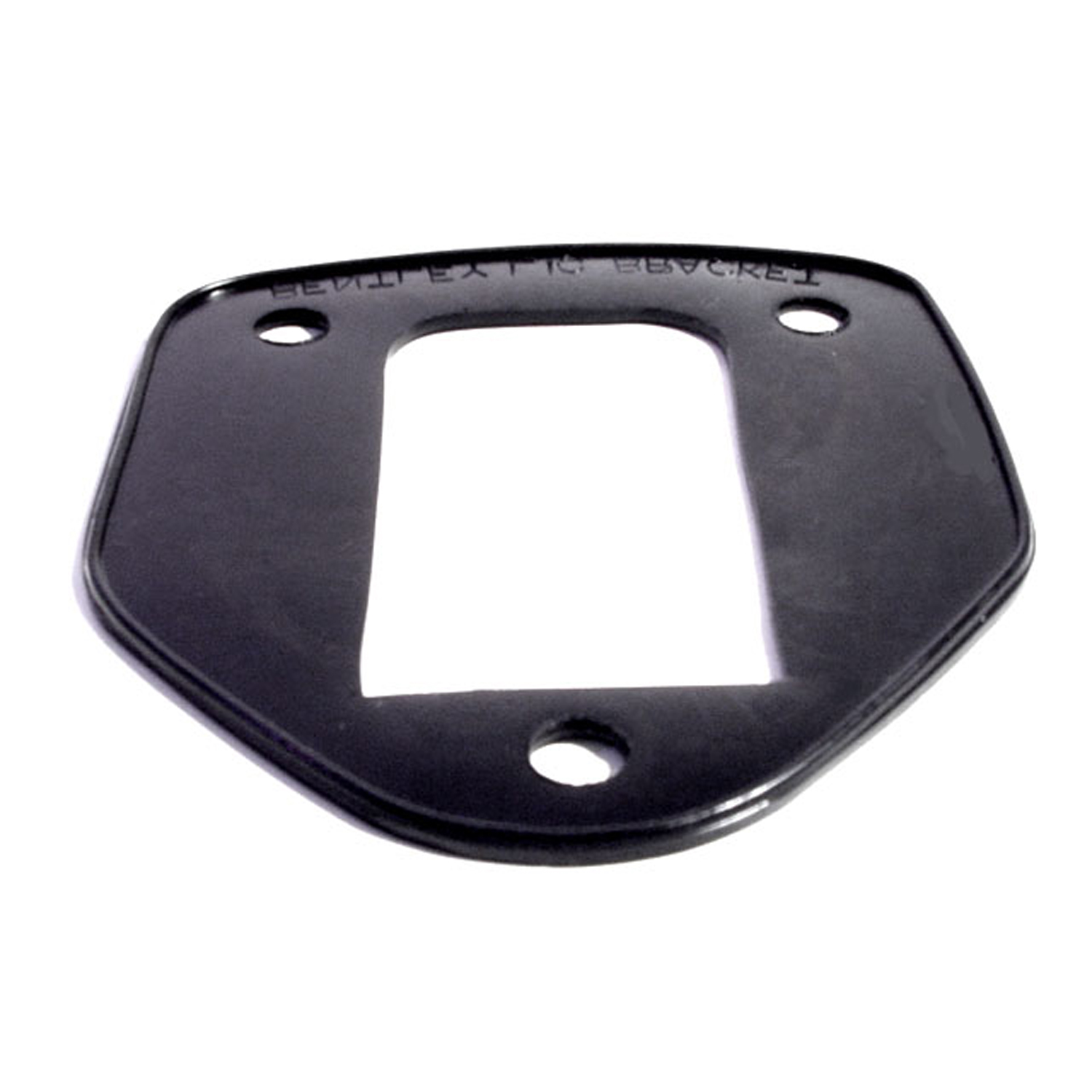 1958 Bentley S1 Series License Bracket Pad. 4-3/8" wide X 5" long. Each-MP 112-JLicense Bracket Pad. 4-3/8" wide X 5" long. Each
Why Choose Metro?
For over 100 years, Metro Moulded Parts has been the pinnacle of quality in classic car restoration parts. Our commitment to precision and authenticity in every component ensures a perfect fit and an OEM-level appearance.
- Expert Craftsmanship & Quality: Each part is a testament to our dedication to reliability and perfection, crafted from original designs and thoroughly tested.
- Advanced Technology: We use cutting-edge techniques to create flawless, long-lasting parts that surpass others in performance.
- SuperSoft Sponge – The Ultimate Door Seal: Not only are our door seals 30% softer than competitors', but they're also guaranteed to never leak. They effectively reduce wind and road noise, enhancing your classic car's comfort and driving experience.
- Proudly American: Our parts are a product of American craftsmanship, made in the USA with a spirit of excellence and heritage.
- Unrivaled Warranty: We back our products with a 30-year industry-leading warranty, a testament to our confidence in their quality.
Join us in preserving the legacy of classic cars with parts that are crafted for perfection, not just made.