

Image of 1959 Bentley Continental, Note: These illustrations use artistic license and may differ from actual historical models.
Performance Metrics
Fundamental Metrics
Emotional Appeal
MMP Rating
| Engine Specifications | |
|---|---|
| Engine: | 6.2L V8 |
| Displacement: | 6.2L |
| Horsepower: | 200-225 HP |
| Torque: | Estimated 295 lb-ft |
| Compression Ratio: | 8.0:1 |
| Ignition System: | Distributor ignition |
| Cooling System: | Liquid-cooled |
| Performance Specifications | |
| 0-60 Time: | 10.8 seconds |
| 1/4 Mile Time: | Estimated 18 seconds |
| Top Speed: | 120 mph |
| Transmission and Drive | |
| Drive Type: | Rear-wheel drive |
| Transmission Type: | 4-speed automatic |
| Fuel and Efficiency | |
| Fuel System Type: | Carburetor |
| MPG: | Estimated 10-12 mpg |
| Dimensions and Brakes | |
| Brakes: | Drum brakes |
| Wheelbase: | 123 inches |
| Weight: | Estimated 4,700 lbs |
Note: Specifications for classic cars are given to the best of our ability, considering the limited and variant data available.
1959 Bentley Continental: The Grand Tourer That Made Speed Elegant
A 1959 Bentley Continental could cross a continent at high speed while carrying its passengers in the quiet, hand-finished comfort of a private club. It was not a mass-produced model with one fixed shape. Rather, it was a coachbuilt grand tourer: Bentley supplied the chassis and mechanicals, while specialist British coachbuilders created the bodywork to suit the buyer.
The year 1959 sits at an important turning point in Continental history. Depending on its build date and chassis, a car described as a 1959 Continental may be an S1 Continental with Bentley’s refined six-cylinder engine or one of the first S2 Continentals, which introduced the marque’s new V8. Both belong to the postwar tradition that began with the R-Type Continental in 1952, a car conceived for fast, long-distance travel. A notable detail behind that original brief was the ambition to build one of the world’s fastest four-seat cars, without sacrificing the restraint and comfort expected of a Bentley.
Coachbuilt Style and Hand-Finished Luxury
The Continental’s proportions are low, long and purposeful. Its tall, upright radiator grille and winged Bentley badge provide a formal face, while the bonnet, swept front wings and flowing rear body give the car a more sporting profile than a conventional luxury saloon. Many examples wear finely detailed coachwork, with bright trim used sparingly to emphasize the shape rather than overwhelm it.
Several coachbuilders produced Continental bodies, including H.J. Mulliner, Park Ward and James Young. H.J. Mulliner’s fastback coupe is among the most recognizable versions, with a sloping roofline that runs cleanly into the tail. Drophead coupes and other two-door body styles were also available. The fastback is often treated as the signature Continental shape, but no single body style defines every 1959 car.
Inside, the emphasis is on skilled workmanship and materials chosen by the original customer. Depending on the commission, the cabin might combine rich leather upholstery, polished wood veneer, deep carpeting and carefully fitted metal controls. Buyers could specify colors and trim to suit their preferences, so there was no single standard Continental color palette. Dark greens, blues and restrained grays look particularly at home on the car, while black, silver and elegant two-tone schemes also suit its formal, sporting character.
For its era, the Continental paired traditional craftsmanship with useful modern conveniences. A four-speed automatic transmission was typical, and power-assisted steering was available, making a large car less tiring to maneuver. The suspension was designed to balance composure with comfort, while the Continental’s relatively light, carefully shaped body helped it achieve impressive speed for a luxury four-seater. Equipment and details vary by chassis and coachbuilder, so individual cars should be assessed on their own specifications.
Why the Continental Mattered
The Continental helped establish a distinct kind of luxury car: not simply a limousine for being driven, but a refined machine its owner could enjoy from behind the wheel. Its sporting proportions and high-speed ability challenged the idea that a prestigious car had to be ponderous. At the same time, the hand-built bodies made clear that performance did not require mass-market styling or production-line uniformity.
That combination of speed, comfort and bespoke design became a lasting reference point for grand touring cars. The Continental’s influence can be seen in later luxury coupes that promise cross-country pace without giving up a quiet cabin or an imposing presence. Its coachbuilt construction also makes every surviving example a little different, a quality that continues to distinguish it from more standardized luxury cars of the period.
Six-Cylinder S1 or V8 S2?
The most important mechanical distinction for a 1959 Continental is whether it is an S1 or an S2. The S1 Continental uses Bentley’s 4.9-liter inline-six. The S2, introduced in 1959, brought in a 6.2-liter V8 with an aluminum-alloy block and cylinder heads. The V8 gave the newer car stronger, more effortless performance and became a defining engine for later generations of the marque.
Factory horsepower figures were not the sort of headline specification Bentley promoted, and performance varies with body style, condition and gearing. As a practical guide, an S1 Continental can reach roughly 115 to 120 mph, with 0-to-60 mph taking around 13 seconds. An S2 Continental is generally quicker, with a top speed around 120 mph and a 0-to-60 mph time in the neighborhood of 10 to 11 seconds. These are period-style estimates, not guarantees for an individual car.
On the road, the Continental feels substantial but not clumsy. The automatic transmission suits its relaxed character, allowing the engine to deliver smooth, steady thrust rather than demanding constant gear changes. The six-cylinder S1 has a quieter, more traditional engine note; the S2’s V8 adds a deeper, more modern-sounding rumble. Neither is meant to feel like a lightweight sports car. The pleasure is in covering distance quickly with little fuss.
The suspension absorbs ordinary road imperfections well, although a worn or poorly maintained example may feel loose, harsh or unsettled. On winding roads, the car rewards smooth inputs and a measured pace. Its size and weight are always present, but the steering and balanced chassis make it more engaging than its imposing appearance suggests. At speed, a well-sorted Continental feels composed and reassuring, with the engine working quietly in the background.
Living With a 1959 Continental
Today, most Continentals are cherished collector cars, shown at concours events or driven on carefully planned tours. Some owners use them for occasional weekend trips, and a properly maintained car can still make long journeys. They are rarely sensible daily drivers: their value, age, fuel consumption and specialist maintenance needs make routine modern traffic an expensive environment.
These cars were engineered to be durable, but age and complexity matter. Cooling systems, brakes, steering, suspension, electrical equipment and automatic transmissions all deserve close inspection. The S2’s V8 has its own specific service requirements, while the S1’s six-cylinder engine benefits from knowledgeable maintenance and correct parts. Coachbuilt body repairs can be particularly demanding because panels, trim and interior fittings may be unique to a particular car.
Repair is not usually a realistic do-it-yourself project for an average owner. A specialist familiar with postwar Bentley chassis and coachwork is the best resource, and restoration costs can rise quickly if structural corrosion, neglected mechanical systems or missing bespoke parts are involved. A careful pre-purchase inspection and a documented service history are worth far more than a tempting asking price.
Rare Coachwork and Collector Appeal
The Continental was produced in small numbers compared with Bentley’s standard saloons. Across the S1 and S2 Continental generations, production is commonly given at roughly 431 S1 cars and 388 S2 cars, or about 819 in total. Those figures cover entire production runs, not just 1959, and published totals can vary according to how body and chassis categories are counted. The number of cars actually built during the 1959 calendar year is therefore not a useful substitute for identifying an individual car by its chassis number.
There is no single celebrity story that defines every 1959 Continental. Their more enduring distinction is the bespoke nature of the cars themselves: two examples from the same year may have different coachwork, interiors and equipment. The rarest or most sought-after versions are often those with especially elegant bodies, strong originality and clear documentation.
Collector values vary widely with body style, condition, provenance and restoration quality. As a broad 2026 estimate, an S1 Continental might fall around $350,000 to $1 million, with exceptional or especially desirable examples reaching higher. S2 Continentals may range roughly from $300,000 to $850,000, with outstanding cars potentially exceeding that range. These are guide figures, not appraisals; a celebrated coachbuilt body or a major restoration can shift the price substantially.
Values for the best cars have generally benefited from the Continental’s rarity and historical importance, though the market is selective. Excellent, well-documented cars tend to attract the strongest interest. Cars needing extensive restoration can be difficult to price because the cost of returning hand-built coachwork and complex mechanical systems to a high standard is considerable. In this market, originality and quality of work matter at least as much as a shiny finish.
A Bentley Built for the Long Way Round
The 1959 Bentley Continental stands at the meeting point of two important eras: the S1’s refined six-cylinder tradition and the S2’s arrival of the landmark V8. Its coachbuilt body, luxurious cabin and genuine long-distance pace made it a different kind of Bentley, one designed to be driven as well as admired.
More than six decades later, it remains an unusually complete expression of the grand tourer. The Continental does not need to shout about its speed or craftsmanship. It simply carries both with the quiet confidence of a car built to make the journey as memorable as the destination.
1959 Bentley Continental Catalog of Parts
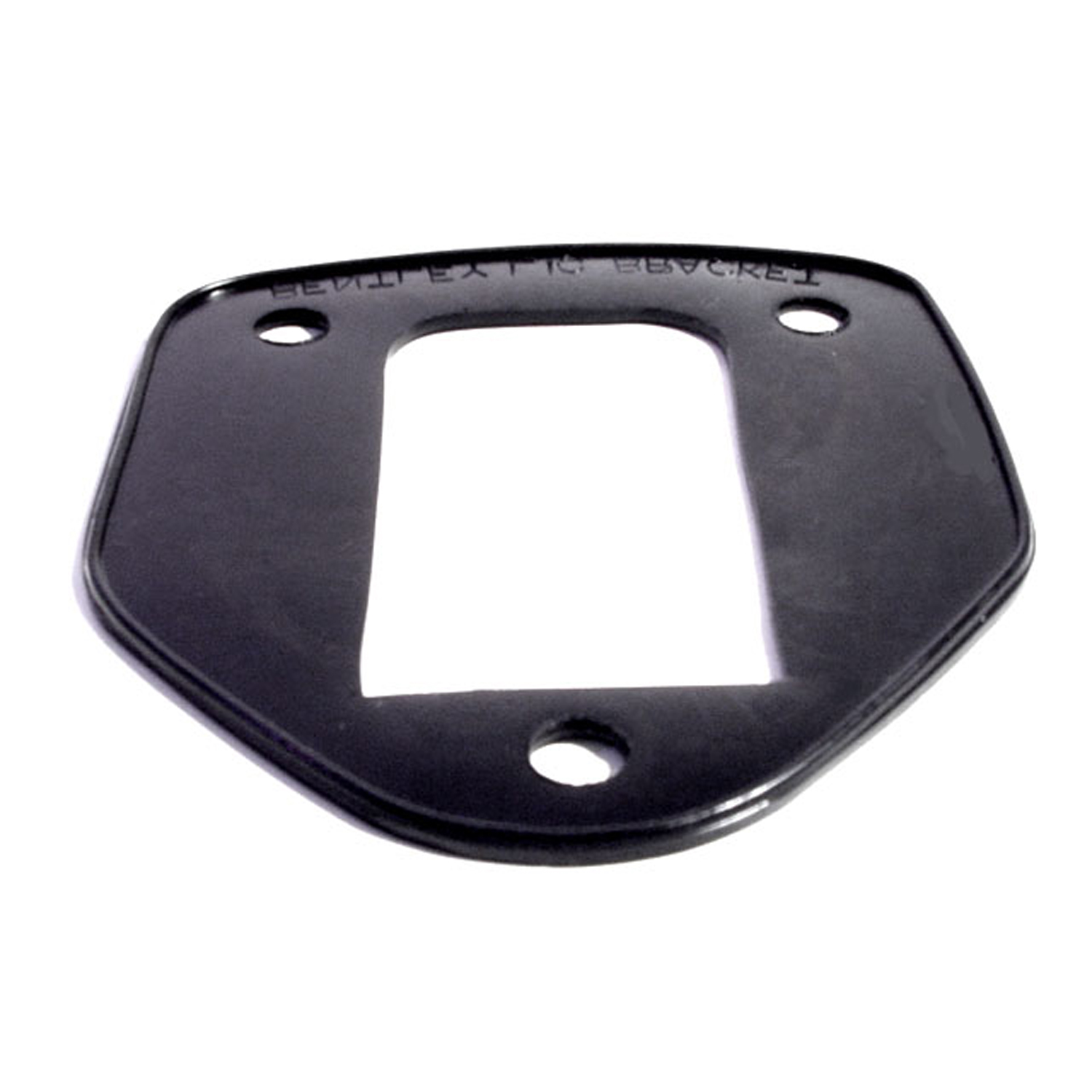 1959 Bentley Continental License Bracket Pad. 4-3/8" wide X 5" long. Each-MP 112-JLicense Bracket Pad. 4-3/8" wide X 5" long. Each
Why Choose Metro?
For over 100 years, Metro Moulded Parts has been the pinnacle of quality in classic car restoration parts. Our commitment to precision and authenticity in every component ensures a perfect fit and an OEM-level appearance.
- Expert Craftsmanship & Quality: Each part is a testament to our dedication to reliability and perfection, crafted from original designs and thoroughly tested.
- Advanced Technology: We use cutting-edge techniques to create flawless, long-lasting parts that surpass others in performance.
- SuperSoft Sponge – The Ultimate Door Seal: Not only are our door seals 30% softer than competitors', but they're also guaranteed to never leak. They effectively reduce wind and road noise, enhancing your classic car's comfort and driving experience.
- Proudly American: Our parts are a product of American craftsmanship, made in the USA with a spirit of excellence and heritage.
- Unrivaled Warranty: We back our products with a 30-year industry-leading warranty, a testament to our confidence in their quality.
Join us in preserving the legacy of classic cars with parts that are crafted for perfection, not just made.