
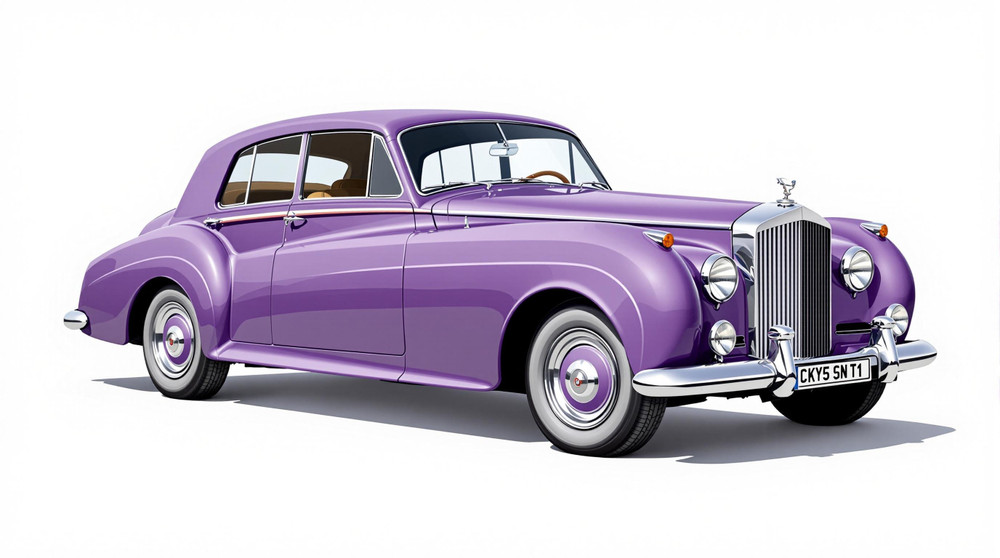
Image of 1959 Bentley S1, Note: These illustrations use artistic license and may differ from actual historical models.
Performance Metrics
Fundamental Metrics
Emotional Appeal
MMP Rating
| Engine Specifications | |
|---|---|
| Engine: | 4.9L I6 |
| Displacement: | 4887 cc |
| Horsepower: | 178 hp |
| Torque: | Estimated 300 lb-ft |
| Compression Ratio: | 8:1 |
| Ignition System: | Coil ignition |
| Cooling System: | Water-cooled |
| Performance Specifications | |
| 0-60 Time: | 13 seconds |
| 1/4 Mile Time: | Estimated 19 seconds |
| Top Speed: | 103 mph |
| Transmission and Drive | |
| Drive Type: | Rear-wheel drive |
| Transmission Type: | 4-speed automatic |
| Fuel and Efficiency | |
| Fuel System Type: | Twin SU carburetors |
| MPG: | Estimated 10-15 mpg |
| Dimensions and Brakes | |
| Brakes: | Drum brakes |
| Wheelbase: | 123 inches |
| Weight: | 4100 lbs |
Note: Specifications for classic cars are given to the best of our ability, considering the limited and variant data available.
1959 Bentley S1: The Last Great Six-Cylinder Saloon
The 1959 Bentley S1 brings old-world craftsmanship and effortless road manners together in a handsome, quietly powerful luxury car. Built by Bentley Motors in Crewe, England, it was the final model year of the S1, a refined postwar saloon that paired Bentley’s sporting identity with the comfort and polish expected of a first-class motor car.
Introduced in 1955 as the successor to the R-Type, the S1 shared its basic engineering and much of its body structure with the Rolls-Royce Silver Cloud. The two cars were close mechanical relatives, but Bentley styling gave the S1 a distinct character: a more assertive grille, the famous winged-B mascot, and a subtly sportier image. One notable milestone came with its successor, the S2: Bentley replaced the S1’s long-serving straight-six with a V8, making the S1 the last in this line of Bentley luxury saloons powered by a six-cylinder engine.
Elegant Styling and Coachbuilt Craft
The S1’s shape is formal without feeling heavy-handed. Its tall, bright-edged radiator grille gives the front end its unmistakable presence, while sweeping front wings, a gently curved roofline, and a generous boot create the classic three-box saloon profile. Fine chrome details and the upright Bentley mascot complete a look designed to impress through proportion and finish rather than flashy ornament.
Most S1s wore the factory-produced Standard Steel Saloon body, built in cooperation with Pressed Steel. Inside, passengers found deep leather seats, polished wood veneer, wool carpeting, and a carefully finished dashboard. The materials were chosen to feel substantial and durable, and much of the cabin could be specified to a buyer’s preferences. This was luxury with a practical purpose: a calm, comfortable place to travel, not merely a display of expensive trim.
Buyers could order a wide range of exterior colors, including solid finishes and two-tone combinations. Dark blues, greens, and black were popular choices for a suitably formal appearance, while lighter shades and contrasting roof or body panels gave some cars a more personal look. Since many Bentleys were ordered to individual tastes, surviving examples can differ considerably in color and interior specification.
The Standard Steel Saloon was the most common and recognizable S1 body style. Customers seeking something more individual could commission a coachbuilt body from firms such as H.J. Mulliner, Park Ward, James Young, or Freestone & Webb. The long-wheelbase S1 offered extra rear-passenger room, while the separate S1 Continental models were lower, faster, and more sporting in appearance. Those Continental versions are especially sought after today.
Engineering That Made Luxury Feel Effortless
The S1 was built around a robust chassis and powered by Bentley’s 4,887 cc inline six-cylinder engine. Period output was not promoted with the same emphasis on horsepower figures used by many modern manufacturers, but the engine is commonly estimated at around 180 horsepower. Its real strength was smooth, accessible torque, delivered in a relaxed manner rather than with a dramatic surge.
A four-speed automatic transmission helped make the S1 easy to drive in traffic and restful on long journeys. Independent front suspension improved comfort and control, while power assistance for the steering and brakes reduced the effort required to manage the car’s considerable size. A self-levelling rear suspension system helped maintain a composed ride as passenger and luggage loads changed.
These features did not make the S1 a high-tech sports car. Instead, they showed how engineering could make a large luxury car feel more manageable and refined. Its combination of a smooth six-cylinder engine, automatic transmission, assisted controls, and carefully tuned suspension established a template that remained central to the luxury saloon for decades.
Performance and Road Manners
Contemporary performance figures vary by source and specification, but a standard S1 saloon is generally credited with a top speed of roughly 100 to 105 mph and a 0-to-60 mph time in the region of 13 to 14 seconds. Those numbers were respectable for a large luxury car of the 1950s. The S1 Continental, with its lighter, more aerodynamic coachwork, was the faster and more sporting member of the family.
On the road, the S1 feels substantial and composed. Its suspension smooths out ordinary bumps, and the long wheelbase helps it settle into a relaxed rhythm on open roads. It is not a car to hustle through tight bends like a modern sports sedan. On winding roads, measured steering inputs and a considerate pace suit it best, especially given its size and weight.
The six-cylinder engine is typically subdued from the cabin, offering a smooth mechanical murmur rather than a loud, attention-seeking exhaust note. The automatic gearbox shifts with an unhurried ease, and the steering is light enough for town driving without inviting sharp, rapid movements. Behind the wheel, the S1 rewards anticipation: look well ahead, brake smoothly, and let the car carry its momentum.
Owning a Bentley S1 Today
Today, the S1 is most often used as a collector car, a show car, or a special-occasion tourer. Some owners do drive their cars regularly, but few treat a well-preserved example as an everyday commuter. Its size, fuel consumption, and age make it better suited to leisurely journeys than dense modern traffic.
Maintenance is manageable with the right specialist, but the S1 is not an inexpensive car for an average owner to repair without experience. The engine and mechanical systems are durable when properly maintained, yet decades of use can leave work needed on the brakes, suspension, steering, electrical system, or automatic transmission. The self-levelling equipment also deserves attention. Body and chassis condition matter greatly, and a thorough inspection before purchase can prevent costly surprises.
Parts support remains available through classic Bentley specialists and marque suppliers, but repair costs reflect the car’s hand-finished construction and premium engineering. A sound S1 with a documented service history is generally a better proposition than a cheaper example with deferred maintenance. Restoration can be rewarding, but it is easy for the bill to exceed the value of an ordinary saloon.
Notable Facts and Common Criticisms
The standard S1 saloon is commonly credited with production of about 3,538 cars across the model’s 1955-to-1959 run, including long-wheelbase examples. The S1 Continental was a separate, much rarer sporting branch, with approximately 431 produced. Coachbuilt cars are rarer still in some configurations, and their individual bodywork can make them especially distinctive.
The Continental’s speed and sleek profile helped cement the idea that a Bentley could combine high-speed touring with four-seat comfort. The standard S1 saloon was not built to set racing records, but it carried the same broader promise: cross-country pace delivered with remarkable calm. The S1 also belongs to a pivotal period in Bentley history, bridging the company’s traditional six-cylinder engineering and the V8 era that began with the S2.
Its most frequent criticisms are familiar ones for a large 1950s luxury car: high fuel use, substantial weight, modest acceleration by modern standards, and maintenance that demands specialist knowledge. The automatic gearbox and power assistance make it less tiring than many older cars, but they do not disguise its size. Nor should buyers mistake the Bentley badge for immunity from age-related wear.
1959 Bentley S1 Values and Rarity
Values depend heavily on condition, originality, history, and body style. As a broad current-market estimate, a standard S1 saloon in usable but imperfect condition may sell for about US$35,000 to US$65,000. A well-maintained, presentable example can fall around US$65,000 to US$110,000, while exceptional restorations or particularly desirable coachbuilt cars may reach higher figures. S1 Continental models are in a different market, often commanding several hundred thousand dollars depending on specification and condition.
These are guide ranges, not guarantees: auction results, location, currency, and the quality of a restoration can shift prices considerably. Standard S1 saloons are uncommon but do appear on the market. Coachbuilt examples and Continentals are far scarcer, and buyers may wait a long time for the right car.
Over the long term, the S1 has tended to reward originality, documented history, and high-quality restoration more reliably than simple age. Prices for ordinary examples can move with the broader classic-car market, while the best coachbuilt and Continental cars have stronger collector appeal. Running costs and restoration expense should be included in any estimate of ownership value.
Why the S1 Still Matters
The 1959 Bentley S1 is a graceful, technically capable luxury saloon from the end of an important chapter in Bentley history. Its straight-six engine, automatic transmission, quiet cabin, and composed ride made long-distance travel feel easy, while its coachbuilt alternatives and Continental relatives displayed the model’s more individual and sporting side.
It is not the quickest or simplest classic to own, but it offers something more lasting than headline figures: a sense of carefully engineered calm, wrapped in hand-finished British style. The S1 remains a fitting final flourish for Bentley’s great six-cylinder saloon tradition.
1959 Bentley S1 Catalog of Parts
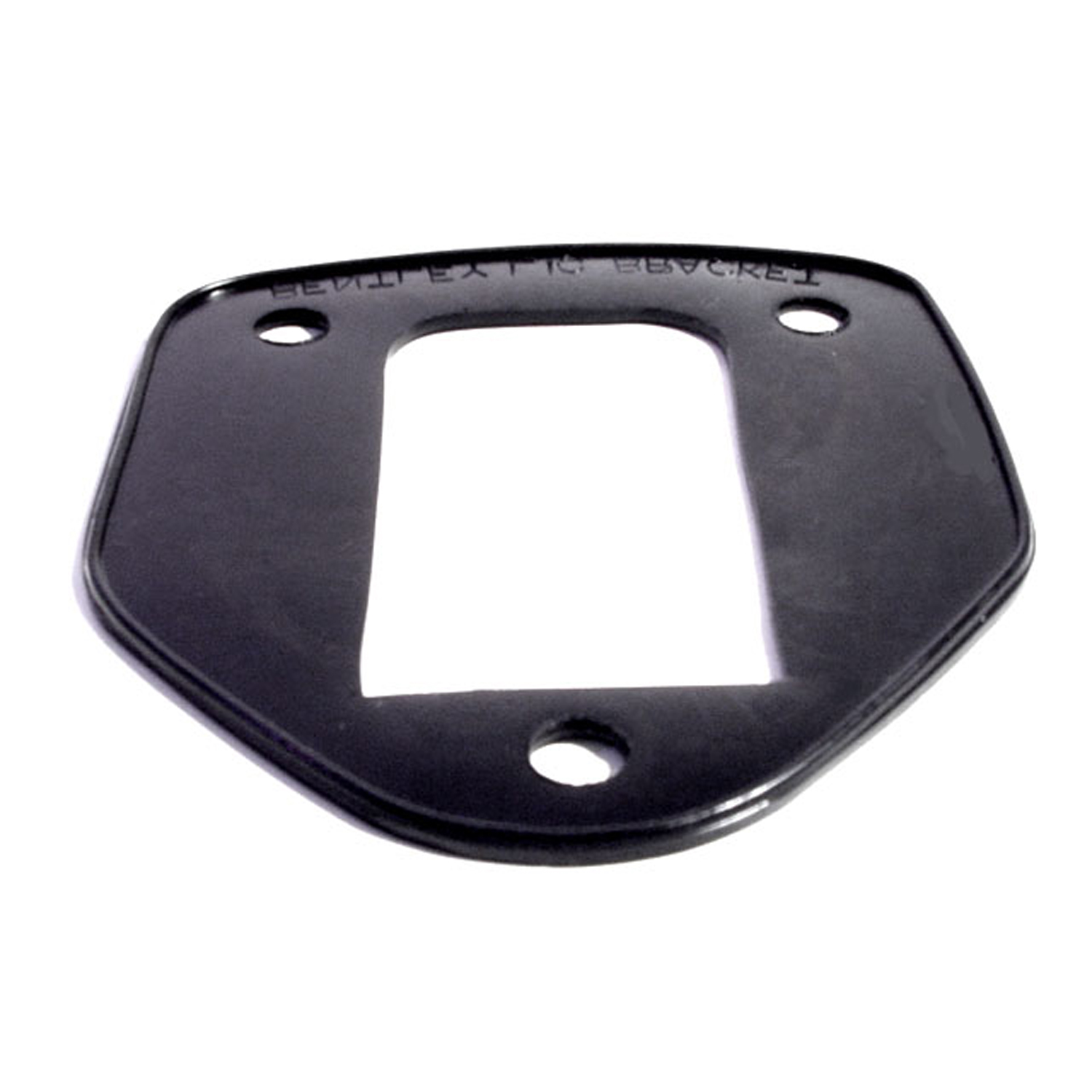 1959 Bentley S1 License Bracket Pad. 4-3/8" wide X 5" long. Each-MP 112-JLicense Bracket Pad. 4-3/8" wide X 5" long. Each
Why Choose Metro?
For over 100 years, Metro Moulded Parts has been the pinnacle of quality in classic car restoration parts. Our commitment to precision and authenticity in every component ensures a perfect fit and an OEM-level appearance.
- Expert Craftsmanship & Quality: Each part is a testament to our dedication to reliability and perfection, crafted from original designs and thoroughly tested.
- Advanced Technology: We use cutting-edge techniques to create flawless, long-lasting parts that surpass others in performance.
- SuperSoft Sponge – The Ultimate Door Seal: Not only are our door seals 30% softer than competitors', but they're also guaranteed to never leak. They effectively reduce wind and road noise, enhancing your classic car's comfort and driving experience.
- Proudly American: Our parts are a product of American craftsmanship, made in the USA with a spirit of excellence and heritage.
- Unrivaled Warranty: We back our products with a 30-year industry-leading warranty, a testament to our confidence in their quality.
Join us in preserving the legacy of classic cars with parts that are crafted for perfection, not just made.