
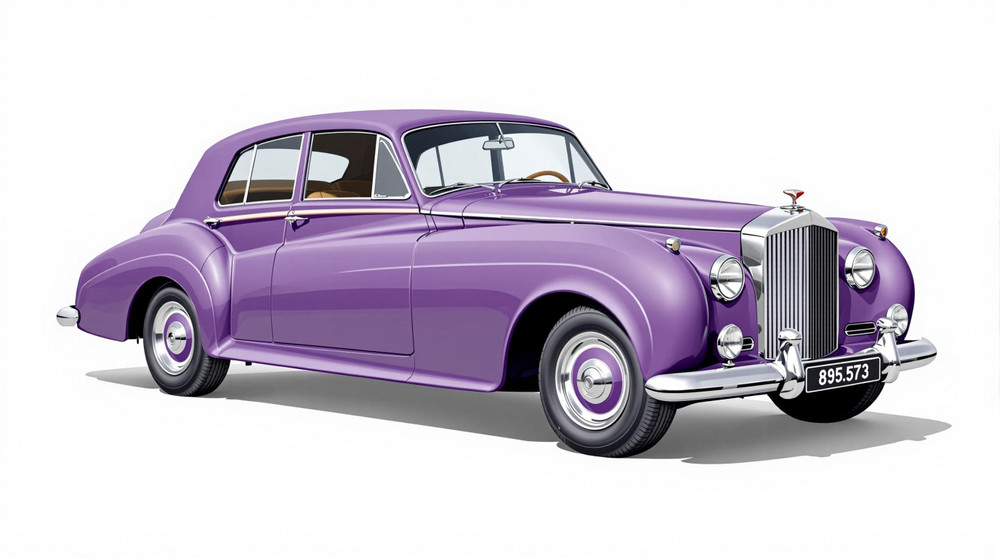
Image of 1959 Bentley S2 Series, Note: These illustrations use artistic license and may differ from actual historical models.
Performance Metrics
Fundamental Metrics
Emotional Appeal
MMP Rating
| Engine Specifications | |
|---|---|
| Engine: | 6.2L V8 |
| Displacement: | 6230 cc |
| Horsepower: | 200 hp |
| Torque: | Estimated at 400 lb-ft |
| Compression Ratio: | 8:1 |
| Ignition System: | Coil ignition |
| Cooling System: | Water-cooled |
| Performance Specifications | |
| 0-60 Time: | 13 seconds |
| 1/4 Mile Time: | Estimated at 19 seconds |
| Top Speed: | 115 mph |
| Transmission and Drive | |
| Drive Type: | Rear-wheel drive |
| Transmission Type: | 4-speed automatic |
| Fuel and Efficiency | |
| Fuel System Type: | Twin SU carburetors |
| MPG: | Estimated at 10-12 mpg |
| Dimensions and Brakes | |
| Brakes: | Drum brakes |
| Wheelbase: | 123 inches |
| Weight: | 4,700 lbs |
Note: Specifications for classic cars are given to the best of our ability, considering the limited and variant data available.
1959 Bentley S2: The V8 Arrives
The 1959 Bentley S2 gave the marque’s imposing postwar saloon a new kind of quiet power: a smooth, all-aluminum V8 beneath its long, formal bonnet. Built by Bentley Motors, then part of Rolls-Royce, the S2 replaced the six-cylinder S1 and shared its basic platform and much of its engineering with the Rolls-Royce Silver Cloud II. It was a traditional luxury car with a significant change under the hood.
That change proved remarkably long-lived. The S2’s 6.2-liter engine began a V8 lineage that, through many revisions, continued in Bentley models until production of the 6.75-liter V8 ended in 2020. The S2 was not just a new model for 1959. It was the beginning of one of the most enduring engine stories in British motoring.
Elegant Lines, Coachbuilt Character
The standard S2 Saloon has the poised proportions associated with postwar Bentley: a tall, upright grille, round headlamps, a broad bonnet and flowing front wings that meet a carefully shaped rear body. Its chrome is restrained, and its overall effect is formal rather than flashy. The design communicates quality through proportion and finish instead of dramatic styling gestures.
Inside, the cabin is a study in traditional materials and careful craftsmanship. Depending on specification, owners could expect thick wool carpets, generous leather upholstery, polished wood veneers, deep seats and a broad dashboard with clear, neatly arranged instruments. The rear compartment was especially important: it offered passengers a quiet, spacious place to travel, often with folding occasional seats and other bespoke conveniences. Coachbuilt cars could be trimmed and equipped to an individual customer’s requirements.
Paint and trim choices were extensive, particularly for customers ordering a coachbuilt body. Solid, understated colors such as black, dark blue, green and burgundy suited the S2’s stately character. Two-tone schemes were also popular, especially on Continental models, where contrasting paint helped bring out a more sporting profile. As with many Bentleys of the era, the precise combination depended on the original order rather than a short, fixed list of modern-style packages.
Most S2s were delivered as four-door saloons, but buyers seeking something more individual could choose bodies from specialist coachbuilders including H.J. Mulliner, Park Ward and James Young. Those firms produced saloons, coupes and drophead coupes, among other variations. The Continental models are especially sought after. H.J. Mulliner’s Flying Spur, a handsome four-door sports saloon, is among the best-known and most recognizable S2 designs.
Engineering for Quiet Progress
The S2’s headline innovation was its 6,230 cc, 90-degree V8, made with an aluminum block and cylinder heads. It replaced the S1’s six-cylinder engine and delivered stronger, more relaxed performance, particularly useful in a heavy luxury car. Bentley did not make a habit of publishing a precise horsepower figure, preferring its famous understatement, but period estimates commonly put output at around 200 horsepower.
A four-speed automatic transmission, power steering and servo-assisted braking helped make the S2 easier to operate than its size might suggest. The suspension combined independent front suspension with a live rear axle, tuned for comfort and stability. Its mechanical package was conventional in some respects, but the combination of a lightweight V8, automatic transmission and extensive attention to quietness made the car feel thoroughly modern for a high-end British saloon.
The S2 was part of a broader transition in luxury-car engineering. Buyers increasingly expected effortless acceleration and less demanding operation, not simply a large engine and a prestigious badge. Bentley answered without abandoning its traditional priorities: mechanical refinement, high-quality construction and a composed ride.
What Set the S2 Apart
In the late 1950s, the S2 competed with other expensive European and American luxury cars, but it offered a distinctive blend of bespoke British craftsmanship and understated performance. The shared relationship with the Silver Cloud II gave the two models common engineering foundations, while Bentley’s sporting identity and coachbuilt options helped the S2 retain its own character.
Its significance is clearest in the engine. The V8 gave Bentley a more flexible and powerful foundation for future cars, while its descendants became a defining feature of the marque. The S2 also shows how luxury-car makers were changing: a chauffeur-oriented, hand-finished automobile could now offer automatic convenience and strong acceleration without sacrificing its quiet, formal character.
Performance and Road Manners
Performance figures vary with body style, condition and testing method, but a standard S2 Saloon is generally credited with a top speed of about 115 mph and a 0-to-60 mph time of roughly 11 seconds. A lighter or more aerodynamic Continental could feel quicker. Those figures were impressive for a large luxury car of the period, especially one designed to carry passengers in comfort rather than chase lap times.
On the road, the S2 feels substantial and calm. Its power steering makes low-speed maneuvering manageable, although the car’s length and weight still require attention in tight spaces. The suspension takes the sting out of ordinary bumps and broken pavement, favoring a smooth, settled ride over sharp responses. On a winding road, the S2 can cover ground confidently, but it is happiest when driven with measured inputs. A Continental generally feels more sporting, yet neither version should be mistaken for a lightweight sports car.
The V8’s character is part of the appeal. From the passenger compartment, it is typically a subdued presence, producing a low, smooth note rather than a theatrical roar. Acceleration arrives without much fuss, and the automatic transmission encourages an unhurried driving style. Behind the wheel, the experience is less about working hard to drive fast and more about guiding a beautifully finished, powerful car along at an easy pace.
Living With a Bentley S2
Today, most S2s are used for touring, special occasions, club events and concours displays. A well-maintained example can cover road miles comfortably, but its age, size and fuel consumption make it a demanding everyday choice. It is also far removed from a modern car in terms of active safety features, parking ease and routine running costs.
The S2 is a complex, hand-built machine, so maintenance is best entrusted to a mechanic familiar with Rolls-Royce and Bentley cars of the period. The V8 is durable when serviced properly, and specialist knowledge and parts support are available, but neglected cooling, fuel, electrical, transmission or braking systems can lead to expensive work. A skilled home mechanic may be able to handle selected tasks, but this is not an especially easy car for an average owner to maintain without specialist tools and experience.
Before buying, inspect the car’s mechanical condition and service history carefully. A low purchase price can be misleading if the car needs extensive recommissioning or restoration. For a coachbuilt example, originality and the quality of previous bodywork matter greatly, and repairs may require specialist craftsmanship.
Rare Details and Common Criticisms
Production figures are commonly given as approximately 1,863 Bentley S2s across the range, with totals and classifications varying between sources and model categories. Continental versions are much scarcer than standard saloons, and coachbuilt bodies add another layer of individuality. Their rarity, distinctive styling and bespoke construction make them especially appealing to collectors.
A notable piece of trivia is that Rolls-Royce and Bentley did not promote the engine with a straightforward horsepower claim. The company’s understated approach to performance suited the S2’s character: the car was expected to move briskly and quietly, not advertise its numbers. Another remarkable fact is the engine’s long afterlife. The original S2 V8 was substantially developed over the decades, but its broader lineage continued to power Bentley models into the 21st century.
The S2’s criticisms are practical ones. It is thirsty by modern standards, large in narrow streets and expensive to restore. Its brakes and handling also reflect the technology and expectations of its era, so drivers must leave more room and plan ahead compared with a contemporary car. The standard saloon can seem visually conservative beside more dramatic coachbuilt Continentals, though that restraint is part of its appeal for many owners.
Collector Values and Availability
As a broad 2026 estimate in the United States, a standard S2 Saloon in usable but imperfect condition might sell for around $30,000 to $55,000. A well-maintained, attractive example could bring approximately $55,000 to $100,000, while exceptional restorations may exceed that range. Project cars can cost less, but the repair bill can quickly outweigh the initial savings.
Coachbuilt S2s, particularly desirable Continental models, occupy a different market. Depending on coachbuilder, originality, condition and history, values can range from roughly $150,000 to well over $500,000. Particularly rare or exceptionally presented cars may sell for more. These are estimates, not appraisals: condition, provenance and the specific body can make a substantial difference.
The standard S2 is not so scarce that a patient buyer can never find one, but genuinely good examples are much less common than tired cars. Coachbuilt Continentals appear far less often and attract a smaller, specialist group of buyers. Values have generally been strongest for documented, high-quality cars, while ordinary saloons have tended to move more steadily. The market is condition-sensitive, so it is safer to view the S2 as a classic to enjoy than as a guaranteed investment.
Why the 1959 S2 Still Matters
The 1959 Bentley S2 brought together elegant postwar styling, coachbuilt individuality and the marque’s first V8-powered generation of luxury saloons. It was swift for its size, exceptionally refined for its time and built around an engine lineage that lasted for decades. Whether encountered as a stately standard saloon or a rare Continental, the S2 captures a particular idea of British motoring: quiet power, careful craftsmanship and a sense of occasion every time the engine starts.
1959 Bentley S2 Series Catalog of Parts
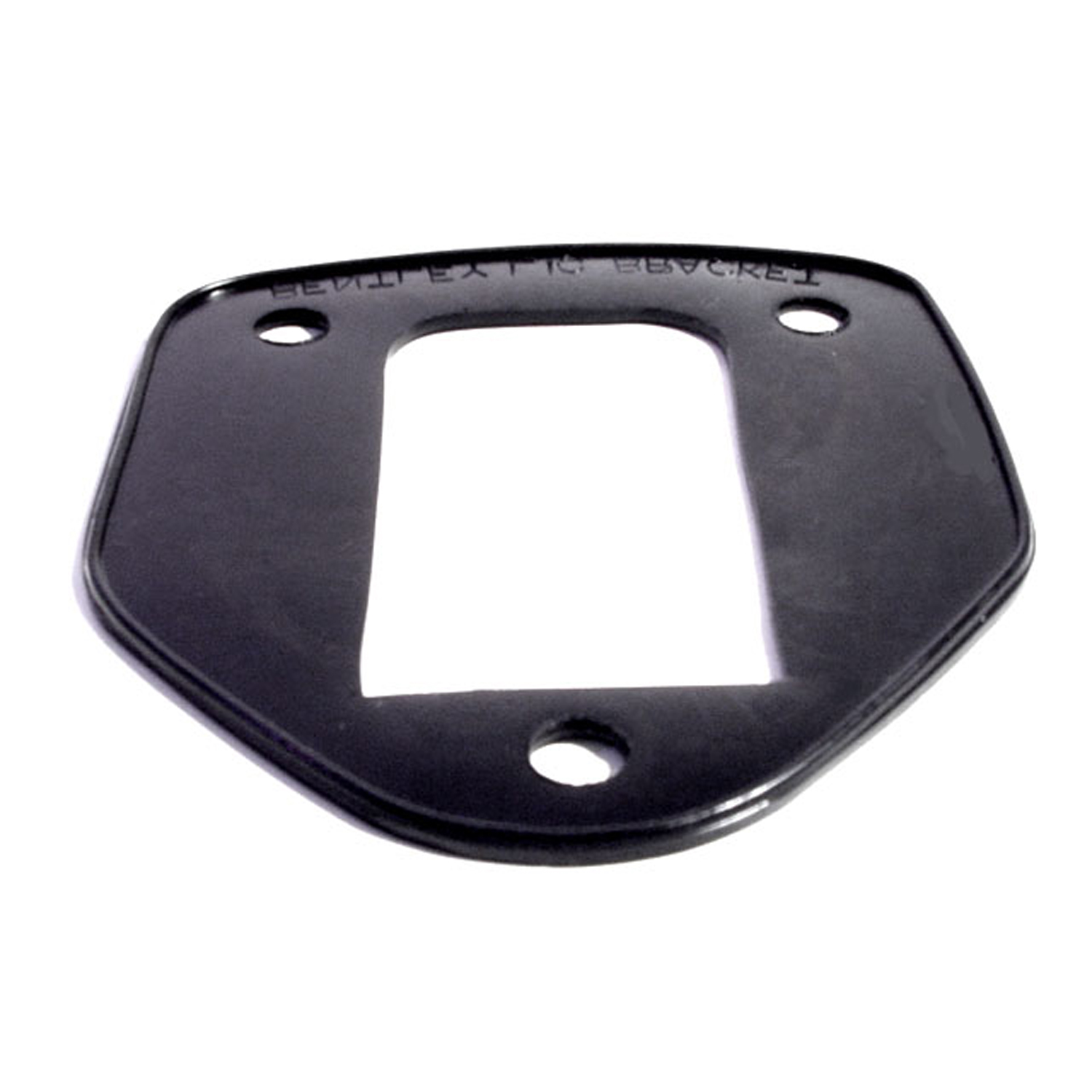 1959 Bentley S2 Series License Bracket Pad. 4-3/8" wide X 5" long. Each-MP 112-JLicense Bracket Pad. 4-3/8" wide X 5" long. Each
Why Choose Metro?
For over 100 years, Metro Moulded Parts has been the pinnacle of quality in classic car restoration parts. Our commitment to precision and authenticity in every component ensures a perfect fit and an OEM-level appearance.
- Expert Craftsmanship & Quality: Each part is a testament to our dedication to reliability and perfection, crafted from original designs and thoroughly tested.
- Advanced Technology: We use cutting-edge techniques to create flawless, long-lasting parts that surpass others in performance.
- SuperSoft Sponge – The Ultimate Door Seal: Not only are our door seals 30% softer than competitors', but they're also guaranteed to never leak. They effectively reduce wind and road noise, enhancing your classic car's comfort and driving experience.
- Proudly American: Our parts are a product of American craftsmanship, made in the USA with a spirit of excellence and heritage.
- Unrivaled Warranty: We back our products with a 30-year industry-leading warranty, a testament to our confidence in their quality.
Join us in preserving the legacy of classic cars with parts that are crafted for perfection, not just made.