
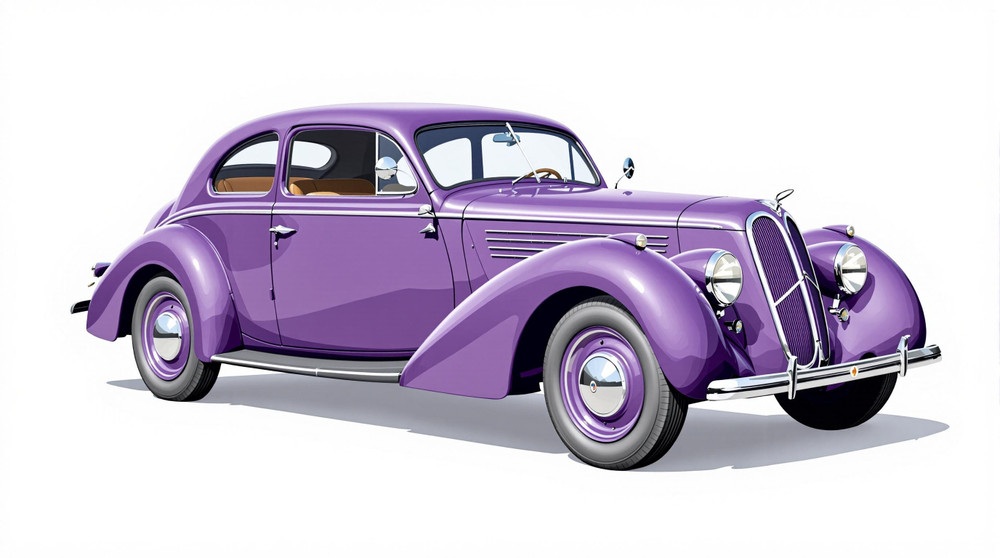
Image of 1937 Bmw 328, Note: These illustrations use artistic license and may differ from actual historical models.
Performance Metrics
Fundamental Metrics
Emotional Appeal
MMP Rating
| Engine Specifications | |
|---|---|
| Engine: | Straight-6 |
| Displacement: | 1,971 cc |
| Horsepower: | 80 hp at 5000 rpm |
| Torque: | Estimated at 96 lb-ft |
| Compression Ratio: | 7.0:1 |
| Ignition System: | Coil ignition |
| Cooling System: | Water-cooled |
| Performance Specifications | |
| 0-60 Time: | Estimated at 15 seconds |
| 1/4 Mile Time: | Not available |
| Top Speed: | 93 mph |
| Transmission and Drive | |
| Drive Type: | Rear-wheel drive |
| Transmission Type: | 4-speed manual |
| Fuel and Efficiency | |
| Fuel System Type: | Carburetor |
| MPG: | Not available |
| Dimensions and Brakes | |
| Brakes: | Hydraulic drum brakes |
| Wheelbase: | 94.5 inches |
| Weight: | 1,830 lbs |
Note: Specifications for classic cars are given to the best of our ability, considering the limited and variant data available.
1937 BMW 328: The Sports Car That Put BMW on the Map
Low, light, and built to race, the 1937 BMW 328 was a sports car with a competition record far bigger than its modest size. Developed by Bayerische Motoren Werke in Munich, it arrived when European manufacturers were using motor racing to prove that their engineering could deliver both speed and reliability. The 328 quickly became one of the most celebrated prewar sports cars, combining elegant roadster styling with a remarkably advanced six-cylinder engine.
BMW had entered automobile production after taking over the Dixi company in 1928, but the 328 gave the young carmaker a distinctive sporting identity. The model made its competition debut in 1936, then built an impressive record in events across Europe. Its most famous racing relative, the streamlined 328 Touring Coupé, won the 1940 Mille Miglia at an average speed of about 166.7 km/h, or 103.6 mph. That victory came during a wartime edition of the race run over a closed circuit rather than the traditional open-road route.
Roadster Style, Racing Purpose
The 328’s body is a study in purposeful restraint. Its long bonnet leads to a pair of kidney-shaped grilles, while flowing front wings wrap around exposed headlamps and taper toward a short, tidy tail. The low beltline and wide-set wheels give the car a planted stance, but its proportions remain light and graceful. Details such as the narrow windscreen, simple bumpers, and sweeping fenders make it unmistakably a 1930s sports car without looking overly ornate.
The standard two-seat roadster is the model’s signature form. Its compact cockpit was designed around driving, not luxury: expect a clear instrument panel, straightforward controls, and trim that was handsome but practical. Leather upholstery and careful finishing added a touch of refinement, yet the overall impression is of a purposeful machine. A passenger seat, simple hood, and limited luggage space made it usable for touring, but the 328 was never a grand touring car in the plush modern sense.
Factory paint was not a rigid, widely publicized menu in the way it is for many later production cars. Surviving cars show that customers could choose from period finishes, including dark colors, red, and lighter shades. Competition cars were often seen in white or silver-toned finishes, while restorations today may reflect documented original colors or carefully chosen period-correct alternatives.
Although the roadster is the most recognizable 328, coachbuilders created special bodies for individual customers and competition use. Variations included streamlined coupés and racing roadsters, with the Touring Superleggera-bodied 328 Coupé among the most famous. The standard roadster remains the classic image of the model, but the special-bodied cars demonstrate how adaptable its compact chassis could be.
Six Cylinders Ahead of Their Time
Under the bonnet sits a 1,971 cc inline-six producing about 80 horsepower at 4,500 rpm. That figure may sound modest today, but it was strong for a two-liter sports car of the period, especially in a machine weighing roughly 780 kg. The engine used a sophisticated cylinder head with hemispherical combustion chambers and inclined valves operated by pushrods. Three Solex carburetors supplied the mixture, helping the engine breathe efficiently and deliver its power smoothly.
The 328’s innovation was not simply a matter of peak horsepower. Its engine design helped it produce useful performance across the rev range, while a four-speed manual gearbox gave the driver control over the available power. BMW combined that drivetrain with a lightweight chassis and responsive steering, creating a car that could compete successfully against larger and more powerful machinery.
The 328 also left a lasting engineering legacy beyond BMW. After the Second World War, Bristol used the BMW six-cylinder design as the basis for the engine in its 400-series cars. The connection helped carry the 328’s technical ideas into postwar British sports-car production.
Performance and the Feel of the Drive
Period specifications and modern estimates generally put the 328’s top speed at about 150 km/h, or 93 mph, depending on bodywork, gearing, and condition. A 0-to-60 mph time is less firmly documented, since standardized acceleration testing was not routine for road cars in the 1930s. A reasonable estimate for a healthy roadster is around 10 to 12 seconds. Special racing bodies could be faster, while age, restoration choices, and mechanical setup make a substantial difference today.
On a smooth road, the BMW feels agile and eager rather than brutally fast. Its low weight helps it change direction readily, and the steering gives the driver a direct sense of what the front tires are doing. The suspension pairs a transverse leaf spring at the front with a live rear axle on semi-elliptic springs. That arrangement is relatively simple by modern standards, so sharp bumps can unsettle the car more than they would a contemporary sports car with independent suspension at all four corners.
On a winding road, the 328’s balance and compact dimensions come into their own. The driver works the manual gearbox, listens to the six-cylinder engine climb through its revs, and feels the car respond through the steering wheel and seat. There is wind over the low windscreen, mechanical sound from the engine and transmission, and little isolation from the road. The experience is engaging precisely because the driver is involved in every part of it.
Racing Record and Historical Importance
The BMW 328 helped establish a new template for the lightweight European sports car: a relatively small engine, carefully developed chassis, efficient combustion, and low overall mass. Instead of relying on displacement alone, it showed how thoughtful engineering could produce speed and endurance from a compact package. That approach influenced later sports-car development and strengthened BMW’s reputation for performance.
The car’s competition results made the engineering case in public. The 328 scored class victories and strong finishes in major European events, including the Mille Miglia and the RAC Tourist Trophy. Its wins were significant not just as trophies, but as demonstrations that a two-liter roadster could challenge more powerful rivals. The 1940 Mille Miglia victory by the specially bodied Touring Coupé became the headline achievement, turning the 328 story into an international one.
For BMW, the 328 became an enduring symbol of sporting ambition. Its kidney grille, compact proportions, and emphasis on driver-focused performance remain part of the company’s heritage. It was not the first BMW with a racing pedigree, but it was the model that made the marque’s sporting character unmistakable.
Living With a 328 Today
In its own time, the 328 could serve as a road car, a touring companion, or a competition machine. Today, most examples are carefully preserved collector cars, shown at concours events or driven on historic rallies. A few are still exercised on the road, but their rarity and value usually rule out ordinary daily use.
Maintenance is a specialist undertaking. The basic mechanical layout is understandable to an experienced vintage-car mechanic, and the engine’s straightforward pushrod design is less complex than many later performance engines. However, that does not make ownership easy or inexpensive. Original parts are scarce, bodywork and coachbuilt details can be difficult to reproduce, and correct restoration requires marque expertise. A prospective owner should arrange a detailed inspection of the chassis, engine, gearbox, body structure, and the car’s provenance before purchase.
Reliability depends heavily on maintenance and how the car is used. A properly restored example can be driven on tours and rallies, but it needs regular attention and careful warm-up, lubrication, and cooling-system checks. Parts availability is not comparable to that of a mass-produced classic, so repairs may take time and require specialist suppliers.
Rare Facts and Common Criticisms
Only about 464 BMW 328s were built between 1936 and 1940, making every surviving example a significant collector car. That total includes the production roadsters and a small number of cars with special bodies. The hand-finished nature of the model means that variations in equipment and coachwork are part of its story rather than evidence of a broad, standardized options catalog.
The 1940 Mille Miglia win is the model’s most famous record, but the event itself was unusual. Because of wartime conditions, that year’s race used a closed-circuit format near Brescia. The Touring Coupé’s average speed of about 166.7 km/h remains a striking measure of the car’s capability and of the aerodynamic work behind its streamlined body.
The 328’s main criticisms are familiar to anyone considering a prewar sports car: limited weather protection, little luggage room, a firm and sometimes unsettled ride over rough surfaces, and maintenance demands that can be costly. It also lacks modern conveniences such as dependable high-speed braking, crash protection, and easy parts access. Those limitations are part of its period character, but they matter when deciding whether to drive one regularly or preserve it primarily as a collectible.
Collector Values and Market Outlook
BMW produced roughly 464 examples, and the number available for sale at any given time is very small. A genuine, well-documented 328 roadster may bring approximately $700,000 to $1.5 million, with exceptional cars, significant competition history, or unusually strong provenance potentially exceeding that range. Special-bodied cars are harder to value because originality, coachbuilder, and racing history can move the price dramatically. A famous competition car such as the Mille Miglia-winning Touring Coupé belongs in a different price category from a standard roadster.
These are broad 2026 market estimates, not guaranteed sale prices. Condition, matching components, restoration quality, ownership records, and documented history all have an outsized effect. Because the supply is extremely limited and the model has enduring historical importance, the 328 has generally shown strong long-term collector appeal. Prices can still fluctuate with the broader market, but well-preserved and correctly documented examples are more likely to hold their value than ordinary classic cars.
Why the BMW 328 Still Matters
The 1937 BMW 328 brought together elegant roadster design, a technically advanced six-cylinder engine, low weight, and genuine competition success. Its influence reached beyond the race circuits, helping define BMW’s sporting identity and providing engineering inspiration for postwar cars. It is rare, demanding to own, and unmistakably a product of another era, but those qualities are also part of its appeal.
More than a beautiful prewar roadster, the 328 is a landmark in the evolution of the European sports car. Its greatest achievement was proving that smart engineering and a light chassis could make two liters feel like much more.
1937 Bmw 328 Catalog of Parts
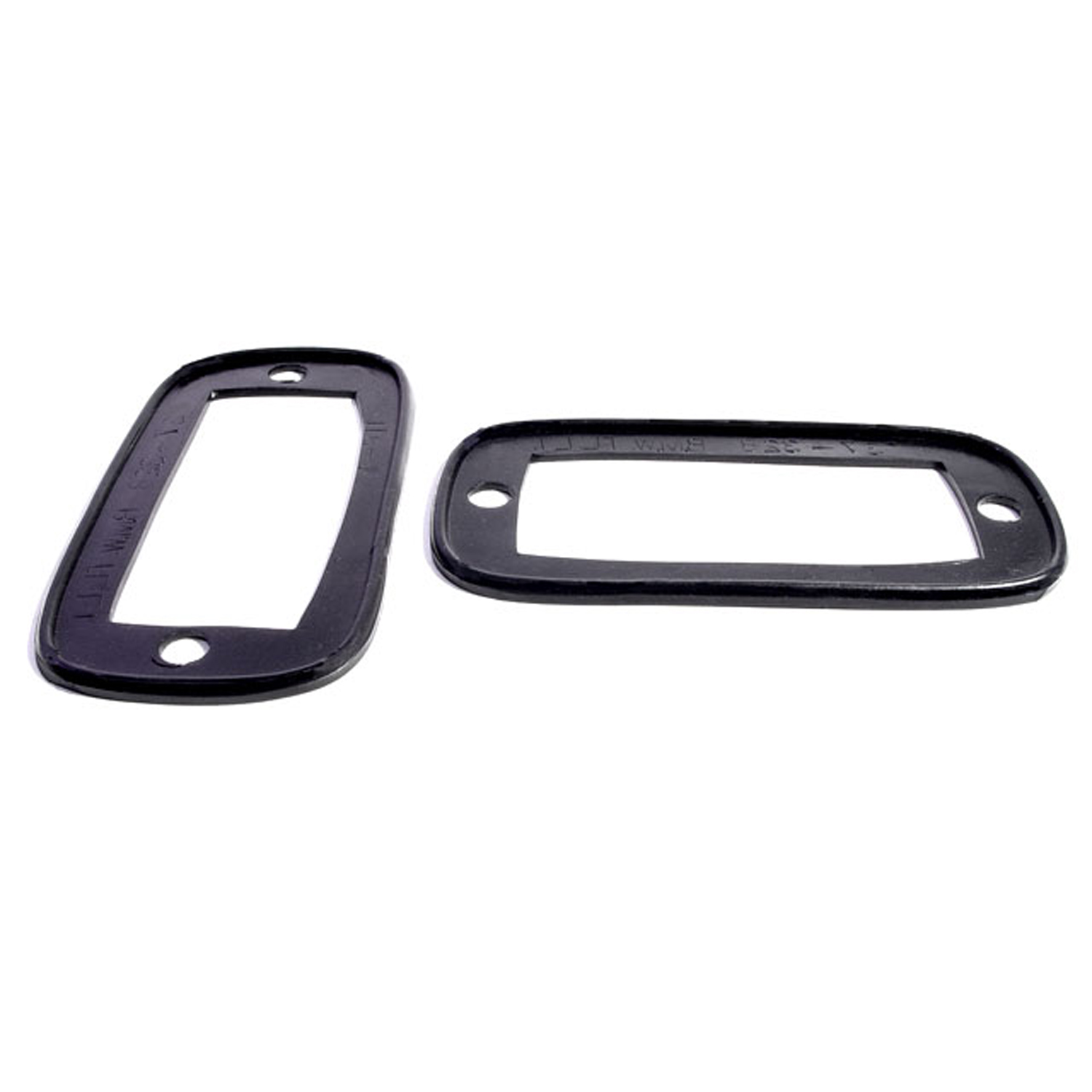 1937 BMW 328 Tail-light Pads. 2-1/2" wide X 4-3/4" long. Pair-MP 116-ATail-light Pads. 2-1/2" wide X 4-3/4" long. Pair
Why Choose Metro?
For over 100 years, Metro Moulded Parts has been the pinnacle of quality in classic car restoration parts. Our commitment to precision and authenticity in every component ensures a perfect fit and an OEM-level appearance.
- Expert Craftsmanship & Quality: Each part is a testament to our dedication to reliability and perfection, crafted from original designs and thoroughly tested.
- Advanced Technology: We use cutting-edge techniques to create flawless, long-lasting parts that surpass others in performance.
- SuperSoft Sponge – The Ultimate Door Seal: Not only are our door seals 30% softer than competitors', but they're also guaranteed to never leak. They effectively reduce wind and road noise, enhancing your classic car's comfort and driving experience.
- Proudly American: Our parts are a product of American craftsmanship, made in the USA with a spirit of excellence and heritage.
- Unrivaled Warranty: We back our products with a 30-year industry-leading warranty, a testament to our confidence in their quality.
Join us in preserving the legacy of classic cars with parts that are crafted for perfection, not just made.