
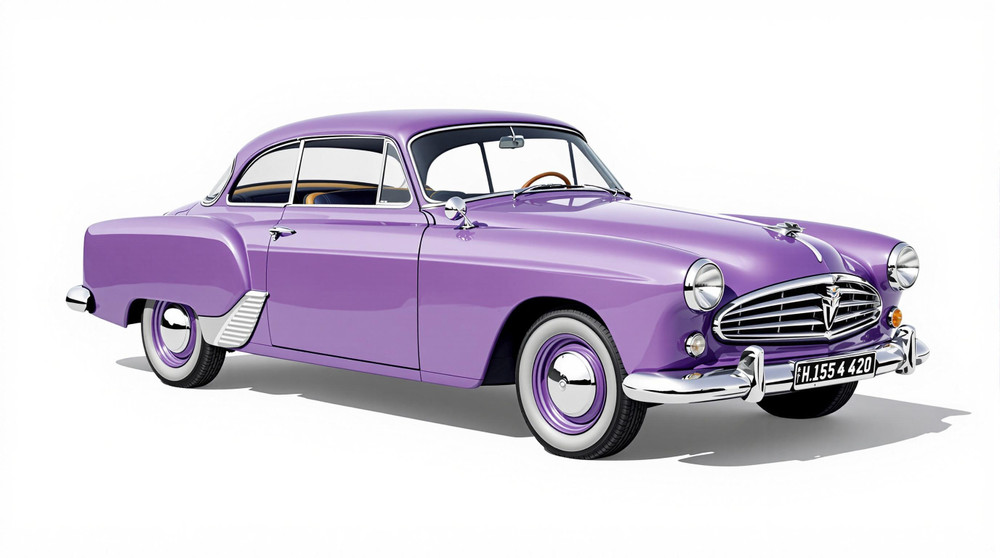
Image of 1957 Borgward H 2400, Note: These illustrations use artistic license and may differ from actual historical models.
Performance Metrics
Fundamental Metrics
Emotional Appeal
MMP Rating
| Engine Specifications | |
|---|---|
| Engine: | Inline 4 |
| Displacement: | 2.4L |
| Horsepower: | Estimated 82 hp |
| Torque: | 123 lb-ft |
| Compression Ratio: | Estimated 7.5:1 |
| Ignition System: | Distributor ignition |
| Cooling System: | Liquid cooled |
| Performance Specifications | |
| 0-60 Time: | Information not available |
| 1/4 Mile Time: | Information not available |
| Top Speed: | 90 mph |
| Transmission and Drive | |
| Drive Type: | Rear-wheel drive |
| Transmission Type: | 4-speed manual |
| Fuel and Efficiency | |
| Fuel System Type: | Carburetor |
| MPG: | Information not available |
| Dimensions and Brakes | |
| Brakes: | Drum brakes |
| Wheelbase: | 108.3 inches |
| Weight: | Estimated 2,800 lbs |
Note: Specifications for classic cars are given to the best of our ability, considering the limited and variant data available.
1957 Borgward Hansa 2400: Bremen’s Rare Luxury Saloon
The 1957 Borgward Hansa 2400 was an ambitious German luxury car with an uncommon silhouette, a smooth six-cylinder engine and a production run so small that a surviving example is a genuine rarity today. Built by Borgward in Bremen, it represented the company’s attempt to take on established prestige marques with a distinctive, technically interesting alternative.
The name is often shortened to Borgward 2400 or H 2400, though the model is generally known as the Hansa 2400. Borgward was led by industrialist Carl F. W. Borgward, whose company had grown into one of West Germany’s important independent automakers during the postwar boom. The 2400 sat near the top of its range, combining substantial size and comfort with the company’s characteristically individual approach to design.
One detail sets the Hansa 2400 apart from many cars of its era: it was offered not only as a streamlined fastback saloon but also as a longer Pullman limousine. Despite its high ambitions, it remained a low-volume model. Commonly cited production estimates put the total at roughly 1,032 cars, although breakdowns by body style vary between sources.
Fastback Lines and Pullman Presence
The fastback saloon is the Hansa 2400’s most immediately recognizable form. Its roof sweeps into the rear body in one flowing curve, giving the car a more aerodynamic, modern profile than the separate-trunk sedans that were still common in the early 1950s. The broad bonnet, rounded front wings and upright front end give it a solid, formal presence, while the sloping tail adds a note of motion even when the car is parked.
The Pullman version took a different approach. Its extended body and more conventional saloon profile emphasized passenger space and limousine-like dignity. It suited buyers who wanted a roomy chauffeur-driven car, while the fastback had a more personal, sporting character. Both versions are unusual today, but the fastback is often the one that catches the eye first.
Inside, the Hansa 2400 aimed for the comfort expected of an upper-class European car. Period examples and restorations feature broad seating, substantial door trim and finishes such as wood-effect or wood-veneer details, with upholstery materials depending on specification and restoration history. The dashboard is formal rather than flashy, and its large instruments reflect a time when clear, legible gauges mattered more than a crowded array of switches.
Factory paint choices varied, and surviving cars may have been repainted, so it is risky to name one universally “correct” color. Dark, dignified shades suit the car’s luxury character, while lighter and two-tone finishes can make the fastback shape especially striking. For a prospective buyer, documented original paint is more meaningful than assuming any one color was the standard choice.
Six-Cylinder Power for the Autobahn Era
Under the bonnet sits a longitudinal 2.4-litre inline-six, driving the rear wheels. Output figures differ by model year and specification. Early versions are commonly quoted at about 82 horsepower, while later, more powerful versions are often listed at around 100 horsepower. A 1957 car may be described with the higher figure, but its exact specification should be checked against its engine and vehicle records.
Period performance figures also vary. A reasonable guide for a late, higher-output car is a top speed in the region of 140 to 150 km/h, or about 87 to 93 mph. A 0-to-60-mph time is not consistently documented in the way it is for modern cars; based on the car’s power and weight, roughly 15 to 18 seconds is a sensible estimate, rather than a guaranteed factory figure.
The Hansa 2400 was built for fast, comfortable touring, not hard-edged sports-car driving. Its six-cylinder engine delivers power smoothly, and the car feels most at home cruising steadily on open roads. Contemporary chassis specifications and equipment could vary, so the condition of an individual car matters enormously. A properly sorted suspension should take the edge off ordinary bumps, while the car’s size and period tires call for measured inputs on narrow, winding roads.
From the driver’s seat, the experience is less about sharp acceleration than mechanical character. The inline-six gives a muted, even note as revs rise, while the long body and generous cabin create the relaxed feel of a traditional touring saloon. Steering, braking and gear changes will feel more physical than in a modern car, and the driver needs to anticipate traffic rather than rely on contemporary levels of grip or stopping power.
What Made the Hansa 2400 Different
The 2400 arrived as West Germany was rebuilding its economy and its car industry. Buyers were again considering large, refined cars, and Borgward wanted to compete in a market associated with established names such as Mercedes-Benz and BMW. The Hansa 2400 offered a different interpretation of prestige: less conservative in its fastback styling, and backed by the ambitions of an independent manufacturer rather than a giant industrial group.
Its significance lies less in a single technology that transformed the industry than in the way it showed Borgward reaching for the luxury-car class. The two body styles, six-cylinder power and emphasis on passenger comfort made it a serious flagship. Its fastback shape also gave it a distinctive place among German luxury cars of the period, even if the design did not become a template copied widely by competitors.
The model’s limited numbers tell another part of the story. Borgward had the engineering and manufacturing confidence to build an ambitious car, but the 2400 was expensive and sold in small quantities. The company itself collapsed in 1961, ending the marque’s plans for future development. The Hansa 2400 therefore stands as a snapshot of Borgward at its boldest, as well as a reminder of how vulnerable an independent automaker could be.
Living With a 1957 Borgward
Today, most Hansa 2400s are better suited to careful touring, club events and concours displays than everyday commuting. Their rarity and age make regular use possible only when the car has been thoroughly maintained and the owner is prepared to source parts patiently. A sound example can still be enjoyed on the road, but it is not a practical choice for someone who expects modern-car convenience.
Routine service work is familiar in principle: engine oil, ignition components, cooling system checks, brakes and suspension all need the attention expected of a 1950s vehicle. The challenge is usually not that the car is impossible to understand, but that model-specific parts, trim and body components can be difficult to find. Mechanical repairs may be manageable for an experienced classic-car workshop, while specialist fabrication or a comprehensive restoration can become costly.
Before buying, inspect the body carefully for corrosion and poor previous repairs, and check that the engine, transmission, brakes and electrical system are operating correctly. Confirm the car’s identity and specification, especially if it has been restored or modified. With production so limited, originality and completeness can matter as much as the quality of the paint.
Rare-Car Facts and Common Criticisms
The Hansa 2400’s most striking piece of trivia is its scarcity: estimates commonly place total production at around 1,032 cars across the model’s run. That figure should be treated as an approximate total, not a definitive count of surviving vehicles or of each body style. The fastback and Pullman are both rare, and the number available for sale at any one time is likely to be very small.
There is no widely recognized speed or endurance record associated with the Hansa 2400, and it is not primarily remembered as a competition car. Its story is instead tied to Borgward’s attempt to establish itself in the luxury market. Nor is a particular celebrity ownership or major historical-event appearance central to the model’s reputation. Its appeal comes from its unusual design, its maker’s history and its rarity.
Common criticisms include the car’s substantial size, modest performance by modern standards and the difficulty of sourcing parts. Some observers also find the fastback styling unusual, especially compared with the more conventional luxury sedans of the period. For fans, that individuality is precisely the point.
Collector Values and Availability
Because sales are infrequent and condition varies widely, there is no simple, dependable price guide for the Borgward Hansa 2400. As a broad international estimate, a project or incomplete car might fall around US$10,000 to US$25,000. A usable, well-presented example could bring roughly US$25,000 to US$50,000, while a high-quality restoration or especially desirable, well-documented car may reach US$50,000 to US$90,000 or more. These are estimates, not guaranteed sale prices; location, originality, body style, restoration quality and current demand can shift the result considerably.
The Hansa 2400 is best described as scarce rather than impossible to find. A buyer may have to wait for the right example and may need to look beyond their home market. Its rarity supports collector interest, but a small pool of buyers and high restoration costs can limit how quickly values rise. In general, exceptional, original or expertly restored cars have the strongest prospects, while neglected projects can be expensive to bring back to life. The model appears to have long-term enthusiast appeal, though its market is specialized rather than broad.
A Distinctive Chapter in Borgward History
The 1957 Borgward Hansa 2400 brought together a smooth six-cylinder engine, long-distance comfort and styling that refused to blend into the background. Its fastback saloon and Pullman limousine reflected Borgward’s ambition to compete at the top end of the German market, while its low production numbers made it an unusual sight even when new.
It may not have changed the course of automotive engineering, but the Hansa 2400 remains a compelling expression of postwar German independence and craftsmanship. For collectors, it is more than a rare badge: it is a rolling reminder of a bold automaker that dared to take a different road.
1957 Borgward H 2400 Catalog of Parts
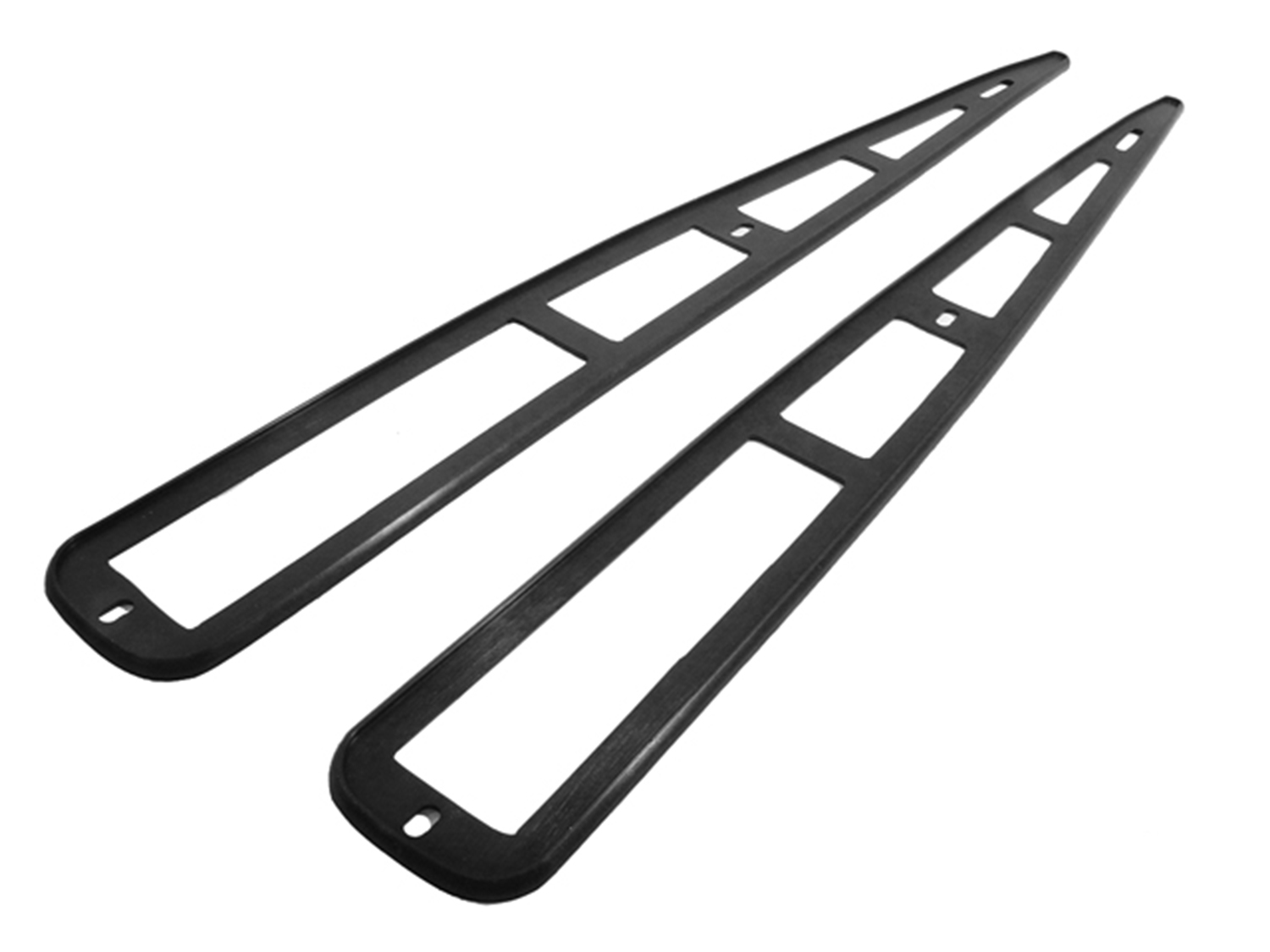 1957 Borgward H 2400 Rear Tail-light to Body Seal. Black. Pair-MP 113/BLACKRear Tail-light to Body Seal. Black. Pair
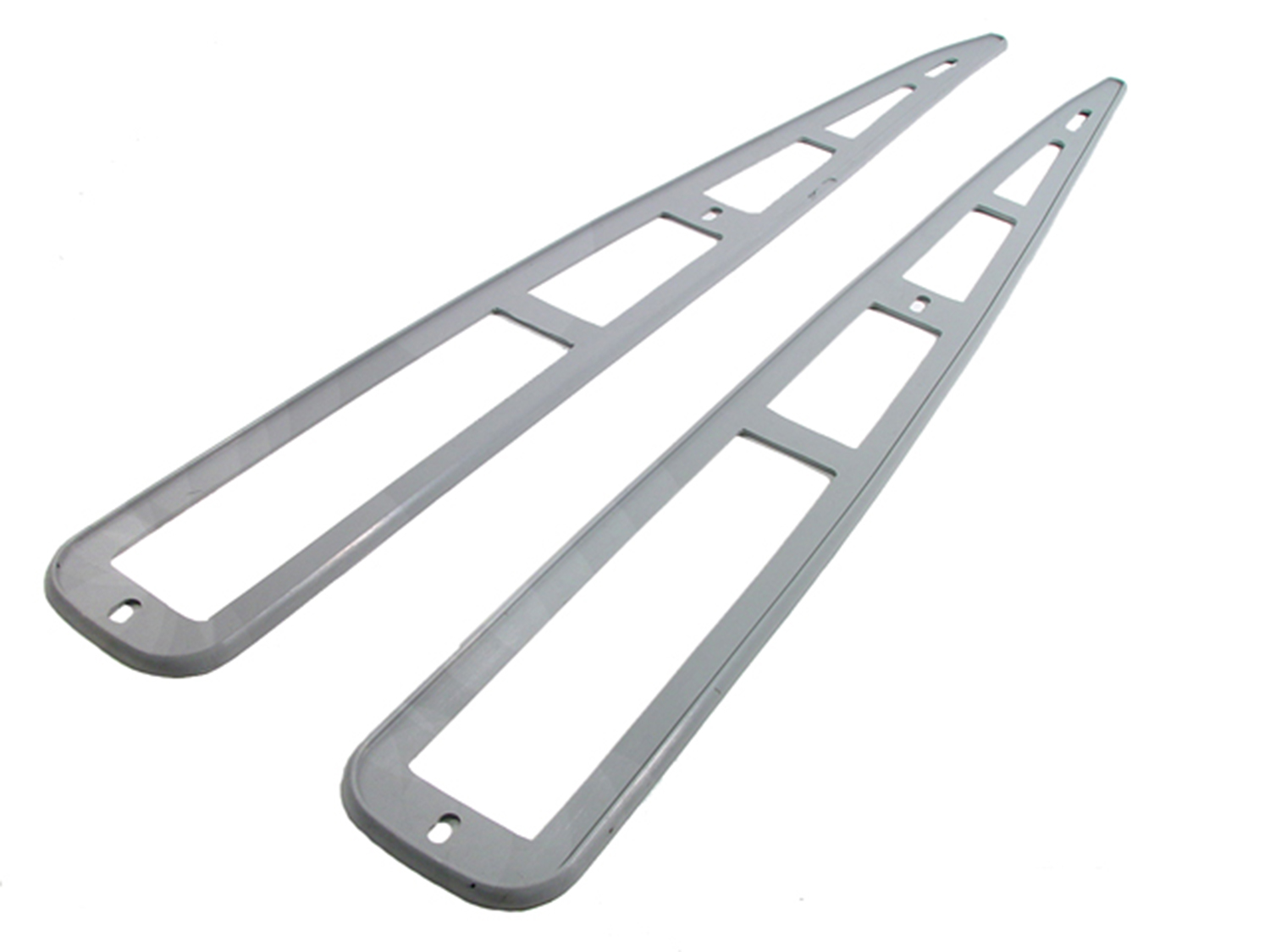 1957 Borgward H 2400 Rear Tail-light to Body Seal. Gray. Pair-MP 113/GRAYRear Tail-light to Body Seal. Gray. Pair
Why Choose Metro?
For over 100 years, Metro Moulded Parts has been the pinnacle of quality in classic car restoration parts. Our commitment to precision and authenticity in every component ensures a perfect fit and an OEM-level appearance.
- Expert Craftsmanship & Quality: Each part is a testament to our dedication to reliability and perfection, crafted from original designs and thoroughly tested.
- Advanced Technology: We use cutting-edge techniques to create flawless, long-lasting parts that surpass others in performance.
- SuperSoft Sponge – The Ultimate Door Seal: Not only are our door seals 30% softer than competitors', but they're also guaranteed to never leak. They effectively reduce wind and road noise, enhancing your classic car's comfort and driving experience.
- Proudly American: Our parts are a product of American craftsmanship, made in the USA with a spirit of excellence and heritage.
- Unrivaled Warranty: We back our products with a 30-year industry-leading warranty, a testament to our confidence in their quality.
Join us in preserving the legacy of classic cars with parts that are crafted for perfection, not just made.