

Image of 1927 Bugatti Type 40/40a, Note: These illustrations use artistic license and may differ from actual historical models.
Performance Metrics
Fundamental Metrics
Emotional Appeal
MMP Rating
| Engine Specifications | |
|---|---|
| Engine: | Inline 4 |
| Displacement: | 1.5L |
| Horsepower: | 40-50 HP |
| Torque: | Not available |
| Compression Ratio: | Not available |
| Ignition System: | Magneto ignition |
| Cooling System: | Water-cooled |
| Performance Specifications | |
| 0-60 Time: | Not available |
| 1/4 Mile Time: | Not available |
| Top Speed: | 75 mph |
| Transmission and Drive | |
| Drive Type: | Rear-wheel drive |
| Transmission Type: | 4-speed manual |
| Fuel and Efficiency | |
| Fuel System Type: | Carburetor |
| MPG: | Not available |
| Dimensions and Brakes | |
| Brakes: | Mechanical drum brakes |
| Wheelbase: | 2,800 mm |
| Weight: | 850 kg |
Note: Specifications for classic cars are given to the best of our ability, considering the limited and variant data available.
1927 Bugatti Type 40 and 40A: A Roadgoing Bugatti with Racing DNA
The 1927 Bugatti Type 40 turned the marque’s racing pedigree into a compact, elegant road car that its owner could actually take touring. Built by Automobiles Ettore Bugatti at Molsheim in Alsace, it paired a sophisticated overhead-cam engine with a light chassis and coachbuilt bodywork. The result was not a Grand Prix car in disguise, but a distinctive sports tourer that brought Bugatti engineering to a broader group of well-heeled motorists.
The Type 40 arrived in the mid-1920s, when European manufacturers were refining cars for faster roads and longer-distance travel. Bugatti was already famous for racing success, particularly with the Type 35, but the company also produced road cars that carried its unmistakable style and mechanical character. The Type 40 offered a more approachable entry to that world. Its rarer, more powerful sibling, the Type 40A, added extra engine capacity for drivers who wanted a little more performance.
A useful detail for enthusiasts: the Type 40’s engine belonged to the same broad family of compact, advanced Bugatti fours used in the marque’s smaller racing cars. It delivered its power in a very different setting, beneath a roadgoing body built for touring rather than the start line.
Bugatti Styling and Coachbuilt Bodies
The Type 40 wears Bugatti’s unmistakable face: a tall, narrow horseshoe radiator framed by sweeping front wings and a long bonnet. Its proportions are athletic without being oversized. Depending on the body, the rear could taper into a neat boat-tail, finish as a squared touring bench, or form a more enclosed coupe profile. Wire wheels, slim tires, exposed running boards, and delicate lamps completed a look that was elegant but never anonymous.
Bugatti supplied the chassis and mechanical components, while body styles varied according to factory offerings and the work of coachbuilders. Buyers could find open two-seat roadsters and sports bodies, four-seat touring or torpedo bodies, and more enclosed coupe or cabriolet forms. Open roadster and touring configurations are among the most frequently associated with the Type 40 today, although there was no single body style that defined every example. Individual cars can differ substantially because coachwork was part of the appeal.
The cabin was purposeful rather than lavish by modern luxury-car standards. Depending on the body and specification, occupants might find leather upholstery, a simple instrument panel with clear, period gauges, and trim in polished metal or wood. Open cars offered little protection from weather or road noise. Their reward was a direct connection to the engine, the road, and the surrounding landscape.
There was no universal paint palette. Buyers and coachbuilders selected colors to suit the car, so surviving examples appear in shades such as French racing blue, dark green, red, black, and two-tone combinations. Blue is an especially recognizable Bugatti choice, but originality and documented history matter more to collectors than any one color.
Engineering Ahead of Its Era
The standard Type 40 used a 1,496 cc, four-cylinder engine with a single overhead camshaft and three valves per cylinder. Contemporary specifications are commonly quoted at roughly 45 horsepower, though exact figures can vary by source and engine condition. The Type 40A enlarged displacement to approximately 1,624 cc and is generally credited with about 50 horsepower. Both versions were front-engined and rear-wheel drive, with a four-speed manual gearbox.
For the period, overhead-cam valve gear was a sophisticated feature, especially in a road car. The engine’s layout reflected Bugatti’s racing experience, while the Type 40’s chassis and usable gearing made it better suited to public roads than a dedicated competition machine. It also had mechanical drum brakes at all four wheels, a substantial feature for its day, although their cable-operated system requires careful adjustment and a driver who plans ahead.
The Type 40 did not introduce a single design breakthrough that transformed the entire industry. Its achievement was more personal and practical: it made Bugatti’s engineering philosophy available in a smaller, less intimidating package than the company’s most expensive touring cars. Its combination of compact dimensions, advanced engine design, and coachbuilt individuality helped establish the idea that a sporting road car could be both technically serious and beautifully tailored.
Performance, Speed, and Road Manners
A standard Type 40 is commonly reported to reach roughly 70 to 75 mph, with some specifications and individual cars suggesting a little more. The Type 40A’s larger engine could offer a modest advantage, but body shape, gearing, mechanical condition, and the weight of the coachwork all affect real-world speed. Reliable period 0–60 mph figures are not generally available. A reasonable modern estimate for a healthy example is around 20 to 25 seconds, but it should be treated as an approximation rather than a factory-verified statistic.
On a smooth road, the car feels light and alert compared with larger, heavier contemporaries. The engine rewards a driver who uses the gearbox and keeps it turning in its useful rev range. Steering is direct, though it can feel heavy at low speed, and the narrow tires provide a very different level of grip from modern rubber. On winding roads, the modest weight and compact footprint make the Type 40 enjoyable, but it asks for smooth inputs rather than abrupt braking or cornering.
Its period suspension, with solid axles and leaf springs, can feel firm and busy over broken surfaces. Bumps are part of the experience, not something the chassis filters away. Wind protection depends on the body, and an open car can be tiring on a long, fast run. The mechanical brakes need more anticipation than modern systems, particularly in traffic or on a descent.
Behind the wheel, the Type 40 is about interaction. The driver works a manual gearbox, listens for the engine’s response, and judges braking distance without electronic assistance. The four-cylinder makes a crisp mechanical sound rather than a deep, modern rumble. In a roadster, wind, tire noise, and the engine all arrive together. It is lively and involving, but it rewards respect rather than speed for its own sake.
Living with a Type 40
Today, Type 40s are most often enjoyed on private tours, at historic motoring events, and in concours or club gatherings. They can be driven on suitable roads, but they are valuable, more than a century old, and increasingly treated as preservation pieces. Regular use is possible when a car is properly maintained, though using one as a daily driver would be impractical by modern standards.
Maintenance demands specialist knowledge. The engine, lubrication system, ignition, carburetion, gearbox, and mechanical brakes all need attention from someone familiar with early Bugatti machinery. Routine tasks may be straightforward for an experienced vintage-car mechanic, but parts, correct adjustments, and historical accuracy can make even a small repair a specialist job. Reliability depends heavily on the quality of restoration and how consistently the car is exercised and serviced.
Prospective owners should pay close attention to chassis and engine identity, restoration records, the condition of the drivetrain, and the authenticity of the body. A beautifully restored car can still be costly to maintain, while an apparently inexpensive project may require extensive mechanical and coachwork investment. Pre-purchase inspection by a marque specialist is essential.
Rare Details and Common Misconceptions
The Type 40 is sometimes described as a more accessible Bugatti, but that means comparatively accessible within the Bugatti range, not inexpensive in ordinary 1920s terms. It was still a specialist, hand-built car aimed at buyers who could afford advanced machinery and custom bodywork. Its variety of coachbuilt forms also means that two Type 40s can look remarkably different while sharing the same basic model identity.
There is no widely recognized Type 40 speed or endurance record that defines the model’s legacy. Its significance lies instead in bringing Bugatti’s engineering and styling to a roadgoing sports car. Claims about celebrity ownership or famous event appearances should be checked against the history of a specific chassis, since provenance belongs to individual cars rather than automatically to the model as a whole.
A frequent criticism is that the Type 40 can feel underpowered beside larger, more imposing Bugattis, especially when fitted with heavy coachwork. Its brakes and ride also reflect the limits of 1920s technology. Those are real compromises, but they are balanced by the car’s lightness, mechanical charm, and unusually refined engineering for its class.
Collector Value and Availability
Published production totals vary, but roughly 830 Type 40 cars are often cited, with the Type 40A representing a much smaller group, commonly estimated at about 40 examples. These figures should be treated as approximate because historical records, model classifications, and surviving chassis documentation are not always consistent. The Type 40 is rare, but it appears on the market more often than some of Bugatti’s best-known racing models.
As a broad current-market guide, a Type 40 in sound, usable condition might fall around US$250,000 to US$500,000. A high-quality restoration, desirable coachwork, strong provenance, and matching or well-documented components can push an example toward roughly US$500,000 to US$800,000 or more. A rare Type 40A or an especially significant car may command a premium. These are estimates, not fixed prices, and auction results can vary sharply with condition, originality, and documentation.
Over the long term, exceptional Bugattis have generally benefited from their rarity and historical importance. The Type 40’s market is more selective than that of the most celebrated Bugatti racing cars, so values are not guaranteed to rise year by year. Originality, a credible restoration, and a clear history tend to support value more reliably than cosmetic upgrades. As with any prewar car, the cost of returning a neglected example to sound condition can exceed the apparent bargain in its asking price.
Why the Bugatti Type 40 Still Matters
The 1927 Bugatti Type 40 combined a compact overhead-cam engine, sporting road manners, and coachbuilt elegance in a car that was more usable than Bugatti’s pure racing machines. The Type 40A added extra capacity, while the range of body styles gave owners room to choose between open-air sportiness and more practical touring comfort. Its performance is modest by modern standards, but its design and mechanical character remain compelling.
More than a beautiful prewar car, the Type 40 is a reminder that Bugatti’s reputation was built on road cars as well as victories. It brings the sound, feel, and craftsmanship of Molsheim engineering to an intimate scale, making every drive feel like a meeting with automotive history.
1927 Bugatti Type 40/40a Catalog of Parts
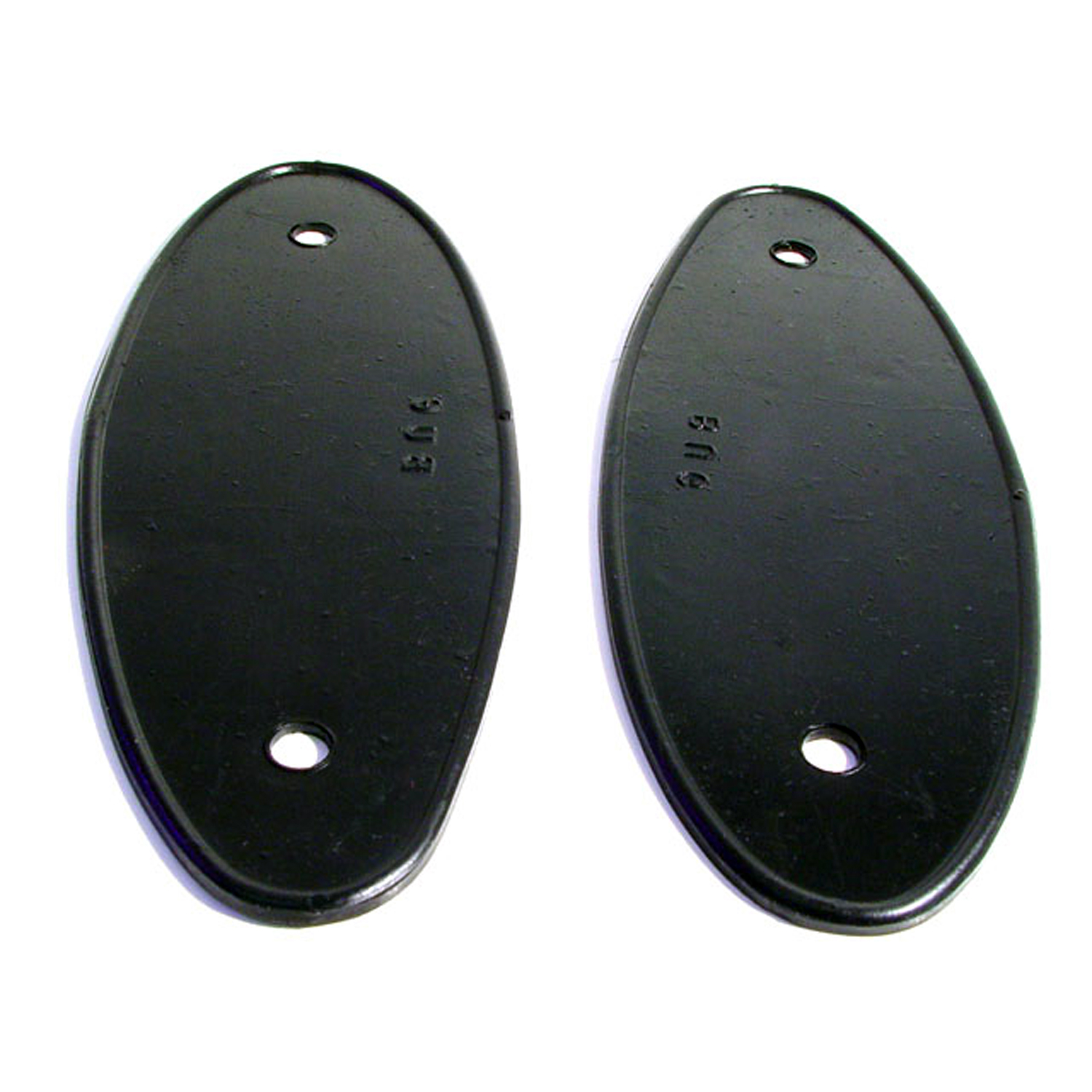 1927 Bugatti TYPE 40/40A Headlight Pads. 3" wide X 8-1/8" long. Pair-MP 337-AHeadlight Pads. 3" wide X 8-1/8" long. Pair
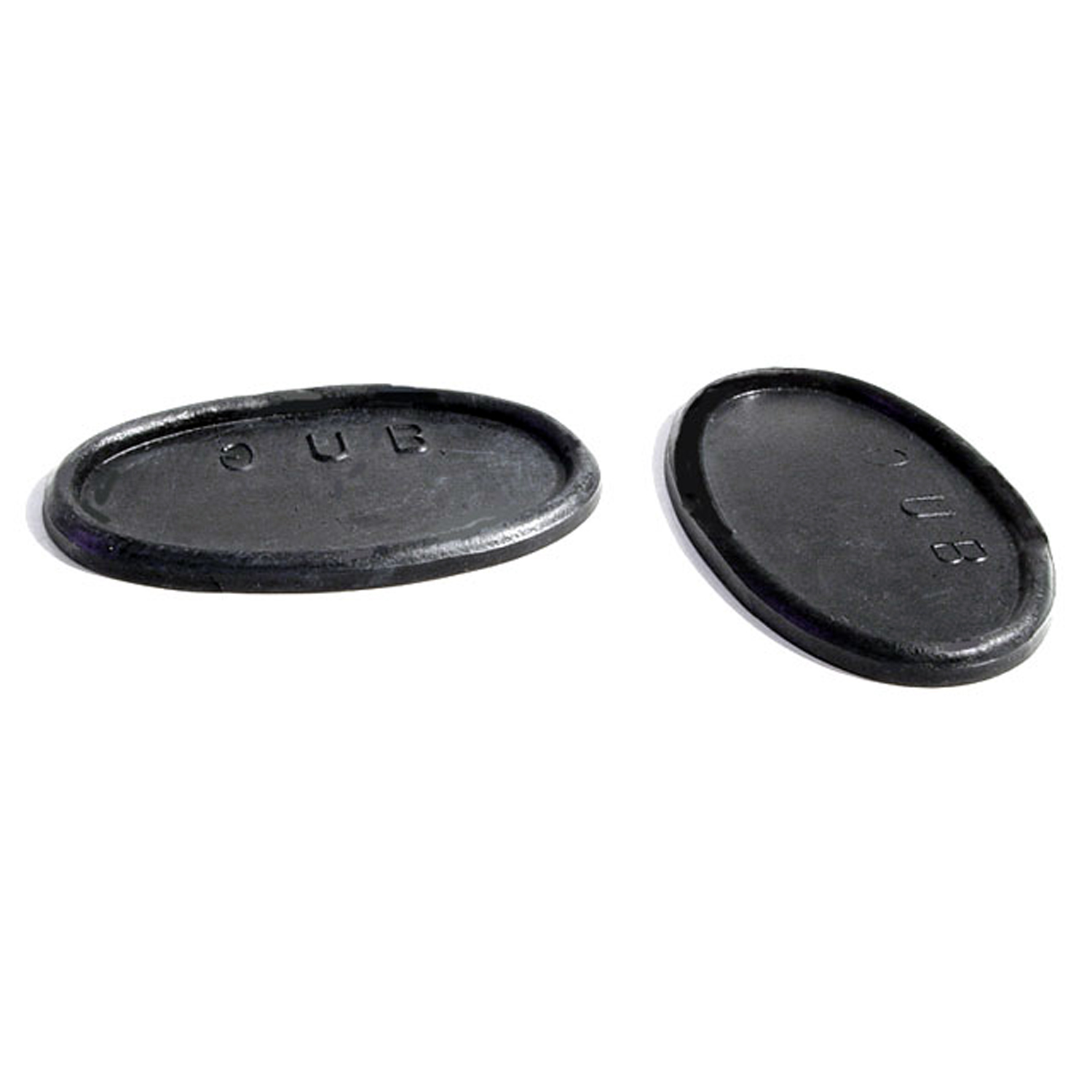 1927 Bugatti TYPE 40/40A Door Handle Pads. 1-3/8" wide X 2-1/4" long. Pair-MP 337-BDoor Handle Pads. 1-3/8" wide X 2-1/4" long. Pair
Why Choose Metro?
For over 100 years, Metro Moulded Parts has been the pinnacle of quality in classic car restoration parts. Our commitment to precision and authenticity in every component ensures a perfect fit and an OEM-level appearance.
- Expert Craftsmanship & Quality: Each part is a testament to our dedication to reliability and perfection, crafted from original designs and thoroughly tested.
- Advanced Technology: We use cutting-edge techniques to create flawless, long-lasting parts that surpass others in performance.
- SuperSoft Sponge – The Ultimate Door Seal: Not only are our door seals 30% softer than competitors', but they're also guaranteed to never leak. They effectively reduce wind and road noise, enhancing your classic car's comfort and driving experience.
- Proudly American: Our parts are a product of American craftsmanship, made in the USA with a spirit of excellence and heritage.
- Unrivaled Warranty: We back our products with a 30-year industry-leading warranty, a testament to our confidence in their quality.
Join us in preserving the legacy of classic cars with parts that are crafted for perfection, not just made.